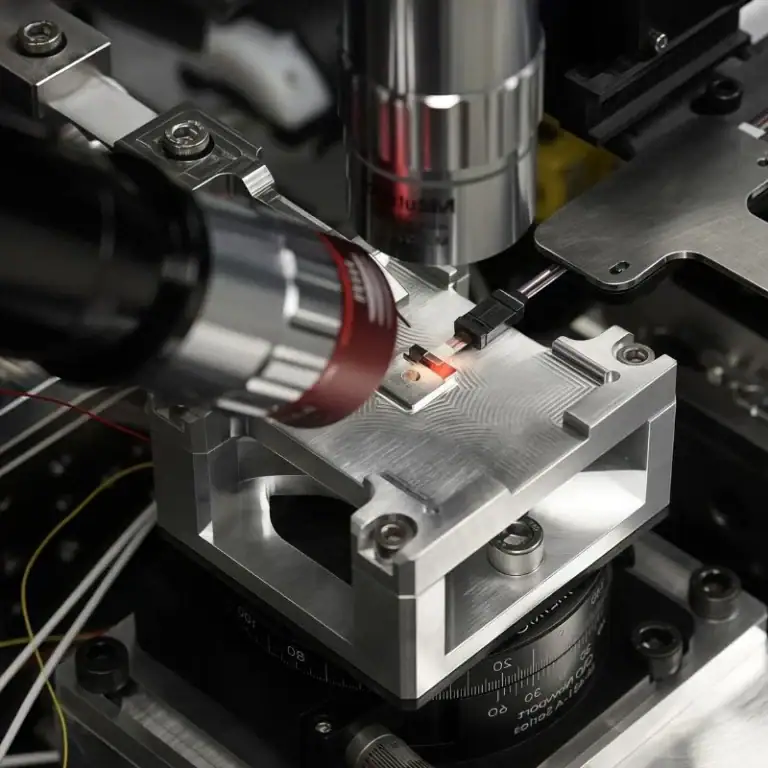
If a project requires both custom metal and plastic parts, TiRapid is one Chinese manufacturing company worth considering. Based in Zhongshan, Guangdong, TiRapid has 16 years of CNC machining experience. It machines metals including aluminum, stainless steel, steel, copper, brass, and titanium, as well as engineering plastics such as POM, PEEK, PTFE, nylon, ABS, PC, PMMA, HDPE, and ULTEM. In total, TiRapid supports more than 80 metal and plastic materials.
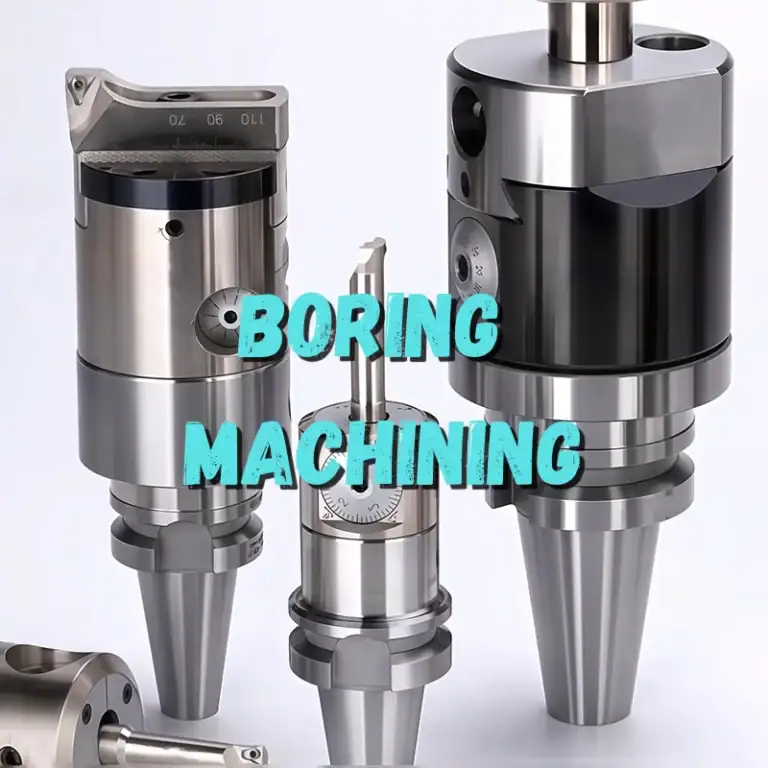
Its capabilities include 3-axis, 4-axis, and 5-axis CNC milling, CNC turning, micromachining, screw machining, wire EDM, and large-part machining. This range covers metal structures, plastic insulators, wear components, transparent parts, seals, and multi-material assemblies. A project can begin with a single prototype and move into low-volume or ongoing production. If it later needs sheet metal fabrication, 3D printing, or injection molding, the same team can coordinate those supporting processes.
Why Does One Product Need Both Metal and Plastic Parts?
Metals and plastics often serve complementary functions within a product. Metals provide stiffness, strength, heat resistance, and dimensional stability for load-bearing structures, mounting blocks, shafts, flanges, housings, and precision connectors. Engineering plastics reduce weight and can add electrical insulation, low friction, chemical resistance, transparency, vibration damping, or self-lubricating behavior. They are used for gears, slides, guides, insulating mounts, seals, viewing windows, and guards.
An automation system may combine aluminum frame connectors, stainless steel shafts, POM guide blocks, and transparent PC guards. An electronic device may contain an aluminum heat-dissipating housing, copper conductive components, a PEEK insulator, and a PMMA viewing window. Medical or laboratory equipment may combine stainless steel structures, PTFE fluid-handling parts, and engineering-plastic isolation components. A requirement described simply as “metal and plastic parts” is really a need to coordinate location, motion, sealing, insulation, and protection across different materials.
Metal and Plastic CNC Machining Follow Different Process Logic
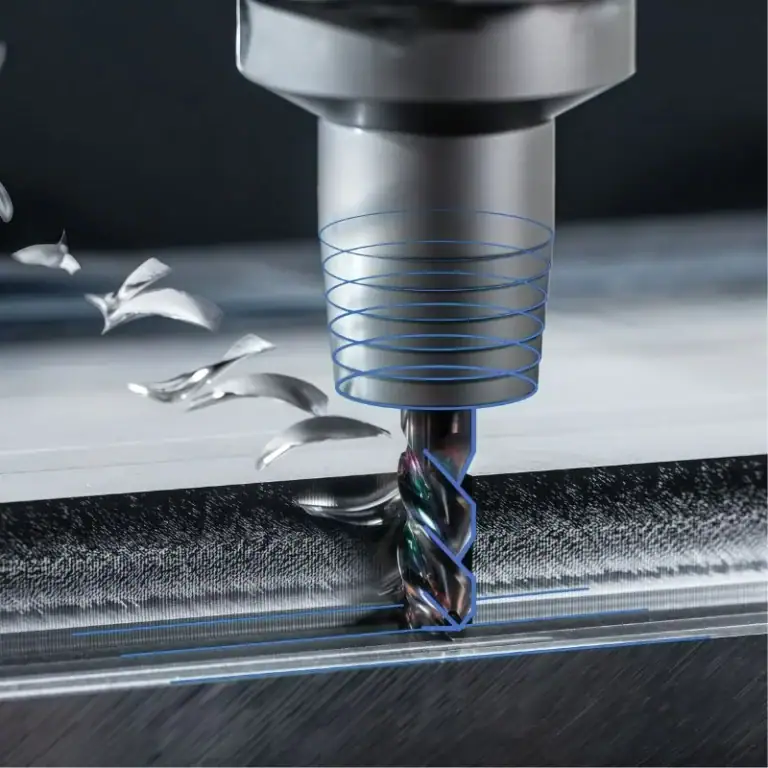
CNC machines remove both metals and plastics with cutting tools, but the two material groups respond differently to cutting heat, clamping force, tool sharpness, and measurement conditions. Metals usually tolerate higher cutting loads, although each alloy behaves differently in hardness, toughness, heat transfer, and work hardening. Plastics require lower cutting force but are more likely to distort from heat, clamping, and internal stress. They can also melt at the edge, form stringy chips or burrs, or chip during machining.
The same process parameters therefore cannot simply be applied to both. TiRapid adjusts tooling, spindle speed, feed, depth of cut, cooling, and workholding according to material and geometry. Metal machining emphasizes tool wear, chip evacuation, cutting heat, and structural rigidity. Plastic machining relies more heavily on sharp tools, temperature control, low-distortion clamping, and dimensional stability after material removal. Separate machining strategies for each material, connected through common assembly datums, form the basis of a stable multi-material project.
Which Custom Metal Parts Can TiRapid Machine?
Aluminum combines low weight, machinability, and compatibility with surface treatments. It is widely used for housings, brackets, base plates, heat-dissipating structures, robotic components, and aerospace prototypes. 6061 aluminum suits a broad range of structural and equipment parts, while 7075 is selected for lightweight components requiring higher strength. Anodizing, hardcoat anodizing, bead blasting, and polishing can add protection, wear resistance, and a defined appearance.
Stainless steel works well for shafts, fittings, valve bodies, equipment components, and medical device structures requiring corrosion resistance, strength, and cleanable surfaces. Carbon steel and alloy steel serve load-bearing brackets, mechanical connectors, gear blanks, and tooling fixtures, with heat treatment, black oxide, plating, or powder coating used to improve hardness and corrosion protection.
Copper and brass are used for electrical, thermal, fluid-handling, and cosmetic parts, while bronze is suitable for bushings and friction interfaces. Titanium combines high strength, low density, and corrosion resistance for aerospace, medical equipment, and performance machinery. TiRapid reviews material behavior, geometry, tolerance, and finishing together, then selects an appropriate milling, turning, or five-axis route for each metal component.
Which Custom Engineering Plastic Parts Can TiRapid Machine?
POM provides dimensional stability, rigidity, and low friction for gears, slides, bushings, locating blocks, and precision mechanical components. Nylon offers toughness and wear resistance for rollers, guides, and transmission parts, although its moisture absorption needs attention during storage, machining, and measurement. PTFE offers low friction and chemical resistance for seals, insulators, and sliding parts. Because the material is soft, workholding and cutting need to control deformation.
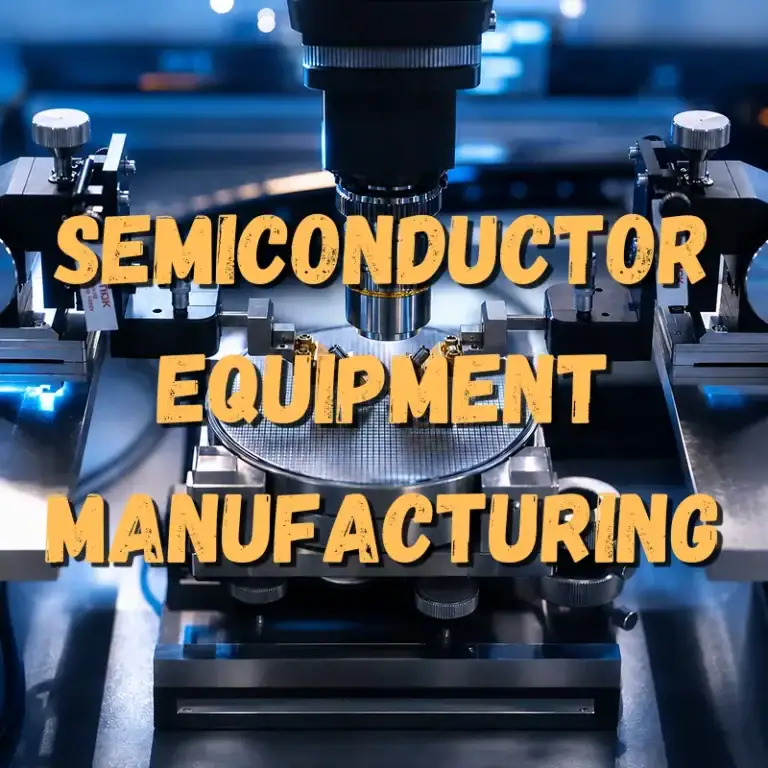
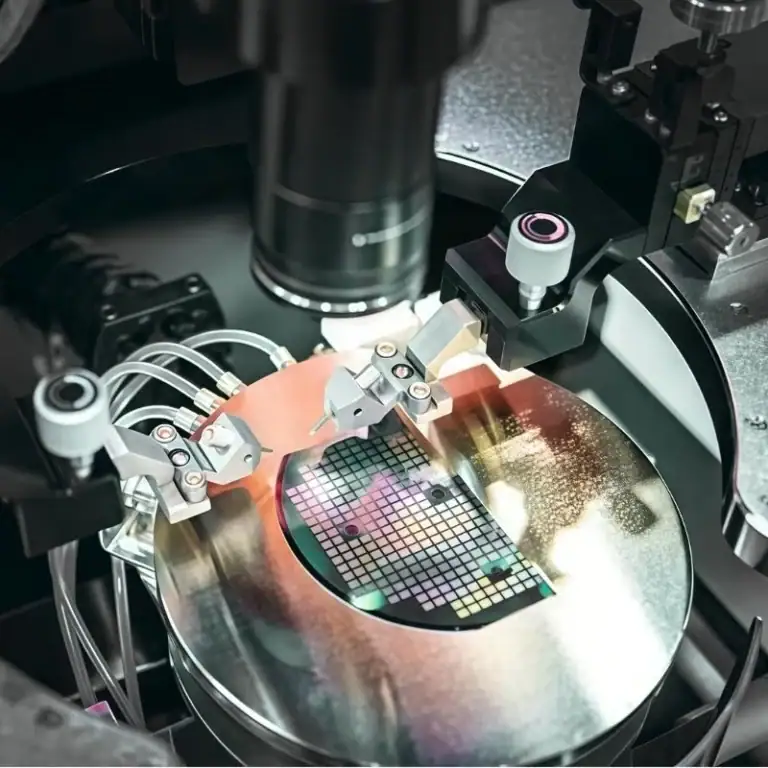
PEEK and ULTEM serve applications requiring higher temperature capability, mechanical strength, or electrical insulation, including components for aerospace, medical, electronics, and semiconductor equipment. ABS is useful for housings, fixtures, and prototype structures. PC combines transparency with impact performance, while PMMA is used for clear viewing windows and cosmetic parts. HDPE, UHMW-PE, PP, and PVC offer different combinations of chemical resistance, wear behavior, low weight, and environmental suitability for industrial equipment, conveying systems, and fluid-related components.
The dimensional stability of a plastic part depends on more than machine accuracy. Material condition, temperature, moisture absorption, internal stress, and wall-thickness changes also matter. During engineering review, TiRapid identifies thin walls, deep slots, transparent surfaces, precision bores, and distortion-sensitive areas. Tooling and workholding are selected for plastic machining to produce clean edges, stable dimensions, and a surface suitable for the application.
Metal-to-Plastic Fits Need One Dimensional Strategy
In a multi-material assembly, metal and plastic components are commonly joined through shaft-and-bore fits, threads, slots, fasteners, or insert structures. The two materials differ in stiffness, thermal expansion, and deformation under load. If each part is controlled only as an isolated component, the final assembly may still be too tight, loose, cracked, or unable to move smoothly.
A POM slide and stainless steel guide rail need a suitable running clearance. A plastic insulating mount fitted into an aluminum housing must balance location with compression. A transparent PMMA window attached to a metal frame needs protection from fastening stress that could cause cracking. A PTFE seal and metal groove must account for compression and material recovery.
TiRapid’s DFM review considers assembly datums, tolerance stacks, fastening methods, contact surfaces, and operating temperature. When one team coordinates the metal and plastic parts, dimensions can be allocated from the complete assembly rather than interpreted separately by two suppliers. This makes it easier to establish which side is the datum, which side carries the clearance, and how finishing affects the final dimensions.
Milling, Turning, and Five-Axis Machining Serve Different Geometries
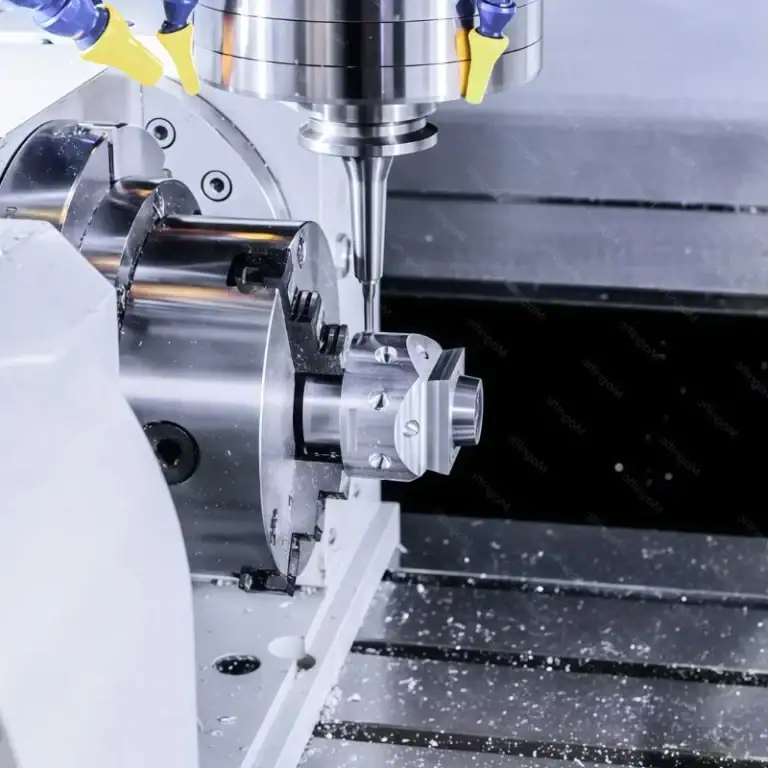
Three-axis CNC milling is suitable for plates, covers, housings, mounting blocks, and plastic functional parts with planar features. Four-axis equipment continuously machines cylindrical surfaces and several sides. Five-axis CNC machining supports complex contours, angled holes, deep cavities, and multi-face geometry. TiRapid has completed more than 30,000 five-axis projects and can machine metal and plastic parts up to 600 mm in length on five-axis equipment.
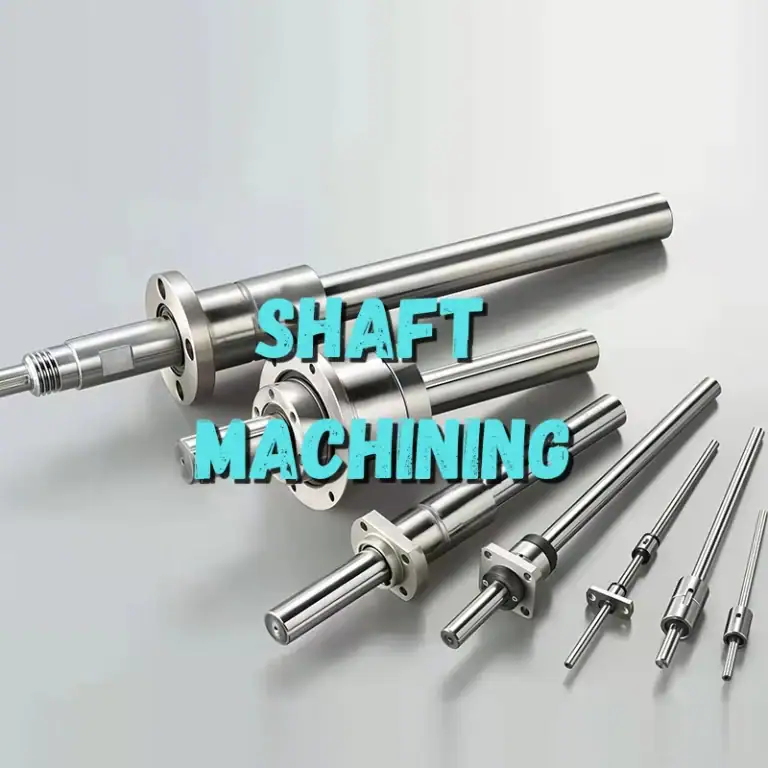
CNC turning produces rotational components such as shafts, sleeves, flanges, fittings, rollers, bushings, and sealing rings. TiRapid turns parts as small as 2 mm in stainless steel, aluminum, brass, POM, PEEK, PTFE, and other materials. Screw machining supports slender and compact parts requiring repeat production. Wire EDM serves narrow slots and intricate metal profiles, while micromachining extends the capability to miniature features.
For machine bases, long rails, large plates, and structural frames, TiRapid’s CNC milling capacity reaches 3,000 mm in length. This equipment range allows a small plastic bushing, a conventional metal bracket, and a large mounting base from the same project to be coordinated within one manufacturing system.
Prototyping the Material and Assembly Supports Product Development
Metal and plastic material choices often need physical validation. A sliding component may be compared in POM, nylon, and PTFE for friction and dimensional stability. A housing may be evaluated in aluminum and engineering plastic for weight, stiffness, and appearance. An insulating component may progress from a standard plastic prototype to a functional PEEK or ULTEM version.
TiRapid has no minimum order quantity for CNC machining, so a project can begin with one part or a small prototype batch, with lead times starting from three working days. Metal and plastic components can be made to the same assembly revision for dimensional, cosmetic, motion, sealing, and functional validation. Test results can then return to the 3D models, 2D drawings, and material decision so that the next iteration is based on the actual assembled product.
After the design is stable, the confirmed grades, machining datums, fit dimensions, finishes, and inspection requirements can carry into low-volume production. As plastic volumes grow, the project can evaluate a transition from CNC machining to injection molding. Metal housings or brackets can be assessed for sheet metal fabrication or stamping when the geometry supports it. The process may change with the production stage while part function and assembly datums remain continuous.
Surface Finishing Must Remain Consistent with Material Function and Fit
Metal and plastic components often need different protective and cosmetic finishes. Aluminum can be anodized or bead blasted. Stainless steel can be passivated, brushed, or polished. Steel can receive black oxide, plating, or powder coating. Copper and brass finishes can be selected for conductivity, soldering, or appearance. Plastic parts may retain their machined finish or receive polishing, painting, printing, or laser marking.
Finishing cannot be separated from assembly. An anodized layer may change the fit between a metal bore and plastic bushing. Powder coating must avoid grounding surfaces and precision mounting faces. Polishing a transparent plastic needs to preserve both optical appearance and dimensions. Laser marks need to stay clear of functional contact areas. TiRapid includes masking, color, texture, marking position, and coating effects in drawing and inspection requirements so that both material groups follow one functional and cosmetic logic in the final product.
ISO 9001 Quality Control Covers Different Inspection Priorities for Both Materials
TiRapid follows an ISO 9001 quality management system with incoming inspection, in-process checks, and final inspection. Metal parts typically require attention to hole locations, flatness, concentricity, threads, surface roughness, and finish condition. Plastic parts also require checks for warpage, burrs, edge chipping, transparent surfaces, stress marks, and material condition.
Coordinate measuring machines support complex geometry, hole positions, and geometric tolerances. Optical projectors are useful for miniature profiles. Micrometers, calipers, height gauges, plug gauges, and other instruments cover conventional dimensions and fit features. For a multi-material assembly, inspection can extend beyond the individual metal and plastic components to location, clearance, fastening, and motion in the actual assembly relationship.
TiRapid’s typical CNC machining tolerance can reach ±0.01 mm, with surface roughness down to Ra 0.6 μm. Precision is allocated according to part function, with critical mating dimensions receiving focused process and inspection control. This gives the metal and plastic components a clear, verifiable quality basis before assembly.
Why TiRapid Is Suited to Custom Metal and Plastic Parts
Sourcing metal and plastic parts together requires more than finding machines capable of cutting both. It requires a manufacturing team that understands how the two material groups behave and can manage their interfaces as one assembly. TiRapid supports more than 80 metal and plastic materials and combines 3-axis through 5-axis milling, turning, micromachining, large-part machining, and precision inspection. Its size range extends from 2 mm turned parts to 3,000 mm milled components.
Sixteen years of CNC machining experience, more than 30,000 completed five-axis projects, DFM engineering review, and an ISO 9001 quality system allow TiRapid to connect metal structures, plastic functions, finishing, and assembly requirements in one manufacturing plan. For robotics, automation equipment, medical devices, electronics, automotive development, and semiconductor equipment that depend on multi-material components, TiRapid can begin with prototype validation and continue into low-volume and subsequent production.