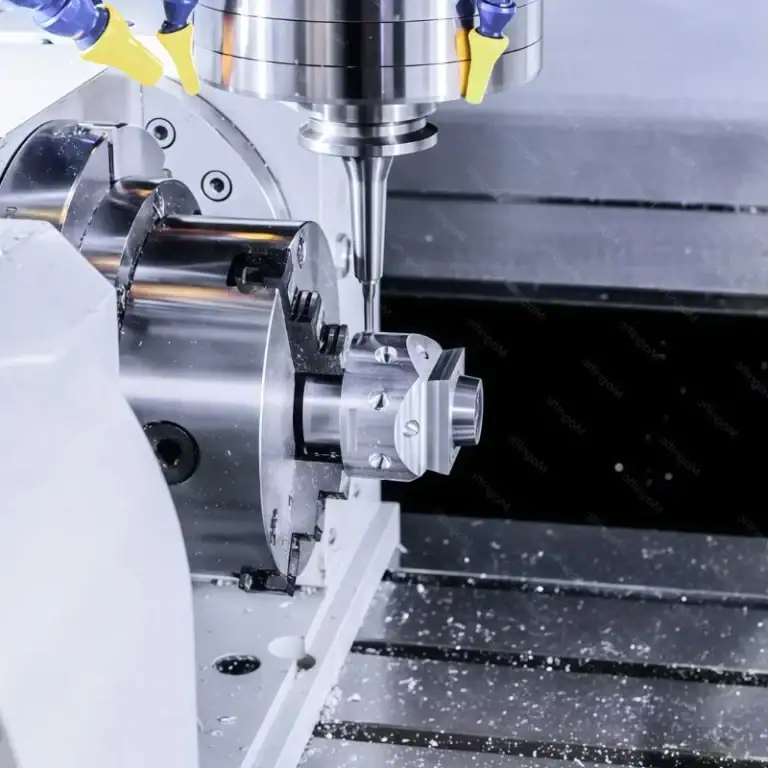
Copper parts are widely used in the machining industry and are commonly found in electronic components, valve fittings, communication equipment, automotive parts, and precision instruments. Compared with ordinary steel, copper materials have good thermal conductivity, strong plasticity, and relatively low cutting resistance, so many people believe copper machining is easy. However, during actual turning operations, improper parameter settings, unsuitable tools, or poor process control can still lead to burrs, built-up edge, unstable dimensions, and rough surface finish. Pure copper and red copper are usually more difficult to machine than brass. To improve copper machining quality, proper adjustment of tooling, cutting speed, chip evacuation, and surface control is necessary.
Material Characteristics of Copper Turning Machining
Different copper materials show different machining behaviors. Understanding material characteristics helps operators select suitable machining methods. Copper has excellent thermal conductivity, allowing cutting heat to dissipate quickly during machining, so tool temperatures are generally lower than during stainless steel machining. This helps reduce the risk of tool burning and supports higher cutting speeds. However, good heat conductivity does not guarantee stable machining. If cutting conditions are unstable, tool wear and surface problems may still occur.
High Plasticity of Copper Materials
Some copper materials, especially pure copper and red copper, have strong plasticity and are prone to deformation during cutting.
Common situations include:
- Continuous chips that are difficult to break
- Surface tearing on the workpiece
- Easy burr formation
- Material adhesion on the cutting tool
The stronger the plasticity, the more serious the chip evacuation problem usually becomes.
Copper Parts Are Easily Scratched
Copper surfaces are relatively soft, and if chips are not removed in time during machining, they may repeatedly rub against the workpiece surface.
Common problems include:
- Surface scratches
- Reduced surface finish quality
- Obvious machining marks
- Surface discoloration
Chip control is especially important during finishing operations.
Tool Selection Techniques for Copper Turning
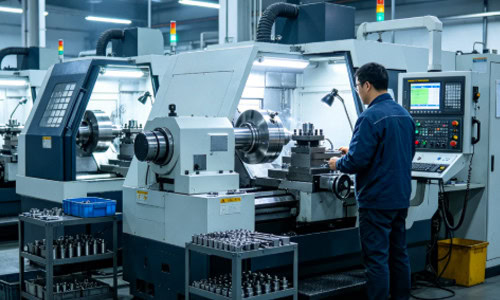
Tool condition directly affects copper machining quality. Although copper has relatively low cutting resistance, it requires very sharp cutting tools. If the tool becomes worn, surface fuzziness, burr formation, and dimensional fluctuation can easily occur. Therefore, copper machining usually requires maintaining sharp cutting edges while reducing friction between the tool and material.
Proper Rake Angle Selection
During copper machining, the rake angle is usually increased appropriately.
A larger rake angle can:
- Reduce cutting resistance
- Improve cutting smoothness
- Enhance chip evacuation
- Reduce material adhesion on the tool
However, an excessively large rake angle may reduce cutting edge strength.
Different Copper Materials Require Different Tools
Different copper materials require different tool types.
For example:
- Brass is suitable for high-speed machining
- Red copper requires highly sharp tools
- Beryllium copper requires wear-resistant tools
- Copper alloys require stable cutting edges
Improper tool selection can easily lead to dimensional instability and poor surface finish.
How to Adjust Cutting Parameters for Copper Turning
Although copper machining has relatively low cutting resistance, cutting parameters still need proper adjustment. Copper materials are generally suitable for relatively high cutting speeds. High-speed machining improves efficiency, enhances surface finish, and reduces built-up edge formation. However, machine stability must still be maintained during high-speed machining, otherwise vibration marks or dimensional errors may occur.
Feed Rate Should Not Be Too High
Copper surfaces are relatively soft, and excessive feed rate can easily leave visible tool marks on the surface.
This may result in:
- Rough surface finish
- Unstable dimensions
- Reduced machining accuracy
- Increased vibration marks
Finishing operations usually require lower feed rates.
Finishing Allowance Control
Finishing allowance for copper parts must be distributed properly.
If the allowance is too large:
- Cutting resistance increases
- Surface quality decreases
- Workpiece deformation becomes more likely
If the allowance is too small:
- Friction cutting may occur
- Uneven surface brightness may appear
- Dimensional correction becomes difficult
Reasonable allowance improves machining stability.
Chip Evacuation and Cooling in Copper Machining
Many copper machining problems are not caused by the cutting tool itself, but by poor chip evacuation and cooling control. During copper machining, if chips wrap around the tool, they can repeatedly rub against the workpiece surface, causing scratches, tearing, and obvious machining marks. Therefore, chips must be removed efficiently to prevent copper chips from remaining in the cutting area for too long.
Stable Coolant Usage
Although copper materials conduct heat well, coolant remains very important.
Effective cooling can:
- Reduce tool friction
- Lower the risk of built-up edge
- Improve surface quality
- Increase dimensional stability
Stable cooling is especially important during continuous machining.
Dry Cutting Is Not Suitable for All Copper Materials
Some brass materials can be machined using dry cutting, but pure copper and red copper are more likely to stick to the tool.
If cooling is insufficient:
- Built-up edge may form easily
- Surface discoloration may appear
- Surface finish quality decreases
Cooling methods should therefore be selected according to material type.
How to Improve Surface Quality in Copper Turning
Surface quality directly affects product appearance and performance, so finishing operations require greater stability. Once cutting tools become worn, copper surfaces become rougher, while deeper tool marks and increased burr formation may also occur. Regular inspection of tool condition is therefore necessary. Although copper cutting force is relatively low, insufficient machine rigidity may still cause vibration marks, so clamping stability and shorter tool overhang are also important.
Avoid Repeated Cutting During Finishing
Copper surfaces are relatively soft, and repeated cutting passes can easily create uneven surface appearance.
During finishing operations:
- Try to complete the surface in one pass
- Avoid repeated idle cutting
- Reduce unnecessary tool pauses
- Maintain stable tool movement
These methods help achieve a smoother and more uniform surface finish.
How to Maintain Stability in Copper Turning Machining
Stable cutting conditions have a major influence on dimensional accuracy and surface quality during copper machining. If spindle speed fluctuates significantly or tool clamping becomes unstable, vibration marks and dimensional errors can easily appear on the workpiece surface. Stable and continuous cutting reduces tool impact and lowers the risk of surface tearing.
Machining parameters should also be adjusted according to different copper materials. Brass is suitable for higher cutting speeds, while pure copper requires greater attention to tool sharpness and cooling conditions. During batch production, tool wear should be checked regularly to avoid unstable product quality caused by dull cutting edges.