As a longtime manufacturer, I’m often asked by clients: What is insert molding? Insert-molded parts not only combine the strength of metal with the lightweight of plastic, but also reduce the number of complex assembly steps, improving reliability and appearance consistency.
In this article, I’ll provide an in-depth understanding of insert molding’s core principles, applications, and the advantages it brings to manufacturing. I hope to help you quickly understand why it’s becoming a key technology in modern manufacturing.
What Is Insert Molding?
Insert molding is a manufacturing process in which metal or other insert components are placed into a mold before plastic injection. During molding, the plastic flows around these inserts and forms a single integrated part. In simple terms, parts such as nuts, pins, bushings, or connectors are fixed inside the mold first, and then bonded with plastic during the molding cycle. This helps reduce or eliminate later assembly steps.
The core idea of insert molding is to combine different materials in one product, most often metal and plastic. This allows the final part to use the strengths of both materials at the same time. Metal can provide strength, thread retention, conductivity, or wear resistance, while plastic can reduce weight, improve insulation, and support more complex shapes. Because of this, insert molding is often chosen for parts that need both structural performance and design efficiency.
Common examples include metal nut inserts in automotive and mechanical parts, conductive pins in electronic connectors, and hybrid parts in medical devices. In these applications, insert molding helps improve part integration and production consistency. It can also reduce labor, lower assembly errors, and improve the reliability of the finished product. As demand grows for lighter and more integrated components, insert molding is becoming increasingly important in modern manufacturing.
Key Points Of Design And Process Of Insert Molding
In actual insert molding production, the process involves much more than simply placing a metal insert into a mold and injecting plastic around it. To achieve stable quality, reliable bonding, and consistent finished parts, insert design, mold positioning, plastic flow, and overall process control all need to be carefully managed throughout production.
Insert Design Requirements
The insert itself must be designed for both bonding stability and manufacturing practicality. Its surface should be clean and protected against rust or contamination, because poor surface condition can reduce bonding quality between the insert and the plastic. The insert design should also help prevent movement during molding, for example through positioning grooves, knurled textures, or other retention features. At the same time, the geometry must allow molten plastic to flow and fill smoothly around the insert, so that voids, bubbles, or unfilled gaps can be avoided.
Mold Design
The mold must be able to hold the insert securely and accurately throughout the injection process. This usually requires dedicated positioning features, support structures, or fixtures to keep the insert stable when the mold closes and plastic is injected. For mass production, mold design also needs to consider runner layout and cooling efficiency. A well-optimized mold can improve cycle time, reduce variation, and support more stable part quality in repeated production.
Shrinkage And Tolerance Control
Like other injection molded plastics, insert molded parts are affected by material shrinkage after molding. This means dimensional change must be considered during both part design and mold design. Depending on the material and product requirements, dimensional control may need to stay within a range such as ±0.05 mm to ±0.005 mm for higher-precision applications. Careful shrinkage prediction and tolerance planning are especially important when the finished part must meet strict assembly or functional requirements.
Automation And Robotic Insert Placement
In mass production, automated insert placement can significantly improve both efficiency and consistency. Robotic systems can position inserts more accurately and repeatedly than manual handling, which helps reduce variation and lower the risk of human error. This is particularly valuable in applications such as electronic connectors, automotive parts, and other products where insert location and assembly precision directly affect final performance.
Insert Molding Process
Insert molding is a widely used manufacturing process that combines metal or other inserts with plastic in a single molding step. Compared with secondary assembly, it can improve part strength, reduce assembly steps, lower production cost, and shorten manufacturing time. Because of these advantages, it is widely used in industries such as automotive, electronics, medical devices, and aerospace.
Insert Molding In Injection Molding
In injection molding, insert molding follows a clear and efficient process. Before molding begins, metal parts or other non-plastic inserts must be prepared in advance. This usually includes cleaning, rust protection, and accurate positioning so the insert can bond securely with the plastic during molding.
Depending on production volume and precision requirements, inserts can be placed manually or by robotic systems. Automated placement is often preferred in mass production because it improves consistency, reduces variation, and helps maintain stable cycle times.
Once the inserts are fixed in place, molten thermoplastic is injected into the mold cavity under pressure. The plastic quickly fills the cavity and flows around the insert, forming an integrated structure. After cooling and solidification, the mold opens and the finished part is removed.
This method is widely used for nut inserts in plastic parts, conductive terminals in electronic connectors, and medical components that require cleanliness and corrosion resistance. Because of its efficiency and repeatability, insert molding is often a preferred solution for high-volume production.
The Role Of CNC Machining In Insert Molding
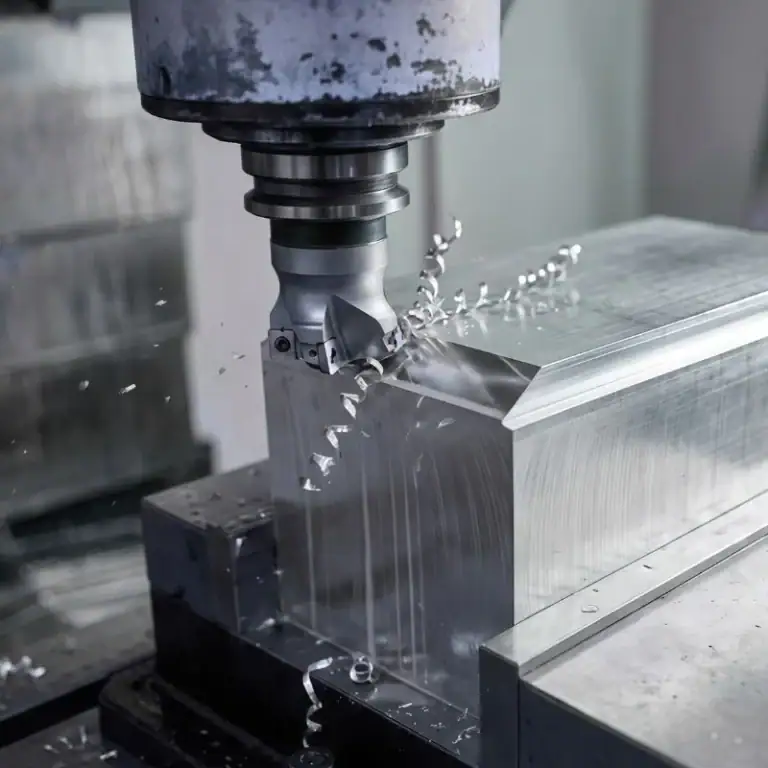
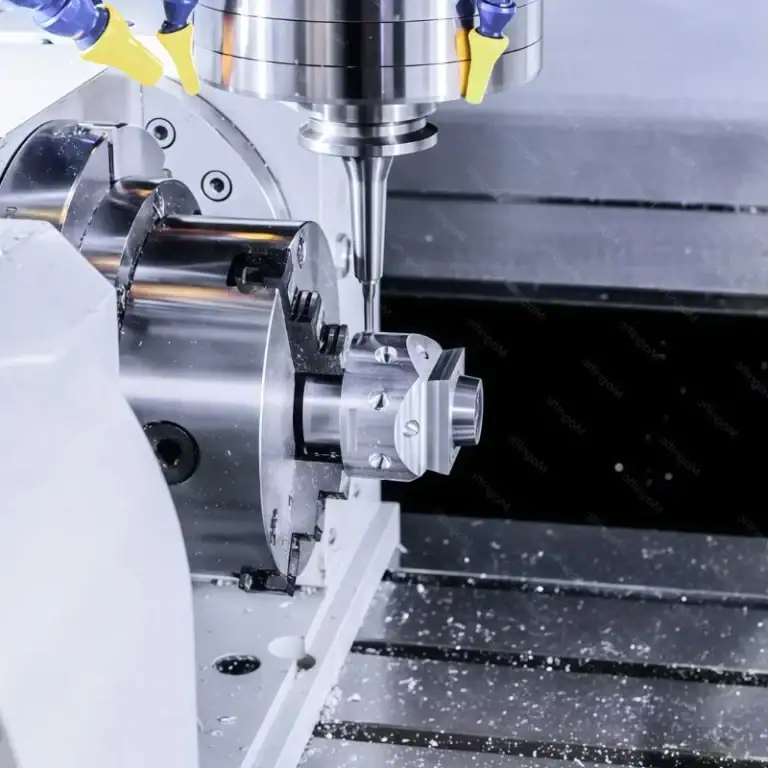
Although insert molding is mainly based on injection molding, CNC machining is also important in both the front-end and back-end of the process. Many inserts must first be produced by CNC turning or milling to achieve the dimensional accuracy required for proper integration with plastic.
Typical examples include stainless steel nuts, brass contacts, and aluminum heat sinks. These parts often require tight tolerances, so CNC machining helps ensure they fit correctly in the mold and perform reliably in the final product.
CNC machining is also essential in mold manufacturing. Mold cavities are commonly made through CNC milling, often combined with EDM, so that complex surfaces and small details can be produced with high precision.
In some projects, molded parts also require secondary machining after demolding. This may include removing excess material, drilling small holes, or adding slots and assembly features. These finishing steps help the final part meet stricter functional or assembly requirements.
Insert Molding As A Combined Manufacturing Solution
For this reason, insert molding is best seen as a combined manufacturing solution rather than a single process. Injection molding provides efficient material encapsulation and supports large-scale production, while CNC machining ensures insert accuracy, mold precision, and necessary post-processing.
The two methods work together to meet both structural and dimensional requirements. Overall, insert molding combines the efficiency of molding with the precision of machining, making it a strong option for products that require lightweight design, reliable strength, and integrated functionality.
What Are the Common Materials for Insert Molding?
Insert molding combines inserts and plastic in one process to create strong, integrated parts while reducing assembly steps. In actual production, material selection usually involves two categories: insert materials and plastic matrix materials. The following table shows common material options and their main characteristics.
| Classification | Material | Features | Common Applications |
| Insert materials | Stainless Steel | High strength, corrosion resistance, high temperature resistance | Medical devices, structural parts, electronic connectors |
| Copper | Excellent electrical and thermal conductivity | Electrical components and connectors | |
| Brass | Easy to process, good wear resistance, high cost performance | Fasteners, valves, electronic connectors | |
| Aluminum | Lightweight, corrosion-resistant, moderate strength | Auto parts, electronic housings, aviation components | |
| Ceramic | High temperature resistance, wear resistance, electrical insulation | Sensors, medical, electronic insulation components | |
| Electronic Components | Function integration and enhanced intelligence | Sensor chips, connectors | |
| Plastics | ABS | Easy to form, impact resistant, low cost | Automotive interiors, consumer electronics |
| PBT | Chemical resistance and good electrical properties | Automotive electronic control, electronic connectors | |
| PC | High strength, transparent, impact resistant | Medical devices, optical parts | |
| PEEK | High temperature resistance, corrosion resistance, excellent performance | Aerospace, medical implants | |
| Nylon (PA6, PA66+GF) | High strength, wear resistance, and dimensional stability | Auto parts, mechanical parts | |
| LCP (Liquid Crystal Polymer) | High fluidity, high temperature resistance, electrical insulation | Electronic connectors, micro-structures |
The advantages of insert molding lie not only in the molding process itself but also in the choice of materials. The metal insert typically provides strength, conductivity, or wear resistance, while the plastic matrix offers lightweighting, insulation, and design flexibility. This combination makes insert molding an ideal solution for manufacturing high-performance parts across a wide range of industries.
Advantages Of Insert Molding
In modern manufacturing, insert molding, with its unique process advantages, has become a common solution in industries such as automotive, electronics, medical, and aerospace. Compared to traditional separate processing and secondary assembly, insert molding efficiently combines multiple materials in a single process, improving product performance while optimizing production efficiency and design.
Improved Strength and Reliability
Insert molding combines metal and plastic in a single molding step, which helps create a more stable and integrated structure than traditional secondary assembly. Because the insert is fixed directly inside the molded part, the risk of loosening, shifting, or misalignment is reduced. This improves both mechanical strength and long-term reliability, especially in products that must withstand repeated use, vibration, or assembly stress.
Lightweight Design
Insert molding also supports lightweight design by replacing part of a full-metal structure with plastic. This reduces total part weight while still preserving the strength or functionality provided by the insert. It is especially valuable in industries such as automotive, drones, and consumer electronics, where lighter components can improve efficiency, portability, or energy performance.
Lower Assembly Cost
Because the insert and plastic part are formed into one integrated component during molding, many secondary assembly steps can be removed. This helps reduce labor cost, shorten production time, and lower the chance of assembly-related errors. In mass production, this advantage can make insert molding a highly efficient and cost-effective solution.
High Design Freedom
Insert molding gives designers more flexibility to combine multiple functions within a limited space. Features such as electrical conductivity, threaded fastening, wear resistance, or heat dissipation can be integrated directly into the molded part through the insert. This helps reduce part count, save space, and improve overall product functionality.
Better Appearance and Safety
Because metal inserts can be fully enclosed within plastic, the final part often has a cleaner and more refined appearance. At the same time, covering sharp edges or exposed metal can improve user safety and reduce risks related to loose or partially exposed components. This makes insert molding especially useful in consumer-facing products and precision assemblies.
Limitations And Challenges Of Insert Molding
While insert molding offers significant advantages in structural strength, lightweight design, and production efficiency, it is not without limitations. In practical applications, the process places higher demands on insert precision, material matching, and mold design, while also presenting challenges in terms of cost and production flexibility. Understanding these limitations can help engineers make more informed trade-offs when selecting designs and processes.
| Challenges | illustrate | Typical impact |
| High requirements for insert alignment accuracy | If the insert is not positioned correctly in the mold, it will cause uneven plastic coating or the finished product to be scrapped. | Increase scrap rate and affect batch consistency |
| Thermal expansion differences | Metals and plastics have different coefficients of thermal expansion, which may cause stress or deformation after cooling | Affects the dimensional accuracy and long-term stability of the finished product |
| High cost | Compared with traditional injection molding, it requires special molds and additional processes such as CNC insert processing and mold positioning. | Higher initial mold investment and production costs |
| Process complexity | Comprehensive process involving injection molding + insert positioning + mold design | Higher requirements for factory automation level and technical personnel |
| Limited scope of application | Not all parts are suitable for insert molding, such as those that are subject to excessive force or require extremely lightweight structures. | It is necessary to judge whether to adopt it in combination with the specific application scenario. |
The Difference Between Insert Molding And Overmolding
In the field of plastic injection molding, insert molding and overmolding are two common and often confused processes. While both utilize the injection molding process to combine different materials, they differ significantly in the process steps, applicable materials, and end applications. Understanding the differences between the two helps designers and manufacturers choose the most appropriate production method based on their specific needs, achieving the optimal balance between performance and cost.
| Comparison Dimension | Insert Molding | Overmolding |
| Craftsmanship | The metal or non-plastic insert (such as nuts, electronic components) is placed in the mold cavity, and then the plastic is injected to wrap it, completing the molding in one step. | First, a plastic matrix is formed, and then another plastic is secondary-injected on its surface to achieve the combination of plastic + plastic. |
| application | Commonly used in nut inserts, electronic connectors, medical devices and other products that require structural strength and electrical performance. | Commonly found in tool handles, electronic housings, and consumer products (such as toothbrush handles), they enhance comfort, slip resistance, and appearance. |
| Material | The typical combination is “metal + plastic”, which can also include ceramic + plastic. | Typical combinations are “hard plastic + soft plastic” or “between different plastics”. |
| cost | Relatively low, suitable for mass production, reducing secondary assembly costs. | The cost is slightly higher and requires multiple injection moldings, but it can enhance product added value and user experience. |
Insert molding emphasizes structural strength and functionality and is suitable for engineering and industrial parts . Overmolding, on the other hand, focuses on comfort, aesthetics, and user experience and is commonly found in consumer products and handheld devices. Each has its advantages, and the choice of process depends on the product’s end-use application .
What Industries Commonly Use Insert Molding?
Insert molding is widely used because it combines structural strength, design flexibility, and production efficiency in one process. By integrating metal or other inserts with plastic during molding, it helps create parts that are lighter, stronger, and more functional. Because of these advantages, insert molding is used across many industries, from consumer products to high-performance equipment.
Automotive
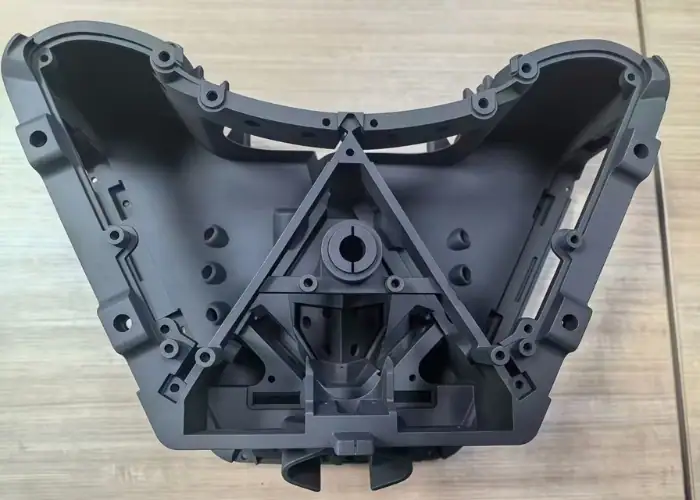
In the automotive industry, insert molding is commonly used for sensors, electronic connectors, gears, nuts, and other functional components. These parts are widely applied in engine systems, vehicle electronics, and safety-related assemblies, where reliable performance and long-term durability are important.
Industrial Equipment
In industrial equipment, insert molding is often used for motor housings, control components, handles, switches, and structural support parts. It helps improve part integration, reduce assembly steps, and increase durability in equipment that operates under repeated mechanical loads.
Medical
In medical applications, insert molding is used for surgical instruments, syringe accessories, medical plugs, and other precision parts. It helps meet the high requirements for cleanliness, corrosion resistance, and dimensional accuracy, which are critical for safety and stability in medical environments.
Aerospace
In aerospace applications, insert molding is used for lightweight electronic connectors and structural parts that require both strength and weight reduction. These components help aircraft and aerospace equipment achieve lighter designs while maintaining reliable mechanical and electrical performance.
Automation
In automation systems, insert molding is commonly used for sensor housings, actuator components, cable connectors, positioning parts, and custom machine assemblies. It is especially useful where compact design, part consistency, and assembly efficiency are important.
Electronics
In the electronics industry, insert molding is often used for USB interfaces, plugs, power modules, terminals, and similar components. It improves electrical performance, connection stability, and part integration, making it a common choice for consumer electronics and communication equipment.
Robotics
In robotics, insert molding is used for connector housings, cable interfaces, sensor mounts, lightweight covers, and structural support parts. It helps combine strength, insulation, and dimensional consistency in compact assemblies that require repeated motion and long-term reliability.
FAQs
How Does Insert Molding Work?
Insert Molding Combines Metal Or Other Inserts With Molten Plastic In A Single Injection Cycle. I First Prepare The Inserts By Cleaning And Positioning Them, Then Place Them Into The Mold Cavity. Heated Plastic At 220–280°C Flows Around The Inserts Under High Pressure, Creating A Strong Bond. After Cooling For About 30–60 Seconds, The Mold Opens And A Finished One-Piece Part With ±0.05 mm Accuracy Is Released.
What Is The Difference Between Over Molding And Insert Molding?
Insert Molding Uses Pre-Manufactured Inserts Like Metal Nuts Or Pins, Which I Place Into The Mold Before Plastic Injection. Over Molding, By Contrast, Involves Molding One Plastic Layer Over Another, Often Soft TPE Over Rigid ABS Or PC. Insert Molding Reduces Secondary Assembly, While Over Molding Improves Grip, Aesthetics, And Comfort. Typically, Insert Molding Handles ±0.05 mm Tolerance, While Over Molding Focuses On Ergonomic Performance.
What Are The Four Types Of Molding?
In Manufacturing, I Commonly Work With Four Key Types: Injection Molding, Compression Molding, Blow Molding, And Rotational Molding. Injection Molding Handles High-Volume Plastic Parts With ±0.05 mm Precision. Compression Molding Shapes Thermoset Plastics Like Rubber Under High Pressure. Blow Molding Creates Hollow Parts Such As Bottles. Rotational Molding Uses Heated Molds Rotated At Multiple Axes To Form Large Hollow Parts. Each Offers Distinct Cost, Tolerance, And Application Profiles.
Does Your Part Require Overmolding Or Inserts?
I Decide Based On Function, Volume, And Material. If The Part Requires Electrical Conductivity, Threads, Or Structural Reinforcement, Insert Molding With Brass, Steel, Or Aluminum Inserts Is Best. If The Part Needs Comfort, Anti-Slip, Or Aesthetic Enhancements, Overmolding With Soft TPE Or TPU Is Ideal. In Prototyping Runs, Inserts Save Assembly Costs; In Consumer Products, Overmolding Boosts Ergonomics. The Right Choice Can Cut Costs By 20–30% While Enhancing Usability.
Conclusion
Insert molding combines metal strength with plastic flexibility in one part. It helps create components that are lighter, stronger, and easier to assemble. As manufacturing moves toward higher efficiency and better integration, insert molding is becoming even more valuable across many industries.
At TiRapid, we support insert molding projects with custom manufacturing solutions from prototype to production, helping customers achieve reliable part performance, stable quality, and efficient delivery.