PEEK vs PTFE is a common material comparison because both plastics are used in demanding engineering environments, but they solve different problems. PEEK is usually selected for strength, stiffness, wear resistance, and dimensional stability, while PTFE is chosen for chemical resistance, low friction, electrical insulation, and sealing performance.
In this guide, we compare PEEK vs PTFE by material properties, temperature resistance, mechanical strength, friction, chemical resistance, machinability, cost, and applications.
What Is PEEK?
PEEK is a high-performance thermoplastic known for high strength, heat resistance, wear resistance, and excellent dimensional stability. Its full name is polyether ether ketone, and it is commonly used when a plastic part must perform close to metal-like conditions while keeping the benefits of lower weight, corrosion resistance, and electrical insulation.
PEEK material properties make it suitable for demanding industries such as aerospace, medical devices, semiconductor equipment, oil and gas, automotive systems, and industrial machinery. It is often used for parts that must resist load, friction, repeated movement, heat, or long-term mechanical stress.
Compared with PTFE, PEEK is much stiffer and more stable under load. It is not as chemically inert as PTFE, but it provides a better balance of strength, machinability, creep resistance, and dimensional control for structural engineering parts.
Key Properties of PEEK
The key properties of PEEK are high tensile strength, high stiffness, good wear resistance, strong creep resistance, and stable performance at elevated temperatures. These properties make PEEK a practical choice for components that cannot deform easily during use.
Common advantages of PEEK include:
- High mechanical strength
- Good dimensional stability
- Excellent wear resistance
- Strong creep resistance
- Good chemical resistance
- Good electrical insulation
- Suitable for CNC machining
- Useful for metal replacement in selected parts
PEEK temperature range and peek temp rating are important in engineering design, but temperature alone should not decide the material. The bigger advantage of PEEK is that it keeps useful mechanical strength and shape stability under heat better than many engineering plastics.
What Is PTFE?
PTFE is a fluoropolymer known for exceptional chemical resistance, extremely low friction, non-stick behavior, and excellent electrical insulation. Its full name is polytetrafluoroethylene, and it is widely known under the trade name Teflon.
PTFE is often selected when a component must work in corrosive chemicals, low-friction sliding conditions, electrical insulation environments, or sealing applications. It is commonly used for gaskets, seals, valve seats, liners, tubing, washers, bearing pads, and insulating parts.
Compared with PEEK, PTFE is softer, more flexible, and more chemically inert. However, it has lower mechanical strength and is more prone to creep or cold flow under sustained load.
Key Properties of PTFE
The key properties of PTFE are excellent chemical resistance, very low coefficient of friction, strong dielectric performance, wide temperature capability, and non-stick surface behavior. These properties make PTFE one of the most useful materials for sealing and chemical contact applications.
Common advantages of PTFE include:
- Excellent chemical inertness
- Very low friction
- Good non-stick behavior
- Excellent electrical insulation
- Good high and low temperature capability
- Good sealing performance
- Suitable for gaskets and valve seats
- Useful in chemical processing and semiconductor systems
PTFE is not chosen mainly for strength. It is chosen because it can survive aggressive media, reduce friction, and provide reliable sealing where many other plastics would react, stick, or degrade.
PEEK vs PTFE: Quick Comparison
PEEK vs PTFE can be summarized as strength versus chemical inertness. PEEK provides higher mechanical strength, better rigidity, and stronger wear resistance. PTFE provides better chemical resistance, lower friction, and better non-stick performance.
| Property Focus | PEEK | PTFE |
| Main advantage | Strength and stability | Chemical resistance and low friction |
| Mechanical strength | High | Low to moderate |
| Stiffness | High | Low |
| Chemical resistance | Good | Excellent |
| Friction | Low to moderate | Extremely low |
| Wear resistance | Excellent | Good in low-load use, better with fillers |
| Dimensional stability | Better | Lower under load |
| Machinability | Good for tight tolerances | More difficult for tight tolerances |
| Cost | Higher | Usually lower |
| Best use | Structural and high-load parts | Seals, gaskets, liners, and low-friction parts |
Strength vs Chemical Inertness
The main difference between PEEK and PTFE is that PEEK is stronger, while PTFE is more chemically inert. PEEK is better for structural parts that must resist load and deformation. PTFE is better for parts exposed to aggressive chemicals or requiring very low friction.
This is the most important selection logic. If the part fails because it bends, creeps, or wears under load, PEEK is usually the better option. If the part fails because of chemical attack, sticking, or sealing issues, PTFE is usually safer.
High-Temperature Resistance
Both PEEK and PTFE can work in high-temperature environments, but they behave differently under heat. PTFE has excellent temperature capability and can remain useful across a wide temperature range, but it may deform more easily under pressure at high temperature.
PEEK usually maintains better stiffness and mechanical stability when heat and load occur together. For parts that only need chemical resistance at high temperature, PTFE may work well. For parts that must also carry load, PEEK is often more reliable.
Friction and Wear Resistance
PTFE has one of the lowest friction levels among solid materials, making it excellent for sliding, non-stick, and self-lubricating applications. It is widely used when lubrication is difficult or when a surface must release easily.
PEEK does not have friction as low as PTFE, but it has better wear resistance under higher load. For gears, bushings, bearings, and sliding parts under mechanical stress, PEEK may last longer because it resists deformation and abrasion better.
Chemical Resistance
PTFE has the advantage in chemical resistance because it is nearly inert to many strong acids, bases, solvents, and aggressive chemicals. This makes it a preferred material for chemical processing, semiconductor wet process systems, gaskets, and liners.
PEEK has strong chemical resistance for many industrial environments, but it is not as universal as PTFE. In a peek vs ptfe chemical resistance comparison, PTFE is usually better for aggressive chemical exposure, while PEEK is better when strength and stability must also be maintained.
Dimensional Stability
PEEK has better dimensional stability than PTFE because it is much stiffer and has stronger creep resistance. It holds shape better under load, pressure, and machining stress.
PTFE can move, compress, or creep under sustained pressure. This does not make PTFE a poor material, it simply means it must be designed correctly. For seals and gaskets, controlled deformation can be useful. For precision structural parts, it can be a problem.
Cost Difference
PEEK is usually more expensive than PTFE because it is a higher-strength specialty polymer with more demanding processing and material production requirements. However, higher material cost does not always mean higher total project cost.
If PEEK reduces wear, deformation, downtime, or replacement frequency, it may lower lifecycle cost in demanding applications. If the part mainly needs chemical resistance, sealing, or low friction, PTFE may be more cost-effective.
PEEK vs PTFE: Mechanical Properties Comparison
PEEK has better mechanical properties than PTFE in strength, rigidity, creep resistance, and load-bearing performance. PTFE is softer and more flexible, which is useful for sealing and low-friction movement but less suitable for structural loads.
A practical ptfe vs peek material comparison should begin with the load condition. If the part supports weight, pressure, or repeated mechanical force, PEEK is usually safer. If the part must seal, slide, or resist chemicals without high load, PTFE may be better.
Tensile Strength and Rigidity
PEEK has much higher tensile strength and rigidity than PTFE. This means PEEK can resist pulling, bending, and mechanical deformation better. It is commonly used for parts that must behave like structural components.
PTFE has lower tensile strength and lower stiffness, but it has high flexibility. This makes it useful for gaskets, seals, and soft-contact parts where conformability is more important than rigid strength.
Wear Resistance and Load-Bearing Performance
PEEK provides better wear resistance when the part is exposed to high load, repeated motion, or abrasive contact. It is often used for bearings, bushings, gears, pump parts, and valve components that must operate under mechanical stress.
PTFE provides excellent low-friction behavior, but virgin PTFE can wear faster under heavy load. Filled PTFE grades may improve wear performance, but for high-load structural movement, PEEK often remains the stronger choice.
Deformation and Creep Resistance
PEEK has stronger creep resistance than PTFE, which means it is less likely to deform permanently under long-term pressure. This is important for tight-tolerance assemblies and load-bearing parts.
PTFE is more prone to creep or cold flow. In sealing applications, some deformation can help create a seal. In precision mechanical parts, excessive deformation can lead to leakage, misalignment, or tolerance loss.
PEEK vs PTFE: Thermal Performance Comparison
PEEK and PTFE both offer high-temperature performance, but PEEK usually maintains mechanical strength better under heat and load. PTFE offers excellent temperature resistance, but it becomes less dimensionally stable when pressure is added.
For a peek vs ptfe temperature comparison, the real question is not only maximum temperature. Engineers should ask whether the part must carry load, hold tolerance, seal, slide, or stay rigid at that temperature.
Temperature Resistance
Both PEEK and PTFE can operate at elevated temperatures that exceed many common engineering plastics. PTFE has excellent high and low temperature capability, while PEEK provides strong structural stability at high temperature.
If the part is exposed mainly to heat and chemicals, PTFE may be suitable. If the part is exposed to heat plus mechanical stress, PEEK is usually better because it keeps shape and stiffness more effectively.
Heat Stability Under Load
PEEK has better heat stability under load because it resists creep and maintains rigidity. This makes it useful for high-temperature bearings, valve seats, support parts, and precision components.
PTFE can handle heat, but under pressure it may deform more easily. For high-temperature sealing, this may be acceptable or even useful. For load-bearing components, it can create performance risk.
Performance in High-Temperature Environments
In high-temperature environments, PEEK is often used where dimensional accuracy and mechanical performance are critical. It can maintain functional strength in conditions where softer plastics may lose shape.
PTFE is often used where high temperature combines with chemical exposure or low-friction requirements. It is suitable for seals, gaskets, liners, and insulation parts where mechanical loads are controlled.
Chemical Resistance Comparison
PTFE has better overall chemical resistance than PEEK, especially in aggressive acid, base, solvent, and corrosive environments. PEEK has good chemical resistance, but it is not as universally inert as PTFE.
When PTFE Has the Advantage
PTFE has the advantage when the part contacts strong acids, aggressive chemicals, high-purity fluids, or unknown chemical mixtures. It is one of the most chemically inert engineering plastics available.
This makes PTFE suitable for chemical gaskets, valve seats, liners, tubing, semiconductor chemical delivery parts, and corrosion-resistant seals. If chemical compatibility is the main risk, PTFE is often the safer starting point.
When PEEK Is Suitable
PEEK is suitable when the chemical environment is demanding but not beyond its compatibility range. It works well with many oils, fuels, hydrocarbons, steam, and industrial fluids while also providing strong mechanical performance.
PEEK becomes more attractive when the part must resist both chemicals and load. For example, a pump component, backup ring, or high-pressure valve part may need more rigidity than PTFE can provide.
Chemical Compatibility Selection Tips
Chemical compatibility should be confirmed before choosing either material. Designers should check the exact chemical, concentration, operating temperature, pressure, cleaning method, and exposure duration.
A good selection process should compare chemical resistance with mechanical requirements. PTFE may win on chemical resistance, but PEEK may be better if the part also needs high strength, wear resistance, or dimensional stability.
PEEK vs PTFE: Friction and Wear Performance
PTFE is better for ultra-low friction, while PEEK is better for wear resistance under load. This is one of the clearest differences in the PEEK vs PTFE comparison.
For sliding parts, the correct choice depends on the type of contact. PTFE works well for low-friction surfaces and soft sealing contact. PEEK works better where pressure, speed, wear life, and dimensional control are more important.
Low-Friction Performance of PTFE
PTFE provides extremely low friction and self-lubricating behavior. This makes it useful for slide plates, seals, gaskets, low-load bearings, liners, and non-stick surfaces.
It can reduce sticking and help moving parts operate without added lubricant. However, PTFE softness must be considered because low friction does not always mean high wear resistance under load.
Wear Resistance and Strength of PEEK
PEEK provides excellent wear resistance because it combines strength, stiffness, and thermal stability. It is often selected for bushings, bearings, gears, valve seats, and pump components that experience repeated movement.
For applications with higher pressure or abrasive contact, PEEK can outperform PTFE because it resists deformation and material loss better. Filled PEEK grades can further improve wear behavior in specific designs.
Seals, Bearings, and Sliding Components
For seals, PTFE is often preferred because it can conform to surfaces, resist chemicals, and reduce friction. For bearings and sliding components under heavier load, PEEK is often preferred because it offers better wear life and dimensional control.
In ptfe vs peek seats, PTFE is a strong choice for chemical sealing and low-friction valve movement. PEEK is a better choice when the seat must handle higher pressure, temperature, or mechanical stress.
PEEK vs PTFE: Machinability and Fabrication
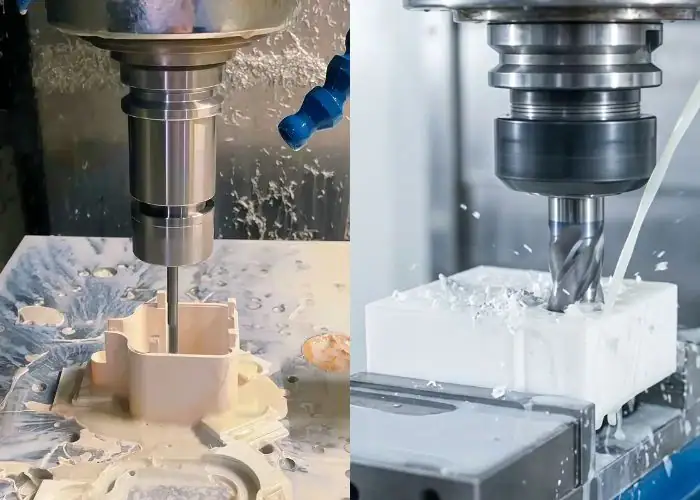
PEEK is generally easier to machine to tight tolerances, while PTFE requires more care because it is soft and dimensionally sensitive. Both materials can be CNC machined, but they need different tooling, fixturing, and inspection strategies.
CNC Machining PEEK
CNC machining PEEK is practical for precision components, especially when the design requires accurate holes, threads, slots, flat surfaces, and complex features. Because PEEK has higher stiffness than PTFE, it stays more stable during cutting and is easier to control in tight-tolerance machining.
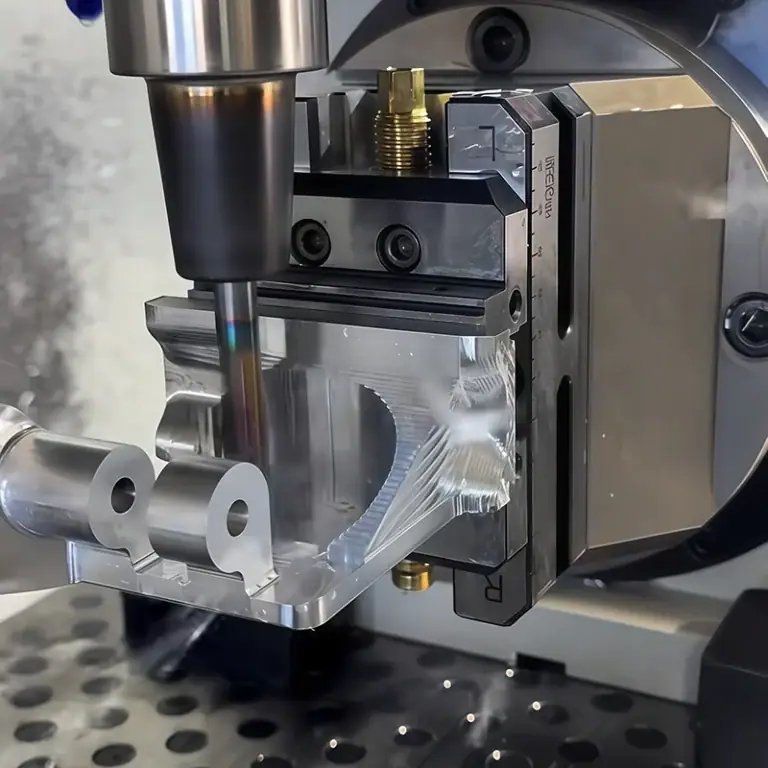
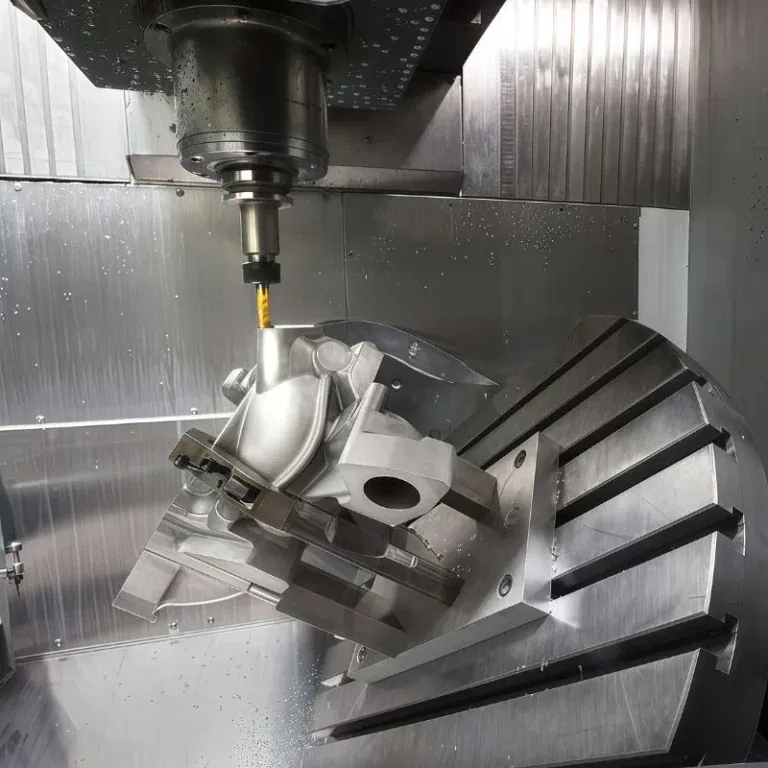
PEEK can be processed by CNC milling, CNC turning, drilling, tapping, boring, and contour machining. CNC milling is commonly used for plates, brackets, housings, pockets, slots, and complex 3-axis or 5-axis geometries. CNC turning is suitable for round parts such as bushings, sleeves, rings, valve seats, spacers, and threaded components.
Machining PEEK still requires proper heat control, sharp cutting tools, and suitable feeds and speeds. Excessive cutting heat may cause internal stress, burrs, or dimensional movement, especially for thin-wall parts or components with large material removal. For precision parts, carbide tools, stable fixturing, coolant or air cooling, and finishing passes help improve accuracy and surface quality.
For tight tolerances or large-volume material removal, stress relief or annealing may be considered before or after machining. This helps reduce warpage and improves dimensional stability after the part is released from the fixture. PEEK is usually a better option than PTFE when the design needs threaded holes, stable flatness, high-load performance, or repeatable CNC machining accuracy.
CNC Machining PTFE
CNC machining PTFE is possible, but holding tight tolerances can be more difficult than machining PEEK. PTFE is soft, flexible, and sensitive to clamping pressure, so it may deform during machining and recover after release. This makes dimensional control more challenging, especially for thin walls, long parts, small holes, and tight-fitting features.
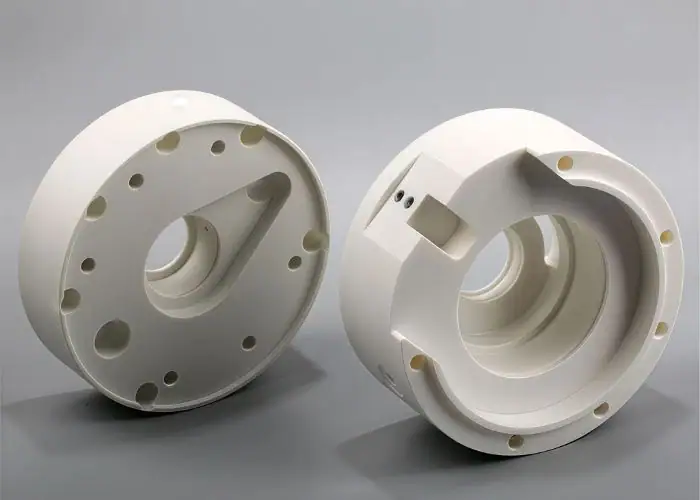
PTFE can be machined by CNC milling, CNC turning, drilling, boring, cutting, and threading. CNC milling is used for flat plates, gaskets, channels, housings, and custom insulation parts. CNC turning is commonly used for round parts such as seals, washers, sleeves, valve seats, bushings, liners, and circular housings. However, because PTFE is softer than PEEK, tool pressure and clamping force must be carefully controlled.
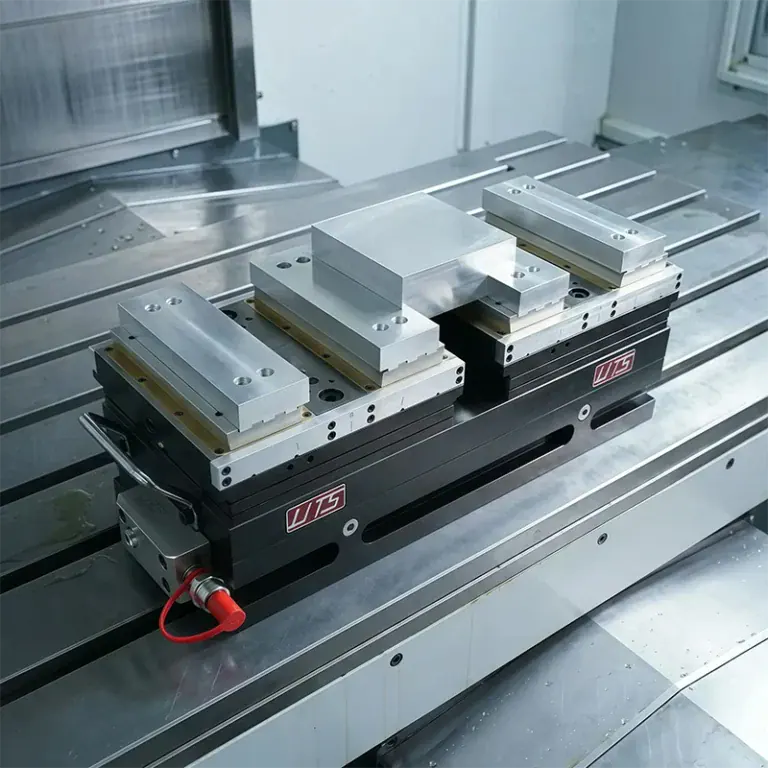
Successful PTFE machining requires sharp tools, light cutting passes, stable fixturing, and controlled temperature. Heavy cuts may cause the material to deflect, smear, or produce inaccurate dimensions. For turned PTFE parts, support tooling and proper chuck pressure are important to avoid ovality, surface marks, or distortion. For milled PTFE parts, vacuum fixtures, soft jaws, or custom fixtures may help reduce part movement.
Inspection should consider that PTFE parts may move after machining, especially when the geometry is thin, flexible, or tightly toleranced. Designers should avoid unrealistic tolerance requirements and allow proper compensation for material movement. PTFE is usually better for seals, gaskets, low-friction parts, and chemical-resistant components, while PEEK is better when CNC machined parts require strength, rigidity, and stable dimensions.
Tolerance, Surface Finish, and Deformation Control
PEEK usually holds tighter tolerances than PTFE because it is more rigid and less prone to creep. This makes it better for precision mechanical parts, semiconductor components, medical parts, and high-performance assemblies.
PTFE can provide a clean surface and low friction, but dimensional control is harder. For soft seals and gaskets, this may not be a problem. For tight mechanical fits, engineers should allow realistic tolerances.
Processing Considerations for Custom Parts
Custom PEEK and PTFE parts should be designed with material behavior in mind. Wall thickness, sharp corners, clamping surfaces, tolerance zones, surface finish, and operating temperature all affect manufacturing success.
A practical design review should ask whether the part needs sealing, sliding, load support, chemical resistance, or tight tolerance control. This helps avoid choosing a material that performs well on paper but causes problems in production.
Typical Applications of PEEK and PTFE
PEEK and PTFE are used in different applications because they solve different engineering problems. PEEK is used for strength and stability. PTFE is used for chemical resistance and low friction.
PEEK Applications
PEEK is commonly used for high-load, high-temperature, and precision engineering components. Typical applications include bearings, bushings, valve seats, pump parts, compressor parts, gears, medical components, aerospace brackets, semiconductor test sockets, and structural insulators.
It is often selected when metal is too heavy, conductive, or corrosion-prone, but ordinary plastic is not strong enough. PEEK is a strong candidate for CNC machined engineering parts that must keep tolerance under load.
PTFE Applications
PTFE is commonly used for seals, gaskets, valve seats, tubing, liners, slide plates, washers, insulation parts, and low-friction components. It is especially useful in chemical processing, electrical insulation, high-purity fluid handling, and non-stick applications.
PTFE is often chosen when the part must resist aggressive chemicals or reduce friction without lubrication. It is also suitable for sealing surfaces where controlled softness helps improve contact.
Aerospace Applications
In aerospace applications, PEEK is used for lightweight structural parts, brackets, fasteners, bushings, and components that need strength-to-weight performance. Its stiffness and temperature stability make it suitable for demanding assemblies.
PTFE is used for low-friction bearings, seals, cable insulation, and chemical-resistant components. It is useful where low friction, electrical insulation, or fluid resistance is more important than structural strength.
Oil and Gas Applications
In oil and gas applications, PEEK is often used for backup rings, valve components, anti-extrusion parts, and high-pressure components because it resists load and deformation. Its dimensional stability is valuable in pressure systems.
PTFE is used for seals, gaskets, valve seats, and chemically resistant components. It performs well where corrosion resistance and sealing are the main requirements, especially when supported by proper design.
Semiconductor Applications
In semiconductor applications, PTFE is useful for high-purity chemical handling, tubing, fittings, and components exposed to aggressive wet process chemicals. Its chemical inertness helps reduce contamination and degradation risks.
PEEK is used for wafer handling parts, test sockets, fixtures, and precision tooling where strength, dimensional stability, and wear resistance are required. It is often preferred when the component must hold exact geometry.
Hydrogen and Renewable Energy Applications
In hydrogen and renewable energy systems, material selection depends on pressure, temperature, permeation, sealing behavior, and chemical exposure. PEEK may be used for high-pressure structural components, valve parts, and compression-related parts.
PTFE may be used for sealing and chemical-resistant components in renewable processing systems. Because hydrogen applications can be demanding, compatibility testing and supplier validation are important before production.
Industrial Equipment Applications
In industrial equipment, PEEK is used for pump components, wear rings, bushings, bearings, gears, and load-bearing plastic parts. It helps reduce weight while maintaining mechanical reliability.
PTFE is used for liners, seals, gaskets, slide surfaces, insulation parts, and low-friction components. It helps reduce sticking, chemical attack, and friction-related wear in many industrial systems.
Cost and Material Selection Considerations
PEEK usually costs more than PTFE, but the right choice should be based on performance risk, machining cost, service life, and failure consequences. Material price alone is not enough for engineering selection.
Why PEEK Is Usually More Expensive
PEEK is usually more expensive because it is a high-performance specialty thermoplastic with superior mechanical properties, higher processing demands, and strong performance in critical applications.
The higher price can be worthwhile when the part must perform under stress, heat, and wear. In demanding assemblies, a more expensive material can reduce downtime, replacement frequency, and failure risk.
When PTFE Is More Cost-Effective
PTFE is more cost-effective when the application needs chemical resistance, low friction, sealing, or electrical insulation without high mechanical load. It can deliver excellent performance at a lower material cost than PEEK in many sealing and chemical applications.
For gaskets, liners, simple seals, low-load sliding parts, and chemical contact components, PTFE may be the better economic choice. The design should still consider creep, deformation, and tolerance requirements.
How Cost Relates to Performance Requirements
Cost should be evaluated by total part performance, not just raw material price. A cheaper material can become expensive if it causes leakage, wear, deformation, downtime, or repeated replacement.
A good material selection process compares initial cost, machining cost, inspection needs, service environment, and lifecycle performance. PEEK is often better for high-risk structural parts, while PTFE is often better for chemical and sealing functions.
How to Choose Between PEEK and PTFE?
Choose PEEK when strength, wear resistance, dimensional stability, and load-bearing performance are most important. Choose PTFE when chemical resistance, low friction, sealing, and electrical insulation are the main requirements.
Choose PEEK for Strength, Wear Resistance, and Stability
PEEK is the better choice when the part needs structural performance. It is suitable for high-load bearings, bushings, valve parts, gears, pump components, brackets, test sockets, and precision machined parts.
Choose PEEK when the project needs:
- High tensile strength
- High stiffness
- Better creep resistance
- Wear resistance under load
- Tight tolerance control
- Heat stability under mechanical stress
- Metal replacement potential
- Long-term dimensional stability
Choose PTFE for Chemical Resistance, Low Friction, and Sealing
PTFE is the better choice when the part must resist aggressive chemicals, reduce friction, or seal against fluid leakage. It is suitable for gaskets, seals, liners, valve seats, tubing, washers, and insulation parts.
Choose PTFE when the project needs:
- Excellent chemical inertness
- Very low friction
- Non-stick behavior
- Electrical insulation
- Sealing conformability
- Chemical processing compatibility
- Low-load sliding performance
- Resistance to aggressive media
Decision Summary for Engineering Parts
The decision is simple when the main failure risk is clear. If the risk is deformation, wear, or structural failure, choose PEEK. If the risk is chemical attack, friction, or sealing failure, choose PTFE.
| Requirement | Recommended Material |
| Higher strength | PEEK |
| Better stiffness | PEEK |
| Better wear under load | PEEK |
| Better chemical inertness | PTFE |
| Lowest friction | PTFE |
| Better sealing conformability | PTFE |
| Better tight-tolerance machining | PEEK |
| Lower material cost | PTFE |
| High-load valve seats | PEEK |
| Chemical gaskets and seals | PTFE |
FAQs
Is PTFE The Same As PEEK?
No, PTFE is not the same as PEEK. PTFE is a fluoropolymer known for excellent chemical resistance, very low friction, and strong electrical insulation. PEEK is a high-performance thermoplastic known for higher strength, stiffness, wear resistance, and dimensional stability. In simple terms, PTFE is better for seals, gaskets, and chemical contact parts, while PEEK is better for load-bearing, tight-tolerance, and structural machined components.
What Is The Difference Between PTFE And PEEK Seats?
The main difference between PTFE and PEEK seats is load capacity and sealing behavior. PTFE seats offer very low friction, excellent chemical resistance, and good sealing conformability, making them suitable for low-to-medium pressure valves and corrosive media. PEEK seats provide higher strength, better creep resistance, and better dimensional stability, so they are preferred for high-pressure, high-temperature, or high-wear valve applications where deformation control is important.
Is PEEK The Strongest Plastic?
PEEK is one of the strongest high-performance plastics, but it is not always the strongest plastic in every condition. It offers high tensile strength, strong stiffness, excellent wear resistance, and good heat stability compared with many engineering plastics. However, materials like carbon-fiber-filled PEEK, PEI, PPS, or certain polyimides may outperform standard PEEK in specific properties. PEEK is best viewed as a strong, balanced material for demanding CNC machined parts.
Conclusion
PEEK and PTFE are both high-performance plastics, but they are designed for different engineering priorities. PEEK is better for strength, stiffness, wear resistance, creep resistance, and tight-tolerance machined parts. PTFE is better for chemical resistance, low friction, sealing, non-stick behavior, and electrical insulation. The right choice depends on whether the part needs structural stability or chemical and friction performance.
At TiRapid, we provide precision CNC machining services for custom plastic components across multiple industries. If you are comparing PEEK vs PTFE for a machined part, upload your drawing or share your material requirements to get a tailored manufacturing solution.