Acetal vs nylon is a common engineering plastic comparison because both materials are widely used for gears, bushings, bearings, fasteners, rollers, housings, and CNC machined components. Acetal is usually selected for dimensional stability, low friction, moisture resistance, and clean machining, while nylon is chosen for toughness, impact resistance, abrasion resistance, and cost-effective mechanical strength.
In this guide, we compare acetal vs nylon by material properties, strength, wear resistance, friction, moisture absorption, dimensional stability, machinability, applications, cost, and material selection rules. The goal is to help engineers, buyers, and product developers choose the right plastic for custom parts and functional components.
What Is Acetal?
Acetal is an engineering thermoplastic known for low friction, high stiffness, good wear resistance, and excellent dimensional stability. It is also called POM, polyoxymethylene, polyacetal, or acetal plastic.
Acetal is commonly used in gears, bushings, rollers, bearings, valve parts, pump components, fasteners, sliding blocks, conveyor components, and precision CNC machined parts. It is especially useful when a part must move smoothly and maintain accurate dimensions.
Compared with nylon, acetal absorbs much less moisture. This makes it more predictable in humid environments and better for tight-tolerance assemblies where swelling, binding, or clearance changes could cause functional problems.
Key Properties of Acetal
The key properties of acetal are low friction, high stiffness, good wear resistance, low moisture absorption, and clean machinability. These properties make it one of the most practical plastics for precision moving parts.
Common advantages of acetal include:
- Low coefficient of friction
- Good wear resistance
- High stiffness and hardness
- Low moisture absorption
- Strong dimensional stability
- Excellent CNC machinability
- Good fatigue resistance
- Suitable for gears, bushings, and sliding parts
Acetal is not usually selected for very high-temperature environments or strong acid exposure. Its main value is stable mechanical behavior, smooth movement, predictable machining, and reliable fit after assembly.
What Is Nylon?
Nylon is an engineering thermoplastic known for toughness, impact resistance, abrasion resistance, and good mechanical strength. It belongs to the polyamide family and includes common grades such as nylon 6 and nylon 66.
Nylon is widely used in gears, rollers, wheels, bushings, fasteners, clips, housings, electrical parts, industrial components, and automotive parts. It is often selected when a part needs toughness and resistance to repeated load or impact.
Compared with acetal, nylon absorbs more moisture. Moisture can improve toughness in some cases, but it can also reduce stiffness, change dimensions, and affect tight-tolerance assemblies.
Key Properties of Nylon
The key properties of nylon are toughness, impact resistance, abrasion resistance, fatigue performance, and cost-effective mechanical strength. These properties make nylon useful for durable parts that experience vibration, shock, or repeated movement.
Common advantages of nylon include:
- High toughness
- Good impact resistance
- Good abrasion resistance
- Good fatigue performance
- Good mechanical strength
- Suitable for molded and machined parts
- Available in reinforced and filled grades
- Useful for gears, wheels, rollers, and fasteners
The main limitation of nylon is moisture absorption. Water uptake can change size and mechanical properties, so it must be considered for humid environments, tight fits, and precision CNC machined parts.
Acetal vs Nylon: Quick Comparison
Acetal vs nylon can be summarized as dimensional stability versus toughness. Acetal provides lower friction, better moisture resistance, and cleaner machining. Nylon provides better toughness, impact resistance, and strong abrasion performance.
| Property Focus | Acetal | Nylon |
| Main advantage | Stability and low friction | Toughness and impact resistance |
| Moisture absorption | Low | High |
| Dimensional stability | Better | More moisture-dependent |
| Friction | Lower | Good, but usually higher |
| Wear resistance | Very good | Very good in many applications |
| Impact resistance | Good | Better |
| Machinability | Excellent | Good, but more sensitive |
| Stiffness | High and stable | Good, but affected by moisture |
| Best use | Precision moving parts | Tough mechanical parts |
Strength and Rigidity
Acetal is generally more rigid and dimensionally stable, while nylon is tougher and more impact-resistant. Acetal keeps its stiffness more consistently because it absorbs less moisture.
Nylon can provide strong mechanical performance, especially in dry conditions or reinforced grades. However, moisture can reduce stiffness and change part dimensions. For precision mechanisms, acetal is often more predictable.
Wear Resistance and Friction
Acetal usually has lower friction than nylon, which makes it suitable for gears, bushings, bearings, rollers, and sliding parts. Its surface behavior helps reduce stick-slip, noise, and movement resistance.
Nylon also has strong wear resistance, especially in dry or abrasive environments and modified grades. However, in an acetal vs nylon friction comparison, acetal is usually easier to design for smooth dry movement and tight clearance.
Moisture Resistance
Acetal has better moisture resistance than nylon because it absorbs much less water. This helps acetal maintain size, stiffness, and fit in humid or wet conditions.
Nylon is hygroscopic, meaning it absorbs moisture from the environment. That moisture can improve impact toughness but may also cause swelling, lower stiffness, and dimensional variation.
Dimensional Stability
Acetal has better dimensional stability than nylon because it has lower moisture absorption and stronger tolerance control in typical use. It is usually easier to machine and inspect for tight-fit components.
Nylon can change dimensions after machining, storage, or service exposure. This does not make nylon unsuitable, but designers should allow realistic tolerances and consider humidity when selecting it.
Cost Difference
Nylon is often more cost-effective than acetal for general mechanical parts, while acetal may provide better value for precision parts because it reduces dimensional risk and machining uncertainty.
The better economic choice depends on the part function. If the part needs tight tolerances and low swelling risk, acetal may reduce scrap and assembly problems. If the part mainly needs toughness and impact resistance, nylon may be more economical.
Acetal vs Nylon: Mechanical Properties Comparison
Acetal and nylon both offer useful mechanical properties, but acetal is better for stiffness and dimensional control, while nylon is better for toughness and impact performance. This difference guides most engineering material choices.
Tensile Strength and Toughness
Nylon usually provides better toughness, while acetal provides stronger dimensional consistency and rigidity. Nylon can absorb impact energy better, especially in applications with shock, vibration, or repeated load.
Acetal is less flexible but more precise. It is better for parts where stiffness, surface finish, and tolerance control matter more than impact absorption. The best choice depends on whether the part must flex or stay rigid.
Impact Resistance
Nylon generally has better impact resistance than acetal. This makes nylon useful for fasteners, clips, housings, covers, wheels, and parts exposed to assembly impact or vibration.
Acetal still offers good toughness for many mechanical components, but it is usually selected more for stable movement and accurate fit. For impact-heavy applications, nylon or modified nylon grades should be reviewed.
Creep Resistance and Load-Bearing Performance
Acetal usually provides better dimensional control under moderate load, especially in humid environments. It can maintain fit and function in gears, bushings, and precision assemblies.
Nylon can carry load well, but its stiffness and creep behavior may change with moisture and temperature. For long-term load-bearing parts, engineers should check actual service conditions, not only dry-state datasheet values.
Acetal vs Nylon: Friction and Wear Performance
Acetal is usually better for low-friction and precision sliding applications, while nylon can perform well in abrasion and impact-related wear conditions. Both materials are used for moving parts, but they should not be treated as identical.
Low-Friction Performance of Acetal
Acetal has low friction and good self-lubricating behavior, making it a strong choice for gears, sliding rails, bushings, rollers, and bearings. It can help reduce noise and movement resistance in dry-running mechanisms.
Because acetal also holds dimensions well, gear teeth, bearing clearances, and sliding surfaces remain more stable over time. This is why acetal vs nylon gears often favors acetal for precision dry-running gears.
Wear Behavior of Nylon
Nylon has good wear behavior, especially in dry environments, abrasive contact, or modified grades. It is commonly used for wheels, rollers, bushings, wear pads, and industrial parts where toughness is important.
However, nylon can absorb moisture and become less stiff, which may change contact pressure, clearance, and wear pattern. For precision sliding systems, acetal is often more predictable.
Gears, Bearings, and Sliding Parts
For gears, bearings, and sliding parts, acetal is often preferred when low friction, quiet movement, and dimensional accuracy are required. It works well in moderate-load mechanisms where clearance must remain stable.
Nylon can be better when the part faces shock, vibration, or abrasive conditions. In some applications, filled nylon grades may improve wear performance, stiffness, and service life.
Wear Selection Tips
Wear selection should consider contact pressure, sliding speed, lubrication, surface finish, moisture exposure, and operating temperature. A material that works well in one wear system may not work in another.
Choose acetal for low-friction precision movement and stable fit. Choose nylon when toughness, impact absorption, and abrasion resistance are more important. For severe wear, compare filled grades and test under real conditions.
Acetal vs Nylon: Moisture Absorption and Dimensional Stability
Moisture absorption is one of the biggest differences between acetal and nylon. Acetal absorbs little moisture and keeps dimensions stable, while nylon absorbs water and may swell or change stiffness.
Why Nylon Absorbs More Moisture
Nylon absorbs more moisture because its polyamide structure attracts water. This moisture can increase toughness but reduce stiffness and cause dimensional change.
In practical use, nylon parts may change size after machining, storage, or service exposure. Designers should consider humidity, water contact, and conditioning when using nylon for precision components.
Why Acetal Holds Dimensions Better
Acetal holds dimensions better because it has much lower moisture absorption than nylon. This makes it more stable in normal humidity and better for parts that need accurate clearance, alignment, or fit.
For CNC machined components, acetal is often preferred when tight tolerances, flatness, roundness, or repeatable assembly are important. It reduces the risk of swelling-related interference.
Tolerance Control for CNC Machined Parts
Tolerance control is usually easier with acetal than with nylon because acetal is stiffer, cuts cleanly, and is less affected by moisture. It can hold machined features more consistently after cutting and inspection.
Nylon can still be CNC machined accurately, but tolerance planning should account for moisture, internal stress, and elastic deflection. For thin walls, press fits, or tight holes, realistic tolerances are important.
Acetal vs Nylon: Thermal and Electrical Properties
Acetal and nylon both provide useful thermal and electrical performance, but nylon often offers better toughness under mechanical stress, while acetal offers more stable dimensions and insulation in humid conditions.
Heat Resistance Comparison
Nylon can perform well in heat-related applications, especially nylon 66 or reinforced grades. Acetal is better suited to moderate-temperature precision parts where stable movement and dimensional control are more important.
If the part works near engines, heated equipment, or continuous elevated temperatures, nylon 66 or reinforced nylon may be considered. If the main need is low-friction precision movement at moderate temperature, acetal is often better.
Electrical Insulation Comparison
Acetal and nylon can both be used for electrical insulation, but acetal is usually more stable in humid conditions because it absorbs less moisture. Moisture can affect nylon’s dielectric behavior and dimensional fit.
For connectors, spacers, supports, and insulating components, the final choice should consider humidity, mechanical load, heat, and flame requirements. Flame-retardant grades may be required for electrical assemblies.
Performance Limits in Demanding Environments
Both acetal and nylon have limits in demanding environments. Acetal is not ideal for strong acids, oxidizers, or prolonged high-temperature exposure. Nylon may lose stiffness and dimensional accuracy when exposed to moisture and heat.
For harsh service conditions, designers should compare nylon 66, glass-filled nylon, PBT, PPS, PEEK, or other higher-performance plastics. Selection should be based on continuous temperature, load, chemical exposure, and tolerance requirements.
Acetal vs Nylon: Machinability and Manufacturing
Acetal is usually easier to machine cleanly and hold dimensionally stable, while nylon is machinable but more affected by flexibility, moisture, and internal stress. Both materials can be CNC machined, but they require different controls.
CNC Machining Acetal
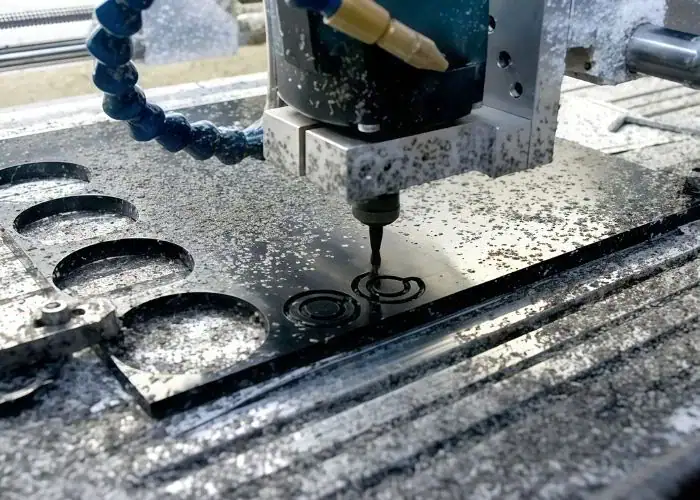
CNC machining acetal is practical for precision parts because the material cuts cleanly, holds dimensions well, and provides a good surface finish. It is suitable for milled plates, gears, bushings, rollers, spacers, fixtures, and complex mechanical parts.
Acetal can be processed by CNC milling, CNC turning, drilling, tapping, boring, and profiling. Sharp tools, stable clamping, moderate cutting parameters, and proper deburring help maintain tolerance and surface quality.
Because acetal is dimensionally stable and low-friction, it is often preferred for parts that require sliding clearance, gear tooth accuracy, or repeatable assembly. For tight-tolerance parts, proper stock selection and stress control still matter.
CNC Machining Nylon
CNC machining nylon is possible for functional components, but dimensional control can be more challenging than machining acetal. Nylon is tougher and more elastic, so it may deflect during cutting or change dimension with moisture.
Nylon can be machined by CNC milling, CNC turning, drilling, boring, threading, and contour machining. Fixturing should avoid excessive clamping pressure, especially for thin-wall or flexible features.
For precision nylon parts, moisture conditioning, sharp tools, heat control, and realistic tolerances are important. If the part must hold tight dimensions in humid service, acetal may be the safer material choice.
Injection Molding and Fabrication
Both acetal and nylon can be injection molded, machined, and fabricated into functional components. Nylon is widely used for molded fasteners, housings, clips, and structural parts, while acetal is widely used for precision molded gears and moving parts.
For prototypes, low-volume production, or tight-tolerance custom parts, CNC machining may be more practical than tooling. For high-volume production, injection molding can reduce unit cost after tooling is approved.
Surface Finish and Edge Quality
Acetal usually provides a cleaner machined surface and sharper edges than nylon. This is useful for parts with visible surfaces, sliding contact, small features, or assembly interfaces.
Nylon can also produce good parts, but it may deflect, fuzz, or show more variation depending on grade and machining conditions. Tool sharpness, feed rate, coolant, and deburring method all affect final quality.
Typical Applications of Acetal and Nylon
Acetal and nylon are used in different applications because acetal is better for stable low-friction movement, while nylon is better for tough and impact-resistant mechanical parts. Both are valuable engineering plastics, but they should not be treated as interchangeable.
Acetal Applications
Acetal is commonly used for gears, bearings, bushings, rollers, sliding blocks, pump parts, valve parts, fasteners, clips, spacers, conveyor components, and CNC machined mechanical parts.
It is often selected when the part must resist wear, move smoothly, and keep dimensions stable. Acetal is especially useful for small mechanical assemblies where clearance and repeatability matter.
Nylon Applications
Nylon is commonly used for fasteners, gears, rollers, wheels, housings, clips, cable ties, electrical supports, wear pads, automotive parts, and industrial machine components.
It is useful where toughness and impact resistance are more important than maximum dimensional stability. Reinforced or filled nylon grades can improve stiffness, wear resistance, and heat performance for specific applications.
Gears, Bearings, Bushings, and Rollers
For gears, bearings, bushings, and rollers, acetal is often preferred when low friction, quiet operation, and dimensional accuracy are required. It works well in dry-running and moderate-load systems.
Nylon can be used for larger or tougher parts that experience shock, vibration, or abrasion. In reinforced or lubricated grades, nylon may provide strong wear performance and good service life.
Automotive and Industrial Components
In automotive and industrial components, acetal is used where precision, low friction, and stable movement are important. Typical examples include clips, fuel system parts, gears, rollers, and sliding elements.
Nylon is used where toughness, fatigue resistance, and cost-effective strength are required. It is common in housings, brackets, fasteners, protective parts, and components exposed to mechanical shock.
Electrical and Consumer Product Parts
For electrical and consumer product parts, acetal is useful when stable dimensions, good surface quality, and low friction are needed. It can be used in switches, small mechanisms, housings, and moving assemblies.
Nylon is useful for durable housings, clips, fasteners, supports, and impact-resistant parts. If the component has flame or electrical safety requirements, the exact grade and certification must be confirmed.
Acetal vs Nylon: Advantages and Disadvantages
Acetal and nylon both have advantages and disadvantages, and neither material is better for every project. Acetal is stronger in dimensional stability and friction control, while nylon is stronger in toughness and impact performance.
Advantages of Acetal
The main advantages of acetal are low friction, high stiffness, wear resistance, moisture resistance, dimensional stability, and clean machinability. These benefits make it excellent for precision mechanical parts.
Acetal is especially useful when the design requires smooth sliding, repeatable fit, tight tolerance control, and good surface finish. It is often the better choice for CNC machined gears, bushings, rollers, and sliding parts.
Disadvantages of Acetal
The main disadvantages of acetal are limited long-term high-temperature performance, sensitivity to strong acids or oxidizers, and lower impact toughness than nylon in some conditions.
Acetal also may not be suitable for every fire-sensitive or chemically aggressive application. For regulated or high-heat environments, grade-specific data and certification should be checked before production.
Advantages of Nylon
The main advantages of nylon are toughness, impact resistance, abrasion resistance, fatigue performance, and cost-effective mechanical strength. It is useful for parts that must handle vibration, shock, and repeated loading.
Nylon also offers many modified options. Glass-filled, oil-filled, and heat-stabilized grades can improve stiffness, wear resistance, and temperature capability for demanding applications.
Disadvantages of Nylon
The main disadvantage of nylon is moisture absorption. Water uptake can change dimensions, reduce stiffness, and affect tolerance stability, which can be a problem for precision assemblies.
Nylon may also be harder to control in CNC machining when tight tolerances, thin walls, or stable long-term dimensions are required. For these conditions, acetal is often easier to manage.
Cost, Delivery, and Production Considerations
Cost, delivery, and production should be considered because material price alone does not decide the best plastic. Machining time, scrap risk, tolerance control, stock availability, and service life also affect total cost.
Material Cost Comparison
Nylon is often cost-effective for general mechanical parts, while acetal may provide better value for precision parts because it reduces dimensional risk and machining uncertainty. The price difference depends on grade, stock form, quantity, and supplier.
Glass-filled or specialty nylon may cost more than standard nylon. Acetal copolymer, acetal homopolymer, and branded grades may also vary in cost. Final selection should compare performance and production risk, not only raw material price.
Machining Cost and Scrap Risk
Acetal can reduce machining cost and scrap risk for precision parts because it cuts cleanly and holds dimensions well. It is often easier to inspect and assemble after machining.
Nylon can still be economical, but moisture movement, elastic deflection, and internal stress may increase inspection needs for tight-tolerance parts. For simple robust parts, nylon can remain a cost-effective choice.
Stock Availability and Lead Time
Acetal and nylon are both widely available in rods, plates, sheets, and molded stock, but exact grade, color, thickness, and certification can affect lead time. Acetal is commonly stocked for machining because of its dimensional stability and broad industrial use.
Nylon is also widely available, especially in standard and reinforced grades. For urgent projects, stock form and moisture condition should be confirmed early to avoid delays or machining changes.
How to Choose Between Acetal and Nylon?
Choose acetal when dimensional stability, low friction, and machining accuracy are the main requirements. Choose nylon when toughness, impact resistance, and cost-effective mechanical strength are more important.
Choose Acetal for Dimensional Stability and Low Friction
Acetal is the better choice when the part needs stable dimensions, smooth sliding movement, and clean machining. It is especially suitable for precision gears, bushings, rollers, spacers, sliding rails, and CNC machined mechanical parts.
Choose acetal when the project needs:
- Low friction
- Good wear resistance
- High dimensional stability
- Low moisture absorption
- Clean CNC machining
- Stable gear or sliding movement
- Tight tolerance control
- Predictable assembly fit
Choose Nylon for Toughness and Impact Resistance
Nylon is the better choice when the part must absorb impact, handle vibration, or provide tough mechanical performance at a reasonable cost. It is suitable for fasteners, rollers, housings, clips, wheels, and industrial components.
Choose nylon when the project needs:
- High toughness
- Good impact resistance
- Good abrasion resistance
- Good fatigue performance
- Cost-effective strength
- Vibration resistance
- Reinforced grade options
- Less critical dimensional tolerance
Decision Summary for Engineering Parts
The decision is straightforward when the main performance risk is clear. If the risk is swelling, friction, or tolerance drift, choose acetal. If the risk is impact, vibration, or shock failure, choose nylon.
| Requirement | Recommended Material |
| Better dimensional stability | Acetal |
| Lower moisture absorption | Acetal |
| Lower friction | Acetal |
| Cleaner CNC machining | Acetal |
| Precision gears | Acetal |
| Better toughness | Nylon |
| Better impact resistance | Nylon |
| Abrasion resistance in dry use | Nylon |
| Cost-effective mechanical parts | Nylon |
| Humid tight-tolerance parts | Acetal |
FAQs
Is Acetal Stronger Than Nylon?
Acetal is not always stronger than nylon. Acetal is usually more rigid and dimensionally stable, with tensile strength commonly around 60–70 MPa. Nylon can offer similar or higher strength depending on grade, especially PA66 or glass-filled nylon. However, nylon absorbs more moisture, which may reduce stiffness. Choose acetal for precision and stability, choose nylon for toughness and impact resistance.
Is Acetal A Good Bearing Material?
Yes, acetal is a good bearing material for moderate-load, low-friction applications. It has a low friction coefficient, good wear resistance, and low moisture absorption, often around 0.2–0.8% depending on grade. These properties help bearings, bushings, rollers, and sliding parts keep stable clearance. For high-load or high-temperature bearings, filled nylon, PEEK, or PTFE-based materials may be better.
Does Acetal Absorb Moisture?
Yes, acetal absorbs moisture, but much less than nylon. Acetal moisture absorption is commonly around 0.2–0.8%, while nylon can absorb several percent depending on grade and humidity. Lower moisture absorption helps acetal maintain tighter tolerances, better stiffness, and stable dimensions. This is why acetal is often preferred for gears, bushings, bearings, and CNC machined precision parts.
What Plastic Is Stronger Than Nylon?
Several plastics can be stronger than standard nylon, depending on the property measured. PEEK, PPS, PEI, and glass-filled nylon grades can offer higher stiffness, temperature resistance, or strength. For example, glass-filled nylon may reach much higher tensile strength than unfilled nylon, while PEEK offers excellent strength, wear resistance, and heat stability. For CNC machined parts, material choice should match load, temperature, tolerance, and wear conditions.
Conclusion
Acetal and nylon are both useful engineering plastics, but they are designed for different manufacturing goals. Acetal is better for low friction, dimensional stability, moisture resistance, wear resistance, and precision CNC machined parts. Nylon is better for toughness, impact resistance, abrasion resistance, fatigue performance, and cost-effective mechanical components.
At TiRapid, we provide precision CNC machining services for custom plastic components across multiple industries. If you are comparing acetal vs nylon for a machined part, upload your drawing or share your material requirements to get a tailored manufacturing solution.