Polycarbonate (PC) is one of the most widely used industrial plastics and holds an important position in modern manufacturing. Thanks to its excellent impact resistance, high transparency, outstanding dimensional stability, and strong mechanical properties, PC material is extensively used in the production of precision components. Compared with traditional glass, PC is lighter and far less likely to break. Compared with many standard plastics, it offers superior strength and durability. As a result, PC is frequently manufactured into functional parts through CNC machining during product development, low-volume production, and precision equipment manufacturing. With the rapid growth of automation equipment, medical devices, electronics, and new energy industries, the application range of PC CNC machined parts continues to expand. Many products that require transparency, strength, and safety prioritize the use of PC material.
What Are Polycarbonate (PC) CNC Machined Parts?
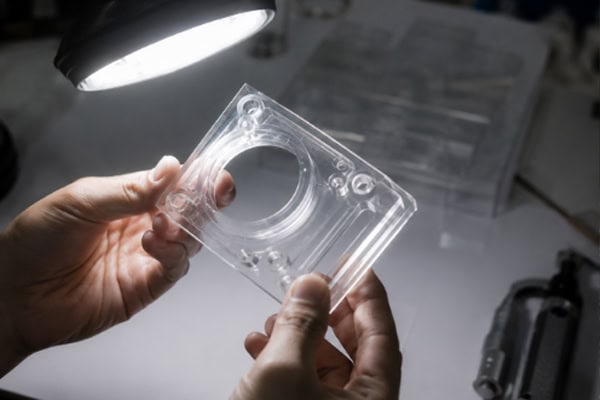
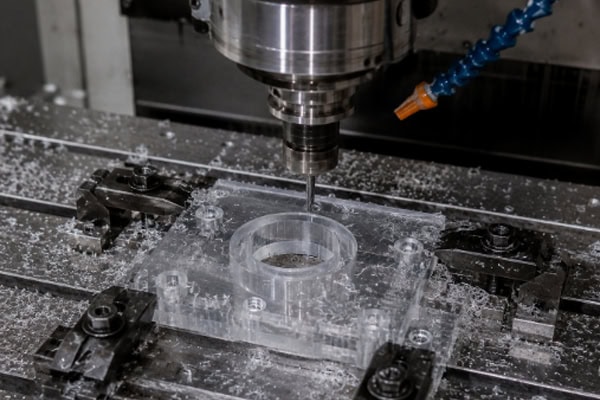
Polycarbonate (PC) is a high-performance industrial plastic that is widely used in manufacturing applications. It combines the lightweight advantages of plastics with excellent mechanical strength, while also providing high transparency and impact resistance. For this reason, PC is often referred to as a “transparent engineering plastic.”Compared with standard plastics, PC is stronger and more durable. Compared with glass, it is lighter, more impact-resistant, and easier to machine. As CNC machining technology continues to advance, more manufacturers are choosing CNC machining to produce PC components. Using high-precision CNC equipment, PC sheets and rods can be machined into complex structural parts, transparent protective components, and precision functional parts. These products are widely used in automation equipment, electronics, medical devices, new energy equipment, and laboratory instruments.For product development, prototype manufacturing, low-volume production, and precision component fabrication, PC combined with CNC machining has become a mature and highly efficient solution.
What Are the Characteristics of PC Material?
Among industrial plastics, PC is highly recognized because of its balanced performance. It offers both high mechanical strength and excellent light transmission, making it ideal for transparent structural components and safety protection applications.Many machines and devices use PC instead of glass when internal operation visibility is required.
Common characteristics of PC include:
- High light transmission
- Excellent impact resistance
- Lightweight
- Good dimensional stability
- Excellent electrical insulation properties
- Easy machinability
One of PC’s most notable features is its impact resistance. At the same thickness, PC offers significantly greater impact strength than most transparent plastics. Even under substantial force, it is unlikely to crack or shatter. Therefore, it is widely used in equipment guards, observation windows, safety panels, and industrial protective covers.In addition, PC provides good heat resistance and dimensional stability, allowing it to maintain its shape and performance during long-term use in industrial environments.
Why Use CNC Machining for PC Parts?
Many PC products are customized components with unique size, structural, and installation requirements. Manufacturing these parts through injection molding would require tooling investment and design modifications could become costly.For product development, prototyping, low-volume production, and precision manufacturing, CNC machining offers a more flexible solution. Using CNC technology, parts can be produced directly from CAD drawings without waiting for mold development, significantly accelerating project timelines.
The primary advantages of CNC machining include:
- No mold development required
- Short production lead time
- Easy design modifications
- Excellent precision control
- Suitable for prototype development
- Ideal for complex structures
During product development, dimensions often require multiple adjustments. CNC machining enables rapid prototype production and validation, reducing development cycles.For transparent precision components, optimized machining processes can also achieve excellent dimensional accuracy and surface quality.
What Types of PC CNC Machined Parts Are Common?
Because PC combines transparency, strength, and machinability, it can be manufactured into many different industrial products.
Common PC CNC machined products include:
- Transparent viewing windows
- Protective covers
- Instrument panels
- Insulating structural components
- Medical device parts
- Automation equipment accessories
- Laboratory equipment components
- Industrial transparent housings
For example, transparent safety guards on automated production lines must provide both visibility and impact protection. Transparent components in medical devices require dimensional precision and safety. Electrical insulation structures in electronic equipment demand dimensional stability and machining accuracy.As industrial equipment continues to prioritize lightweight design and safety, the use of PC CNC machined parts continues to expand.
How Are PC CNC Machined Parts Manufactured?
PC material offers excellent machinability and can be fabricated into complex structures using CNC technology. However, PC is also a plastic that demands high surface quality. Particularly for transparent PC components, improper machining can cause scratches, burrs, whitening, or dimensional inaccuracies.Therefore, every stage—from material selection to final delivery—requires careful planning and strict process control. Only by combining proper machining methods, precision equipment, and thorough quality inspection can high-quality PC CNC machined parts be produced.
Material Preparation and Drawing Analysis
The first step in machining PC parts is material preparation.
Before machining begins, suitable PC sheets or rods must be selected according to the product’s intended application. Different material grades and thicknesses can vary in transparency, strength, and machinability.
Even with excellent machining processes, improper material selection can negatively affect final product quality.
After receiving customer drawings, engineers typically evaluate the product structure and operating environment to determine machining difficulty and process priorities.
Key considerations include:
- Dimensional requirements
- Transparency requirements
- Strength requirements
- Surface quality requirements
- Assembly requirements
- Tolerance requirements
Simple parts usually require straightforward machining strategies. Products containing deep holes, complex contours, or transparent viewing areas often require more detailed planning of machining sequences and fixturing methods.Once the analysis is completed, engineers determine material specifications, machining allowances, and manufacturing procedures.
CNC Programming and Machining
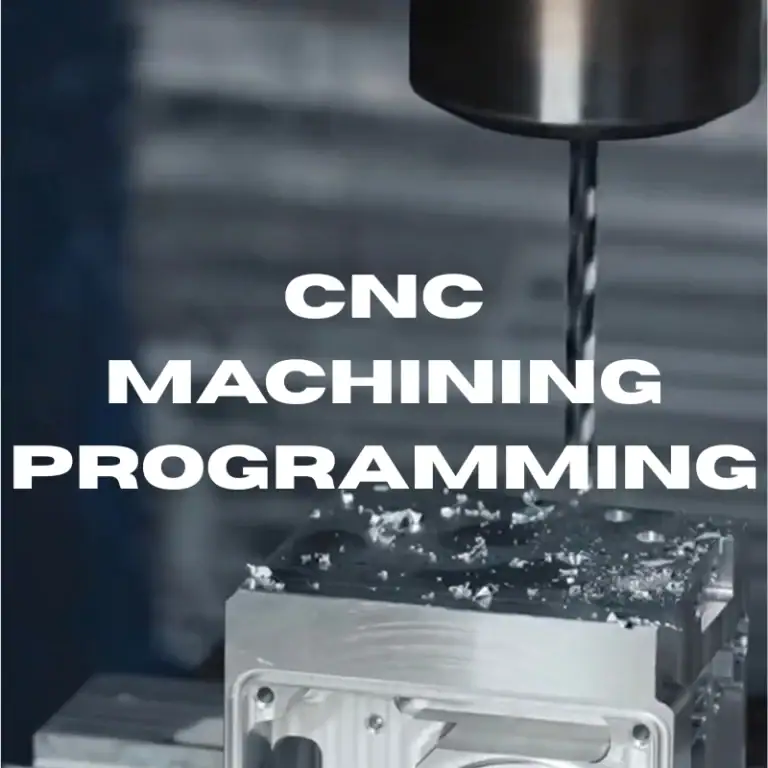
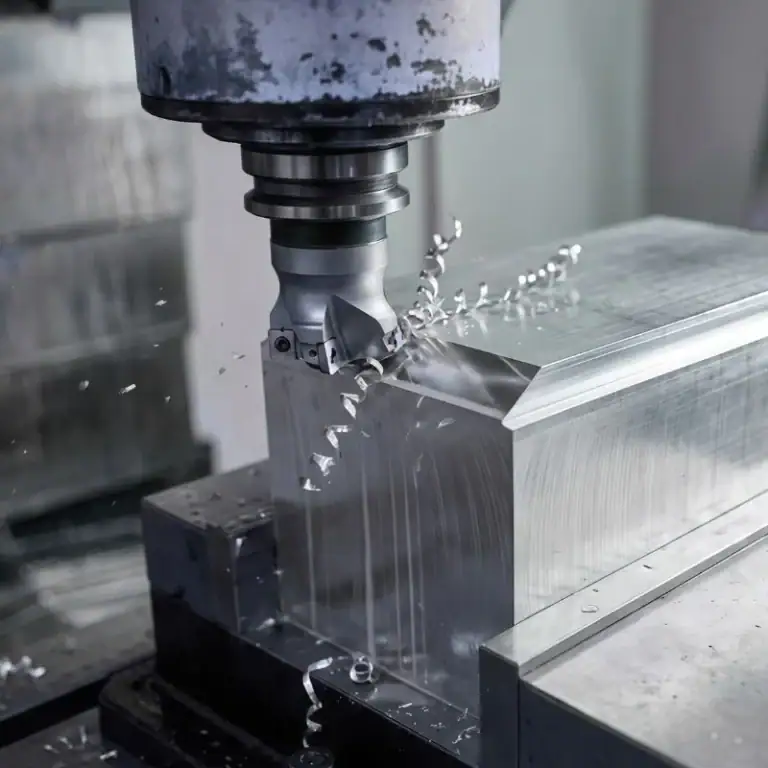
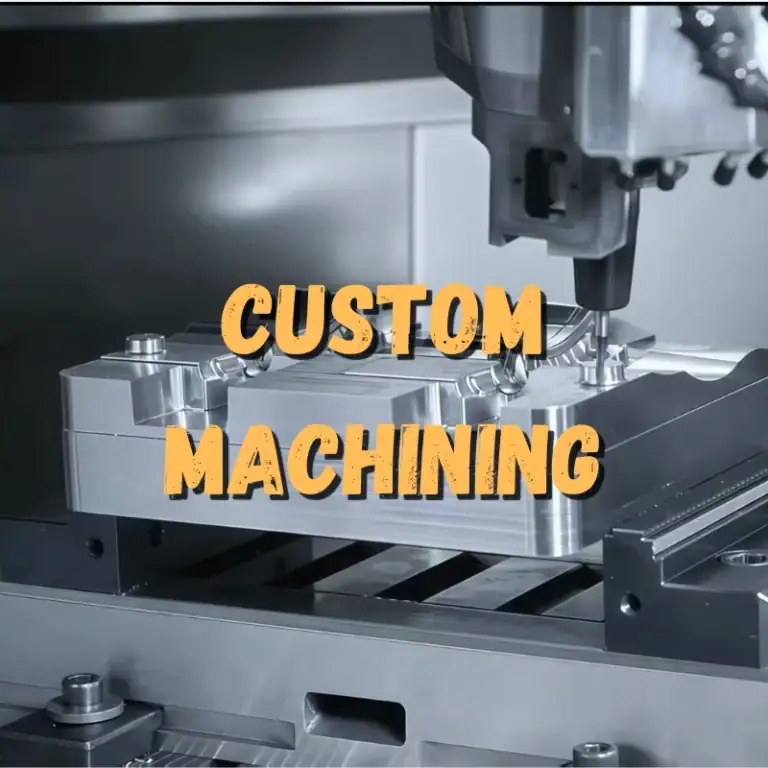
After material selection is completed, CNC programming and machining begin.Engineers use professional CAM software to generate machining programs and define toolpaths and cutting parameters according to the product structure.
The CNC machine automatically performs:
- Milling
- Drilling
- Slotting
- Chamfering
- Surface machining
- Contour cutting
Although PC is easier to machine than metal, worn tools or improper cutting parameters may cause burrs, melted edges, or surface whitening.
Transparent PC components are particularly sensitive to surface defects, requiring sharp cutting tools and careful heat management.Machining generally includes both roughing and finishing operations.Rough machining removes excess material and forms the basic shape.Finish machining improves dimensional accuracy and surface quality.For high-precision parts, layered cutting strategies are often used to minimize machining stress and maintain dimensional stability.
Post-Processing and Quality Inspection
After CNC machining is completed, PC components typically undergo post-processing and inspection before delivery.Transparent parts and appearance-sensitive products especially require careful finishing.
Common post-processing procedures include:
- Deburring
- Polishing
- Cleaning
- Dimensional inspection
- Visual inspection
- Assembly testing
Deburring removes sharp edges and residual burrs, improving safety and assembly performance.Polishing enhances transparency and surface smoothness, especially for viewing windows and transparent covers.After finishing, inspectors verify critical dimensions according to engineering drawings and examine the part for scratches, cracks, deformation, or other defects.For precision PC components, trial assembly may also be conducted to verify hole locations, mounting dimensions, and structural fit.Only after passing all inspection requirements can the product proceed to packaging and shipment.Through proper material preparation, CNC machining, post-processing, and inspection, PC materials can be transformed into high-quality industrial components suitable for automation equipment, medical devices, electronics, and new energy systems.
What Industries Commonly Use PC CNC Machined Parts?
Because PC offers high transparency, outstanding impact resistance, light weight, and excellent machinability, it is widely used throughout industrial manufacturing.Many devices require clear visibility of internal operations while maintaining structural strength and operator safety. PC material effectively fulfills these requirements.Through CNC machining, PC sheets and rods can be manufactured into precision parts capable of meeting complex structural and dimensional requirements.As automation, new energy, medical, and electronics industries continue to grow, PC CNC machined parts have become essential components in many systems.
Automation Equipment Industry
The automation industry is one of the largest users of PC CNC machined components.Modern automated production lines contain numerous moving mechanisms, drive systems, and inspection devices. Operators often need to monitor internal operations while remaining protected from moving parts.
PC material is frequently used to manufacture:
- Equipment viewing windows
- Safety guards
- Control panels
- Transparent shields
- Machine safety door windows
- Automation equipment enclosures
Compared with glass, PC is significantly more impact-resistant and safer because it is less likely to shatter into fragments.Many robotic systems, packaging machines, production lines, and inspection equipment utilize transparent PC components to improve visibility and safety.
Medical Device Industry
Medical equipment requires exceptional safety, stability, and reliability.
Many instruments need transparent components that allow operators to observe liquid flow, testing procedures, or internal equipment operation.
PC components are commonly used in:
- Medical instrument housings
- Inspection equipment windows
- Laboratory apparatus components
- Medical observation assemblies
- Diagnostic equipment accessories
- Transparent protective structures
PC provides high transparency, strong impact resistance, and excellent dimensional stability, making it suitable for long-term use in demanding medical environments.Additionally, many medical product development projects use CNC machining to quickly manufacture PC prototypes and accelerate validation processes.
Electronics and Electrical Industry
Electronic products contain numerous circuits, control modules, and electrical components, requiring reliable insulation performance.PC offers excellent electrical insulation while maintaining strong mechanical properties.
Common applications include:
- Insulating brackets
- Control panels
- Electrical protective covers
- Display windows
- Electrical cabinet viewing windows
- Instrument housing components
Many electronic devices require components that combine insulation, durability, and dimensional stability. PC fulfills these requirements and maintains long-term performance under varying environmental conditions.
Observation windows and protective covers made from PC are commonly found in industrial control systems, testing equipment, communication devices, and electronic instruments.
New Energy and Industrial Equipment Industry
As the new energy sector continues to expand, PC materials are increasingly used in energy-related equipment and industrial machinery.Many systems require transparent structural components for monitoring operational conditions.
Typical applications include:
- Battery equipment viewing windows
- Inspection equipment panels
- Instrument protective covers
- Industrial transparent structures
- Charging equipment observation windows
- Protective components for new energy production equipment
In lithium battery manufacturing equipment, photovoltaic systems, and energy testing devices, transparent PC structures allow operators to observe equipment operation while maintaining safety.Industrial machinery also relies on PC for similar purposes. Testing equipment, automated inspection platforms, laboratory instruments, and precision machinery frequently incorporate PC viewing panels and protective covers.
Compared with traditional glass, PC is lighter, more impact-resistant, and offers longer service life in demanding industrial environments.As industrial automation and the new energy sector continue to evolve, the use of PC CNC machined components will continue to expand. Their combination of transparency, safety, durability, and machinability makes PC one of the most important engineering plastics in modern industry.
What Technical Details Should Be Considered During PC CNC Machining?
Although PC offers excellent machinability and mechanical strength, producing dimensionally accurate, smooth, and highly transparent components requires more than simply operating a CNC machine.Machining parameters, tool conditions, fixturing methods, and cutting temperatures all influence final product quality.Transparent PC components are particularly sensitive to cosmetic defects, making process control extremely important.
Prevent Surface Whitening
PC generates heat during high-speed cutting. Excessive localized temperatures can cause whitening, haze, or loss of surface gloss.This is especially problematic for viewing windows, protective covers, and display products.
Common causes include:
- Worn cutting tools
- Excessive cutting speed
- Unstable feed rates
- Heat accumulation
Recommended solutions include:
- Using sharp cutting tools
- Controlling cutting heat
- Optimizing machining parameters
- Maintaining stable feed rates
- Using compressed-air cooling
- Monitoring tool wear regularly
For highly transparent products, dedicated finishing operations are often used to improve optical clarity.
Minimize Burr Formation
Because PC is relatively tough, burrs can form during drilling, slotting, and contour cutting.Even small burrs can affect assembly accuracy and product appearance.
Improvement methods include:
- Selecting appropriate cutting tools
- Optimizing spindle speed
- Adding finishing operations
- Performing deburring procedures
- Reducing tool vibration
- Optimizing toolpath design
Many manufacturers perform manual edge finishing or specialized deburring operations after machining to improve edge quality.
Maintain Dimensional Stability
Dimensional stability is one of the most important indicators of machining quality.For automation equipment, medical devices, and electronic assemblies, excessive dimensional deviation may lead to assembly issues or operational failures.Although PC offers good dimensional stability, machining stress and fixturing stress can still cause deformation.
Common control methods include:
- Layered cutting
- Symmetrical machining
- Finish machining with allowances
- Proper fixturing
- Reducing cutting depth
- Optimizing machining sequences
Large PC sheets are often machined through separate roughing and finishing stages. Allowing internal stresses to relax after rough machining can significantly improve final dimensional stability.For precision parts, additional inspections may be performed to verify critical dimensions before shipment.Maintaining dimensional stability is essential not only for assembly performance but also for long-term equipment reliability.
Frequently Asked Questions
What is the difference between PC and acrylic?
PC has significantly higher impact resistance than acrylic and is less likely to crack or break, making it better suited for industrial equipment and safety applications.
Does PC offer high transparency?
Yes. PC provides excellent light transmission and can achieve good optical clarity after proper machining and polishing.
Is PC suitable for long-term use?
Yes. PC offers excellent mechanical properties and dimensional stability, allowing it to maintain performance over extended periods under normal operating conditions.
Is CNC machining suitable for PC prototyping?
Absolutely. CNC machining allows rapid prototype production without tooling, significantly shortening product development cycles.
Can PC replace glass?
In many protective covers and viewing window applications, PC has successfully replaced glass because it reduces weight while improving safety.
Conclusion
With its transparency, strength, light weight, and excellent machinability, PC has become one of the most commonly used engineering plastics in modern manufacturing. From automation equipment and medical devices to electronics and new energy systems, PC plays a vital role in countless industrial applications.In environments where both visibility and safety are required, PC CNC machined parts offer significant advantages. For product development and low-volume manufacturing, CNC machining enables rapid prototyping while supporting complex geometries and precision requirements.By selecting appropriate materials, optimizing machining processes, and implementing comprehensive quality inspection procedures, manufacturers can produce PC components with excellent appearance, dimensional stability, and reliable performance.As industrial equipment continues to demand lighter weight, higher safety, and greater reliability, the application scope of PC CNC machined parts will continue to expand, making them an increasingly important choice across many industries.