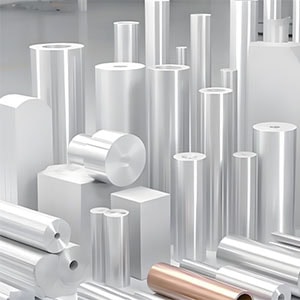
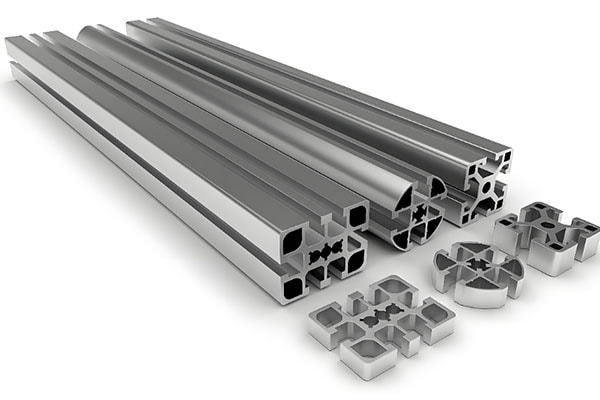
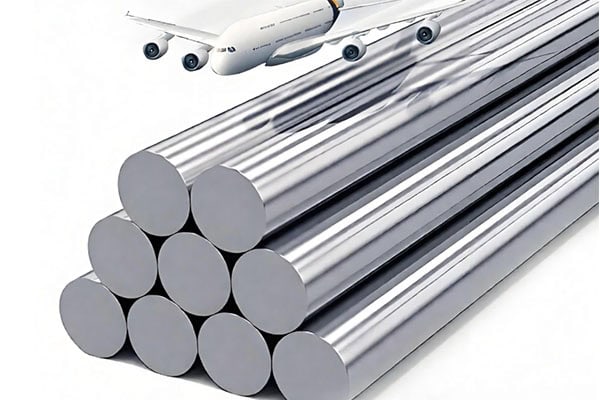
Aluminum is one of the most commonly used metals in CNC machining. It is lightweight, easy to machine, and offers a good balance of strength and performance, making it widely used in aerospace, automotive, robotics, electronics, and medical equipment. Although aluminum is generally considered easy to machine, achieving tight dimensional tolerances, accurate hole positions, and good flatness still depends on many factors. Understanding these factors can help manufacturers improve the consistency and accuracy of CNC machined aluminum parts.
Get 20% offf
Your First Order
Need custom metal and plastic parts?
Aluminum Material Properties Can Affect Machining Accuracy
Different Aluminum Alloys Have Different Machining Characteristics
Aluminum alloys such as 6061, 6063, 7075, and 2024 are all suitable for CNC machining, but they differ in hardness, strength, ductility, and cutting performance.
Softer aluminum alloys may cause problems such as built-up edges, burrs, or material adhesion when the cutting tools and parameters are not properly selected. Stronger alloys may generate higher cutting loads and require different machining strategies.
For this reason, spindle speed, feed rate, cutting depth, tooling, and cooling should be selected according to the specific aluminum alloy instead of applying the same parameters to every project.
Thermal Expansion Should Not Be Ignored
Aluminum has a relatively high coefficient of thermal expansion. During CNC machining, heat can be generated by high-speed spindle operation, friction between the tool and workpiece, and cutting processes.
As the workpiece temperature changes, its dimensions can also change slightly. This becomes particularly important when machining large aluminum components or parts with very tight tolerances.
For precision aluminum CNC machining, controlling the machining environment and workpiece temperature can help reduce dimensional variation.
CNC Machine Condition Determines the Basic Accuracy
Machine Rigidity and Positioning Accuracy
Machine positioning accuracy, repeatability, spindle runout, and overall mechanical rigidity all have a direct impact on machining results.
If the machine structure or cutting tool deflects slightly under cutting forces, the final dimensions may deviate even when the CNC program itself is correct.
For precision aluminum parts, manufacturers should use stable CNC equipment and perform regular machine calibration and maintenance.
Multiple Setups Can Increase Accumulated Errors
Complex aluminum components sometimes require several setups. Every time the workpiece is removed and repositioned, there is a possibility of introducing a small positioning error.
When several operations are involved, these small errors can accumulate and affect the relationship between different features.
For complex parts, 4-axis or 5-axis CNC machining can sometimes reduce the number of setups and improve consistency by allowing more features to be machined from fewer orientations.
Tool Selection and Cutting Parameters Are Equally Important
Tool Wear Can Cause Dimensional Changes
Although aluminum is relatively easy to cut, CNC tools still experience wear during extended machining operations.
As the cutting edge becomes dull, cutting forces can increase, which may result in vibration, burrs, poor surface finish, and dimensional deviations.
For precision aluminum machining, carbide tools are commonly used. Tool overhang and rigidity should also be considered when machining thin walls, deep cavities, or other difficult features.
Spindle Speed, Feed Rate, and Cutting Depth Must Be Properly Matched
Cutting parameters have a significant influence on machining accuracy.
An excessively high spindle speed may increase heat generation, while an excessively high feed rate can increase cutting forces. An unsuitable depth of cut may also cause tool deflection or vibration.
The optimal parameters depend on the aluminum alloy, tool diameter, tool geometry, machine capability, and part structure. Proper parameter optimization helps balance machining efficiency, tool life, surface quality, and dimensional accuracy.
Part Design and Geometry Can Also Affect Accuracy
Thin-Wall Structures Are More Prone to Deformation
Thin-wall aluminum components can easily deform under cutting forces. Excessive clamping pressure can also cause temporary deformation. Once the workpiece is released from the fixture, it may spring back and result in dimensional changes.
To reduce this problem, manufacturers can use appropriate support structures, optimize clamping methods, and carefully arrange roughing and finishing operations.
Tolerances Should Match the Functional Requirements
Not every dimension needs an extremely tight tolerance.
For example, specifying very tight tolerances for every feature can significantly increase machining difficulty, inspection requirements, production time, and overall cost.
A more practical approach is to identify critical dimensions that affect assembly or performance and assign tighter tolerances only where necessary. Standard tolerances can be used for less critical features.
The Machining Environment and Inspection Process Matter
Temperature, Vibration, and Cleanliness
Changes in workshop temperature, machine vibration, and contamination on fixtures or worktables can all affect CNC machining repeatability.
This is particularly important for high-precision aluminum components. Maintaining a stable machining environment and keeping fixtures and machine surfaces clean can help minimize unnecessary dimensional variation.
Finished aluminum parts should not be inspected using only basic measuring tools when tight tolerances are involved.
Depending on the requirements, manufacturers may use micrometers, bore gauges, height gauges, and coordinate measuring machines (CMM) to verify critical dimensions, hole positions, flatness, and geometric tolerances.
Effective inspection also allows manufacturers to identify process deviations early and make adjustments before producing large quantities of parts.
How Can Aluminum CNC Machining Accuracy Be Improved?
The final accuracy of CNC machined aluminum parts is not determined by a single factor. Material properties, machine condition, tooling, cutting parameters, workholding, part geometry, environmental conditions, and inspection methods all work together.
For standard aluminum components, proper process control can provide stable dimensional accuracy. For aerospace, robotics, medical, and precision electronics applications, accuracy requirements should be considered from the design stage.
Selecting the right aluminum alloy, using stable CNC equipment, optimizing cutting parameters, reducing unnecessary setups, controlling deformation, and implementing effective inspection procedures can all contribute to better machining accuracy.
Ultimately, high-quality aluminum CNC machining requires control throughout the entire manufacturing process rather than relying on the CNC machine alone. A well-planned process can improve dimensional consistency, surface quality, production efficiency, and the reliability of the finished aluminum parts.
Scroll to Top
Your 24 hour quote
Send us a message if you have any questions or request a quote. We will be back to you within 1-2 hours!