Chrome plating is an electroplating process that deposits a thin layer of chromium onto a metal or specially prepared plastic surface. The coating can improve wear resistance, surface hardness, corrosion performance, friction behavior, and appearance. Depending on the application, chrome may be applied as a thin decorative finish or as a thicker functional coating for industrial components.
This guide explains what chrome plating is, how the chrome plating process works, the differences between hard and decorative chrome, suitable base materials, coating parameters, benefits, defects, costs, removal methods, and common manufacturing applications.
What Is Chrome Plating?
Chrome plating is a surface finishing process that uses electroplating to deposit chromium onto another material. Rather than making a component from solid chromium, manufacturers apply a controlled chromium layer to improve wear resistance, corrosion resistance, surface hardness, friction behavior, or appearance.
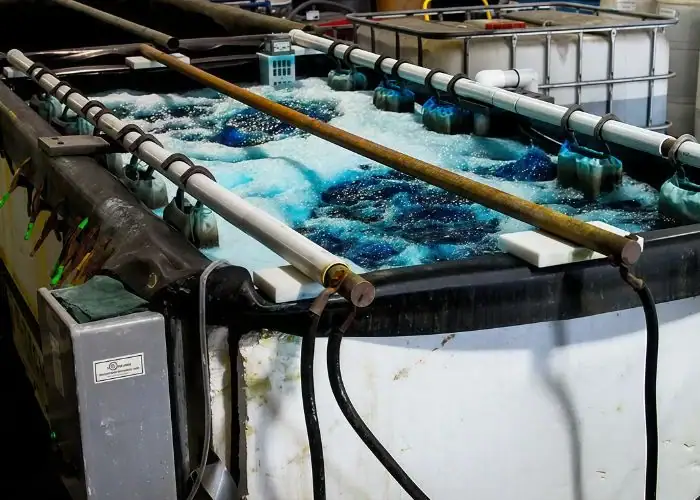
The workpiece is placed in an electrolyte and connected to an electrical circuit. Current drives an electrochemical reaction that deposits chromium onto the prepared surface. Thickness, adhesion, hardness, and appearance depend on bath chemistry, current density, temperature, plating time, and substrate preparation.
Chrome plating should not be treated as one universal finish. Decorative chrome plating emphasizes appearance and corrosion protection, while hard chrome plating is primarily an engineering coating used to improve the working surfaces of cylinders, rods, molds, tools, and other wear components.
How Does Chrome Plating Work?
Chrome plating works by using direct electrical current to deposit chromium from an electrolyte onto a conductive surface. The workpiece acts as part of the electrochemical circuit, allowing chromium to form a controlled coating over the prepared substrate.
Before deposition, oil, oxide, rust, old coatings, and contamination must be removed. Depending on the substrate, activation, etching, copper, nickel, or another intermediate treatment may also be required to obtain reliable adhesion.
Plating rate and final thickness depend partly on electrical current and processing time. This means engineers must consider chrome thickness before machining critical diameters, bores, sealing surfaces, or close-tolerance fits.
What Is Chrome Plating Made Of?
Chrome plating is made of a deposited chromium layer, but the complete coating system may also contain copper or nickel underlayers. The exact layer structure depends on the substrate, required adhesion, corrosion resistance, appearance, and whether the coating is decorative or functional.
Traditional hexavalent processes use chromium in the Cr⁶⁺ oxidation state, while trivalent systems use Cr³⁺ chemistry. Decorative systems commonly use underlying nickel to provide smoothness, brightness, and corrosion protection before the thin chromium top layer is deposited.
For engineering drawings, simply specifying “chrome plating” may therefore be insufficient. The drawing may also need to define chrome type, coating thickness, plated areas, masked areas, post-plating dimensions, surface finish, and applicable specification.
What Is The Chrome Plating Process?
The chrome plating process generally includes surface cleaning, activation or pretreatment, optional undercoating, chromium electroplating, rinsing, finishing, and inspection. Each stage affects adhesion and coating quality, so a well-controlled plating bath cannot compensate for poor surface preparation.
A typical process follows these stages:
- Degrease and clean the component.
- Remove oxides, rust, and existing surface contamination.
- Activate or etch the substrate.
- Apply copper or nickel underlayers when required.
- Electroplate the chromium layer.
- Rinse and neutralize residual chemicals.
- Grind, polish, or finish if required.
- Inspect thickness, appearance, adhesion, and dimensions.
The exact sequence changes with the base material. Steel, stainless steel, aluminum, brass, and plastic cannot simply be placed into the same plating line with identical pretreatment.
Surface Cleaning And Preparation
Surface cleaning and preparation remove contaminants that would prevent the chrome coating from bonding correctly. Oil, grease, oxide, rust, polishing compounds, fingerprints, and machining residues can all contribute to poor adhesion.
Chemical degreasing, alkaline cleaning, acid treatment, ultrasonic cleaning, abrasive preparation, polishing, or combinations of these methods may be used. The required method depends on the substrate and its existing surface condition.
For precision CNC parts, preparation also affects final geometry. Excessive polishing or grinding can remove base material, while insufficient preparation can produce peeling, blistering, pitting, and inconsistent chrome thickness.
Activation And Pre-Treatment
Activation and pretreatment chemically prepare the cleaned substrate so the following metallic layer can bond reliably. This stage is especially important for metals that rapidly form passive oxide layers.
Steel may receive acid activation, while stainless steel requires treatment capable of overcoming its passive surface. Aluminum needs a more specialized pretreatment because its natural oxide film forms rapidly and interferes with direct plating.
Pretreatment must therefore be matched to the alloy rather than only to the final chrome finish. Poor activation is one of the reasons a visually acceptable coating can later blister or peel during service.
Nickel Or Undercoat Application
A nickel or other undercoat is applied when the chrome layer requires improved adhesion, smoothness, corrosion protection, or appearance. Nickel is especially common beneath decorative chrome.
In decorative systems, much of the smooth reflective appearance comes from surface preparation and the nickel layer beneath the chromium. The chrome topcoat is comparatively thin and provides the characteristic appearance and additional surface protection.
Copper may also be used in multilayer systems, particularly where leveling or substrate compatibility is important. The exact copper-nickel-chrome structure should therefore be selected according to the base material and performance requirements.
Chromium Electroplating
Chromium electroplating deposits the actual chromium coating by immersing the prepared workpiece in a controlled plating bath and applying direct electrical current. Chromium is deposited onto exposed conductive surfaces while masked areas remain unplated.
Current density, bath temperature, chemistry, electrode geometry, part orientation, and time influence deposition. Sharp edges can receive higher current density, while recesses, deep bores, and shielded areas may receive less.
This current-distribution effect is especially important for precision parts because chrome does not automatically deposit at perfectly uniform thickness across complex geometry.
Rinsing, Finishing, And Inspection
Rinsing, finishing, and inspection remove process residues, bring the plated surface to its required condition, and verify that the coating meets drawing requirements. Decorative parts may be polished, while hard chrome components may require grinding or lapping.
Inspection may include:
- Coating thickness
- Final dimensions
- Surface roughness
- Visual appearance
- Adhesion
- Cracks and pits
- Coverage
- Hardness
- Critical diameters and fits
For precision components, inspection should evaluate the finished plated dimension rather than considering only the dimension before plating.
What Are The Main Chrome Plating Methods?
The two established chrome plating methods are hexavalent chromium plating and trivalent chromium plating. Hexavalent chromium remains important for demanding functional hard chrome applications, while trivalent chromium is widely used where decorative performance and reduced environmental and occupational exposure concerns are priorities.
| Method | Chromium State | Main Strength | Typical Application |
| Hexavalent Chrome | Cr⁶⁺ | Hardness and wear performance | Hard industrial chrome |
| Trivalent Chrome | Cr³⁺ | Decorative finish and lower environmental burden | Automotive and consumer finishes |
| Divalent Chromium | Cr²⁺ | Emerging technology | Limited/specialized research use |
Hexavalent Chrome Plating
Hexavalent chrome plating uses chromium in the Cr⁶⁺ oxidation state and is the traditional system associated with industrial hard chrome. It can produce hard, wear-resistant coatings suitable for mechanical components exposed to sliding, abrasion, and repeated contact.
Applications include hydraulic rods, cylinders, tooling, molds, shafts, piston-related components, and industrial machinery. The process is particularly useful where coating performance matters more than decorative appearance.
Its major disadvantage is environmental and occupational risk. Hexavalent chromium requires strict control of worker exposure, ventilation, mist, wastewater, chemical handling, and disposal.
Trivalent Chrome Plating
Trivalent chrome plating uses Cr³⁺ chemistry and is commonly selected as an alternative to traditional hexavalent decorative chrome. It can provide a bright, corrosion-resistant surface while reducing some environmental and occupational concerns associated with Cr⁶⁺ chemistry.
It is widely associated with automotive trim, hardware, consumer products, fixtures, and other appearance-focused applications.
However, trivalent and hexavalent processes should not automatically be considered interchangeable. Required hardness, color, coating structure, specification, corrosion testing, and industry approval must still be checked.
Divalent Chromium Plating
Divalent chromium plating uses chromium in the Cr²⁺ state and is an emerging approach rather than a mainstream replacement for established industrial chrome processes.
Research and development around alternative chromium chemistries aims to improve deposition efficiency and reduce environmental impact. However, industrial adoption and long-term performance data are much more limited than for Cr³⁺ and Cr⁶⁺ systems.
For normal production drawings, engineers are much more likely to encounter hexavalent or trivalent specifications. Divalent chromium should therefore be treated as a specialized or developing technology rather than a standard plating option.
Hexavalent Vs Trivalent Chrome Plating
Hexavalent chrome is generally preferred for established high-performance hard chrome applications, while trivalent chrome is often preferred for decorative finishes and applications seeking lower environmental impact.
| Factor | Hexavalent Chrome | Trivalent Chrome |
| Chromium | Cr⁶⁺ | Cr³⁺ |
| Hard Chrome Use | Excellent | More limited/process-dependent |
| Decorative Use | Yes | Very common |
| Wear Resistance | Excellent | Application-dependent |
| Environmental Concern | High | Lower |
| Process Control | Mature | Mature for decorative applications |
| Typical Selection | Industrial wear surfaces | Decorative components |
The final choice should follow the required engineering specification rather than simply selecting the process described as safer or harder.
What Are The Main Types Of Chrome Plating?
The main types of chrome plating include hard chrome, decorative chrome, thin dense chrome, flash chrome, black chrome, satin chrome, micro-cracked or micro-porous chrome, and specialized composite coatings. Hard chrome and decorative chrome are the two most important categories for most manufacturing projects.
Hard Chrome Plating
Hard chrome plating is a functional coating designed primarily to increase hardness, wear resistance, corrosion resistance, and service life. It is also called industrial or engineered chrome plating.
Hard chrome is much thicker than typical decorative chromium. One referenced process source notes that industrial hard chrome can be deposited up to approximately 0.025in (0.635mm) in some applications, although actual engineering thickness should always follow the drawing and process specification.
Typical parts include:
- Hydraulic rods
- Shafts
- Cylinders
- Piston rings
- Molds
- Dies
- Rollers
- Bearing surfaces
- Wear components
Because thickness affects geometry, hard chrome frequently requires allowance during CNC machining and may be ground back to the final dimension after plating.
Decorative Chrome Plating
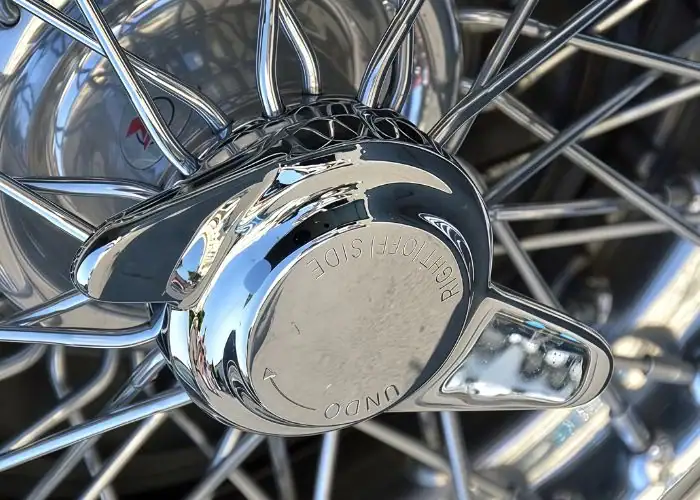
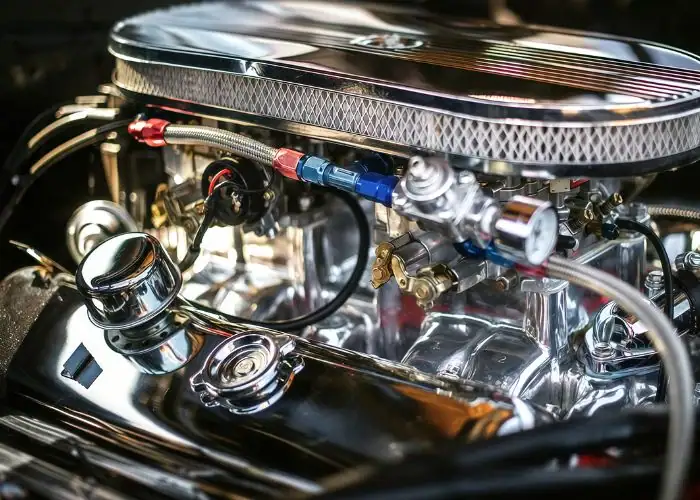
Decorative chrome plating is primarily selected to produce a bright, smooth, reflective appearance while also adding surface protection. The chromium layer is generally much thinner than a functional hard chrome coating.
Decorative systems commonly rely on nickel beneath the chromium for leveling, brightness, and corrosion protection. Copper may also be included depending on substrate and finish requirements.
Typical applications include automotive trim, handles, fixtures, consumer hardware, furniture components, and decorative products where visual consistency matters as much as functional performance.
Thin Dense Chrome Plating
Thin dense chrome plating uses a relatively thin but dense chromium coating to provide hardness, wear resistance, low friction, and corrosion protection with less dimensional buildup than conventional heavy hard chrome.
It is particularly attractive for precision parts because engineers may want functional surface performance without adding a large coating thickness.
Applications can include aerospace components, precision tooling, medical equipment, hydraulic components, and other closely toleranced surfaces.
Flash Chrome Plating
Flash chrome plating applies an extremely thin chromium layer when minimal dimensional buildup is required. One referenced guide describes flash chrome layers as often below 0.1mil, or about 2.5μm.
The thin coating can provide appearance or limited surface improvement while keeping dimensional change small.
It should not be confused with heavy hard chrome. For severe abrasion, rebuilding worn surfaces, or long-term sliding contact, a flash coating may not provide sufficient thickness.
Black Chrome Plating
Black chrome plating produces a dark gray to black surface rather than the conventional bright silver appearance. It is mainly selected when appearance, light absorption, or a specialized visual finish is required.
Depending on process chemistry and preparation, the surface may range from glossy to matte. Applications include automotive trim, optical components, hardware, and decorative equipment.
Because appearance is highly process-sensitive, color range, gloss, texture, and acceptance criteria should be defined when cosmetic consistency is critical.
Satin Chrome Plating
Satin chrome plating produces a softer, matte or low-reflective appearance instead of a mirror-bright chrome surface.
Its final appearance depends heavily on the underlying surface texture and preparation. It is frequently used for handles, hardware, automotive interior components, fixtures, and consumer products.
Satin chrome should be specified with a visual standard or approved sample when appearance matters because terms such as satin, matte, and brushed can be interpreted differently by different suppliers.
Micro-Cracked And Micro-Porous Chrome
Micro-cracked and micro-porous chrome are engineered coating structures that intentionally create controlled microscopic features in the plated system.
These structures can influence lubrication retention and corrosion behavior. Micro-cracked hard chrome is particularly associated with mechanical wear surfaces such as rods and cylinders.
The required crack density, porosity, underlayer, thickness, and corrosion performance should follow an established engineering specification rather than being selected only by the coating name.
Composite Chrome Plating
Composite chrome plating combines a chromium matrix with hard particles or other engineered constituents to modify wear and friction performance.
Particles such as silicon carbide, alumina, or diamond may be incorporated in specialized systems to increase resistance to severe abrasion.
These coatings are more specialized than conventional hard chrome. They should be considered when standard chrome cannot provide sufficient tribological performance and when the added processing cost can be justified.
What Materials Can Be Chrome Plated?
Chrome plating can be applied to steel, stainless steel, aluminum, brass, copper, zinc die castings, and specially prepared plastics such as ABS. However, each substrate requires a different cleaning, activation, and undercoating strategy to obtain reliable adhesion.
| Base Material | Typical Pretreatment | Main Concern |
| Steel | Cleaning + activation | Rust and surface contamination |
| Stainless Steel | Activation/strike | Passive oxide film |
| Aluminum | Deoxidizing + zincate + undercoat | Rapid oxide formation |
| Brass | Cleaning + polishing | Surface appearance |
| Plastic | Etching + conductive layer | Non-conductive substrate |
Chrome Plating Steel
Steel can be chrome plated effectively and is one of the most common substrates for hard chrome. It is widely used for shafts, hydraulic rods, cylinders, tools, molds, and wear surfaces.
Before plating, steel must be degreased, cleaned, and activated. Rust, scale, cutting fluid, polishing compound, and oxide contamination must be removed.
High-strength steels also require careful process control because electroplating can introduce hydrogen. For susceptible components, hydrogen embrittlement control and post-plating baking requirements should follow the applicable specification.
Chrome Plating Stainless Steel
Stainless steel can be chrome plated, but its passive chromium-rich oxide surface makes adhesion more difficult than on ordinary carbon steel.
Surface activation or a suitable strike layer is commonly needed before the main coating system. If passivation is not removed correctly, the deposited layer can separate from the substrate.
For precision stainless parts, alloy grade, surface condition, heat treatment, masking, and post-plating dimensions should be defined before the finishing route is finalized.
Chrome Plating Aluminum
Aluminum can be chrome plated, but it requires specialized pretreatment because aluminum rapidly develops a stable oxide film that prevents direct adhesion.
A typical route includes cleaning, etching or deoxidizing, zincate treatment, and an intermediate nickel or copper/nickel layer before chromium deposition. The exact sequence varies by alloy and specification.
For CNC-machined aluminum components, plating should be planned before final dimensioning. Edges, threads, bores, fits, masking surfaces, and coating buildup all need to be considered in the manufacturing drawing.
Chrome Plated Brass
Chrome plated brass combines the machinability and formability of brass with the appearance and surface protection of a chromium finish.
Brass components are normally polished and cleaned carefully before the undercoat and chrome layers are applied. Decorative copper-nickel-chrome systems are common for visually important parts.
Typical applications include fittings, valves, handles, plumbing hardware, instruments, and decorative mechanical components.
Plastic Chrome Plating
Plastic chrome plating is possible when the plastic surface is first made suitable for electroplating. ABS is one of the most commonly plated plastics because its surface can be chemically etched and metallized.
The process generally creates a conductive metallic layer before nickel and chromium are electroplated. This allows a non-conductive molded plastic component to receive a metallic-looking surface.
Plastic chrome plating is common in automotive trim, appliance components, handles, controls, and consumer products. Part design must account for molding quality, surface defects, ribs, corners, and plating coverage.
What Are The Key Chrome Plating Parameters?
The key chrome plating parameters are coating thickness, current density, bath chemistry, bath temperature, plating time, surface condition, electrode geometry, and substrate preparation. Together, these variables control deposition rate, hardness, adhesion, uniformity, appearance, and final dimensions.
For precision manufacturing, the most important point is that plating adds material. A 20μm coating on a cylindrical surface can change an outside diameter by approximately 40μm if 20μm is deposited radially on both sides.
Important parameters include:
- Chrome thickness
- Current density
- Bath temperature
- Bath chemistry
- Plating time
- Part orientation
- Anode-to-part geometry
- Surface roughness
- Masking
- Base material
- Pretreatment quality
How Is Chrome Plating Thickness Measured?
Chrome plating thickness can be measured using methods such as X-ray fluorescence, magnetic or eddy-current instruments where applicable, microscopic cross-sections, or other standardized coating-thickness methods.
The correct method depends on substrate material, coating thickness, geometry, accuracy requirement, and applicable standard.
For high-precision components, thickness should be checked at functionally important locations rather than assuming that one reading represents the entire part.
How Does Thickness Affect Tolerance And Fit?
Chrome plating thickness affects tolerance and fit because the deposited material changes the dimensions of every plated surface.
For an external diameter, plating increases size. For a plated bore, deposition reduces the available internal diameter. Threads, bearing fits, seal diameters, sliding fits, and precision mating surfaces can therefore move outside tolerance if coating allowance is ignored.
A practical drawing should distinguish dimensions that apply before plating from those required after plating. Critical features can then be machined undersize or oversize as needed and brought to final size after coating.
What Equipment Is Used For Chrome Plating?
Chrome plating requires cleaning and rinse tanks, activation tanks, plating tanks, DC rectifiers, anodes, racks or fixtures, temperature and chemistry controls, ventilation, filtration, wastewater treatment, and inspection equipment. Industrial systems also require environmental and worker-protection controls.
Plating Tanks And Power Supply
Plating tanks hold the chemical solutions required for cleaning, activation, undercoating, chromium deposition, and rinsing.
A DC rectifier supplies controlled current to the electroplating circuit. Stable current is important because current density influences deposition rate and coating distribution.
Industrial systems may also include heaters, chillers, agitation, filtration, chemical dosing, and automated process monitoring.
Racks, Fixtures, And Masking
Racks and fixtures hold the component securely while providing electrical contact and positioning it correctly relative to the anodes.
Fixture design affects current distribution and therefore coating thickness. Complex shapes, deep recesses, and long cylindrical components may require auxiliary anodes or specialized fixturing.
Masking protects threads, holes, datum surfaces, bearing seats, electrical contacts, and other areas where chrome is not required.
Cleaning, Rinsing, And Ventilation Equipment
Cleaning and rinsing equipment prevents contamination from being carried between process tanks and prepares the surface for reliable deposition.
Ventilation and fume extraction are especially important where hazardous plating chemistry is used. Wastewater and chemical treatment systems are also required to control chromium-containing process streams.
These systems are not secondary equipment, they are fundamental to stable process quality, environmental compliance, and worker safety.
What Are The Benefits Of Chrome Plating?
The main benefits of chrome plating are higher wear resistance, increased surface hardness, improved corrosion performance, reduced friction, better appearance, easier cleaning, and longer service life. The exact benefit depends strongly on whether hard chrome or decorative chrome is used.
Wear Resistance
Chrome plating improves wear resistance by creating a hard working surface that can withstand sliding, rubbing, and abrasive contact better than many untreated substrates.
This is particularly useful for hydraulic rods, shafts, rollers, piston components, molds, and machine parts.
Wear performance still depends on coating thickness, surface finish, lubrication, mating material, contact pressure, alignment, and operating environment.
Corrosion Resistance
Chrome plating can improve corrosion resistance by forming a protective surface between the substrate and its environment.
Decorative multilayer systems often depend heavily on underlying nickel or copper/nickel layers for corrosion protection. Hard chrome can also protect engineering surfaces, although cracks or coating damage may allow corrosive media to reach the substrate.
For severe environments, corrosion resistance should therefore be validated by the complete coating system rather than by chromium alone.
Surface Hardness
Hard chrome plating substantially increases surface hardness without requiring the entire component to be made from a highly hardened material.
This allows engineers to combine a tough or machinable substrate with a hard working surface.
It is useful for parts where the surface experiences abrasion but the core still needs toughness, dimensional support, or economical machinability.
Lower Friction
Hard chrome can reduce friction and galling when the coating is correctly finished and matched to the mating material.
Smooth chrome surfaces are therefore useful for sliding rods, cylinders, seals, guides, and other moving interfaces.
However, friction depends on surface roughness, lubrication, load, speed, temperature, and counterface material. Chrome alone does not guarantee a low-friction system.
Improved Appearance
Decorative chrome plating produces a bright, reflective metallic appearance that is difficult to reproduce with an untreated base metal.
Its appearance makes it common on automotive trim, handles, fixtures, appliances, furniture hardware, and consumer products.
The quality of the final chrome appearance depends strongly on polishing and the underlying surface because thin decorative chromium will not hide major substrate defects.
Easier Cleaning And Maintenance
Chrome-plated surfaces can be easier to clean because a smooth, hard finish provides fewer locations for dirt and residues to accumulate.
This is useful for consumer fixtures and selected industrial components that require regular wiping or cleaning.
Maintenance should still avoid abrasive methods or aggressive chemicals that can scratch, attack, or undermine the coating system.
How Does Hard Chrome Plating Affect Precision Parts?
Hard chrome plating affects precision parts by adding measurable coating thickness, changing diameters and fits, influencing surface roughness, and creating potential variation in thickness across complex geometry. Precision parts therefore need machining allowance, masking, controlled deposition, and often post-plating grinding.
Dimensional Change And Tolerance Control
Hard chrome changes part dimensions because chromium is physically deposited onto the surface.
For close-tolerance CNC components, the pre-plating dimension should therefore be calculated from the required final dimension and expected coating thickness.
If the coating will later be ground, additional stock must be included so grinding can remove high spots and establish the final geometry without cutting through the functional chrome layer.
Concentricity And Cylindrical Parts
Concentricity is important for chrome-plated shafts, rods, rollers, and hydraulic components because uneven deposition or incorrect grinding can produce radial variation.
A cylindrical part may therefore be machined, plated oversize, and then cylindrically ground to final diameter and roundness.
This route is useful where both wear resistance and precision geometry are required.
Masking Critical Features
Masking protects surfaces that must remain free from chromium, including threads, precision holes, electrical contacts, sealing interfaces, datum surfaces, and assembly fits.
Good masking reduces unnecessary post-plating machining and prevents dimensional interference.
For complex CNC components, the plating drawing should identify plated and non-plated areas clearly rather than leaving masking decisions entirely to the plating supplier.
Surface Texture And Friction
Surface texture affects friction because a hard coating can still perform poorly if roughness is unsuitable for the mating component.
Chrome-plated hydraulic rods and sliding components often need controlled grinding or polishing after plating to establish the required Ra and bearing characteristics.
Surface finish should therefore be specified separately from coating thickness.
Hydrogen Embrittlement Risk
Hydrogen embrittlement is a potential concern when high-strength steels undergo electrochemical cleaning and plating processes that introduce hydrogen.
Absorbed hydrogen can reduce ductility and increase delayed cracking risk in susceptible steels.
For critical high-strength components, material strength, pretreatment, plating process, baking time and temperature, and applicable aerospace or industrial specifications should be reviewed before production.
Can Chrome-Plated Parts Be Machined After Plating?
Chrome-plated parts can be finished after plating, most commonly by grinding, lapping, or polishing. Post-plating machining is especially useful for hard chrome parts that need precise diameter, roundness, flatness, surface roughness, or dimensional recovery.
CNC Machining
CNC machining is commonly integrated with chrome plating when parts require both precise geometry and improved wear or corrosion resistance. Most material removal is completed before plating so the coating thickness can be included in the dimensional allowance.
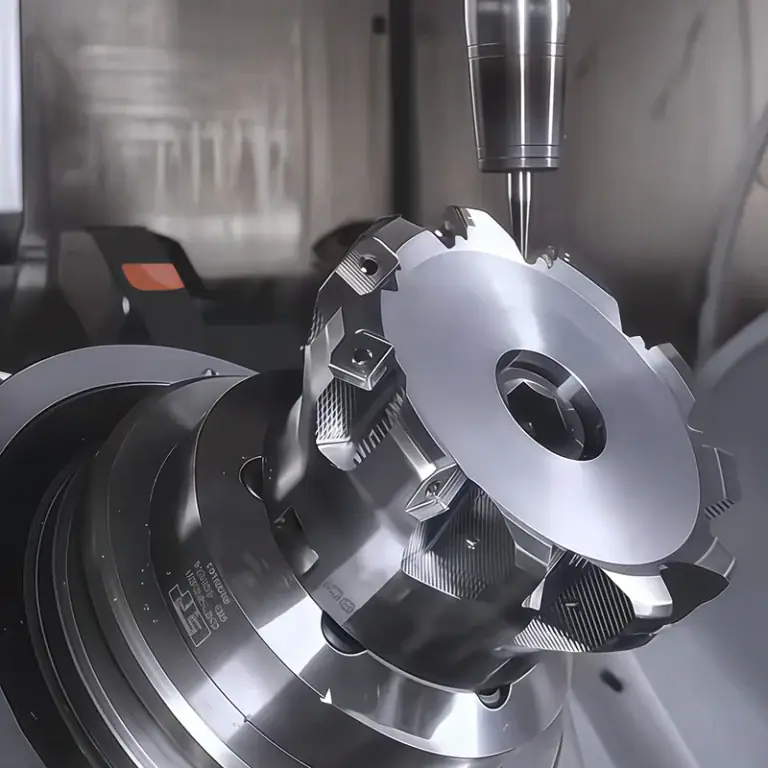
CNC milling is suitable for flat surfaces, slots, pockets, mounting features, mold components, and other prismatic geometries. Critical areas that should remain unplated can also be identified during machining and protected by masking during the chrome plating process.
CNC turning is particularly suitable for shafts, rods, sleeves, rollers, pistons, and other rotational components. These parts can be turned slightly undersize before hard chrome plating, allowing the coating and subsequent grinding process to bring the diameter to its specified final tolerance.
5-axis CNC machining is useful for complex components with curved surfaces, multiple angles, deep features, or precision surfaces located on several sides. Completing these geometries with fewer setups before chrome plating can help maintain feature relationships and reduce accumulated setup error.
Direct CNC cutting of a finished chrome layer is possible in selected situations, but it must be carefully controlled because aggressive cutting may cause cracking, chipping, or local coating removal. For critical hard chrome surfaces, precision grinding is generally preferred for final dimensional correction.
Grinding
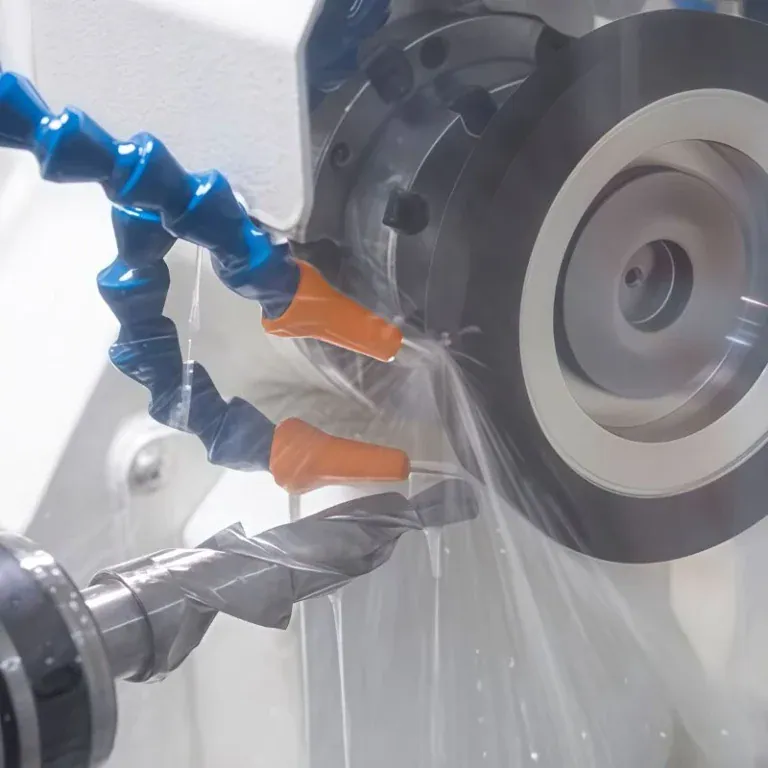
Grinding is the most common precision finishing method for thick hard chrome coatings.
Cylindrical grinding can bring shafts, rods, and rollers to final diameter and roundness, while surface grinding can control flat surfaces.
Grinding parameters must avoid excessive heat or aggressive removal that could crack, burn, or locally strip the chrome.
Lapping
Lapping is used when very fine surface finish, flatness, or dimensional control is required after plating.
It removes a much smaller amount of material than typical grinding and is useful for precision sealing or mating surfaces.
Because chrome is hard, abrasive selection, pressure, and lapping time must be controlled carefully.
Polishing
Polishing improves the smoothness and appearance of a chrome-plated surface without being the primary method for major dimensional correction.
Decorative chrome may be polished to achieve high visual quality, while functional surfaces may receive controlled polishing to reduce roughness.
Excessive polishing should be avoided because thin coatings can be locally removed.
When Post-Plating Machining Is Necessary
Post-plating machining is necessary when the required final tolerance or surface finish cannot reliably be achieved through electroplating alone.
It is particularly useful for:
- Hydraulic rods
- Precision shafts
- Rollers
- Bearing surfaces
- Mold components
- Seal diameters
- Repaired worn components
The machining and plating sequence should therefore be planned as one manufacturing process rather than two unrelated operations.
What Are The Common Applications Of Chrome Plating?
Chrome plating is commonly used in automotive components, industrial equipment, aerospace parts, robotics and automation, molds and tooling, hydraulic components, and decorative consumer products. Functional applications mainly use hard chrome, while appearance-focused applications generally use decorative chrome.
Automotive
Chrome plating is used in automotive parts for both appearance and functional surface performance.
Decorative applications include trim, handles, wheels, and exterior components. Functional hard chrome may be used on wear-related mechanical surfaces where friction and durability matter.
The finish should be selected according to whether the requirement is visual appearance, wear resistance, corrosion protection, or a combination.
Industrial Equipment
Industrial equipment uses hard chrome plating on components exposed to sliding contact, abrasion, repeated motion, and harsh operating environments.
Typical parts include rods, shafts, rollers, cylinders, plungers, guides, and machine components.
Hard chrome can also restore worn dimensions, potentially extending the service life of expensive components rather than replacing the entire part.
Aerospace
Aerospace applications use engineered chrome coatings on selected components that require wear resistance, controlled friction, and dimensional restoration.
Landing-gear-related surfaces, actuators, shafts, and other mechanical components may use hard chrome where permitted by the applicable specification.
Because aerospace parts are safety-critical, plating chemistry, hydrogen embrittlement control, traceability, inspection, and approved processing requirements are especially important.
Robotics And Automation
Robotics and automation components can use hard chrome where repeated sliding, positioning, and mechanical contact create wear.
Potential parts include actuator rods, guide shafts, pins, rollers, fixtures, and precision moving components.
Low friction and dimensional consistency can help reduce wear in high-cycle automation, but coating thickness must be included in the tolerance stack.
Molds And Tooling
Molds and tooling use hard chrome to improve wear resistance, reduce sticking, and extend service life.
Chrome may be applied to mold surfaces, dies, forming tools, gauges, and wear areas that experience repeated contact.
For precision tooling, polishing and post-plating grinding may be required to restore exact geometry and surface finish.
Hydraulic And Cylindrical Components
Hydraulic and cylindrical components are among the most established hard chrome applications because their surfaces experience continuous sliding contact against seals and bearings.
Hydraulic rods, piston rods, cylinders, and plungers benefit from hardness, wear resistance, corrosion protection, and controlled surface finish.
Roundness, straightness, coating thickness, surface roughness, and adhesion are critical because they directly influence seal life and leakage.
Consumer And Decorative Parts
Consumer products mainly use decorative chrome for its bright metallic appearance and ease of cleaning.
Applications include faucets, handles, appliance components, furniture hardware, automotive trim, and decorative fixtures.
In these applications, surface preparation and underlayers are especially important because even small scratches or polishing defects may remain visible through the final chrome finish.
What Are Common Chrome Plating Defects?
Common chrome plating defects include peeling, poor adhesion, pitting, pinholes, cracking, uneven thickness, burning, discoloration, blistering, and hydrogen-related problems. Most defects originate from poor surface preparation, incorrect bath chemistry, unstable current density, unsuitable geometry, or improper process control.
| Defect | Common Cause | Possible Result |
| Peeling | Poor cleaning or activation | Coating separation |
| Pitting | Contamination or gas | Rough surface |
| Cracking | Stress or process conditions | Reduced protection |
| Uneven Thickness | Current distribution | Dimensional error |
| Burning | Excessive current density | Dark/rough areas |
| Blistering | Poor adhesion/gas | Local coating failure |
Peeling And Poor Adhesion
Peeling occurs when the chromium or underlying coating does not bond correctly to the substrate.
Common causes include oil contamination, oxide films, poor activation, incompatible pretreatment, or inadequate undercoating.
The best prevention is proper substrate preparation rather than simply increasing chrome thickness.
Pitting And Pinholes
Pitting and pinholes are small surface cavities or discontinuities in the plated coating.
They can result from contamination, gas bubbles, base-material defects, poor cleaning, or unstable bath conditions.
For sealing and precision sliding surfaces, even small pits can affect wear, leakage, and surface finish.
Cracking
Cracking occurs when stresses within the chromium layer exceed what the coating can accommodate.
Hard chrome naturally has a characteristic crack structure in many processes, but uncontrolled macro-cracking can reduce performance.
Thickness, bath conditions, grinding heat, substrate geometry, and service stress can all influence cracking behavior.
Uneven Thickness
Uneven thickness occurs because electroplating current is not distributed equally across every feature.
Edges and projections can build coating faster, while recesses, deep holes, and shielded areas may receive less.
Auxiliary anodes, shielding, fixture design, part orientation, and post-plating grinding can help manage thickness distribution.
Burning And Discoloration
Burning and discoloration generally indicate unsuitable current density, bath chemistry, temperature, or surface conditions.
Burned areas may appear dark, rough, or inconsistent with surrounding chrome.
Because the defect can affect both appearance and coating integrity, simply polishing the surface may not solve the underlying problem.
Hydrogen Embrittlement
Hydrogen embrittlement can occur when hydrogen generated during cleaning or electroplating enters susceptible high-strength steel.
The part may initially pass dimensional inspection but develop delayed cracking later.
Critical components should therefore follow established hydrogen-relief baking and process-control requirements based on material strength and applicable standards.
How Can Chrome Plating Be Removed?
Chrome plating can be removed by mechanical stripping, chemical stripping, or reverse electroplating. The best method depends on the base material, chrome thickness, part geometry, dimensional requirements, and whether the component will be re-plated.
Mechanical Removal
Mechanical removal uses grinding, blasting, polishing, or another abrasive process to physically remove the chrome layer.
It is practical for accessible surfaces and thick coatings, especially when the substrate will be re-machined afterward.
The disadvantage is dimensional loss. Excessive removal can damage edges, alter geometry, or remove too much base material.
Chemical Stripping
Chemical stripping removes chrome using a controlled chemical solution selected for the coating and substrate.
It can reach geometries that are difficult to grind and may reduce mechanical damage to the part.
However, the stripping chemistry must be compatible with the underlying material and any intermediate nickel or copper layers.
Reverse Electroplating
Reverse electroplating removes chromium by reversing the electrochemical direction of the plating process.
The plated component is configured so that chromium dissolves from its surface into the processing solution.
This method can provide controlled stripping, but it requires professional chemical and electrical process control.
When Can A Part Be Re-Plated?
A part can be re-plated when the old coating can be removed without compromising the substrate and the remaining component still meets dimensional and structural requirements.
After stripping, the surface should be inspected for corrosion, cracks, wear, pits, and dimensional loss.
Worn components may require machining, grinding, or repair before a new chrome layer is deposited and finished back to the required dimension.
How Much Does Chrome Plating Cost?
Chrome plating cost depends on part size, geometry, base material, chrome type, coating thickness, surface preparation, masking, finishing, inspection, batch quantity, and environmental processing requirements. For this reason, chrome plating price is normally quoted from the drawing and specification rather than from surface area alone.
What Affects Chrome Plating Price?
Chrome plating price is affected by all operations needed before and after chromium deposition, not only the amount of chromium used.
Major cost drivers include:
- Part dimensions
- Surface area
- Hard vs decorative chrome
- Required thickness
- Existing coating removal
- Polishing
- Masking
- Grinding after plating
- Inspection
- Batch size
- Base material
- Environmental compliance
A simple decorative component can therefore cost much less than a precision hydraulic rod requiring thick hard chrome and final cylindrical grinding.
How Thickness And Part Size Affect Cost
Thickness and part size affect cost because larger surfaces and thicker coatings require more plating capacity and processing time.
Hard chrome generally costs more than a thin decorative layer when substantial thickness is required.
Large or long parts can also require specialized tanks, racks, anodes, handling equipment, and grinding machines, increasing production cost.
How Precision Masking And Finishing Affect Cost
Precision masking and finishing increase cost because they add labor, fixtures, inspection, and secondary operations.
A component with several unplated threads, bores, datums, and tight-tolerance fits requires more process planning than a fully plated simple part.
Post-plating grinding or lapping also adds cost but may be necessary to achieve the final tolerance and surface finish.
How Long Does Chrome Plating Last?
Chrome plating can last from several years to decades depending on chrome type, coating thickness, adhesion, substrate, wear, corrosion exposure, lubrication, maintenance, and operating conditions. There is no single service-life value that applies to every chrome-plated component.
Factors That Affect Service Life
Chrome plating service life is controlled by both the coating and the working environment.
Important factors include:
- Coating thickness
- Surface preparation
- Adhesion
- Load
- Sliding speed
- Abrasion
- Lubrication
- Moisture
- Chemical exposure
- Temperature
- Maintenance
A lightly used indoor decorative component and a continuously cycling hydraulic rod can therefore have completely different service lives.
Hard Chrome Vs Decorative Chrome Durability
Hard chrome is generally more durable under mechanical wear because it is designed as a functional engineering coating and is usually much thicker.
Decorative chrome is optimized mainly for appearance and corrosion protection through a multilayer coating system.
If abrasion and sliding contact are the primary concerns, hard chrome is normally the better choice. If appearance is the priority, decorative chrome is usually more appropriate.
What Are The Environmental And Safety Concerns Of Chrome Plating?
The main environmental and safety concerns of chrome plating involve exposure to hazardous chromium compounds, especially hexavalent chromium, as well as plating mist, contaminated wastewater, chemical handling, and hazardous waste. Industrial plating therefore requires engineered ventilation, PPE, process controls, and proper waste treatment.
Hexavalent Chromium Risks
Hexavalent chromium compounds used in traditional Cr⁶⁺ plating processes present significant occupational and environmental hazards.
Exposure can occur through mist, contaminated surfaces, process chemicals, or waste streams.
For this reason, industrial facilities using hexavalent chromium require strict exposure control and compliance with applicable local environmental and occupational regulations.
Ventilation, Wastewater, And PPE
Ventilation controls airborne mist generated around plating tanks, while PPE reduces direct worker contact with process chemicals.
Wastewater treatment is necessary because rinse water and spent chemistry can contain chromium and other metals.
Facilities also need controlled chemical storage, spill procedures, monitoring, maintenance, and hazardous-waste management.
Trivalent Chrome As An Alternative
Trivalent chrome is an alternative to hexavalent chromium for many decorative applications and can reduce some environmental and occupational risks associated with Cr⁶⁺ chemistry.
It can provide bright appearance and good corrosion resistance while using Cr³⁺ rather than Cr⁶⁺.
However, it should not automatically replace hard hexavalent chrome in every engineering application. Required coating performance and industry specifications still determine whether substitution is appropriate.
Chrome Plating Vs Other Surface Finishes
Chrome plating differs from nickel plating, zinc plating, electroless nickel, and PVD because it is particularly strong in surface hardness, wear resistance, low-friction functional surfaces, and bright decorative appearance. Other finishes may be better when uniform thickness, sacrificial corrosion protection, complex geometry, color, or very thin coatings are the priority.
| Finish | Main Advantage | Typical Selection Reason |
| Chrome Plating | Hardness and wear | Sliding/wear surfaces |
| Nickel Plating | Corrosion + appearance | General protection |
| Zinc Plating | Sacrificial corrosion protection | Steel fasteners |
| Electroless Nickel | Uniform coating | Complex geometry |
| PVD | Thin hard decorative coating | Precision/cosmetic surfaces |
Chrome Plating Vs Nickel Plating
Chrome plating generally provides a harder and more wear-resistant outer surface, while nickel plating is commonly selected for corrosion protection, leveling, appearance, and as an underlayer beneath chrome.
In decorative chrome nickel systems, the two processes are complementary rather than competing.
If the part needs heavy sliding wear resistance, hard chrome may be preferred. If uniform decorative protection is more important, nickel-based finishes may be sufficient.
Chrome Plating Vs Zinc Plating
Chrome plating provides hardness and wear resistance, while zinc plating primarily protects steel through sacrificial corrosion behavior.
Zinc is widely used for bolts, brackets, fasteners, and general steel hardware because it is economical and effective against corrosion.
Hard chrome is more appropriate for precision working surfaces exposed to friction and abrasion.
Chrome Plating Vs Electroless Nickel
Electroless nickel deposits without external electrical current and is well known for producing relatively uniform thickness over complex geometry.
Chrome electroplating is more sensitive to current distribution, which can produce greater thickness variation around edges and recesses.
Electroless nickel may therefore be better for complex shapes requiring uniform coverage, while hard chrome remains attractive for high-wear surfaces.
Chrome Plating Vs PVD Coating
Chrome plating is an electrochemical wet process, while PVD deposits thin films in a vacuum environment.
PVD can produce very thin, hard coatings with different colors and chemistries while creating less dimensional buildup than heavy hard chrome.
Hard chrome remains useful for thicker functional coatings, dimensional restoration, and components that may be ground after plating.
How To Choose The Right Chrome Plating Process?
The right chrome plating process should be chosen according to wear resistance, corrosion exposure, appearance, required coating thickness, dimensional tolerance, substrate material, environmental requirements, cost, and production volume. Hard chrome is generally selected for functional wear surfaces, while decorative chrome is selected primarily for appearance.
Choose Based On Wear Resistance
Choose hard chrome when the component experiences sliding, abrasion, friction, or repeated mechanical contact.
Shafts, rods, rollers, molds, cylinders, and tooling are typical examples.
Coating thickness, final surface roughness, lubrication, mating material, and contact load should be evaluated together rather than selecting chrome by hardness alone.
Choose Based On Corrosion Resistance
Choose the coating system according to the actual corrosive environment rather than assuming all chrome finishes are rust-proof.
Humidity, salt, chemicals, temperature, cracks, porosity, and coating damage can influence corrosion performance.
For decorative systems, nickel and other underlayers may contribute substantially to corrosion resistance.
Choose Based On Appearance
Choose decorative chrome when brightness, reflectivity, color, and visual consistency are primary requirements.
Bright chrome, satin chrome, and black chrome can produce very different visual effects.
For cosmetic parts, approved samples and appearance standards can reduce disputes over gloss, texture, scratches, and color.
Choose Based On Tolerance And Thickness
Choose coating thickness together with the dimensional tolerance because plating changes the size of the component.
A tight-tolerance shaft may need to be machined undersize, chrome plated oversize, and then ground to its final diameter.
For threads, bores, bearing fits, and mating surfaces, masking may be more economical than correcting dimensions after plating.
Choose Based On Base Material
Choose the chrome process according to substrate compatibility because steel, stainless steel, aluminum, brass, and plastic require different pretreatments.
Aluminum may require zincate and intermediate layers, stainless steel needs activation, and plastic requires metallization before conventional electroplating.
The base material should therefore be identified by exact grade whenever possible.
Choose Based On Cost And Production Volume
Choose chrome plating according to total production cost rather than coating price alone.
A low-cost coating can become expensive if it requires extensive polishing, masking, rework, grinding, inspection, or rejected parts.
For CNC projects, reviewing machining allowance, masking, coating thickness, and final inspection requirements before production can reduce both cost and dimensional risk.
FAQs
Can You Chrome Plate Plastic?
Yes, plastic can be chrome plated, but it must first be made electrically conductive. ABS is one of the most common substrates. The surface is chemically etched, activated, and coated with a conductive copper or nickel layer before chromium electroplating. Typical decorative chrome thickness is far lower than industrial hard chrome. Plastic chrome plating is widely used for automotive trim, appliance controls, handles, and consumer products where low weight and metallic appearance are required.
How To Chrome Plate Steel?
Steel is chrome plated by cleaning and degreasing the surface, removing oxides, activating the steel, masking non-plated features, and then electroplating chromium under controlled current and bath conditions. Hard chrome thickness varies widely by application and may reach hundreds of micrometers for rebuilding or heavy wear surfaces. Precision shafts are commonly plated oversize and ground back to final diameter. High-strength steels may also require hydrogen-embrittlement relief according to the applicable specification.
Is Chrome Plated Rust Proof?
No, chrome-plated parts are not completely rust-proof. Chromium can improve corrosion resistance, but pores, cracks, scratches, thin areas, or coating damage may expose the underlying steel to moisture. Decorative systems often use copper and nickel beneath the thin chromium layer to improve corrosion protection. Hard chrome also contains characteristic microcracks in many processes. Service life therefore depends on coating structure, thickness, substrate, environment, maintenance, and exposure to salt, chemicals, or abrasion.
How To Chrome Plate Aluminum?
Aluminum is chrome plated by first removing contamination and oxide, then applying specialized pretreatment such as zincate because chromium does not reliably adhere directly to the natural aluminum oxide surface. An intermediate copper or nickel layer is commonly deposited before the final chrome layer. For precision CNC aluminum parts, engineers must account for coating thickness on diameters, bores, threads, and fits and clearly identify surfaces that require masking before plating.
Is Chrome Plating Toxic?
Chrome plating can involve toxic substances, particularly processes using hexavalent chromium, Cr⁶⁺. Industrial facilities therefore require controlled ventilation, PPE, chemical handling, wastewater treatment, and exposure management. Trivalent chromium, Cr³⁺, is generally considered a lower-risk alternative and is widely used for decorative plating, but it still requires proper industrial controls. The safety risk relates mainly to plating chemistry and workplace exposure, a finished chrome-plated component should be evaluated according to its specific coating system and intended application.
Conclusion
Chrome plating is a versatile surface finishing process used to improve wear resistance, surface hardness, corrosion performance, friction behavior, appearance, and component life. Hard chrome is best suited to demanding mechanical surfaces, while decorative chrome focuses on appearance and surface protection. For precision parts, substrate preparation, coating thickness, masking, dimensional allowance, hydrogen embrittlement control, grinding, and final inspection should all be considered before the part enters production.
At TiRapid, we provide precision CNC machining and manufacturing services for custom metal and plastic components that require controlled dimensions and professional surface finishing. From CNC milling and turning to complex precision parts requiring chrome plating, grinding, polishing, or other secondary finishes, our team can support material selection, DFM analysis, tolerance planning, manufacturing, and final quality inspection.