PPSU vs PEEK is a common material selection question when engineers need high-performance plastic parts for medical, industrial, aerospace, food equipment, and precision mechanical applications. Both materials offer better heat resistance, chemical resistance, and mechanical performance than many standard engineering plastics, but they are not the same.
PPSU is often selected for tough, sterilizable, and dimensionally stable components, while PEEK is usually chosen for higher load, higher temperature, wear resistance, and more demanding working conditions. This guide explains the key differences between PPSU and PEEK, especially from the view of CNC plastic machining and real part performance.
What Are PPSU And PEEK?
PPSU and PEEK are both high-performance thermoplastics, but their structures and performance priorities are different. Understanding the basic material identity helps avoid choosing a material only by name, price, or temperature rating.
What Is PPSU?
PPSU, also called polyphenylsulfone, is an amorphous high-performance polymer. In simple terms, amorphous means the material does not have a highly ordered crystalline structure. This gives PPSU good toughness, stable dimensions, and useful transparency in many grades.
PPSU material is known for impact resistance, hydrolysis resistance, low moisture absorption, and repeated steam sterilization performance. This is why PPSU plastic is commonly used in medical devices, reusable trays, sterilizable handles, fluid components, food-contact parts, and other applications that need repeated cleaning or exposure to hot water and steam.
For CNC plastic parts, PPSU can be a practical choice when the part needs toughness, cleanliness, and stable performance under sterilization conditions. It is also useful when the design needs a balance between performance and cost, especially where the full strength and temperature capability of PEEK are not necessary.
What Is PEEK?
PEEK, or polyether ether ketone, is a semi-crystalline high-performance thermoplastic. Compared with many other engineering plastics, PEEK material offers excellent strength, heat resistance, chemical resistance, wear performance, and dimensional stability under demanding conditions.
PEEK plastic is widely used in aerospace, medical, automotive, oil and gas, semiconductor, electrical, and industrial equipment applications. It is often selected for parts that replace metal components, such as bushings, seals, valve parts, pump parts, gears, insulators, fixtures, and high-load structural components.
For CNC machining, PEEK is valuable when a plastic part must work under high temperature, load, friction, or chemical exposure. However, PEEK is usually more expensive than PPSU, so it should be selected when the application truly needs its higher performance.
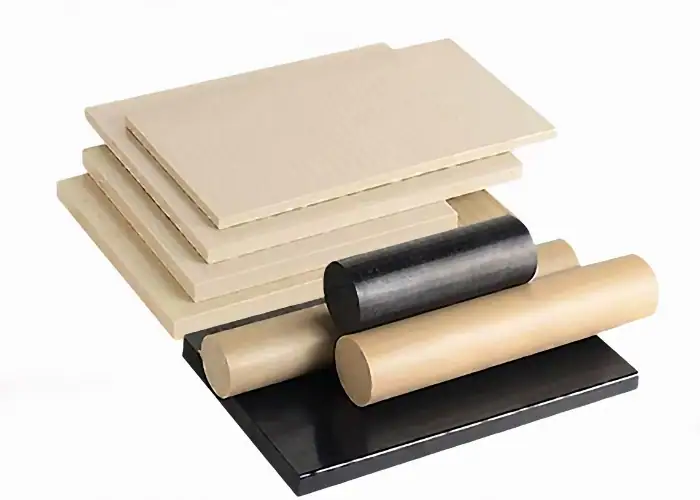
Why Both Materials Are Used For CNC Plastic Parts
PPSU and PEEK are both used for CNC plastic parts because they can support applications where common plastics such as ABS, PC, nylon, POM, or PP may not be enough. They are often chosen when the part must survive heat, cleaning, sterilization, chemicals, or mechanical stress.
CNC machining is useful for both materials because it can produce prototypes, low-volume production parts, custom medical components, precision fixtures, and complex engineering parts without making injection molds. This is especially helpful during design validation or when the quantity does not justify tooling cost.
The key is not to ask which material is better in general. The better question is: which material fits the part function, working temperature, chemical exposure, tolerance requirement, and budget?
PPSU Vs PEEK: Key Material Differences
When comparing PPSU vs PEEK, the most important differences are material structure, heat behavior, mechanical strength, chemical resistance, sterilization performance, wear resistance, and cost. These factors directly affect how the part performs after CNC machining.
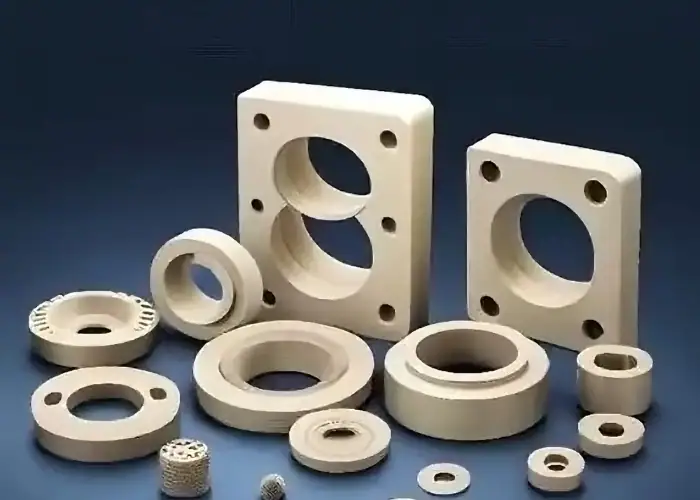
Material Structure And Thermal Behavior
PPSU is amorphous, while PEEK is semi-crystalline. This structure difference affects how each material responds to heat, stress, machining, and long-term use. PPSU generally offers good dimensional stability and toughness, while PEEK offers stronger performance in high-temperature and high-load environments.
PPSU can handle elevated temperatures and repeated steam sterilization, making it suitable for reusable medical and food-related parts. It also has low moisture absorption, which helps maintain dimensional stability in wet or sterilization environments.
PEEK has a higher thermal performance range and is better suited for parts exposed to high operating temperatures, friction, or mechanical load. If the part must maintain strength near higher temperatures or work in a demanding industrial environment, PEEK is usually the stronger choice.
Strength, Toughness, And Wear Resistance
PPSU offers excellent toughness and impact resistance. This makes it useful for parts that may be handled often, dropped, cleaned, assembled, or sterilized repeatedly. For medical device housings, trays, handles, and transparent components, PPSU can provide a good balance of toughness and durability.
PEEK is stronger and more wear-resistant in many demanding applications. It is often chosen when the part needs to carry load, resist creep, or work in sliding contact. Bearings, bushings, seals, valve seats, and dynamic components often benefit from the higher strength and wear performance of PEEK.
If the part mainly needs toughness, sterilization resistance, and cost control, PPSU may be enough. If the part needs high load-bearing performance, long-term wear resistance, or better mechanical strength at high temperature, PEEK is usually more suitable.
Chemical Resistance And Sterilization Performance
PPSU has good resistance to hot water, steam, disinfectants, cleaning agents, and repeated sterilization cycles. This is one reason it is popular in medical, dental, laboratory, and food equipment applications. It is often used where parts must be cleaned and sterilized many times without cracking, deforming, or losing performance.
PEEK also has excellent chemical resistance. It can resist many acids, bases, organic solvents, hydrocarbons, and aggressive environments. This makes it suitable for chemical processing, oil and gas, aerospace, medical, and industrial equipment.
For sterilization-heavy applications, PPSU is often a very strong candidate, especially when transparency, toughness, and cost matter. For chemically aggressive environments or parts exposed to both high temperature and mechanical load, PEEK may provide better long-term reliability.
Cost And Material Availability
Cost is one of the biggest differences between PPSU and PEEK. PEEK is usually more expensive because it delivers higher thermal, mechanical, and chemical performance. In many projects, this cost is justified because failure would be expensive or unsafe.
PPSU is often more cost-effective when the part does not need the full performance of PEEK. For example, a reusable medical tray, handle, housing, or fluid component may require sterilization resistance and toughness, but not the high wear resistance or high-load capability of PEEK.
Material availability also matters. PPSU sheet, PPSU rod, PEEK rod, and PEEK sheet may be available in different sizes, grades, and colors. Before finalizing the design, engineers should check stock form, part size, machining allowance, and required certification.
CNC Machining PPSU Vs PEEK
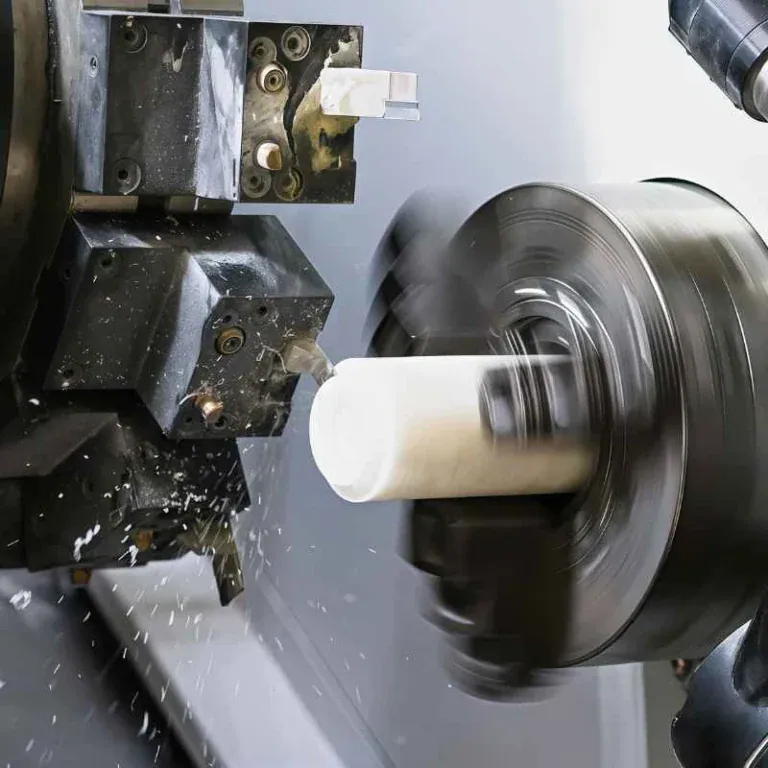
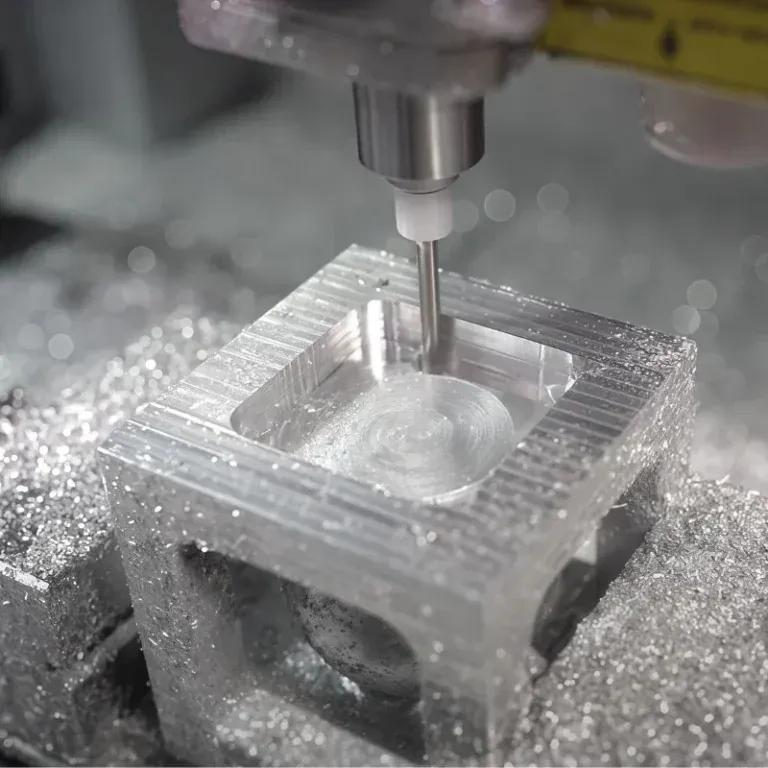
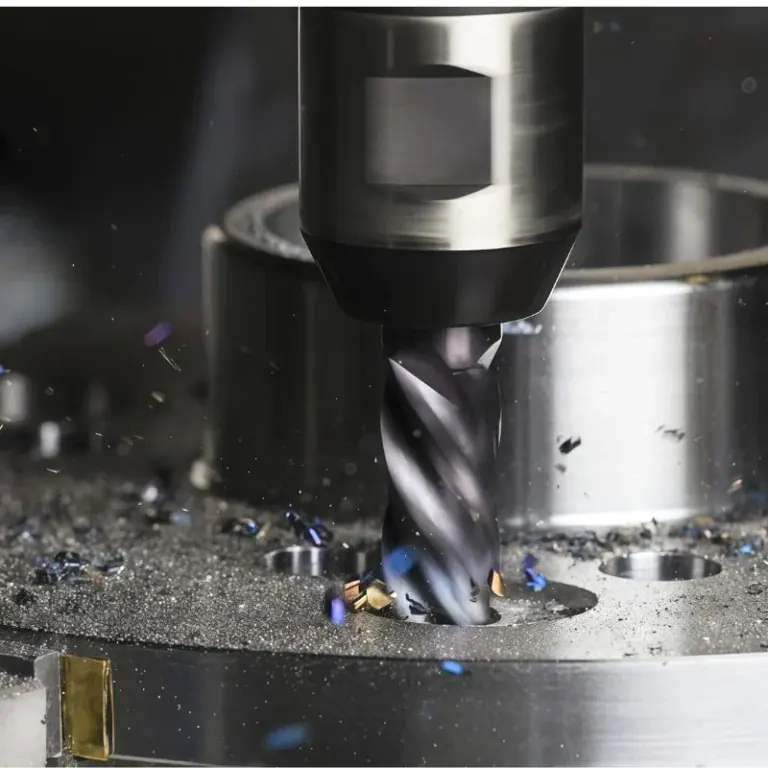
CNC machining PPSU and PEEK requires more care than machining standard plastics. Both materials can produce accurate parts, but machining stability depends on tool sharpness, heat control, fixturing, cutting strategy, and inspection.
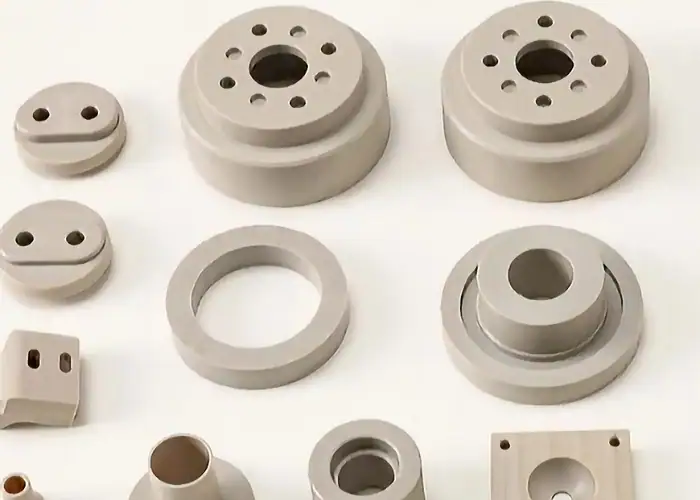
Machining Stability And Deformation Risk
PPSU has good dimensional stability, but it still requires careful machining. Thin walls, sharp internal corners, aggressive cutting, and poor clamping can cause stress or deformation. Because PPSU is often used for medical and visible parts, surface quality and burr control are also important.
PEEK is generally stable during machining, but it can be sensitive to heat buildup. If the cutting temperature is too high, the surface quality, tolerance, and part flatness may be affected. Sharp tools and controlled cutting parameters are important for keeping PEEK parts accurate.
For both materials, stress-relieved stock can help reduce movement after machining. This is especially important for precision CNC plastic parts with tight tolerances, thin sections, flatness requirements, or multiple machining setups.
Tolerance, Burr Control, And Surface Finish
PPSU and PEEK can both be machined to precise tolerances, but final accuracy depends on part geometry and material behavior. Plastic materials can move more than metals under heat, clamping pressure, and internal stress, so tolerance planning must be realistic.
PPSU may produce burrs on small holes, edges, and thin features if the tool is not sharp enough. Careful toolpath planning, controlled feeds, and proper deburring help improve the final part quality. For medical or food-related parts, burrs and sharp edges must be controlled carefully.
PEEK can usually hold good surface finish when machined with sharp carbide tools and stable parameters. However, heat control is still critical. For high-performance parts such as seals, bushings, and sliding components, surface finish can directly affect wear, sealing, and assembly performance.
Cutting Heat, Tooling, And Process Control
Cutting heat is a major issue in CNC plastic machining. Plastics do not conduct heat as well as metals, so heat can stay near the cutting zone. This can cause softening, smearing, burrs, dimensional change, or poor surface finish.
For PPSU, the process should avoid excessive heat and tool pressure. Light cuts, sharp tools, and stable clamping can help protect the part from deformation. Coolant or air cooling may be used depending on the part requirement and cleanliness standard.
For PEEK, tooling and process control are especially important when the part has tight tolerance or functional surfaces. Sharp carbide tools, correct chip evacuation, and stable machining conditions help reduce heat and maintain dimensional accuracy. For demanding PEEK parts, machining should be planned around both performance and inspection needs.
PPSU Vs PEEK Application Selection
Choosing between PPSU and PEEK should start from the application. A material that looks better on a datasheet may not be the best choice for a real CNC part if it increases cost without improving function.
When To Choose PPSU
Choose PPSU when the part needs repeated steam sterilization, good toughness, low moisture absorption, and stable performance in hot water or cleaning environments. PPSU is often a strong choice for reusable medical components, dental tools, sterilization trays, fluid handling parts, food equipment, and transparent or amber-colored parts.
PPSU is also useful when impact resistance is more important than maximum strength. Handles, covers, housings, brackets, trays, and protective components may benefit from PPSU because the material can handle repeated use and cleaning.
For cost-sensitive high-performance plastic parts, PPSU can be a good middle ground. It offers better performance than many standard plastics while avoiding the higher cost of PEEK when PEEK-level performance is not required.
When To Choose PEEK
Choose PEEK when the part needs higher mechanical strength, better wear resistance, high-temperature performance, or stronger chemical resistance. PEEK is suitable for demanding CNC plastic parts that must work under load, friction, pressure, heat, or aggressive chemicals.
Common PEEK applications include bushings, bearings, seals, valve components, pump parts, compressor parts, semiconductor fixtures, aerospace components, medical implant-related parts, and high-performance electrical insulators. These parts often need long-term reliability under difficult working conditions.
PEEK is also a strong choice when replacing metal parts. Its high strength-to-weight ratio, corrosion resistance, and wear performance make it valuable in designs that need lighter weight without sacrificing function.
When PPSU Can Replace PEEK
PPSU can replace PEEK when the application does not require the highest temperature resistance, wear resistance, or load-bearing performance. If the main needs are sterilization resistance, toughness, dimensional stability, and cost control, PPSU may be a more practical material.
For example, a reusable medical handle or tray may not need PEEK’s full mechanical strength. In this case, PPSU can provide enough performance while reducing material cost. This is especially important for parts where many pieces are produced or where the material volume is large.
However, PPSU should not replace PEEK blindly. If the part is exposed to high friction, continuous load, high temperature, aggressive chemicals, or tight mechanical fit, PEEK may still be the safer choice. The final decision should depend on real operating conditions, not only material price.
Common Mistakes When Choosing PPSU Or PEEK
Many material selection problems happen because the choice is based on one property only. PPSU vs PEEK should be evaluated as a full engineering decision, including performance, machining, application, cost, and inspection.
Choosing Only By Temperature Rating
Temperature rating is important, but it is not the only factor. A material may survive heat but still fail because of load, stress, chemical exposure, wear, or dimensional change. This is why engineers should avoid choosing PPSU or PEEK only by maximum temperature.
PPSU may be excellent for repeated sterilization and hot water exposure, but it may not match PEEK for high-load or high-wear applications. PEEK may handle higher temperatures, but it may be unnecessary if the part only needs cleaning resistance and moderate strength.
The better method is to define the full working environment: continuous temperature, peak temperature, load, contact surfaces, cleaning method, chemical exposure, and tolerance requirement.
Ignoring Sterilization Or Chemical Exposure
For medical, dental, laboratory, and food equipment parts, sterilization and cleaning conditions are critical. Steam, hot water, disinfectants, alcohols, cleaning chemicals, and radiation can affect plastic parts over time.
PPSU is often selected because it performs well in repeated steam sterilization and hydrolysis environments. If the part will be autoclaved frequently, PPSU should be evaluated carefully.
PEEK is also strong in many chemical and sterilization environments, but its higher cost must be justified by the actual performance need. For highly aggressive chemicals, high temperature, and mechanical load together, PEEK may offer better long-term reliability.
Over-Specifying PEEK When PPSU Is Enough
PEEK is an excellent material, but it is not always necessary. Using PEEK when PPSU is enough can increase part cost without adding real value. This is common when engineers choose the most powerful material instead of the most suitable one.
If the part is a cover, handle, tray, bracket, or low-load medical component, PPSU may meet the functional requirements. In this case, choosing PPSU can reduce cost while still providing good performance.
For CNC plastic machining, this decision can also affect lead time and material utilization. High-cost materials should be used where their performance is truly needed. A good supplier can help compare the drawing, tolerance, and application before machining begins.
FAQ
Is PEEK The Strongest Plastic?
PEEK is one of the strongest high-performance engineering plastics, but it is not always the strongest in every category. Some reinforced or specialty polymers may perform better in certain conditions. However, PEEK offers an excellent balance of strength, heat resistance, chemical resistance, wear resistance, and machinability for CNC plastic parts.
How Long Does PPSU Last?
The service life of PPSU depends on temperature, cleaning method, sterilization cycles, chemical exposure, load, and part design. In suitable applications, PPSU can provide long service life because it has good toughness, hydrolysis resistance, and repeated sterilization resistance. For critical parts, material grade and working conditions should be confirmed before production.
Are PEEK And PTFE The Same?
No. PEEK and PTFE are different high-performance plastics. PEEK offers higher strength, better stiffness, and better load-bearing ability. PTFE has excellent low friction and chemical resistance, but it is softer and less suitable for structural parts. For CNC plastic parts, PEEK is often chosen for strength and wear performance, while PTFE is often chosen for low-friction or sealing applications.
Conclusion
PPSU vs PEEK is not a simple choice between good and bad materials. PPSU is often better for sterilizable, tough, dimensionally stable, and cost-balanced CNC plastic parts. PEEK is usually better for high-temperature, high-load, wear-resistant, and chemically demanding applications. The right choice depends on how the part will be used, cleaned, loaded, measured, and assembled.
At TiRapid, we provide precision CNC machining services for high-performance plastic parts, including PPSU, PEEK, and other engineering materials. Our team can review your drawings, tolerance requirements, working conditions, and material options to help choose a practical machining route for prototypes, low-volume production, and demanding functional components.