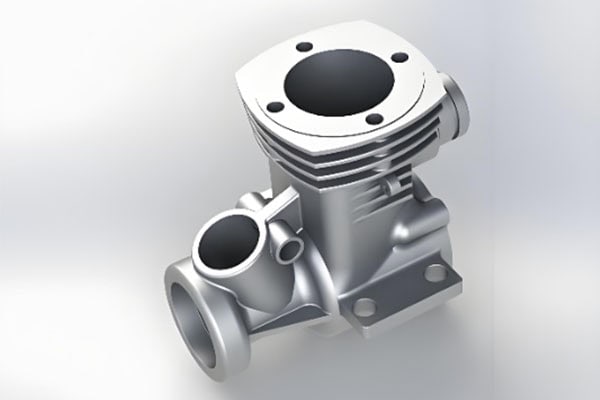
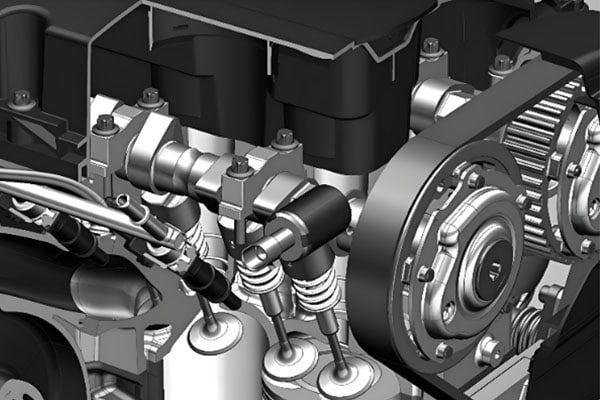
Motorcycle engines operate under high temperatures, high-speed rotation, continuous vibration, and complex mechanical loads. As a result, engine components require high dimensional accuracy, reliable material performance, excellent surface quality, and consistent assembly tolerances. Components such as cylinder heads, engine covers, shafts, bushings, mounting bases, and transmission-related parts all require stable and precise manufacturing processes.
CNC machining can produce motorcycle engine components directly from CAD drawings through precision milling, turning, drilling, tapping, and multi-axis machining. It is suitable for prototypes, low-volume production, and batch manufacturing. TiRapid provides 3-axis, 4-axis, and 5-axis CNC machining capabilities and supports a wide range of materials, including aluminum alloys, steel, stainless steel, and titanium alloys. This allows customized machining solutions to be developed according to different engine component requirements.
Get 20% offf
Your First Order
Need custom metal and plastic parts?
Key Requirements for Motorcycle Engine Parts Machining
High Dimensional Accuracy
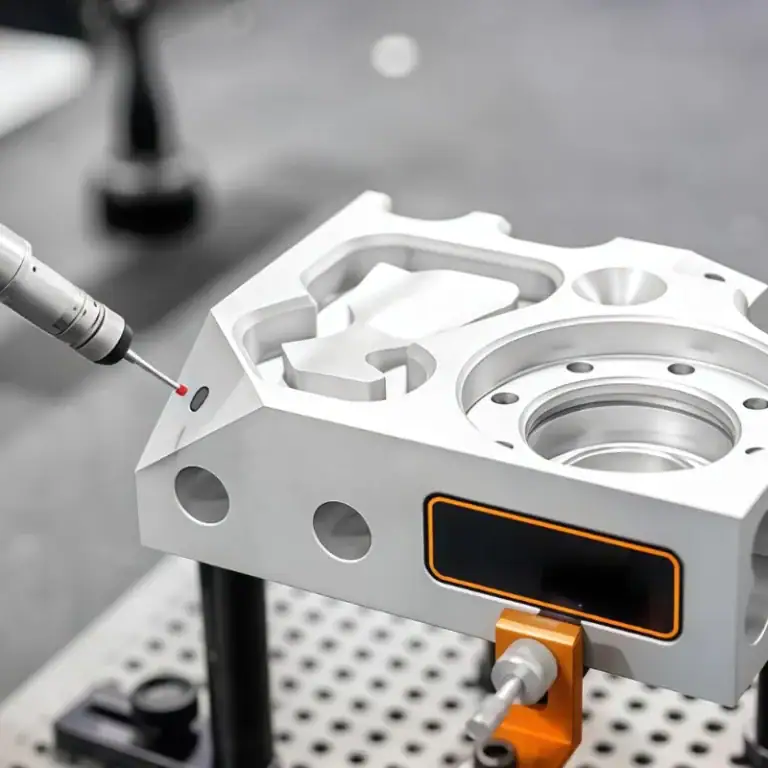
Motorcycle engine components often need to fit precisely with shafts, bearings, seals, and other mechanical parts. Excessive dimensional deviations in holes, shafts, mounting surfaces, or positioning structures can affect assembly and overall engine performance. CNC machining helps maintain tight tolerances and consistent positioning accuracy throughout production.
Excellent Surface Quality
Many engine components are exposed to friction, rotation, sealing, and other demanding operating conditions. Surface roughness can directly affect friction, sealing performance, and component service life. Appropriate cutting tools, machining parameters, and finishing processes are therefore essential for achieving stable surface quality.
Matching Materials with Machining Processes
Different motorcycle engine components require different materials according to their strength, weight, wear resistance, and heat resistance requirements. Aluminum alloys are commonly selected for lightweight structural components, while high-strength steel can be used for parts exposed to higher mechanical loads. Stainless steel and other engineering materials may also be selected for applications requiring improved corrosion or heat resistance.
CNC Machining Solutions for Motorcycle Engine Parts
CNC Milling
Engine covers, mounting bases, flanges, brackets, and components with complex surfaces can be manufactured through CNC milling. Milling can produce precise planes, slots, holes, pockets, and three-dimensional profiles.
For components with complex structures and multiple surfaces requiring accurate positioning, 5-axis CNC machining can reduce errors caused by repeated setups. TiRapid’s 5-axis machining capability is suitable for complex geometries and allows multiple surfaces to be machined with fewer setups.
CNC Turning
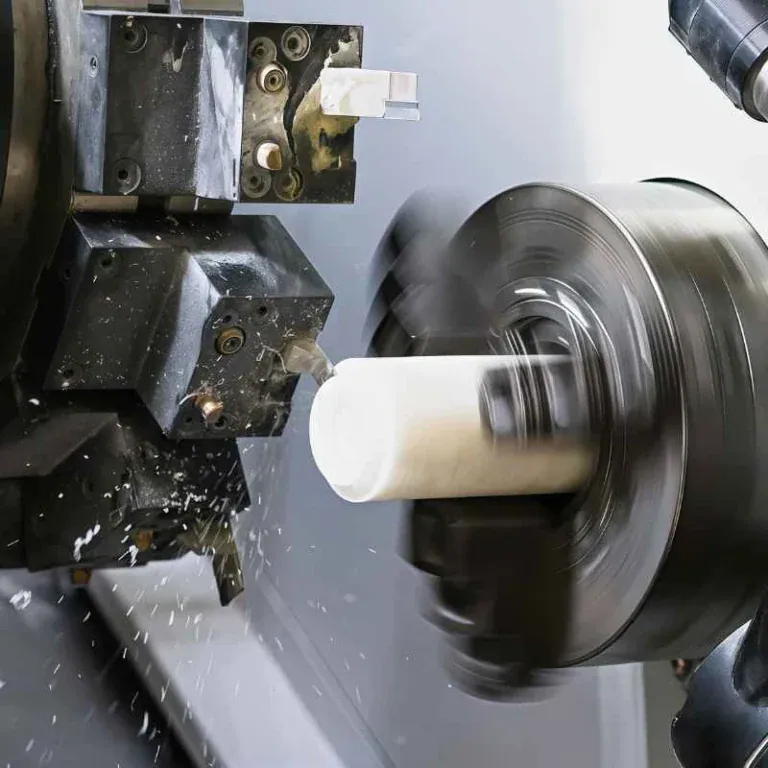
Shafts, bushings, sleeves, and other cylindrical engine components are well suited to CNC turning. Turning, drilling, threading, and finishing operations can be combined to achieve accurate control of dimensions, concentricity, roundness, and fit tolerances.
Multi-Axis CNC Machining
Some motorcycle engine components feature curved surfaces, holes, slots, and machining features positioned at different angles. Multiple setups on conventional equipment can introduce accumulated positioning errors. Using 4-axis or 5-axis CNC machining can reduce the number of setups while improving machining efficiency and consistency.
TiRapid provides 3-axis, 4-axis, and 5-axis CNC machining services, allowing the appropriate machining method to be selected according to the component’s geometry and production requirements.
Common Motorcycle Engine Parts and Machining Methods
Engine Component
Common Materials
Recommended Machining
Key Machining Requirements
Engine Cover
Aluminum Alloy
CNC Milling, Drilling
Profile, hole positions, sealing surfaces
Cylinder Head Components
Aluminum Alloy, Steel
CNC Milling, Drilling
Flatness, hole accuracy
Bushings
Steel, Stainless Steel
CNC Turning
Inner/outer diameter, concentricity
Mounting Bases
Aluminum Alloy, Steel
CNC Milling
Positioning holes, mounting surfaces
Transmission Components
Alloy Steel
CNC Turning, Milling
Dimensions and mating tolerances
Support Structures
Aluminum Alloy, Steel
3/4/5-Axis Machining
Complex profiles, structural strength
How TiRapid Supports Custom Engine Parts Machining
Motorcycle engine parts machining involves more than controlling individual dimensions. Material selection, component geometry, machining difficulty, and production volume must all be considered together. TiRapid can perform DFM analysis based on CAD files and technical drawings, then recommend 3-axis, 4-axis, or 5-axis milling, CNC turning, or other suitable processes according to the component design.
TiRapid’s CNC machining services support prototypes, low-volume production, and production manufacturing. A wide range of metals and plastics are available, allowing customers to select materials according to their mechanical, thermal, and application requirements.
For motorcycle engine projects, a well-planned machining process can reduce repeated setups, minimize machining errors, and improve consistency between production batches. TiRapid also provides surface finishing options to meet both functional and appearance requirements.
Choosing the Right Engine Parts Machining Supplier
Motorcycle engine components require reliable manufacturing because their dimensional accuracy and mechanical performance can directly influence the operation of the finished vehicle. A qualified machining supplier should have not only advanced CNC equipment but also engineering expertise, material selection capabilities, quality control processes, and scalable production capacity.
TiRapid provides CNC machining services covering engineering support, DFM optimization, material selection, precision machining, and post-processing. With ISO 9001 quality management certification and multi-axis CNC machining capabilities, TiRapid can support precision component manufacturing for the powersports industry.
Motorcycle engine parts machining involves multiple requirements, including dimensional accuracy, material performance, surface quality, and production consistency. CNC milling, CNC turning, and 4-axis or 5-axis machining provide effective solutions for complex engine components and precision assembly requirements.For companies developing or manufacturing motorcycle engine components, working with a CNC machining supplier that combines engineering support, multi-axis machining capabilities, and quality control can help improve component quality and shorten development cycles. TiRapid provides customized CNC machining solutions for motorcycle and powersports components, supporting projects from prototypes and initial development to low-volume production and larger-scale manufacturing.
Author
Galen Director and Founder
Committed to ensuring we provide the best possible service in the manufacturing industry.
Turbine blades are made from materials selected for the temperature, mechanical loads, and environment of their operating stage. Nickel-based superalloys are common in high-temperature gas turbines, while heat-resistant steels are
A wafer chuck is a precision holding device that supports and secures silicon wafers during semiconductor manufacturing, inspection, and testing. Depending on its design, it uses vacuum pressure, electrostatic attraction,
Blade machining produces or refines the airfoil, attachment features, and edges that allow a blade to fit its assembly and interact with the working fluid. The challenge is controlling those
A CNC-machined plate can meet its thickness limits and still cause problems when it is bolted into an assembly. A bowed mounting face may leave gaps, distort a supported component,
How are turbine blades made? Turbine blades are precision-engineered components manufactured through carefully controlled material preparation, CNC machining, grinding, polishing, and quality inspection. Depending on the blade design, 5-axis CNC
Limits, fits and tolerances define the acceptable dimensional variation and assembly relationships between mating mechanical components. Limits establish the maximum and minimum permitted sizes, tolerances define the allowable variation, and
Ejector pins are small mold components, but they play a major role in whether an injection molded part can leave the mold cleanly and consistently. After plastic cools around the
A machined housing can have a flat mounting face, a deep pocket, a bearing seat, and threaded holes. A shaft may need finished diameters, grooves, and an axial bore. Each
CNC plastic machining is a subtractive manufacturing process that uses computer-controlled cutting tools to produce precision components from engineering plastics. It is widely used for prototypes, custom housings, bushings, gears,
A flat mounting face, a deep pocket, and a curved mold surface call for different cutting approaches. Choosing a milling cutter starts with understanding the feature to be produced, then
Aluminum is a weakly paramagnetic metal, meaning it responds slightly to an external magnetic field but does not behave like iron or ordinary carbon steel. A typical refrigerator magnet will
Stiffness and strength are often treated as if they describe the same material behavior, but they answer different engineering questions. Stiffness tells you how much a material or part deforms