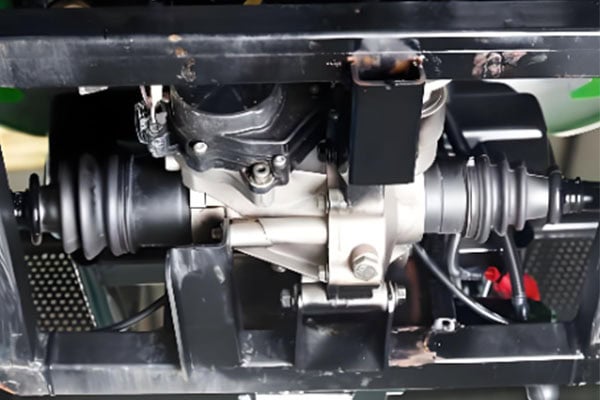
UTVs (Utility Terrain Vehicles) are designed to operate on mud, gravel, rocky terrain, and other challenging off-road surfaces. Their chassis systems are continuously exposed to impact, vibration, torsional loads, and uneven road conditions. Therefore, UTV chassis components need to provide sufficient structural strength while maintaining dimensional accuracy, assembly performance, wear resistance, and controlled weight.
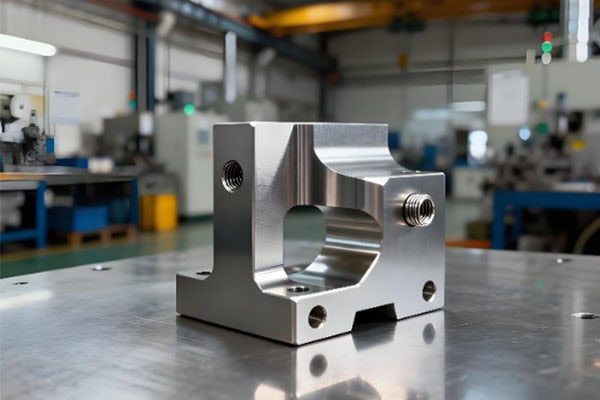
CNC precision machining is well suited for manufacturing UTV chassis components such as mounting bases, suspension brackets, steering components, connectors, bushings, wheel-related parts, and other customized structural components. Through CNC milling, turning, and 4-axis or 5-axis machining, manufacturers can produce complex profiles, holes, curved surfaces, and precision mating features directly from 3D models and engineering drawings.
Get 20% offf
Your First Order
Need custom metal and plastic parts?
Key Requirements for UTV Chassis Parts Machining
High Structural Strength
UTV chassis components are exposed to impact forces and dynamic loads during off-road operation. Suspension mounting brackets, connecting components, and load-bearing structures require suitable material strength and reliable machining quality.
Aluminum alloys and alloy steels can be selected according to the specific load, weight, and performance requirements of each component.
Accurate Mounting Hole Positions
Many UTV chassis components are connected to other assemblies using bolts, shafts, and bearings. Deviations in hole diameter, hole spacing, or hole position can affect the assembly of suspension, steering, and wheel systems.
CNC machining allows manufacturers to precisely control hole dimensions, positional accuracy, concentricity, and mounting surfaces to achieve reliable component assembly.
Lightweight Design
UTV chassis components need to combine structural strength with weight control. For components that are not exposed to extremely high loads, aluminum alloys combined with optimized structural designs can reduce component weight while maintaining the required mechanical performance.
CNC machining can produce complex 3D structures and precision lightweight components according to digital models, making it suitable for modern UTV lightweight design.
CNC Machining Solutions for UTV Chassis Parts
CNC Milling
Mounting brackets, suspension supports, steering bases, connecting plates, and other complex UTV chassis components can be manufactured using CNC milling.
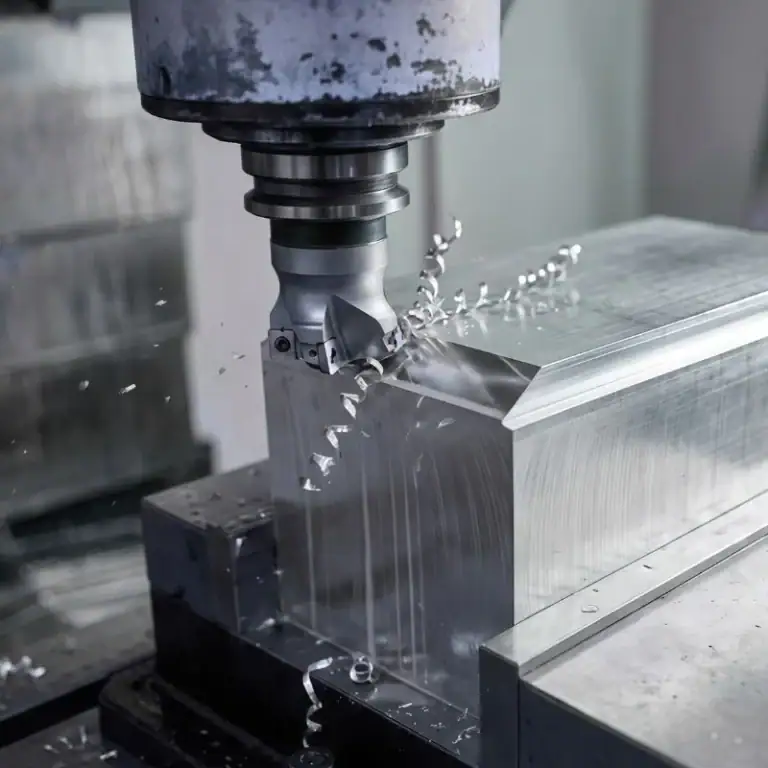
Roughing, semi-finishing, and finishing operations can be used to produce external profiles, mounting surfaces, grooves, pockets, and precision holes.
For aluminum UTV components, appropriate cutting tools and machining parameters can help balance machining efficiency and surface quality while reducing burrs and deformation.
CNC Turning
Bushings, sleeves, connecting shafts, cylindrical mounting components, and other rotational parts are well suited to CNC turning.
CNC turning can effectively control inner diameters, outer diameters, lengths, and concentricity, providing reliable mating dimensions for bearings and other moving components.
Drilling and threading operations can also be integrated into the machining process, helping reduce repeated positioning and improve production efficiency.
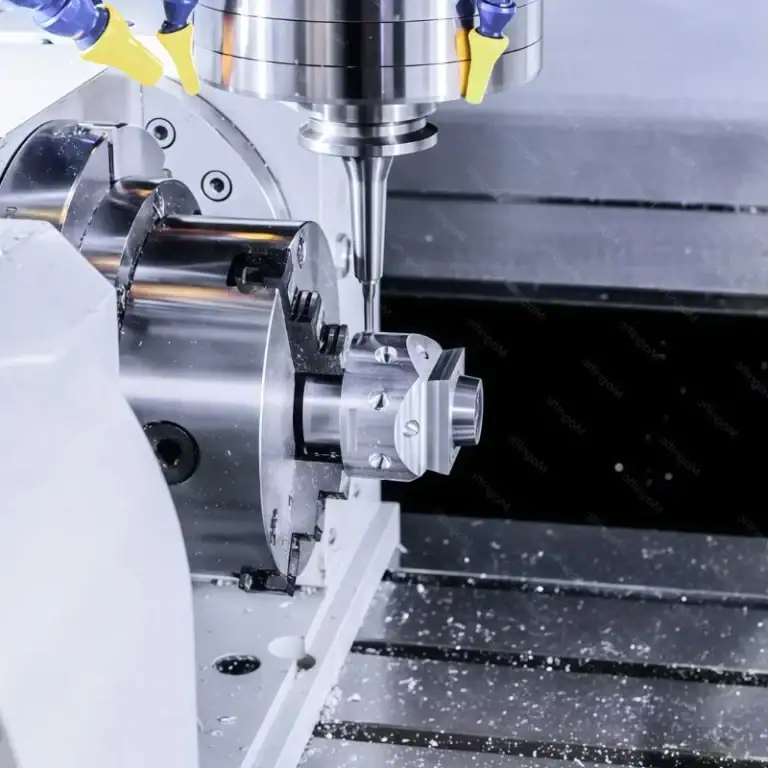
4-Axis and 5-Axis CNC Machining
Some UTV chassis components feature multiple machining surfaces, angled holes, and complex curved profiles. Using conventional 3-axis equipment with repeated setups can increase machining time and create accumulated positioning errors.
4-axis and 5-axis CNC machining can reduce the number of setups and allow components to be machined from multiple directions. These capabilities are particularly useful for complex suspension brackets, steering components, and chassis parts with spatial curves.
TiRapid can select the appropriate multi-axis machining process according to the component geometry and technical requirements.
Common UTV Chassis Parts and Machining Methods
UTV Chassis Component
Common Materials
Recommended Machining
Key Machining Requirements
Suspension Bracket
Aluminum Alloy, Alloy Steel
CNC Milling, 5-Axis Machining
Mounting holes, structural strength
Steering Mount
Aluminum Alloy, Steel
CNC Milling, Drilling
Hole position, concentricity
Bushing / Sleeve
Steel, Stainless Steel, Aluminum Alloy
CNC Turning
Inner/outer diameter, roundness
Chassis Connector
Aluminum Alloy, Steel
CNC Milling
Profile, hole spacing, mounting surfaces
Transmission Mount
Alloy Steel, Aluminum Alloy
CNC Turning, Milling
Mating dimensions, wear resistance
Wheel Hub Components
Aluminum Alloy, Steel
CNC Turning, 5-Axis Machining
Concentricity, hole position accuracy
TiRapid UTV Chassis Parts Machining Advantages
UTV chassis components often feature customized designs, complex geometries, and diverse material requirements. TiRapid can perform DFM analysis based on customer CAD files and 3D models, evaluating wall thickness, hole positions, machining directions, and tool accessibility before production.
This engineering analysis helps identify potential manufacturing issues and optimize the machining process before production begins.
Multi-Axis CNC Machining Capabilities
TiRapid provides 3-axis, 4-axis, and 5-axis CNC machining services. Different machining equipment can be selected according to the geometry of each UTV chassis component.
Simple structural components can be efficiently produced with 3-axis CNC machining, while complex curved parts and components with multi-angle features can benefit from 4-axis or 5-axis machining.
Wide Range of Material Options
UTV chassis components do not all require the same material properties. TiRapid supports aluminum alloys, steel, stainless steel, titanium alloys, and various engineering plastics.
Material selection can be based on component weight, strength, wear resistance, operating environment, and other application requirements.
Prototyping to Low-Volume Production
During UTV product development, manufacturers often need prototypes for design verification before moving into low-volume production.
CNC machining does not require complex molds, allowing manufacturers to produce prototypes directly from digital design files. Design changes can then be implemented quickly based on testing and evaluation, helping shorten the product development cycle.
How to Choose a UTV Chassis CNC Machining Supplier
When selecting a CNC machining supplier for UTV chassis components, manufacturers should consider machining equipment, dimensional accuracy, material capabilities, quality control, and engineering support.
For complex chassis components, a supplier with only standard 3-axis equipment may have limitations. A manufacturer with multi-axis CNC machining capabilities can provide greater flexibility for components with complex geometries and multiple machining surfaces.
TiRapid provides customized CNC machining services for powersports equipment, supporting manufacturing processes from design analysis and material selection to precision machining and surface finishing.
For companies requiring customized UTV chassis components, the machining process can be developed according to specific 3D models, engineering drawings, tolerances, and application requirements.
UTV chassis components need to balance structural strength, dimensional accuracy, weight, and long-term reliability. CNC milling, CNC turning, and 4-axis or 5-axis machining can cover the manufacturing requirements of suspension brackets, steering mounts, bushings, connectors, wheel-related components, and other complex chassis parts.For UTV and other powersports manufacturers, a well-planned CNC machining process can improve dimensional consistency, optimize complex structures, reduce repeated setups, and increase production efficiency.With multi-axis CNC machining capabilities and customized manufacturing support, TiRapid provides CNC machining solutions for UTV chassis components and other powersports precision parts, supporting projects from prototype development through low-volume production.
Author
Galen Director and Founder
Committed to ensuring we provide the best possible service in the manufacturing industry.
Vertical and horizontal milling use the same basic cutting principle, but spindle orientation changes how the tool reaches the workpiece, clears chips, and handles different part geometries. This guide explains
Chamfer machining is the process of removing material from an edge, hole, or contour to create a controlled angled surface. In CNC manufacturing, chamfers are commonly used to remove sharp
Custom machining is used when a part cannot be sourced as a standard component or when its geometry, material, tolerance, or function must be tailored to a specific project. Instead
Undercut machining creates recessed, hidden, or back-facing features that a standard straight-shank cutter cannot reach from the primary machining direction. The main challenge is usually not removing the material, but
Semiconductor equipment depends on far more than electronics and process technology. Behind every wafer-handling system, test station, inspection tool, and process chamber is a network of precision-machined parts, structural components,
AI CNC machining combines traditional computer numerical control with artificial intelligence, machine learning, manufacturing data, sensors, and intelligent CAM software. Instead of replacing CNC technology, AI adds a decision-support layer
Robotic process automation is a software-based automation technology that uses digital bots to complete repetitive, rules-based tasks normally performed by people on computers. RPA bots can enter and transfer data,
Computer numerical control machining is an automated manufacturing process in which programmed computer instructions control machine tools to remove material and produce precise parts. CNC technology can control tool movement,
Semiconductor manufacturing is the process of turning high-purity semiconductor materials into functional chips through a sequence of wafer preparation, thin-film formation, photolithography, etching, doping, metallization, testing, dicing, packaging, and final
Semiconductors are materials whose electrical conductivity can be controlled between that of conductors and insulators. Silicon is the most widely used semiconductor material, but germanium, silicon carbide, gallium nitride, gallium
Boring machining is a precision cutting process used to enlarge and correct an existing hole. Unlike drilling, which creates the initial hole, boring improves diameter, roundness, straightness, alignment, and internal
Shaft machining is the precision manufacturing of cylindrical components that transmit torque, support rotating elements, or provide controlled motion within mechanical systems. Although a shaft may appear simple, its performance