When industrial equipment is finally ready for installation, the component most likely to be overlooked is often not the motor or controller, but the seemingly ordinary base underneath. A slight dimensional deviation in the base can make guide rails, equipment modules, and connecting components difficult to install. An unstable support structure may also cause vibration during operation. This is especially important for customized industrial equipment, where the base may need to accommodate mounting holes, positioning features, support areas, and connection interfaces at the same time. CNC machining provides a more reliable manufacturing solution through flexible programming and stable dimensional control.
Why Do Industrial Equipment Bases Require CNC Machining?
An industrial equipment base is much more than a simple metal plate. It often supports equipment loads, fixes components in place, positions modules, and provides mounting connections. When equipment structures are modified, the base may also need to be redesigned, with changes to hole locations, steps, slots, and mounting areas. What purchasing teams really care about is whether the finished part can be installed directly, whether critical features are accurate, whether machining has caused noticeable deformation, and whether future repeat orders can maintain the same specifications.
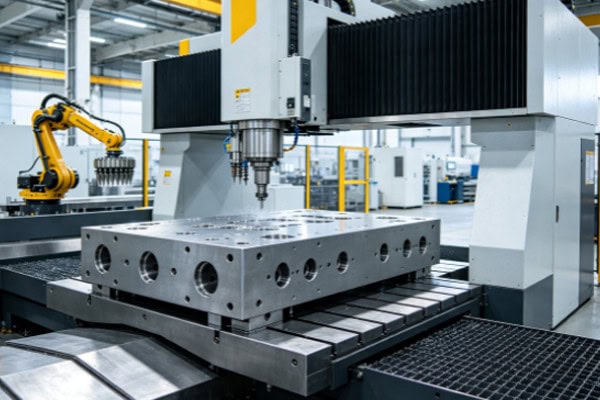
Mounting Hole Positions Must Match Precisely
Industrial equipment bases often contain numerous connection holes, with different positions corresponding to different equipment components. Even a noticeable deviation in hole location can make on-site installation difficult and may require additional machining.
- Mounting hole spacing needs to match the equipment structure, reducing the need for on-site modifications.
- Positioning holes need accurate positional relationships to ensure proper installation of equipment modules.
- Threaded holes require appropriate diameters, depths, and effective thread lengths for reliable assembly.
- Counterbores, stepped holes, and other special features also need stable dimensions.
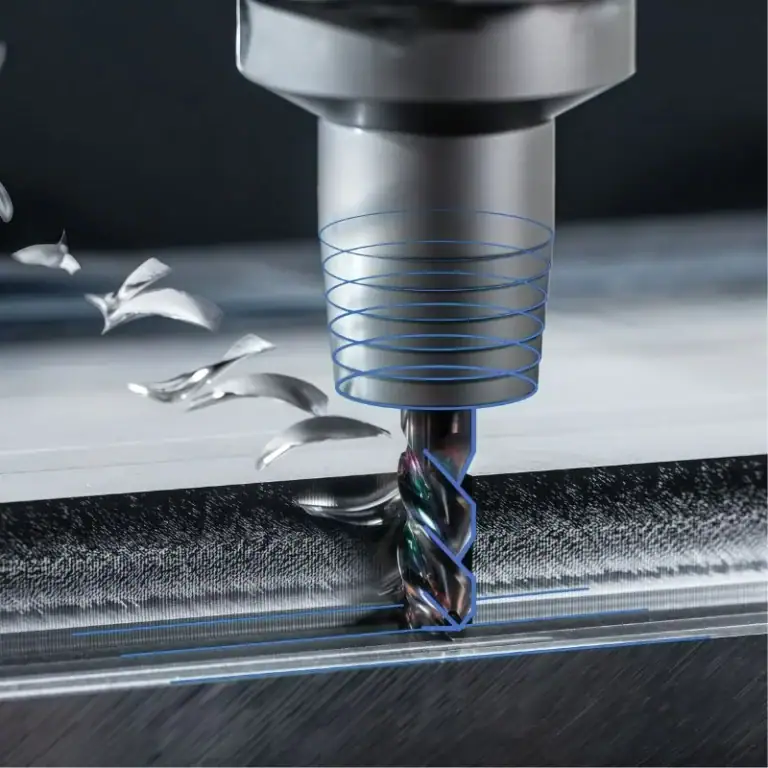
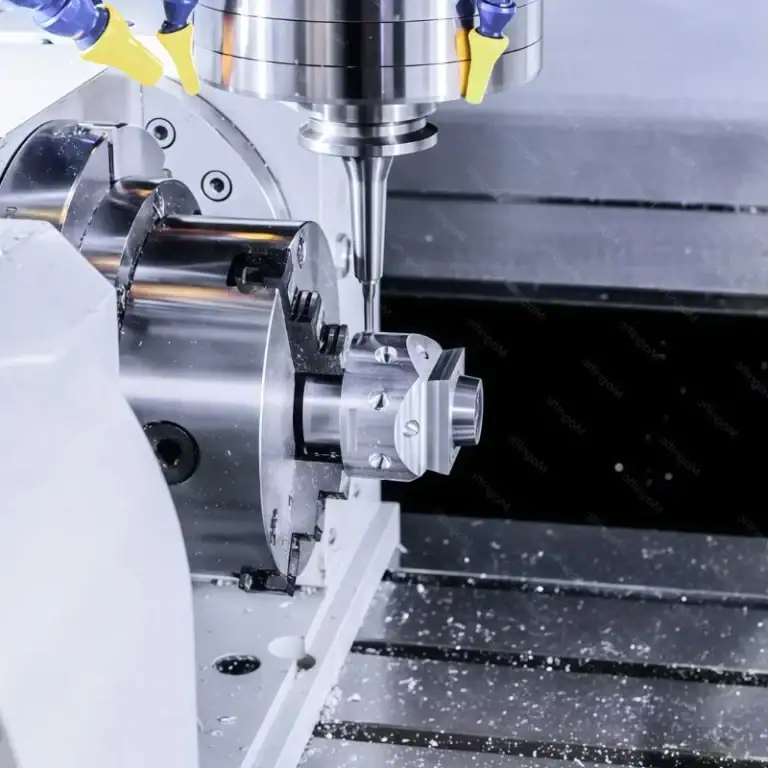
CNC machining can control tool paths based on 2D engineering drawings or 3D models, maintaining consistent relationships between different hole positions. For industrial equipment bases with dense hole patterns and complex mounting structures, digital machining reduces errors caused by manual operations and makes final assembly easier.
Load-Bearing and Support Structures Are More Than Just Appearance
Industrial equipment bases continuously carry equipment weight and operational loads, so the actual load conditions need to be considered during manufacturing. Large bases may also experience dimensional changes caused by stress after substantial material removal. If the machining sequence is not properly planned, the finished part may deviate from its original design dimensions. Before machining, support locations, fixing methods, and primary load-bearing areas should be evaluated, followed by a suitable material-removal and finishing sequence. For equipment manufacturers, the base needs to meet drawing requirements while also maintaining sufficient support stability after the equipment is installed.
Different Materials Require Different Machining Strategies
Industrial equipment bases are manufactured from different materials depending on the equipment design and operating conditions. Aluminum alloys are common in lightweight equipment, while carbon steel or alloy steel may be used for heavy-duty systems. Stainless steel is also selected for equipment operating in demanding environments. Once the material changes, cutting parameters, tool conditions, and surface treatment requirements may also change.
| Common Material | Typical Applications | Key CNC Machining Considerations |
| Aluminum Alloy | Automation equipment, electronic equipment | Weight, hole positions, surface quality |
| Carbon Steel | Heavy industrial equipment | Load-bearing capacity, machining stability |
| Stainless Steel | Inspection and special-environment equipment | Tool wear, surface condition |
| Alloy Steel | High-load equipment | Strength, dimensional stability |
After the material is selected, the machining method also needs to match the part structure. Focusing only on material cost can overlook actual cutting difficulty, so machining time, dimensional requirements, and final assembly requirements should also be considered during purchasing.
What Problems Can Occur When CNC Machining Industrial Equipment Bases?
Many machining problems with base components are not immediately visible from the outside. A part may look fine after machining but reveal positional errors when the equipment is actually installed. Some bases may meet dimensional requirements at an early stage but develop local dimensional changes after significant material removal. Large and structurally complex bases require careful control of fixturing, machining sequence, and cutting forces.
CNC machining is not simply a matter of loading a drawing into a machine and running a program. A single base may contain mounting surfaces, positioning holes, slots, steps, and threaded features, each with different machining requirements. Proper process planning makes production more predictable, while insufficient preparation can lead to additional machining time and manufacturing costs later.
How Does CNC Machining Ensure the Quality of Industrial Equipment Bases?
An industrial equipment base ultimately needs to integrate smoothly into the complete equipment assembly. Machining quality should not be judged by a single dimension alone, but by whether the entire component can successfully move into the installation stage. Critical mounting surfaces, hole relationships, structural condition, and final dimensions all need to be planned in advance. For purchasing teams, a stable machining process means fewer adjustments after delivery and greater confidence that the part can be installed as intended.
Prioritize Critical Mounting Areas
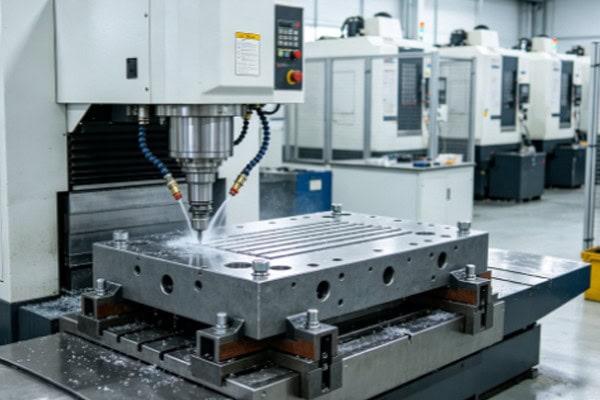
Different areas of a base have different levels of importance. Equipment fixing holes, guide rail mounting surfaces, positioning features, and module interfaces are usually critical areas. During machining, critical and non-critical dimensions should be identified in advance so that precision machining resources can focus on features that directly affect assembly.
- Finish guide rail mounting surfaces carefully to maintain a stable installation foundation.
- Inspect positioning holes closely to confirm their positional relationships.
- Control the height difference of module mounting steps to prevent component misalignment after installation.
Identifying critical areas early can reduce repeated adjustments during machining and make final inspection more efficient. For precision industrial equipment, this type of process planning is often more practical than simply pursuing higher machining speed.
Plan Fixturing and Machining Sequences Properly
For large bases, fixturing has a direct influence on machining conditions. Improper support locations can cause local dimensional changes during cutting, while excessive clamping force may affect weaker areas. In actual production, the workpiece needs to remain properly supported throughout major machining operations, with roughing and finishing arranged in a suitable sequence. Rough machining removes most of the material allowance, while finishing operations focus on critical dimensions and mounting areas. This approach helps maintain better dimensional stability during later stages. For bases with large slots or hollowed-out sections, structural changes during material removal should also be considered in advance rather than discovered near the end of production.
Final Inspection Should Go Beyond Overall Dimensions
Before an industrial equipment base is delivered, inspection should cover more than length, width, and height. Installation performance is often determined by hole positions, mounting surfaces, step dimensions, and the positional relationships between different features.
- Check mounting hole diameters and positions against the engineering drawing.
- Inspect critical mounting surfaces to prevent problems when upper-level components are installed.
- Re-measure important features to confirm machining stability.
- Record key inspection data when necessary to support specification tracking for future repeat orders.
A complete inspection process helps identify potential problems before shipment, reducing the risk of discovering installation issues only after the equipment manufacturer receives the part. It also makes it easier to maintain the same manufacturing standard for future production batches.
What Should You Consider When Purchasing CNC Machined Industrial Equipment Bases?
Industrial equipment bases are rarely one-time purchases. After an equipment system enters development or production, additional bases may be required for capacity expansion, structural upgrades, maintenance, or replacement. Comparing only the unit price can easily overlook drawing management, first-article approval, delivery capability, and repeat-order consistency. A manufacturing supplier that saves time should make the entire process—from initial communication to production and repeat purchasing—straightforward.
Prepare Complete Drawing Information
Industrial equipment bases contain a large amount of dimensional and installation information. The more complete the documentation, the easier it is for the manufacturing team to identify potential machining difficulties. For non-standard industrial equipment, providing both a 3D model and 2D drawing is usually much clearer than supplying a simple dimensional sketch. Purchasing documents should specify the material grade, critical dimensions, tolerances, surface treatment, threads, and special machining requirements. For replacement parts used in older equipment, installation dimensions and information from the original part can also be useful. Clear information at the beginning makes quotation, process evaluation, and production planning more efficient while reducing repeated clarification caused by missing data.
Pay Attention to Response Speed for Small-Batch Orders
During industrial equipment development, a company may only need one or two base prototypes. Equipment modification projects may also require only a small number of replacement components. Although these orders are small, they can directly affect project schedules. CNC machining is well suited to this type of customized production because it does not require large investments in mold development. Purchasing teams can start with a small number of prototypes and then use test results to improve subsequent production. For equipment development companies, receiving prototypes earlier also means installation testing and structural validation can move forward sooner.
Keep Production Records for Long-Term Repeat Orders
Once equipment is in operation, the same type of base may need to be purchased repeatedly. If material, dimensions, and machining methods have to be reconfirmed for every order, the purchasing cycle can become unnecessarily long. Keeping drawing versions, part numbers, material information, and historical production records makes it easier to reproduce the original specifications. For long-term projects, this type of documentation management reduces repeated communication and helps maintain consistency between production batches.
| Purchasing Stage | Key Information to Confirm | Practical Impact on the Project |
| Drawing Communication | Dimensions, tolerances, hole positions, material | Reduces repeated clarification |
| First-Article Production | Assembly relationships, critical dimensions | Supports equipment testing and validation |
| Batch Production | Quantity, revision, lead time | Makes production planning easier |
| Repeat Orders | Drawings, part numbers, production records | Shortens future purchasing cycles |
An industrial equipment base may look like nothing more than a structural component underneath the machine, but it directly affects installation, positioning, load support, and operational stability. When drawings, materials, critical dimensions, machining methods, and repeat-order records are clearly managed from the beginning, production becomes much easier to control. For projects that need to move from prototype development to stable long-term supply, TIRAPID can support the process from drawing communication through CNC machining, dimensional inspection, and repeat production, helping industrial equipment manufacturers maintain consistent base specifications as their projects evolve.