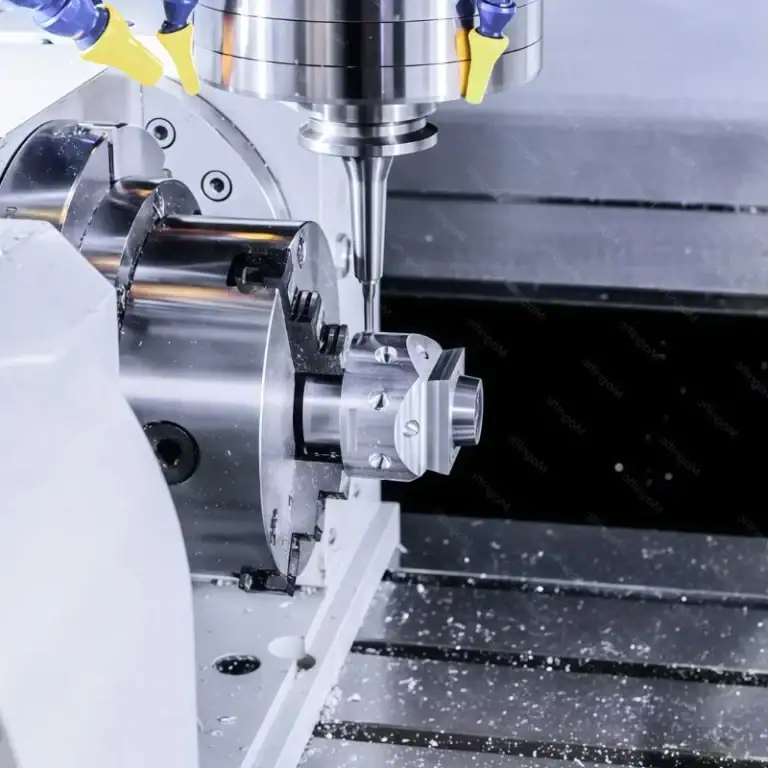
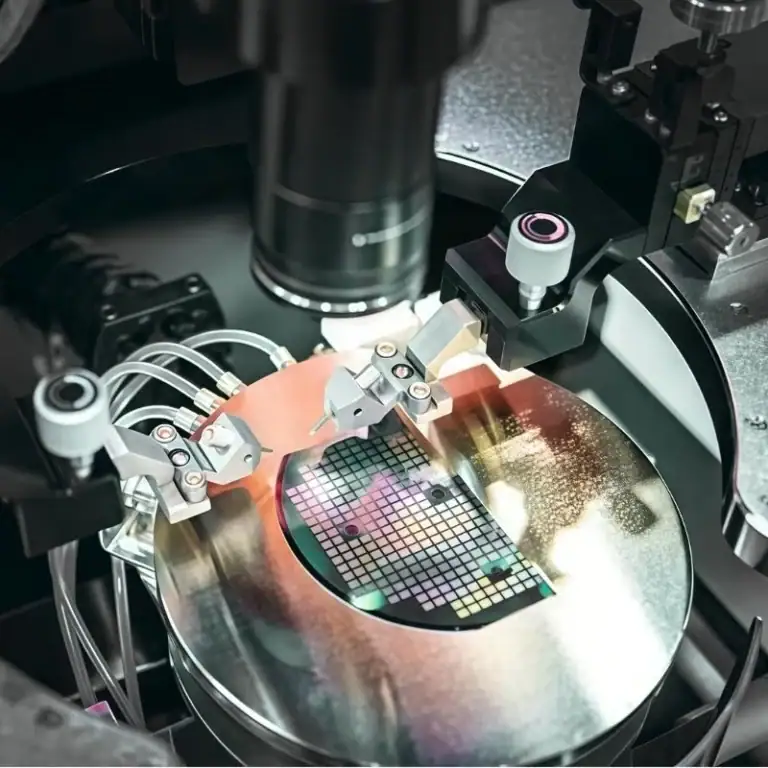
High-pressure valves are used in hydraulic systems, industrial pipelines, and high-pressure fluid control equipment. The manufacturing quality of valve bodies, spools, stems, and sealing components affects assembly accuracy, opening and closing performance, and pressure-bearing reliability. When sourcing precision valve components, buyers should evaluate not only machining prices but also blank integrity, material condition, sealing surface quality, internal passage cleanliness, and performance verification requirements. Developing a manufacturing plan around component geometry and operating conditions helps control machining scrap, assembly rework, and delivery risks.
Which High-Pressure Valve Components Are Suitable for CNC Precision Machining?
Different valve components perform pressure-bearing, fluid-guiding, motion, or sealing functions. Their machining priorities should match their structures and assembly requirements.
Valve Bodies and Internal Flow Passages
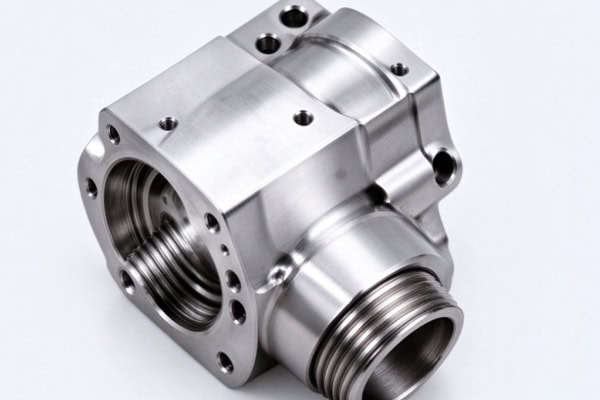
Valve bodies provide pressure containment, connection, and fluid guidance. Their passages, interfaces, and end faces must meet drawing specifications.
- Valve Bodies and Bonnet Covers: Control the dimensions and positional relationships of mounting faces, connection holes, and threaded features.
- Internal Flow Passages and Cross-Holes: Pay attention to hole diameters, hole positions, burrs at intersections, and residual chips to prevent contamination from interfering with valve operation.
- Flanges and Sealing Faces: Control face condition, hole spacing, and sealing-fit dimensions according to the connection design.
For cross-holes that are difficult to inspect directly, deburring, cleaning, and cleanliness acceptance requirements should be planned in advance. Visual inspection alone is insufficient to determine internal quality.
Valve Spools, Stems, and Seats
The machining requirements for moving and sealing components depend on their contact conditions, fit clearances, and operating environments.
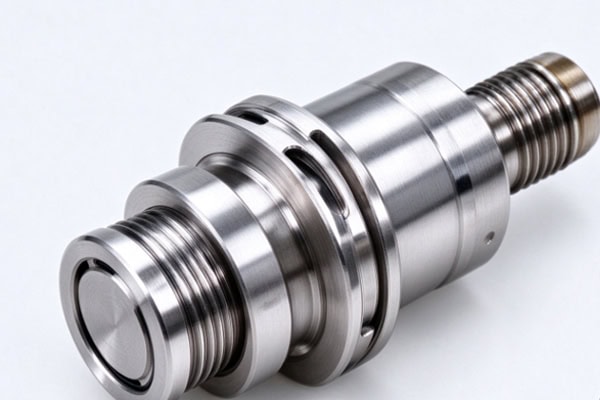
- Valve Stems: Control shaft diameter, threads, coaxial relationships, and sliding-fit surfaces.
- Valve Spools and Seats: Define profiles, contact surfaces, and mating dimensions according to the sealing design.
- Sealing Grooves: Specify groove width, depth, position, and edge requirements to ensure correct seal installation.
Applying functional tolerances when planning finishing operations helps balance assembly performance and manufacturing costs.
How Can Quality Be Controlled in CNC Machining for High-Pressure Valves?
Meeting finished-part dimensional requirements does not eliminate every quality risk. Blank defects, machining deformation, and critical performance characteristics must also be controlled.
Inspect Blanks and Material Conditions Before Machining
Internal or surface defects in blanks may become visible during machining and can affect pressure-bearing capacity and service reliability.
- Verify the material grade, specifications, heat-treatment condition, and traceability records.
- Select suitable nondestructive testing methods, such as ultrasonic testing, magnetic particle testing, or penetrant testing, according to the blank type, pressure requirements, and applicable technical specifications. Define the acceptance criteria in advance.
- Confirm the inspection coverage for critical pressure-bearing areas and arrange additional verification when required by the material documentation and design.
Different testing methods have different application ranges. Selection should be based on material characteristics, defect location, and inspection objectives. A single test cannot replace a comprehensive quality assessment.
Arrange Roughing and Finishing Operations Properly
Deep-hole machining, cavity machining, and multi-face cutting may release residual stresses, causing components to deform after unclamping or during subsequent operations.
- Allocate machining allowances appropriately during roughing to avoid excessive material removal from localized areas.
- Evaluate the need for intermediate stress-relief or stabilization treatment for large components, uneven wall sections, or parts with a high risk of deformation.
- Plan semi-finishing, finishing, and any necessary grinding or lapping according to material condition and precision requirements.
Stress-relief treatment is not a mandatory step for every valve body. Process selection should account for material properties, heat-treatment requirements, and final dimensional stability.
Develop Inspection Plans Based on Component Functions
Inspection items should correspond to drawing tolerances, mating relationships, and performance requirements rather than focusing only on external dimensions.
| Component Type | Key Control Items | Inspection Focus |
| Valve Body | Hole positions, end faces, flow-passage dimensions | Dimensions and positional relationships |
| Valve Stem | Shaft diameter, threads, coaxial relationships | Dimensional and geometric accuracy |
| Valve Spool | Fit dimensions, profile | Dimensions and surface condition |
| Valve Seat | Sealing contact surfaces, fit dimensions | Profile, surface condition, and fit requirements |
| Internal Cross-Holes | Hole edges, residual contaminants | Deburring effectiveness and cleanliness |
Conventional measuring instruments can be used for applicable linear dimensions. Coordinate measuring machines or specialized equipment may be used for complex geometric relationships, depending on tolerance requirements. Pressure-bearing and sealing performance should be verified through appropriate tests based on the product design and applicable requirements.
How Should Materials and Surface Treatments Be Selected for High-Pressure Valves?
Materials and surface treatments should be selected according to the working medium, pressure, temperature, and wear mechanisms, rather than procurement price or machining difficulty alone.
Select Materials According to Operating Conditions
Materials differ in strength, corrosion resistance, machinability, and response to heat treatment.
- Carbon Steel and Alloy Steel: Can be used for pressure-bearing or load-bearing components when permitted by the design. Material condition and protection requirements must be confirmed.
- Stainless Steel: Suitable for applications requiring corrosion resistance. The specific grade should be selected according to the working medium and temperature.
- Special Corrosion-Resistant Alloys: May be used in specific corrosive environments, with machining difficulty, lead time, and cost evaluated at the same time.
After confirming the material, specify heat-treatment requirements and inspection records to establish clear manufacturing criteria and maintain quality traceability.
Select Surface Hardening Methods According to Sealing and Wear Conditions
Valve spools and seats may experience contact wear, erosion, or cavitation. Surface treatment should be selected according to the actual operating conditions.Where required by the design, options such as hardfacing with hard alloys, nitriding, or laser cladding can be evaluated. For surface-hardened components, define the required layer properties, thickness, and machining allowance, then plan suitable turning, grinding, or lapping operations. This helps control dimensional deviations and reduce the risk of damaging sealing surfaces.
Plan Precision Fit Dimensions in Advance
Surface treatment may change component dimensions and surface conditions. Final acceptance requirements should therefore be defined for precision bores, valve-stem mating surfaces, and sealing areas.Clarifying dimensions before and after treatment, masking areas, and post-treatment machining plans helps reduce fit problems and fluctuations in sealing performance.
How Should You Select a CNC Precision Manufacturing Supplier for High-Pressure Valves?
Supplier evaluation should cover machining capability, in-process inspection, and quality traceability rather than focusing only on equipment quantity and quotations.
Confirm Complex-Part Machining and Process Control Capabilities
The supplier should be able to plan turning, milling, drilling, boring, and finishing operations according to the drawings. Appropriate deburring and inspection procedures should also be established for deep holes, cross-holes, sealing surfaces, and complex mating structures.
Verify Inspection Records and Quality Traceability
Before procurement, all quality certifications and inspection requirements should be fully clarified to ensure that materials and parts meet design and usage standards.
- Documentation confirmation: Clarify material certificates, applicable non-destructive testing reports, key dimension records, surface treatment information, and pressure test requirements.
- Supplementary requirements for parts with complex flow channels: For parts with complex internal flow channels, cleanliness inspection methods and acceptance criteria should also be agreed upon.
The clarification and implementation of the above procurement requirements can effectively ensure material quality, part performance, and reliability in subsequent use.
Clarify Drawings, Tolerances, and Delivery Requirements
Before production, all preparation information should be fully confirmed, and after sample verification is passed, batch processing capability should be evaluated to ensure smooth subsequent production.
- Pre-production confirmation: Confirm drawing version, material specifications, key dimensions, surface treatment, inspection standards, and delivery date.
- Post-sample verification evaluation: After sample verification is passed, evaluate batch processing consistency and engineering change management capability.
The above confirmation and evaluation, production risks can be effectively reduced, ensuring quality stability and change controllability in batch processing.
CNC precision manufacturing for high-pressure valves requires a quality control process tailored to blank integrity, dimensional stability, sealing-surface wear resistance, internal cleanliness, and performance verification. Specific processes should be determined by valve type, material, and operating conditions. Providing complete drawings, working-medium information, pressure and temperature ranges, and acceptance requirements helps suppliers assess manufacturing processes and costs accurately. TiRapid provides CNC precision machining and custom manufacturing support for high-pressure valve manufacturers, serving prototype development and small-batch production needs.