Nylon positioning blocks are widely used in automation equipment, workholding fixtures, and inspection jigs, where they perform part-locating, guiding, and limiting functions. These components typically carry stringent requirements for dimensional accuracy and geometric tolerances—flatness of the locating surface, parallelism relative to datums, and positional accuracy of mounting holes. Any one of these exceeding tolerance can compromise the positioning accuracy of an entire fixture. Nylon’s hygroscopic nature, relative softness, and tendency to deform during machining mean that its processing approach cannot simply copy the practices used for metal positioning blocks.
Machining Characteristics of Nylon
Effect of Moisture Absorption on Dimensional Stability
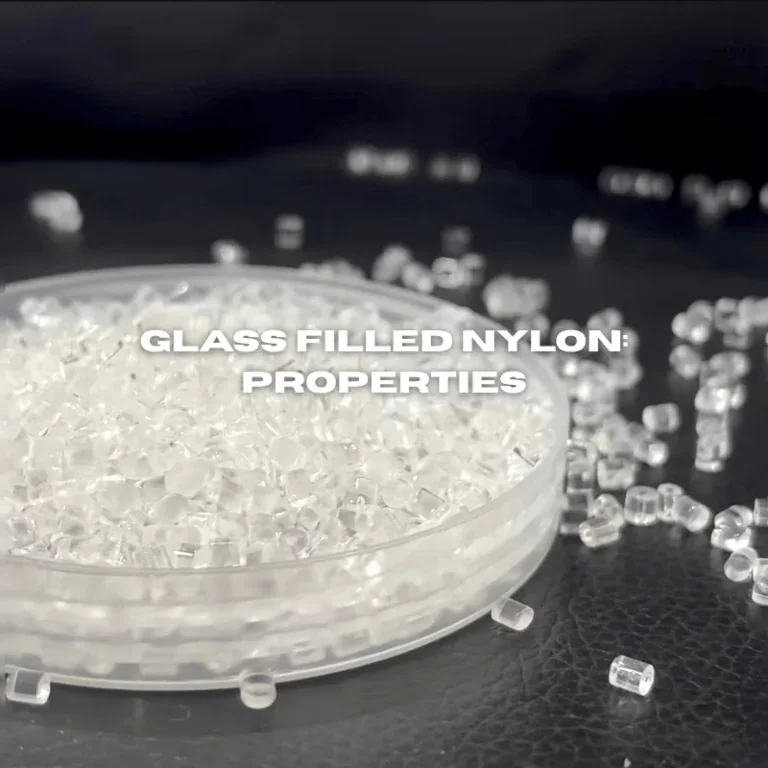
Among engineering plastics, nylon is one of the more hygroscopic materials. PA6 can gain up to 3 percent in weight at saturation moisture content, and PA66 approximately 2.5 percent. Moisture absorption causes the material to swell, changing its dimensions. If the moisture content is not uniform at the time of machining, the finished part may continue to deform in service as it responds to changes in ambient humidity. The moisture content of the material cannot be ignored when machining nylon positioning blocks—the sheet should be confirmed to have undergone adequate drying before finish machining, and parts used in environments with wide humidity swings may still exhibit minor dimensional fluctuations.
Cutting Behavior and Tool Selection
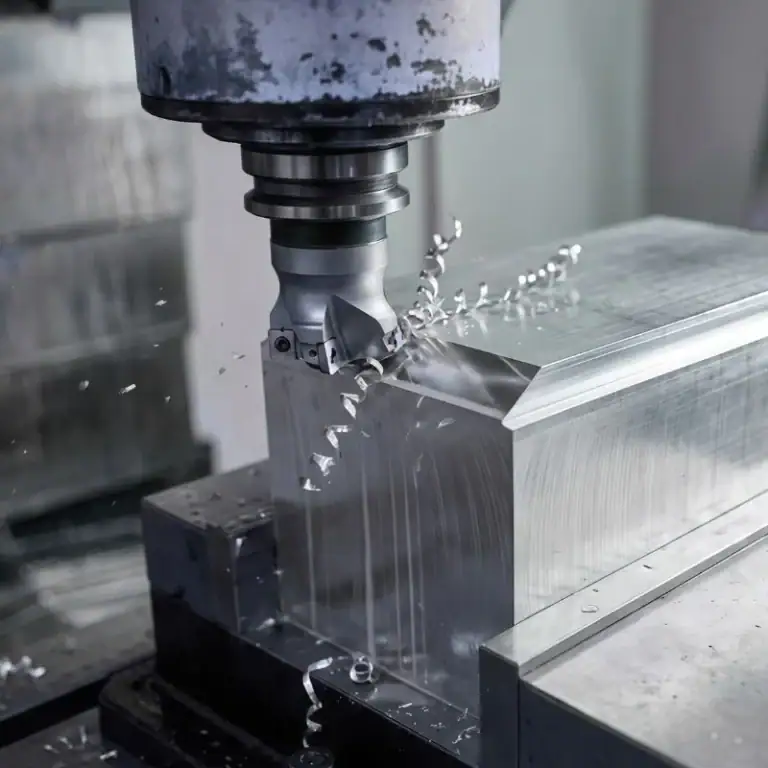
Nylon is relatively soft and has good ductility, which causes it to readily produce long, stringy chips that wrap around the tool during cutting. If the cutting edge is not sharp enough, the material is pushed and deformed rather than cleanly severed, resulting in a rough machined surface and poor flatness on locating faces. Nylon has poor thermal conductivity, so cutting heat concentrates in the machining zone. At excessive temperatures, the material can soften or even melt locally, causing it to stick to the tool. Tool sharpness, flute space, and cooling method must all be matched to nylon’s characteristics.
Material Preparation Before Machining
Sheet Drying
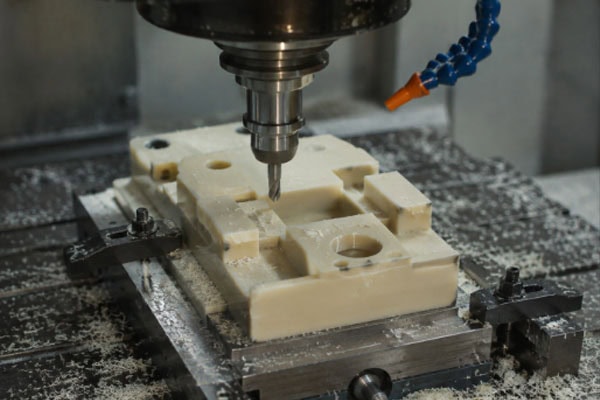
Nylon sheet is typically dried at the factory, but it can still absorb moisture from the air during transport and storage. Before machining, it is advisable to dry the sheet at 80 to 90 C for 4 to 6 hours (specific temperatures and times should follow the material supplier’s recommendations) to bring the moisture content below 0.2 percent. If the dried sheet is not machined on the same day, it should be stored in a sealed bag or desiccator to prevent re-absorption. For positioning blocks with particularly tight accuracy requirements, pre-machining drying is one of the lowest-cost quality-assurance measures available.
Stress Relief and Roughing Allowance
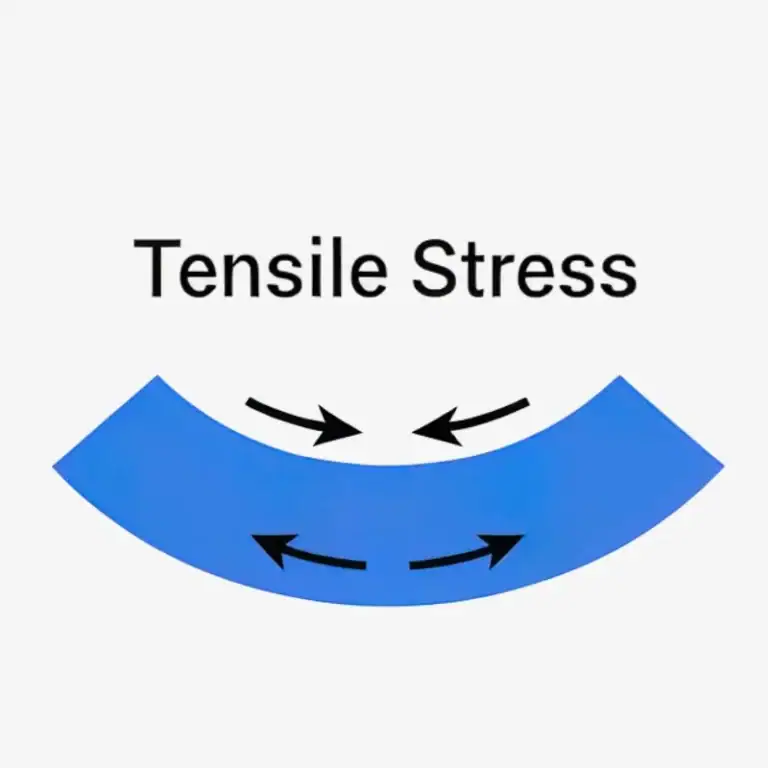
Nylon sheet retains internal stress from the extrusion or casting process, with the highest stress levels at the surface. Removing surface material during machining can release these internal stresses and cause the part to deform. For thicker positioning blocks or those requiring substantial material removal, a roughing to aging to finishing workflow is recommended: after roughing, leave an allowance of 0.5 to 1 mm, remove the part from the machine, and allow it to rest naturally for at least 24 hours so that stresses can fully relax before finish machining. This waiting period is a worthwhile investment in the stability of the final accuracy.
Tool Selection and Cutting Parameters
Tool Type and Geometry
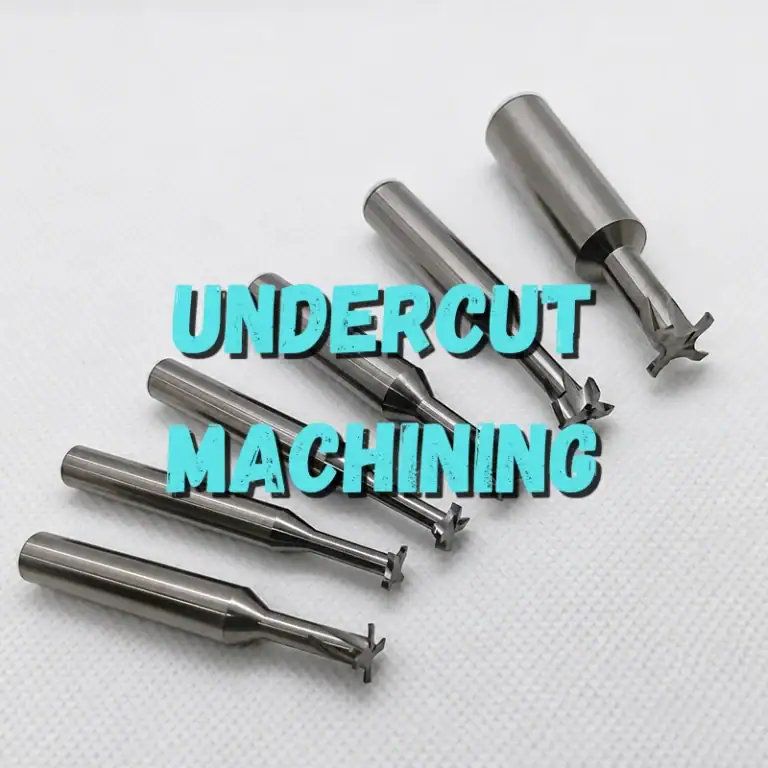
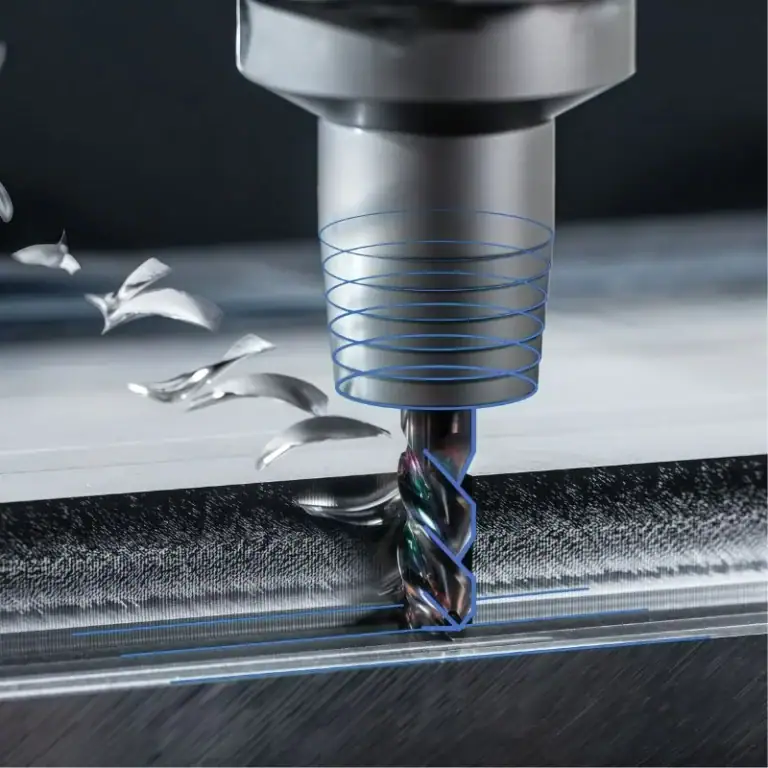
For machining nylon, single-flute or two-flute end mills are the preferred choice. Single-flute tools have the largest flute space, making them less prone to clogging with stringy chips—particularly effective in deep slots and pocketing operations. Two-flute tools offer higher efficiency in face milling and profiling, with a balanced tool body size that works well in most applications. A helix angle in the range of 30 to 40 degrees is recommended—a larger angle helps propel chips upward, though an excessively large angle increases the axial component of cutting force. Tools with polished flute surfaces are noticeably more effective at reducing the tendency of nylon to stick to the tool.
Recommended Cutting Parameter Ranges
The recommended surface speed for nylon is in the range of 100 to 250 m/min. For common tool diameters, this translates to the following spindle speeds: approximately 10,000 to 26,000 RPM for a 3 mm tool, and approximately 5,000 to 13,000 RPM for a 6 mm tool. A feed per tooth of 0.05 to 0.12 mm is suggested—higher feed values help with chip breaking and reduce frictional heat, though surface tool marks will be deeper; lower feed produces a finer surface but is more prone to frictional heating. The axial depth of cut per pass should be limited to 20 to 40 percent of the tool diameter, and the radial stepover to 30 to 50 percent. For finishing, reduce the depth of cut to 0.2 to 0.5 mm while increasing the spindle speed to achieve a finer surface finish.
Workholding and Deformation Control
Balancing Clamping Forces
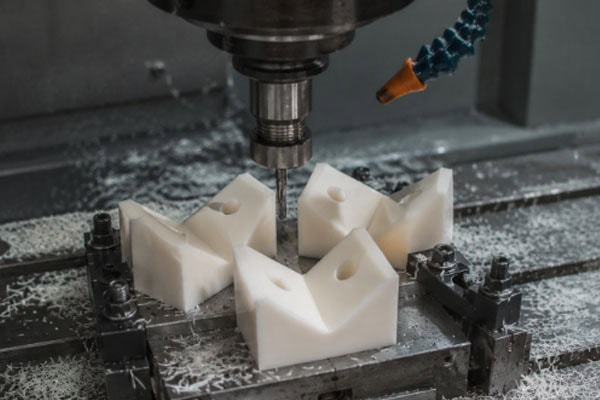
Nylon has low hardness, with an elastic modulus roughly one-fiftieth that of aluminum. Even a small clamping force can produce measurable elastic deformation. If the part is deformed while clamped and springs back upon release, the machined surface may end up out of flat, and hole positions may shift. For nylon positioning blocks with demanding locating-face accuracy, the direction and magnitude of clamping force must be carefully managed: use multi-point, evenly distributed clamping to spread the pressure; reduce clamping force during the finishing stage so the part is machined in a near-free state; and consider vacuum chucks or double-sided adhesive tape as effective alternatives for thin positioning blocks with high flatness requirements, since they introduce minimal clamping stress.
Effect of Machining Sequence on Deformation
A nylon positioning block typically has multiple locating surfaces and mounting holes to machine. The machining sequence affects final accuracy: machine large faces and datum surfaces first, then use these as references for other features; where possible, machine symmetric features symmetrically to avoid unbalanced stresses from one-sided material removal; drill holes after milling is complete, so that the localized forces from drilling do not disturb already-finished locating surfaces. If both the top and bottom faces serve as locating surfaces, a flip-flop approach is recommended—rough both sides, then flip and finish each side—rather than finishing one side completely before moving on to the other.
Accuracy Assurance and Inspection
Inspection Methods for Key Dimensions
Key dimensions on a nylon positioning block typically include: flatness and surface roughness of locating surfaces, positional accuracy and diameter tolerance of mounting holes, and parallelism and perpendicularity between locating faces. When measuring, the elastic deformation of nylon under the measurement force must be taken into account—the contact pressure from a micrometer or CMM probe can indent the surface by several microns, an error that cannot be ignored for high-precision parts with tolerances within +/-0.02 mm. Non-contact measurement methods (such as vision measurement systems) are recommended, or contact measurement forces should be minimized.
Post-Machining Stabilization
After machining, nylon positioning blocks should be allowed to rest in a temperature- and humidity-controlled environment for 24 to 48 hours before final inspection. This allows any minor stresses introduced during machining to relax and lets the material’s moisture content reach equilibrium with the ambient environment. The part dimensions may undergo natural changes of a few microns during this stabilization period. Inspection results obtained after stabilization are more representative of the part’s dimensional behavior in actual service.
Frequently Asked Questions
Can nylon positioning blocks maintain their accuracy over the long term?
In indoor environments with moderate temperature and humidity variation, the dimensional accuracy of nylon positioning blocks can be maintained for extended periods. Nylon is, however, sensitive to humidity; during rainy seasons or in high-humidity workshops, locating surfaces may undergo slight dimensional increases. If the service environment experiences wide humidity swings, oil impregnation or surface sealing treatments can be applied to slow the rate of moisture absorption.
How to choose between nylon and aluminum positioning blocks?
Nylon positioning blocks offer the advantages of light weight, good wear resistance, no risk of marring the workpiece surface, low cost, and fast machining. The comparator is aluminum positioning blocks, which provide high rigidity, no moisture-induced deformation, and a low thermal expansion coefficient, but are heavier, more expensive, and take longer to produce. If the block is a consumable item replaced on a regular schedule, or if it must avoid scratching the parts it locates (such as optical components or precision electronic parts), nylon is the preferred choice. If the fixture requires long-term maintenance-free operation, operates in environments with wide temperature and humidity swings, or requires locating accuracy within +/-0.01 mm, aluminum is the more reliable option.
Conclusion
Achieving stable dimensional accuracy and long-term service performance in CNC-machined nylon positioning blocks requires integrated control across material preparation, machining parameters, workholding methods, and post-processing. Because nylon is hygroscopic and has a degree of elasticity, it is readily affected by temperature, internal stress, and cutting forces during machining—every detail influences the quality of the finished part. Through a well-planned process sequence, precise equipment control, and experienced machining practices, problems such as deformation and dimensional deviation can be effectively minimized, allowing nylon positioning blocks to meet equipment assembly and service requirements.