Tirapid

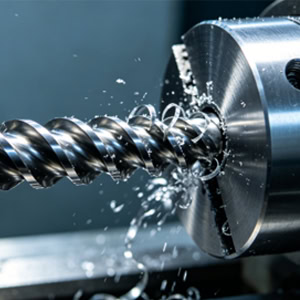
Heat generation process during turning

How to Solve Severe Heat Generation in Turning Machining?

Severe heat generation is a common problem during turning operations. Excessive temperature not only affects machining accuracy, but also accelerates tool wear, reduces surface quality, and may even cause tool chipping or machine instability.The heat generated during turning mainly comes from friction between the cutting tool and the workpiece, as well as heat produced during

How to Solve Severe Heat Generation in Turning Machining? Read More »
Inspect every detail

What Are the Acceptance Standards for Precision Machining?

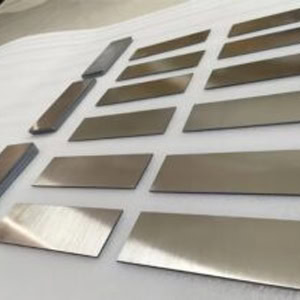
In the field of precision manufacturing, acceptance standards are not simply about whether a part “can be used.” Instead, they represent a systematic evaluation of dimensional accuracy, geometric tolerances, surface quality, and functional consistency. As modern industry continues to demand higher reliability, acceptance standards have evolved from simple dimensional checks into a multi-dimensional, full-process quality

What Are the Acceptance Standards for Precision Machining? Read More »

Factory precision machining

How Can Precision Machining Save Budget?

In high-end manufacturing, precision machining is often considered expensive. However, from a project management perspective, cost is not determined solely by the unit price of machining. Instead, it is influenced by design decisions, process planning, material utilization, defect rates, and overall production efficiency. Many companies overlook these system-level factors in the early stages, which leads

How Can Precision Machining Save Budget? Read More »

Precision machining operations

Which Industries Are Suitable for Precision Machining?

In modern manufacturing systems that are continuously upgrading, precision machining has gradually evolved from a capability exclusive to a small number of high-end industries into a fundamental technical support for multiple key sectors. As product structures become more complex, material performance continues to improve, and requirements for reliability keep increasing, traditional machining methods are increasingly

Which Industries Are Suitable for Precision Machining? Read More »

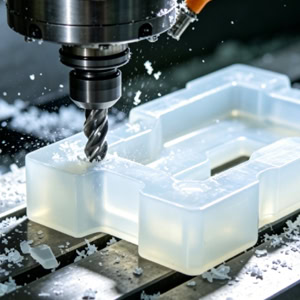
CNC machining of nylon plastic materials

Which Product Designs Are Suitable for CNC Plastic Machining?

In product development, CNC plastic machining is a highly mature and reliable manufacturing method. It is not only suitable for industrial parts, but is also widely used in consumer electronics, medical devices, automotive components, and structural validation prototypes. Compared with 3D printing or injection molding, CNC machining offers clear advantages in precision, strength, and surface

Which Product Designs Are Suitable for CNC Plastic Machining? Read More »

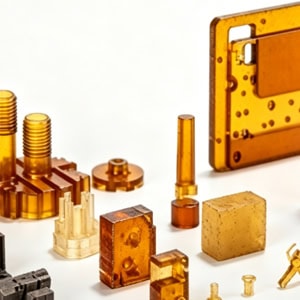
CNC machining of PEI/PSU high-temperature resistant plastic parts

Which Plastic Materials Are More Suitable for CNC Machining?

In CNC plastic machining, material selection is often more important than the machining parameters themselves. Different plastics vary greatly in hardness, toughness, thermal stability, moisture absorption, and dimensional stability. These properties directly affect machining difficulty, surface quality, and final precision. Therefore, there is no absolute answer to “which material is more suitable for CNC machining”;

Which Plastic Materials Are More Suitable for CNC Machining? Read More »

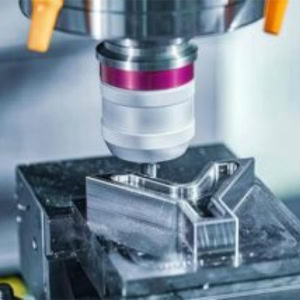
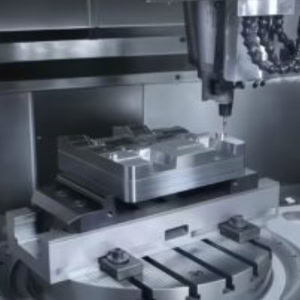
Image of the spindle unit performing cutting.

How does CNC milling improve production efficiency?

As the modern manufacturing industry continues its evolution toward higher efficiency, greater precision, and increased automation, production efficiency has emerged as a key metric for evaluating a company’s manufacturing capabilities. Thanks to its automated control, stable processing capabilities, and aptitude for manufacturing complex structures, CNC milling technology occupies an increasingly pivotal position in modern industrial

How does CNC milling improve production efficiency? Read More »

Machining precision parts

Application of Precision Machining in Aerospace

The aerospace industry is widely regarded as one of the fields with the highest manufacturing precision requirements. Whether it is aircraft engines, spacecraft structures, or critical satellite components, all require extremely high dimensional accuracy, material stability, and long-term reliability. Since aerospace equipment operates under high temperature, high pressure, high speed, and complex vibration environments, conventional

Application of Precision Machining in Aerospace Read More »

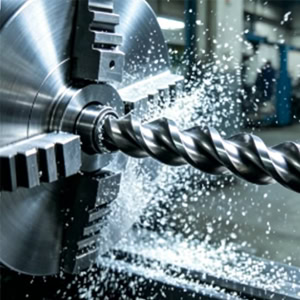
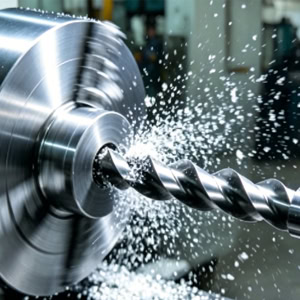
Severe drawing in turning process

How to Solve Severe Heat Generation in Turning Machining?

Severe heat generation is a common problem during turning operations. Excessive temperature not only affects machining accuracy, but also accelerates tool wear, reduces surface quality, and may even cause tool chipping or machine instability.The heat generated during turning mainly comes from friction between the cutting tool and the workpiece, as well as heat produced during

How to Solve Severe Heat Generation in Turning Machining? Read More »
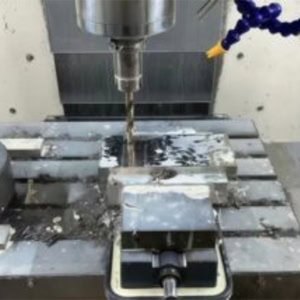
CNC drilling

Sources of Errors in Precision Machining

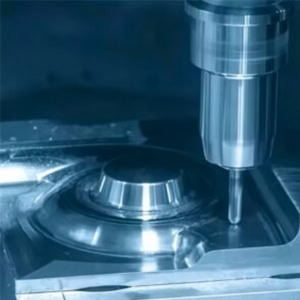
In precision machining, errors are an unavoidable reality. Even with high-precision CNC machines, five-axis machining centers, and strict process control systems, final parts will still exhibit small deviations. These deviations are not caused by a single factor, but by the combined influence of equipment, process design, material properties, environmental conditions, and human operations. Understanding error

Sources of Errors in Precision Machining Read More »

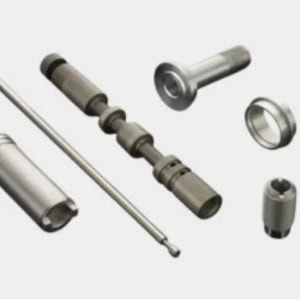
Precision parts

Is Precision Machining Suitable for Small-Batch Production?

In modern manufacturing systems, small-batch production demand is increasing rapidly, especially in product development, customized equipment, and high-end industrial components, where orders of just a few or a few dozen parts are very common. At the same time, precision machining, with its high accuracy, flexibility, and strong adaptability, has become an important solution for small-batch

Is Precision Machining Suitable for Small-Batch Production? Read More »

Chip handling for turning tools

What Should You Do When a Turning Tool Chips?

Tool chipping is a common problem during turning operations. Once a cutting tool chips, it can affect machining accuracy, surface finish, and even cause equipment instability. In high-speed and continuous production environments, tool chipping can also reduce overall machining efficiency. Many factors can cause tool chipping, including improper cutting parameters, incorrect tool material selection, machine

What Should You Do When a Turning Tool Chips? Read More »

Scroll to Top
Simplified Table

To ensure successful upload, please compress all files into one .zip or .rar file before uploading.
Upload CAD files (.igs | .x_t | .prt | .sldprt | .CATPart | .stp | .step | .pdf).