Tool chipping is a common problem during turning operations. Once a cutting tool chips, it can affect machining accuracy, surface finish, and even cause equipment instability. In high-speed and continuous production environments, tool chipping can also reduce overall machining efficiency.
Many factors can cause tool chipping, including improper cutting parameters, incorrect tool material selection, machine vibration, and insufficient cooling. Only by identifying the specific cause and making targeted adjustments can manufacturers reduce tool damage and improve machining stability.
Main Causes of Tool Chipping
Tool chipping usually occurs when cutting loads change suddenly. When the cutting edge experiences impact forces beyond the material limit, cracks can form and gradually expand until chipping occurs. Different machining environments may produce different causes of chipping, so the problem should be analyzed based on the actual machining condition. Cutting parameters, workpiece material properties, and tool structure all directly affect tool life. If the machine operates under high load for long periods while parameters remain unstable, the cutting edge will experience continuous stress fluctuations, increasing the risk of chipping.
Improper Cutting Parameter Settings
Cutting parameters directly affect tool load and cutting heat distribution. If parameter settings exceed the tool’s capacity, the cutting edge can become damaged. In high-speed machining environments, spindle speed, feed rate, and cutting depth must remain properly balanced. Aggressive settings can rapidly increase tool temperature and create continuous impact force, eventually causing cracks or fractures at the cutting edge.
- Excessive feed rate increases cutting impact
- Excessive cutting depth raises edge load
- High spindle speed causes rapid temperature increase
- Insufficient cooling during high-speed machining
- Sudden parameter changes create impact stress
- Using the same parameters for roughing and finishing
Improper parameter settings keep the tool under high load for long periods, accelerating wear and increasing the probability of chipping.
Mismatch Between Tool Material and Workpiece Material
Different workpiece materials require different types of cutting tools. If the tool lacks sufficient hardness, toughness, or heat resistance, it may not withstand demanding cutting conditions. During high-hardness material machining, poor wear resistance can quickly damage the cutting edge. Some materials also generate built-up edges or interrupted cutting impacts, further increasing the risk of tool chipping.
- Insufficient wear resistance when machining hard materials
- Stainless steel machining may create built-up edges
- Cast iron machining generates strong impact forces
- Tool coating unsuitable for the cutting condition
- Tool edge angle does not match material characteristics
- Insufficient toughness may lead to cracking
Poor matching between the tool and workpiece material increases cutting pressure on the edge and raises the risk of chipping.
The Influence of Machine Stability on Tool Life
Machine stability is closely related to tool life. Even high-performance tools may chip frequently if the machine lacks rigidity or experiences vibration problems. During machining, spindle stability, clamping accuracy, and machine structure rigidity all affect cutting conditions. When vibration or runout occurs, cutting forces fluctuate continuously, placing the tool in an unstable stress environment that eventually damages the cutting edge.
Spindle Vibration and Cutting Impact
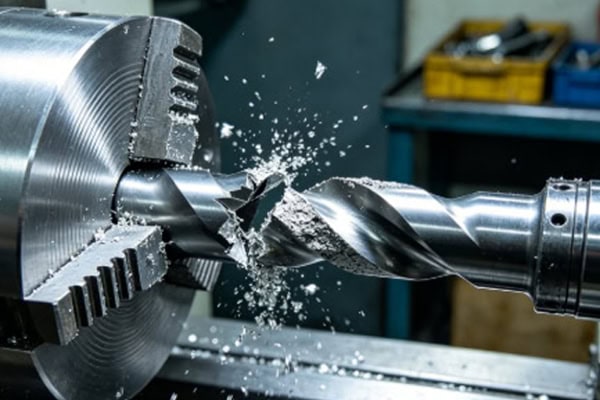
If the spindle experiences runout or vibration during high-speed operation, cutting forces become unstable and the tool receives repeated impact loads. During long continuous machining cycles, vibration accumulates and gradually creates small cracks along the cutting edge. Once these cracks expand, chipping or even tool breakage may occur.
- Worn spindle bearings increase vibration
- Poor dynamic balance during high-speed machining
- Excessive tool overhang reduces rigidity
- Poor workpiece clamping causes movement
- Interrupted cutting creates periodic impact
- Cutting force fluctuation causes resonance
Long-term vibration can create fatigue cracks in the tool and eventually lead to chipping or breakage.
Tool Installation and Clamping Errors
Tool installation quality directly affects cutting stability. Unstable clamping structures may cause tool displacement and abnormal stress. In some machining environments, insufficient attention to tool seat cleanliness and locking precision allows small tool movements during high-speed machining. Although not immediately obvious, these movements gradually increase edge wear over time.
- Tool not fully seated against the holder
- Insufficient locking force causes micro movement
- Tool holder eccentricity affects cutting path
- Excessive tool overhang
- Incorrect insert installation angle
- Worn tool seats reduce positioning accuracy
Stable clamping structures reduce vibration and runout, improving tool stability and service life.
How to Reduce the Risk of Tool Chipping in Turning
Reducing tool chipping requires optimization of cutting parameters, tool management, and machining conditions so that cutting remains stable throughout the process. Modern turning increasingly emphasizes automation and data-based control. By optimizing machining rhythm, adjusting cutting paths, and improving cooling conditions, manufacturers can significantly reduce force fluctuation and extend tool life.
Optimizing Cutting Parameters
Machining parameters should match the workpiece material and tool performance to avoid overloading the tool. Different materials generate different cutting heat characteristics, so spindle speed and feed rate should be dynamically adjusted according to actual machining conditions.
- Adjust cutting speed based on material hardness
- Control feed rate to reduce cutting impact
- Use layered cutting to reduce edge pressure
- Separate roughing and finishing parameters
- Avoid sudden acceleration and deceleration
- Reduce cutting depth during high-speed machining
Reasonable parameter settings reduce cutting force fluctuation and improve tool stability.
Improving Cooling and Lubrication
Excessive cutting heat reduces tool strength and accelerates crack expansion, making cooling systems extremely important for preventing chipping. Effective cooling not only lowers edge temperature but also reduces friction and improves cutting stability. In high-speed machining environments, high-pressure cooling systems have become essential for extending tool life.
- Use high-pressure cooling to improve heat dissipation
- Ensure coolant covers the cutting edge area
- Improve lubrication to reduce friction
- Prevent concentrated heat buildup
- Regularly inspect coolant flow
- Prevent blockage that affects cooling performance
Stable cooling conditions reduce thermal cracking and extend tool service life.
The Role of Automated Monitoring Systems in Tool Protection
With the development of intelligent manufacturing, more turning machines now use automated monitoring systems to analyze tool conditions in real time, helping identify abnormalities before sudden tool chipping occurs. Sensors and data analysis systems monitor load, vibration, and temperature changes throughout the machining process, making tool conditions more transparent and controllable.
Tool Condition Monitoring Technology
The system collects machining data through sensors and identifies tool wear and abnormal conditions. By analyzing vibration frequency and spindle load fluctuations, abnormal tool wear can be detected early before the tool reaches failure conditions.
- Real-time monitoring of vibration changes
- Analysis of spindle load fluctuation
- Detection of tool temperature conditions
- Identification of abnormal cutting sound
- Monitoring of cutting force changes
- Evaluation of tool wear trends
Intelligent monitoring systems can identify abnormal conditions early and reduce unexpected downtime.
Automatic Tool Change and Life Management
Automated systems can predict and manage tool life, replacing tools before they reach critical wear limits. Tool life databases record machining time and operating conditions, enabling more accurate life prediction models and reducing human judgment errors.
- Establishing a tool life database
- Automatically recording machining time
- Predicting remaining tool life
- Automatically switching to backup tools
- Reducing human judgment errors
- Improving continuous machining stability
Tool life management improves machining continuity while reducing the risk of tool damage.
Correct Handling After Tool Chipping
After tool chipping occurs, machining should stop immediately to avoid larger losses. The cutting parameters, cooling condition, and machine vibration should all be inspected before production resumes.
By optimizing machining parameters, improving machine stability, and strengthening tool management, manufacturers can effectively reduce tool chipping problems and maintain more stable turning operations.