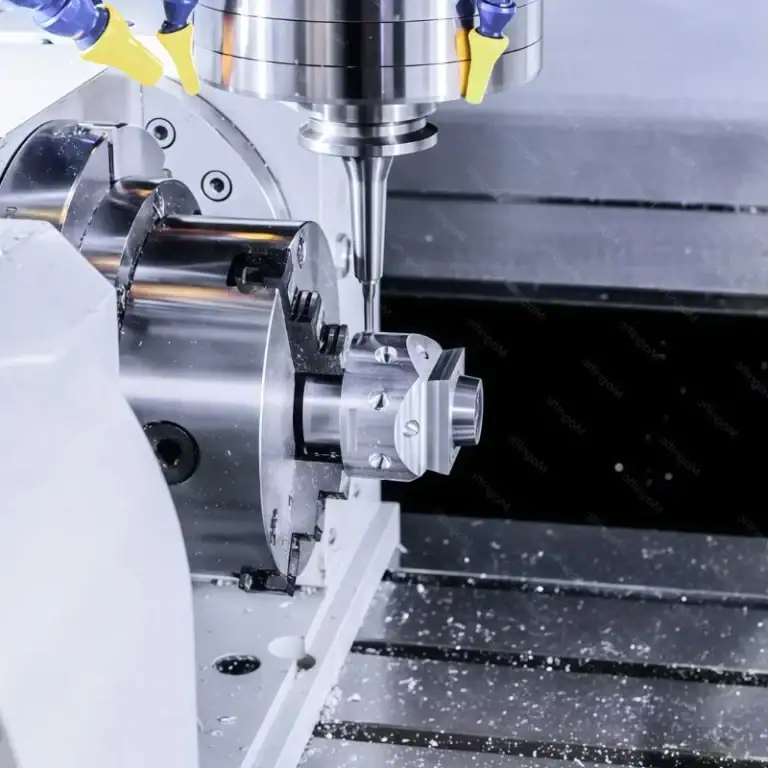
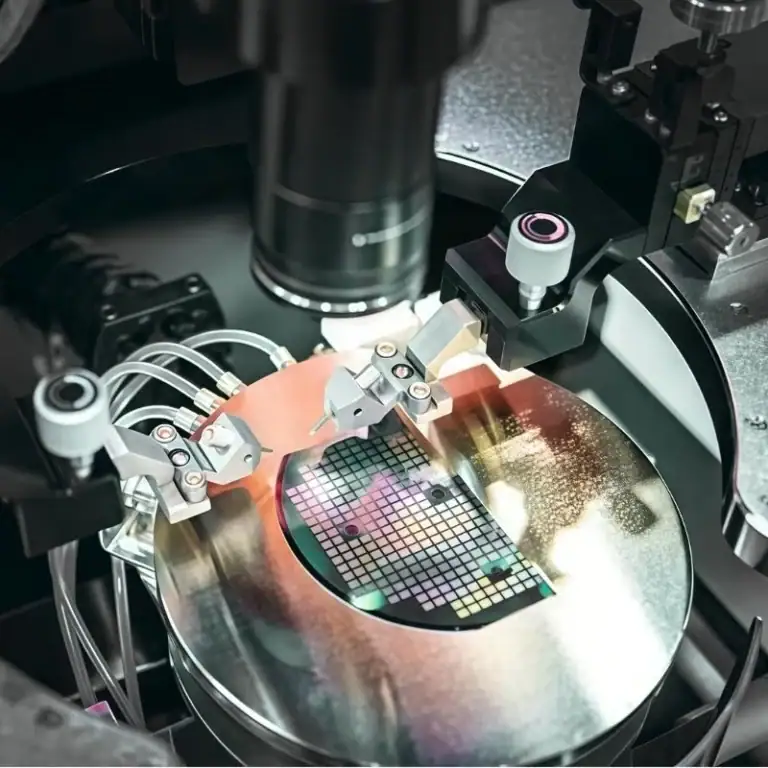
In CNC plastic machining, material selection is often more important than the machining parameters themselves. Different plastics vary greatly in hardness, toughness, thermal stability, moisture absorption, and dimensional stability. These properties directly affect machining difficulty, surface quality, and final precision. Therefore, there is no absolute answer to “which material is more suitable for CNC machining”; it must be judged comprehensively based on both machining performance and application requirements.
What Does “CNC-Machinable Plastic Material” Mean?
Basic Requirements for CNC Machining Materials
CNC machining is a subtractive manufacturing process that removes material using cutting tools. Therefore, a “CNC-suitable” plastic typically needs to have the following characteristics: a uniform material structure, good thermal stability, resistance to deformation, low tendency to melt or form stringing during cutting, and stable dimensions after machining. If the material is too soft, it will deform under compression; if too brittle, it will chip or crack; if too heat-sensitive, it may turn white, melt at the edges, or show visible tool marks. Thus, whether a material is “easy to machine” essentially depends on whether it can maintain a stable state during the cutting process.
Relationship Between Material Properties and Machining Performance
The machining performance of plastics is mainly determined by three factors:First, thermal properties (whether it deforms due to heat generated during cutting);Second, mechanical properties (whether it is easily compressed or fractured by the tool);Third, dimensional stability (whether it absorbs moisture or releases internal stress).The more balanced these three aspects are, the more suitable the material is for CNC machining.
Why Some Materials Are Particularly Suitable for CNC
Some engineering plastics are widely used in CNC machining because they achieve a balance between mechanical performance and machining stability. For example, they are neither too soft nor too brittle, and they are not sensitive to temperature changes. This makes the machining process more controllable and improves consistency of the final parts.
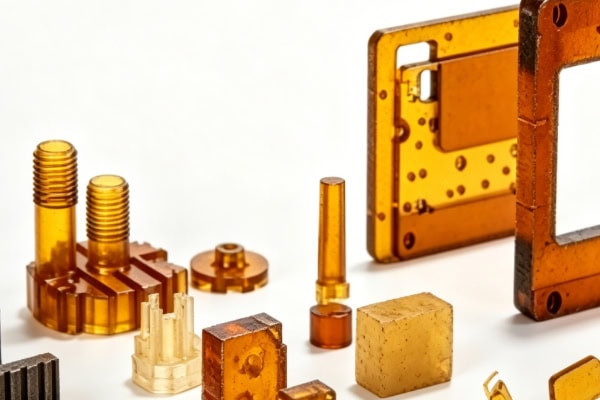
How to Determine Whether a Plastic Is Suitable for CNC Machining?
Analyze the Application Scenario
Whether a material is suitable for CNC machining depends first on the part’s application. If it is a structural, assembly, or functional part, dimensional stability and strength must be prioritized. If it is only a cosmetic or display part, surface appearance can be given more importance.
Evaluate Machining Behavior
Before actual machining, it is necessary to evaluate how the material behaves during cutting, such as whether it is prone to edge melting, stringing, or chipping. These behaviors can be judged through test cuts or experience data, which helps determine whether it is suitable for mass production.
Match Tools and Parameters
Even if a material is suitable for CNC machining, it must be matched with appropriate tools and cutting parameters. For example, some materials require sharp tools and high spindle speeds, while others require low-speed, stable cutting. Material and process are closely linked.
Verify Dimensional Stability
Material suitability also depends on post-machining stability. Some materials maintain correct dimensions during machining but later change due to stress release or moisture absorption. Such materials must be used carefully in precision machining.
Factors Affecting CNC Machining Adaptability of Plastics
Thermal Stability Determines Machining Limits
During cutting, plastics generate heat. If a material has poor heat resistance, it may soften or partially melt. Materials with good thermal stability can withstand higher cutting loads, improving efficiency and surface quality.
Cutting Behavior Determines Surface Quality
Whether a material is “cut cleanly” or “deformed under pressure” directly affects surface finish. Materials that shear cleanly are generally more suitable for CNC machining, while those prone to plastic deformation often produce burrs and tool marks.
Internal Stress and Dimensional Change
Some plastics generate internal stress during molding, which may be released after machining, causing deformation or cracking. Therefore, stress condition is an important indicator when evaluating CNC suitability.
Moisture Absorption Affects Precision Stability
Certain plastics (such as nylon) easily absorb moisture. After absorption, both dimensions and performance may change. In high-precision CNC machining, environmental control is essential to avoid dimensional deviations.
Tool Wear and Material Matching
Different materials affect tool wear differently. Some are easy to machine but cause rapid tool wear; others machine stably but require high-performance tools. Therefore, material selection must also consider machining cost.
Which Plastics Are More Suitable for CNC Machining?
POM (Polyoxymethylene)
POM is one of the most commonly used CNC materials. It offers excellent dimensional stability, low friction, and high rigidity. It is not easily deformed during machining and provides good surface quality, making it ideal for gears, sliders, structural parts, and precision components.
PMMA (Acrylic)
PMMA has good machinability and is suitable for display parts, transparent housings, and decorative structures. Although relatively brittle, with proper tool selection and parameters, it can achieve very high surface finish.
PC (Polycarbonate)
PC has high impact resistance and is suitable for functional and protective parts. Heat must be controlled during machining to avoid stress whitening, but overall machinability is relatively stable.
ABS
ABS performs stably in CNC machining, offering a good balance of toughness and form stability. It is suitable for housings, structural parts, and medium-precision components.
PEEK / PPS
These materials are used in high-temperature, high-strength, and high-precision applications such as aerospace, medical, and semiconductor equipment. Although difficult to machine, they offer excellent dimensional stability and durability under proper processing conditions.
PA (Nylon)
PA materials have good mechanical properties but strong moisture absorption, which can lead to dimensional changes. Environmental control is necessary for precision machining to ensure stability.
PTFE
PTFE is difficult to machine due to its softness, which can cause deformation and tool drag. It is suitable for special sealing and low-friction applications but requires strict process control.
Which Plastics Are More Suitable for CNC Machining?
POM is the most stable: excellent dimensional stability and easy machinability, making it a top choice for structural parts.
PMMA is suitable for appearance parts: high transparency and good post-machining finish, but crack prevention is required.
PC is suitable for functional parts: high strength but requires heat control.
ABS has balanced performance: stable and widely applicable.
PEEK/PPS are for high-end applications: high temperature resistance and strength but require demanding processes.
PA requires environmental control: strong moisture absorption affects stability.
PTFE is for special conditions: low friction but difficult to machine.
Frequently Asked Questions
“Why are some plastics easy to machine while others are difficult to achieve stable results, even though they are all plastics?”
The core reason lies in differences in internal structure. Some plastics have stable molecular structures and low thermal deformation, making them easier to control during machining. Others may have excellent performance but are highly sensitive to temperature, humidity, or stress. Even slight changes in machining conditions can affect dimensional accuracy and surface quality. Therefore, in actual production, material selection is often more critical than machining itself. If the right material is chosen, even average machining parameters can produce stable results; but if the material is unsuitable, even the best equipment may not achieve ideal outcomes.
In conclusion
Different plastics behave very differently during machining—some are stable and easy to control, while others are sensitive and complex. From experience, materials like POM, PMMA, PC, and ABS are commonly used and relatively easy to control, while high-performance materials like PEEK and PPS are suitable for advanced applications but require higher process precision. If CNC machining is compared to “carving,” then the material is the “wood itself.” Its hardness, texture, and stability determine the difficulty of machining and the final result. Therefore, in CNC plastic machining, choosing the right material is often more important than optimizing parameters. With proper material selection, combined with suitable tools and processes, it is possible to consistently achieve precise dimensions, good surface quality, and reliable performance.