Tirapid

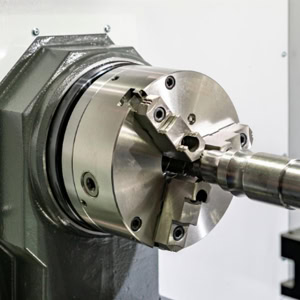
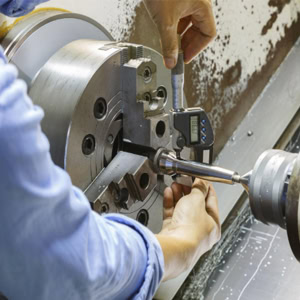
Improving Precision Through CNC Turning Figure

How to Improve CNC Turning Machining Accuracy?

CNC turning machining accuracy plays a critical role in part fit quality, assembly performance, and overall manufacturing consistency. Dimensional errors often come from insufficient machine rigidity, tool wear, improper cutting parameters, thermal deformation, and unstable process control. During continuous production, these factors gradually accumulate and affect final precision and surface quality. To achieve stable and high

How to Improve CNC Turning Machining Accuracy? Read More »
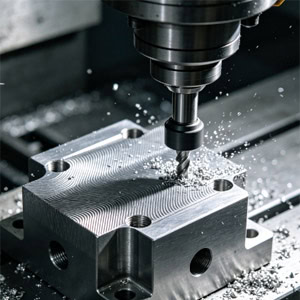
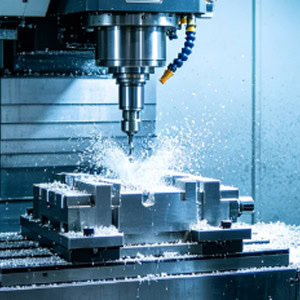
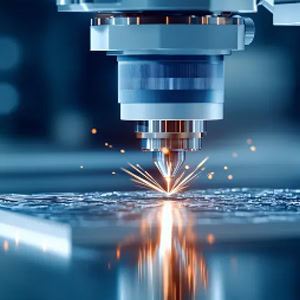
Image of a machine tool spindle performing drilling operation.

Application of CNC Milling in Mechanical Manufacturing

As the modern mechanical manufacturing industry continues to evolve toward high precision, high efficiency, and automation, CNC milling technology has become one of the core manufacturing methods in the industrial processing system. CNC milling not only machines complex structural parts but also maintains consistent accuracy and uniformity in batch production, making it widely used in

Application of CNC Milling in Mechanical Manufacturing Read More »

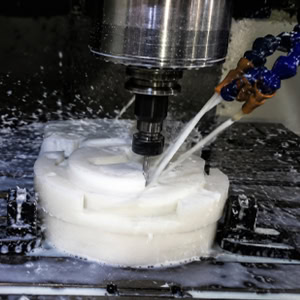
A photo of a CNC machining center performing metal milling.

Types and characteristics of CNC milling machines

As the modern manufacturing industry continues to evolve toward high precision, high efficiency, and intelligence, CNC milling machines have become one of the key pieces of equipment in the field of precision machining. Different types of CNC milling machines exhibit significant differences in structural design, machining capabilities, and applicable scenarios, and these differences directly affect

Types and characteristics of CNC milling machines Read More »

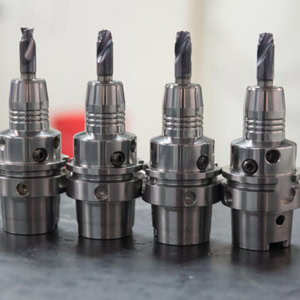
Maintenance diagram of turning equipment

What Are the Maintenance Methods for Turning Equipment?

Turning equipment is subjected to cutting loads, temperature changes, lubricant consumption, and continuous mechanical movement for a long time. If maintenance and management are not done properly, problems such as decreased machining accuracy, spindle noise, turret misalignment, and unstable dimensional control may occur, which will affect production consistency and equipment lifespan. Stable operation depends on

What Are the Maintenance Methods for Turning Equipment? Read More »

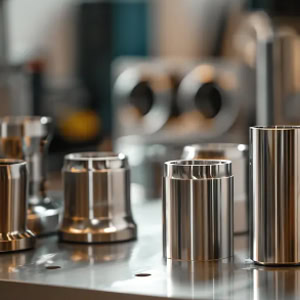
Metal Parts in Precision Machining

What Are the Common Materials Used in Precision Machining?

In the precision manufacturing industry, material selection often determines machining difficulty, structural performance, and the final service life of a component. Different materials not only have different characteristics in strength, hardness, corrosion resistance, and weight, but also directly affect cutting efficiency, surface quality, and machining stability. As industries such as aerospace, medical devices, new energy,

What Are the Common Materials Used in Precision Machining? Read More »

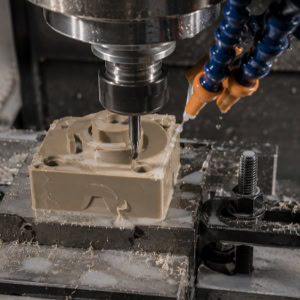
PEEK plastic parts CNC machining site

CNC Machining of Engineering Plastic PEEK Material

Among high-performance engineering plastics, PEEK (Polyether Ether Ketone) has long been regarded as one of the representatives of “high-end materials.” It not only offers high temperature resistance, wear resistance, and corrosion resistance, but also provides excellent mechanical strength. Therefore, it is widely used in medical, aerospace, semiconductor, automotive, and precision industrial equipment industries.However, precisely because

CNC Machining of Engineering Plastic PEEK Material Read More »

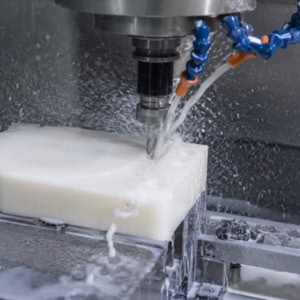
POM in CNC machining process

What are the considerations for CNC machining of POM plastics?

POM (Polyoxymethylene, also known as acetal/acetal) is a typical engineering plastic, renowned for its excellent dimensional stability, wear resistance, and low friction in CNC machining. It is widely used in gears, bushings, sliders, and precision structural parts. However, it is also quite sensitive to machining processes. Improper parameter or process control can easily lead to

What are the considerations for CNC machining of POM plastics? Read More »

POM plastic material CNC processing process

What are the differences between acetal and PEEK in CNC machining?

In the field of CNC plastics machining, acetal (POM, also often called acetal or Delrin) and PEEK (polyetheretherketone) are both very common engineering plastics, but their applications are completely different. Furthermore, the two materials differ significantly in temperature resistance, mechanical properties, processing difficulty, and application industries. POM is known for its low friction, ease of

What are the differences between acetal and PEEK in CNC machining? Read More »

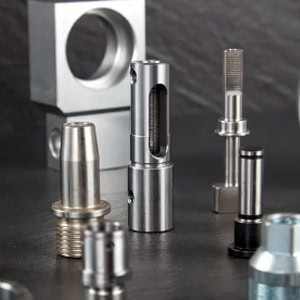
Precision metal parts

Is Aluminum Alloy Precision Machining Difficult?

In the field of precision manufacturing, aluminum alloy is one of the most widely used metal materials. It is commonly applied in aerospace, consumer electronics, automotive parts, and automation equipment due to its lightweight properties, good thermal conductivity, and relatively easy machinability. Because of this, many people assume that aluminum machining is “easy.” However, in

Is Aluminum Alloy Precision Machining Difficult? Read More »

High hardness material processing diagram

How to Machine High Hardness Materials in Turning Operations?

Turning high-hardness materials involves high cutting resistance, rapid tool wear, and high requirements for machining stability. Common materials include hardened steel, high alloy steel, bearing steel, and some pre-hardened alloys. During machining, heat is easily concentrated, which exacerbates tool wear. Therefore, tool selection, cutting parameters, and machine tool rigidity are crucial. In actual production, the

How to Machine High Hardness Materials in Turning Operations? Read More »

Scroll to Top
Simplified Table

To ensure successful upload, please compress all files into one .zip or .rar file before uploading.
Upload CAD files (.igs | .x_t | .prt | .sldprt | .CATPart | .stp | .step | .pdf).