POM (Polyoxymethylene, also known as acetal/acetal) is a typical engineering plastic, renowned for its excellent dimensional stability, wear resistance, and low friction in CNC machining. It is widely used in gears, bushings, sliders, and precision structural parts. However, it is also quite sensitive to machining processes. Improper parameter or process control can easily lead to deformation, warping, and dimensional deviations.
What are the material properties of POM in CNC machining?
POM is a highly crystalline thermoplastic engineering plastic with high rigidity and wear resistance, and extremely low water absorption, resulting in superior dimensional stability compared to ordinary nylon materials.
In the field of CNC machining, its characteristics can be summarized in three points:
- It has good machinability, resulting in low machining resistance and easy molding;
- It is heat-sensitive, with excessively high local temperatures leading to melt edges or deformation;
- It has internal stress, making thick parts or complex structures prone to springback deformation after machining.
Therefore, while POM may seem “easy to machine,” producing high-precision parts hinges on process control, not simply the cutting ability of the tool.
Standard Steps for POM CNC Machining
Material Pretreatment and Selection
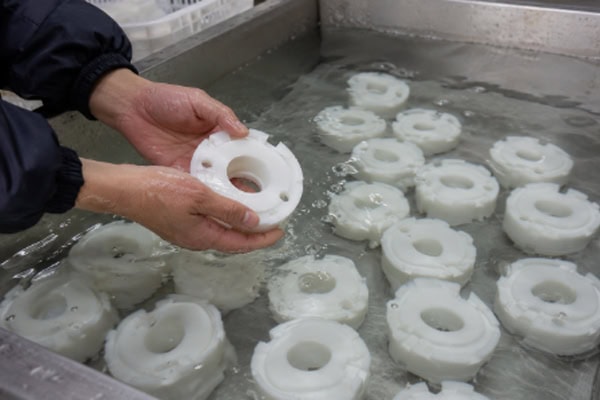
Before starting CNC machining, material selection and pretreatment are the first steps determining the final quality. The POM (Polyoxymethylene) material must be confirmed to be homogeneous extruded rods or high-quality sheets, with a stable internal structure and free of obvious bubbles, impurities, or delamination. It is particularly important to avoid using recycled POM materials, as the molecular chain length decreases after repeated melting, easily leading to problems such as uneven strength, localized brittleness, and dimensional drift after machining. For high-precision parts (such as gears, sliders, and precision structural components), it is generally recommended to use imported homopolymer POM or highly crystalline materials to ensure consistent dimensional stability and wear resistance. Simultaneously, the material should be allowed to stand at room temperature before machining to allow its temperature to align with the workshop environment, reducing errors caused by thermal expansion and contraction.
Roughing Stage
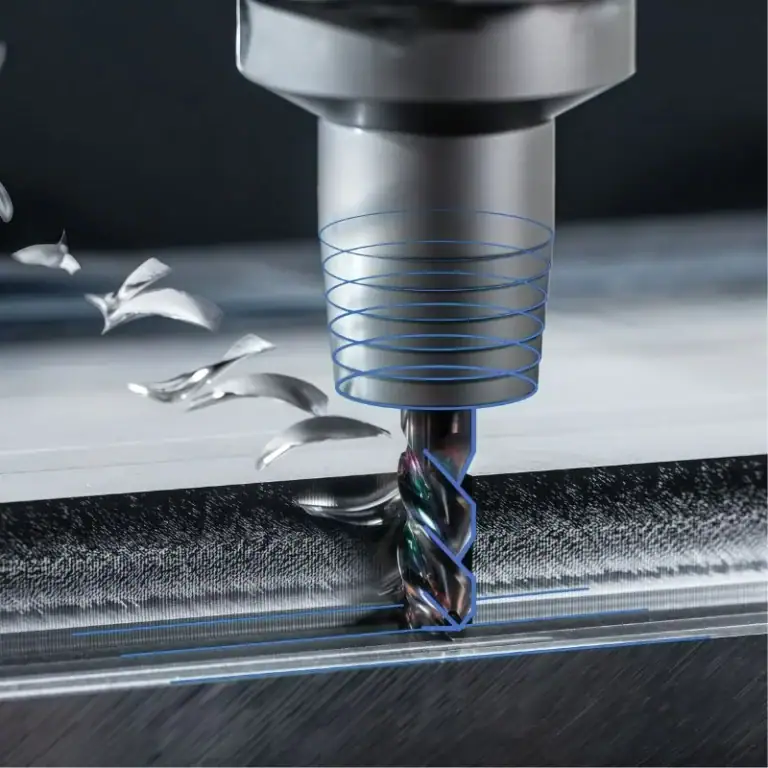
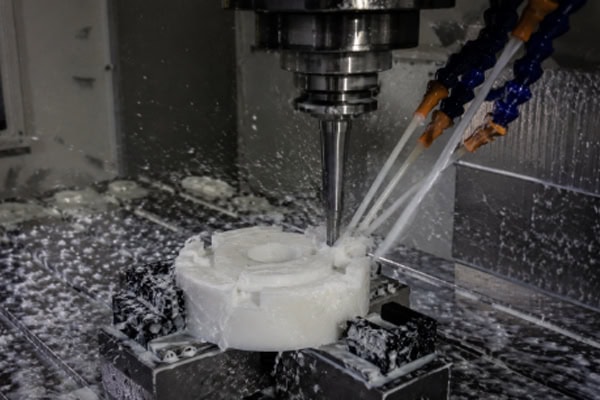
The core goal of roughing is to quickly remove excess material and approximate the target shape, rather than pursuing precision. This stage typically uses a higher feed rate and higher spindle speed to improve machining efficiency. However, it is crucial to strictly control the depth of cut per pass to avoid excessive cutting that could cause localized instantaneous heating. POM is highly sensitive to temperature; excessively high local temperatures can easily lead to problems such as softening, wire drawing, surface whitening, and even tool mark adhesion. Maintaining good chip removal is also recommended to prevent chip accumulation in the machining area, as this can cause secondary friction and heat buildup, affecting the initial forming quality of the workpiece.
Semi-finishing
The main purpose of semi-finishing is to gradually release internal stress and correct roughing errors. At this stage, the cutting amount should be significantly reduced, and a more stable toolpath should be used to allow the material to gradually stabilize. Layered removal of the allowance can effectively reduce warping or dimensional springback issues caused by stress release in POM. Furthermore, it is recommended to appropriately increase the uniformity of the toolpath at this stage to avoid concentrated cutting in certain areas, thereby improving the stability of subsequent finishing.
Finishing and Dimensional Correction
The finishing stage is a critical step determining the final product’s accuracy and surface quality. Sharp carbide tools or single-edged high-gloss tools should be used for small-mass cutting. Cutting parameters should be kept as stable as possible to ensure dimensional consistency and surface finish, avoiding repeated corrections that can lead to error accumulation. For high-precision parts, it is generally recommended to complete the machining in a single setup to reduce coaxiality or perpendicularity deviations caused by clamping errors, thereby ensuring overall structural accuracy.
Cooling and Cleaning
Strong water cooling is not recommended during POM machining, as the coolant may cause the material to absorb water, resulting in surface contamination or micro-stress changes, thus affecting dimensional stability. Air cooling or micro-atomization cooling is preferred, effectively cooling the area while keeping it clean. After machining, chips should be cleaned promptly to prevent residual debris from scratching the workpiece surface and to help maintain subsequent inspection and assembly accuracy.
The Most Common Problem Areas in POM Machining
To improve the quality of POM (acetal) CNC machining, the core lies in “temperature control, stress control, and toolpath control.” Cutting parameters should avoid frictional heating caused by high speed and low feed rate. It is recommended to use a medium speed with a higher feed rate, making cutting a “rapid separation” rather than “friction scraping,” reducing thermal deformation at the source. Furthermore, the cutting tools must be kept sharp, with single-edged or high-rake-angle carbide tools preferred to enhance chip removal and prevent chip entanglement that could lead to secondary cutting and surface scratches. In the machining path, layered material removal and symmetrical machining strategies should be employed as much as possible to reduce warping caused by stress concentration within the material. Simultaneously, it is recommended to leave a small allowance for finishing and allow the material to rest for a period after roughing to allow stress to release naturally before finishing corrections. In addition, compressed air-assisted chip removal is more suitable for POM machining than large amounts of coolant, effectively reducing localized heat accumulation and maintaining a clean surface. Through these detailed controls, the dimensional stability, surface finish, and batch consistency of POM parts can be significantly improved.
Frequently Asked Questions
Q: Why do POM-machined parts sometimes deform or have unstable dimensions?
There are usually three main reasons:
- Excessively high machining temperatures cause material softening;
- Deformation occurs after clamping stress is released;
- An unreasonable machining path leads to localized stress concentration.
Solutions include: reducing cutting temperature, optimizing the toolpath (avoiding prolonged localized cutting), and performing staged machining to release stress. For high-precision parts, a “roughing + resting + finishing” approach is recommended, which significantly improves stability.
In conclusion
POM (Polymer Oxide) is well-suited for precision parts, such as gears and guide rails, which require both wear resistance and smooth operation. However, this is also where the problem lies—over-machining can easily cause deformation. In practice, many issues aren’t due to inadequate machine quality, but rather a lack of attention to detail. For example, a dull tool, excessively high spindle speed, or insufficient chip removal can all cause localized heating of the material, leading to whitening, warping, or even dimensional deviations in the parts. Clamping is another crucial aspect. Unlike metals, POM isn’t as resistant to pressure; excessive clamping creates internal stress, causing it to spring back after machining, resulting in dimensional changes. Therefore, POM machining is more about controlling its state than simply cutting it. Controlling the temperature, slowing the cutting pace, and ensuring proper chip removal are key to consistently producing high-quality parts. For batches of precision parts, it’s recommended to use a fixed set of process parameters and avoid frequent tool and path changes for better consistency.