Tirapid

Why Is Trial Cutting Necessary for CNC Plastic Machining

Why Is Trial Cutting Necessary for CNC Plastic Machining?

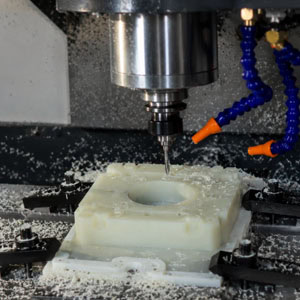
Plastics are different from metal materials in terms of hardness, toughness, thermal conductivity, and thermal expansion characteristics. When the same machining parameters are applied to different plastics, the final results may vary significantly. Even when the tool model and machining program have already been determined, trial cutting is still required before actually machining the parts

Why Is Trial Cutting Necessary for CNC Plastic Machining? Read More »
Why Is the Breakage Rate of Micro Diameter Milling Cutters ≤φ0.5 mm So High

Why Is the Breakage Rate of Micro-Diameter Milling Cutters (≤φ0.5 mm) So High?

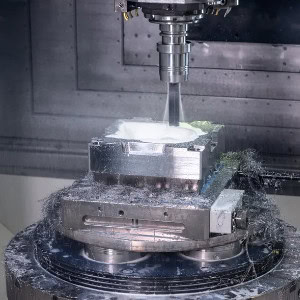
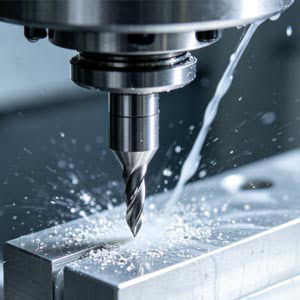
Micro-diameter milling cutters with diameters no greater than φ0.5 mm are commonly used for machining precision molds, micro-grooves, thin-walled parts, medical components, and electronic structural parts. They can produce details that ordinary tools cannot handle, but they are also more likely to break suddenly during machining. The high breakage rate of micro-diameter tools is usually

Why Is the Breakage Rate of Micro-Diameter Milling Cutters (≤φ0.5 mm) So High? Read More »

Introduction to Common Process Parameters for CNC Turning

Introduction to Common Process Parameters for CNC Turning

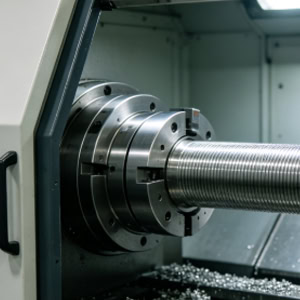
CNC turning process parameters have a direct impact on machining efficiency, dimensional accuracy, surface finish, tool life, and overall production stability. During actual machining, spindle speed, cutting speed, feed rate, depth of cut, tool material, nose radius, coolant flow, and lubrication conditions all influence the final machining result. Different materials and component structures require different

Introduction to Common Process Parameters for CNC Turning Read More »

How to Match Cutting Speed, Feed Rate, and Depth of Cut in Metal CNC Machining?

How to Match Cutting Speed, Feed Rate, and Depth of Cut in Metal CNC Machining?

In metal CNC machining, cutting speed, feed rate, and depth of cut are three key parameters that directly affect machining efficiency, tool life, dimensional accuracy, and surface quality. Many machining problems are not caused by insufficient machine accuracy but by an improper combination of cutting parameters. For example, excessive cutting speed can accelerate tool wear,

How to Match Cutting Speed, Feed Rate, and Depth of Cut in Metal CNC Machining? Read More »

Why Is Titanium Alloy Machining More Expensive? 5 Major Factors That Affect the Cost

Why Is Titanium Alloy Machining More Expensive? 5 Major Factors That Affect the Cost

Titanium alloys offer high strength, low density, excellent corrosion resistance, and good high-temperature performance. As a result, they are widely used in aerospace, medical equipment, automotive components, marine applications, and advanced industrial equipment. However, compared with aluminum alloys and conventional steels, titanium CNC machining is generally more expensive. The higher cost is not simply due

Why Is Titanium Alloy Machining More Expensive? 5 Major Factors That Affect the Cost Read More »

What Is the Difference Between Machining Soft Metals and Hard Metals?

What Is the Difference Between Machining Soft Metals and Hard Metals?

In CNC machining and metal part manufacturing, material hardness directly affects tool selection, cutting parameters, machining efficiency, and final part quality. Although both soft and hard metals can be processed through turning, milling, drilling, and other machining methods, their practical machining requirements are quite different. Understanding these differences can help manufacturers select suitable machining processes,

What Is the Difference Between Machining Soft Metals and Hard Metals? Read More »

How to Control Surface Roughness in Metal Parts? A Comparison of Common Machining Methods

How to Control Surface Roughness in Metal Parts? A Comparison of Common Machining Methods

In metal part manufacturing, dimensional accuracy determines whether a component can be properly assembled, while surface roughness directly affects friction, wear, sealing performance, appearance, and service life. For CNC machining, precision mechanical components, and batch production, controlling surface roughness is an important part of process planning. Different materials, cutting tools, machining parameters, and post-processing methods

How to Control Surface Roughness in Metal Parts? A Comparison of Common Machining Methods Read More »

What Makes Stainless Steel CNC Machining Difficult? An Analysis of Tooling, Cutting Speed, and Surface Quality

What Makes Stainless Steel CNC Machining Difficult? An Analysis of Tooling, Cutting Speed, and Surface Quality

Stainless steel is widely used in medical equipment, food processing machinery, automotive components, aerospace parts, and industrial equipment because of its corrosion resistance, high strength, and heat resistance. However, compared with aluminum, stainless steel is more challenging to machine with CNC equipment. Material hardness, work hardening, poor heat dissipation, and heat accumulation during cutting can

What Makes Stainless Steel CNC Machining Difficult? An Analysis of Tooling, Cutting Speed, and Surface Quality Read More »

What Factors Affect the Final Accuracy When CNC Machining Aluminum1

What Factors Affect the Final Accuracy When CNC Machining Aluminum?

Aluminum is one of the most commonly used metals in CNC machining. It is lightweight, easy to machine, and offers a good balance of strength and performance, making it widely used in aerospace, automotive, robotics, electronics, and medical equipment. Although aluminum is generally considered easy to machine, achieving tight dimensional tolerances, accurate hole positions, and

What Factors Affect the Final Accuracy When CNC Machining Aluminum? Read More »

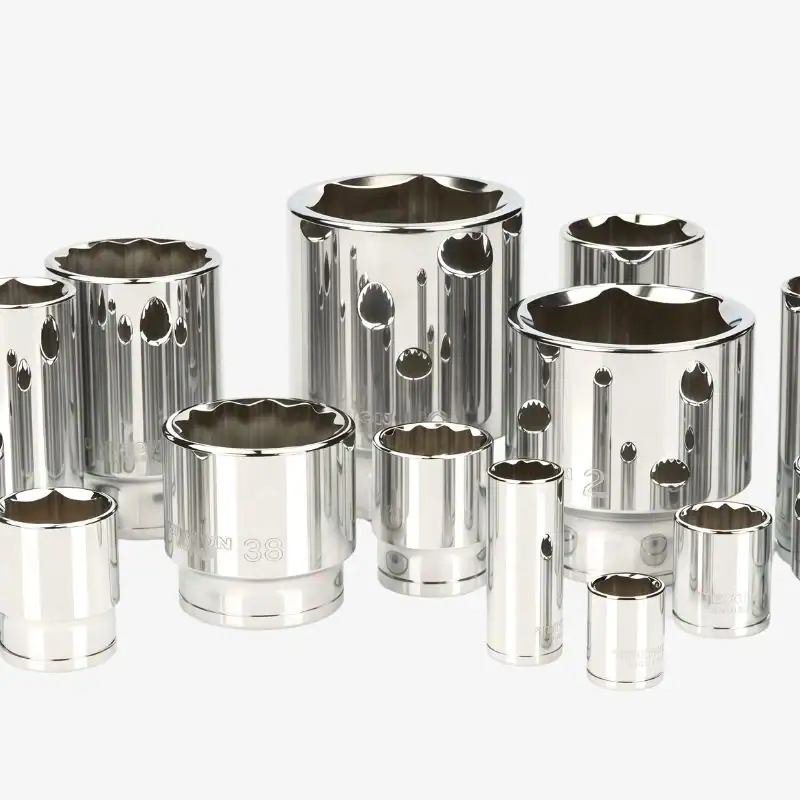
chrome plated precision industrial hardware parts

Chrome Plating: Process, Types, Benefits, and Uses

Chrome plating is an electroplating process that deposits a thin layer of chromium onto a metal or specially prepared plastic surface. The coating can improve wear resistance, surface hardness, corrosion performance, friction behavior, and appearance. Depending on the application, chrome may be applied as a thin decorative finish or as a thicker functional coating for

Chrome Plating: Process, Types, Benefits, and Uses Read More »

How Are Tolerances Determined in Metal Machining1

How Are Tolerances Determined in Metal Machining? Key Parameters Engineers Should Consider

Dimensional tolerances are an important consideration in metal machining. For a mechanical part, the dimension shown on an engineering drawing does not necessarily mean that the finished part must reach an absolute value. Instead, a certain range of dimensional variation is usually allowed. A reasonable tolerance ensures that parts can be properly assembled and perform

How Are Tolerances Determined in Metal Machining? Key Parameters Engineers Should Consider Read More »

Scroll to Top
Simplified Table

To ensure successful upload, please compress all files into one .zip or .rar file before uploading.
Upload CAD files (.igs | .x_t | .prt | .sldprt | .CATPart | .stp | .step | .pdf).