When people talk about robots, they often think first about intelligent systems, programming control, or sensors. However, the ability of a robot to operate accurately, quickly, and reliably also depends heavily on the quality of its mechanical components. Especially in industrial robots, automation equipment, and collaborative robots, even a small part error can affect arm movement, repeat positioning accuracy, and long-term operating stability. Robots often perform thousands of repeated actions in production environments, which places extremely high demands on internal components. Through precision machining technology, robot parts can achieve better dimensional consistency, smoother motion coordination, and longer service life, providing a reliable foundation for improving robot performance.
Why Does Robot Performance Depend on Precision Machining?
A robot may look like a complete machine, but internally it consists of many precision components. From joint shafts and connectors to transmission parts and mounting structures, every component needs accurate coordination. If there are excessive errors between parts, robots may experience unstable movement, positioning deviations, or abnormal wear during operation. Especially in automated production environments, robots often need to work continuously for long periods, creating higher requirements for component manufacturing.
Improving Robot Motion Accuracy
The biggest advantage of robots is their ability to complete repeated tasks according to programmed instructions. However, if the mechanical structure itself has manufacturing errors, even advanced control systems may not achieve the expected performance.
- Reducing component fitting errors helps robot joints move more smoothly and reduces operational issues such as sticking or uneven movement.
- Improving repeat positioning accuracy allows robots to maintain higher consistency when performing the same actions repeatedly.
- Enhancing mechanical transmission performance helps robots complete tasks such as precise assembly and accurate material handling.
Precision machining improves robot performance from the component manufacturing stage. In many cases, robot performance is not determined only by software; the accuracy of mechanical parts plays an equally important role.
Reducing Robot Operating Vibration
When robots operate at high speeds, internal components are exposed to continuous impact and friction. If machining quality is inconsistent, changes in component gaps may occur, leading to increased vibration.
- Controlling dimensional deviations reduces looseness after assembly.
- Improving surface finish quality helps reduce friction during movement.
- Enhancing component compatibility allows robots to operate more smoothly.
- Reducing abnormal wear during long-term operation extends equipment service life.
Stable operation is extremely important for industrial robots, especially in industries such as precision assembly and electronics manufacturing, where even minor vibration can affect production results. Precision machining helps robots maintain more reliable performance.
Improving Long-Term Robot Reliability
Industrial robots often operate in high-frequency and high-load environments. Their components need not only high accuracy but also strong durability.
- Improving the manufacturing quality of critical components.
- Reducing maintenance frequency.
- Extending equipment service life.
Robot parts produced through precision machining can better handle continuous operation requirements and help companies reduce the impact of unexpected downtime.
How Does Precision Machining Optimize Core Robot Components?
Improving robot performance is not achieved by simply replacing one part or upgrading one system. It requires the entire mechanical structure to work together. Key components such as joints, transmission systems, and structural parts directly influence robot movement. As robots become smaller, faster, and more advanced, their components also require higher levels of manufacturing capability.
Improving Robot Joint Component Manufacturing
Robot joints are similar to human joints. They are responsible for movement and must continuously rotate while carrying loads, making them one of the most challenging areas in robot manufacturing.
- Improving shaft component accuracy ensures more stable rotation.
- Optimizing gear and transmission component fitting reduces motion errors.
- Maintaining manufacturing consistency improves assembly efficiency.
The manufacturing quality of joint components directly affects robot flexibility and movement performance. Through precision machining, robots can achieve more complex and accurate motions.
Enhancing Robot Structural Component Performance
Robot structural parts must balance strength, weight, and stability. With modern robots increasingly focusing on lightweight designs, traditional manufacturing methods may struggle to meet complex structural requirements.
- Supporting complex shape machining to meet different robotic arm designs.
- Enabling lightweight structure manufacturing to reduce overall robot load.
- Improving assembly compatibility and reducing adjustment requirements.
Precision machining provides greater design possibilities for robot structures and helps manufacturers develop more advanced automation equipment.
Meeting Different Material Machining Requirements
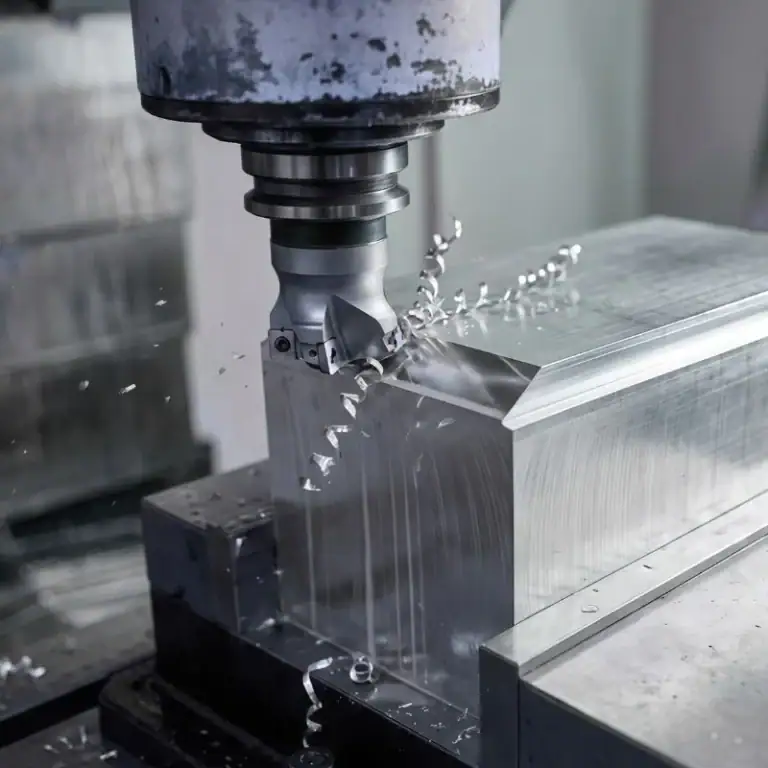
Robot components are made from various materials, including aluminum alloys, stainless steel, and high-performance alloys. Different materials require different machining strategies.
- Adjusting machining parameters based on material properties.
- Selecting suitable cutting tools to improve machining results.
- Reducing deformation problems during processing.
Different materials require different manufacturing approaches. Only by understanding material characteristics can manufacturers ensure robot components meet design requirements.
Why Is CNC Precision Machining Suitable for Robot Part Manufacturing?
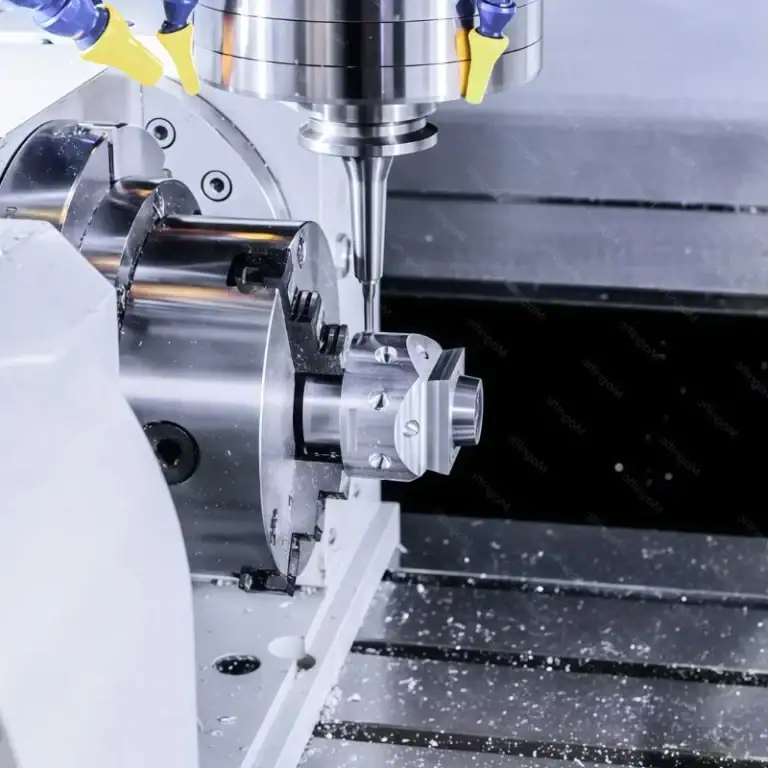
As robot applications continue to expand, customers are placing more demands on component manufacturing. Robot parts usually feature complex structures, strict dimensional requirements, and changing production quantities. CNC precision machining, with its flexibility and automation advantages, is highly suitable for these manufacturing needs.
Suitable for Complex Robot Part Machining
Robot component designs are becoming increasingly complex, with many parts requiring curved surfaces, irregular structures, and multi-angle machining.
- Machining complex geometric structures.
- Supporting small-batch customized production.
- Allowing quick process adjustments based on design changes.
CNC machining makes robot part manufacturing more flexible, especially during development and customized projects, helping companies quickly complete product verification.
Improving Robot Part Production Efficiency
Robot manufacturing focuses not only on individual component quality but also on overall production efficiency. Long machining cycles can affect product development and delivery schedules.
- Reducing the impact of manual operations.
- Improving repeated machining efficiency.
- Shortening component manufacturing cycles.
- Supporting smooth transition to mass production.
CNC precision machining helps companies manufacture robot components faster while maintaining stable machining performance.
Supporting Robot Product Upgrades
The robotics industry is developing rapidly, and many companies need to continuously improve their product designs. Flexible machining methods allow manufacturers to respond quickly to market changes.
- Supporting new structure testing.
- Helping product iteration and development.
- Reducing manufacturing challenges during the R&D stage.
Precision machining supports not only mature products but also provides manufacturing capabilities for future robot innovations.

Why Will Future Robot Development Rely More on Precision Machining?
With the continuous advancement of smart manufacturing, robots are moving toward higher accuracy, faster operation, and more complex applications. Future robots will not only perform simple handling tasks but also participate in precision assembly, inspection, and intelligent production. This means internal components will face increasingly demanding manufacturing requirements. Precision machining will play an even more important role in future robot development.
Driving Robots Toward Higher Precision
Many industries will require higher robot accuracy in the future, including electronics manufacturing, medical equipment, and precision assembly.
- Improving robot motion control capability.
- Meeting stricter application requirements.
- Enhancing equipment reliability.
Advanced precision machining technologies will help robots achieve more stable and accurate performance.
Supporting Lightweight Robot Design
Lightweight designs can improve robot speed and reduce energy consumption, but they also create greater manufacturing challenges.
- Supporting new material applications.
- Producing complex lightweight structures.
- Balancing strength and precision requirements.
Precision machining helps manufacturers solve production challenges in lightweight robot design and improve overall robot performance.
Improving Smart Manufacturing Competitiveness
Robots have become an important part of modern manufacturing, and component manufacturing quality directly affects equipment competitiveness.
- Reducing equipment failure risks.
- Improving production stability.
- Lowering long-term maintenance costs.
In the future, precision machining capability will become an important foundation for the continued development of the robotics industry.
Improving robot performance depends not only on intelligent control systems but also on high-quality component manufacturing. Precision machining improves part accuracy, optimizes structural fitting, and enhances manufacturing stability, allowing robots to operate with greater precision and efficiency. Tirapid specializes in precision machining services, providing robot components and automation equipment part machining solutions to help companies develop high-performance manufacturing products.