Aluminum extrusion is widely used to produce lightweight profiles with consistent cross-sections, including channels, tubes, frames, heat sinks, rails, and equipment housings. The process can form long parts with grooves, ribs, cavities, and mounting features that would require more material and machining time if made entirely from solid aluminum stock.
This guide explains how aluminum extrusion works, the main extrusion types, commonly used alloys, profile design principles, finishing options, and industrial applications. It also explains when CNC machining is needed to add holes, threads, pockets, sealing surfaces, and tight-tolerance features to an extruded aluminum profile.
What Is Aluminum Extrusion?
Aluminum extrusion is a forming process that pushes an aluminum alloy billet through a shaped die. The aluminum exits the die as a continuous profile whose cross-section matches the opening in the die. It is then cooled, straightened, cut, heat treated, inspected, and prepared for finishing or secondary machining.
How Aluminum Extrusion Works
The basic idea of aluminum extrusion is similar to pressing a soft material through a shaped opening. A cylindrical aluminum billet is heated until it becomes easier to deform but remains solid. A hydraulic ram then applies pressure and forces the billet through a steel die.
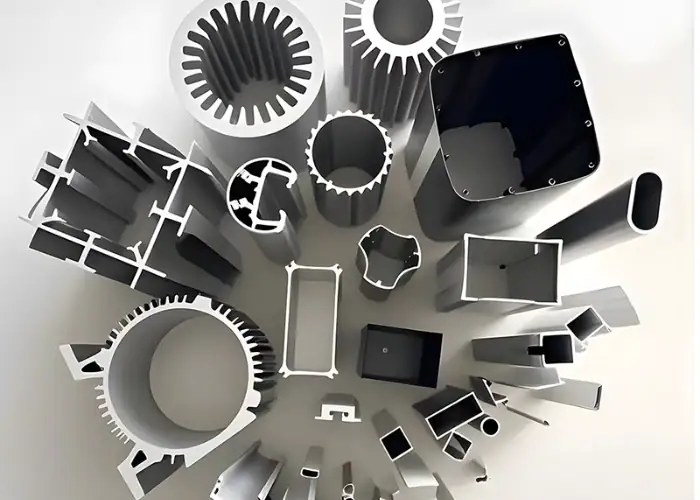
As the aluminum passes through the die, it takes on the required cross-sectional shape. A simple die may produce a flat bar, angle, channel, or solid rod. More complex dies can form hollow tubes, enclosed cavities, heat sink fins, screw channels, T-slots, and interlocking assembly features.
The extruded profile leaves the press as a long continuous section. Because the die controls the cross-section, the same geometry can be repeated throughout the entire length. This makes extrusion especially suitable for parts that need a constant profile but may later require different cut lengths or machined features.
Key Features Of Extruded Aluminum Profiles
One important feature of aluminum extrusions is their ability to combine several functions into one profile. A designer can include ribs for stiffness, channels for cables, fins for heat transfer, slots for fasteners, or locating features for assembly. These elements may reduce the number of separate parts and simplify later production.
Extrusion also uses material more efficiently than machining the same long profile from a solid block. Instead of removing a large amount of aluminum to create channels or hollow areas, the required cross-section is formed directly. CNC machining can then be limited to the features that truly require precision.
However, an aluminum extrusion is not automatically a finished precision part. The process controls the general profile, but straightness, twist, flatness, wall thickness, surface condition, and cross-sectional dimensions still have manufacturing tolerances. Critical features may need CNC machining after extrusion.
Aluminum Extrusion Types And Process
Aluminum extrusion can be classified by how the billet moves through the press and by the geometry of the finished profile. Understanding these differences helps engineers choose a process that balances profile complexity, dimensional control, tooling cost, and production efficiency.
Direct vs Indirect Extrusion
Direct extrusion, also called forward extrusion, is the most common method. The billet is placed inside a container, and a ram pushes it toward a stationary die. The aluminum flows in the same direction as the ram while contacting the container wall.
This contact creates friction between the billet and the container. The press must generate enough force to overcome this friction and move the aluminum through the die. Direct extrusion is widely used because it supports many alloys, profile sizes, and solid or hollow shapes.
In indirect extrusion, the die moves into the billet on a hollow ram, and the aluminum flows in the opposite direction from the ram movement. Because there is less relative movement between the billet and container wall, friction may be lower. This can improve material flow in suitable applications, but the equipment and profile limitations may make it less common than direct extrusion.
Solid, Hollow, Semi-Hollow, And Custom Profiles
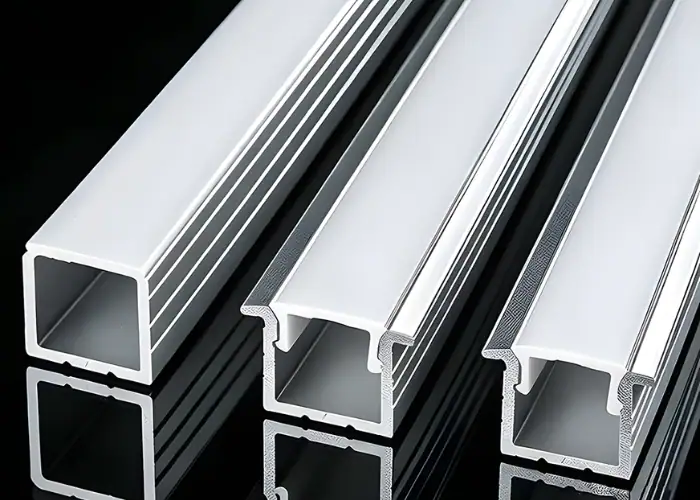
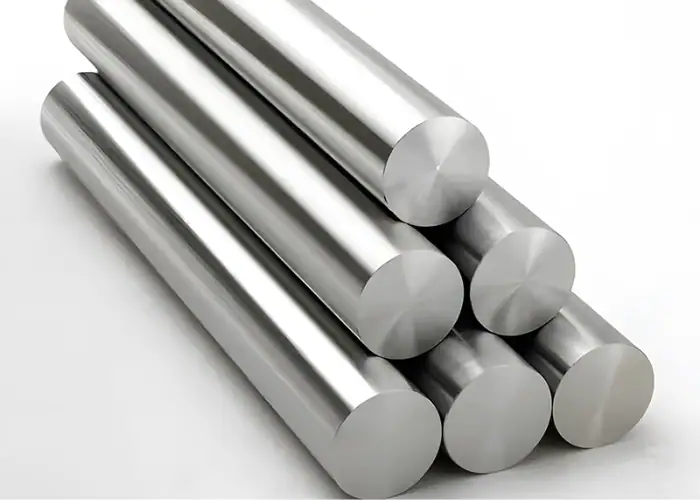
Solid profiles do not contain a fully enclosed internal cavity. Common examples include bars, rods, angles, T-sections, U-channels, rails, and open frames. Their simpler die design often makes them easier and less expensive to extrude.
Hollow profiles contain one or more fully enclosed voids. Square tubes, rectangular tubes, multi-channel housings, and fluid passages are typical examples. These profiles require more complex dies and tighter control of metal flow so that the internal walls form correctly and remain consistent.
Semi-hollow profiles have partially enclosed areas, such as a C-shaped section with a narrow opening. Custom profiles can be solid, hollow, or semi-hollow and may include ribs, fins, mounting tracks, snap-fit details, or cable channels. The more balanced and uniform the design, the easier it is to maintain stable extrusion quality.
From Billet And Die Preparation To Aging And Inspection
The process begins with the extrusion die and aluminum billet. The die is prepared and heated to support stable material flow, while the billet is cut to the required length and preheated. Proper temperature control helps reduce excessive pressure and improves how the alloy moves through the die.
Once the billet is loaded into the press, the hydraulic ram pushes it through the die. The emerging profile is guided along a runout table and cooled with air or water. It is then cut to a manageable length and allowed to reach a stable temperature.
The profile may stretch slightly during cooling, so it is mechanically straightened to reduce twist and bow. It is then cut to the required production length and aged to obtain the specified temper. Inspection may cover cross-sectional dimensions, wall thickness, straightness, twist, flatness, surface condition, hardness, and mechanical properties.
Aluminum Alloys And Profile Design
Alloy and profile geometry strongly influence extrusion performance. The correct aluminum grade must satisfy strength, corrosion resistance, surface finish, machining, welding, and cost requirements. At the same time, the profile must allow the metal to flow evenly through the die.
6061 vs 6063 Aluminum Extrusion
6061 and 6063 are two common alloys used for aluminum extrusion, but they serve different priorities. Both are heat-treatable 6000-series alloys containing magnesium and silicon, and both can be extruded into many standard and custom profiles.
6061 is generally selected when mechanical strength, structural performance, welding, or secondary machining is important. It is commonly used for machine components, transportation parts, structural frames, marine equipment, fixtures, brackets, and profiles that will receive significant CNC machining.
6063 is often preferred when appearance, extrudability, and anodized surface quality are more important than maximum strength. It is widely used for architectural profiles, trim, window and door systems, visible housings, frames, and decorative components.
| Selection Factor | 6061 Aluminum | 6063 Aluminum |
| Main priority | Strength and machining | Surface finish and extrudability |
| Common uses | Structural and mechanical profiles | Architectural and visible profiles |
| CNC machining | Generally better suited | Machinable, but usually less preferred |
| Anodizing appearance | Good | Usually more uniform and attractive |
| Complex thin profiles | Possible with design control | Often easier to extrude |
| Structural load | Better for higher loads | Better for moderate-load applications |
The final choice also depends on temper. T5 and T6 conditions affect strength, hardness, machining response, and dimensional behavior. Engineers should specify both the alloy and temper instead of referring only to “extruded aluminum.”
Wall Thickness, Symmetry, Ribs, And Corner Radii
Consistent wall thickness helps aluminum flow through the die at a similar rate across the entire profile. Large changes from thick to thin areas can create uneven flow, cooling differences, surface defects, distortion, or dimensional variation.
A symmetrical profile is generally easier to extrude and cool evenly. When a design is highly unbalanced, one area may flow faster than another, increasing the risk of twist or bow. Symmetry is not always possible, but balanced material distribution usually improves production stability.
Ribs can increase stiffness without adding the weight of a fully solid section. Internal webs can divide hollow profiles into multiple chambers, while grooves and channels can provide locations for fasteners or sliding components. However, very thin ribs, deep narrow slots, and isolated heavy sections may increase die complexity and manufacturing risk.
Sharp internal corners should usually be replaced with suitable radii. Rounded transitions improve aluminum flow, reduce stress concentration, and support longer die life. The radius must still match assembly and CNC machining requirements, especially if a mating component needs a specific corner condition.
Tolerances, Tooling Cost, And Production Volume
Extrusion tolerances depend on profile size, alloy, temper, wall thickness, geometry, die type, and whether the feature is a solid-metal or open-space dimension. Straightness, twist, flatness, contour, and cross-sectional dimensions are controlled separately.
A drawing should not apply tight tolerances to every dimension without considering function. Standard extrusion tolerances are usually sufficient for noncritical walls, covers, and structural areas. Bearings, sealing surfaces, alignment holes, threaded features, and precision interfaces often require secondary machining.
Custom extrusion also requires an initial die investment. A simple solid profile normally needs less tooling than a complex hollow profile. Tooling cost may be reasonable when the same cross-section will be produced repeatedly, but it can be difficult to justify for a few prototypes or a design that is still changing.
Production volume should therefore be considered early. For stable medium- or high-volume parts, extrusion can significantly reduce material waste and machining time. For low quantities, frequently changing designs, or complex three-dimensional parts, full CNC machining from standard stock may be more practical.
CNC Machining Aluminum Extrusions
Many extruded profiles require secondary operations before they can be assembled into a finished product. CNC machining converts a continuous profile into a functional component by adding precise features that cannot be formed economically or accurately in the extrusion die.
Cutting, Milling, Drilling, And Tapping
Cutting is usually the first secondary operation. Long profiles are sawed into individual blanks with an allowance for final machining. The cut must control length, squareness, burrs, and surface damage, especially when the ends will form an assembly interface.
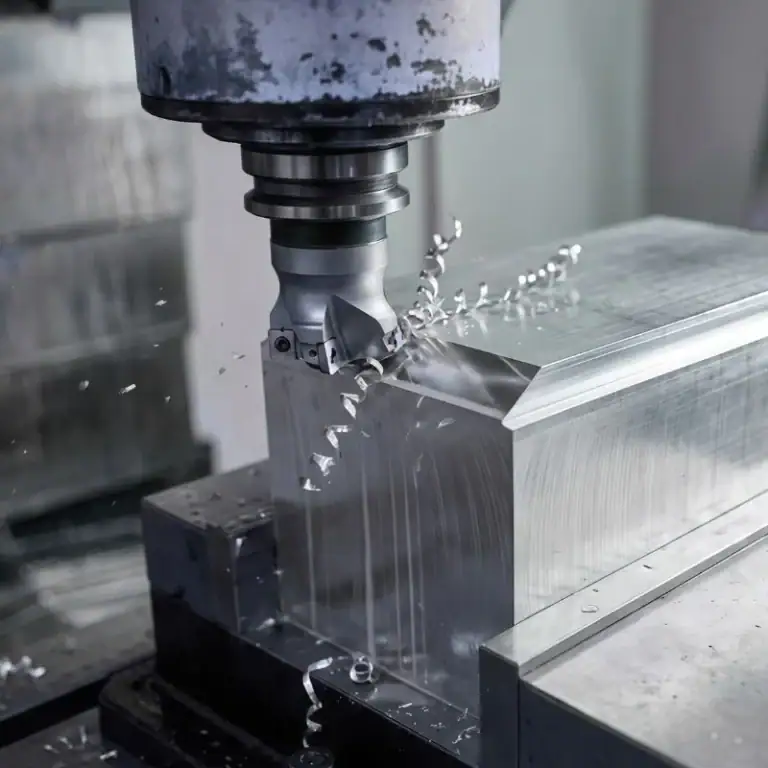
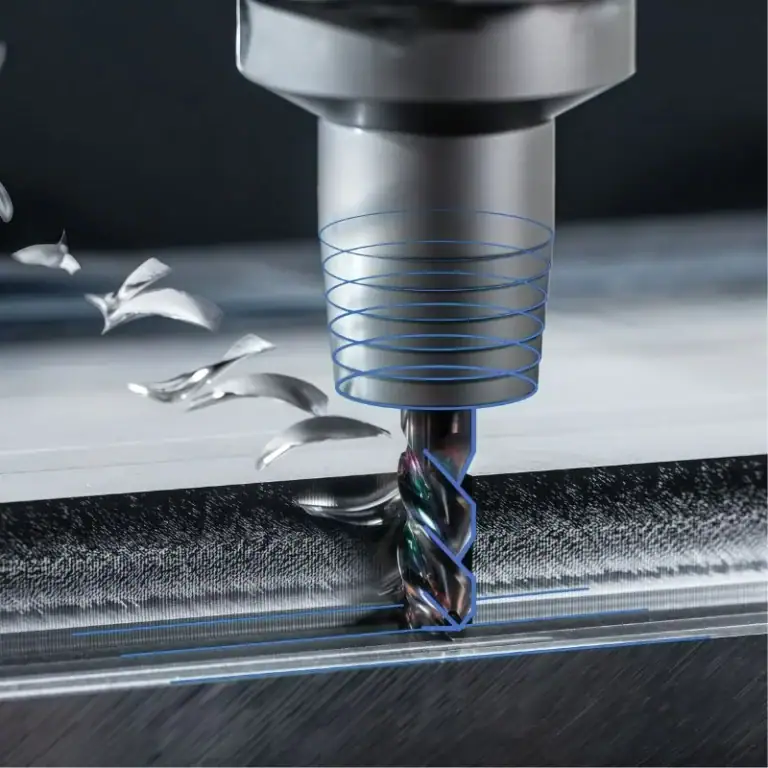
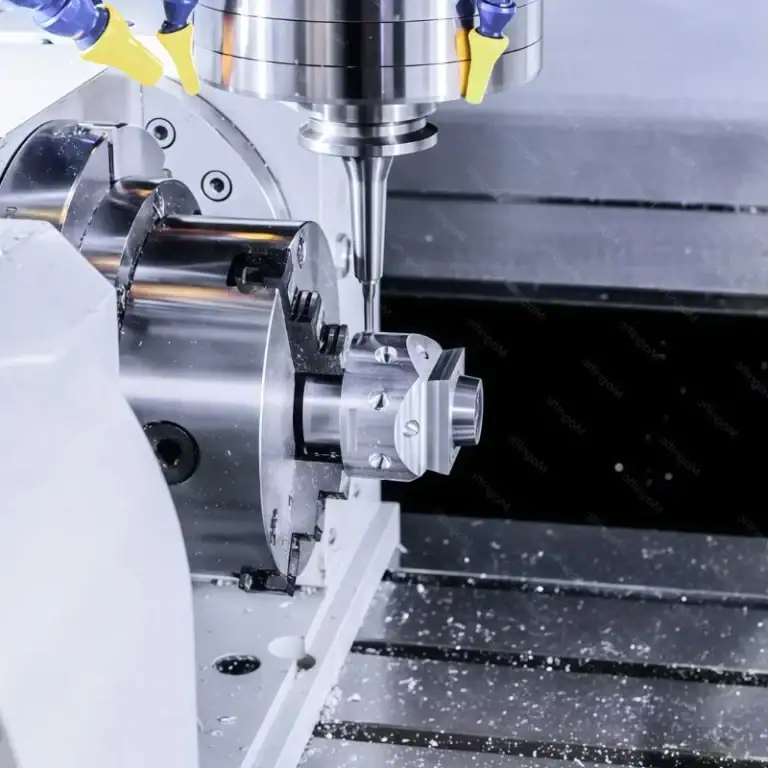
Milling can add pockets, flat mounting surfaces, slots, windows, side features, or clearance areas. CNC machines can process several faces in one setup, depending on part geometry and fixture access. For long profiles, dedicated support may be needed to prevent vibration and movement.
Drilling and tapping add mounting holes, threaded holes, counterbores, and locating features. These operations are common in machine frames, electronic housings, automation systems, heat sinks, and structural profiles. Tool selection, hole depth, chip evacuation, and thread engagement must match the alloy and wall thickness.
Extruded sections can also receive chamfering, countersinking, reaming, engraving, and end-face machining. The machining route should be planned around the profile geometry so tools can access each feature without colliding with thin walls, fins, or internal channels.
Adding Tight-Tolerance And Custom Features
The extrusion die creates the general cross-section, but it cannot always produce the precision required for an assembly. CNC machining is used when a feature needs closer positional accuracy, controlled flatness, accurate diameter, or a specific surface finish.
For example, an extrusion may form the body of an electronic enclosure, but CNC machining adds connector openings, ventilation patterns, threaded mounting points, display windows, and sealing grooves. A heat sink may be extruded with fins, then cross-milled or drilled for electronic components.
CNC machining can also create features that vary along the length. The extrusion process repeats the same cross-section continuously, so it cannot directly form isolated pockets, local recesses, angled holes, or different details at each end.
A practical design uses extrusion for the long, repeated geometry and machining for localized precision. This combination often reduces material cost and cycle time compared with cutting every feature from solid plate or billet.
Fixturing, Deformation, And Surface Finish Control
Extruded profiles can be difficult to hold because they may have thin walls, hollow cavities, open channels, or long unsupported lengths. Excessive clamping force can distort the profile, while insufficient clamping can cause vibration or movement during cutting.
Custom soft jaws, support blocks, nests, expanding mandrels, and vacuum fixtures can spread the clamping load. Internal support may be needed for thin hollow sections. The fixture should locate the part from stable datums instead of relying on a wall that may vary within normal extrusion tolerance.
Machining forces should be balanced to reduce bending. Sharp tools, suitable toolpaths, controlled engagement, and proper chip evacuation help protect thin sections. Roughing and finishing may be separated so the part can relax before final dimensions are cut.
Surface appearance is also important. Extruded surfaces may show die lines, handling marks, or local variation. Machined surfaces will have a different texture from the original extrusion. If the part will be anodized, brushed, or bead blasted, the finishing process should be reviewed before machining decisions are finalized.
Finishing Options And Applications
Aluminum extrusions are used in visible and functional products, so finishing can affect both appearance and performance. Their continuous profiles also make them suitable for structural, thermal, protective, and assembly functions across many industries.
Anodizing, Powder Coating, Brushing, And Sandblasting
Anodizing creates a controlled oxide layer on the aluminum surface. It improves corrosion and wear resistance and can provide clear, black, or colored finishes. The final appearance depends on alloy, surface preparation, extrusion quality, and anodizing specifications.
Powder coating applies a dry coating that is cured into a protective layer. It provides a broad color range and can cover minor surface variation better than clear anodizing. However, the coating thickness must be considered around threads, tight slots, mating surfaces, and electrical contact areas.
Brushing creates a directional grain that gives the profile a clean industrial appearance. Sandblasting or bead blasting produces a more uniform matte texture and can reduce the visibility of light die lines and machining marks.
The order of operations matters. Machining before finishing allows the coating or anodized layer to cover most surfaces, but dimensions may change slightly. Machining after finishing exposes bare aluminum and can damage nearby surfaces. Masking and tolerance planning should be included in the production drawing.
Automotive, Industrial Equipment, And Structural Frames
Automotive applications use extrusions for rails, supports, battery structures, housings, thermal systems, and lightweight structural components. The process can place material where strength is needed while removing weight from less critical areas.
Industrial equipment commonly uses T-slot and modular profiles for machine frames, guards, workstations, conveyors, inspection systems, and automation cells. Integrated slots allow brackets and accessories to be repositioned without welding.
Custom extrusions are also used for guides, rails, actuators, pneumatic components, protective covers, and machine enclosures. Secondary CNC machining adds mounting holes, datum surfaces, bearing locations, and interfaces for motors, sensors, and linear systems.
Structural profiles benefit from the combination of low weight, corrosion resistance, and repeatable geometry. These advantages also make aluminum profiles suitable for architectural structures, interior frameworks, and modern living spaces where lightweight construction, durability, and clean design are important. However, load direction, joint design, fastener pullout, local wall thickness, and long-term deflection must be checked before replacing steel or machined aluminum.
Electronics Enclosures, Heat Sinks, Automation, And Robotics
Electronic enclosures often use extruded bodies because the profile can include internal PCB guides, external cooling fins, screw channels, and protective walls. The long extrusion is cut to length, and CNC machining adds ports, controls, displays, and mounting holes.
Heat sinks are another common application. Extrusion can form multiple parallel fins in one operation, increasing surface area for heat transfer. CNC machining may then add component pockets, mounting surfaces, holes, and local pin-fin patterns.
Automation equipment uses extrusions for frames, sensor mounts, linear motion structures, end-effectors, and protective housings. Their modularity makes assembly and later adjustment easier than welded structures in many low- and medium-load systems.
Robotic equipment can use custom aluminum extrusions for lightweight arms, rails, covers, gripper structures, and cable-management components. For critical moving parts, the design must consider stiffness, fatigue, joint accuracy, payload, and the machining needed to create precise interfaces.
Aluminum Extrusion vs Full CNC Machining
Extrusion and CNC machining are not competing solutions in every project. Each process solves a different manufacturing problem. The most economical route often uses one process for the main geometry and the other for critical features.
When Aluminum Extrusion Is The Better Choice
Extrusion is usually the better choice when a component has a constant cross-section over most of its length. Channels, tubes, frames, rails, heat sinks, trim, and long housings are typical examples.
It becomes more attractive as production volume increases. Once the die is approved, the same profile can be produced repeatedly with less material waste than machining it from a solid block. Long parts can also be cut into multiple lengths for different products.
Extrusion is especially useful when several functions can be built into the cross-section. A single profile may replace separate brackets, ribs, covers, cable guides, and fastener tracks. This can reduce assembly work and the total number of components.
The design must be stable enough to justify tooling. If the profile will change after the first prototype, investing in a production die too early can create unnecessary cost. CNC machining or a standard extrusion may be better during initial design validation.
When To Use Full CNC Machining Or Combine Both Processes
Full CNC machining is often better for prototypes, very low quantities, complex three-dimensional shapes, or parts whose geometry changes along every axis. It avoids custom extrusion tooling and allows rapid drawing revisions.
Machining from plate or billet can also achieve closer control of pockets, holes, threads, flatness, and positional relationships. It is suitable when nearly every surface is functional or when the part cannot be described as a repeated cross-section.
A combined process is usually best when the component has both repeated and localized features. Extrusion forms the main shape efficiently, while CNC machining adds precision interfaces. This approach is common for enclosures, heat sinks, linear rails, structural supports, and automation components.
| Requirement | Aluminum Extrusion | Full CNC Machining | Extrusion Plus CNC |
| Constant cross-section | Excellent | Possible but wasteful | Excellent |
| Complex 3D geometry | Limited | Excellent | Good for local features |
| Low-volume prototypes | Tooling may be difficult to justify | Usually practical | Use standard profiles where possible |
| Medium or high volume | Cost-effective | Higher material and cycle cost | Often the best balance |
| Tight local tolerances | Requires secondary work | Strong capability | Strong capability |
| Design changes | New die may be required | Easy to revise | Local machining can remain flexible |
| Material efficiency | High | Lower for hollow or channel parts | High |
| Integrated ribs and channels | Excellent | Expensive to machine | Excellent |
The decision should be based on total manufacturing cost rather than the price of one process. Tooling, raw material, machining time, scrap, finishing, inspection, assembly, and expected volume all affect the final result.
FAQs
How Strong Is Aluminum Extrusion?
Its strength depends on the alloy, temper, wall thickness, and profile design. 6061-T6 is commonly used for stronger structural parts, while ribs and hollow sections can improve stiffness.
How To Connect Aluminum Extrusions?
They can be joined with bolts, T-slot nuts, brackets, plates, welding, or machined connectors. CNC machining can add precise holes, threads, and locating surfaces.
How To Bend Aluminum Extrusions?
Common methods include roll bending, stretch forming, and press bending. The best method depends on the alloy, profile shape, wall thickness, and bend radius.
How To Tap Aluminum Extrusion?
Drill the correct pilot hole, then use a sharp tap with suitable lubrication. Thin walls may require thread inserts or thicker mounting areas.
Conclusion
Aluminum extrusion is an efficient way to manufacture long, repeatable profiles with solid, hollow, or semi-hollow cross-sections. Its main value comes from material efficiency, integrated geometry, lightweight strength, and consistent production. Alloy, temper, wall thickness, symmetry, tolerance, finishing, and production volume must be considered together. When the profile also requires precise holes, threads, pockets, sealing features, or assembly datums, secondary CNC machining provides the necessary accuracy.
At TiRapid, we provide precision CNC machining and manufacturing services for aluminum extrusion parts, prototypes, and low-volume components. Our team can machine custom profiles with controlled dimensions, drilled and tapped features, precision pockets, and surface finishing support for industrial equipment, electronics, automation, robotics, and other engineering applications.