7075 and 2024 are two high-strength, heat-treatable aluminum alloys widely considered for aerospace and demanding machined components. Both provide excellent strength-to-weight ratios, but they differ in alloy chemistry, achievable strength, machining behavior, corrosion performance, and common tempers.
This guide explains 7075 vs 2024 aluminum in terms of mechanical properties, fatigue behavior, CNC machinability, corrosion resistance, applications, and manufacturing cost. It also shows why alloy, temper, geometry, tolerance, and service conditions should be considered together before material selection.
7075 vs 2024 Aluminum: Quick Comparison
7075 generally provides higher static strength, while 2024 offers good machinability and a long history in aircraft structural applications. The table below compares representative 2024-T351 and 7075-T651 conditions.
Actual properties vary with temper, thickness, product form, grain direction, and material specification, so these values should be treated as typical references rather than universal design values.
| Property | 2024-T351 | 7075-T651 |
| Main Alloying System | Al-Cu-Mg | Al-Zn-Mg-Cu |
| Typical Tensile Strength | 469 MPa | 572 MPa |
| Typical Yield Strength | 324 MPa | 503 MPa |
| Typical Elongation | 19% | 11% |
| Typical Brinell Hardness | 120 HB | 150 HB |
| Fatigue Reference* | 138 MPa | 158 MPa |
| Elastic Modulus | 73.1 GPa | 71.0 GPa |
| Density | 2.77 g/cm³ | 2.80 g/cm³ |
| Machinability | Good | Good |
| Corrosion Considerations | Often requires protection | Strongly affected by temper |
| Typical Focus | Aircraft structures and machined fittings | High-load lightweight components |
*Fatigue values are representative reversed-stress reference data and should not be treated as universal fatigue limits.
The most obvious difference is static strength. 7075-T651 offers substantially higher tensile and yield strength than 2024-T351, but this does not automatically make it the better material for every component.
What Is 2024 Aluminum?
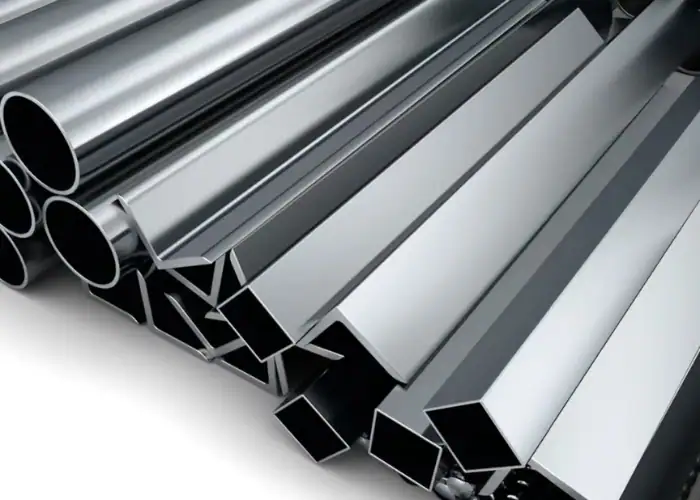
2024 is a heat-treatable 2000-series aluminum alloy with copper as its main alloying element. Magnesium and manganese also contribute to its mechanical properties.
It combines high strength with good machinability and is strongly associated with aircraft structures, fittings, and precision components. Its main limitation is relatively modest corrosion resistance, so exposed parts often require protective finishing.
Composition And Main Characteristics Of 2024 Aluminum
Typical 2024 chemistry contains approximately 3.8–4.9% copper, 1.2–1.8% magnesium, and smaller amounts of manganese and other elements.
In the T351 condition, typical tensile strength is around 469 MPa and yield strength around 324 MPa. This provides a strong balance between mechanical performance, ductility, and machining behavior.
2024 also cuts well during milling, turning, drilling, and tapping. This makes it useful for precision fittings and structural components that require considerable material removal.
Common 2024 Aluminum Tempers
Common engineering tempers include 2024-T3 and 2024-T351.
Temper matters because strength, residual stress, dimensional stability, and corrosion behavior can change significantly between conditions. For CNC plate components, T351 is commonly considered because the stress-relieved condition can improve dimensional stability during machining.
However, stress-relieved material can still distort when large amounts of stock are removed unevenly. Machining sequence and workholding remain important.
What Is 7075 Aluminum?
7075 is a heat-treatable 7000-series aluminum alloy containing zinc, magnesium, and copper. It is one of the highest-strength aluminum alloys commonly used for machined structural parts.
Its high strength-to-weight ratio makes it attractive for aerospace, defense, high-performance mechanical systems, and other components where weight must be reduced without sacrificing load capacity.
Composition And Main Characteristics Of 7075 Aluminum
Typical 7075 contains approximately 5.1–6.1% zinc, 2.1–2.9% magnesium, and 1.2–2.0% copper.
In the T651 condition, typical tensile strength is around 572 MPa and yield strength around 503 MPa. This is significantly higher than representative 2024-T351 values.
That additional strength can help reduce section size or increase load capacity, but stiffness, fatigue, corrosion, geometry, and manufacturing requirements must still be checked.
Common 7075 Aluminum Tempers
Common conditions include 7075-T6, T651, and T7351.
T6 and T651 are commonly selected when high strength is important. T651 is frequently used for CNC-machined plate because it has undergone stress relief.
T7351 sacrifices some peak strength for improved stress-corrosion resistance. Typical values may be around 503 MPa tensile strength and 434 MPa yield strength, compared with approximately 572 MPa and 503 MPa for T651.
This is why engineering comparisons should always include the temper rather than comparing alloy numbers alone.
7075 vs 2024 Aluminum Mechanical Properties
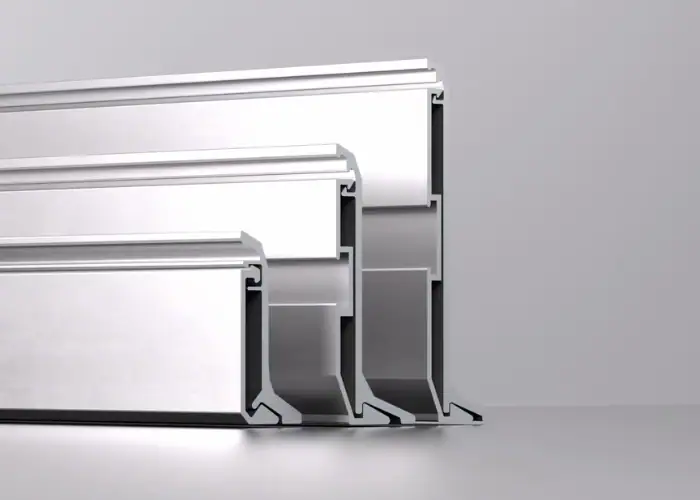
The mechanical difference between the two alloys is important, but the exact temper must be defined before making a meaningful comparison.
Tensile And Yield Strength
7075-T651 has a clear advantage in static strength.
Representative values are approximately:
- 2024-T351: 469 MPa tensile, 324 MPa yield
- 7075-T651: 572 MPa tensile, 503 MPa yield
The higher yield strength of 7075 can be valuable for highly loaded brackets, fittings, structural links, and lightweight components where permanent deformation must be avoided.
However, a higher strength number does not automatically produce a better design. Part stiffness, geometry, buckling, fatigue, environmental exposure, and manufacturing requirements can become more important than maximum tensile strength.
Fatigue Strength And Cyclic Loading
2024 has a long history in fatigue-sensitive aircraft structures, but it should not be described as universally having better fatigue strength than 7075.
Representative reversed-stress data can show around 138 MPa for 2024-T351 and 158 MPa for 7075-T651 under the same reference test conditions.
Real fatigue behavior depends heavily on:
- Stress concentration
- Surface finish
- Holes and threads
- Machining marks
- Corrosion
- Grain direction
- Mean stress
- Load spectrum
- Component geometry
For fatigue-critical parts, engineers should use data for the exact alloy, temper, product form, and loading condition rather than relying on a generic 2024-versus-7075 ranking.
Hardness, Stiffness, And Density
7075-T651 is typically harder than 2024-T351, with representative Brinell hardness values around 150 HB and 120 HB respectively.
Their stiffness and density are much closer.
2024 has an elastic modulus of about 73 GPa, while 7075 is around 71 GPa. Their densities are approximately 2.77 and 2.80 g/cm³.
This means replacing 2024 with 7075 can significantly increase strength, but it will not create the same percentage increase in stiffness.
7075 vs 2024 Aluminum Machinability
Both alloys can be machined efficiently, but material condition, residual stress, geometry, and cutting strategy strongly influence the final result.
CNC Milling And Turning Behavior
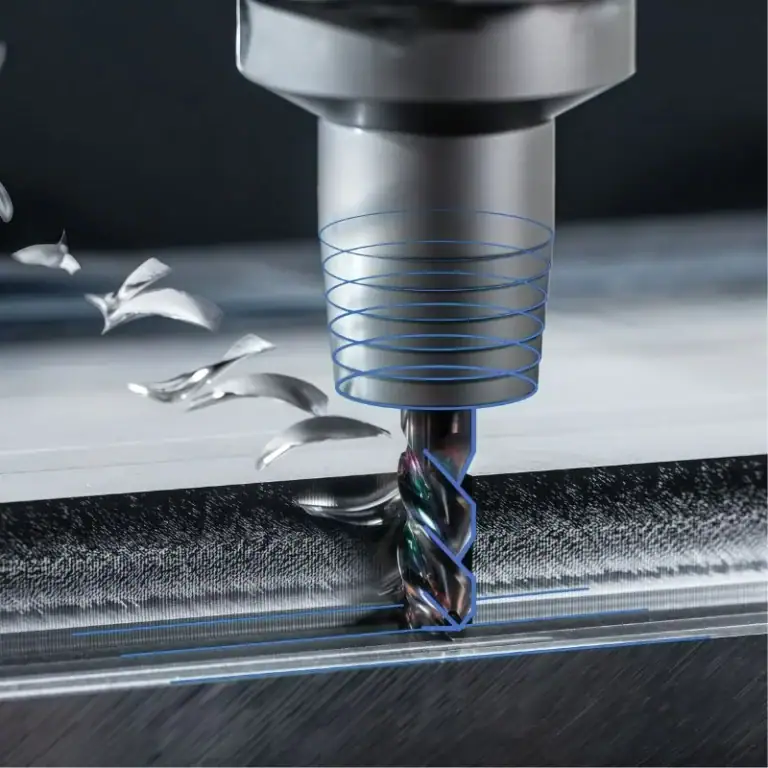
2024 is generally regarded as having very good machinability among high-strength aluminum alloys. It performs well during milling, turning, drilling, and tapping when sharp aluminum-specific tools and effective chip evacuation are used.
7075 also machines well, especially compared with titanium, stainless steel, and many other high-strength engineering materials. Its greater hardness and strength, however, can produce higher cutting loads.
For either alloy, cutting parameters should be developed around the actual temper and component geometry rather than using one generic aluminum machining program.
Chip Control, Tool Wear, And Surface Finish
Good aluminum machining depends on maintaining sharp cutting edges and removing chips efficiently.
Deep cavities and narrow pockets require particular attention because recutting chips can increase heat, damage the surface, and shorten tool life.
7075’s higher hardness can make tool-condition control more important in production runs, while 2024 generally provides favorable cutting behavior.
Surface finish also depends on toolpath strategy, machine rigidity, workholding, coolant, spindle speed, feed rate, and final finishing passes rather than alloy selection alone.
Tolerance And Distortion Control
For precision CNC parts, distortion is often more important than basic machinability.
Heavy material removal from thick plate can release residual stress and cause bowing, twisting, or flatness changes. Thin walls, deep pockets, long ribs, and frame-shaped parts are especially sensitive.
Stress-relieved tempers such as 2024-T351 and 7075-T651 help, but they do not eliminate movement.
Common machining strategies include:
- Balanced stock removal
- Symmetrical roughing
- Controlled clamping pressure
- Leaving finishing allowance
- Releasing and reclamping after roughing
- Finishing critical surfaces later in the process
- Inspecting important features after unclamping
A well-planned machining sequence can have a greater effect on final dimensional stability than the small machinability difference between the two alloys.
Corrosion Resistance And Surface Finishing
2024 and 7075 are selected mainly for mechanical performance rather than exceptional corrosion resistance.
Corrosion And Stress-Corrosion Considerations
2024 generally requires protection when exposed to demanding environments.
7075 corrosion performance depends strongly on temper. T651 provides high strength but requires careful consideration in environments where stress-corrosion cracking may be a concern.
Overaged conditions such as 7075-T7351 provide better stress-corrosion performance while giving up some peak strength.
For critical components, alloy, temper, applied stress, moisture, salt exposure, fastener interfaces, and protective coating should be evaluated together.
Anodizing And Protective Finishes
Both materials can receive protective finishes such as:
- Anodizing
- Chemical conversion coating
- Primer
- Paint
- Specification-controlled protective coatings
Some 2024 sheet products are also available in clad form for improved corrosion protection.
For CNC parts, finishing must be considered during dimensional planning. Threads, precision bores, bearing fits, sealing surfaces, and electrical contact areas may require masking or dimensional compensation.
Welding And Joining Considerations
Neither 2024 nor 7075 is normally the first choice when conventional fusion welding is a major design requirement.
Mechanical fastening methods such as bolts, rivets, inserts, and other qualified joining methods are often more appropriate for high-strength structures.
If a design requires extensive welding, another aluminum alloy may provide a better overall manufacturing solution.
7075 vs 2024 Aluminum Applications
The best application depends on the actual load case rather than simply choosing the strongest alloy.
Common Applications Of 2024 Aluminum
2024 has a long history in aerospace structures and precision mechanical parts.
Typical applications include:
- Aircraft structural components
- Frames and ribs
- Precision fittings
- Machined brackets
- Structural plates
- High-load mechanical components
It is especially attractive when designers need high structural strength together with good machinability and established aerospace material experience.
Common Applications Of 7075 Aluminum
7075 is commonly selected for high-load components where reducing weight is important.
Typical applications include:
- Aircraft structural fittings
- High-load brackets
- Aerospace machined parts
- Defense components
- Precision tooling
- Lightweight mechanical structures
It may also be selected for demanding components in robotics, automation, high-performance automotive systems, motorsport, and industrial equipment.
However, 7075 should not be specified simply because it is stronger. Many moderately loaded components can be produced more economically from 6061 or other aluminum alloys.
Aerospace Applications: When Load Type Matters
Aerospace applications demonstrate why 2024 and 7075 often coexist rather than replace one another.
A compact fitting may benefit from the high yield strength of 7075-T651. A component exposed to greater stress-corrosion risk may use an overaged 7075 temper.
Other aircraft structures may continue to use 2024 because of product form, established design data, fastening methods, manufacturing history, or damage-tolerance requirements.
The material decision therefore needs to consider:
static load + cyclic load + corrosion + geometry + product form + manufacturing + inspection.
Strength alone is not enough.
Cost And Manufacturing Considerations
Material price is only one part of the final CNC component cost.
Material Price And Availability
The price of 7075 and 2024 varies according to:
- Temper
- Thickness or diameter
- Stock size
- Certification requirements
- Quantity
- Supplier inventory
- Market conditions
A common stocked size may be readily available, while aerospace-grade plate with specific traceability requirements can have a higher price and longer lead time.
For this reason, fixed claims that one alloy always costs a certain percentage more than the other are not reliable.
CNC Machining Cost
Machining cost depends on much more than raw material price.
Important factors include:
- Material removal volume
- Machine time
- Tool life
- Number of setups
- Workholding
- Distortion control
- Inspection
- Surface finishing
- Scrap risk
For a simple component, material price may be important. For a thin-wall aerospace housing machined from thick plate, machine time, distortion control, and inspection can easily become larger cost drivers.
The most economical material is therefore the one that meets design requirements while supporting a stable manufacturing process.
How To Choose Between 7075 And 2024 Aluminum
The right alloy depends on the performance that actually drives the component design.
Choose 7075 For Higher Static Strength
7075 is a strong starting point when the design requires:
- High yield strength
- High tensile strength
- High strength-to-weight ratio
- Compact high-load structures
- Weight reduction
7075-T651 is particularly attractive when maximum static strength is important.
Where stress-corrosion resistance is more critical, an overaged condition such as T7351 may offer a better balance even though its strength is lower.
Choose 2024 For Established Structural And Machining Performance
2024 is a strong option when the application benefits from:
- High structural strength
- Good machinability
- Established aerospace use
- Precision fitting manufacture
- Suitable performance without requiring maximum 7075 strength
Its corrosion protection requirements should still be included in the design.
For cyclic structures, fatigue performance should be evaluated using application-specific data rather than assuming 2024 is automatically better than 7075.
Match Alloy, Temper, Geometry, And Manufacturing Process
A practical starting point is:
| Requirement | Recommended Starting Point |
| Maximum static strength | 7075-T6/T651 |
| High-load lightweight CNC part | 7075 |
| Better stress-corrosion resistance within 7075 | T73/T7351 |
| High strength with good machinability | 2024 |
| Established aerospace structures | 2024 or 7075 depending on design |
| Thin-wall precision machining | Evaluate temper and machining strategy |
| Corrosive environment | Evaluate temper + protective finish |
| Extensive fusion welding | Consider another aluminum alloy |
The final drawing should define more than just “2024” or “7075.”
Alloy + temper + product form + tolerance + surface treatment + inspection requirements should be considered together.
FAQs
Why Is 2024 Aluminum Susceptible To Galvanic Action?
2024 aluminum contains relatively high copper, which improves strength but reduces corrosion resistance. Copper-rich intermetallic particles can create local electrochemical differences within the aluminum matrix, increasing the risk of localized corrosion. The risk becomes greater when 2024 contacts a more noble metal in the presence of moisture or another electrolyte. Protective coatings, anodizing, sealants, and proper material isolation can help reduce galvanic corrosion.
Can 2024 And 7075 Aluminum Be Welded?
2024 and 7075 are generally not recommended for conventional fusion welding, including common MIG and TIG processes, because their compositions make them highly susceptible to weld cracking and strength loss in the heat-affected zone. Mechanical fastening is often preferred for structural applications. Specialized joining methods such as friction stir welding may be possible in properly engineered applications, but they require specific process development and qualification.
Can You Anodize 7075 Aluminum?
Yes, 7075 aluminum can be anodized to improve corrosion resistance, wear resistance, and surface protection. However, its zinc, copper, and chromium content can affect the final coating color and appearance, so the finish may differ from alloys such as 6061. The anodizing process, coating type, temper, and required dimensions should be confirmed before production, especially for precision CNC parts.
Can You Bend 7075 Aluminum?
Yes, but bendability depends strongly on the temper. 7075-T6 and T651 have relatively limited formability and can crack during tight cold bending. Softer conditions such as the O temper, or forming after solution treatment in a suitable W condition, provide better formability. Larger bend radii or controlled warm-forming processes may also reduce cracking and springback.
Conclusion
7075 and 2024 are both high-strength aluminum alloys, but they solve different engineering requirements. 7075-T651 generally provides much higher static strength, while 2024 combines strong structural performance with good machinability and established aerospace use. The final choice should consider temper, load type, corrosion exposure, geometry, dimensional stability, surface treatment, availability, and CNC manufacturing requirements rather than strength alone.
At TiRapid, we provide precision CNC machining and manufacturing services for 2024, 7075, and other engineering aluminum alloys. For complex geometries, thin walls, tight tolerances, and high material-removal parts, we evaluate workholding, machining sequence, deformation control, tooling, CMM inspection, and surface finishing to support reliable prototypes and low-volume production.