Xometry and Fictiv are two major digital manufacturing platforms that help engineers and purchasing teams source custom parts without managing every manufacturing supplier individually. Both provide online quoting, design-for-manufacturing support, supplier matching, quality management, and delivery services across processes such as CNC machining, 3D printing, sheet metal fabrication, and injection molding. Their capabilities overlap significantly, but the way each platform organizes manufacturing resources is different.
This guide compares Xometry vs Fictiv in platform structure, manufacturing services, pricing, lead times, quality management, engineering support, and project suitability. The goal is not to declare one platform universally better, but to show where each sourcing model is strongest and when a direct manufacturer may make more sense.
Xometry vs Fictiv: Quick Comparison
At first glance, Xometry and Fictiv appear very similar. Both allow users to upload CAD files, specify materials and manufacturing requirements, receive pricing, place orders, and let the platform coordinate production. The differences become clearer when you look at supplier scale, engineering involvement, process coverage, and how complex production programs are managed.
| Comparison | Xometry | Fictiv |
| Platform Model | AI-driven manufacturing marketplace | Managed manufacturing partner network |
| Supplier Network | 5,000+ suppliers | About 250 manufacturing partners disclosed before MISUMI integration |
| Main Strength | Scale, fast digital quoting, process breadth | Engineering support and production management |
| CNC Machining | Yes | Yes |
| 3D Printing | Yes, plastic and metal | Yes |
| Sheet Metal | Yes | Yes |
| Injection Molding | Yes | Yes |
| Other Production Processes | Casting, stamping, extrusion, welding, assembly and more | Die casting, compression molding, urethane casting, welding and assembly |
| Online Quoting | AI-driven pricing and process recommendations | Digital quoting and automated DFM |
| Complex Project Review | Human support available when required | Strong emphasis on engineering and project review |
| Enterprise Supply Chain | Strong procurement and enterprise integration | Strong production, regional sourcing, BOM and logistics support |
| Best Fit | Broad process access and scalable sourcing | Managed production and engineering-intensive projects |
Xometry’s scale is one of its clearest differentiators. Its platform combines more than 5,000 suppliers with more than 20 supported manufacturing technologies, allowing capacity to be distributed according to process, region, certification, and availability. Fictiv’s disclosed partner network is much smaller, but it uses qualification, test parts, training, quality scoring, and audits to manage that network more closely.
That distinction affects more than supplier count. Xometry is optimized around marketplace scale and automation, while Fictiv positions engineering and production management as a larger part of the customer experience. For a buyer, the practical question is therefore not simply which company has more factories, but which operating model better matches the risk and complexity of the project.
How Are Xometry And Fictiv Different?
Both platforms sit between the buyer and the actual factory producing the component. Customers generally work through the platform rather than sourcing and managing a specific independent machine shop themselves. What differs is how the manufacturing network is organized and how much of the sourcing decision is driven by automation versus managed engineering.
Xometry: AI-Driven Manufacturing Marketplace
Xometry describes its business as an AI-native global manufacturing marketplace. Customers upload CAD files or drawings, select materials, quantities, finishes, tolerances, inspection requirements, and delivery options, and the system converts these inputs into pricing, lead-time estimates, manufacturing recommendations, and supplier-matching decisions.
The platform then matches projects according to supplier equipment, manufacturing capabilities, certifications, capacity, quality performance, and delivery history. Suppliers use Xometry’s Workcenter environment to manage matched production work, while Xometry remains responsible for the transaction, customer relationship, and overall order workflow.
This model is particularly powerful when a company needs access to a large amount of variable manufacturing capacity. Rather than qualifying an individual shop every time demand changes, a buyer can access a distributed network through one purchasing interface. That helps explain why Xometry’s competitive advantage is less about owning a particular type of CNC machine and more about combining pricing data, supplier data, manufacturing capacity, and order management.
Xometry also extends beyond the buyer marketplace. Its Services business includes Thomasnet advertising and marketing, financial services, and Workcenter manufacturing software. For enterprise customers, it supports production-level quoting, repeat orders, team collaboration, procurement integration, quality documentation, and security controls.
The result is a broad ecosystem. A company may first use Xometry for a prototype, then continue using the same platform for multiple processes, repeat production, supplier consolidation, and enterprise procurement.
Fictiv: Managed Manufacturing Network
Fictiv uses a different positioning. Its report explicitly notes that Fictiv does not describe itself as an open marketplace. Instead, the company reviews manufacturing requirements, qualifies partners, and assigns projects according to process capability, material, certification, quality performance, location, lead time, and production capacity.
For the customer, Fictiv acts as the main project interface. The workflow covers design upload, DFM and quotation, manufacturing-partner selection, production, inspection, logistics, and repeat orders. Complex projects can move from automated feedback into human engineering review rather than staying entirely inside an instant-quote workflow.
This gives Fictiv a more managed-service character. The company emphasizes not only getting a part quoted but also coordinating design feedback, materials, engineering, order management, inspection documentation, production progress, and delivery through one platform.
Its production strategy has also expanded. Fictiv supports multi-part BOM programs, regional manufacturing, dedicated engineering and project management, logistics and tariff planning, welding, assembly, replacement parts, inventory-related services, and MRO. Following the MISUMI acquisition, the platform is positioned to combine custom manufacturing with standard and configurable mechanical components in a broader mechanical BOM workflow.
The practical difference is important. Xometry is particularly strong at making a very large manufacturing network easy to access, while Fictiv places more emphasis on managing the manufacturing program around the part.
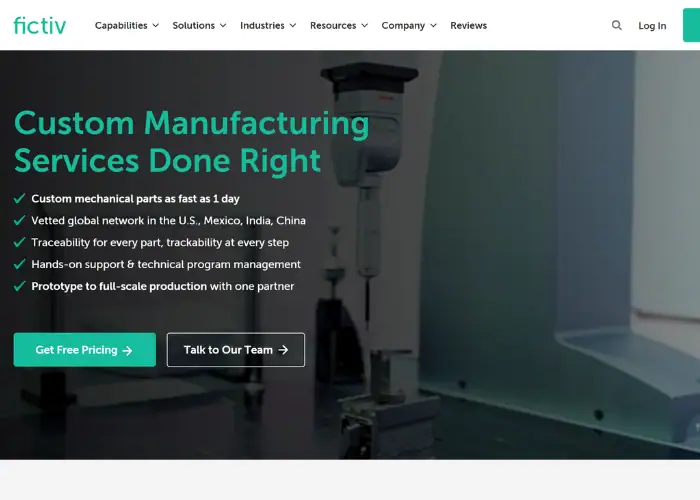
Manufacturing Services: Xometry vs Fictiv
The process portfolios of Xometry and Fictiv overlap enough that many customers could send the same project to either company. Both support CNC machining, additive manufacturing, sheet metal fabrication, injection molding, secondary finishing, inspection, and production quantities. The differences become more visible at the edges of their portfolios and in how those processes are combined into larger programs.
CNC Machining, 3D Printing, And Sheet Metal
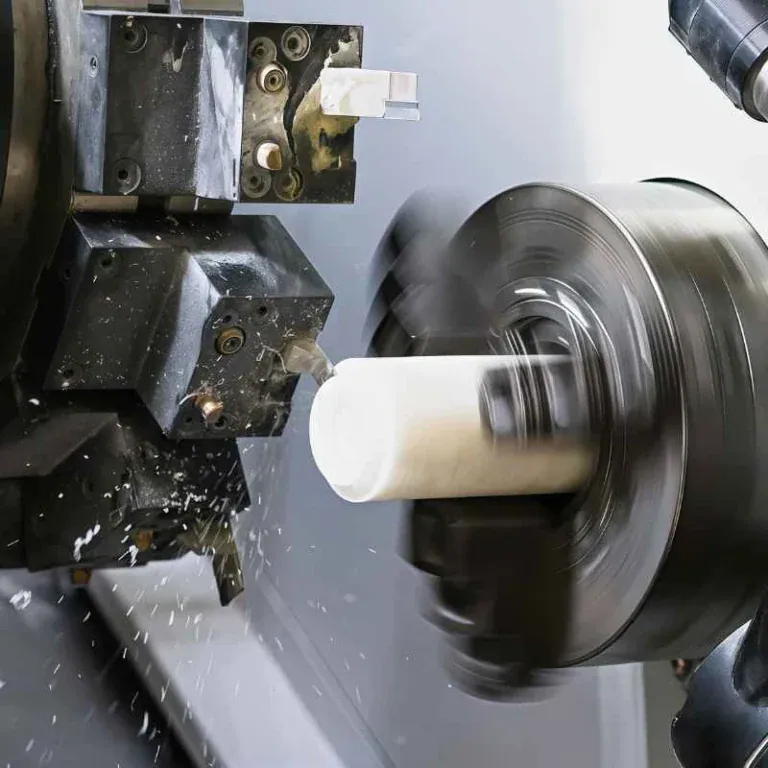
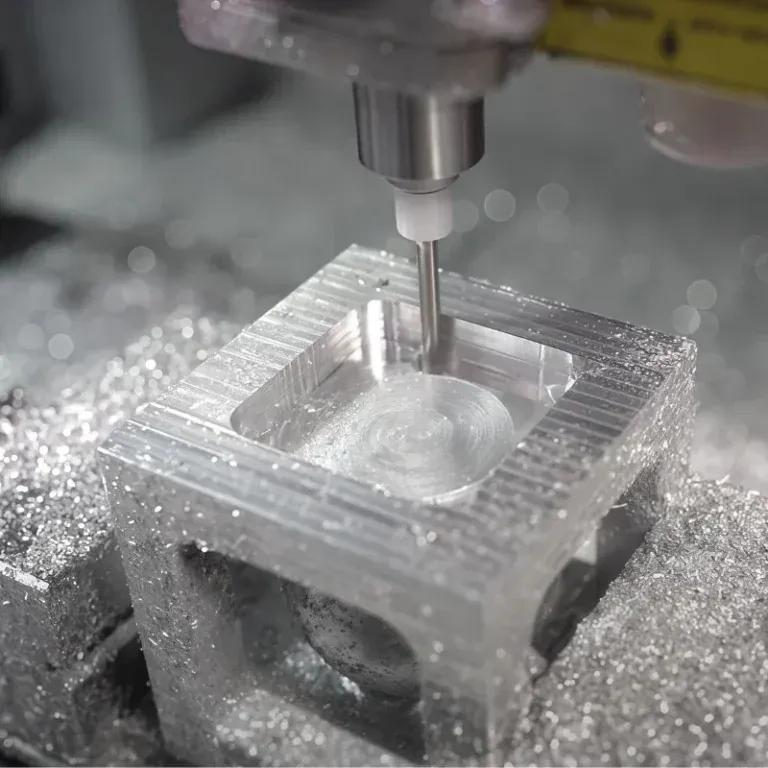
CNC machining is a major service for both platforms. Xometry’s reported capabilities include 3-axis, 4-axis, and 5-axis milling, CNC turning, Swiss machining, micro machining, drilling, and wire EDM. Its platform handles precision metal and plastic prototypes, functional components, and production parts.
Xometry also offers a particularly broad additive manufacturing portfolio, including plastic technologies such as FDM, MJF, SLS, SLA, PolyJet, and Carbon DLS, as well as metal additive processes. Sheet metal and tube manufacturing add laser cutting, waterjet cutting, bending, tube processing, and related fabrication.
Fictiv’s CNC offering includes multi-axis milling, turning, EDM, and additional machining capabilities through its partner network. Its core process portfolio also includes sheet metal fabrication and several 3D printing technologies. The platform’s report identifies CNC as one of its most important manufacturing categories, but its value proposition is broader than individual machining operations.
For standard machined brackets, housings, fixtures, panels, prototypes, and production parts, both platforms may be suitable. The decision often depends less on whether they can technically machine the part and more on quoting speed, quantity, certification, engineering complexity, production location, and inspection requirements.
Injection Molding And Production Manufacturing
Both platforms also extend beyond machining into tooling and production.
Xometry combines injection molding with casting, stamping, extrusion, welding, assembly, and other manufacturing routes. This breadth is valuable when a product contains different types of parts or when manufacturing needs change as the product moves from prototype to production.
A project may begin with CNC-machined plastic or 3D-printed prototypes, transition to bridge tooling, and eventually move into injection molding or another higher-volume production process without requiring the customer to leave the platform.
Fictiv supports injection molding, die casting, compression molding, urethane casting, welding, and assembly in addition to its machining and prototype processes. Its production offering places particular emphasis on coordinating different parts, suppliers, quality requirements, and logistics within one program.
This makes the comparison less about whether one has injection molding and the other does not. Both do. The more useful question is whether the buyer values maximum process variety or more centralized program management.
Prototype To Production Capabilities
Xometry and Fictiv both position themselves beyond rapid prototyping.
Xometry supports one-off prototypes, engineering validation, low-volume production, bridge production, and higher-volume manufacturing. Its network model allows production to scale by shifting demand across qualified capacity rather than relying on the machine availability of one facility.
Fictiv similarly covers concept prototypes, EVT, DVT and PVT stages, low-volume manufacturing, bridge production, volume manufacturing, and full assemblies. Its model adds project coordination around those stages, particularly when a program contains multiple components or requires controlled regional sourcing.
For an engineer, this means that the choice does not need to be based on prototype versus production alone. Both can address the full development cycle. The deciding factor is more likely to be the mix of processes, engineering support, certification, supply-chain structure, and how much supplier management the buyer wants to outsource.
Pricing, Lead Time, Quality, And Engineering Support
This is where the Xometry vs Fictiv comparison becomes most relevant to purchasing decisions. A manufacturing platform is useful only if the quoted cost, delivery date, and quality system remain practical once the part enters real production.
Pricing And Online Quoting
Xometry has invested heavily in AI-based pricing and process recommendation. Its 2026 model updates use information such as geometry, material, finishing, and order structure to predict manufacturing cost and recommend from supported manufacturing processes. The main benefit is speed: many conventional RFQ steps can be reduced or automated.
For standardizable geometry, common materials, normal tolerances, and familiar production routes, that can be extremely convenient. Engineers can evaluate design alternatives quickly rather than waiting for multiple individual suppliers to prepare quotations.
Fictiv also provides online pricing and automated DFM, but its platform combines those tools more explicitly with engineering support. Its DFM tools address features such as wall thickness, holes and slots, radii, undercuts, machinability, and tooling risks. Its broader digital tool set includes material comparison and engineering services such as drawing creation, FEA, BOM work, cost optimization, mold design, and NPI readiness support.
Neither pricing system means the final manufactured part will always be cheap. A platform still has to cover customer acquisition, software, engineering, supplier management, quality, logistics, and its own commercial margin.
The Xometry report therefore notes that standard projects may cost more than sourcing directly from an appropriate factory. The Fictiv report reaches a similar conclusion: the added engineering, project, quality, and logistics layers mean a simple component is not necessarily cheaper than buying directly from a mature manufacturer.
That does not make platform pricing poor value. The buyer is paying for more than spindle time. The service includes sourcing convenience, capacity access, supplier management, quality coordination, digital workflow, and in some cases procurement integration.
Lead Time And Engineering Support
Instant quoting can shorten the front end of a manufacturing project, but quotation speed and production lead time are not the same thing.
For straightforward CNC parts or standard prototype work, a large automated network can reduce the time needed to find capacity and issue a purchase order. Xometry’s scale is therefore useful when speed and available capacity matter more than maintaining a relationship with one specific supplier.
Fictiv also promotes rapid quoting for standard work, but complex or production projects can move into manual RFQ and engineering review. This is intentional rather than a failure of automation: some manufacturing risks cannot be evaluated reliably from geometry alone.
A CAD model may show nominal geometry, but it may not explain functional datums, critical interfaces, cosmetic surfaces, assembly sequence, deformation risk, post-machining heat treatment, inspection strategy, or why one tolerance matters more than another.
Both reports acknowledge this limit. Xometry’s instant engine is most effective for parameterizable work, while complex assemblies, special materials, extreme tolerances, and nonstandard validation may still need applications engineering and manual management. Fictiv similarly requires additional human support for extreme tolerances, special materials, complex assemblies, strict validation, or frequent engineering changes.
The relevant purchasing question is therefore not simply “Which website gives the fastest quote?” It is “How quickly can this project move from quote to an approved, stable manufacturing plan?”
Quality Control And Supplier Management
A distributed manufacturing network creates an important tradeoff. More suppliers provide more capacity and process options, but they also increase the need for consistent qualification, process control, and inspection.
Xometry addresses this through supplier onboarding, QMS review, test parts or documentation where applicable, and performance data. Supplier matching considers equipment, certifications, quality history, and on-time delivery. Quality and fulfillment performance can affect future order allocation.
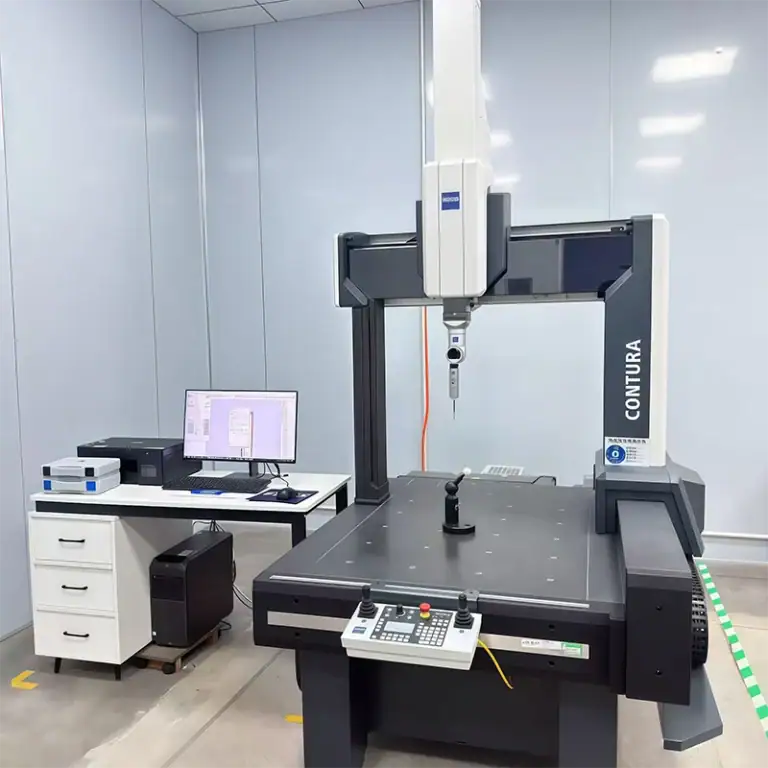
Its enterprise and regulated-industry offering also supports material certificates, dimensional inspection, CMM, FAI, PPAP, traceability, and a range of industry certifications. The report lists ISO 9001, ISO 13485, AS9100D, IATF 16949, ITAR, and CMMC Level 2 among important qualification capabilities within its ecosystem.
Fictiv manages quality through a smaller and more tightly administered partner system. Its partner process can include business and quality review, complex test parts, conditional certification, standardized data packages, inspection forms, corrective-action processes, weekly performance scoring, and periodic audits.
Its reported quality framework includes ISO 9001 QMS, qualified partners with AS9100, ISO 13485, and IATF capabilities, plus tools such as FAI, PPAP, APQP, CMM, XRF, and digital quality documentation.
Neither approach eliminates manufacturing variation. Xometry’s larger network introduces consistency challenges across many suppliers, while Fictiv’s distributed partner network still contains differences in machines, culture, and process capability. Both therefore depend on qualification, data, inspection, and active supplier management.
For critical parts, buyers should still specify important dimensions, datums, inspection frequency, material documentation, surface requirements, and acceptance criteria directly on the drawing and purchase requirements. A digital platform can manage quality well, but it cannot replace a clear engineering specification.
Xometry vs Fictiv: Which Is Better For Your Project?
Neither company is the automatic winner. The better platform depends on what the buyer is trying to optimize.
Choose Xometry For Scale And Process Variety
Xometry is particularly attractive when a company wants broad access to manufacturing technologies through one purchasing system.
Its 5,000+ supplier network provides capacity flexibility across processes and regions. The platform can support CNC parts, additive manufacturing, sheet metal, molded components, castings, stampings, extrusions, welding, finishing, and assemblies without forcing the buyer to qualify a separate vendor for every process.
This makes it useful for engineering teams handling many unrelated parts or product families. A purchaser can use the same digital infrastructure for an aluminum CNC housing, a nylon prototype, a bent sheet metal bracket, and a molded plastic production component.
The AI quoting model is another advantage when the work can be standardized. Fast pricing allows designers to compare materials, quantities, and manufacturing approaches early in development, when design decisions still have a large effect on cost.
Xometry may also be more suitable for enterprise buyers that need procurement integration, repeat-order workflows, security controls, supplier qualification support, and centralized quality documents. Its tools support team collaboration and integration with systems such as Ariba, Coupa, and Oracle.
The tradeoff is that marketplace scale does not necessarily provide deep direct contact with the specific factory making the part. When a design requires continuous manufacturing feedback, frequent changes, difficult workholding, or specialized process development, more direct engineering involvement may become valuable.
Choose Fictiv For Engineering And Production Support
Fictiv is particularly relevant when the customer wants the manufacturing platform to take a more active role in managing the production program.
Its standard workflow still provides digital pricing and DFM, but its differentiation becomes stronger when projects require engineering review, multiple parts, production planning, quality documentation, regional sourcing, logistics, or assembly.
The platform can coordinate manufacturing across the United States, Mexico, China, India, and Japan, allowing customers to evaluate domestic, nearshore, and offshore production options. Its production services also address tariff strategy, assembly, BOM coordination, replacement parts, and MRO.
That structure can be useful for product companies moving from prototype into a controlled supply chain. Instead of independently coordinating one machine shop, a molding supplier, finishing vendors, logistics providers, and standard-component suppliers, the buyer can place more of that coordination inside a single managed system.
The MISUMI relationship adds another dimension. Fictiv’s strategy now includes bringing standard, configurable, and custom mechanical components into the same broader procurement environment. For machinery, automation, robotics, and other products with large mechanical BOMs, that could become increasingly important.
Fictiv’s limitation is that the additional management layer also has a cost. Simple standard parts may not benefit enough from engineering and supply-chain management to justify a platform premium. It also does not support every regulated program, the report specifically notes limitations around ITAR-classified work.
Choose A Direct CNC Manufacturer For Complex Parts
Digital manufacturing platforms are highly effective when sourcing can be standardized. The value proposition changes when manufacturing itself becomes the difficult part of the engineering problem.
Consider a thin-wall aerospace housing that distorts after material removal, a deep cavity requiring long-reach tooling, a five-axis component with several tightly related datums, or a titanium part where heat, tool wear, workholding, and surface integrity all affect the result. These projects may require more than uploading a model and selecting a tolerance.
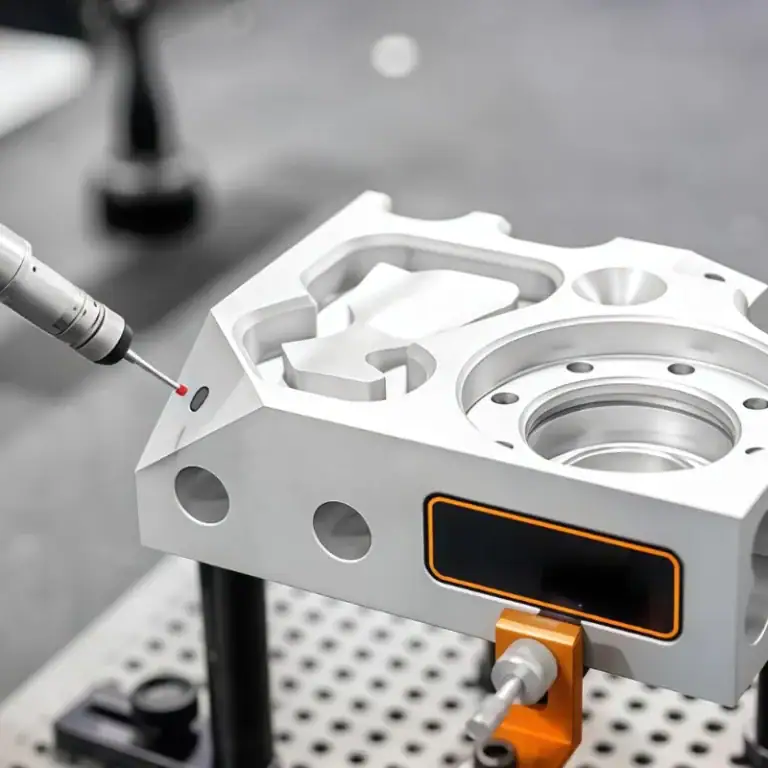
A direct CNC manufacturer allows the customer to communicate with the people developing the machining strategy. Questions about stock condition, tool access, workholding, roughing sequence, stress relief, finish machining, probing, CMM setup, surface treatment, and packaging can be addressed before production rather than after a dimensional issue appears.
That direct communication can also help during design changes. When an engineer changes a wall thickness, hole position, tolerance, or surface requirement, the factory can explain how the change affects setup count, cutter selection, inspection, lead time, and cost.
The two research reports identify this as one of the strongest differentiation opportunities for specialist manufacturers. They highlight thin walls, deep cavities, complex surfaces, difficult materials, tight tolerances, multi-operation machining, transparent production, direct engineering communication, and flexible handling of small batches as areas where direct manufacturing relationships can provide additional value.
Direct sourcing is not automatically better. A platform can be a better choice when the buyer needs rapid access to many processes, large flexible capacity, regional manufacturing options, or centralized supplier administration.
The decision can be simplified this way: use Xometry when process breadth, automation, and network scale are the priority, consider Fictiv when engineering coordination and managed production are more important, and consider a specialized direct manufacturer when the manufacturing process itself requires close engineering collaboration.
FAQs
What Is Fictiv?
Fictiv is a digital manufacturing and supply-chain management company that connects customers with a managed network of qualified manufacturing partners. Customers can upload CAD files or drawings, receive quotations and DFM feedback, and use Fictiv to coordinate manufacturing, inspection, logistics, and delivery.
Unlike an open marketplace, Fictiv manages partner selection and project execution. Its services cover CNC machining, injection molding, sheet metal, 3D printing, die casting, and other production processes from prototyping through volume manufacturing.
What Does Fictiv Do?
Fictiv helps engineering and purchasing teams source and manage custom mechanical parts. Its platform combines online quoting, automated DFM, material selection, engineering review, manufacturing-partner matching, quality management, and order tracking.
For production programs, Fictiv also provides regional manufacturing, BOM coordination, logistics and tariff management, welding, assembly, and MRO services. This makes it more than a rapid-prototyping platform, especially for projects requiring ongoing engineering and supply-chain support.
Is Xometry Legit?
Yes. Xometry is an established digital manufacturing platform with more than 5,000 suppliers worldwide. However, a large supplier network does not automatically guarantee consistent quality. Because orders are distributed among many independent factories with different equipment, engineering experience, and process-control capabilities, quality can vary between suppliers.
Is Xometry Expensive?
Xometry is not always expensive, but it is also not guaranteed to be the lowest-cost sourcing option. Its pricing model considers factors such as part geometry, material, surface finish, quantity, manufacturing process, inspection, and other order requirements.
Customers are also paying for access to a large manufacturing network, automated quoting, supplier management, quality coordination, and logistics. For relatively simple or repeat CNC parts, sourcing directly from a suitable manufacturer may sometimes produce a lower total price because there is less platform overhead.
Conclusion
The Xometry vs Fictiv decision is primarily a choice between two different digital manufacturing models. Xometry emphasizes AI-driven quoting, a 5,000+ supplier network, broad manufacturing coverage, and enterprise procurement infrastructure. Fictiv operates a more concentrated managed partner network and places greater emphasis on DFM, engineering support, production project management, regional supply chains, assembly, logistics, and MRO. Both can support projects from prototype through production, so the better option depends on process mix, part complexity, quality requirements, volume, and how much engineering coordination the buyer needs.
At TiRapid, we provide precision CNC machining and manufacturing services for prototypes and low-volume production, with direct engineering communication throughout the project. For complex aluminum, stainless steel, titanium, and engineering-plastic parts, our team can review machining strategy, tolerances, workholding, inspection, surface treatment, and production risks before manufacturing, helping customers maintain clearer process visibility and quality control.