PET material is one of the most widely used thermoplastic polyesters in packaging, fibers, films, molded products, and precision engineering components. Its combination of mechanical strength, low moisture absorption, surface hardness, chemical resistance, dimensional stability, transparency, and recyclability allows manufacturers to adapt it to products ranging from beverage bottles to CNC-machined gears and equipment guides.
This guide explains what PET material is, how its molecular structure affects performance, the differences between packaging and engineering grades, common processing methods, CNC machining considerations, application limits, recycling routes, and the practical factors engineers should evaluate before selecting PET for a molded, extruded, thermoformed, or machined component.
What Is PET Material?
PET is a broad material family rather than one fixed product. The polymer structure, crystallinity, molecular orientation, additives, manufacturing method, and stock form determine whether the final material is transparent and flexible, opaque and rigid, suitable for bottles, or optimized for CNC machining.

PET Chemical Name and Polymer Structure
PET stands for polyethylene terephthalate and belongs to the polyester family. The same polymer is commonly called polyester when manufactured as textile fiber, while PET or PET resin is the more common term for bottles, containers, sheets, films, and engineering plastic products.
The basic raw materials are ethylene glycol and terephthalic acid. Polymerization joins these molecules into long polyester chains, which are extruded, cooled, and cut into resin pellets. The pellets can later be reheated and converted into bottles, films, fibers, molded products, or semi-finished stock shapes.
PET can exist in amorphous, oriented, and semi-crystalline conditions. Rapid cooling can preserve transparency, while controlled heating and crystallization increase rigidity and may make the material more opaque. This structural flexibility explains why PET bottles, food trays, textile fibers, and machined engineering parts can look and perform differently.
PET, Polyester, and PET Resin
The terms PET and polyester describe the same basic polymer chemistry, but industry terminology usually reflects the product form. Fibers and fabrics are normally described as polyester, while resin pellets and rigid packaging are usually identified as PET resin.
Bottle-grade PET is formulated for clarity, stretch-blow molding, barrier performance, and production efficiency. Film and fiber grades emphasize orientation, drawability, thickness control, and mechanical performance in one or two directions.
Engineering PET stock shapes are normally semi-crystalline and designed for mechanical strength, stiffness, dimensional accuracy, wear behavior, and CNC machinability. Ensinger specifically distinguishes its machinable semi-crystalline PET from the amorphous polyester commonly used in packaging.
How PET Crystallinity Changes Performance?
Amorphous PET allows light to pass through more easily and is commonly associated with clear bottles, sheets, and packaging. Molecular orientation during stretching further improves strength and toughness without requiring a large increase in material thickness.
Semi-crystalline PET contains more ordered molecular regions. These regions increase stiffness, hardness, wear resistance, chemical stability, and dimensional control, making the material more suitable for mechanical components and machinable stock shapes.
Greater crystallinity can also increase molding shrinkage and reduce transparency. Engineers must therefore select the correct PET form rather than assuming a clear bottle resin will perform like a semi-crystalline engineering plate or rod.
Key PET Material Properties
PET properties depend strongly on grade, crystallinity, reinforcement, processing history, stock form, temperature, and test method. Packaging PET, recycled PET, injection-molding compounds, and machinable PET stock shapes should not be assigned one universal property set.
Mechanical Strength and Stiffness
Semi-crystalline engineering PET provides relatively high strength and stiffness compared with many general-purpose thermoplastics. It can maintain stable geometry in gears, rollers, guides, scrapers, spacers, housings, and other moderately loaded components.
A representative machinable PET grade reports tensile yield strength around91MPa and a tensile modulus around3400MPa. These values demonstrate the material’s structural capability but apply only to the cited stock-shape grade and test conditions.
PET also offers useful creep resistance, but long-term deformation still depends on stress, temperature, time, geometry, and environmental exposure. Continuous-load designs should use grade-specific creep data rather than short-term tensile strength alone.
Hardness, Friction, and Wear
Engineering PET combines surface hardness with relatively low sliding friction. These properties support guides, rollers, bearings, wear strips, mechanical stops, and components that repeatedly contact metal or other plastics.
Wear performance remains application-specific. Mating material, pressure, speed, surface finish, alignment, lubrication, temperature, and contamination can affect service life more than the polymer family name alone.
PTFE-modified PET grades are also available for applications requiring lower friction or improved sliding performance. The modified grade may machine and wear differently from standard unfilled PET, so material substitutions require testing.
Moisture Absorption and Dimensional Stability
PET absorbs relatively little moisture compared with materials such as nylon. This helps machined dimensions, electrical performance, and mechanical stiffness remain more stable when ambient humidity changes.
Representative engineering PET stock shapes report water absorption of approximately0.02%–0.03% after24–96hours at23°C. These values are grade- and test-specific, but they illustrate why PET is frequently selected for precision mechanical components.
Low moisture absorption does not eliminate dimensional movement. Thermal expansion, internal stock stress, wall thickness, machining heat, clamping force, and long-term loading must also be considered when specifying tight tolerances.
Heat Resistance and Thermal Behavior
PET is a semi-crystalline polyester with a melting temperature commonly near244–247°C for representative grades. Melting point is a processing characteristic and should not be treated as the maximum allowable operating temperature.
A representative machinable PET stock grade lists approximately110°C for long-term service and170°C for limited short-term exposure. Actual operating limits depend on mechanical load, dimensional requirements, chemical exposure, thermal cycling, and the exact material grade.
The material also expands substantially more than aluminum or steel. Precision fits should therefore be evaluated across the actual operating-temperature range rather than only at room-temperature inspection conditions.
Chemical and Hydrolysis Resistance
PET generally offers resistance to oils, greases, many acids, cleaning agents, and common industrial chemicals. Its chemical stability supports food-processing machinery, packaging equipment, pharmaceutical systems, and selected mechanical components.
Chemical resistance is not universal. The concentration, temperature, exposure time, applied stress, cleaning method, and PET formulation can change the result. Supplier compatibility data should be reviewed for each service fluid.
Standard engineering PET may also have limitations in continuous hot-water or strongly alkaline environments. Ensinger describes hydrolysis resistance up to approximately70°C for its PET material family and notes restrictions involving high-alcohol media. These limits should be validated against the exact grade.
Representative Engineering PET Material Data
The following table summarizes one representative semi-crystalline machinable PET stock shape. It helps illustrate the engineering performance range, but it is not a universal PET material data sheet.
| Property | Representative Value | Engineering Meaning |
| Tensile yield strength | 91MPa | Supports moderately loaded precision components |
| Tensile modulus | 3400MPa | Provides relatively high rigidity |
| Flexural strength | 121–134MPa | Relevant to bending-loaded parts |
| Shore hardness | 84–85D | Supports hard surfaces and wear components |
| Glass-transition temperature | About81°C | Stiffness begins changing above this region |
| Melting temperature | About244°C | Processing reference, not a service limit |
| Long-term service temperature | About110°C | Grade-specific continuous-use guidance |
| Short-term service temperature | About170°C | Limited-duration exposure guidance |
| Thermal expansion | 8–10×10⁻⁵/K | Greater dimensional movement than metals |
| Water absorption | About0.02%–0.03% | Supports humidity-related dimensional stability |
| Volume resistivity | About10¹⁴Ω·cm | Indicates electrical insulation capability |
| Flammability | UL94 HB equivalent | Applies only to the cited grade and thickness conditions |
Common Types and Grades of PET
PET manufacturers modify molecular weight, crystallization behavior, reinforcement, additives, color, and recycled content to meet different processing and performance requirements. The grade name should therefore be included on engineering drawings and purchasing documents.
Bottle-Grade PET
Bottle-grade PET is designed for injection stretch blow molding. The process first creates a molded preform and then reheats, stretches, and blows it into the final container geometry.
Stretching orients the polymer chains and improves strength, toughness, and pressure resistance while maintaining low weight. This makes PET especially effective for water, carbonated drinks, juices, personal-care liquids, and other packaging.
A representative Eastman general-purpose PET grade is designed for one- and two-stage injection stretch blow molding and provides clear appearance, recyclability, and hot-fill or heat-set processing capability.
Amorphous PET and Crystallized PET
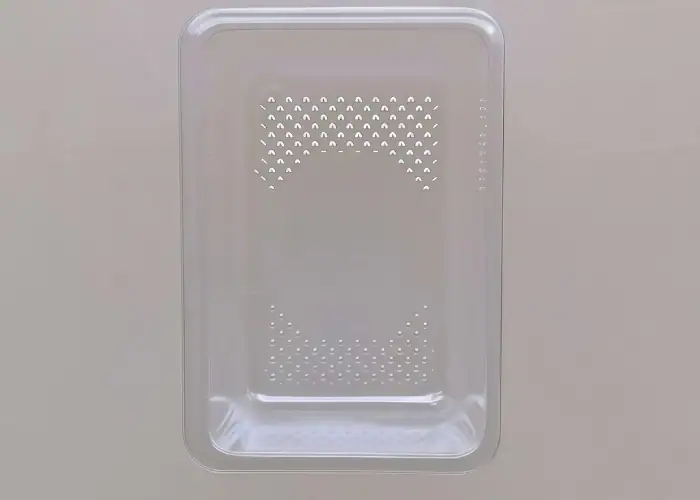
Amorphous PET, often called APET in sheet and packaging applications, is cooled to limit crystallization. It is normally transparent and suitable for trays, clamshells, covers, displays, and thermoformed packaging.
Crystallized PET, commonly associated with CPET food trays, receives additional thermal treatment that increases crystallinity. The finished material becomes more opaque, rigid, and capable of supporting higher reheating temperatures than clear amorphous PET.
APET and CPET should not be treated as interchangeable. Their forming temperatures, appearance, shrinkage, stiffness, impact response, and heat capability differ because of their molecular structure.
Engineering-Grade PET Stock Shapes
Engineering PET is supplied as plate, rod, tube, profile, or near-net stock for CNC machining. These products are typically semi-crystalline and optimized for strength, stiffness, surface quality, dimensional stability, and chip formation.
Modified machinable grades may improve toughness or processing consistency. PTFE-modified versions target sliding applications, while specialized grades may support food-processing, pharmaceutical, semiconductor, or other controlled applications.
Availability can be more limited than common POM, nylon, or polyethylene stock. Designers should confirm plate thickness, rod diameter, color, certification, and production lead time before finalizing the component geometry.
Recycled PET Material
Recycled PET, or rPET, is produced from recovered PET containers, sheets, or other suitable feedstock. Mechanical recycling typically involves sorting, washing, grinding, melting, filtration, and pelletizing.
Chemical recycling can break PET into monomers or intermediate chemicals that are purified and used to produce new polymer. PETRA identifies both remelting and chemical breakdown as commercial recycling routes.
Recycled content does not automatically guarantee the same color, molecular weight, contamination control, mechanical performance, or regulatory suitability as virgin PET. The exact application must be matched to a documented rPET grade and production standard.
How Is PET Material Processed?
PET can be converted through injection molding, stretch blow molding, extrusion, thermoforming, fiber spinning, film production, and CNC machining. The correct process depends on volume, geometry, transparency, crystallinity, orientation, tooling cost, and final performance.
Injection Molding
Injection molding is used to produce PET preforms, housings, electrical parts, structural components, and near-net blanks. PET must generally be dried before melt processing because absorbed moisture can break polymer chains at processing temperature.
A representative bottle-grade PET data sheet specifies desiccant drying at150–170°C for4–6hours and injection temperatures around275–295°C. These are grade-specific processing conditions rather than general settings for every PET resin.
Mold temperature, gate design, packing pressure, cooling rate, and wall thickness influence crystallinity, shrinkage, clarity, surface quality, and mechanical performance. A process developed for transparent packaging PET may not suit a semi-crystalline engineering compound.
Injection Stretch Blow Molding
Injection stretch blow molding is the dominant process for beverage bottles and many personal-care containers. A PET preform is heated, stretched axially, and expanded radially against a cooled mold.
Biaxial orientation increases strength in two directions and enables thin, lightweight containers to withstand handling and internal pressure. PETRA explains that stretched chains can be locked into orientation through controlled cooling.
Preform design, intrinsic viscosity, reheat behavior, stretch ratio, mold temperature, and cooling determine bottle clarity, wall distribution, pressure resistance, and barrier performance.
Extrusion and Thermoforming
PET extrusion produces sheets, films, profiles, fibers, and semi-finished products. Melt filtration, moisture control, temperature uniformity, and cooling determine surface quality and molecular stability.
Extruded APET sheet can be reheated and thermoformed into clear trays, covers, and packaging. CPET processing adds crystallization control when a more heat-resistant food tray is required.
Engineering stock shapes may also be extruded and annealed before machining. Internal stress, centerline quality, crystallinity, orientation, and flatness can influence the performance of the final CNC component.
Film and Fiber Production
PET polymer chains can be stretched in one direction for fibers or two directions for films. Orientation improves tensile performance and dimensional behavior along the stretched direction.
Polyester fibers are used in clothing, industrial fabrics, conveyor belting, reinforcement products, carpets, and filtration media. PET films are used in packaging, electrical insulation, labels, laminates, and industrial protective layers.
Film- and fiber-grade PET should not automatically be specified for injection molding or CNC machining. Molecular weight, additives, orientation, and supply form must match the intended process.
PET CNC Machining
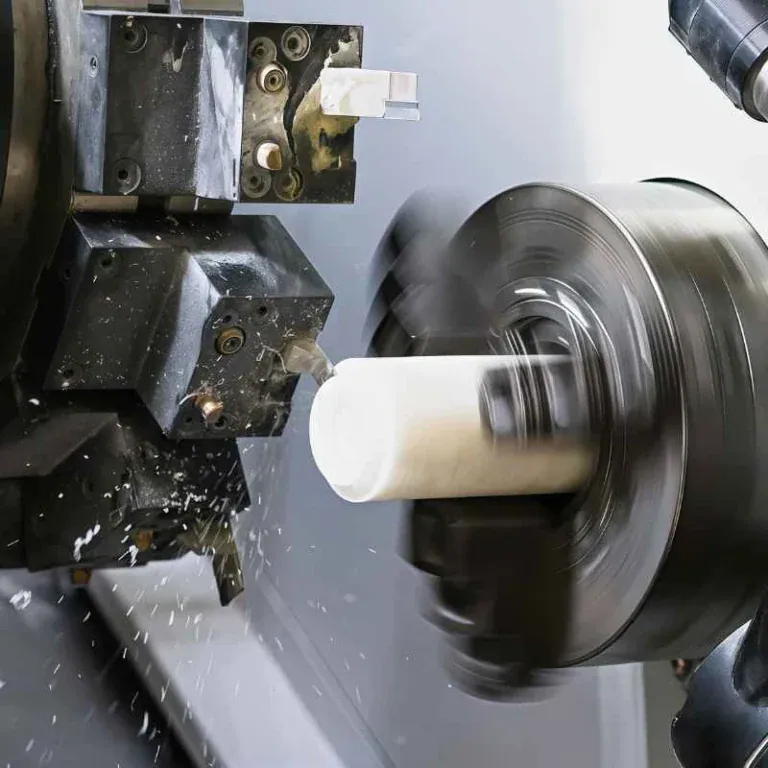
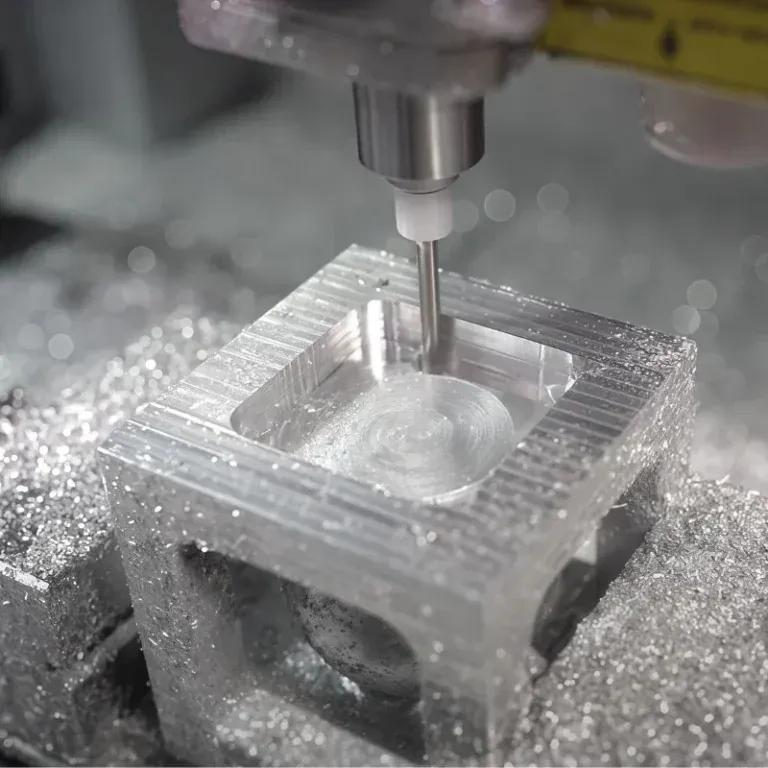
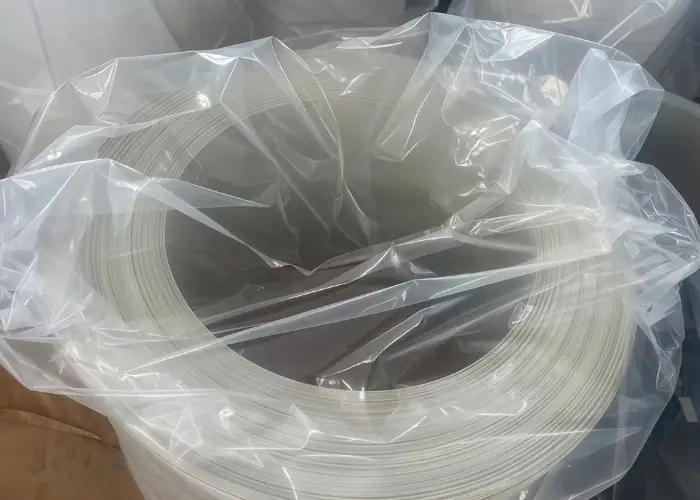
CNC machining is most suitable for semi-crystalline engineering PET plate, rod, or tube rather than clear bottle resin. It supports prototypes, low-volume production, replacement components, fixtures, and precision mechanical parts without requiring injection-mold tooling.
Cutting Tools, Heat, and Chip Control
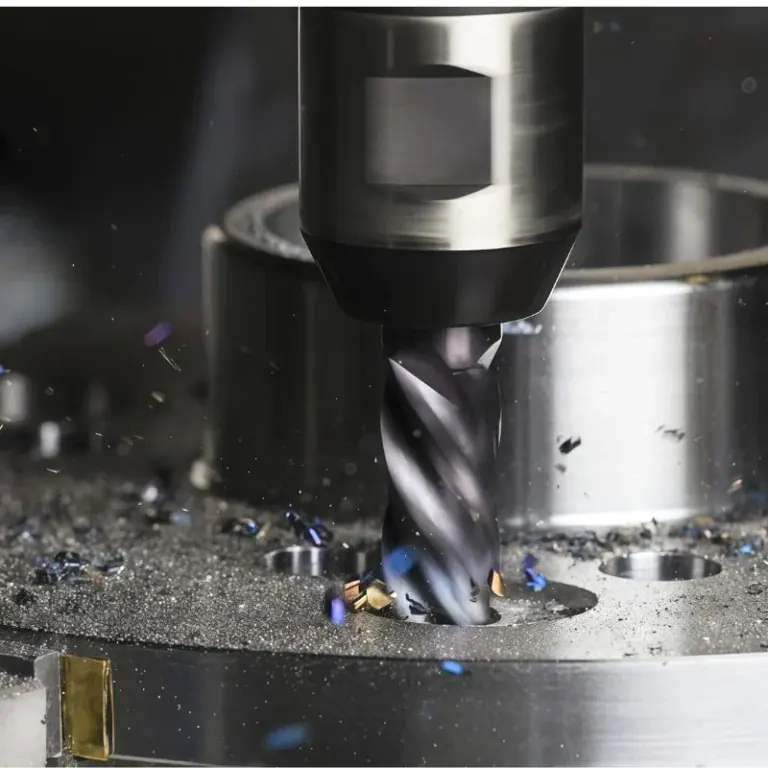
PET can be milled, turned, drilled, bored, reamed, threaded, and engraved. Sharp cutting tools reduce friction, heat generation, burr formation, and local surface damage.
Semi-crystalline machinable PET can support relatively high feeds and efficient material removal while producing good surface quality. Ensinger identifies CNC machining as an effective method for producing complex, dimensionally accurate PET components.
Heat should still be controlled because plastics conduct heat less efficiently than metals. Chip evacuation, tool sharpness, feed per tooth, cutting depth, air cooling, and intermittent drilling help prevent softening around the cutting edge.
Workholding and Part Stability
PET components should be supported without excessive clamping pressure. Thin walls, broad plates, narrow ribs, and unsupported sections can deform while held and spring back after the fixture is released.
Soft jaws, broad contact areas, vacuum fixtures, and distributed support can reduce local distortion. Large parts may require balanced machining from opposite faces to release stock stress more evenly.
For tight-tolerance or asymmetric components, roughing and finishing may be separated. The part can be allowed to stabilize between operations before critical dimensions and sealing surfaces are finish-machined.
Tolerances and Surface Quality
Engineering PET can produce smooth surfaces and stable precision features when the selected grade, geometry, tooling, and inspection conditions are controlled. It is often used when HDPE or other softer plastics cannot maintain the required rigidity.
Tolerance capability depends on feature size, wall thickness, stock stress, thermal expansion, clamping, cutting temperature, and service conditions. Applying one metal-like tolerance to every surface can add cost without improving function.
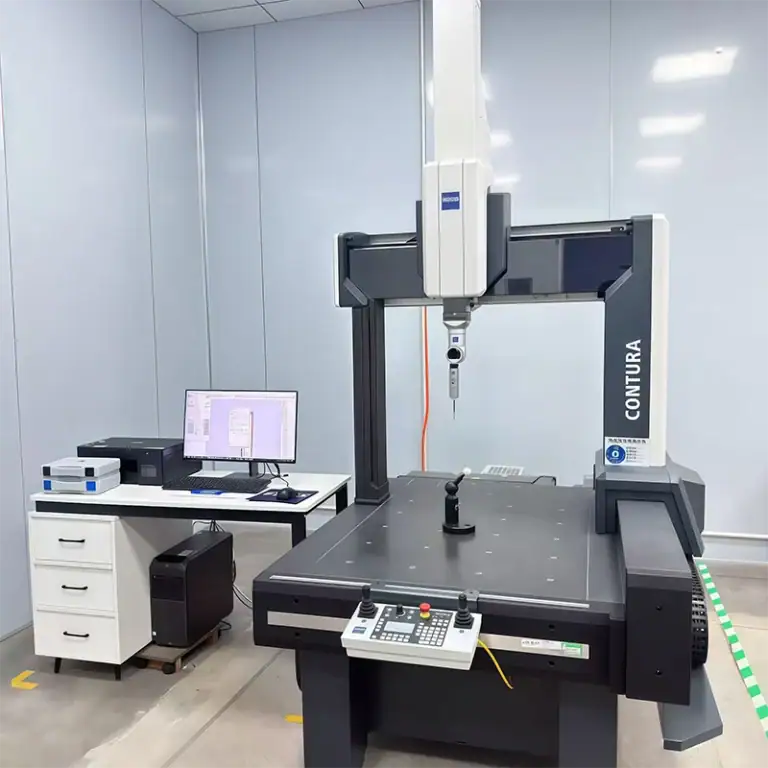
Inspection should occur at a controlled temperature. A component that meets tolerance immediately after machining may shift as it returns to room temperature or experiences load, cleaning, and operating heat.
Advantages and Limitations of PET Material
PET offers a useful balance of mechanical, processing, packaging, and environmental properties. However, its broad range of forms can cause selection errors when the PET grade and manufacturing condition are not clearly identified.
| PET Advantages | PET Limitations |
| High strength-to-weight ratio | Properties vary significantly with crystallinity |
| Low moisture absorption | Standard grades have hot-water and alkali limits |
| Good stiffness and hardness | Not every grade is suitable for high-impact parts |
| Good dimensional stability | Thermal expansion is greater than metal |
| Useful chemical resistance | Compatibility is not universal |
| Good surface quality | Crystalline grades may not be transparent |
| Suitable for molding, extrusion, forming, and machining | Resin normally requires careful drying |
| Widely recyclable | Recycled grade quality depends on feedstock and control |
| Available in clear packaging and rigid engineering forms | Packaging PET is not equivalent to machinable PET |
| Lower cost than many high-performance polymers | High-temperature capability is below PEEK, PPS, or PEI |
PET Material Compared With Other Polyesters
PET, PETG, and PBT all contain polyester chemistry, but their crystallization, forming, machining, and thermal behavior differ. The correct selection depends on whether clarity, tooling efficiency, dimensional control, impact performance, or engineering strength is the main priority.
| Selection Factor | Engineering PET | PETG / Copolyester | PBT |
| Typical structure | Semi-crystalline | Primarily amorphous | Semi-crystalline |
| Main priority | Stiffness, wear and dimensional control | Clarity, toughness and easy forming | Fast molding and electrical applications |
| Transparency | Limited in crystalline stock | Usually high | Usually opaque |
| CNC machinability | Good with suitable stock shapes | Possible but more heat-sensitive | Good dimensional stability |
| Thermoforming | Grade-dependent | Generally favorable | Less common |
| Injection-molding cycle | Moderate | Grade-dependent | Generally rapid crystallization |
| Common applications | Guides, rollers, gears and food machinery | Displays, housings and clear products | Connectors, sensors and electrical parts |
| Main limitation | Hot-water and alkali resistance | Lower stiffness and heat capability | Hydrolysis and warpage require grade control |
Common Applications of PET Material
The PET grade and manufacturing route must match the application. Clear packaging resin, engineering stock shape, recycled PET, and reinforced compounds have different validation and performance requirements.
| Application Area | Typical PET Components | Main Selection Reason |
| Automotive | Handles, housings, wiper components, films and recycled-fiber parts | Strength, surface quality and low moisture absorption |
| Industrial Equipment | Guides, rollers, scrapers, gears and mechanical stops | Stiffness, wear behavior and dimensional stability |
| Medical | Qualified dosing-system and diagnostic components | Precision and grade-specific documentation |
| Aerospace | Films, insulation and selected lightweight components | Strength-to-weight ratio and electrical performance |
| Automation | Conveyor guides, locating parts, rollers and sensor supports | Repeatable dimensions and low sliding friction |
| Electronics | Covers, switches, coil bodies and insulation panels | Rigidity and electrical insulation |
| Robotics | Guides, spacers, small gears and positioning components | Machinability and low moisture sensitivity |
| Consumer Products | Bottles, containers, appliance parts and textile fibers | Clarity, strength and production efficiency |
| Aerospace & Defense | Qualified films, insulation and support components | Grade-specific mechanical and environmental performance |
| Powersports | Housings, guides and selected under-cover components | Oil resistance and dimensional stability |
| Oil & Gas | Selected guides, insulators and low-temperature mechanical parts | Chemical resistance subject to media validation |
Machinable PET is particularly common in food-processing, beverage-filling, pharmaceutical, semiconductor, printing, and general mechanical equipment. Representative components include guide rails, sliding bars, rollers, stops, grabbers, cases, switches, and gears.
Design Considerations for PET Parts
Material selection and component geometry must be evaluated together. A PET grade that performs well in a bottle, film, or thick plate may behave differently in a thin injection-molded wall or heavily machined asymmetric component.
Wall Thickness, Ribs, and Corners
Injection-molded PET parts should maintain reasonably uniform wall thickness to reduce shrinkage differences, sink marks, internal stress, and warpage.
Ribs can increase stiffness without creating thick solid sections. Rib thickness, height, draft, gate position, weld-line location, and crystallization behavior should be considered during mold design.
Sharp internal corners create stress concentration and can restrict melt flow. Suitable radii improve molding, machining, impact performance, and long-term load distribution.
Shrinkage and Crystallization
PET molding shrinkage changes with crystallinity, mold temperature, packing pressure, cooling rate, wall thickness, orientation, and grade formulation.
Clear amorphous parts normally require rapid cooling to limit crystallization. Semi-crystalline engineering parts may use controlled mold temperature and cooling to develop the required stiffness and dimensional behavior.
Tooling calculations should use shrinkage data from the selected resin supplier. Generic PET values are not accurate enough for high-precision molds or material substitutions.
Temperature, Water, and Chemical Exposure
Operating temperature should be evaluated together with load duration and dimensional tolerance. A part may remain physically intact but creep or lose alignment far below the melting temperature.
Continuous hot-water, steam, strong alkali, or high-alcohol exposure requires careful compatibility review. Standard engineering PET may not be the correct material for these environments.
Outdoor parts should use a grade with documented weathering or UV performance. Natural PET should not automatically be assumed suitable for prolonged ultraviolet exposure.
Regulatory and Food-Contact Requirements
PET is widely used for food and beverage packaging, but regulatory suitability remains grade-specific. The generic material name does not prove that a particular engineering plate, pigment, recycled grade, lubricant, or additive package is approved for food contact.
Medical, pharmaceutical, food-processing, semiconductor, and clean-equipment components may require traceability, migration testing, biocompatibility information, or documented production controls.
The material certificate, manufacturing process, cleaning method, and finished-part application should therefore be reviewed together.
FAQs
Is PET material the same as PETG?
No. PETG is a modified copolyester designed to reduce crystallization and improve clarity, toughness, forming, or processing behavior. Standard engineering PET is usually semi-crystalline and offers greater stiffness, hardness, wear performance, and dimensional control. The two materials should not be substituted without checking the application requirements.
Can PET hold a±0.05mm CNC machining tolerance?
Localized±0.05mm tolerances may be achievable on suitable geometry with stable stock, controlled workholding, sharp tools, temperature management, and consistent inspection. Large flat surfaces, thin walls, deep pockets, thermal expansion, and internal stress may require wider tolerances. Capability should be evaluated feature by feature.
Can recycled PET be used for precision CNC parts?
It is possible only when the recycled PET is supplied as a documented engineering stock shape with controlled composition, molecular weight, cleanliness, and mechanical properties. Packaging-grade recycled flakes or pellets should not be assumed suitable for tight-tolerance machining without compounding, stock-shape production, and material qualification.
Is PET suitable for continuous hot-water applications?
Standard engineering PET may have limited hydrolysis resistance in continuous hot-water or alkaline environments. A representative supplier describes resistance only up to approximately70°C for its PET family. Engineers should verify the exact temperature, chemistry, pressure, stress, and exposure time or compare another polymer.
Conclusion
PET material offers an adaptable balance of strength, stiffness, low moisture absorption, dimensional stability, surface quality, chemical resistance, and production efficiency. Successful selection requires distinguishing bottle resin, APET, CPET, recycled PET, copolyesters, and semi-crystalline machining stock while considering crystallinity, heat, hydrolysis, chemical exposure, regulatory requirements, stock stress, processing history, and final tolerance.
At TiRapid, we provide precision CNC machining and manufacturing services for custom PET and engineering plastic parts, helping customers control material grade selection, stock stability, dimensional accuracy, surface quality, inspection requirements, and functional performance for demanding applications.