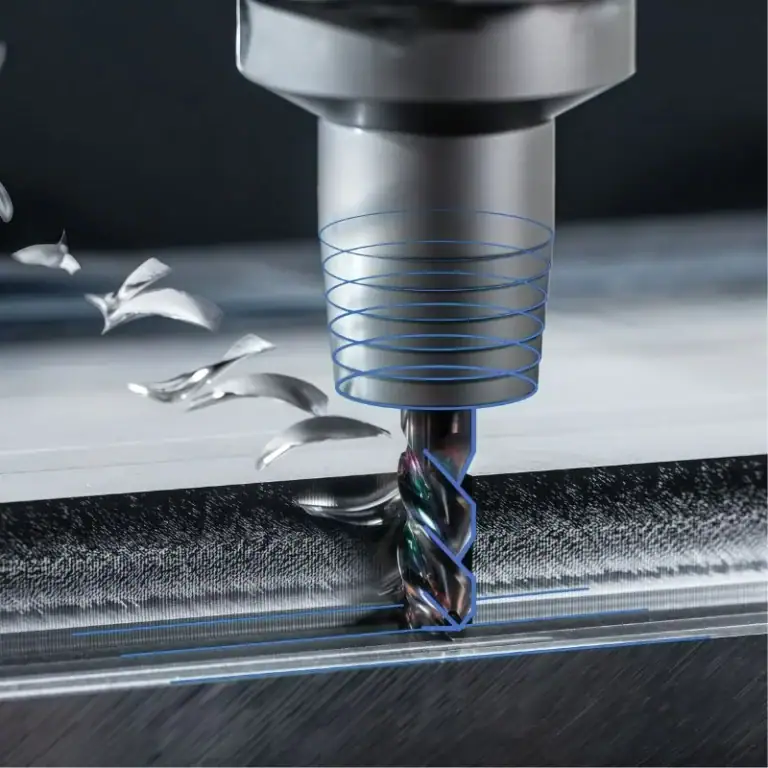
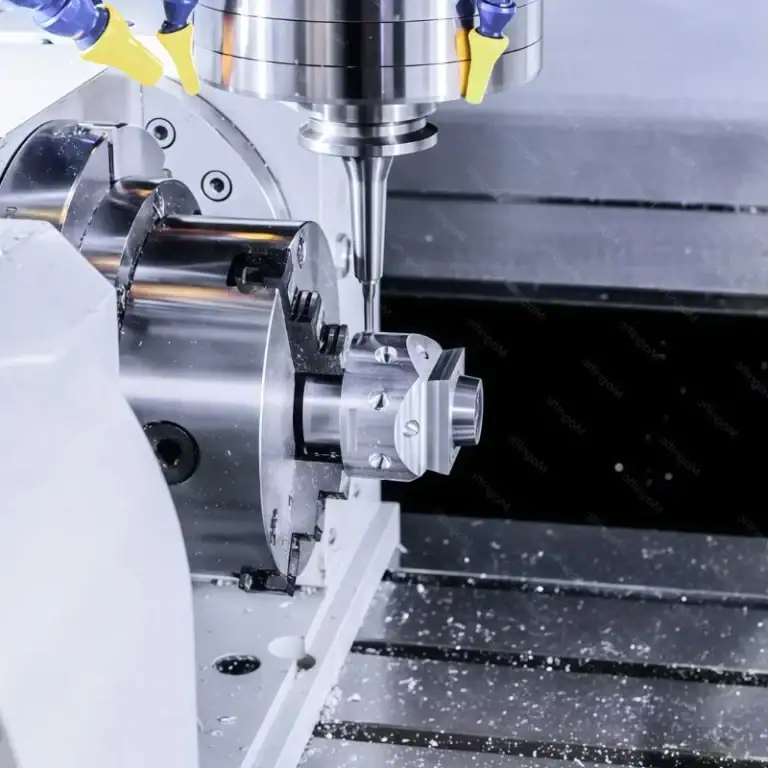
Aluminum 1100 vs 6061 is a material comparison between a commercially pure aluminum grade and a heat-treatable structural aluminum alloy. 1100 aluminum is better for formability, corrosion resistance, conductivity, reflective surfaces, and non-structural sheet metal parts, while 6061 aluminum is better for CNC machining, higher strength, load-bearing parts, fixtures, frames, and precision components.
This guide explains the key differences between aluminum 1100 and 6061, including composition, mechanical properties, strength, bendability, machinability, corrosion resistance, weldability, cost, availability, and best applications.
What Is 1100 Aluminum?
1100 aluminum is a commercially pure aluminum grade known for excellent ductility, corrosion resistance, workability, and high thermal and electrical conductivity. It is one of the softest common aluminum grades and is often used when forming, spinning, stamping, polishing, or conductivity matters more than strength.
Main Features Of 1100 Aluminum
The main features of 1100 aluminum are high formability, good corrosion resistance, excellent thermal conductivity, strong electrical conductivity, and good surface appearance. Pratham Traders describes 1100 aluminum as 99% pure aluminum with excellent ductility, outstanding corrosion resistance, high thermal and electrical conductivity, and superior formability.
These properties make 1100 useful when the part does not need high strength but must be easy to shape, clean in appearance, or stable in chemical and humid environments. Common examples include nameplates, reflectors, kitchenware, HVAC parts, decorative trim, and non-structural panels.
Common Tempers Of 1100 Aluminum
1100 aluminum is commonly supplied in tempers such as O and H14, depending on the balance required between softness, forming ability, and moderate strength. 1100-O is softer and easier to form, while 1100-H14 provides a higher-strength half-hard condition for sheet applications.
For aluminum 1100 H14 properties, buyers should focus on tensile strength, yield point, elongation, surface condition, and bending behavior. Metal Supermarkets lists representative 1100 mechanical properties with tensile strength around 18,000psi, yield point around 17,000psi, and notes H14 as a commonly used temper.
What Is 6061 Aluminum?
6061 aluminum is a heat-treatable 6000 series aluminum alloy known for good strength, corrosion resistance, machinability, weldability, and broad industrial use. It contains magnesium and silicon as major alloying elements, which allow it to reach higher strength after heat treatment.
Main Features Of 6061 Aluminum
The main features of 6061 aluminum are higher strength, good CNC machinability, good corrosion resistance, practical weldability, and wide stock availability. Pratham Traders describes 6061 as a magnesium- and silicon-based alloy with high tensile strength, reliable machinability, good weldability, and heat-treatable performance.
This makes 6061 suitable for brackets, frames, housings, fixtures, mounting plates, machine parts, automotive components, aerospace fittings, and automation equipment. It is often selected when the part must be lightweight but still strong enough for mechanical assembly.
6061-T6 And HE20 Grade Explanation
6061-T6 is a heat-treated and artificially aged condition that gives 6061 aluminum higher strength and hardness than softer tempers. This temper is widely used for CNC machined parts, structural plates, frames, brackets, and load-bearing aluminum components.
HE20 is a naming reference sometimes used in supplier markets for 6061-type aluminum. For engineering projects, the safer approach is to confirm the exact standard, temper, certificate, and material specification before procurement, because names such as 6061, 6061-T6, 6061-T651, and HE20 may not always describe the same supply condition.
Aluminum 1100 Vs 6061 Quick Comparison Table
Aluminum 1100 vs 6061 quick comparison shows that 1100 is the better forming, conductivity, and corrosion-resistant sheet alloy, while 6061 is the better strength, machining, and structural alloy.
| Requirement | Better Choice | Reason |
| Higher tensile strength | 6061 | Stronger heat-treatable alloy |
| Higher yield strength | 6061 | Better resistance to permanent deformation |
| CNC milling | 6061 | Cleaner machining and better dimensional stability |
| Drilling and tapping | 6061 | Better hole quality and thread strength |
| 5-axis machining | 6061 | Better for complex machined geometry |
| Sheet bending | 1100 | Softer and more ductile |
| Deep drawing | 1100 | Better formability |
| Bright polished surface | 1100 | High-purity aluminum surface |
| Electrical conductivity | 1100 | Higher conductivity |
| Thermal conductivity | 1100 | Very high thermal conductivity |
| Structural brackets | 6061 | Higher load-bearing capacity |
| Decorative trim | 1100 | Good appearance and easy forming |
| Chemical processing parts | 1100 | Strong corrosion resistance in suitable conditions |
| Machine fixtures | 6061 | Better hardness and stability |
| General aluminum CNC parts | 6061 | Balanced strength, availability, and machinability |
Chemical Composition Difference
The chemical composition difference between aluminum 1100 and 6061 controls their strength, forming behavior, corrosion resistance, heat treatment response, and machining performance. 1100 is nearly pure aluminum, while 6061 is an alloyed aluminum grade with magnesium and silicon.
1100 Aluminum Composition
1100 aluminum composition is based on commercially pure aluminum with only small amounts of other elements. Metal Supermarkets lists 1100 chemical analysis with aluminum as the remainder and limited copper, silicon, iron, manganese, and zinc additions.
Because the alloying content is low, 1100 remains soft, ductile, and highly workable. This is why it is often selected for aluminum sheet, thin panels, reflectors, nameplates, spun parts, and components requiring clean forming rather than high mechanical strength.
6061 Aluminum Composition
6061 aluminum composition is based on aluminum with magnesium and silicon as the key strengthening elements. Metal Supermarkets lists typical 6061 chemistry with magnesium around0.80–1.2%, silicon around0.40–0.80%, plus copper, chromium, iron, manganese, zinc, titanium, and aluminum as the remainder.
This alloy system allows 6061 to be heat treated, which improves hardness, tensile strength, and yield strength. That is why 6061 is much more suitable than 1100 for CNC machined brackets, structural plates, fixtures, frames, and components under assembly load.
How Composition Affects Strength, Forming, And Machining
Composition affects strength, forming, and machining by controlling how the aluminum behaves under load, cutting force, heat, and deformation. 1100’s purity improves ductility and conductivity, while 6061’s alloying improves strength and machinability.
For forming, 1100 is easier to bend and shape because it is softer. For machining, 6061 is more stable because it cuts cleaner and resists deformation better. For structural use, 6061 has a clear advantage because its alloying elements create higher strength after heat treatment.
Aluminum 1100 Vs 6061 Mechanical Properties
Aluminum 1100 vs 6061 mechanical properties differ mainly in tensile strength, yield strength, hardness, load-bearing capacity, and ductility. 6061 is significantly stronger, while 1100 is more ductile and easier to form.
Tensile Strength And Yield Strength
6061 aluminum has much higher tensile strength and yield strength than 1100 aluminum in common commercial conditions. Metal Supermarkets lists representative 6061-T651 minimum tensile strength at45,000psi and yield point at40,000psi, while 1100 representative values are much lower at18,000psi tensile strength and17,000psi yield point.
| Property | 1100 Aluminum | 6061 Aluminum | Practical Meaning |
| Tensile Strength | About18,000psi | About45,000psi | 6061 handles higher pulling load |
| Yield Point | About17,000psi | About40,000psi | 6061 resists permanent deformation better |
| Typical Selection | Formed and non-structural parts | Structural and CNC machined parts | Choose based on load and process |
This is why 6061 yield strength is important for brackets, fixtures, frames, threaded parts, and load-bearing assemblies. 1100 should not be used as a direct substitute for 6061 when strength is the main requirement.
Strength-To-Weight Ratio
6061 aluminum usually provides a better practical strength-to-weight ratio for structural parts because it offers much higher strength while keeping the lightweight benefits of aluminum. 1100 is also lightweight, but its lower strength limits load-bearing use.
For parts with the same geometry, 6061 can carry more load than 1100. For designs where strength allows thinner sections, 6061 may reduce overall part weight without sacrificing performance.
1100 is better when the goal is not structural strength but easy forming, high conductivity, or corrosion-resistant sheet work. In that case, strength-to-weight ratio is less important than process reliability.
Hardness And Load-Bearing Capacity
6061 aluminum has higher hardness and load-bearing capacity than 1100 aluminum. Metal Supermarkets lists 6061 Brinell hardness at95, while 1100 is described as soft and ductile with excellent workability.
Higher hardness helps 6061 resist indentation, thread deformation, clamping pressure, edge damage, and assembly stress. This is useful for fixtures, mounting plates, brackets, frames, and CNC machined housings.
1100’s softness is an advantage for forming but a disadvantage for precision load-bearing parts. It can deform more easily under bolts, clamps, or repeated mechanical pressure.
Ductility And Bendability
1100 aluminum has better ductility and bendability than 6061 aluminum, especially compared with 6061-T6. Pratham Traders notes that 1100 bends easily without cracking and is commonly used for deep drawing and intricate shapes, while 6061-T6 requires controlled bending to avoid fractures.
This makes 1100 suitable for sheet metal parts, decorative panels, reflectors, drawn components, and formed non-structural products. It can accept more deformation before cracking.
6061 can be formed in softer tempers, but 6061-T6 is not ideal for tight bends. For bent structural parts, designers should confirm bend radius, grain direction, temper, and whether post-forming heat treatment is needed.
Formability And Fabrication Performance
Formability and fabrication performance are better in 1100 when the part needs bending, stamping, spinning, or deep drawing, while 6061 is better when fabrication includes machining, structural cutting, and precision features. The manufacturing route often decides the better alloy.
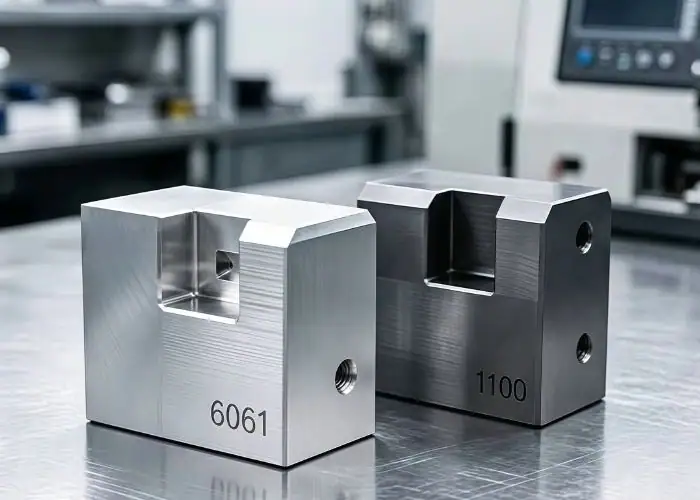
Bending And Stamping Performance
1100 aluminum is better for bending and stamping because it is softer, more ductile, and easier to shape without cracking. It is especially suitable for thin sheet, formed covers, reflectors, decorative parts, and non-structural enclosures.
6061 aluminum is less forgiving in T6 temper. It can be bent, but it often needs larger bend radii, controlled tooling, or a softer temper when tight forming is required.
For stampings and formed aluminum sheet parts, 1100 is usually the safer option. For machined brackets and structural components, 6061 is usually more reliable.
Laser Cutting And Automated Processing Behavior
6061 aluminum is usually better for automated cutting and precision processing because it is stronger and more dimensionally stable. Pratham Traders notes that workshops using laser cutters, CNC routers, and robotic fabrication systems often prefer 6061 because it responds well to automated machining without warping.
1100 can be laser cut or processed, but its softness can make it easier to deform, mark, or shift if fixturing and cutting parameters are not controlled. This matters for thin parts, bright surfaces, and tight dimensional requirements.
For high-speed automated production, material stiffness, burr behavior, clamping method, and part flatness should be reviewed before choosing 1100.
Weldability And Weld Joint Performance
1100 aluminum is suitable for light welding and formed assemblies, while 6061 aluminum is weldable but may lose strength near the heat-affected zone. Pratham Traders describes 1100 as easy to weld and able to retain ductility after welding, while 6061 is weldable but can experience strength reduction in heat-affected zones.
For light enclosures, ducts, chemical containers, and formed sheet assemblies, 1100 can be practical because the welded structure often does not require high strength. For structural assemblies, 6061 may still be preferred, but weld strength, distortion, and post-weld requirements must be considered.
Welded 6061-T6 parts should be reviewed carefully because the local temper can change around the weld. Joint design, filler metal, inspection, and possible post-weld heat treatment can affect final performance.
Heat-Treatability Difference
6061 aluminum is heat-treatable, while 1100 aluminum is not heat-treatable. This is one of the most important differences in aluminum 1100 vs 6061 selection.
6061 can gain strength through solution heat treatment and artificial aging, such as T6 or T651 temper. This makes it useful for parts that need higher strength and better machining stability.
1100 is strengthened mainly by strain hardening, such as H14 temper. It cannot reach the structural strength level of 6061-T6 through heat treatment, so it should be used where forming and corrosion performance matter more than load capacity.
CNC Machinability Of Aluminum 1100 Vs 6061
6061 aluminum has better CNC machinability than 1100 aluminum because it cuts more cleanly, holds features better, and supports tighter tolerances. 1100 aluminum is softer and can cause tool gumming, burrs, and dimensional instability during machining.
Machining Performance Of 1100 Aluminum
1100 aluminum can be machined, but it is not ideal for complex CNC parts because its soft structure can create gummy chips, burrs, built-up edge, and surface marking. It is better suited for forming than precision machining.
If 1100 must be machined, sharp tools, proper chip evacuation, stable clamping, and careful finishing passes are important. Thin 1100 parts may also deform if clamping pressure or cutting heat is not controlled.
For parts with simple holes, slots, or trimmed edges, 1100 can work. For complex 3D machining, threads, pockets, and tight tolerances, 6061 is usually a better material choice.
Machining Performance Of 6061 Aluminum
6061 aluminum is one of the most practical aluminum grades for CNC machining because it cuts cleanly, holds tolerances well, and supports drilling, tapping, milling, boring, and finishing. It is a common starting point for custom CNC aluminum parts.
6061 is suitable for brackets, housings, fixture plates, mounting blocks, frames, and mechanical components. It also performs well when parts need threaded holes, countersinks, pockets, grooves, and accurate assembly features.
For 5-axis machining, 6061 is also suitable because it has better dimensional stability than softer grades like 1100. It can support multi-angle features, curved surfaces, deep pockets, light structural parts, and precision machining with controlled tool paths.
Tooling, Burr Control, And Surface Stability
6061 aluminum generally offers better tooling stability, burr control, and surface consistency than 1100 aluminum. This helps reduce deburring time, improve tolerance repeatability, and create cleaner edges on machined parts.
1100 aluminum requires more attention to sharp cutting edges and chip control. If tooling is dull or feeds and speeds are not optimized, it can smear rather than cut cleanly.
For production machining, surface stability affects more than appearance. It also affects inspection, assembly, anodizing quality, and repeatable part fit.
Which Alloy Is Better For Precision Machined Parts?
6061 aluminum is better for precision machined parts because it has higher strength, better hardness, cleaner chip formation, and stronger dimensional stability. It is usually the safer choice for CNC parts with holes, threads, pockets, and assembly surfaces.
1100 aluminum is better only when the machined features are simple and the part’s main requirement is conductivity, corrosion resistance, or formed sheet geometry. It should not be selected for high-load CNC components.
For TiRapid CNC machining projects, 6061 is usually the more practical choice when the part needs tight tolerances, stable surfaces, reliable threads, and efficient production.
Corrosion Resistance And Surface Finish
1100 aluminum generally has excellent corrosion resistance because of its high purity, while 6061 aluminum also has good corrosion resistance but may need surface treatment in harsher environments. The better choice depends on exposure, appearance, and mechanical needs.
General Corrosion Resistance
1100 aluminum has excellent general corrosion resistance, especially in atmospheric, humid, and chemical environments. Pratham Traders notes that 1100 offers outstanding corrosion resistance in humid environments, chemical processing, and coastal applications.
6061 also resists corrosion well in normal indoor and outdoor use. For many machined components, anodizing, powder coating, painting, or sealing can further improve surface durability.
When corrosion resistance is the main requirement and load is low, 1100 is often the better choice. When strength and machining are more important, 6061 is usually selected with a suitable finish.
Marine And Outdoor Environment Performance
1100 aluminum can perform well in humid and chemically exposed environments, while 6061 is widely used outdoors when strength and structure are also required. Pratham Traders notes that 6061 performs well outdoors but may require coating or anodizing in marine or chemically aggressive conditions.
For simple outdoor panels, covers, and formed parts, 1100 may be suitable. For outdoor frames, brackets, machine supports, and structural assemblies, 6061 is usually better because of its strength.
For marine exposure, the final decision should consider coating, galvanic contact, fasteners, drainage, surface finish, and the expected service life.
Surface Finish Requirements For Consumer And Industrial Parts
1100 aluminum is often better for bright, smooth, polished, or reflective surface requirements because of its high purity and soft workability. Pratham Traders notes that 1100 is chosen for consumer-facing panels, appliances, and decorative fixtures when aesthetics are prioritized.
6061 can also be anodized, brushed, machined, bead blasted, or coated. It is usually better for functional machined surfaces and industrial-looking parts.
For cosmetic products, surface samples are recommended. Alloy, temper, grain direction, polishing method, and anodizing process can all affect final appearance.
Anodizing, Polishing, And Coating Options
Both 1100 and 6061 can use surface treatment options such as anodizing, polishing, brushing, painting, and powder coating. The best finish depends on whether the part needs appearance, corrosion resistance, insulation, wear resistance, or color consistency.
1100 is attractive for polishing and reflective surfaces. 6061 is attractive for anodized CNC parts because it holds machined geometry well and provides stable feature accuracy.
For customer-facing components, finish should be evaluated before production. Small differences in alloy, batch, and pretreatment can create visible color or texture variation.
Cost, Availability, And Material Utilization
Cost, availability, and material utilization depend on alloy, temper, stock form, thickness, supplier, production volume, and process route. 1100 may be economical for sheet forming, while 6061 may be more cost-effective for machined structural parts.
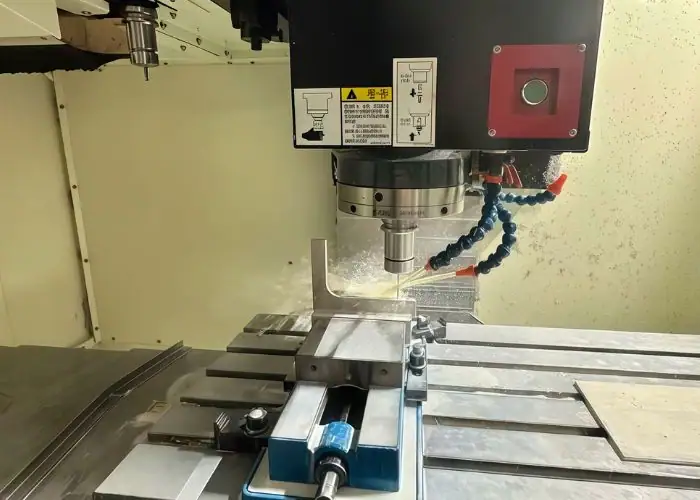
Material Cost Difference
1100 aluminum is often cost-effective when the part is made from sheet and does not require high strength. Its simpler composition and strong formability can reduce fabrication risk in suitable applications.
6061 aluminum may cost more in some stock forms, but it can reduce total cost for CNC parts because it machines faster, holds features better, and lowers burr-control problems.
A cheaper raw material can become more expensive if it increases cycle time, scrap rate, or manual finishing. The best alloy should be selected by total project cost, not only material price.
Inventory Stability And Thickness Availability
1100 aluminum is commonly available as sheet and coil, while 6061 aluminum is widely available as plate, bar, rod, tube, extrusion, and structural stock. This stock difference affects lead time and production strategy.
Pratham Traders notes that 6061 is often readily available in thicker plates and structural profiles, while 1100 is easier to source in thin sheets and coils.
For sheet metal products, 1100 aluminum sheet can be convenient. For CNC machined blocks, fixtures, brackets, and structural components, 6061 plate or bar is usually easier to match with machining requirements.
Processing Cost And Scrap Recycling Value
Processing cost depends on how the alloy behaves during cutting, forming, machining, welding, and finishing. 1100 can reduce cost in forming but may increase cost in precision machining, 6061 can reduce CNC cycle risk but may require more controlled bending.
Material utilization also matters. If a part is nested efficiently from sheet, 1100 can be economical. If a part is machined from billet or plate, 6061 may reduce scrap, rework, and dimensional errors.
Scrap value should not be the main design driver, but it can affect total cost in high-volume production. Good nesting, machining strategy, and DFM planning usually create more value than scrap recovery alone.
Total Project Cost Considerations
Total project cost should include raw material, stock availability, machining time, forming success rate, welding risk, finishing requirements, inspection, assembly fit, and field performance. The right alloy is the one that reduces the most expensive risks.
For example, choosing 1100 for a load-bearing CNC fixture may save material cost but create deformation risk. Choosing 6061-T6 for a tight-radius formed sheet part may create cracking risk.
The most practical decision is to match alloy to process: 1100 for formed non-structural sheet parts, and 6061 for machined or structural components.
Best Uses Of 1100 Aluminum
1100 aluminum is best used for non-structural parts that need excellent formability, corrosion resistance, conductivity, polishability, and lightweight sheet performance. It is ideal when shaping and surface behavior matter more than strength.
Sheet Metal Parts
1100 aluminum is well suited for sheet metal parts because it bends, forms, and stamps easily. It works well for thin covers, light panels, formed housings, nameplates, and decorative sheets.
For sheet metal fabrication, lower strength can be an advantage because it reduces cracking risk during forming. It also supports smoother shapes and clean visual surfaces.
However, 1100 should be avoided for parts that need high bolt load, strong threads, or structural stiffness. In those cases, 6061 is usually better.
Deep Drawing And Formed Components
1100 aluminum is best for deep drawing and formed components because it has excellent ductility and slow work-hardening behavior. It can be shaped into complex forms more easily than stronger aluminum alloys.
This makes it practical for spun parts, reflector bowls, drawn covers, shallow containers, and formed decorative components. The material can tolerate deformation without cracking when tooling and thickness are properly selected.
For deep drawing, temper and lubrication matter. 1100-O may be used for maximum softness, while H14 may be used when slightly higher strength is needed.
Electrical And Thermal Conductive Parts
1100 aluminum is a strong option for electrical and thermal conductive parts because it has very high thermal conductivity and strong electrical conductivity. Metal Supermarkets notes that 1100 has the highest thermal conductivity of any aluminum alloy and electrical conductivity second only to electrical conductor grade aluminum.
This makes it useful for heat exchangers, conductive strips, reflectors, electrical panels, transformer-related components, and light thermal management parts.
If the conductive part also needs high strength or precise CNC features, 6061 may be considered, but conductivity will usually be lower than 1100.
Decorative And Lightweight Products
1100 aluminum is suitable for decorative and lightweight products because it forms easily and can provide a bright, clean surface. It is used in decorative trim, signage, consumer panels, giftware, and appearance-focused sheet components.
Its softness supports polishing and forming, which helps when the part must look clean rather than carry high load. This is useful for consumer goods and visible aluminum surfaces.
For decorative CNC parts that also require precision holes or threads, 6061 may be better with anodizing or other finishing options.
Chemical And Corrosion-Resistant Applications
1100 aluminum is suitable for chemical and corrosion-resistant applications when the part is non-structural and needs good resistance to atmospheric or chemical exposure. It is commonly used for chemical processing and food processing industry parts.
This makes 1100 useful for tanks, trays, covers, panels, and equipment parts in mild chemical or humid environments. Its high purity supports corrosion performance.
For corrosive environments with mechanical load, alloy selection should be checked more carefully. The part may need coating, thicker sections, or a stronger corrosion-resistant aluminum grade.
Best Uses Of 6061 Aluminum
6061 aluminum is best used for CNC machined parts, structural components, fixtures, brackets, housings, frames, and industrial parts that need higher strength and machining stability. It is one of the most versatile aluminum grades for precision manufacturing.
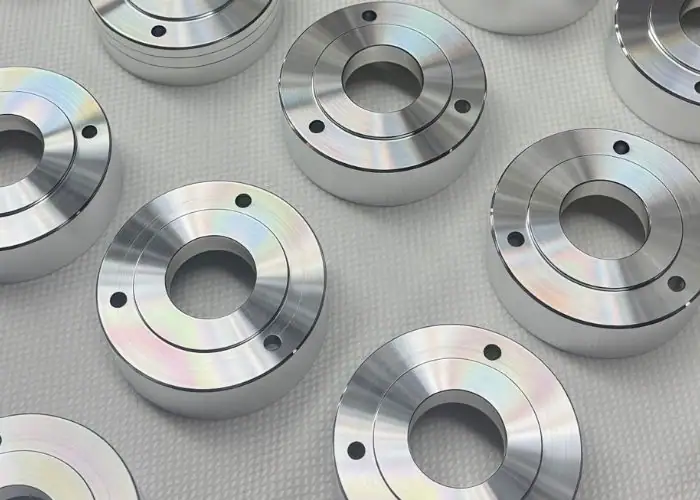
CNC Machined Parts
6061 aluminum is one of the best general-purpose materials for CNC machined aluminum parts. It supports milling, turning, drilling, tapping, boring, pocketing, and 5-axis machining better than softer 1100 aluminum.
Its cleaner chip behavior and higher strength help create stable holes, threads, slots, flatness, and controlled surfaces. This reduces burrs, deformation, and rework in many CNC projects.
For custom prototypes and low-volume production, 6061 is often selected because it is predictable, available, and cost-effective for precision machining.
Structural Frames And Brackets
6061 aluminum is suitable for structural frames and brackets because it provides higher yield strength, hardness, and load-bearing performance than 1100 aluminum. It can resist deformation under bolts, clamps, assembly loads, and mechanical stress.
Common structural uses include machine frames, support plates, mounting brackets, rail structures, automation frames, and equipment supports.
If welding is required, the heat-affected zone should be reviewed. In some structural designs, bolted or machined assemblies may provide better performance consistency.
Fixtures, Mounting Plates, And Housings
6061 aluminum is better for fixtures, mounting plates, and housings because it holds machined features and assembly dimensions more reliably. It is suitable for threaded holes, counterbores, locating surfaces, pockets, and repeatable part fit.
For production fixtures, higher hardness helps resist wear and clamping marks. For housings, 6061 can support precision mating surfaces and clean anodized finishes.
1100 is usually too soft for precision fixtures unless the load is very low and conductivity or formability is the main requirement.
Automotive And Aerospace Components
6061 aluminum is used for automotive and aerospace components because it provides lightweight strength, good machinability, and practical corrosion resistance. Metal Supermarkets lists 6061 applications such as truck bodies, frames, walkways, platforms, and structural components.
In automotive and aerospace-related projects, 6061 is often used for brackets, plates, housings, fixture components, frames, and non-critical structural parts.
For critical aerospace components, material certificates, standards, inspection plans, and customer approval are essential. Material selection should never rely only on a generic alloy name.
Industrial Equipment And Automation Parts
6061 aluminum is well suited for industrial equipment and automation parts because it balances strength, machinability, cost, and availability. It is commonly used for robotic brackets, mounting plates, sensor holders, machine panels, tooling blocks, and custom mechanical components.
Automation parts often require repeatable assembly, precise holes, flatness, and dimensional stability. 6061 performs better than 1100 in these conditions.
Surface finishing such as anodizing, bead blasting, or coating can be added when the part needs appearance, corrosion resistance, or wear protection.
How To Choose Between Aluminum 1100 And 6061?
The choice between aluminum 1100 and 6061 should be based on the part’s function, required strength, manufacturing process, surface requirement, environment, and total production cost. 1100 is better for formed non-structural sheet parts, while 6061 is better for CNC machined and structural parts.
Choose Based On Strength Requirements
Choose based on strength requirements by selecting 6061 when the part must carry load, hold threads, resist clamping pressure, or maintain dimensional stability. Select 1100 when the part has low load and needs forming, conductivity, or corrosion resistance.
6061 has much higher representative tensile and yield values than 1100, so it is better for brackets, frames, fixtures, and machined structural components.
For non-structural panels, nameplates, reflectors, or formed covers, 1100 can be the better and more economical material.
Choose Based On Forming Or Machining Process
Choose based on forming or machining process by using 1100 for bending, stamping, spinning, and deep drawing, and using 6061 for CNC milling, turning, drilling, tapping, and precision machining.
1100 is more forgiving in forming because it is soft and ductile. 6061 is more reliable in machining because it has better strength and chip control.
This process-first selection method prevents common problems such as cracked bends in 6061-T6 or gummy machining behavior in 1100.
Choose Based On Corrosion And Surface Finish Needs
Choose based on corrosion and surface finish needs by selecting 1100 when bright appearance, polishability, conductivity, or chemical resistance is important, and selecting 6061 when surface finish must combine with strength and machined precision.
1100 performs well for reflective and decorative parts. 6061 performs well for anodized and machined components.
For outdoor or chemical environments, surface treatment should be reviewed for both alloys. Coating, anodizing, sealing, and galvanic isolation can strongly affect final service life.
Choose Based On Cost, Volume, And Delivery Time
Choose based on cost, volume, and delivery time by comparing the finished part cost, not just the aluminum price. Stock form, thickness, machining time, forming yield, scrap rate, and finishing requirements can change the real cost.
1100 may be cost-effective for high-volume sheet parts because it forms easily. 6061 may be cost-effective for CNC parts because it machines efficiently and reduces rework.
Before production, confirm stock size, temper, lead time, certificate requirements, and surface finish expectations. Availability can influence both price and delivery schedule.
Common Selection Mistakes To Avoid
Common selection mistakes happen when buyers treat aluminum 1100 and 6061 as interchangeable. They are both aluminum, but they are designed for different performance priorities.
Avoid choosing 1100 for structural CNC parts only because it is easy to form. Avoid choosing 6061-T6 for tight bends without checking bend radius and temper. Avoid comparing cost without considering machining, forming, welding, finishing, and inspection risk.
The safest choice is to match the alloy to the process and end-use condition. 1100 supports formability and conductivity, 6061 supports strength and precision machining.
FAQs
Is 1100 Aluminum Strong?
1100 aluminum is not a high-strength alloy. Its tensile strength is about18,000psi, while 6061-T651 can reach about45,000psi. 1100 is better for forming, bending, conductivity, corrosion resistance, and non-structural sheet metal parts, not load-bearing components.
What Aluminum Is Stronger Than 6061?
7075 and 2024 aluminum are stronger than 6061. For example, 7075-T6 can reach about83,000psi tensile strength, much higher than 6061-T6 at about45,000psi. However, 6061 is easier to machine, weld, source, and finish, so it is more practical for many CNC parts.
What Is The Purity Of 1100 Aluminium Alloy?
1100 aluminium alloy has at least99.0% aluminum content. Its high purity gives it excellent ductility, corrosion resistance, thermal conductivity, electrical conductivity, and surface quality. However, because it has few strengthening elements, it is much weaker than 6061, 2024, or 7075 aluminum.
What Are The Differences Between 6063 And 1100 Aluminum Alloys?
6063 is a heat-treatable aluminum-magnesium-silicon alloy, while 1100 is about99.0% pure aluminum and non-heat-treatable. 6063 is better for extrusions, frames, profiles, and anodized parts. 1100 is better for bending, forming, conductivity, corrosion resistance, and non-structural sheet parts.
Conclusion
Aluminum 1100 and 6061 are both useful aluminum materials, but they solve different manufacturing problems. 1100 aluminum is better for high formability, corrosion resistance, electrical and thermal conductivity, reflective surfaces, deep drawing, stamping, and non-structural sheet metal parts. 6061 aluminum is better for higher strength, CNC machining, threaded features, fixtures, brackets, frames, housings, and industrial components that need dimensional stability and structural performance.
At TiRapid, we provide precision CNC machining and manufacturing services for custom aluminum parts across multiple industries. If a project requires aluminum material selection, prototype machining, 5-axis CNC machining, surface finishing, tolerance control, or low-volume production, our team can help evaluate whether 1100 aluminum, 6061 aluminum, or another aluminum grade is the better fit for the final part.