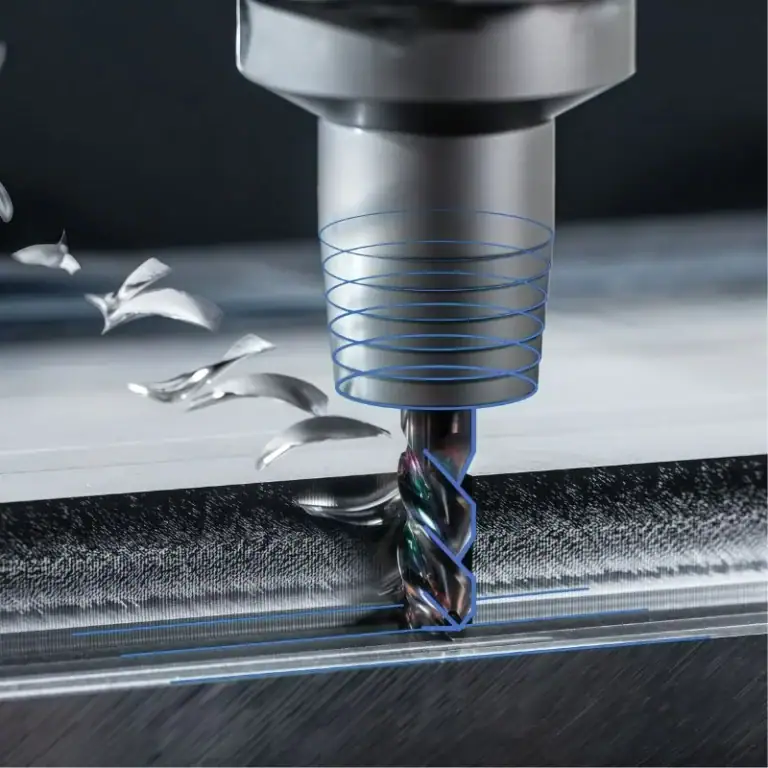
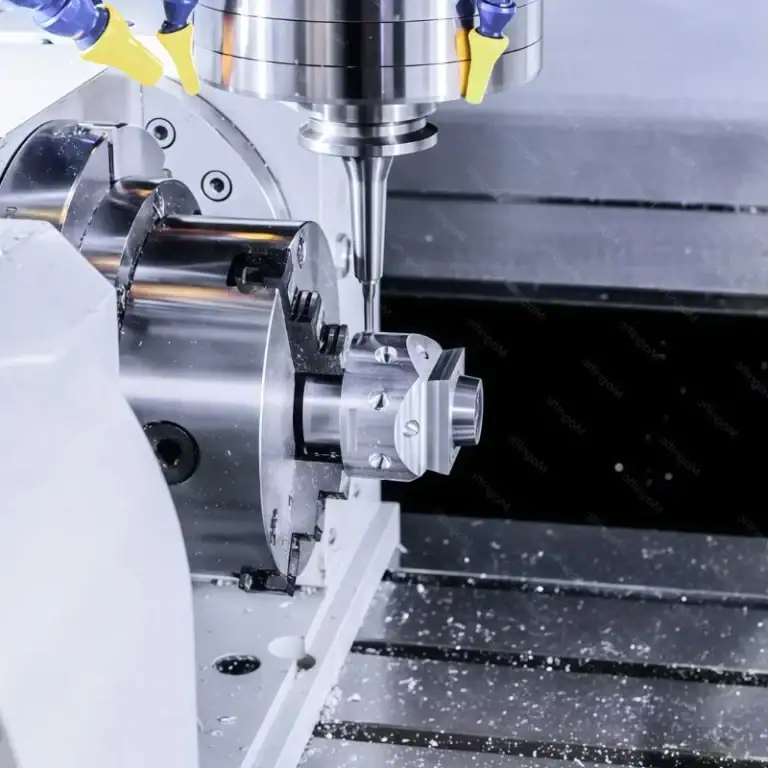
7050 and 7075 are heat-treatable 7000-series aluminum alloys developed for parts requiring high strength without the weight of steel. Although their compositions and mechanical properties are similar, they are not interchangeable. 7075 is commonly associated with high peak strength, while 7050 is valued for fracture toughness, stress-corrosion resistance, and reliable performance in thick plate.
This guide explains the main 7050 vs 7075 aluminum differences, including composition, temper, strength, toughness, corrosion resistance, CNC machinability, thick-section behavior, cost, and applications. It also shows how to select an alloy according to part thickness, loading conditions, operating environment, inspection requirements, and production needs.
What Is 7050 Aluminum?
7050 is a heat-treatable 7000-series aluminum alloy that uses zinc as its primary alloying element, supported by magnesium and copper. Its final mechanical performance depends on the temper, product form, section thickness, grain direction, and applicable material specification.
Main Characteristics Of 7050 Aluminum
7050 is a high-strength aerospace aluminum alloy developed to combine strength with fracture toughness and resistance to exfoliation and stress-corrosion cracking. It contains tightly controlled iron and silicon levels and uses zirconium rather than the higher chromium content found in 7075.
Common plate tempers include 7050-T7451 and 7050-T7651. Typical longitudinal tensile and yield strengths are approximately 524MPa and 469MPa for T7451. The T7651 condition can reach about 552MPa tensile strength and 489MPa yield strength. These are product-specific typical values rather than universal design values.
The advantages of 7050 become more apparent in thick sections. Its relatively low quench sensitivity allows thick plates to retain a useful combination of strength, fracture toughness, and stress-corrosion resistance through the section.
What Is 7075 Aluminum?
7075 is another heat-treatable 7000-series aluminum alloy based primarily on zinc, magnesium, and copper. It is one of the best-known high-strength aluminum grades and is commonly selected when a component requires a high strength-to-weight ratio.
Main Characteristics Of 7075 Aluminum
7075 is available in several tempers, including peak-aged T6 or T651 and overaged T73 or T7351 conditions. The selected temper changes the balance between peak strength, toughness, and resistance to stress-corrosion cracking.
Typical longitudinal properties for 7075-T651 are approximately 572MPa tensile strength and 503MPa yield strength. The overaged 7075-T7351 condition provides lower typical strength—about 503MPa tensile and 434MPa yield—but offers improved stress-corrosion resistance compared with T651.
7075 is widely used for highly stressed aircraft and engineering components. Its peak-aged condition can provide higher yield strength than common 7050-T7451 or T7651 plate. However, the highest-strength temper is not always the safest option when the design involves thick sections, sustained tensile stress, crack-growth risk, or corrosive exposure.
7050 vs 7075 Aluminum: Key Property Differences
The comparison must use specific tempers and product forms. Comparing 7050-T7451 plate with 7075-T651 plate produces a different result from comparing overaged 7050-T7651 with 7075-T7351. Drawing requirements should therefore include the complete alloy and temper designation.
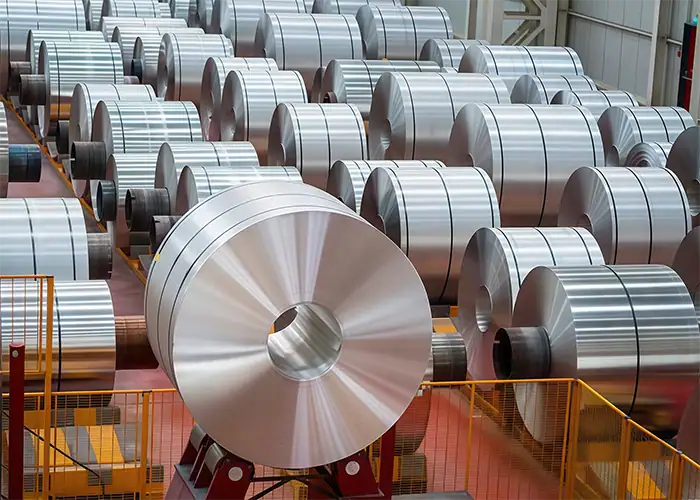
| Property | 7050 Aluminum | 7075 Aluminum |
| Main advantage | Toughness, SCC resistance, thick-section performance | High peak strength and broad engineering use |
| Common plate tempers | T7451, T7651 | T651, T7351 |
| Peak strength | High | Generally higher in T651 |
| Fracture toughness | Excellent | Good, temper-dependent |
| Stress-corrosion resistance | Strong in overaged tempers | Lower in T651, improved in T7351 |
| Thick-plate performance | Particularly strong | More sensitive to section thickness |
| Machinability | Good | Good |
| Fusion weldability | Generally not recommended | Generally not recommended |
| Common applications | Bulkheads, frames, thick aerospace structures | Aircraft parts, tools, molds, high-load components |
Chemical Composition And Temper
7050 typically contains 5.7–6.7% zinc, 1.9–2.6% magnesium, 2.0–2.6% copper, and 0.08–0.15% zirconium. Its maximum iron and silicon levels are relatively low, helping control microstructure and performance in demanding plate products.
7075 typically contains 5.1–6.1% zinc, 2.1–2.9% magnesium, 1.2–2.0% copper, and 0.18–0.28% chromium. Compared with 7050, it permits higher maximum levels of iron and silicon and relies on chromium rather than zirconium as an important grain-structure control element.
Temper changes the balance between strength and corrosion performance. T651 prioritizes high strength in stress-relieved 7075 plate, while T7351 sacrifices some strength to improve stress-corrosion resistance. For 7050, T7651 provides higher strength, while T7451 provides a stronger balance of toughness and corrosion resistance.
Strength, Hardness, And Fatigue Performance
7075-T651 normally provides the highest peak strength among the commonly compared conditions. Kaiser reports typical values of 572MPa tensile strength, 503MPa yield strength, and Brinell hardness of approximately150 for this temper.
7050-T7651 is close, with typical tensile and yield strengths of 552MPa and 489MPa and Brinell hardness of approximately150. The more corrosion-resistant 7050-T7451 condition is slightly lower at approximately524MPa tensile and469MPa yield strength.
These figures should not be used without confirming plate thickness, grain direction, specification, and mill certificate. Fatigue performance also depends on notches, machining marks, residual stress, fastener holes, surface treatment, and load direction—not only the nominal alloy strength.
Fracture Toughness And Stress Corrosion Resistance
7050 is generally preferred when damage tolerance is more important than achieving the highest possible yield strength. Its combination of fracture toughness and stress-corrosion resistance makes it suitable for large structural parts in which crack growth and short-transverse loading must be carefully controlled.
The distinction is especially important in thick plate. Alcoa identifies 7050 as particularly suitable for sections in the3–6inch range because its lower quench sensitivity helps preserve properties through the thickness.
7075-T651 has only a relative “C” stress-corrosion rating in Kaiser’s comparison, while 7075-T7351 improves to “B.” Both 7050-T7451 and T7651 receive a “B” rating, illustrating why temper selection is essential when sustained tensile stress and corrosion exposure occur together.
Machining And Manufacturing Performance
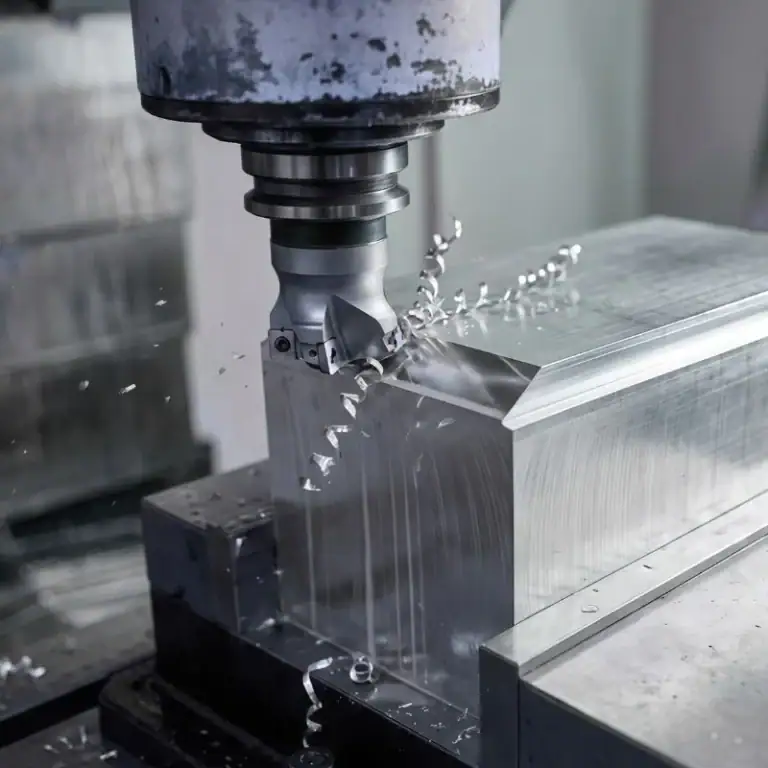
Both alloys can produce accurate CNC components, but their high strength places greater demands on tools, fixtures, stock preparation, and process planning than general-purpose 6000-series aluminum. Thick aerospace plate also requires careful control of residual stress and material removal balance.
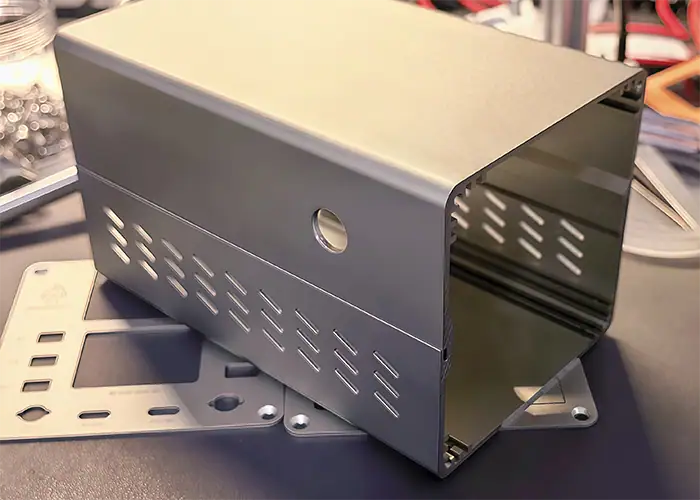
CNC Machinability And Tool Wear
7050 and 7075 can be milled, turned, drilled, reamed, and tapped with carbide tooling. Kaiser gives 7050-T7451 and T7651 a relative machinability rating of “B,” while the listed 7075-T651 and T7351 conditions receive a “C” rating within the same A-to-E comparison system.
Actual performance depends on temper, hardness, tool geometry, spindle rigidity, chip evacuation, coolant, and depth of cut. Sharp cutting edges and stable tool engagement help limit heat, built-up edge, burrs, and dimensional variation.
Large pockets should be roughed symmetrically when possible. Removing material heavily from one side of a thick plate can release residual stress and cause the workpiece to move before finishing. Stress-relieved plate, balanced machining, intermediate inspection, and sufficient finishing allowance reduce this risk.
Thick-Plate Performance And Dimensional Stability
Thick-section performance is one of the strongest reasons to specify7050. Because it is less quench-sensitive, the center of a thick plate can retain a more useful combination of strength and toughness after heat treatment than a more quench-sensitive alloy.
Typical7050 applications include fuselage frames and bulkheads with section thicknesses around2–6inches. These components require more than high tensile strength; they also need reliable short-transverse properties, damage tolerance, and resistance to environmentally assisted cracking.
7075 remains suitable for many plates, bars, forgings, and smaller high-strength components. However, designers should not assume that thin-section handbook values remain unchanged through a heavy plate. The applicable specification and certified values must match the actual material thickness.
Weldability And Surface Treatment
Neither7050 nor7075 is normally selected for conventional fusion-welded structures. Kaiser rates gas and arc weldability as “D” for the listed plate tempers, indicating that commonly used welding methods have not been developed for general application. Spot welding receives a better relative rating.
Mechanical fastening, riveting, bolting, bonding, or specially qualified joining procedures are often more appropriate. When welding is unavoidable, the design must account for cracking risk, reduced local strength, corrosion behavior, and the need for procedure testing.
Both alloys can be anodized, but surface appearance may vary with temper, grain structure, machining, and pretreatment. Kaiser gives both alloy families a relative anodizing response of “B” in the listed plate conditions. Protective coating or anodizing is often used when corrosion exposure or appearance justifies it.
Cost And Common Applications
Material price alone does not determine the economical choice. Total cost includes stock availability, certification, sawing, roughing time, distortion control, tool wear, inspection, scrap risk, finishing, and traceability.
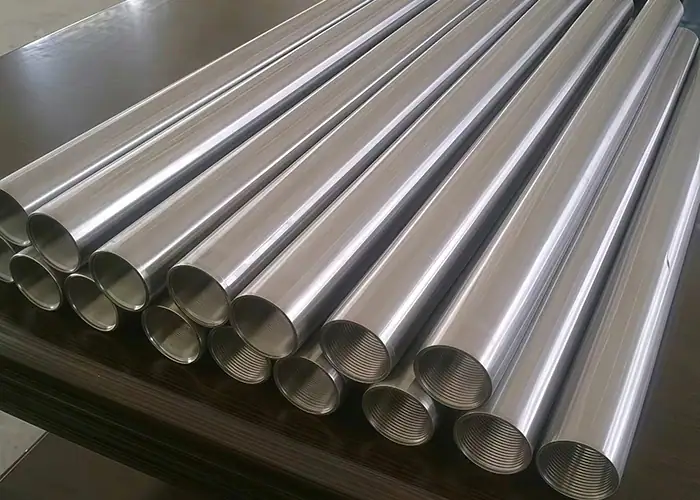
Material Availability And Manufacturing Cost
7075 is commonly supplied in plate, sheet, bar, rod, and other high-strength product forms, while7050 is strongly associated with certified aerospace plate and thick structural sections. Supplier availability still varies by country, temper, thickness, and specification.
7050 may carry a higher purchasing and documentation burden when a project requires aerospace specifications, thick plate, ultrasonic inspection, or full material traceability. However, its better thick-section performance can reduce engineering risk and make it more economical over the complete component lifecycle.
7075 may be the lower-cost practical option when standard stock is available and the part does not require the damage tolerance or stress-corrosion performance of7050. Quotes should compare the exact temper, certification, plate size, machining allowance, and inspection level.
Common Uses Of 7050 Aluminum
7050 is most strongly associated with highly loaded aerospace structures. Alcoa lists fuselage frames and bulkheads as typical thick-plate applications and wing skins as a sheet application.
It is also suitable for large machined structures, support frames, high-load fittings, and other components in which thick-section properties and resistance to crack growth matter more than absolute peak strength.
The alloy is particularly valuable when material must be removed from a thick plate to create a complex monolithic component. Its selection should still be supported by the drawing specification, grain direction, inspection plan, and certified mechanical properties.
Common Uses Of 7075 Aluminum
7075 is widely used in aerospace and defense and may also be selected for high-load, lightweight components in industrial equipment, robotics, automation, high-performance automotive systems, powersports, motorcycles, and drones. Typical applications include aircraft structural parts, gears, shafts, precision fixtures, tooling, and other machined components that require a high strength-to-weight ratio.
7075-T651 is suitable when peak strength and machining performance are primary requirements and the service environment is controlled. T7351 may be selected when improved stress-corrosion resistance justifies lower strength.
Its broader use outside aerospace can make7075 practical for robotics, motorsport, industrial equipment, and high-load precision parts. The designer must still consider poor fusion weldability, corrosion protection, fatigue details, and material direction.
How To Choose Between 7050 And 7075 Aluminum
The best alloy is determined by the complete loading and manufacturing situation. Start with thickness, required strength, crack tolerance, stress direction, corrosion exposure, product form, and specification before comparing raw-material prices.
Choose 7050 For Thick Sections And Damage Tolerance
Choose7050 when a component uses thick plate and must retain reliable properties through the section. It is particularly suitable for large aerospace structures, bulkheads, frames, and monolithic parts machined from heavy stock.
It is also the stronger candidate when fracture toughness and stress-corrosion resistance are more important than obtaining the highest possible yield strength. T7451 is commonly used for a balanced combination of toughness and corrosion performance, while T7651 places more emphasis on strength.
Selecting7050 does not remove the need for protective finishes, fatigue analysis, or inspection. Critical designs must still evaluate grain direction, fastener holes, surface damage, machining marks, and short-transverse loading.
Choose 7075 For Maximum Strength And General Availability
Choose7075-T651 when a thinner or moderate-section part requires very high tensile and yield strength. Typical applications include machined brackets, fixtures, shafts, tooling, molds, and high-load mechanical components.
Choose an overaged temper such as T7351 when stress-corrosion resistance is more important than maintaining maximum T651 strength. This change can be more important than changing the alloy number itself.
7075 is not the best choice for parts that rely on conventional fusion welding. It is also not automatically superior simply because its peak-aged strength is higher; toughness, thickness, environment, and inspection requirements may favor7050.
Compare Temper, Thickness, Environment, And Production Needs
Specify the full designation, such as7050-T7451,7050-T7651,7075-T651, or7075-T7351. Avoid purchasing material labeled only as7050 or7075 when the design depends on certified strength or corrosion performance.
Confirm whether the drawing needs AMS, ASTM, aerospace OEM, or another material specification. Mill certificates should match alloy, temper, product form, thickness, chemistry, mechanical properties, and any required ultrasonic or corrosion testing.
Finally, compare the full manufacturing route: material availability, rough stock size, machining time, distortion control, surface protection, inspection, traceability, quantity, and replacement risk. The correct material is the alloy and temper that satisfy the real service conditions with the lowest controlled manufacturing risk.
FAQs
Is 7075 The Strongest Aluminum?
7075 is one of the strongest widely available aluminum alloys, but it is not the strongest aluminum in every condition. In this comparison, 7075-T651 generally provides higher peak strength than common 7050 tempers, while 7050 offers better fracture toughness, stress-corrosion resistance, and thick-section performance.
Why Is 7075 So Expensive?
7075 is usually more expensive than common alloys such as 6061 because it requires costly alloying elements, controlled heat treatment, and more demanding production and inspection. Aerospace certification, traceability, temper, stock size, and supplier availability can further increase its price. However, standard 7075 stock may still cost less than certified 7050 thick plate.
How To Tell If Aluminum Is 7075?
You cannot reliably identify 7075 by color or appearance. The safest methods are to check the material marking and mill certificate or use chemical composition testing such as XRF or optical emission spectroscopy. Hardness and electrical-conductivity testing can support identification, but they should not replace certified material records for critical parts.
What Is 7050 Aluminum Used For?
7050 aluminum is mainly used for high-strength aerospace components, especially thick-section parts that require good fracture toughness and stress-corrosion resistance. Common applications include aircraft wing structures, fuselage frames, bulkheads, structural plates, landing-gear support components, precision tooling, and other heavily loaded machined parts.
Conclusion
The7050 vs7075 aluminum decision is not simply a comparison of tensile strength.7075-T651 normally offers higher peak strength, while7050 provides a stronger balance of fracture toughness, stress-corrosion resistance, and thick-section performance. Temper, thickness, grain direction, service environment, machining strategy, certification, and inspection must all be considered before the material is released for production.
At TiRapid, we provide precision CNC machining and manufacturing services for high-strength aluminum prototypes and low-volume parts. Our team evaluates alloy, temper, plate thickness, material certification, machining sequence, dimensional stability, tolerance, surface treatment, and inspection requirements to produce reliable7050 and7075 aluminum components for aerospace, automation, robotics, industrial equipment, and other demanding applications.