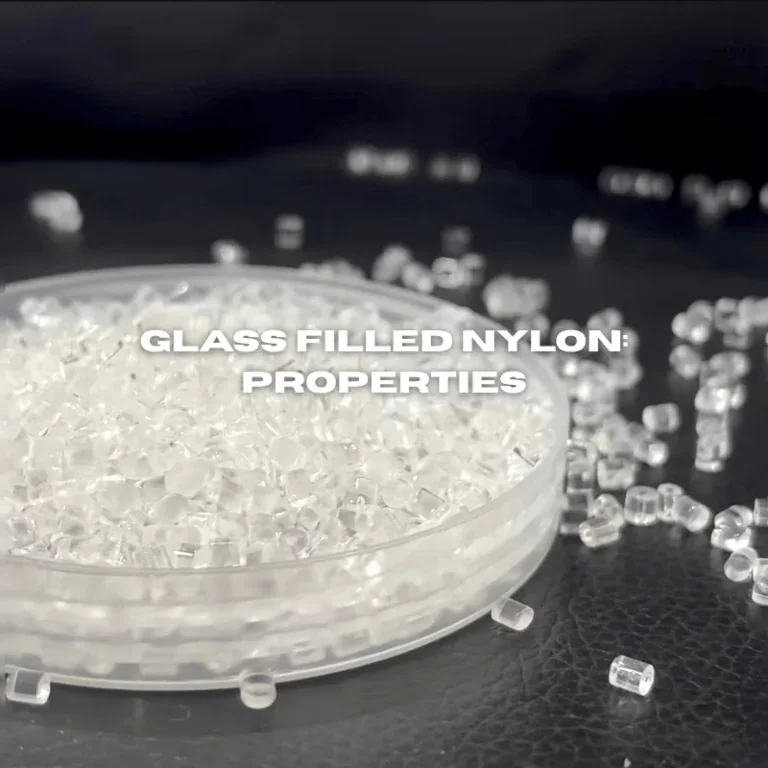
In modern manufacturing, plastic materials are widely used in electronic equipment, medical devices, automation equipment, the semiconductor industry, food processing machinery, aerospace, and many other fields. As product structures become increasingly complex and precision requirements continue to rise, traditional manual machining methods can no longer meet the demands of modern industrial production. CNC machining technology, with its high precision, high efficiency, and excellent repeatability, has gradually become an important manufacturing method for plastic components.Among the various forms of plastic raw materials, plastic sheets are one of the most commonly used materials for machining. Whether it is PEEK, PEI, POM, Nylon, PVC, PP, PTFE, or Acrylic (PMMA), most engineering plastics are available in sheet form. These sheets are offered in a wide range of specifications and are easy to cut, secure, and further process, making them important raw materials in the CNC machining industry.
Why Can Plastic Sheets Be Used for CNC Machining?
Plastic sheets are flat plastic materials manufactured through processes such as extrusion, calendering, and compression molding. They usually have fixed length, width, and thickness specifications and can be processed into various industrial components, equipment accessories, insulation parts, mechanical structural parts, and decorative panels according to application requirements.The reason plastic sheets are suitable for CNC machining is mainly due to their uniform structure, dimensional stability, and ease of fixturing. Compared with irregularly shaped raw materials, sheets provide a larger contact area, making it easier to achieve stable clamping on a machine table and thereby ensuring machining accuracy.At the same time, most plastic sheets possess good cutting performance and can undergo precision machining under high-speed rotating tools without being prone to cracking or edge chipping like some brittle materials.Because plastic sheets offer both excellent mechanical properties and machinability, they have become one of the most common raw material forms in modern manufacturing.
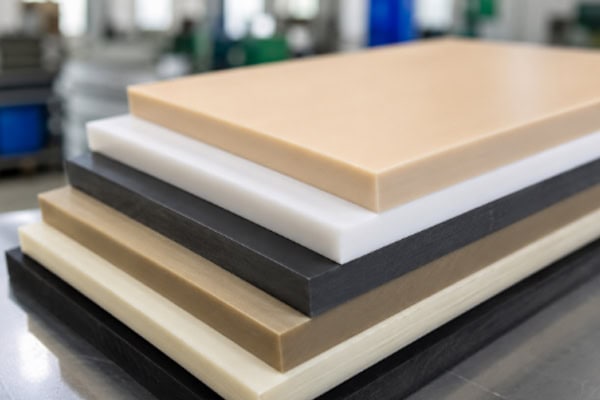
Common Plastic Sheets Used for CNC Machining
| Material Name | Main Characteristics | Common Applications |
| POM | High strength, wear-resistant | Gears, guide rails, mechanical parts |
| PEEK | High-temperature resistance, high strength | Aerospace, medical devices |
| PEI | Excellent insulation, dimensional stability | Electronic equipment, semiconductor equipment |
| PTFE | Corrosion-resistant, self-lubricating | Seals, chemical processing equipment |
| Nylon | Good toughness, wear-resistant | Bushings, sliders |
| PMMA | High transparency | Display panels, optical components |
Why Are Plastic Sheets More Suitable for Precision Machining?
Among plastic materials, plastic sheets are one of the most common choices for CNC machining. Compared with general plastics, engineering plastics usually offer the following advantages:
- Higher mechanical strength
- Better rigidity
- Superior dimensional stability
- Greater heat resistance
- Longer service life
- Better wear resistance
For example, ordinary plastics may undergo significant deformation when subjected to mechanical loads, whereas engineering plastics can maintain a stable structure over long periods.This stability is especially important for precision machining because dimensional errors often directly affect product assembly and performance. Particularly in medical equipment, automation systems, electronics, electrical equipment, and semiconductor industries, high-performance engineering plastic sheets have become important alternatives to metal materials.
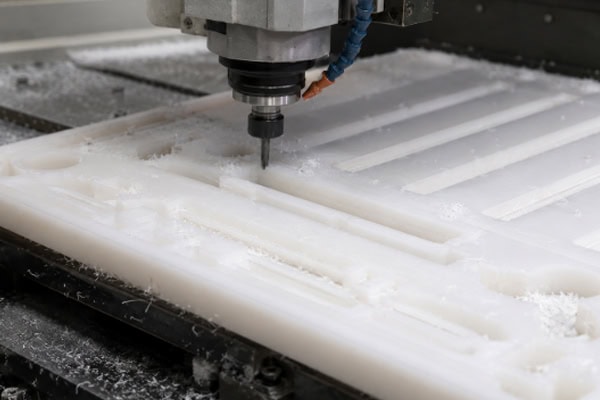
How Are Plastic Sheets CNC Machined?
Every stage of plastic sheet CNC machining affects the final product’s dimensional accuracy, surface quality, and performance. Especially when machining engineering plastics such as PEEK, PEI, POM, PTFE, and Nylon, different materials possess different mechanical properties, requiring corresponding machining strategies.
Raw Material Selection and Preparation
Before machining begins, an appropriate plastic sheet must be selected according to the intended application.
Different plastic materials provide different performance characteristics, so material selection often determines the product’s final performance.
For example:
- POM is suitable for wear-resistant mechanical parts.
- PEEK is suitable for high-temperature environments.
- PEI is suitable for electrical insulation components.
- PTFE is suitable for corrosion-resistant applications.
- Nylon is suitable for load-bearing and sliding structures.
- Acrylic is suitable for transparent display components.
After material selection, preliminary inspections are required, including dimensional measurement, visual inspection, and flatness verification.For high-precision products, material stability directly affects machining results. Therefore, high-quality raw materials are the foundation of product quality.
Product Drawing Analysis and Process Planning
Once the material is prepared, engineers analyze the drawings provided by the customer.
The analysis typically includes:
- Product dimensions
- Tolerance requirements
- Hole locations
- Contour structures
- Assembly requirements
- Surface finish requirements
By analyzing the product structure, engineers can determine the most suitable machining sequence and processing methods.
For example:
- Which features should be machined first
- Which structures require finishing operations
- Which areas require special cutting tools
- How to reduce machining deformation
Proper process planning improves efficiency while reducing scrap rates.
CNC Programming and Toolpath Design
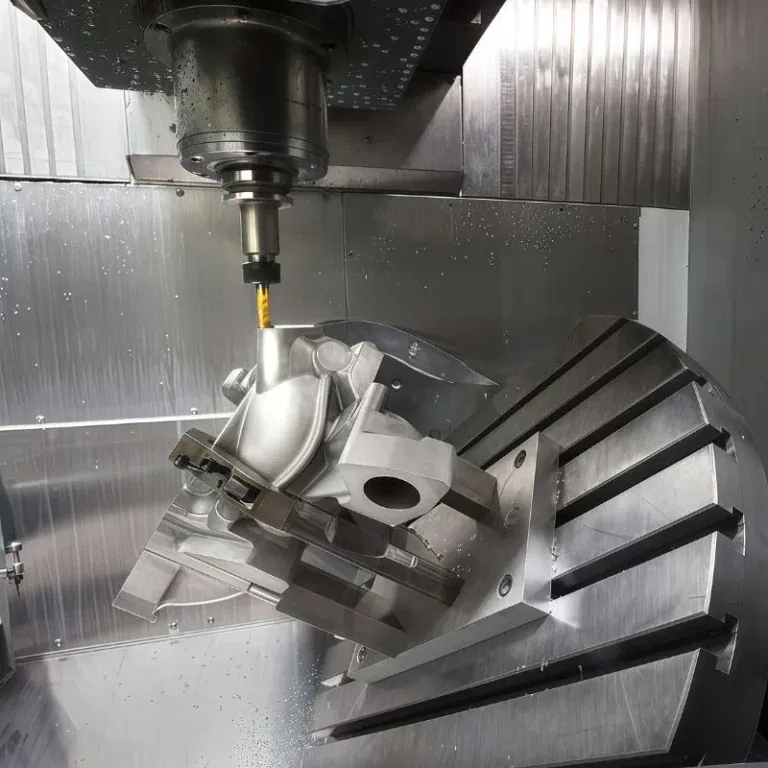
After the machining strategy has been determined, CAD and CAM software are used to create machining programs.A 3D model of the product is first established, and then machine-readable machining programs are generated.
Programming parameters include:
- Tool type
- Spindle speed
- Feed rate
- Cutting depth
- Machining path
- Finishing allowance
For complex components, toolpath design is particularly important.
A well-designed toolpath can:
- Improve machining efficiency
- Reduce tool wear
- Minimize cutting heat
- Improve surface quality
- Ensure dimensional accuracy
Modern CNC systems can even simulate machining operations to identify collision risks and processing issues before production begins.
Sheet Clamping and Positioning
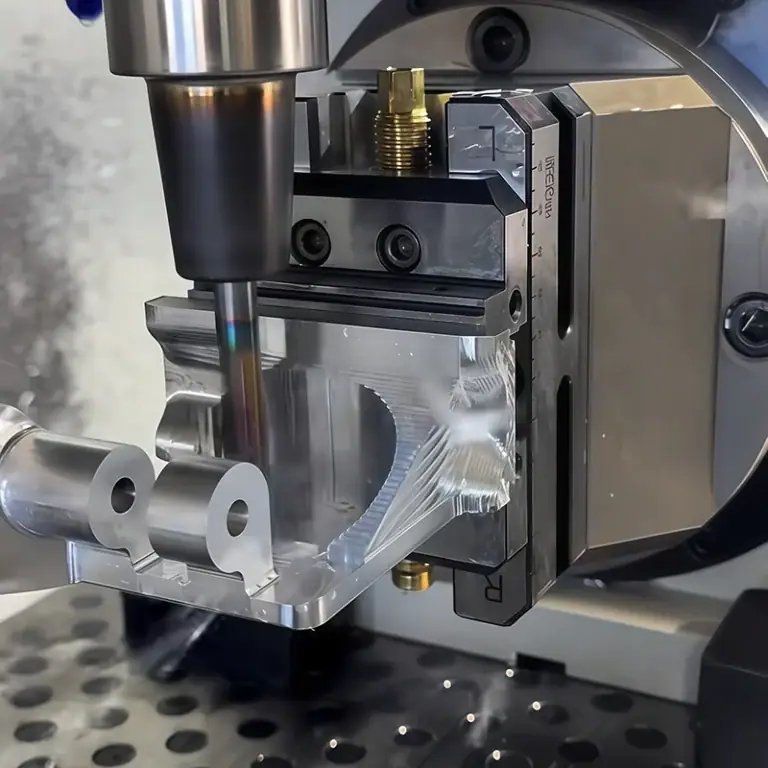
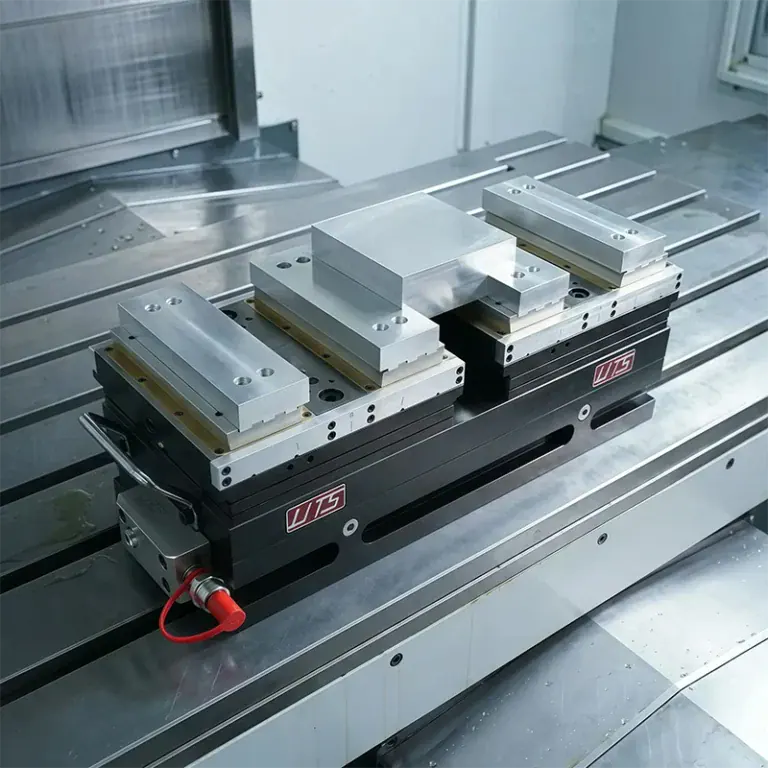
After programming is completed, the plastic sheet must be secured to the machine table.Because plastics generally have lower rigidity than metals, fixturing methods must be carefully selected.
Common fixturing methods include:
- Vacuum holding
- Clamp plate fixing
- Dedicated fixtures
- Double-sided adhesive assistance
The material must be held securely without excessive pressure, as excessive force may cause deformation.Positioning accuracy is also a critical factor affecting machining quality. Even if the machine itself is highly accurate, improper positioning can prevent the final product from meeting drawing specifications.Therefore, coordinate calibration and position verification are usually performed before machining begins.
CNC Rough Machining Stage
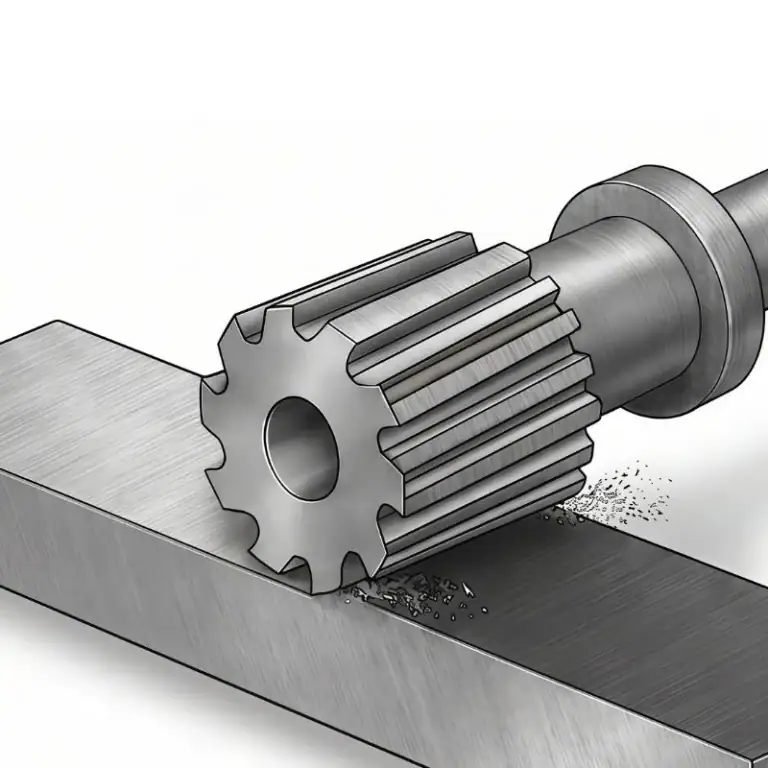
Rough machining is the first stage of material removal.Its primary purpose is to quickly remove excess material and bring the part close to its final shape.
This stage typically uses:
- Larger cutting tools
- Higher cutting efficiency
- Greater cutting depths
The focus is on efficiency rather than final surface quality.
Examples include:
- Outer profile cutting
- Large-area slotting
- Pocket material removal
- Removal of excess corners
After rough machining, the part has its basic shape but still retains machining allowance for finishing operations.
CNC Finishing Stage
Finishing is one of the most important stages in determining product quality.After rough machining, higher-precision cutting tools are used to refine critical features.
Main operations include:
- Dimension correction
- Precision hole finishing
- Edge finishing
- Surface contour machining
- Precision profile machining
This stage uses smaller cutting allowances and more precise machining parameters.
Its objectives include:
- Achieving design dimensions
- Improving surface finish
- Reducing tool marks
- Enhancing assembly accuracy
For medical equipment, electronic devices, and semiconductor components, finishing is often the most critical step in the manufacturing process.
Hole and Thread Machining
Many plastic sheet components require screws, bearings, or connectors, making hole machining an important process.
Common operations include:
- Through-hole machining
- Blind-hole machining
- Locating hole machining
- Countersunk hole machining
- Threaded hole machining
For high-precision products, hole accuracy often directly determines assembly quality.To ensure precise hole dimensions and positioning, manufacturers commonly use:
- Step drilling
- Precision reaming
- Thread milling
- Automatic tapping
These methods significantly improve hole quality and connection reliability.
Deburring and Surface Treatment
After machining, small burrs or tool marks may remain on the product surface.To improve product quality, post-processing is usually required.
Common methods include:
- Manual deburring
- Chamfering
- Edge finishing
- Surface polishing
- Flame polishing (for transparent materials)
- Cleaning
For transparent materials such as acrylic, mirror polishing may also be performed to achieve superior visual appearance.
Quality Inspection and Product Delivery
After all machining processes are completed, comprehensive quality inspection is required.
Inspection items include:
- Length, width, and height dimensions
- Thickness dimensions
- Hole diameters
- Hole position accuracy
- Flatness
- Surface roughness
- Visual quality
Inspection equipment may include:
- Vernier calipers
- Micrometers
- Height gauges
- Optical projectors
- Coordinate Measuring Machines (CMM)
Only after confirming that the product meets drawing requirements will it proceed to packaging and shipment.Because every stage can be precisely controlled, plastic sheets are widely used in medical devices, electronics, automation equipment, semiconductor equipment, and high-end industrial manufacturing, becoming an important machining method for modern precision component production.
Frequently Asked Questions
Q: Why are plastic sheets the most commonly used material form in CNC machining?
A: Because plastic sheets offer dimensional stability, easy fixturing, and flexible machining capabilities.
Q: Why is the machining accuracy of plastic sheets relatively high?
A: Because the internal structure of plastic sheets is uniform, making them less prone to significant dimensional changes during machining.
Q: What types of complex structures can be machined from plastic sheets?
A: Most industrial component structures can be machined from plastic sheets.
Q: Are plastic sheets prone to deformation during machining?
A: High-quality plastic sheets are generally resistant to deformation, provided that machining processes are properly controlled.
Conclusion
Plastic sheets have become important materials in CNC machining primarily because of their excellent dimensional stability, convenient fixturing characteristics, high material utilization rates, and outstanding machining adaptability. Whether producing simple flat components or complex precision structural parts, plastic sheets can be manufactured to a high standard using CNC machining technology.Choosing plastic sheets for CNC machining not only shortens product development cycles but also improves design flexibility and manufacturing accuracy. Particularly in industries such as medical devices, electronics and electrical equipment, automation systems, semiconductor equipment, and aerospace, high-performance plastic sheets have become indispensable engineering materials.