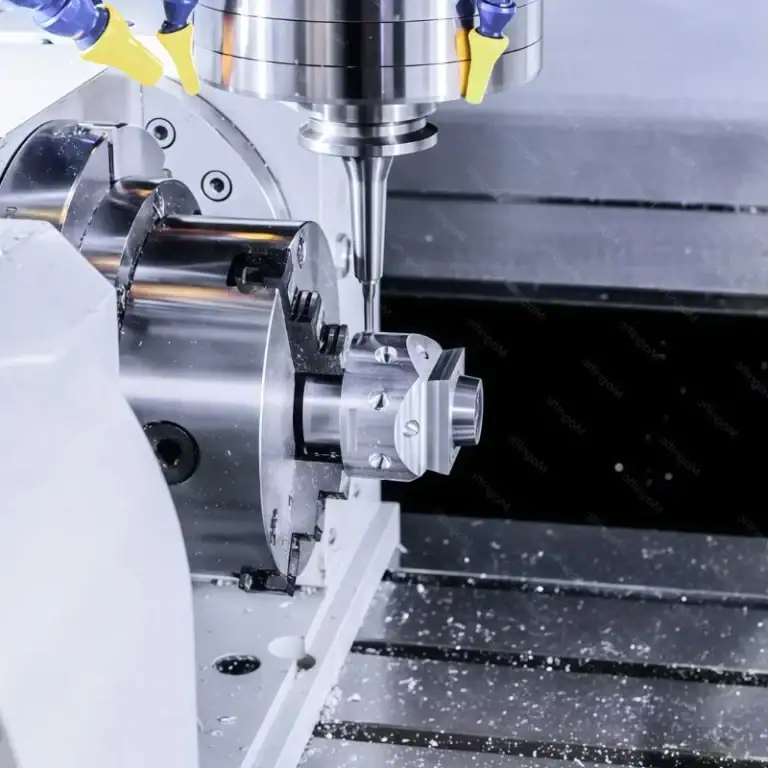
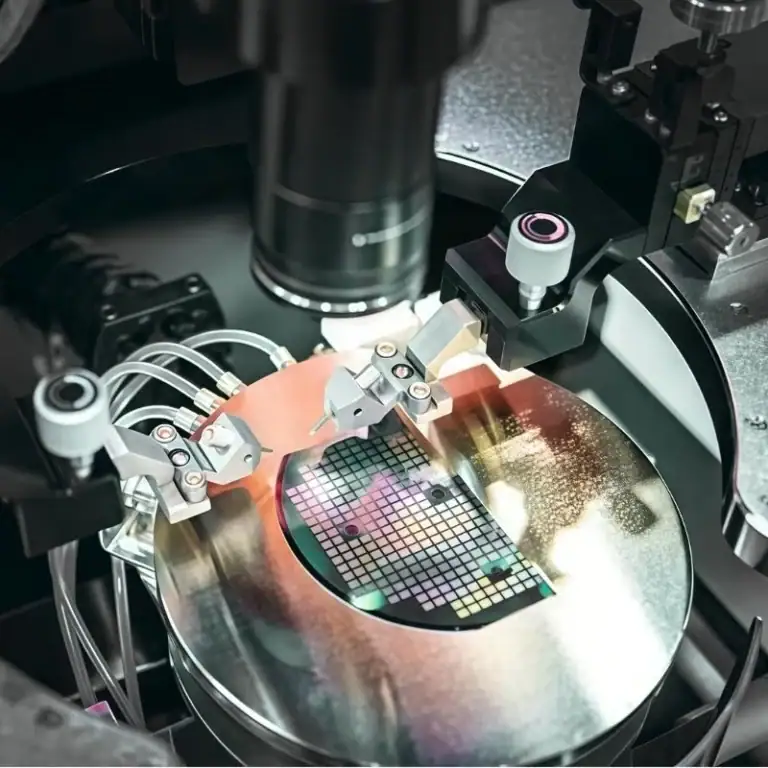
PPAP is a structured approval process used in manufacturing to confirm that a supplier can consistently produce parts that meet customer requirements before mass production begins. It is commonly used for new parts, revised parts, or parts made through new or significantly changed production methods.
In this guide, you will learn what PPAP is, what the PPAP process includes, what documents are commonly required, and why PPAP is important in manufacturing.
What Is PPAP?
PPAP is the Production Part Approval Process, a standardized method used to verify that a supplier’s manufacturing process can reliably produce parts that meet design and quality requirements under actual production conditions.
For manufacturers, this is important because a part may look acceptable in a prototype stage but still fail to perform consistently in real production. PPAP is designed to reduce that gap by requiring evidence from the actual process, not just assumptions about how the process should work. This is one reason PPAP is so widely used in supplier quality management and production approval.
The main characteristics of PPAP include:
- Formal production approval before mass production
- Verification of both part quality and process capability
- Use of standardized documentation and records
- Focus on repeatability and process consistency
- Strong connection to supplier quality management
- Customer-defined submission and review requirements
What Is the Purpose of PPAP?
The purpose of PPAP is to confirm that the product and the production process both meet customer requirements before mass production starts. It helps manufacturers reduce quality risk, improve supplier-customer alignment, and build confidence in repeat production.
Verifying Requirements
PPAP verifies that the supplier understands the drawing, specifications, material requirements, performance expectations, and critical quality characteristics. This is important because many production problems begin when requirements are unclear, misinterpreted, or not fully transferred into the actual process and inspection plan.
Identifying Risks
PPAP helps identify risks before full production by requiring process analysis, dimensional verification, capability evidence, and supporting documentation. It is designed to catch process weaknesses, material issues, and control gaps early, when corrective action is still relatively efficient and less costly.
Supporting Approval
PPAP supports production approval by giving the customer a formal package to review. Once accepted, the supplier has documented evidence that the part is approved under defined production conditions, which helps create a clearer basis for launch and ongoing supply.
What PPAP Helps Manufacturers Confirm
PPAP helps manufacturers confirm:
- The part matches drawing and specification requirements
- The manufacturing process is stable under production conditions
- Inspection and measurement methods are reliable
- Material and performance requirements are met
- Risks have been identified and controlled before launch
- The supplier is ready for repeat production
What Is PPAP In Manufacturing?
PPAP is important in manufacturing because it improves consistency, reduces production risk, and strengthens confidence in supplier performance before production launch. It helps manufacturers prevent problems earlier instead of relying only on final inspection or customer complaints to identify issues after the fact.
Improving Consistency
PPAP improves consistency by requiring evidence that the process can repeatedly produce the same part to the same standard. This is especially important in production programs where stable quality across batches matters just as much as the quality of the first sample.
Strengthening Process Control
PPAP strengthens process control because it requires process flow documentation, PFMEA, control plans, measurement studies, and validation data. These tools help define how quality will be maintained throughout production instead of relying only on final sorting or reactive correction.
Reducing Production Risk
PPAP reduces production risk by validating parts before full-scale production begins. This helps reduce defects, rework, delays, customer complaints, and other avoidable problems that become much more expensive once regular production is underway.
When Is PPAP Required?
PPAP is required when a new part is introduced, when a significant change affects the product or process, or when a customer specifically requests approval documentation. In manufacturing, PPAP is commonly triggered by change, risk, or customer-specific quality requirements.
New Part Introduction
A new part or new product is one of the most common reasons for PPAP. The customer wants proof that the supplier can meet requirements before regular production starts, especially when the part is entering a production program for the first time.
Design or Process Changes
PPAP may also be required after changes to design, material, tooling, process, production method, manufacturing location, or supplier source. If the change can affect quality, fit, function, or repeatability, resubmission may be needed to confirm ongoing compliance.
Customer Requests
Customer requirements often determine whether PPAP is needed and what level of submission is expected. In many OEM supply chains, PPAP requirements are clearly defined by the customer, and suppliers are expected to follow those requirements closely.
Common Situations That Trigger a PPAP Submission
Common situations that may trigger a PPAP submission include:
- Launch of a new part
- Product design revision
- Material change
- Tooling replacement or modification
- Process change or production method change
- Manufacturing location change
- New supplier or subcontractor change
- Customer-specific request for approval
Who Is Responsible for PPAP?
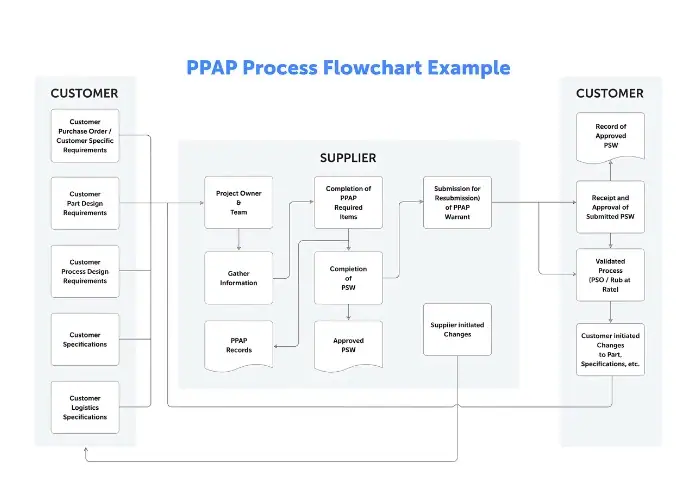
PPAP is usually prepared by the supplier and reviewed by the customer, with support from quality, engineering, and production teams. Although it is a supplier submission, successful PPAP depends on good cross-functional coordination. No single department usually has all the information needed to build a strong PPAP package on its own.
Supplier Preparation
The supplier normally prepares the PPAP package, collects the required evidence, and submits the documentation for approval. This means the supplier is responsible not only for producing the part, but also for demonstrating that the process behind the part is controlled and ready.
Customer Review
The customer reviews the PPAP package to confirm that the part, process, and documentation meet expectations. If the submission is incomplete or insufficient, the supplier may need to correct issues and resubmit before approval can be granted.
Cross-Functional Support
PPAP usually involves engineering, quality, production, metrology, and sometimes purchasing or supplier quality teams because it covers design intent, process planning, inspection methods, and production readiness together. Strong coordination across these groups usually improves submission quality and approval speed.
What Is the PPAP Process?
The PPAP process is a structured sequence of preparation, validation, trial production, and approval review used to prove that a part can be produced consistently under normal manufacturing conditions. It is not just a document handoff. It is a staged process in which evidence is built, reviewed, and confirmed before production is fully released.
Document Preparation
The process begins with preparing the submission package. This may include drawings, engineering records, process flow diagrams, control plans, material certifications, dimensional results, and other required documents. Good preparation is important because weak documentation often leads to delay even when the part itself is acceptable.
Design and Process Validation
The next step is validation. Design validation confirms that the part meets requirements, while process validation confirms that the manufacturing process can produce acceptable parts consistently. Both are important because a correct design does not automatically guarantee a stable production process.
Trial Production
A trial production run is used to simulate actual manufacturing conditions. This helps confirm that the process remains stable at production pace, not just during prototype work or special one-time setups. It also gives a more realistic basis for capability studies and inspection results.
Approval Outcome
After review, the part is approved, conditionally approved, or rejected depending on the submission results and customer requirements. This approval outcome determines whether the supplier can move forward, whether corrections are still needed, or whether the process must be reviewed again before release.
What Documents Are Included in PPAP?
PPAP documents are the formal records used to prove that the design, process, inspection system, and test results support production approval. The exact package can vary by customer and submission level, but the overall goal remains the same: to provide enough evidence that the process is ready and controlled.
Basic Documentation
Basic PPAP documentation usually includes design records, engineering changes, process flow diagrams, PFMEA, control plans, dimensional results, test records, and the PSW. These documents create the core structure of the submission and show how the supplier plans, controls, and verifies the process.
Common Document Types
Common PPAP document types include risk analysis files, measurement system studies, lab records, material and performance test results, master samples, and checking aids. These records help support process capability, inspection confidence, and traceability.
Customer-Specific Requirements
PPAP documents are not always identical from project to project because customers may require extra records, specific forms, additional samples, or industry-specific evidence. This is why manufacturers must confirm submission expectations early rather than assuming every PPAP package is the same.
Commonly Reviewed Items in a PPAP Package
| Document | Main Function |
| Design Record | Defines the approved part requirements |
| Process Flow Diagram | Shows the manufacturing sequence |
| PFMEA | Identifies process risks and failure modes |
| Control Plan | Defines how the process will be controlled |
| Dimensional Results | Confirms that measured features meet requirements |
| Material Test Results | Verifies material compliance |
| Capability Studies | Shows whether the process is statistically stable |
| MSA | Confirms that measurement systems are reliable |
| PSW | Formally declares PPAP submission and compliance |
What Are the 18 Elements of PPAP?
The 18 elements of PPAP are the core categories of documentation and evidence used to support approval. They form the standard structure of a PPAP submission and cover design, process, measurement, testing, and formal release records. Together, they give the customer a complete view of whether the part and the process are ready for production.
Overview of the 18 Elements
The 18 elements commonly include design records, engineering change documents, customer engineering approval, DFMEA, process flow diagrams, PFMEA, control plans, MSA, dimensional results, material and performance test results, initial process studies, qualified laboratory documentation, appearance approval, sample parts, master sample, checking aids, customer-specific requirements, and the Part Submission Warrant.
Core Documentation
Among these, the most important documents for many manufacturing teams are the process flow diagram, PFMEA, control plan, dimensional results, MSA, process studies, and PSW because these are directly tied to process stability, measurement reliability, and approval decisions.
Submission Scope
Not every PPAP submission includes every element in the same way. The required scope depends on the submission level and customer requirements, which is why manufacturers should clarify expectations early and build the submission around the actual approval need.
What Are the PPAP Submission Levels?
PPAP submission levels are the different depths of documentation required for approval, ranging from a PSW-only submission to full documentation with on-site review. These levels allow the customer to match the amount of required evidence to part complexity, supplier history, and program risk.
Five Submission Levels
PPAP has five levels. Level 1 is PSW only. Level 2 includes PSW with limited supporting data. Level 3 includes PSW with full supporting data and is often the most common full submission. Level 4 is customer-defined. Level 5 includes full supporting data plus review at the supplier’s site.
Level Differences
The main difference between levels is how much evidence must be submitted or retained. Higher levels generally require more supporting data, more process visibility, and stronger customer confidence in how the supplier controls production.
Level Selection
The customer usually determines which level applies based on part complexity, risk, supplier history, and application criticality. In practical work, Level 3 and Level 4 are often especially important because they are common in real supplier approval programs.
| Level | Typical Requirement | Main Feature |
| Level 1 | PSW only | Minimum submission |
| Level 2 | PSW with limited supporting data | Partial documentation |
| Level 3 | PSW with full supporting data | Most common full submission |
| Level 4 | Customer-defined requirements | Flexible based on customer needs |
| Level 5 | Full supporting data plus on-site review | Highest review depth |
How Is Quality Control Integrated into PPAP?
Quality control is integrated into PPAP through process controls, validated measurement systems, inspection planning, and documented evidence that the process can meet requirements consistently. PPAP works best when quality is built into the process rather than inspected only at the end. In that sense, PPAP supports preventive quality management rather than purely reactive quality checking.
Process Control
Process control enters PPAP through tools such as process flow diagrams, PFMEA, and control plans. These define how the process operates, where risks may occur, and what controls are used to maintain stability throughout production.
Inspection and Measurement
Inspection and measurement support PPAP through dimensional results, MSA, calibrated equipment, and laboratory documentation. These records help prove that acceptance decisions are based on reliable and repeatable data rather than inconsistent measurement practice.
Approval Improvement
Strong quality control improves approval success because it reduces incomplete submissions, inconsistent results, and uncertainty during customer review. In most cases, stronger controls upstream lead to smoother PPAP approval downstream.
What Problems and Challenges Are Common in PPAP?
Common PPAP problems include incomplete documentation, weak process data, inconsistent measurements, and poor cross-functional coordination. These issues make approval slower and more difficult, even when the supplier believes the part is ready. In many cases, PPAP delays are caused less by the part itself and more by weak preparation or unclear evidence.
Incomplete Documents
Incomplete submissions are one of the most common PPAP problems. Missing records, outdated forms, and unsupported claims can delay approval even when part quality is acceptable, because the customer still lacks full evidence.
Insufficient Data
PPAP can fail when process studies, test data, or inspection evidence are too weak to prove process stability. Without enough data, the customer has no strong basis for approval and may require further validation.
Poor Coordination
PPAP becomes harder when engineering, production, quality, and customer teams are not aligned on requirements, timing, or responsibilities. Slow communication and weak revision control are especially common sources of delay.
| Challenge | Typical Impact |
| Incomplete documentation | Delayed approval |
| Weak process data | Low confidence in process stability |
| Unclear customer requirements | Rework and repeated submission |
| Poor revision control | Mismatch between records and actual process |
| Limited cross-functional communication | Slow response and coordination problems |
| Inconsistent measurement methods | Unreliable inspection results |
How Can PPAP Success Be Improved?
PPAP success can be improved by preparing early, controlling documents carefully, and maintaining clear communication with the customer throughout the approval process. Most PPAP problems are easier to prevent than to fix after submission, so preparation quality has a direct effect on approval speed and overall project risk.
Better Preparation
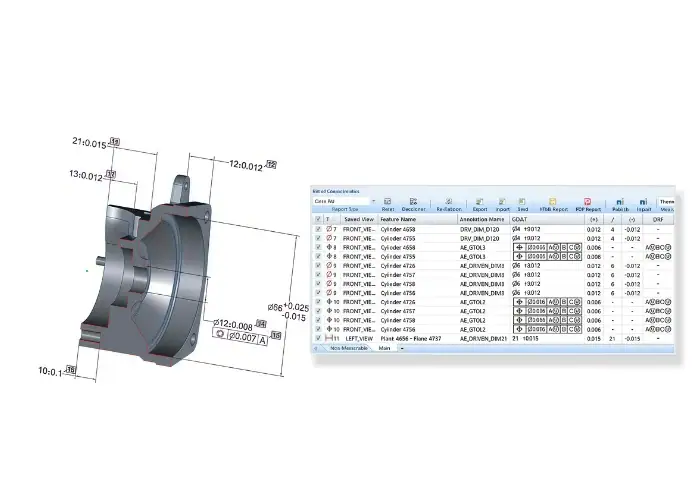
Better preparation means confirming submission level, customer-specific requirements, measurement methods, and process assumptions before trial production and document finalization. This reduces rework and improves the chance of first-time approval.
Stronger Document Control
Stronger document control improves PPAP because the process depends heavily on accurate, current, and traceable records. Clear revision control, standard templates, and organized file management all support more reliable submission.
Clear Customer Communication
Clear customer communication matters because the customer usually defines the required level, any special requirements, and the final approval expectations. Early clarification helps reduce confusion and last-minute corrections.
Key Factors That Affect PPAP Approval Success
| Improvement Area | Practical Action |
| Document Control | Use standard templates and revision tracking |
| Process Validation | Confirm process stability before submission |
| Measurement Reliability | Complete MSA and calibration checks |
| Team Coordination | Align quality, engineering, and production early |
| Customer Communication | Confirm submission level and special requirements in advance |
| Risk Prevention | Review PFMEA and control plan before trial production |
What Benefits Does PPAP Bring to Manufacturers?
PPAP brings manufacturers stronger customer confidence, better quality management, and more stable production by validating the part and process before mass production begins. Its value is not only in gaining approval, but also in helping manufacturers build a more controlled and predictable production launch.
This is why PPAP is often useful even when customers are the main drivers of the requirement. A well-managed PPAP process can help the supplier strengthen process discipline, improve internal coordination, and reduce the likelihood of preventable problems after launch.
Higher Customer Confidence
PPAP builds customer confidence because it provides structured evidence that requirements are understood and the process is capable. This makes supplier approval more objective and reduces uncertainty during production release.
Better Quality Management
PPAP supports better quality management by linking design intent, process planning, measurement control, and formal review in one framework. It creates a stronger connection between documentation and actual manufacturing execution.
More Stable Production
PPAP supports more stable production because it is designed to catch variation, documentation gaps, and process weaknesses before full-scale launch. This reduces avoidable disruption later in the production program.
Practical Benefits of PPAP for Manufacturers
For manufacturers, PPAP can provide:
- Better control before production launch
- Lower risk of customer rejection
- Improved supplier communication
- Stronger quality documentation
- More stable production transfer
- Better support for long-term customer programs
FAQs
What Are PPAP Samples?
PPAP samples are production-level sample parts made under actual process conditions. They are used to verify dimensions, material, function, and consistency before mass production approval. In many cases, 1 set of samples is submitted with the PPAP package, but the exact quantity depends on customer requirements.
What Is PPAP And APQP?
PPAP and APQP are related quality tools in manufacturing, but they serve different roles. APQP, or Advanced Product Quality Planning, focuses on planning quality before production. PPAP, or Production Part Approval Process, focuses on proving that the part and process are ready for approval. In simple terms, APQP is the planning stage, while PPAP is the approval stage.
What Is A Level 3 PPAP?
A Level 3 PPAP is the most common full submission level in manufacturing. It usually requires the Part Submission Warrant, product samples, and complete supporting data for customer review. In practice, this often includes design records, PFMEA, control plan, dimensional results, MSA, and process studies. Its main purpose is to show that the part and process are ready for repeat production.
What Is A Level 4 PPAP?
A Level 4 PPAP is a customer-defined submission level. It includes the Part Submission Warrant plus any additional requirements the customer chooses to request. Unlike Level 3, it does not follow one fixed document package. In some cases, it may require less data than Level 3, while in others it may require more. The submission scope depends on customer needs.
What Is Included In A Level 3 PPAP?
A Level 3 PPAP usually includes 3 main parts: the PSW, product samples, and complete supporting data. The supporting data often covers design records, process flow diagrams, PFMEA, control plan, dimensional inspection results, material or performance test results, MSA, and process capability studies. The goal is to provide a full evidence package for customer approval.
What Is Part Submission Warrant In PPAP?
Part Submission Warrant, or PSW, is the formal summary document in a PPAP package. It states that the supplier has completed the required PPAP activities and that the part meets customer requirements under the declared production process. In practice, PSW is one of the most important PPAP documents because it records submission status, part information, and approval intent in one form.
Conclusion
PPAP matters because it helps reduce launch risk, improve supplier communication, strengthen process control, and support more stable production. When managed well, it is not just paperwork. It is a practical way to prevent problems before they become production losses, customer complaints, or avoidable delays.
At TiRapid, we support manufacturers with precision production and quality-focused project execution across custom part programs. Upload your drawing to discuss your manufacturing requirements and get a tailored solution for your next project.