3 vs 5 axis CNC machining is a common comparison in precision manufacturing because both methods are used to produce accurate custom parts, but they are designed for different levels of part complexity. 3-axis CNC machining is suitable for simpler parts with flat surfaces, holes, pockets, and basic contours, while 5-axis CNC machining is better for complex geometries, angled features, deep cavities, and multi-surface machining.
In this guide, we compare 3-axis and 5-axis CNC machining by movement, part complexity, setup time, accuracy, surface finish, cost, and applications to help you choose the right process for your project.
What Is 3-Axis CNC Machining?
3-axis CNC machining is a machining process where the cutting tool moves along three linear axes: X, Y, and Z. It is widely used for parts that can be machined mainly from one direction or several simple setups. This process is practical, cost-effective, and suitable for many common CNC machined parts.
How 3-Axis CNC Machining Works?
3-axis CNC machining works by moving the cutting tool left and right, forward and backward, and up and down. These three directions allow the tool to remove material from the workpiece and create flat surfaces, holes, slots, pockets, and basic contours.
The workpiece is usually fixed on the machine table. If another side needs machining, the operator may need to stop the process, unclamp the part, rotate it, and set it up again. This is why 3-axis machining is simple and stable, but less flexible for highly complex parts.
Common Features of 3-Axis CNC Machining
3-axis CNC machining is known for its simple machine structure, easier programming, and lower production cost. It is one of the most commonly used CNC processes for prototypes, fixtures, plates, brackets, and general mechanical parts.
Common features include:
- Movement along X, Y, and Z axes
- Suitable for flat and simple 3D surfaces
- Lower programming difficulty
- Easier machine setup
- Lower machining cost
- Good for prototypes and small-batch production
- Often requires multiple setups for multi-side parts
What Is 5-Axis CNC Machining?
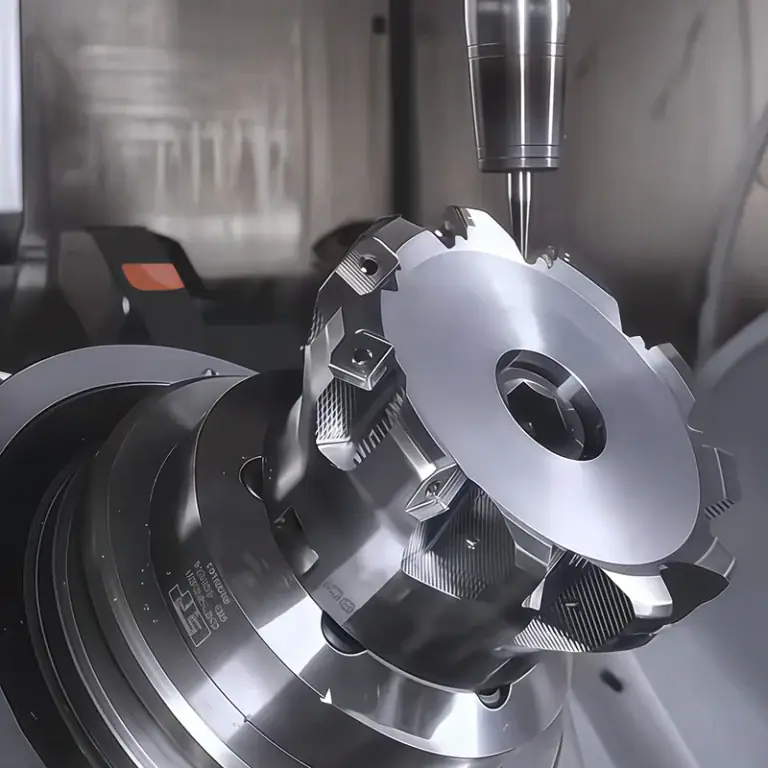
5-axis CNC machining is a process where the cutting tool or workpiece can move along three linear axes and two additional rotary axes. This allows the tool to approach the part from many angles, making it suitable for complex, high-precision, and multi-surface components.
How 5-Axis CNC Machining Works?
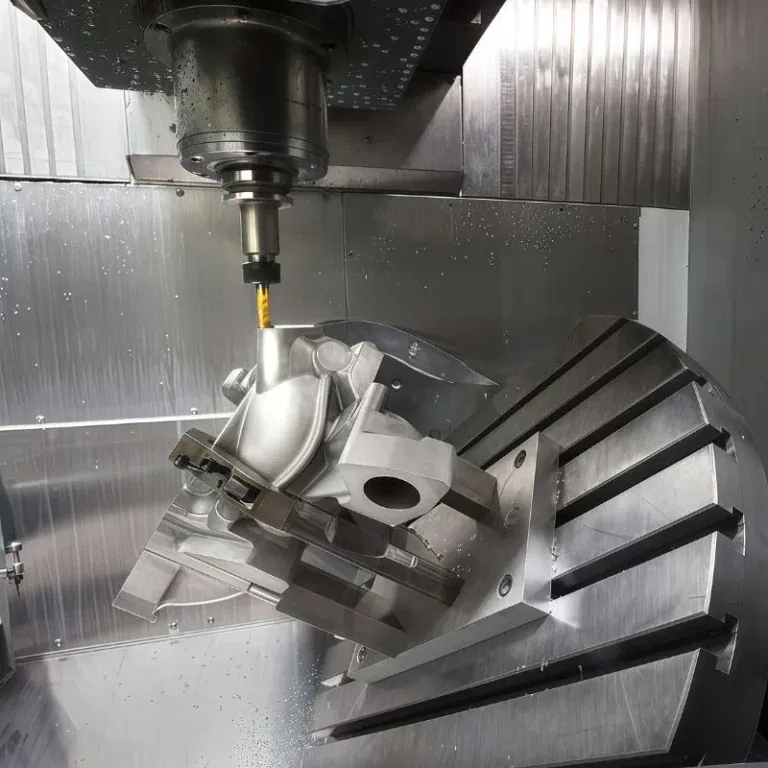
5-axis CNC machining uses X, Y, and Z linear movement, plus two rotary movements. These rotary axes allow the tool or part to tilt and rotate during machining. As a result, the cutting tool can reach difficult surfaces without repeatedly removing and reclamping the part.
This is especially useful for curved surfaces, angled holes, deep cavities, complex contours, and parts that require machining from multiple directions. With 5-axis machining, more features can often be completed in one setup.
Common Features of 5-Axis CNC Machining
5-axis CNC machining is known for strong tool access, fewer setups, better surface finish, and higher flexibility for complex geometries. It can reduce accumulated positioning errors because the part does not need to be repositioned as often.
Common features include:
- Movement along five axes
- Better access to complex surfaces
- Fewer setups and clamping steps
- Suitable for angled and curved features
- Better surface finish on complex parts
- Higher programming and machine requirements
- Higher machining cost than standard 3-axis machining
What Is the Difference Between 3-Axis and 5-Axis CNC?
The main difference between 3-axis and 5-axis CNC machining is tool movement and access. 3-axis CNC moves in three straight directions, while 5-axis CNC adds two rotary axes, allowing the tool to cut from more angles. This affects part complexity, setup time, accuracy, surface finish, cost, and production efficiency.
Axis Movement and Cutting Direction
3-axis CNC machining moves along X, Y, and Z directions. This is enough for many simple parts, but the tool mainly approaches the workpiece from one direction at a time.
5-axis CNC machining adds two rotary axes. This allows the tool to tilt, rotate, and approach the workpiece from different angles. It is much more flexible when machining angled faces, curved surfaces, and hard-to-reach features.
| Item | 3-Axis CNC | 5-Axis CNC |
| Basic movement | X, Y, Z | X, Y, Z + two rotary axes |
| Tool access | Limited | Much stronger |
| Cutting direction | Mostly vertical or simple directions | Multiple angles |
| Best for | Simple geometry | Complex geometry |
Part Complexity and Tool Access
3-axis CNC machining is better for simple and moderately complex parts. It can make pockets, holes, flat surfaces, steps, and basic 3D shapes, but it may struggle with undercuts, deep angled features, and multi-surface parts.
5-axis CNC machining is better for complex geometries. It can reach surfaces that are difficult or impossible for a 3-axis machine to cut without multiple setups. This makes it useful for aerospace, medical, mold, and robotics parts.
Setup Time and Fixture Requirements
3-axis CNC machining often requires multiple setups when several sides of a part need machining. Every time the part is repositioned, there is a risk of small alignment errors.
5-axis CNC machining can reduce setup time because more surfaces can be machined in one clamping. This helps improve accuracy and reduce production time for complex parts.
For simple parts, 3-axis setup may be faster and cheaper. For complex parts, 5-axis machining can save time by reducing repeated clamping.
Accuracy and Surface Finish
3-axis CNC machining can achieve high accuracy for many standard parts, especially when features are accessible from a simple direction. However, if the part requires multiple setups, each setup may add positioning error.
5-axis CNC machining can improve accuracy on complex parts because it reduces the number of setups. It can also use shorter tools and better tool angles, which helps reduce vibration and improve surface finish.
Cost and Production Efficiency
3-axis CNC machining is usually more cost-effective for simple parts because machine rates, programming time, and setup requirements are lower.
5-axis CNC machining is more expensive, but it may be more efficient for complex parts. If a part needs many setups on a 3-axis machine, 5-axis machining may reduce total production time and improve final quality.
The practical rule is simple: choose 3-axis CNC for simple and cost-sensitive parts; choose 5-axis CNC for complex, high-precision, and multi-surface parts.
3-Axis vs 5-Axis CNC Machining Comparison Table
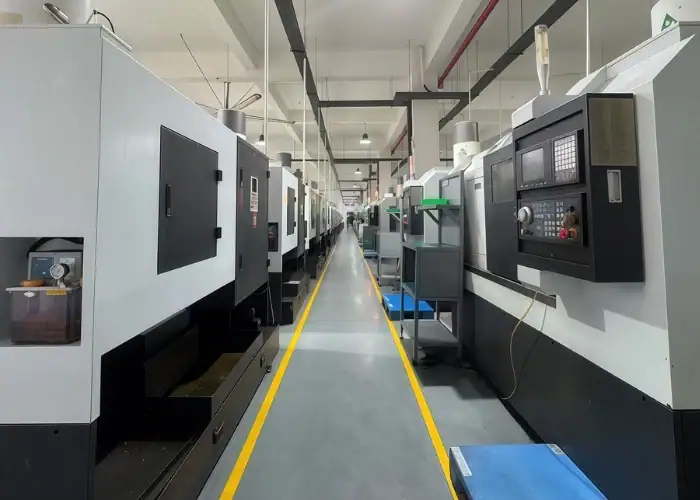
3-axis and 5-axis CNC machining differ in machine movement, suitable geometry, accuracy, surface quality, setup complexity, cost, and applications. The table below gives a quick comparison for engineering and purchasing decisions.
| Comparison Point | 3-Axis CNC Machining | 5-Axis CNC Machining |
| Machine Movement | X, Y, Z linear movement | X, Y, Z plus two rotary axes |
| Suitable Part Geometry | Simple to medium complexity | Complex and multi-angle parts |
| Machining Accuracy | High for accessible features | Higher for complex multi-side parts |
| Surface Quality | Good for simple surfaces | Better for curved and angled surfaces |
| Setup Complexity | More setups for multi-side parts | Fewer setups for complex parts |
| Cost Range | Lower | Higher |
| Best Applications | Plates, brackets, simple housings | Aerospace, medical, molds, impellers |
Machine Movement
Machine movement is the biggest difference. 3-axis machines cut from basic directions, while 5-axis machines can tilt and rotate the cutting angle. This gives 5-axis CNC stronger flexibility for complex surfaces.
Suitable Part Geometry
3-axis CNC is suitable for parts with flat surfaces, simple pockets, holes, and basic contours. 5-axis CNC is suitable for complex geometry, curved surfaces, angled holes, and multi-side machining.
Machining Accuracy
Both processes can be accurate, but 5-axis CNC has an advantage when a part needs several surfaces machined in relation to each other. Fewer setups usually mean fewer alignment errors.
Surface Quality
3-axis CNC can produce good surfaces on simple parts. 5-axis CNC can often produce better surfaces on complex parts because the tool angle can be optimized during machining.
Setup Complexity
3-axis CNC may require several setups for multi-side parts. 5-axis CNC can reduce clamping steps, which improves consistency and saves time for complex components.
Cost Range
3-axis CNC usually has lower cost for simple parts. 5-axis CNC has higher machine and programming cost, but it may reduce total cost when the part is very complex.
Best Applications
3-axis CNC is best for simple mechanical parts, plates, brackets, and fixtures. 5-axis CNC is best for aerospace parts, medical devices, complex molds, impellers, and high-value custom components.
Advantages and Limitations of 3-Axis CNC Machining
3-axis CNC machining is a practical choice when the part design is relatively simple, the budget is controlled, and the features are accessible from basic cutting directions. Its main advantage is cost efficiency, but its limitation is reduced flexibility for complex geometry.
Benefits of 3-Axis CNC Machining
3-axis CNC machining is widely used because it is stable, affordable, and easier to program. It is suitable for many custom parts and production jobs.
Main benefits include:
- Lower machining cost
- Easier programming
- Faster setup for simple parts
- Suitable for many materials
- Good accuracy for standard geometry
- Strong availability across machine shops
- Practical for prototypes and small batches
Limitations of 3-Axis CNC Machining
The main limitation of 3-axis CNC machining is tool access. If the part has angled surfaces, deep cavities, undercuts, or many sides to machine, 3-axis CNC may require multiple setups or special fixtures.
Common limitations include:
- Limited cutting angles
- More setups for complex parts
- Higher risk of accumulated setup error
- Longer production time for multi-side parts
- Less suitable for complex curved surfaces
- May need longer tools for deep features
Best Use Cases for 3-Axis CNC
3-axis CNC machining is the better choice when the part is simple, the geometry is accessible, and cost control is important.
Choose 3-axis CNC for:
- Flat plates
- Simple brackets
- Basic housings
- Fixtures and jigs
- Covers and panels
- Prototype parts
- Low-cost custom components
For many standard industrial parts, 3-axis CNC offers the best balance between cost, accuracy, and lead time.
Advantages and Limitations of 5-Axis CNC Machining
5-axis CNC machining is the better choice when the part has complex geometry, tight tolerance relationships, angled features, or high surface finish requirements. Its main advantage is machining flexibility, but it requires higher machine capability, programming skill, and cost.
Benefits of 5-Axis CNC Machining
5-axis CNC machining provides better access to complex features and can complete more machining operations in one setup. This improves consistency and reduces manual repositioning.
Main benefits include:
- Strong tool access
- Fewer setups
- Better accuracy for complex parts
- Improved surface finish
- Shorter tools can be used
- Reduced vibration on difficult cuts
- Suitable for complex 3D surfaces
- Better for high-value precision parts
Limitations of 5-Axis CNC Machining
5-axis CNC machining is powerful, but it is not always necessary. For simple parts, it may increase cost without adding real value.
Common limitations include:
- Higher machine cost
- Higher hourly rate
- More complex programming
- Higher operator skill requirement
- Longer preparation time for some jobs
- Not always cost-effective for simple parts
Best Use Cases for 5-Axis CNC
5-axis CNC machining is best for parts that cannot be efficiently made with 3-axis CNC or would require too many setups.
Choose 5-axis CNC for:
- Complex aerospace parts
- Medical implants
- Impellers and turbine parts
- Deep cavity molds
- Multi-angle housings
- Robotic components
- Precision parts with complex surfaces
- Parts requiring fewer setups and better consistency
For complex parts, 5-axis CNC may cost more per hour but reduce total project risk.
3+2 Axis vs Simultaneous 5-Axis CNC Machining
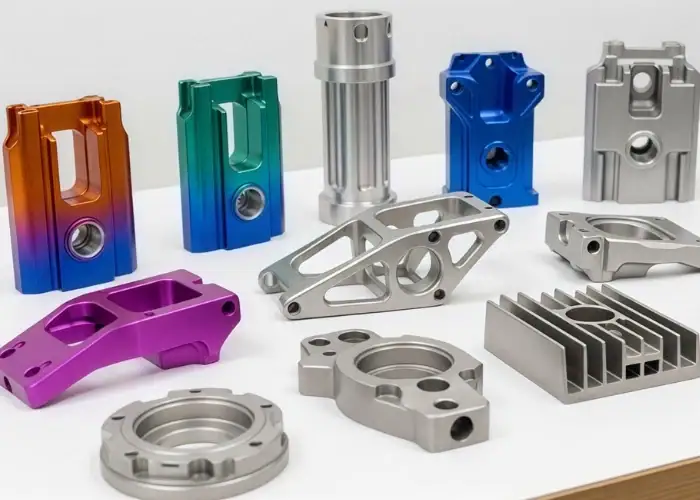
3+2 axis and simultaneous 5-axis CNC machining are both related to 5-axis machining, but they are not the same. 3+2 axis CNC positions the part at an angle and then machines with three axes, while simultaneous 5-axis CNC moves all five axes at the same time during cutting.
What 3+2 Axis CNC Means
3+2 axis CNC means the machine uses the rotary axes to position the workpiece or tool at a fixed angle. After positioning, the cutting is done mainly with the three linear axes.
This method is useful for machining angled features, multiple sides, and difficult-to-reach areas without continuous five-axis movement. It is often simpler to program than full simultaneous 5-axis machining.
What Simultaneous 5-Axis CNC Means
Simultaneous 5-axis CNC means all five axes can move at the same time during cutting. This allows the tool to follow complex surfaces and maintain an optimized cutting angle throughout the process.
It is used for advanced parts such as impellers, turbine blades, medical implants, and complex aerospace components. It offers the highest flexibility but also requires more advanced programming and machine control.
Key Differences Between 3+2 Axis and Simultaneous 5-Axis
| Item | 3+2 Axis CNC | Simultaneous 5-Axis CNC |
| Rotary axis movement | Fixed during cutting | Moves during cutting |
| Programming difficulty | Lower | Higher |
| Best for | Angled features and multi-side parts | Complex continuous surfaces |
| Surface control | Good | Better |
| Cost | Lower than full 5-axis | Higher |
| Typical use | Fixtures, housings, angled holes | Impellers, blades, medical parts |
When to Use Each Method
Use 3+2 axis CNC when the part needs angled access but does not require continuous tool movement across complex surfaces. It is a practical choice for many housings, brackets, molds, and fixture components.
Use simultaneous 5-axis CNC when the part has complex curved surfaces, changing tool angles, or high surface finish requirements. It is better for advanced aerospace, medical, and fluid-dynamic components.
How to Choose Between 3-Axis and 5-Axis CNC?
The choice between 3-axis and 5-axis CNC machining depends on part geometry, tolerance, surface finish, setup time, budget, lead time, and final application. 3-axis CNC is more suitable for simple and cost-sensitive parts, while 5-axis CNC is better for complex and high-precision components.
Consider Part Geometry
Part geometry is the first factor to evaluate. If the part has flat surfaces, simple holes, and basic pockets, 3-axis CNC is usually enough.
If the part has curved surfaces, angled features, deep cavities, undercuts, or multiple sides that must be machined accurately, 5-axis CNC may be the better choice.
Check Tolerance and Surface Finish Requirements
Both 3-axis and 5-axis CNC can achieve good tolerances, but the setup strategy matters. If the part requires tight relationships between several angled or multi-side features, 5-axis CNC can reduce setup error.
For surface finish, 5-axis CNC can maintain better tool angles on curved surfaces. This can reduce tool marks and improve final quality.
Compare Setup Time and Production Volume
For simple parts, 3-axis CNC usually has shorter preparation time and lower cost. For complex parts, 5-axis CNC may reduce total setup time because fewer repositioning steps are needed.
Production volume also matters. If many identical complex parts are required, 5-axis CNC may improve repeatability and reduce manual setup variation.
Evaluate Budget and Lead Time
Budget is important, but the cheapest hourly rate is not always the cheapest total solution. A 3-axis machine may have a lower hourly cost, but if the part needs many setups, special fixtures, and extra inspection, the total cost may increase.
5-axis CNC may have a higher hourly rate, but it can reduce setup time, improve accuracy, and lower risk for complex components.
Match the Process to the Final Application
The machining method should match the part’s final use. A simple fixture plate does not need 5-axis machining. A complex aerospace bracket or medical implant may not be suitable for 3-axis machining.
Use this guide:
| Project Requirement | Recommended Process |
| Simple flat part | 3-axis CNC |
| Low-cost prototype | 3-axis CNC |
| Complex curved surface | 5-axis CNC |
| Multi-side precision part | 5-axis CNC |
| Angled holes or features | 3+2 axis or 5-axis CNC |
| Aerospace or medical complex part | 5-axis CNC |
| Basic fixture or bracket | 3-axis CNC |
Applications of 3-Axis and 5-Axis CNC Machining
3-axis and 5-axis CNC machining are used across many industries, but they are usually selected for different part requirements. 3-axis CNC is common for simpler precision parts, while 5-axis CNC is preferred for complex, high-value, and multi-surface components.
Aerospace Components
Aerospace components often require lightweight structures, complex shapes, tight tolerances, and excellent surface quality. 5-axis CNC is widely used for aerospace brackets, structural parts, turbine-related components, and complex aluminum or titanium parts.
3-axis CNC may still be used for simpler plates, covers, and fixture components in aerospace projects.
Medical Device Parts
Medical device parts often require precise geometry, smooth surfaces, and reliable dimensional control. 5-axis CNC is useful for implants, surgical tools, orthopedic components, and complex medical housings.
3-axis CNC can be used for simple medical fixtures, plates, instrument parts, and prototype components.
Automotive Parts
Automotive parts can use both 3-axis and 5-axis CNC machining. 3-axis CNC is suitable for brackets, plates, housings, and test fixtures. 5-axis CNC is better for complex engine parts, performance components, molds, and lightweight structural parts.
Mold and Tooling Components
Mold and tooling components often require accurate cavities, smooth surfaces, and complex contours. 5-axis CNC is valuable for deep cavities, curved surfaces, and complex mold inserts.
3-axis CNC is still useful for simple mold bases, fixture plates, and standard tooling components.
Robotics and Automation Parts
Robotics and automation parts often require lightweight structures, precision assembly features, and compact geometry. 5-axis CNC is suitable for complex arms, joints, housings, and custom end-effectors.
3-axis CNC is suitable for simple mounting plates, brackets, spacers, and fixture blocks.
Custom Prototype and Low-Volume Parts
Both 3-axis and 5-axis CNC machining are suitable for prototypes and low-volume production. The right choice depends on geometry and tolerance.
For simple prototypes, 3-axis CNC helps control cost and lead time. For complex prototypes, 5-axis CNC can produce realistic functional parts without simplifying the design too much.
FAQs
What Is the Main Difference Between 3-Axis and 5-Axis CNC?
The main difference is the number of movement directions. 3-axis CNC machining moves along X, Y, and Z axes, while 5-axis CNC machining adds two rotary axes. This allows 5-axis CNC to machine complex surfaces, angled features, and multiple sides with fewer setups.
Is 5-Axis CNC More Accurate Than 3-Axis CNC?
5-axis CNC is not automatically more accurate for every part, but it can be more accurate for complex multi-side parts because it reduces repeated setups. Fewer setups can reduce positioning errors and improve consistency between different machined features.
Is 5-Axis CNC Worth the Higher Cost?
5-axis CNC is worth the higher cost when the part has complex geometry, tight tolerance relationships, angled features, or high surface finish requirements. For simple parts, 3-axis CNC is usually more cost-effective. The best choice depends on total machining time, setup requirements, inspection risk, and part value.
Can 3-Axis CNC Make Complex Parts?
3-axis CNC can make some complex parts, but it may require multiple setups, special fixtures, longer tools, or design compromises. If the part has deep cavities, angled features, undercuts, or complex curved surfaces, 5-axis CNC is usually more efficient and reliable.
Which CNC Machining Method Is Better for Custom Parts?
The better method depends on the custom part design. 3-axis CNC is better for simple custom parts, prototypes, brackets, plates, and cost-sensitive projects. 5-axis CNC is better for complex custom parts, multi-surface components, aerospace parts, medical parts, and designs that need fewer setups and higher machining flexibility.
Conclusion
3-axis and 5-axis CNC machining are both important manufacturing methods, but they are used for different project needs. 3-axis CNC is best for simple parts, flat surfaces, basic holes, pockets, and cost-effective machining. 5-axis CNC is best for complex geometry, angled features, multi-surface machining, better tool access, and high-precision custom components.
At TiRapid, we provide precision CNC machining and manufacturing services for custom parts across multiple industries. Upload your design to get a tailored solution for your 3-axis or 5-axis CNC machining project.