Fiberglass is a lightweight material made from extremely fine glass fibers that may be used alone for insulation or combined with resin to form strong composite parts. It is valued for its strength-to-weight ratio, corrosion resistance, electrical insulation, design flexibility, and ability to replace heavier materials in many industrial products.
This guide explains what is fiberglass, what is fiberglass made of, how it is manufactured, what is fiberglass used for, and how different fiber types and product forms affect performance.
What Is Fiberglass?
Fiberglass is a material made from extremely thin glass filaments that are collected into strands, fabrics, mats, meshes, or insulation products. When these fibers are combined with a polymer resin, they form a fiberglass composite material commonly called glass-fiber-reinforced plastic, fiberglass-reinforced plastic, GRP, or GFRP.
The glass fibers provide most of the tensile strength and stiffness, while the resin binds the fibers together, transfers load between them, and protects them from moisture, impact, and environmental exposure. Changing the fiber type, orientation, resin system, and fiber content allows manufacturers to adjust the performance of the finished part.
For engineers, fiberglass is not one fixed material grade. It is a family of glass fibers and composite systems that can be designed for insulation, structural reinforcement, electrical isolation, corrosion resistance, lightweight panels, molded housings, pipes, tanks, and precision industrial components.
Why Is It Called Fiberglass?
It is called fiberglass because the material is produced by forming glass into extremely fine fibers. These fibers are much thinner and more flexible than an ordinary glass sheet, bottle, or window.
The term may refer only to loose glass fibers, insulation wool, woven cloth, or reinforcement strands. In manufacturing discussions, however, “fiberglass” often refers to a finished composite in which glass fibers are embedded in polyester, vinyl ester, epoxy, or another polymer resin.
This difference matters when specifying material. A fiberglass cloth, fiberglass insulation batt, and molded fiberglass composite panel may all contain glass fibers, but they have very different structures, mechanical properties, manufacturing methods, and applications.
How Is Fiberglass Manufactured?
Fiberglass is manufactured by melting a controlled mineral mixture, forming the molten glass into fine filaments, applying a protective sizing, and converting the fibers into insulation or composite reinforcement products. Finished composite parts are then made by combining those fibers with resin and curing them into the required shape.
Raw Materials
Fiberglass raw materials are silica-rich minerals and chemical additives selected to create the required glass composition. Silica provides the basic glass structure, while calcium, aluminum, boron, magnesium, sodium, and other compounds adjust melting behavior and final performance.
The ingredients are weighed and mixed in controlled proportions. Contamination, inconsistent particle size, or incorrect composition can affect melting, fiber drawing, strength, electrical properties, and chemical resistance.
Recycled glass may also be incorporated into selected production systems. This can reduce demand for virgin raw materials, but the recycled feed must have controlled chemistry and cleanliness so it does not damage product consistency.
Glass Fiber Production Process
The glass fiber production process converts molten glass into extremely fine continuous or short filaments. The prepared raw-material batch is melted in a furnace until it becomes a uniform glass liquid.
The molten glass then flows through a bushing containing many very small openings. As the glass exits, it is drawn rapidly into thin filaments, cooled, coated with sizing, and gathered into strands.
Production control is critical because fiber diameter and surface quality directly affect strength. Scratches, contamination, inconsistent cooling, or excessive tension can create defects that reduce the final fiber’s load-carrying ability.
Resin Bonding And Composite Formation
Resin bonding creates a fiberglass composite by surrounding and joining the glass fibers with a polymer matrix. The resin transfers forces between fibers, holds the required geometry, protects the reinforcement, and influences impact, heat, chemical, and moisture performance.
Fiber orientation determines how the composite carries load. Unidirectional fibers provide high strength in one direction, woven fabrics support multiple directions, and randomly oriented mats provide more uniform but generally lower structural performance.
The fiber-to-resin ratio must also be controlled. Too much resin adds weight and may reduce stiffness, while too little resin can create dry fibers, voids, poor bonding, and weak laminate regions.
Common Fiberglass Manufacturing Methods
Common fiberglass manufacturing methods include hand lay-up, spray-up, resin transfer molding, vacuum infusion, compression molding, pultrusion, filament winding, and automated fiber placement. Each method is suitable for different geometry, volume, tolerance, surface quality, and tooling requirements.
| Manufacturing Method | Process Description | Suitable Applications |
| Hand Lay-Up | Fiber layers are placed manually and wetted with resin | Prototypes, large panels, boat parts |
| Spray-Up | Chopped fibers and resin are sprayed into a mold | Covers, tanks, low-cost large parts |
| Vacuum Infusion | Vacuum pulls resin through dry reinforcement | Marine parts, wind blades, large laminates |
| Resin Transfer Molding | Resin is injected into a closed mold | Repeatable medium-volume parts |
| Compression Molding | Sheet or bulk molding compound is pressed in a heated mold | Automotive and electrical housings |
| Pultrusion | Fibers are pulled through resin and a heated die | Constant-section rods and profiles |
| Filament Winding | Resin-wetted fibers are wound around a mandrel | Pipes, pressure vessels, tanks |
| Prepreg Lay-Up | Pre-impregnated fibers are placed and cured | Aerospace and high-performance parts |
Process selection should consider annual volume, component size, structural direction, tooling investment, cure time, dimensional tolerance, cosmetic requirements, and whether secondary CNC machining will be needed.
Key Properties Of Fiberglass
The key properties of fiberglass are high specific strength, low weight, corrosion resistance, electrical insulation, thermal insulation, dimensional stability, and design flexibility. Its exact performance depends on the glass composition, resin matrix, fiber orientation, fiber volume, laminate quality, and service environment.
Mechanical Properties
The mechanical properties of fiberglass include good tensile strength, useful stiffness, fatigue resistance, and a high strength-to-weight ratio. Fibers aligned with the applied load can carry high tensile stress while adding much less mass than steel.
The resin contributes shear transfer, impact behavior, and out-of-plane strength, but it is usually weaker and less stiff than the glass reinforcement. This means poor fiber orientation or resin-rich areas may reduce component performance.
Drilled holes, cut edges, sharp corners, voids, and delamination can create stress concentrations. Engineers should therefore define load direction, laminate design, joint method, edge distance, and inspection requirements early in the design process.
Physical Properties
The physical properties of fiberglass include low density, low water absorption in properly sealed laminates, non-magnetic behavior, and broad shape flexibility. A typical fiberglass composite is much lighter than steel and can often replace metal in covers, panels, ducts, and corrosion-resistant structures.
The density depends on the fiber content and resin system. Higher glass-fiber content generally increases density, stiffness, and strength but may make molding, resin flow, and surface finishing more difficult.
Fiberglass is also available in translucent, pigmented, coated, smooth, textured, and gel-coated finishes. Its appearance can be adjusted during molding rather than relying entirely on post-machining surface treatment.
Thermal Properties
The thermal properties of fiberglass include low thermal conductivity, useful insulation performance, and better dimensional stability than many unreinforced plastics. Loose fiberglass traps air and slows heat transfer, which explains why it is widely used in building insulation.
A structural fiberglass composite does not have one universal temperature limit. Service temperature depends strongly on the resin, glass type, cure level, loading condition, and exposure time.
High temperature may soften or degrade the resin before the glass fibers are damaged. For heated industrial parts, engineers must check the resin’s glass-transition temperature, heat-deflection temperature, flame rating, and long-term service data.
Chemical Properties
The chemical properties of fiberglass include resistance to water, corrosion, and many industrial chemicals. Unlike carbon steel, fiberglass does not rust, which makes it valuable for marine structures, chemical tanks, pipes, and outdoor equipment.
Chemical resistance depends strongly on the resin matrix and glass composition. Vinyl ester systems are often chosen for corrosive environments, while C-glass or corrosion-resistant surface veils may improve protection in selected laminates.
Fiberglass should not be described as resistant to every chemical. Concentration, temperature, pressure, exposure time, stress, and cleaning agents must be reviewed against grade-specific compatibility data.
Electrical Insulation Properties
Fiberglass provides good electrical insulation because glass fibers and most polymer resins are non-conductive. This makes fiberglass useful in circuit boards, electrical enclosures, cable supports, insulators, ladders, radomes, and telecommunications equipment.
E-glass was originally developed for electrical applications and remains the most common reinforcement grade. D-glass and other specialized formulations may be used when lower dielectric constant or improved signal performance is required.
Electrical behavior can change with moisture, contamination, temperature, resin selection, and laminate thickness. Precision electrical components therefore require controlled material certification and stable manufacturing conditions.
Common Types Of Fiberglass
Common fiberglass types include E-glass, S-glass, C-glass, R-glass, D-glass, and AR-glass. Each type uses a different glass chemistry to improve cost, structural strength, chemical resistance, dielectric behavior, or alkaline resistance.
| Fiberglass Type | Primary Advantage | Typical Applications |
| E-Glass | Balanced strength, insulation, and cost | General composites, construction, automotive |
| S-Glass | Higher tensile strength and performance | Aerospace, defense, high-performance equipment |
| C-Glass | Improved chemical resistance | Tanks, pipes, corrosion barriers |
| R-Glass | High structural and thermal performance | Aerospace, marine, demanding structures |
| D-Glass | Low dielectric constant | Electronics and telecommunications |
| AR-Glass | Alkali resistance | Cement and concrete reinforcement |
E-Glass
E-glass is the most common fiberglass type because it balances strength, electrical insulation, availability, and cost. It is widely used in general-purpose fiberglass composite material.
Applications include automotive panels, boat parts, wind blades, insulation, pipes, tanks, printed circuit boards, ladders, sporting goods, and pultruded structural profiles.
E-glass is often the first material considered for a project, but it may not provide enough chemical resistance, dielectric performance, or structural strength for highly specialized applications.
S-Glass
S-glass is a high-strength fiberglass developed for applications requiring better tensile strength, stiffness, fatigue performance, or impact resistance than standard E-glass. It is used where performance justifies higher material cost.
Typical applications include aerospace structures, protective equipment, pressure vessels, military products, high-performance sporting goods, and demanding mechanical components.
S-glass can reduce weight or laminate thickness compared with lower-performance glass, but the full composite design must still consider resin, fiber orientation, processing quality, and operating environment.
C-Glass
C-glass is a chemically resistant fiberglass used in corrosive or moisture-intensive environments. It is commonly used as a surface layer or corrosion barrier rather than as the only structural reinforcement.
Applications include chemical pipes, tanks, ducts, scrubbers, process equipment, and laminate surfaces exposed to aggressive liquids or vapors.
The resin system remains critical. A corrosion-resistant fiber cannot compensate for a resin that is incompatible with the service chemical or temperature.
R-Glass
R-glass is a high-performance reinforcement designed for improved mechanical strength and temperature capability. It is often positioned between general-purpose E-glass and premium structural fibers.
Applications may include aerospace, marine, transportation, pressure-related structures, and components exposed to high stress or demanding environments.
Material selection should compare R-glass with S-glass, carbon fiber, aramid fiber, and high-performance E-glass according to required stiffness, impact behavior, cost, processing, and availability.
D-Glass
D-glass is a fiberglass type designed for low dielectric properties and electrical performance. It is mainly used when signal transmission and reduced dielectric interference are more important than the lowest material cost.
Applications include antennas, radomes, electronic substrates, telecommunications systems, and specialized electrical components.
For high-frequency products, engineers must evaluate dielectric constant, dielectric loss, moisture absorption, resin behavior, fiber weave, and laminate thickness together.
AR-Glass
AR-glass is an alkali-resistant fiberglass designed for cement, mortar, and concrete environments. It contains chemistry that improves resistance to the highly alkaline conditions created by cement.
Applications include glass-fiber-reinforced concrete panels, architectural shapes, facade elements, thin cement sections, reinforcement mesh, and crack-control products.
Ordinary E-glass can degrade in strong alkaline environments, so AR-glass should be selected when long-term contact with cementitious material is expected.
What Are The Common Fiberglass Machining Methods?
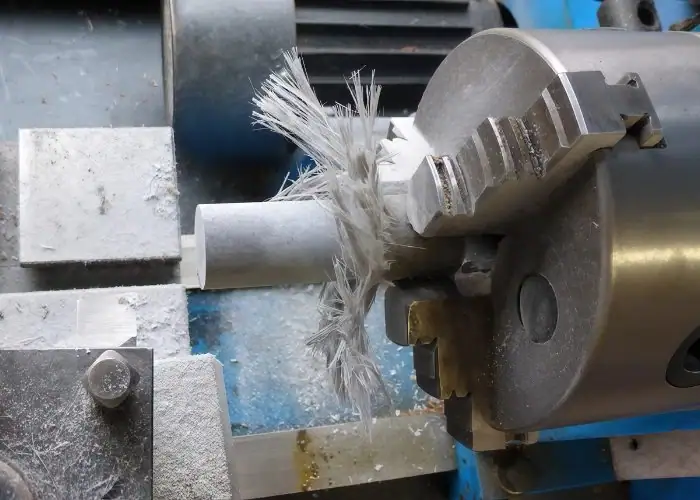
Common fiberglass machining methods include CNC milling, routing, 5-axis CNC machining, drilling, sawing, turning, grinding, sanding, waterjet cutting, and insert installation. The appropriate process depends on the material form, part geometry, required tolerance, edge quality, thickness, and production volume.
| Machining Method | Main Application | Key Consideration |
| CNC Milling And Routing | Profiles, pockets, slots, and contours | Control chipping and fiber pullout |
| 5-Axis CNC Machining | Curved surfaces, angled holes, and multi-face features | Reduce repeated setups |
| Drilling | Mounting holes, countersinks, and alignment holes | Prevent entry and exit delamination |
| Saw Cutting | Straight cutting and blank preparation | Use stable support and suitable blades |
| CNC Turning | Rods, tubes, sleeves, and cylindrical parts | Avoid excessive clamping pressure |
| Grinding And Sanding | Edge finishing and dimensional correction | Prevent resin overheating |
| Waterjet Cutting | Large panels and complex 2D profiles | Control taper and edge roughness |
| Tapping And Inserts | Threaded assembly features | Inserts are preferred for higher loads |
CNC Milling And Routing
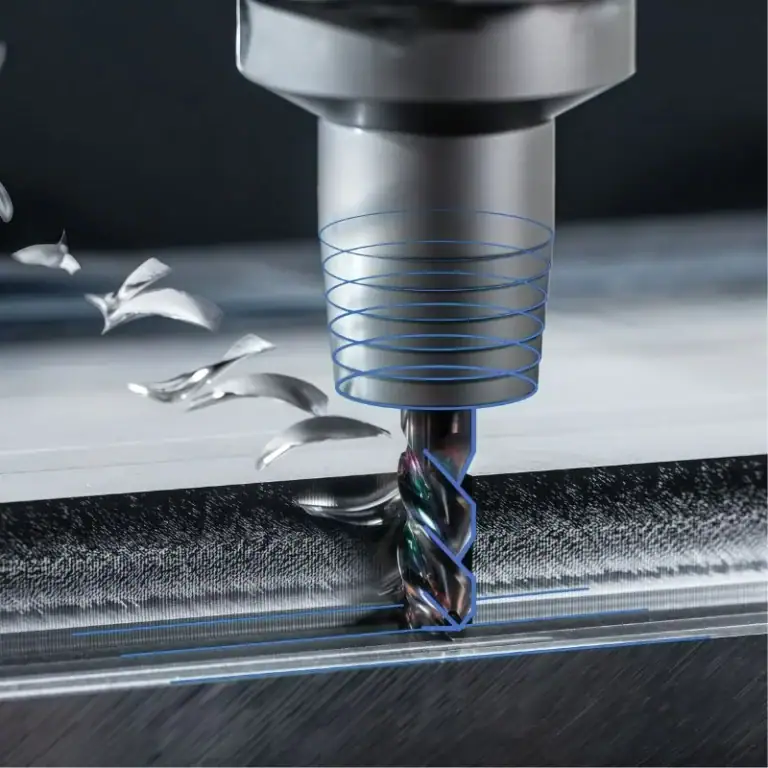
CNC milling and routing are commonly used to create profiles, pockets, slots, holes, openings, and edge features in fiberglass sheets, FR-4 laminates, structural panels, and molded components.
Carbide tools are suitable for prototypes and small batches, while diamond-coated or polycrystalline diamond tools provide longer tool life for repeated production. Thin panels should be fully supported to reduce vibration, cracking, and dimensional variation.
5-Axis CNC Machining
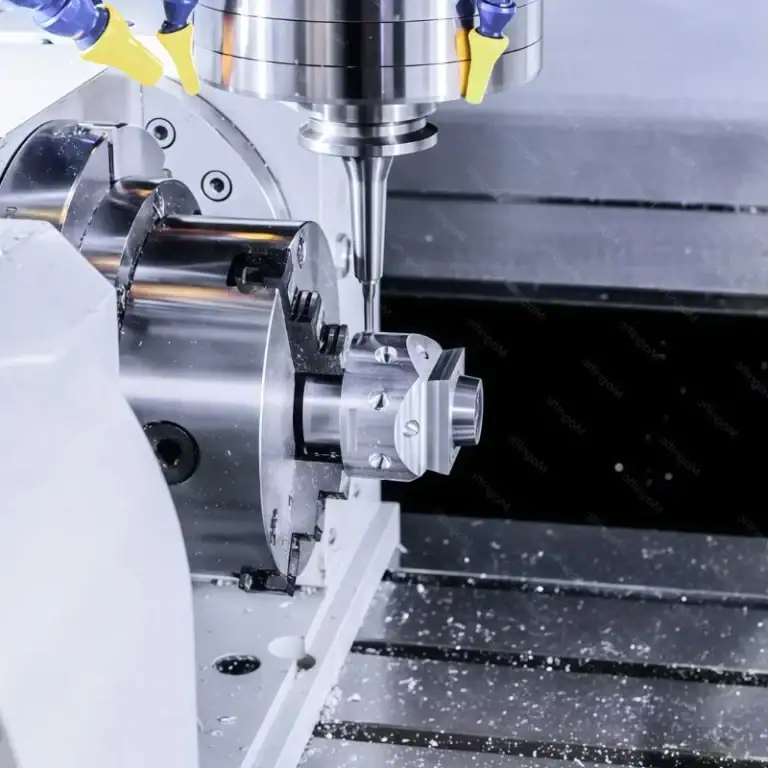
5-axis CNC machining is suitable for fiberglass parts with curved surfaces, angled holes, compound contours, irregular edges, and features located on several faces.
The machine can reach multiple surfaces in one setup, reducing repeated positioning and improving the relationship between holes, contours, and reference surfaces. It is often used for molded housings, aerospace panels, automotive parts, ducts, and composite tooling.
Custom fixtures, vacuum supports, or soft jaws may be required because fiberglass parts are often thin, curved, or irregular. Tool orientation should also be adjusted to reduce delamination when the cutter enters or exits the laminate.
Drilling
Drilling is used to produce mounting holes, alignment holes, countersinks, counterbores, and fastener locations in fiberglass components.
Sharp carbide or diamond drills, backing plates, rigid workholding, and controlled feed rates help reduce breakout and separation between laminate layers. Holes should also be positioned far enough from unsupported edges.
For joints exposed to repeated loading, designers may use bushings, washers, or bonded inserts to distribute the force and protect the surrounding composite.
Saw Cutting
Saw cutting is used to prepare fiberglass sheets, rods, tubes, and pultruded profiles before precision machining.
Carbide-tipped or diamond-grit blades generally provide better tool life and cleaner cuts. A high tooth count and stable material support help reduce vibration, splintering, and rough edges.
Sawing is efficient for straight cuts, but critical dimensions and datum surfaces may still require secondary CNC milling or grinding.
CNC Turning
CNC turning is suitable for fiberglass rods, tubes, sleeves, insulating spacers, and other cylindrical composite components.
Typical operations include facing, external diameter turning, internal boring, grooving, chamfering, and selected thread machining. Sharp tools and light cutting forces help reduce fiber pullout and resin tearing.
Thin tubes require controlled clamping pressure. Soft jaws, mandrels, or internal supports may be needed to prevent distortion and cracking.
Grinding And Sanding
Grinding and sanding are used to remove excess resin, smooth machined edges, prepare bonding surfaces, and correct local dimensions.
Diamond grinding wheels and suitable abrasive papers can produce controlled surfaces, but aggressive cutting may expose fibers or overheat the resin. Light passes and continuous tool movement are generally recommended.
After machining, exposed edges may require sealing, coating, or painting to reduce moisture entry, loose fibers, and long-term laminate damage.
Waterjet Cutting
Waterjet cutting provides a cold-cutting method for large fiberglass panels, thick laminates, gaskets, and complex two-dimensional profiles.
Because it does not create a significant heat-affected zone, it avoids resin burning and thermal discoloration. However, incorrect pressure or cutting speed may still cause edge taper, roughness, or localized delamination.
Waterjet cutting is often used for near-net-shape blanks, while precision holes and tight-tolerance features are completed with CNC milling or drilling.
Tapping And Insert Installation
Fiberglass can be tapped directly, but direct threads are normally suitable only for light loads and limited assembly cycles.
Bonded inserts, threaded bushings, helically wound inserts, or through-bolts usually provide more reliable connections for repeated assembly, vibration, or higher mechanical loads.
Insert holes must be machined accurately and cleaned before installation. Adhesive selection, surface preparation, and curing conditions also affect pull-out strength.
Is Laser Cutting Suitable For Fiberglass?
Laser cutting is generally not recommended for fiberglass composite material because the resin and glass fibers respond differently to heat.
The resin may burn, char, release fumes, or form a damaged edge, while the glass reinforcement may remain difficult to cut cleanly. Thermal damage may also reduce edge strength and affect later bonding or coating.
For most fiberglass components, CNC routing, 5-axis machining, waterjet cutting, diamond cutting, or abrasive machining provides better edge quality and lower thermal risk.
Common Fiberglass Forms
Common fiberglass forms include cloth, fabric, sheet, roving, mat, mesh, veil, insulation, and resin-bonded molded products. The selected form controls fiber direction, handling, resin flow, thickness, strength, surface finish, and manufacturing method.
Fiberglass Cloth
Fiberglass cloth is a woven reinforcement made by crossing glass-fiber yarns in controlled patterns. It provides predictable fiber orientation and is widely used in structural laminates.
Plain, twill, satin, and other weave styles change drapability, stability, surface appearance, and ease of conforming to complex molds. Tight weaves provide controlled surfaces, while more flexible fabrics conform better to curved geometry.
Fiberglass cloth is common in boat repair, aerospace panels, molds, sporting goods, composite tooling, electrical laminates, and custom fabricated parts.
Fiberglass Fabric
Fiberglass fabric is a broad term that includes woven cloth, stitched reinforcement, multiaxial fabric, and other organized textile forms. It is selected when load direction and laminate efficiency matter.
Multiaxial fabrics can place fibers at 0°, 90°, +45°, and −45° without traditional over-under weaving. This can improve structural efficiency and resin flow in large molded components.
The best fabric depends on load direction, curvature, molding method, thickness, resin viscosity, and surface-finish requirements.
Fiberglass Sheet
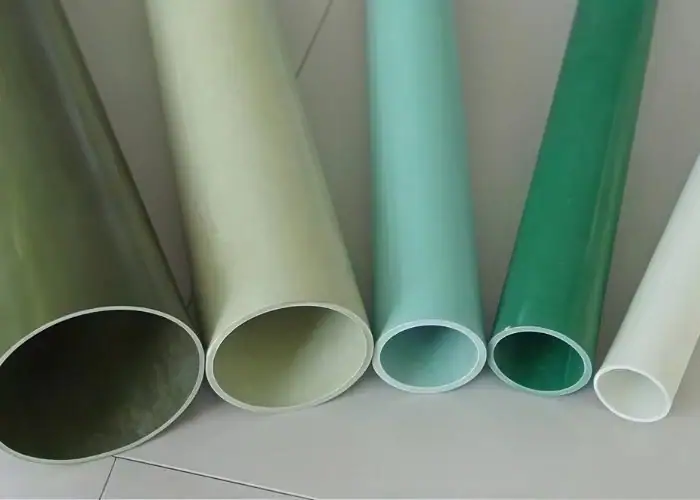
Fiberglass sheet is a cured laminate or molded panel made from glass reinforcement and resin. It may be flat, corrugated, textured, translucent, colored, electrically insulating, or corrosion resistant.
Common products include FR-4 electrical laminate, structural panels, machine guards, equipment covers, wall panels, grating components, insulating boards, and custom CNC-machined sheets.
Sheet selection should define thickness tolerance, flatness, fiber architecture, resin type, flame rating, color, surface finish, and machining requirements.
Fiberglass Roving
Fiberglass roving is a bundle of continuous glass filaments grouped without twisting or with minimal twist. It is used as feedstock for weaving, chopping, spraying, pultrusion, and filament winding.
Direct roving feeds processes such as pultrusion and winding, while assembled roving combines several strands to support specific manufacturing operations.
Roving selection affects wet-out, processing speed, strand integrity, compatibility with resin, mechanical performance, and finished-part appearance.
Fiberglass Resin Systems
Fiberglass resin systems bind the fibers into a solid composite and determine much of the part’s chemical, thermal, impact, and environmental performance. The three common systems are polyester, vinyl ester, and epoxy.
Polyester is economical and widely used in general molded products. Vinyl ester provides better chemical and moisture resistance. Epoxy generally offers stronger adhesion, lower shrinkage, and improved structural performance.
Resin selection should also consider cure speed, tooling, emissions, viscosity, flame requirements, service temperature, repairability, and production volume.
Advantages And Disadvantages Of Fiberglass
The main advantages of fiberglass are low weight, useful strength, corrosion resistance, electrical insulation, design flexibility, and competitive cost. Its main disadvantages are anisotropic behavior, machining dust, brittle edges, recycling difficulty, and dependence on resin and laminate quality.
| Advantages | Disadvantages |
| High strength-to-weight ratio | Properties depend on fiber direction |
| Does not rust like steel | Cut edges can chip or delaminate |
| Good electrical insulation | Dust control is required during machining |
| Can form complex molded shapes | Tight tolerances may be challenging |
| Low thermal conductivity | Resin can limit heat resistance |
| Good moisture resistance | Repair and inspection may be difficult |
| Lower tooling cost for some processes | Recycling is harder than for metals |
| Broad range of grades and forms | Surface quality depends on mold and process |
Advantages
Fiberglass provides a high strength-to-weight ratio, allowing manufacturers to reduce mass without relying entirely on expensive carbon fiber or titanium. It is especially attractive for panels, covers, tanks, pipes, blades, enclosures, and large molded structures.
Its resistance to rust lowers maintenance in wet, outdoor, marine, and chemical environments. Fiberglass can also combine structural performance with electrical insulation and low thermal conductivity.
Composite molding gives designers more freedom to integrate ribs, curves, bosses, channels, textures, and color into one component. This can reduce assembly count when the tooling and production volume justify the design.
Limitations
Fiberglass is limited by directional properties, brittle machining behavior, variable laminate quality, and difficult end-of-life separation. A part may be strong along the fiber direction but weaker across layers or around cut edges.
Voids, dry fibers, resin-rich regions, poor cure, wrinkles, and contamination can reduce performance. Quality control must therefore address both dimensions and internal laminate condition.
Fiberglass is also abrasive to cutting tools. Drilling, milling, sawing, or grinding produces fine dust and can cause delamination, splintering, or rapid tool wear without proper process control.
Common Industrial Applications Of Fiberglass
Fiberglass is used for insulation, structural composites, corrosion-resistant equipment, electrical components, transportation parts, renewable-energy systems, and consumer products. Its broad use comes from the ability to combine low weight, strength, insulation, corrosion resistance, and moldability.
Construction And Building Materials
Fiberglass is used in construction for thermal insulation, roofing, wall panels, reinforcement mesh, concrete reinforcement, doors, windows, grating, ladders, and architectural components.
Fiberglass insulation traps air between fine fibers and reduces heat transfer through walls, ceilings, roofs, and attics. Structural GRP products provide corrosion resistance and lower weight than steel in selected environments.
Building applications may require fire, smoke, thermal, structural, weathering, and code compliance. The insulation product and structural composite should not be treated as the same material.
Automotive Components
Fiberglass is used in automotive components for body panels, covers, hoods, spoilers, interior structures, battery enclosures, truck panels, and low-volume specialty bodies.
The material reduces weight compared with steel while allowing large molded shapes and relatively economical tooling. It is particularly useful for prototypes, performance vehicles, commercial vehicles, and parts with lower annual volume.
Designers must consider crash performance, heat, vibration, UV exposure, paint adhesion, repair, attachment points, and production cycle time.
Marine Equipment
Fiberglass is used in marine equipment because it is lightweight, moldable, and resistant to water and corrosion. Boat hulls, decks, hatches, consoles, tanks, covers, and structural panels are common examples.
Marine laminates often use polyester or vinyl ester resin with gel coat for appearance and water resistance. Higher-performance structures may use epoxy or sandwich cores to increase stiffness without excessive weight.
Water resistance depends on resin quality, cure, surface sealing, damage control, and long-term maintenance. Poorly protected laminates may still absorb moisture or develop blistering and delamination.
Aerospace Components
Fiberglass is used in aerospace components where electrical transparency, insulation, moderate structural performance, and lower material cost than carbon fiber are valuable.
Applications include radomes, fairings, antenna covers, interior panels, ducts, electrical parts, and secondary structures. S-glass or specialized dielectric glass may be selected for demanding applications.
Aerospace parts require controlled materials, traceability, approved processing, nondestructive inspection, and strict dimensional and surface requirements.
Wind Energy
Fiberglass is used in wind energy primarily as structural reinforcement in turbine blades. Its strength-to-weight ratio allows large blades to resist bending, fatigue, vibration, and weather loads without the mass of solid metal structures.
Blade structures commonly combine glass fabrics, epoxy or polyester resin, adhesives, protective coatings, and lightweight core materials. Fiber orientation is designed around the main load paths.
Manufacturing quality is critical because voids, bonding defects, wrinkles, and poor resin distribution may reduce fatigue life. End-of-life recycling is also a major challenge for large composite blades.
Pipes And Storage Tanks
Fiberglass is used in pipes and storage tanks because it resists corrosion and can be designed for specific chemical, pressure, and temperature conditions. Filament winding and contact molding are common production methods.
Applications include water treatment, chemical processing, wastewater, oil and gas, scrubbers, ducts, underground tanks, and industrial vessels.
The resin, corrosion barrier, winding angle, wall thickness, joints, and inspection plan must be matched to the fluid, pressure, temperature, and service life.
Electrical And Electronic Insulation
Fiberglass is used for electrical and electronic insulation because it is non-conductive and dimensionally stable. Common applications include circuit boards, terminal components, insulating sheets, cable supports, enclosures, transformer parts, and switchgear components.
FR-4 is a familiar example of glass fabric combined with flame-resistant epoxy resin. It is widely used for printed circuit board substrates and precision electrical laminates.
Machined electrical parts may require controlled dielectric strength, creepage distance, hole position, burr removal, cleanliness, and flame certification.
Consumer Products
Fiberglass is used in consumer products such as sports equipment, helmets, ladders, bathtubs, pools, furniture, cases, decorative panels, and recreational products.
It allows manufacturers to create smooth, colored, lightweight shapes without machining every surface from solid stock. Molded parts can also include textures, logos, ribs, and mounting features.
Consumer products must consider safe edges, surface durability, UV resistance, odor, appearance, repair, and contact with users.
Fiberglass In CNC Manufacturing
Fiberglass in CNC manufacturing is usually machined after molding or supplied as a cured sheet, tube, rod, or laminate. CNC operations create the final geometry, holes, slots, edge profiles, mounting features, and assembly interfaces that cannot be produced accurately in the mold.
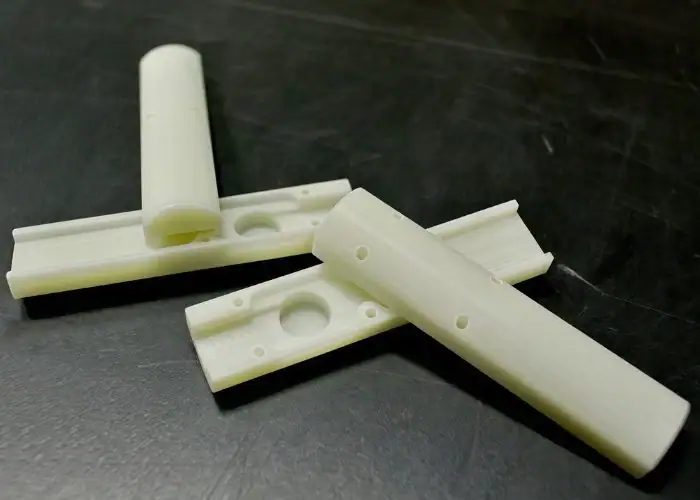
CNC Machining Fiberglass
CNC machining fiberglass includes milling, routing, drilling, boring, sawing, trimming, countersinking, engraving, and 5-axis contour machining. The selected process depends on the laminate, thickness, feature geometry, tolerance, and surface requirement.
Carbide tools may work for limited production, while diamond-coated or polycrystalline diamond tools provide longer life in abrasive glass-filled materials. Sharp geometry helps cut fibers cleanly instead of pushing or tearing them.
Feed, spindle speed, depth of cut, toolpath direction, and workholding must be balanced. Excessive pressure can cause delamination, while rubbing increases heat, resin smearing, and tool wear.
Design Considerations
Fiberglass design should account for fiber direction, edge distance, hole support, wall thickness, laminate stacking, and realistic tolerances. Metal-design rules cannot always be transferred directly to composites.
Holes near unsupported edges can cause cracking or breakout. Sharp internal corners create stress concentrations, and thin unsupported walls may vibrate or chip during machining.
Designers should identify critical datums, mating surfaces, electrical clearances, insert locations, and load paths. Tolerances should be tightened only where they affect function.
Surface Finishing
Fiberglass surface finishing may include sanding, polishing, sealing, painting, coating, gel coating, edge sealing, and controlled deburring. The required finish depends on appearance, chemical exposure, electrical use, and contact with users.
Machined edges may expose fibers and resin layers, so sealing may be required to reduce moisture entry, fiber release, or surface damage. Cosmetic surfaces should be protected from clamps and chips during production.
For high-quality visible parts, surface finish should be planned during molding. CNC machining can refine local features, but it cannot always remove deep porosity, print-through, or laminate defects economically.
Can Fiberglass Be Recycled?
Fiberglass can be recycled, but separating glass fibers from cured thermoset resin is more difficult than recycling metals or simple thermoplastics. Many existing products are therefore downcycled, mechanically processed, repurposed, used in cement production, or disposed of after service.
Recycling Process
Fiberglass recycling processes include mechanical grinding, thermal processing, chemical separation, cement-kiln recovery, and direct reuse of larger components. Each method produces different material quality and environmental impact.
Mechanical recycling turns waste into smaller particles or fibers for fillers, panels, cement products, or lower-performance composites. It is relatively simple but usually reduces reinforcement performance.
Thermal and chemical methods can remove or break down resin and recover fibers, but heat and chemical exposure may reduce fiber strength. These processes also require investment, energy, and reliable waste volume.
Sustainability Benefits
Fiberglass sustainability benefits include long service life, corrosion resistance, reduced maintenance, lightweight transportation, and the potential to replace heavier materials. These advantages can lower resource use during the product’s operating life.
However, manufacturing energy, resin chemistry, repairability, and end-of-life handling must also be considered. A durable product is not automatically sustainable if it cannot be collected or recovered responsibly.
Better design can improve circularity by reducing mixed materials, using removable fasteners, documenting resin systems, supporting repair, and considering end-of-life processing before production begins.
FAQs
What Exactly Is Fiberglass Made Of?
Fiberglass is made from silica sand, limestone, soda ash, alumina, and boron compounds. When explaining what is fiberglass made of, these materials are melted at about 1,400–1,600°C and drawn into filaments roughly 5–20µm thick. For structural products, the fibers are combined with polyester, vinyl ester, or epoxy resin to create a fiberglass composite material.
What Is Fiberglass Insulation?
Fiberglass insulation is a thermal and acoustic material made from fine glass fibers that trap air and slow heat transfer. It is available as batts, rolls, boards, and loose fill. When asking where is fiberglass found in buildings, it is commonly installed in walls, attics, ceilings, floors, and duct systems.
What Is Fiberglass Used For In Houses?
When considering what is fiberglass used for in houses, its main applications include wall and attic insulation, sound control, roofing reinforcement, ducts, windows, doors, panels, and bathroom products. It helps reduce heat loss and noise, but gaps, compression, moisture, or poor installation can significantly lower its rated thermal performance.
Is Fiberglass Dangerous To Inhale?
Fiberglass dust can irritate the nose, throat, eyes, skin, and respiratory system during cutting, sanding, installation, or removal. Dust may come from loose insulation or a machined fiberglass composite material. OSHA exposure limits are 5mg/m³ for respirable dust and 15mg/m³ for total dust. Ventilation, dust extraction, eye protection, gloves, and suitable respirators are recommended.
Conclusion
Fiberglass is a versatile glass-fiber material used either as insulation or as reinforcement in resin-based composites. Its main value comes from low weight, useful strength, corrosion resistance, electrical insulation, thermal performance, and design flexibility. Selecting the right glass type, resin, fiber form, manufacturing process, laminate direction, and machining strategy is essential because fiberglass performance changes significantly with composition and structure.
At TiRapid, we provide precision CNC machining services for custom metal, plastic, and composite components. We support prototypes and low-volume parts requiring CNC milling, routing, drilling, 5-axis machining, controlled edge quality, dimensional inspection, and manufacturability review, helping customers convert fiberglass and other engineering materials into reliable production-ready components.