Aluminium sheet is a flat-rolled aluminium product valued for its low weight, corrosion resistance, formability, and wide range of alloys and tempers. It is commonly used for fabrication, machining, panels, enclosures, and other industrial parts.
This guide explains what aluminium sheet is, its common thicknesses, grades, types, manufacturing methods, uses, and key factors for material selection.
What Is Aluminium Sheet?
Aluminium sheet is a flat-rolled aluminium product supplied in different thicknesses, alloys, and tempers. It can be cut, bent, formed, welded, machined, anodized, or painted for different applications.
The term “sheet” describes the product form, not a specific alloy. For example, 1050, 5052, and 6061 can all be supplied as sheet, but their strength, corrosion resistance, formability, and machinability differ.
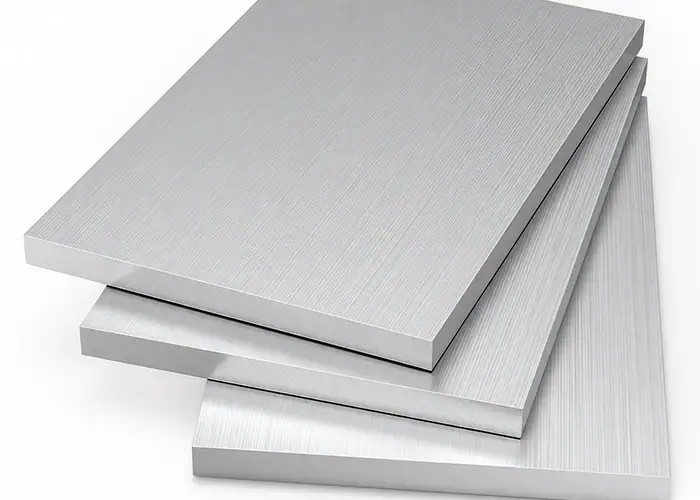
Where Sheet Fits Among Flat Aluminium Products
Flat aluminium products range from very thin foil to sheet and then heavier plate. Foil is used when extreme thinness and flexibility are required, while plate is selected when greater section thickness, rigidity, machining stock, or structural capacity is needed. Sheet occupies the broad middle range used for panels, covers, housings, formed parts, brackets, skins, guards, and many fabricated assemblies.
A commonly used commercial rule places sheet below roughly 6 mm and plate above it, but this should not be treated as a universal engineering definition. Standards and stockholders may classify the same thickness differently. For procurement, the safest approach is to specify alloy, temper, exact thickness, dimensional tolerance, surface condition, and any applicable material standard instead of relying only on the words sheet or plate.
Key Properties Of Aluminium Sheet
The main attraction of aluminium sheet is its combination of low weight and useful mechanical performance. Aluminium has a density of about one-third that of steel, so a sheet-metal component can often reduce mass while maintaining adequate stiffness when geometry, ribs, bends, or formed features are designed correctly.
Aluminium also develops a natural oxide film that provides useful corrosion resistance. Many alloys can be anodized, painted, powder coated, or otherwise finished when additional protection or appearance is required. Depending on grade and temper, sheet can also offer good formability, weldability, machinability, thermal conductivity, electrical conductivity, and recyclability.
These advantages are not identical in every alloy. High-strength grades may be less formable, some heat-treatable alloys require more care during welding, and a highly cosmetic application may need tighter surface-control requirements than an internal machine guard. Material selection should therefore start with the part function and manufacturing route.
How Is Aluminium Sheet Made?
Aluminium sheet manufacturing is a sequence of casting, rolling, thermal treatment, and finishing operations. The exact route depends on alloy, final thickness, temper, surface requirement, and whether the product will be sold as coil or cut sheet. For buyers and engineers, the most important stages are those that control thickness, flatness, mechanical properties, and surface condition.
Casting, Hot Rolling, And Cold Rolling
Primary or recycled aluminium is melted and adjusted to the required alloy chemistry before being cast into large slabs or other rolling feedstock. The cast material is prepared and then hot rolled, where repeated passes reduce thickness while the metal remains at elevated temperature. Hot rolling creates the intermediate product needed for further reduction and helps establish the internal structure of the material.
Cold rolling is used when thinner gauges, tighter thickness control, improved flatness, or a smoother surface are required. The material passes through rollers at or near room temperature, which reduces thickness and increases strain hardening. Depending on the specification, the sheet may then be levelled, slit, cut to length, trimmed, or supplied as coil.
For manufacturing, rolling direction matters. Mechanical properties and forming behavior can be direction-dependent, especially in some alloys and tempers. Critical bent or machined parts may therefore require attention to grain direction, bend orientation, and how blanks are nested from the sheet.
Annealing, Temper, And Surface Finishing
After rolling, thermal treatments are used to control strength and ductility. Annealed O-temper sheet is relatively soft and formable. Non-heat-treatable alloys may use H tempers created by strain hardening and partial annealing, while heat-treatable alloys can use T tempers produced through solution heat treatment, quenching, aging, and related processing steps.
Temper can be as important as alloy number. For example, a grade selected for bending may perform very differently in a harder temper than in a softer condition. The drawing and purchase specification should therefore call out both alloy and temper when the part depends on strength, forming radius, springback, or post-machining stability.
Surface finishing may include mill finish, brushing, polishing, anodizing, painting, powder coating, chemical conversion coating, or protective film. The choice depends on corrosion exposure, wear, appearance, electrical contact, bonding, and whether the surface will remain visible after fabrication.
Aluminium Sheet Thickness And Standard Sizes
Aluminium sheet thickness is one of the first dimensions engineers and buyers must define. Thickness affects weight, stiffness, forming load, minimum bend radius, fastener performance, vibration, machining stability, heat transfer, and cost. A small change in gauge can therefore alter both part performance and manufacturing method.
Common Aluminium Sheet Thicknesses
Common stock ranges include thin gauges below 1 mm and general-purpose sheets at 1 mm, 1.5 mm, 2 mm, 3 mm, 4 mm, and other metric or imperial sizes. A 1mm aluminium sheet is often chosen for lightweight covers, panels, small enclosures, and formed components where high rigidity is not required. Thicknesses around 2-3 mm are common for more robust housings, guards, brackets, and fabricated panels.
As thickness increases, a flat sheet generally becomes stiffer and more resistant to denting, but weight and material cost also increase. Thicker stock may demand larger bending forces, wider tooling, greater minimum radii, or a different fabrication route. Very thin sheet may require special handling to avoid dents, waviness, or distortion.
For CNC-machined parts made from sheet, thickness should also include machining allowance when faces need to be cleaned up. If a finished part must hold tight flatness or thickness tolerances, starting with stock too close to final size may leave insufficient material for correction.
| Typical Thickness Range | Common Use | Manufacturing Consideration |
| Below 1 mm | Light covers, liners, formed skins | Easy to form but sensitive to dents, waviness, and heat distortion |
| 1-2 mm | Enclosures, panels, light brackets | Good balance of low weight and fabricability |
| 2-3 mm | Machine guards, housings, structural panels | Higher stiffness, common for industrial fabrication |
| 3-6 mm | Heavy panels, brackets, machined sheet parts | More rigid, bending and machining loads increase |
4 × 8 And Other Common Sheet Sizes
One of the best-known commercial formats is the 4 × 8 aluminium sheet, approximately 1219 × 2438 mm. In markets using an 8 × 4 description, the same nominal dimensions may be written in reverse order. Metric stockholders commonly offer sizes such as 1000 × 2000 mm, 1250 × 2500 mm, and 1500 × 3000 mm, although availability varies by grade, temper, thickness, and region.
Standard stock size matters because it affects nesting efficiency and scrap. A part that fits efficiently on a standard sheet can use less material and require fewer handling operations than a design that forces the supplier to buy an oversized or uncommon format. For large production quantities, coil-fed processing may be more economical than individual sheets.
How To Choose Aluminium Sheet Thickness
Thickness should be selected from the final part requirements rather than copied from a previous design. Load, span, panel size, allowable deflection, vibration, fastening method, bend geometry, weld distortion, corrosion allowance, machining stock, and total weight can all influence the decision.
A thin sheet can often be made much stiffer by adding flanges, beads, ribs, hems, or formed channels instead of simply increasing material thickness. This is especially useful in enclosures and machine covers where stiffness is needed but mass should remain low.
For parts that will be machined after cutting or forming, discuss flatness and stress with the manufacturer. Removing material from one side of rolled sheet can release residual stress and cause distortion, especially on large, thin parts with pockets or asymmetric geometry.
Common Aluminium Sheet Grades
Aluminium sheet grades are identified by alloy series and a specific alloy designation. Different series change the balance of strength, corrosion resistance, conductivity, weldability, formability, and heat-treatability. The best grade is the one that satisfies the part environment and manufacturing process without adding unnecessary cost or difficulty.
| Grade | Main Characteristics | Typical Applications |
| 1050 / 1100 | Very high aluminium content, soft and conductive | General forming, reflectors, electrical and thermal applications |
| 3003 | Good formability and corrosion resistance with moderate strength | General sheet metal, housings, roofing, heat-transfer parts |
| 5052 | Good corrosion resistance, weldability, and useful strength | Industrial enclosures, marine-related fabrication, covers, brackets |
| 5251 | Good forming and corrosion performance | General fabrication and architectural sheet work |
| 6061 | Heat-treatable, stronger, good machinability | Machined panels, structural components, fixtures, equipment parts |
| 6082 | Heat-treatable structural alloy, common in Europe | Structural and machined applications |
| 7075 | Very high strength, lower formability than common sheet alloys | High-load aerospace and specialized engineering parts |
1000 And 3000 Series Sheet
1000-series sheet, including grades such as 1050 and 1100, contains a high proportion of aluminium and is valued for formability, corrosion resistance, and thermal or electrical conductivity. It is useful when extreme structural strength is not the primary requirement.
3003 aluminium sheet adds manganese to improve strength while retaining good formability and corrosion performance. It is commonly used for general sheet-metal work, equipment covers, roofing-related products, heat-transfer components, and fabricated parts that do not require the higher strength of heat-treatable alloys.
These grades are often practical for bending and forming, but the selected temper still influences hardness and bendability. A manufacturing drawing should identify temper instead of assuming every sheet of the same alloy will form identically.
5000 Series Sheet
5000-series aluminium uses magnesium as a major alloying element. Grades such as 5052 are popular in fabricated sheet-metal components because they combine corrosion resistance, weldability, useful strength, and good forming behavior. This makes 5052 a common choice for industrial enclosures, covers, brackets, cabinets, and parts exposed to moisture.
5251 is another 5000-series grade used in sheet applications, especially in European and UK markets. The exact grade choice depends on required strength, stock availability, forming severity, welding, surface finish, and customer specification.
For formed parts, the correct temper and bend orientation should be checked before production. A grade known for good formability can still crack if supplied too hard or bent below an appropriate radius.
6000 And 7000 Series Sheet
6061 and 6082 are heat-treatable aluminium alloys used when higher strength and machinability are important. They can be practical for machined panels, structural brackets, fixtures, equipment components, and parts that combine profile machining with drilled, tapped, or pocketed features.
7075 is selected when very high strength-to-weight performance is required, especially in aerospace and high-load engineering applications. It is not normally the first choice for deep forming, and its corrosion and stress-corrosion behavior depends strongly on temper and service conditions.
High-strength sheet should never be chosen from alloy number alone. Temper, product thickness, specification, grain direction, machining sequence, and any corrosion or fatigue requirement need to be considered together.
Types Of Aluminium Sheet
Beyond alloy grade, aluminium sheet is supplied in different physical and surface forms. These forms are created to solve practical needs such as airflow, slip resistance, appearance, wear, weather resistance, or easier installation.
Plain, Perforated, And Patterned Sheet
Plain sheet has a flat surface and is the most flexible starting point for cutting, bending, punching, welding, machining, and finishing. It is used for panels, covers, housings, brackets, signs, machine guards, and general fabrication.
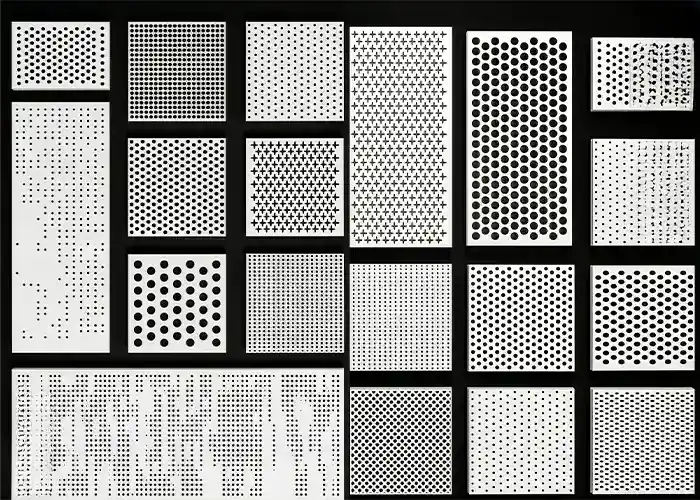
Perforated aluminium sheet contains repeated holes or custom patterns that can reduce weight, allow ventilation, control light, support acoustic treatments, or create a decorative surface. Hole size, pitch, open area, edge margin, and sheet thickness must be coordinated so the part remains strong enough after punching.
Patterned products include tread or checker sheet for anti-slip surfaces and embossed sheet for decorative or functional texture. These products are often chosen for floors, steps, vehicle surfaces, interior panels, and protective applications.
Anodized, Coated, And Decorative Sheet
Anodized aluminium sheet has an electrochemically thickened oxide layer that can improve corrosion resistance, wear performance, and appearance. Anodizing can also provide a consistent metallic finish when alloy, surface condition, and process controls are suitable.
Painted and coil-coated sheets are used when color consistency and outdoor durability are important. Powder coating is common on fabricated parts, while pre-coated sheet can be efficient for high-volume panels when the forming process is compatible with the coating.
Decorative products may use brushed, polished, embossed, or wood-grain finishes. The visible surface should be protected during cutting and forming because scratches, clamp marks, and handling damage can become rejection issues even when dimensions are correct.
How To Cut And Fabricate Aluminium Sheet
Aluminium sheet can be processed by many manufacturing methods. The best method depends on alloy, temper, thickness, tolerance, edge quality, heat sensitivity, quantity, geometry, and whether secondary machining or finishing will follow.
How To Cut Aluminium Sheet Metal
Straight cuts in thin sheet can be produced by shearing or guillotine cutting. Saw cutting is useful for blanks and heavier sections. Laser cutting offers high speed and programmable geometry, while waterjet cutting avoids a heat-affected zone and is useful for thicker material or heat-sensitive requirements. Punching is efficient for repeated holes, slots, and production sheet-metal features.
CNC routing or milling is appropriate when a part requires tighter edge tolerances, pockets, counterbores, threads, precision profiles, or features that are difficult to create with conventional sheet-metal cutting. The sheet must be supported correctly to prevent vibration and movement during machining.
Cut quality should be specified according to the next process. A cosmetic exposed edge may require deburring or finishing, while an edge that will later be machined can tolerate a rougher blanking process. Choosing excessive edge quality too early can add cost without improving the final part.
Bending, Forming, And Welding
Press-brake bending is widely used for enclosures, brackets, guards, and structural sheet parts. Bend radius, grain direction, temper, thickness, and tooling all influence cracking and springback. Softer tempers generally tolerate tighter forming, while stronger or harder conditions may need larger radii.
Stamping, roll forming, deep drawing, and related processes are used when geometry and quantity justify dedicated tooling. These methods can create ribs, beads, flanges, louvers, and complex shells that increase stiffness without adding much material.
MIG and TIG welding are common for many aluminium sheet alloys, especially selected 5000- and 6000-series materials. Heat input can cause distortion in thin panels, so weld sequence, fixturing, joint design, filler selection, and post-weld finishing should be considered during design.
CNC Machining Aluminium Sheet
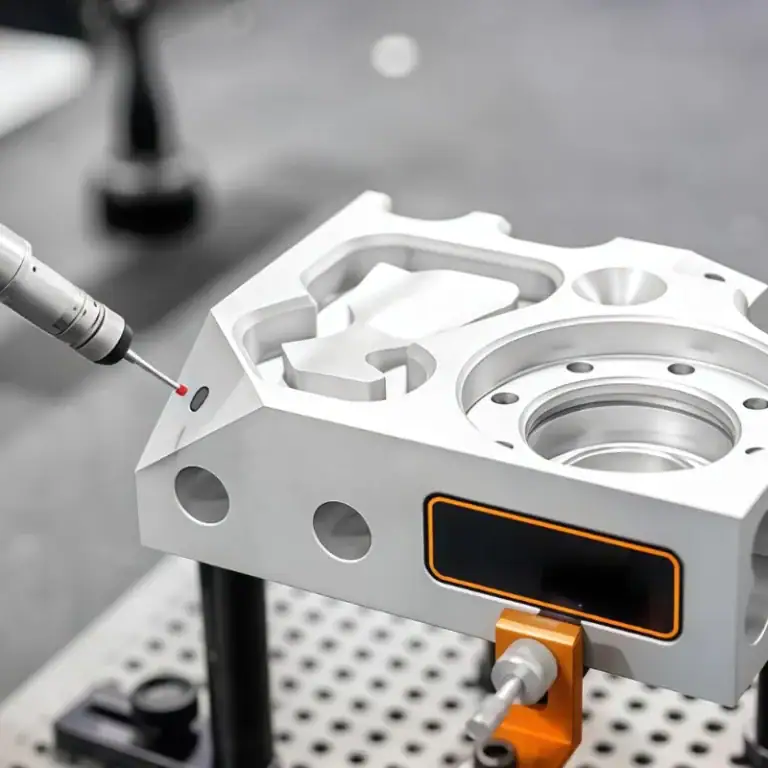
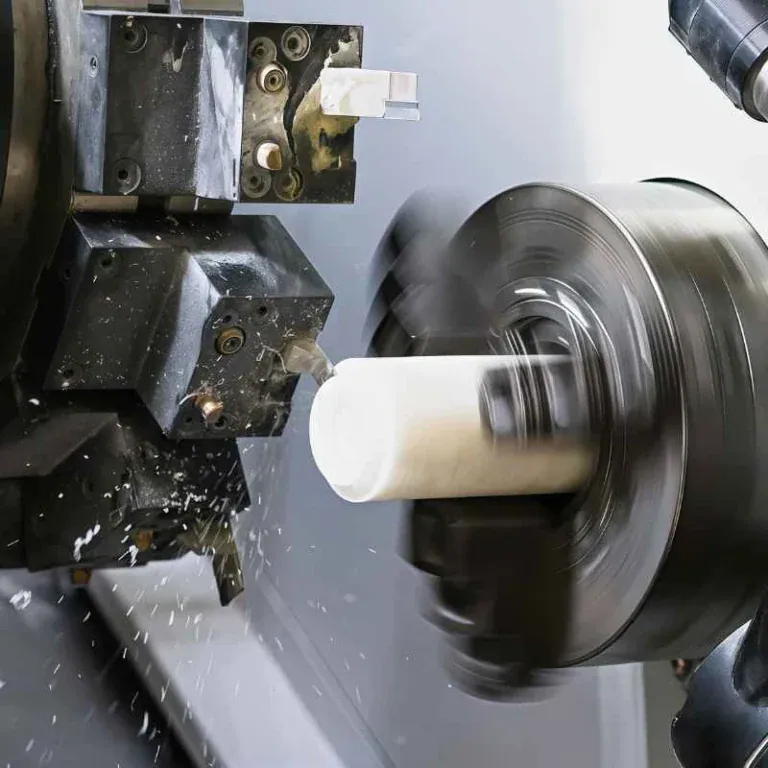
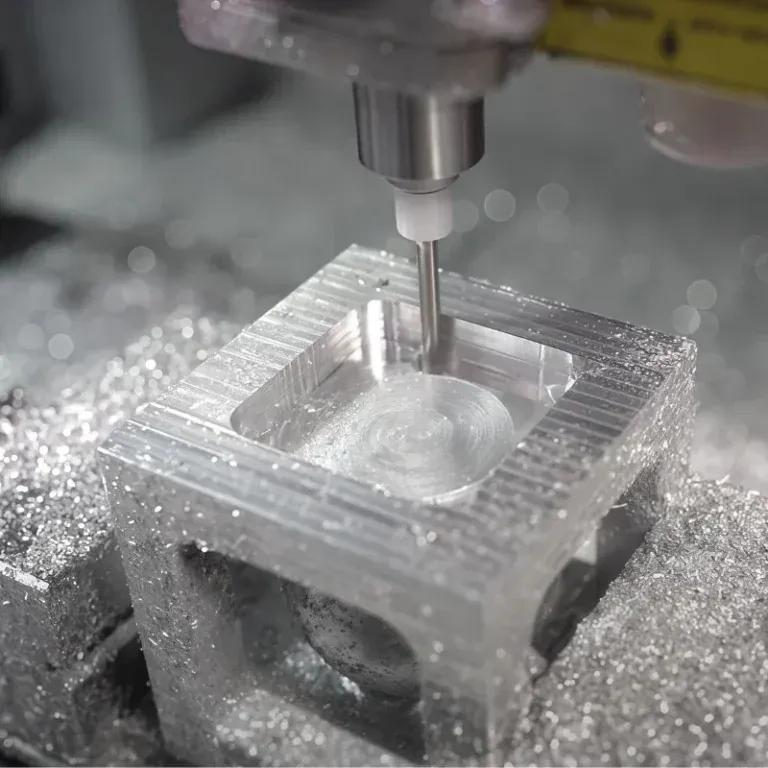
CNC machining is often combined with sheet-metal fabrication when a part needs features that cannot be held accurately by cutting and bending alone. Typical operations include precision profiling, pocketing, drilling, tapping, countersinking, spot-facing, and machining local datum surfaces.
Thin aluminium sheet is difficult to machine if it is poorly supported. Vacuum fixtures, sacrificial plates, soft jaws, custom clamps, or adhesive workholding may be used to distribute holding force and reduce vibration. The machining sequence should avoid releasing too much material from one side before the part is stable.
Large thin panels can move after pockets are machined because rolling and prior processing leave residual stress in the stock. For tight flatness requirements, a manufacturer may adjust stock thickness, roughing strategy, workholding, intermediate stress relief, or inspection setup before committing to production.
What Is Aluminium Sheet Used For?
Aluminium sheet uses span transportation, aerospace, industrial equipment, electronics, automation, construction, architectural products, and consumer goods. Its value comes from combining low weight with corrosion resistance and manufacturing flexibility, but the exact grade and thickness should match the application.
Automotive And Aerospace
Automotive applications use aluminium sheet for lightweight body and closure panels, shields, covers, brackets, battery-related structures, interior components, and other fabricated parts. Lower mass can support vehicle efficiency and performance, while corrosion resistance is useful for exposed components.
Aerospace uses include skins, access panels, brackets, covers, interior structures, and selected high-strength components. Aircraft applications require careful control of alloy, temper, grain direction, fatigue behavior, corrosion resistance, traceability, and inspection, so material should always follow the drawing and governing specification.
Industrial Equipment, Electronics, And Automation
Industrial equipment commonly uses aluminium sheet for control cabinets, machine covers, guards, mounting plates, access panels, brackets, and protective enclosures. Formed sheet can provide high stiffness at low weight, while cutouts and machined features allow controls, connectors, sensors, and fasteners to be integrated efficiently.
Electronics and automation equipment use aluminium for housings, panels, chassis parts, thermal-management components, robot covers, fixture plates, and instrument enclosures. Anodizing or coating can provide appearance and surface protection, while CNC machining can add precision interfaces after forming.
Construction, Roofing, And Architectural Products
Aluminium roofing sheet, cladding, gutters, soffits, ceilings, facades, door panels, decorative screens, and architectural trims benefit from low weight and corrosion resistance. Painted, anodized, perforated, and patterned surfaces allow designers to combine weather performance with appearance.
Architectural sheet selection also depends on fire requirements, coating durability, panel flatness, thermal expansion, fastening, wind load, and local building codes. A decorative finish should not be evaluated separately from the structural support and installation method.
Consumer, Kitchen, And General Products
Aluminium sheet appears in appliances, kitchen equipment, cookware-related parts, furniture, signs, storage products, lighting, packaging equipment, and many consumer housings. The specific alloy depends on whether the priority is forming, food-contact suitability, appearance, thermal conductivity, corrosion resistance, or mechanical strength.
For visible consumer products, surface consistency may be as important as dimensional accuracy. Protective film, controlled grain direction, brushing, anodizing, or coating should be included in the manufacturing plan before cutting and bending.
How To Choose The Right Aluminium Sheet
Selecting aluminium sheet is a multi-variable engineering decision. The right material is not simply the strongest grade or the lowest-cost stock. The sheet has to survive manufacturing, meet the mechanical and environmental requirements of the final part, and remain economical at the required production volume.
Choose The Right Grade And Temper
Start with required strength, corrosion exposure, forming severity, weldability, machinability, conductivity, and surface finish. Then select an alloy family that fits those needs. A general formed enclosure may favor 5052, while a machined structural panel may favor 6061 or 6082, and a high-strength aerospace part may require a 7000-series alloy under a controlled specification.
Temper should be confirmed at the same time. Two sheets with the same alloy number but different tempers can behave differently during bending, machining, and service. For critical work, request material certification and ensure the purchase order matches the drawing.
Match Thickness And Size To The Part
Choose thickness from load and manufacturing requirements, then check whether the selected grade is readily available in that thickness and standard sheet size. Unusual combinations may increase lead time, minimum order quantity, scrap, or material cost.
Nesting should also be considered early. A small design change can sometimes allow more parts to fit on a standard 4 × 8 sheet or metric equivalent, lowering scrap and reducing the number of sheets required. For production, this can be more valuable than a small difference in material price per kilogram.
Consider Surface Finish And Manufacturing Cost
The finished-part cost includes more than raw aluminium. Alloy premium, temper, sheet thickness, sheet size, cutting, bending, welding, machining, inspection, deburring, coating, packaging, and quantity all contribute. This is why an aluminium sheet 8×4 price found online cannot reliably predict the cost of a finished component.
Standard grades and stock sizes are usually easier to source than uncommon combinations. For prototypes and low-volume manufacturing, selecting readily available sheet can shorten lead time and avoid minimum-order penalties. For high-volume products, custom coil width, progressive tooling, or optimized blank size may reduce unit cost.
The best purchasing decision comes from comparing total manufactured cost and technical risk rather than raw sheet price alone. A slightly more expensive alloy may be cheaper overall if it bends reliably, machines with less distortion, finishes consistently, and reduces inspection or rework.
FAQs
How To Calculate Aluminium Sheet Weight?
Calculate aluminium sheet weight by multiplying length × width × thickness × density. Aluminium density is approximately 2,700 kg/m³, so:
Weight (kg) = Length (m) × Width (m) × Thickness (mm) × 2.7
For example, a 2 m × 1 m × 3 mm aluminium sheet weighs about 16.2 kg. Actual weight can vary slightly depending on the alloy.
How To Join Aluminium Sheets?
Aluminium sheets can be joined by riveting, bolting, welding, adhesive bonding, or mechanical fastening. The best method depends on sheet thickness, alloy, load, appearance, and whether the joint needs to be permanent or removable. TIG and MIG welding are common for suitable aluminium alloys, while rivets and bolts are widely used for sheet-metal assemblies.
Does Aluminium Sheet Reflect Heat?
Yes. Aluminium sheet can reflect a significant amount of radiant heat, especially when the surface is clean and bright. However, aluminium is also a good thermal conductor, so it can transfer heat quickly through the material. Its thermal performance therefore depends on surface finish, thickness, airflow, and how the sheet is installed.
How To Bend 3mm Aluminium Sheet?
A 3mm aluminium sheet is normally bent using a press brake with suitable tooling. The required bend radius depends on the aluminium grade and temper. Formable alloys such as 5052 are generally easier to bend than harder conditions such as 6061-T6. Proper bend radius, grain direction, and tooling should be selected to reduce cracking and excessive springback.
Conclusion
Aluminium sheet is a flat-rolled product used across fabrication, machining, transportation, electronics, industrial equipment, construction, and consumer manufacturing. Choosing it correctly requires more than identifying a nominal thickness. Alloy grade, temper, sheet size, forming behavior, machining stability, corrosion exposure, surface finish, and inspection requirements all influence whether the finished part will meet performance, cost, and quality targets.
At TiRapid, we provide precision CNC machining and manufacturing services for aluminium prototypes and low-volume production parts. Our engineering team can support material selection, cutting, CNC machining, fabrication coordination, surface finishing, and inspection, helping customers turn aluminium sheet and plate stock into reliable components with clear manufacturing feedback and controlled quality.