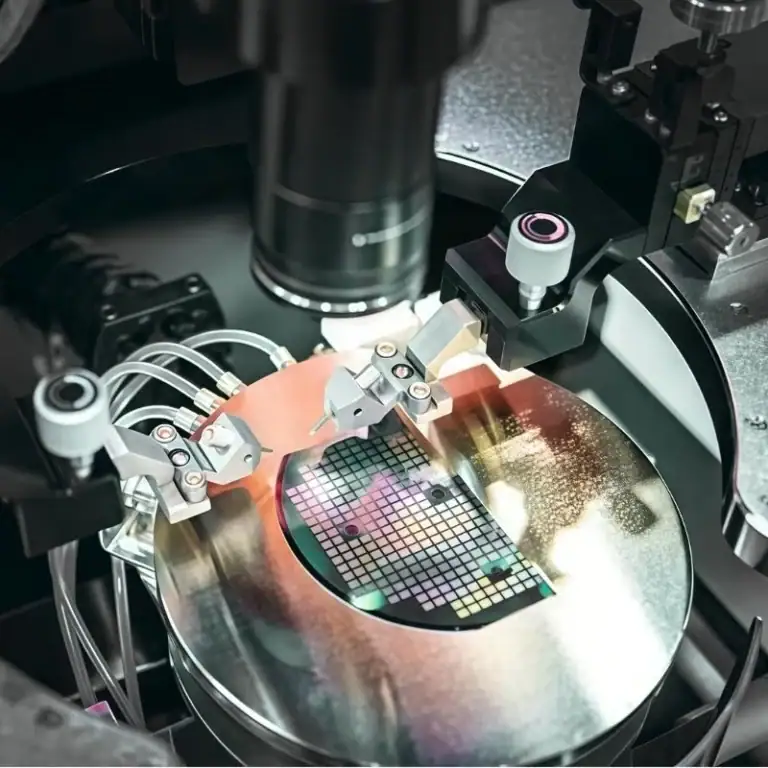
Although micro parts may appear insignificant, they often determine the precision, stability, and service life of an entire product. Whether used in critical medical device components, consumer electronics, aerospace systems, or precision instruments, the smaller the part, the higher the machining requirements. From millimeter-scale to micron-scale components, these parts not only feature highly complex geometries but also demand exceptional dimensional accuracy, surface quality, and assembly consistency. Compared with conventional machining, micro part manufacturing relies more heavily on high-performance equipment, stable machining processes, and precise control. Even the smallest deviation can affect the final performance of the product. Choosing the right equipment and combining it with advanced precision machining technology is essential for meeting the efficiency and quality standards required by high-end manufacturing.
Common CNC Equipment for Micro Part Machining
CNC equipment is the foundation of micro part manufacturing and plays a vital role in achieving high precision and consistent production. Since micro components feature extremely small dimensions and tight tolerances, machining equipment must deliver outstanding positioning accuracy while maintaining long-term stability. In addition, different part geometries, materials, and machining requirements call for different equipment configurations to achieve the ideal balance between productivity, precision, and manufacturing consistency.
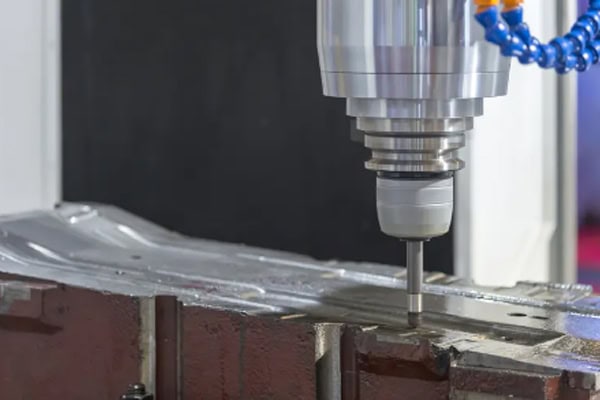
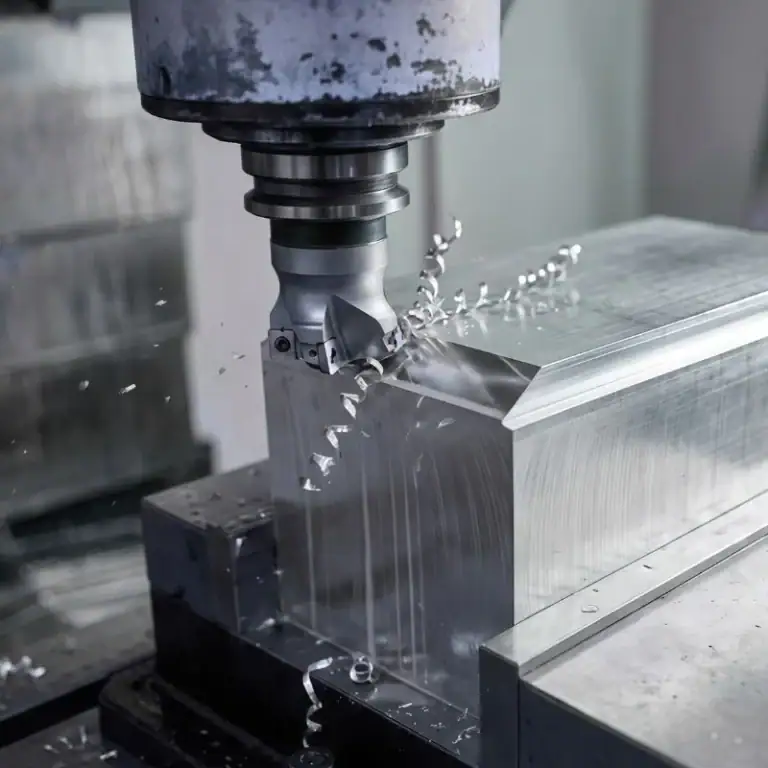
High-Precision CNC Machining Centers
High-precision CNC machining centers are capable of performing most milling, drilling, and contour machining operations required for micro parts, making them one of the most common machines in precision manufacturing workshops.
- Provide micron-level positioning accuracy to meet demanding dimensional tolerances for electronics, medical, and aerospace components.
- Support machining of complex surfaces, miniature cavities, and intricate geometries.
- Automatic tool changers improve continuous production efficiency while reducing manual operation errors.
- Capable of machining aluminum, stainless steel, titanium alloys, engineering plastics, and many other materials.
High-precision CNC machining centers combine productivity with exceptional dimensional accuracy, making them indispensable for manufacturing micro components.
Precision CNC Lathes
For shafts, bushings, and cylindrical micro components, precision CNC lathes provide reliable machining performance while maintaining excellent consistency.
- Suitable for machining slender shafts, miniature bushings, and precision cylindrical parts.
- Ensure excellent roundness, concentricity, and dimensional stability.
- Automatic bar feeding supports continuous batch production.
Stable turning performance improves product consistency while reducing assembly deviations.
Five-Axis CNC Machining Equipment
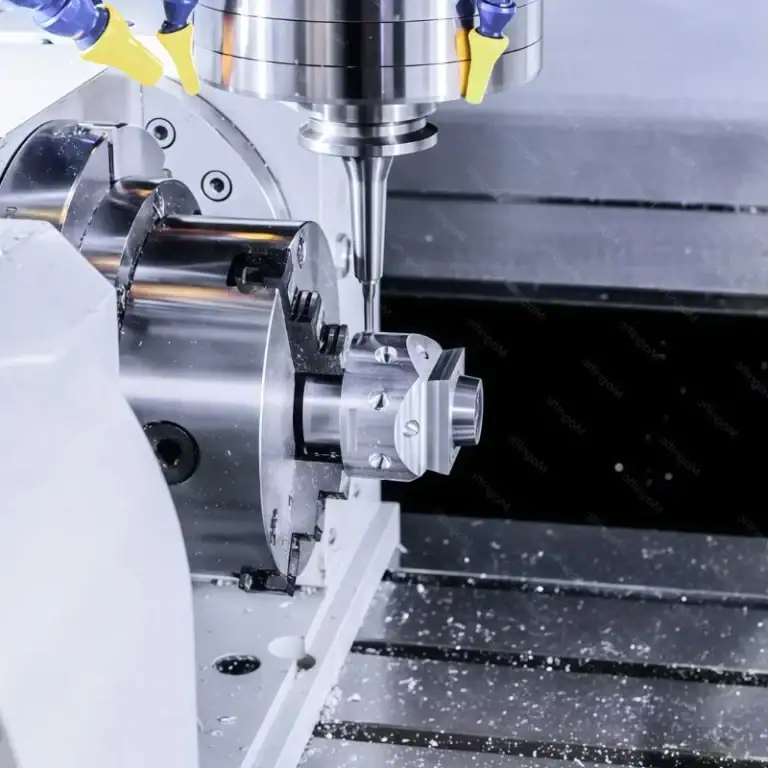
Complex micro components often require machining from multiple directions. Five-axis machining enables more operations to be completed in a single setup, minimizing repositioning errors.
- Complete multi-angle machining in a single clamping operation.
- Reduce positioning errors and improve machining accuracy.
- Support complex curved surfaces and irregular geometries.
- Shorten machining cycles while increasing equipment utilization.
Reducing the number of setups significantly improves dimensional consistency and overall machining quality.
Auxiliary Equipment for Micro Part Machining
In addition to CNC machines, auxiliary equipment has a major impact on machining quality. From dimensional inspection and tool management to cooling systems, every supporting process influences the final accuracy of micro components. Comprehensive auxiliary equipment improves machining stability, reduces defect rates, and supports consistent mass production.
High-Precision Measuring Equipment
Dimensional inspection is a critical step in quality control, and micro components require advanced measurement technology.
- Coordinate Measuring Machines (CMMs) verify critical dimensions and positional accuracy.
- Optical measuring systems inspect tiny features and complex profiles.
- High-magnification microscopes detect burrs, cracks, and surface defects.
- Profile projectors quickly inspect part contours and dimensions.
A complete inspection system allows machining deviations to be identified early and supports continuous process improvement.
Automatic Tool Changers and Tool Management Systems
Small-diameter cutting tools used in micro machining wear quickly, making effective tool management essential for consistent production.
- Automatically monitor tool life to prevent excessive wear.
- Compensate for tool wear to maintain machining accuracy.
- Reduce manual tool change errors and improve production continuity.
Proper tool management maintains stable cutting performance while reducing machining risks.
Cooling and Chip Removal Systems
Because micro parts are extremely small, cutting heat and tiny chips can easily affect machining stability. Efficient cooling systems help maintain optimal machining conditions.
- High-pressure coolant reduces cutting temperature.
- Rapid chip evacuation prevents secondary cutting.
- Minimize built-up edge formation and improve surface finish.
- Extend tool life and enhance machining stability.
Efficient cooling and chip removal help maintain consistent machining precision.
Temperature-Controlled Machining Environment
Temperature fluctuations can influence machine accuracy and material dimensions, making climate-controlled workshops essential for precision manufacturing.
- Maintain machine thermal stability.
- Minimize thermal expansion and contraction.
- Improve long-term dimensional consistency.
Temperature-controlled environments are particularly important for medical and aerospace manufacturing.
Specialized Equipment for Micro Part Machining
As products become increasingly smaller, many micro components exceed the capabilities of conventional machining equipment. To manufacture ultra-precision structures, difficult materials, and microscopic features, specialized machining technologies have become an essential part of modern precision manufacturing.
Electrical Discharge Machining (EDM)
EDM offers significant advantages when machining tiny holes, sharp internal corners, and other features difficult to produce using conventional cutting tools.
- Machine hardened materials and intricate micro features.
- Eliminate cutting forces to reduce workpiece deformation.
- Improve manufacturing capability for complex structures.
- Ideal for precision molds and medical components.
EDM complements conventional machining and expands manufacturing possibilities for complex micro parts.
Laser Micro Machining Equipment
Laser machining is well suited for ultra-small components and precision micro-hole manufacturing because it is a non-contact process.
- High accuracy with a minimal heat-affected zone.
- Machine micro holes, micro grooves, and intricate profiles.
- Reduce mechanical stress and improve machining stability.
Laser processing is widely used in electronics, medical devices, and precision instruments.
Micro Drilling Equipment
Many electronic and medical products require a large number of precision micro holes. Dedicated drilling equipment delivers both high efficiency and excellent consistency.
- Produce ultra-small diameter holes.
- Maintain excellent hole size consistency.
- Improve production efficiency for batch manufacturing.
- Reduce the risk of tool breakage.
Dedicated micro drilling equipment is ideal for high-precision hole machining.
How to Choose the Right Equipment for Micro Part Machining?
Micro components vary greatly in size, tolerance, material, and production volume. No single machine is suitable for every application. Manufacturers should evaluate equipment based on product characteristics, precision requirements, and long-term production goals. Proper equipment selection not only improves machining efficiency but also controls production costs and ensures reliable long-term manufacturing.
Select Equipment Based on Precision Requirements
- Smaller tolerances require higher machine positioning accuracy.
- Prioritize CNC equipment with high rigidity and excellent stability.
- Evaluate long-term repeatability and positioning accuracy.
Machine precision directly determines product quality.
Match Equipment to Material Characteristics
- Metals and engineering plastics require different machining strategies.
- Different materials require specific cutting tools and machining parameters.
- Proper equipment selection improves machining efficiency.
- Reduce tool wear and minimize material deformation.
Matching equipment to material properties improves machining stability.
Plan Equipment Based on Production Volume
- Flexible CNC machining is suitable for small production runs.
- Automated machining cells improve efficiency for high-volume production.
- Balance manufacturing efficiency with production cost.
Proper equipment planning enhances overall competitiveness and delivery capability.
Successful micro part machining depends on the combination of high-precision CNC equipment, comprehensive auxiliary systems, and specialized machining technologies. Selecting the right equipment according to part geometry, material properties, and production requirements, together with advanced precision machining processes, ensures stable, high-quality manufacturing results. Tirapid specializes in precision machining services, providing professional, high-precision, one-stop manufacturing solutions for a wide range of micro components.