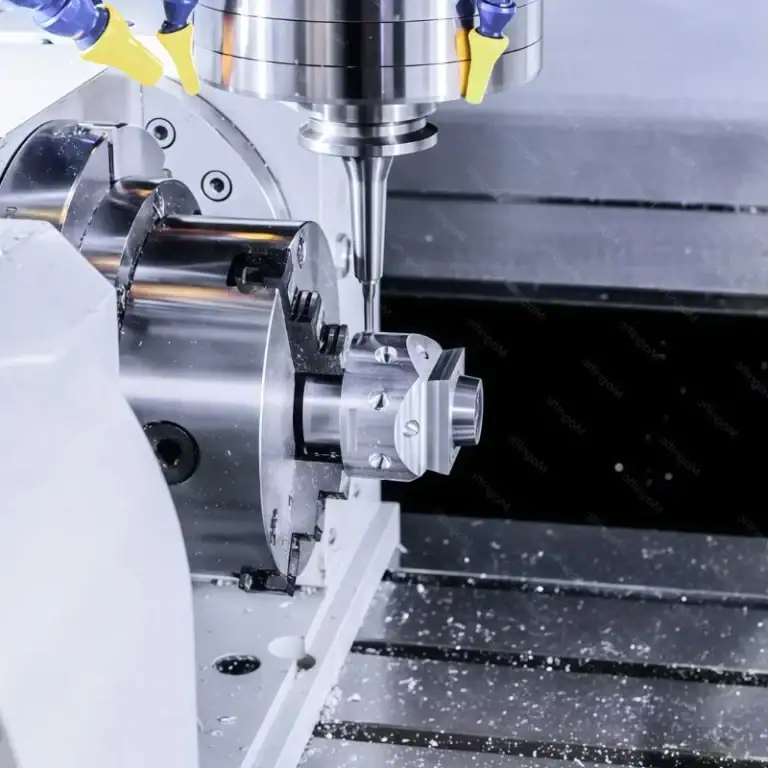
With the continuous advancement of automotive lightweighting and precision manufacturing technologies, plastic gears are being used more extensively in the automotive industry. Compared with traditional metal gears, engineering plastic gears offer advantages such as lightweight construction, lower operating noise, corrosion resistance, excellent self-lubricating properties, and high machining efficiency. They are widely used in automotive seat adjustment mechanisms, power window systems, electronic parking brake systems, HVAC air flap actuators, rearview mirror drive mechanisms, instrument clusters, and auxiliary transmission systems for new energy vehicles. For product development, low-volume prototyping, and high-precision customized components, CNC machining has become an important manufacturing method for plastic gears. By selecting suitable materials, developing a scientific machining process, optimizing cutting parameters, and strengthening dimensional inspection, manufacturers can produce plastic gears with high tooth profile accuracy, stable meshing performance, and long service life.
Why Are Automotive Plastic Gears Suitable for CNC Machining?
Although automotive plastic gears are generally small in size, they require high dimensional accuracy, precise gear tooth profiles, and accurate assembly fit. During the product development stage, many companies need to continuously optimize gear parameters. If traditional mold manufacturing is adopted, not only is the development cycle longer, but design modifications also increase additional costs. CNC machining can directly manufacture parts based on a 3D model, making it an ideal solution for prototype development and low-volume production.
Meeting High-Precision Gear Machining Requirements
Automotive transmission components must maintain stable gear meshing, so gear dimensional accuracy directly affects the operating performance of the entire transmission mechanism. CNC machining equipment uses digitally programmed tool paths, enabling high repeatability and machining precision while providing reliable quality assurance for plastic gear manufacturing.
The machining process can include:
- Gear tooth profile machining
- Center hole machining
- Keyway machining
- Mounting hole machining
- Positioning feature machining
By properly controlling tool paths and machining parameters, the consistency of tooth pitch, tooth thickness, and gear profile can be effectively maintained, providing a stable foundation for subsequent assembly. For prototype parts that require multiple rounds of design validation, CNC machining also allows machining programs to be quickly modified, significantly improving product development efficiency.
Ideal for Product Prototyping and Low-Volume Production
Before entering mass production, automotive components typically undergo design verification, performance testing, and assembly validation. As a result, prototype parts must be produced quickly. CNC machining eliminates the need for mold manufacturing. Production can begin immediately by importing CAD or CAM programs, significantly shortening product development time.
Common applications include:
- New product development prototypes
- Functional validation prototypes
- Low-volume trial production
- Custom non-standard component machining
After a design modification, production can continue simply by updating the machining program, without manufacturing new molds. This helps reduce development costs while accelerating product iteration.
Suitable for Various Engineering Plastic Materials
Automotive plastic gears have different material performance requirements depending on vehicle models, installation locations, and operating environments. Some gears emphasize wear resistance and low operating noise, while others require high temperature resistance and deformation resistance. Certain gears also need to maintain dimensional stability during long-term continuous operation.One of the major advantages of CNC machining is its excellent adaptability. Cutting tools, spindle speed, feed rate, and cutting depth can all be flexibly adjusted according to the characteristics of different materials, allowing a wide variety of engineering plastics to achieve excellent machining performance.
Common machining materials include:
- POM (Polyoxymethylene)
- PA (Nylon)
- PEEK (Polyether Ether Ketone)
- PET (Polyethylene Terephthalate)
- PPS (Polyphenylene Sulfide)
Each of these materials offers unique performance characteristics. POM is well suited for standard transmission gears requiring high dimensional accuracy and wear resistance. PA provides excellent toughness and impact resistance. PEEK is more suitable for high-temperature and high-load applications, while PET and PPS are commonly used for automotive components requiring dimensional stability and chemical resistance.With proper CNC machining, these materials can effectively meet the automotive transmission system’s requirements for wear resistance, dimensional stability, smooth operation, and long-term reliability, while also providing more material options for gear applications under different operating conditions.
What Is the CNC Machining Process for Automotive Plastic Gears?
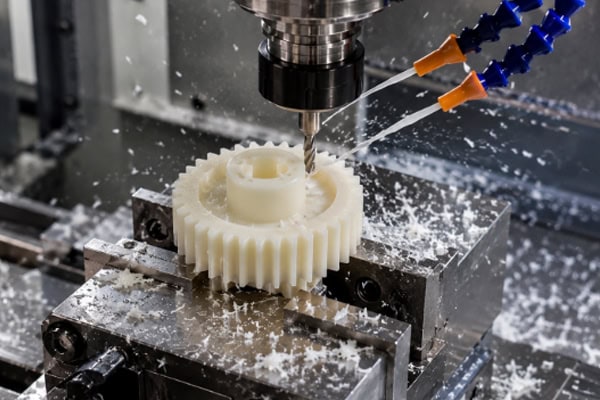
Plastic gear machining must ensure not only dimensional accuracy but also tooth surface quality, meshing accuracy, and assembly stability. Automotive components require smooth and reliable power transmission. Excessive tooth profile errors may lead to increased noise, unstable transmission, or reduced service life. Therefore, a complete and well-defined machining process must be established before production begins. From drawing analysis and program development to rough machining, finish machining, final inspection, and post-processing, every step directly affects the quality of the finished gear. Only by properly controlling the entire process can plastic gears perform reliably in automotive systems.
Drawing Analysis and Process Planning
Before machining begins, engineers analyze the product drawings to evaluate the gear structure and determine the machining strategy and process parameters. Different gears have different modules, numbers of teeth, pressure angles, and installation methods, so the machining plan must be customized accordingly. Drawing analysis is not limited to verifying whether the dimensions can be machined. It also involves evaluating the actual operating conditions to determine whether the gear requires higher wear resistance, better concentricity, or stricter tooth surface quality. By organizing all of this information in advance, manufacturers can reduce rework, minimize trial-and-error, and improve machining efficiency.
Key analysis items include:
- Gear module
- Number of teeth
- Center hole dimensions
- Tolerance requirements
- Tooth surface quality
For products with compound gears, helical gears, or other special structures, tool paths must also be planned in advance to prevent machining interference and improve overall efficiency. Many automotive plastic gears have compact structures and limited installation space. If tool entry angles, fixture positions, and machining sequences are not carefully considered during process planning, problems such as tool collisions, incomplete machining, or localized dimensional deviations may occur. The more detailed the process planning stage is, the more stable the subsequent machining process will be, making it easier to achieve consistent quality in batch production.
Combining Rough Machining and Finish Machining
To ensure dimensional stability, plastic gears are typically machined using a combination of rough machining and finish machining. Although plastics are generally easier to cut than metals, the gear tooth areas are highly detailed. Attempting to remove all material in a single operation can generate excessive heat, which may negatively affect tooth surface quality and dimensional accuracy. Therefore, removing excess material during rough machining and refining the critical dimensions during finish machining is a common and reliable approach for automotive plastic gears. This method reduces tool load while producing smoother tooth profiles that achieve better assembly performance.
The machining process generally includes:
- Blank fixturing
- Rough profile machining
- Pre-machining of gear teeth
- Precision gear tooth machining
- Hole machining
Rough machining primarily removes excess material to reduce the workload during subsequent operations. Finish machining focuses on controlling tooth profile accuracy, surface quality, and dimensional tolerances to ensure the gear meets assembly requirements. For plastic gears with thin walls or complex structures, special attention should be paid to clamping force during rough machining to prevent deformation caused by excessive fixture pressure. During finish machining, tool sharpness, cutting speed, and chip evacuation should be carefully controlled to minimize burrs and melted edges, ensuring smooth gear meshing during actual operation.
Dimensional Inspection and Post-Processing
After machining is completed, the gear must undergo comprehensive inspection to ensure all critical dimensions comply with the engineering drawings. Although automotive plastic gears are relatively small, they require excellent dimensional consistency and assembly accuracy. Critical features such as the center hole, tooth thickness, outside diameter, and concentricity must be carefully inspected because any deviation may affect the performance of the entire transmission system. Inspection is not only the final production step but also an essential part of quality assurance. Systematic inspection allows machining errors to be identified promptly and process parameters to be optimized for greater consistency in future production batches.
Common inspection items include:
- Tooth thickness
- Outside diameter
- Center hole dimensions
- Concentricity
- Tooth surface quality
After inspection, the gears undergo deburring, cleaning, and packaging to prevent damage to the tooth surfaces during transportation and improve product delivery quality. Small burrs often remain along the edges of plastic gears after machining. If they are not removed promptly, they may interfere with smooth gear meshing during assembly or even cause additional wear during operation. Cleaning and packaging are equally important, especially for precision automotive components. Keeping the gear surfaces clean while protecting them from impact and contamination ensures that the products remain in excellent condition when they reach the customer.
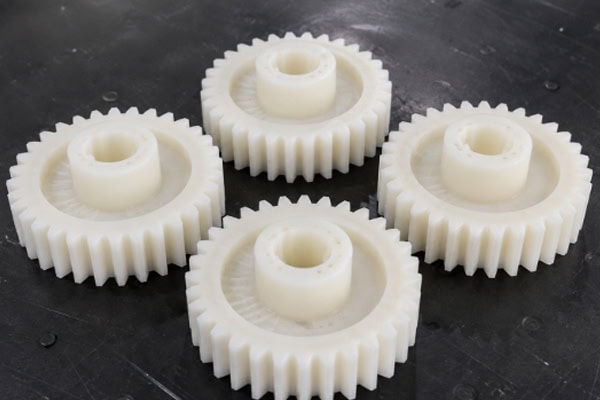
What Technologies Are Used in CNC Machining Automotive Plastic Gears?
Although plastic gears are generally easier to machine than metal gears, differences in material hardness, elasticity, and thermal stability mean that machining details still require careful attention. Proper control of machining parameters can effectively reduce burrs, deformation, and tooth profile errors.
Selecting the Right Cutting Tools and Machining Parameters
Plastic gears typically feature fine and intricate tooth profiles. The tooth tips, tooth roots, and side surfaces all require high machining accuracy, making tool sharpness and cutting edge stability critical to the final result. Unlike metals, plastics are not formed through aggressive cutting. Instead, they are more susceptible to compression, friction, and localized heat buildup. Therefore, tool selection should focus not only on wear resistance but also on smooth cutting performance and efficient chip evacuation. If the cutting tool is not sharp enough, the material tends to be pushed rather than cut, which may result in burrs, stringing, or slight deformation on the tooth surface. Cutting parameters are equally important. Proper coordination of spindle speed, feed rate, and cutting depth produces clearer gear profiles, more stable dimensions, and smoother assembly.
Commonly used tools include:
- Carbide cutting tools
- Plastic-specific milling cutters
- Small-diameter precision cutting tools
At the same time, spindle speed, feed rate, and cutting depth should be optimized according to the material properties to prevent excessive cutting heat from causing localized tooth surface deformation, ensuring stable tooth profile dimensions.
Controlling Machining Temperature and Chip Removal
Heat accumulation is one of the biggest challenges when machining plastics because they have much lower thermal conductivity than metals. During cutting, heat tends to concentrate in the tool contact area. If the heat is not dissipated effectively, the material surface may soften, turn white, or develop melted edges. In severe cases, the actual dimensions and surface quality of the gear may also be affected. Although automotive gears are relatively small, they require excellent running smoothness. Poor tooth surface quality may result in increased noise, poor gear meshing, or reduced service life after assembly. Besides temperature control, efficient chip removal is equally important. If chips accumulate around the gear teeth, they may scratch the finished surfaces, increase tool loading, and reduce machining stability.
Common machining methods include:
- Compressed air cooling
- Vacuum chip extraction
- Optimized tool path planning
- Layer-by-layer cutting
Prompt chip removal not only reduces secondary scratching but also lowers tool loads, improves machining stability, and extends tool life.
Ensuring Gear Meshing Accuracy
Once automotive gears are put into service, performance depends not only on whether each individual dimension meets specifications but also on whether the gears mesh smoothly with one another. Plastic gears are commonly used in automotive transmission systems to transmit power, adjust positions, or control mechanical movements. If the tooth profile contains excessive errors, tooth spacing is inconsistent, or the center bore is not concentric with the gear body, gear meshing becomes unstable. Minor issues may lead to abnormal noise, while more serious problems can shorten the service life of the entire mechanism. After machining, manufacturers should inspect not only the outside diameter and bore size but also the tooth profile, tooth pitch consistency, and concentricity after fixturing. In many cases, a gear may appear visually acceptable but still experience sticking or uneven wear after assembly because the meshing accuracy was not adequately controlled. Therefore, gear machining should not stop at simply producing the part—it should ensure that the gear fits properly, runs smoothly, and delivers long-term reliability.
Common control methods include:
- Optimizing tool compensation
- Correcting the tooth profile during finish machining
- Improving fixturing accuracy
- Strengthening dimensional inspection
By strictly controlling these machining details, manufacturers can effectively reduce operating noise, improve transmission smoothness, and extend the service life of the entire gear system.
How Can the Quality of Automotive Plastic Gear Machining Be Improved?
As manufacturing standards for automotive components continue to rise, plastic gear machining is no longer focused solely on production efficiency. Greater emphasis is now placed on long-term reliability and product consistency. From material selection to final inspection, every manufacturing step should follow standardized management procedures to meet the requirements of modern automotive production.
Select Materials Based on the Operating Environment
Different automotive components operate under different conditions, so engineering plastics should be selected according to the actual application.
For example:
- POM is suitable for standard transmission gears.
- PA is suitable for wear-resistant components.
- PEEK is suitable for high-temperature environments.
- PPS is suitable for applications requiring chemical resistance.
Selecting the appropriate material improves gear wear resistance and service life while helping reduce long-term maintenance costs.
Establish Standardized Machining Procedures
Standardized machining processes help ensure consistent quality across every production batch.
Typical procedures include:
- Raw material inspection
- Program verification
- First article inspection
- In-process inspection
- Final product inspection
Comprehensive quality control throughout the manufacturing process reduces machining errors and improves consistency in mass production.
Improve Post-Processing and Quality Inspection
After machining is completed, comprehensive inspections and appropriate post-processing procedures are recommended to further improve product quality.
These include:
- Deburring
- Surface cleaning
- Visual inspection
- Dimensional reinspection
For high-precision automotive gears, gear inspection equipment can also be used to perform meshing tests, ensuring that the finished products fully comply with the design specifications.
Frequently Asked Questions
Is CNC Machining or Injection Molding Better for Automotive Plastic Gears?
The best choice depends on the production volume and the stage of the project. For product development, prototype validation, small-batch production, or custom non-standard parts, CNC machining is the more flexible option. It does not require mold fabrication, allowing designs to be modified quickly while significantly shortening the development cycle. For products with finalized designs and large production volumes, injection molding offers higher manufacturing efficiency and lower unit costs. Many automotive manufacturers adopt a “CNC prototyping + injection molding for mass production” approach. During the product development stage, CNC machining is used to verify the gear structure and performance. Once the design has been confirmed, production moves to the mold manufacturing and injection molding stage. This approach not only improves R&D efficiency but also effectively controls manufacturing costs for large-scale production.
Conclusion
CNC machining of automotive plastic gears is a precision manufacturing process that balances dimensional accuracy, tooth profile precision, and machining efficiency. By selecting the appropriate engineering plastics, establishing a well-planned machining process, optimizing cutting tool parameters, and strengthening dimensional inspection, manufacturers can produce plastic gears with stable meshing performance, excellent wear resistance, and low operating noise. For automotive product development, prototype manufacturing, small-batch production, and high-precision custom components, CNC machining provides a flexible and efficient manufacturing solution while meeting continuously evolving product design requirements. As new energy vehicles, intelligent vehicles, and automated manufacturing technologies continue to advance, the application of plastic gears in the automotive industry will continue to expand.Alongside these gear components, the wiring harnesses that connect automotive electronic systems are typically bundled with industrial cable ties to ensure they stay secure against vibration, heat, and continuous operation.