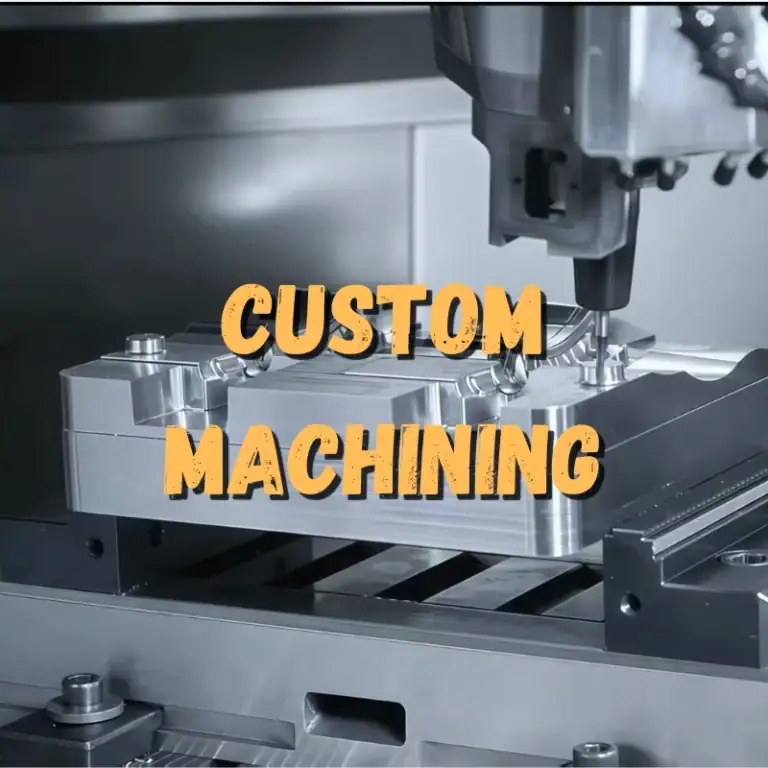
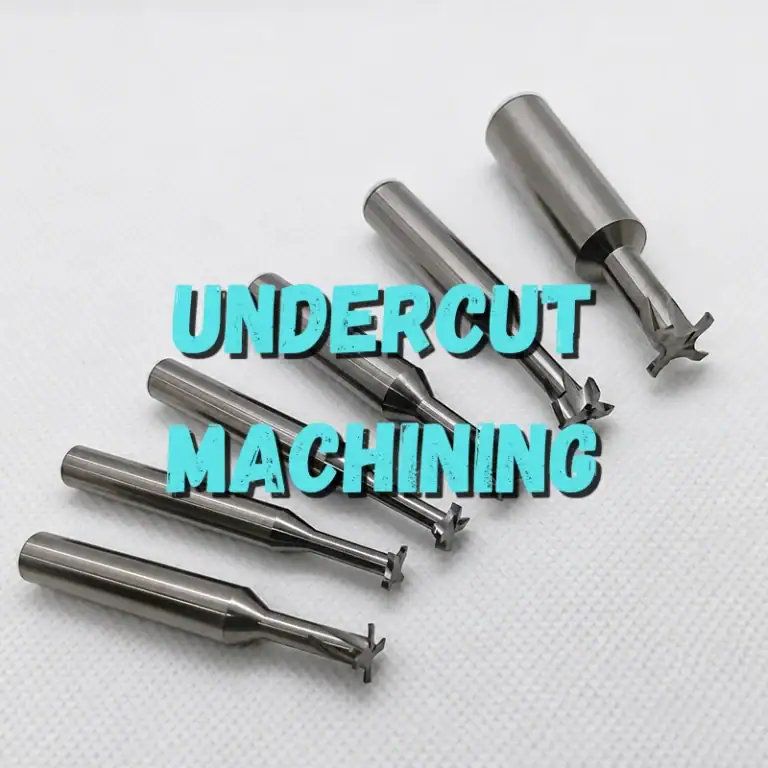
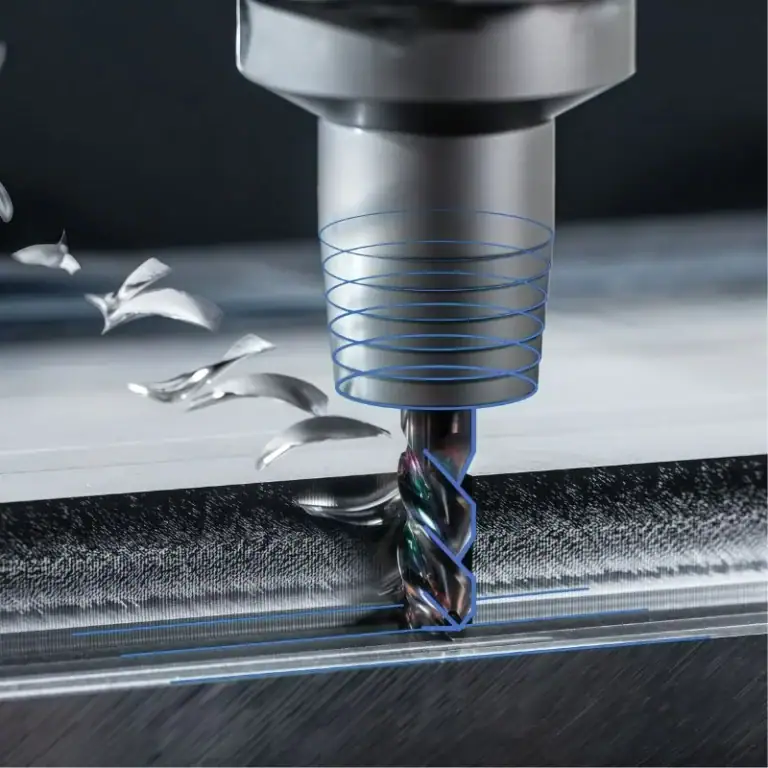
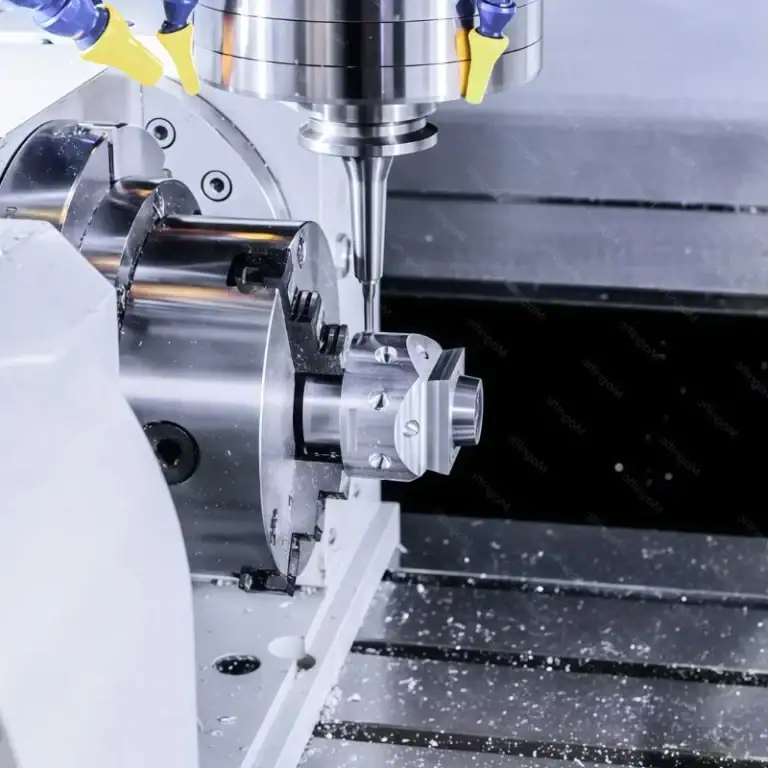
In an environment where part quotations are becoming increasingly transparent and raw material prices continue to fluctuate, material waste is no longer just a cost issue—it directly affects lead time, profit, and the competitiveness of customer pricing. Many companies assume that improving material utilization simply means “using less material,” but the truly effective approach is to optimize CNC milling nesting, toolpaths, fixturing, and machining parameters together, reducing unnecessary cutting and edge waste from the source. Especially in batch production, even a slight deviation in early planning can reduce material utilization across an entire lot, thereby increasing unit cost. Only by combining design, process, and equipment capability can each piece of material produce more qualified parts while maintaining precision and stability.
Reduce Waste Early in the Blank and Nesting Stage
The level of material utilization is often determined at the blanking and nesting stage. Whether the early design is reasonable directly affects whether later machining can reduce waste and rework.
Precisely Control Blank Allowance
The more reasonable the blank allowance is, the less unnecessary cutting will occur in subsequent CNC milling, and the easier it is to keep material costs within an acceptable range.
- Reserve appropriate allowance according to part tolerance, machining method, and surface requirements. It should not be too small, which would increase machining risk, nor too large, which would cause excessive material removal.
- Avoid designing the blank size too conservatively, because once too much allowance is left, not only will cutting time increase, but material that could have been retained will be wasted during machining.
- Set different allowance standards for thin-wall parts, complex parts, and high-precision parts, so that different structures can minimize material loss while still ensuring safe machining.
The more accurate the allowance control, the easier it is to reduce material loss in subsequent CNC milling, and the more favorable it is for cost stability in batch production.
Optimize Sheet Nesting Layout
For sheet-type parts, the nesting method directly determines whether the material can be fully utilized, so layout optimization is often the first cost-reduction measure to take effect.
- Use CAD/CAM nesting to reduce gaps between parts, allowing more parts to be placed on the same sheet and improving output efficiency per unit of material.
- Properly rotate part orientation and optimize layout based on geometric features to further improve sheet yield without affecting machining quality.
- Prioritize high-value parts or parts with urgent lead times, and minimize edge waste so that material resources are used more on truly valuable products.
Reasonable nesting can directly improve sheet utilization and is one of the most effective material optimization methods, especially for batch orders.
Use Shared-Edge or Panelized Design
Shared-edge design integrates originally separate cutting paths, reducing waste from the source while making the machining process more compact and efficient.
- Allow adjacent parts to share cutting boundaries, reducing repeated tool entry and repeated edge trimming, thereby lowering the probability of secondary material consumption.
- Reducing repeated toolpaths and repeated edge trimming not only saves material but also shortens machining time, improving the utilization efficiency of the entire sheet.
- Lower edge waste and ineffective cutting areas so that edge regions that would otherwise be wasted can be used as effectively as possible.
The more reasonable the shared-edge design, the higher the material utilization rate, especially in batch machining and standardized part production.
Use Smarter Toolpaths to Reduce Ineffective Cutting
Toolpath planning is not simply about pursuing speed; it is about making every cut closer to effective material removal so that waste can truly be reduced and overall machining efficiency improved.
Adopt High-Efficiency CAM Paths
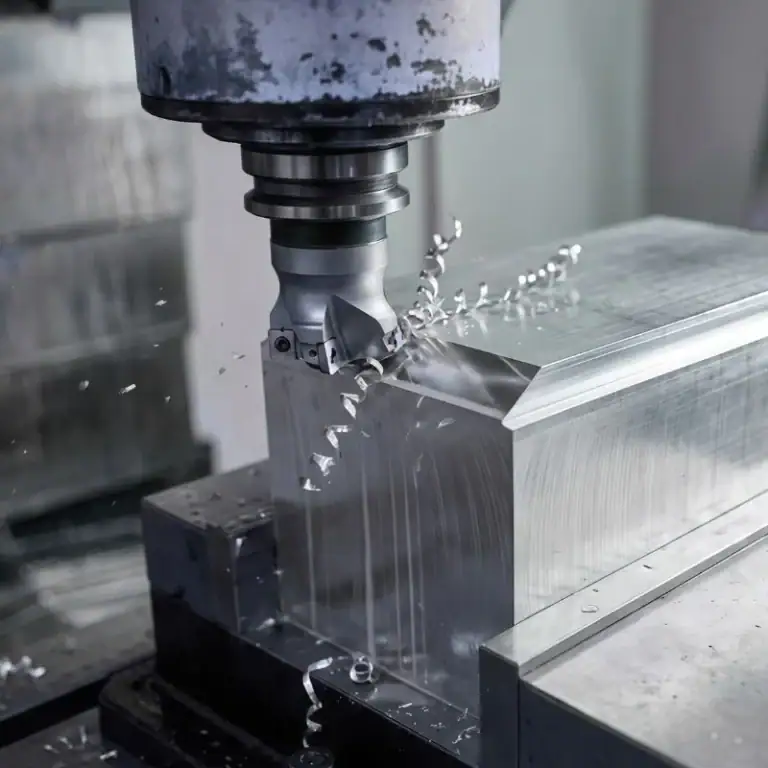
The core of an efficient toolpath is to reduce air cutting and repeated cutting, making material removal more concentrated, more continuous, and more aligned with high-efficiency machining requirements.
- Reduce air moves and return moves so the tool runs as much as possible within effective cutting areas, avoiding wasted time and energy on meaningless motion.
- Maintain cutting continuity and reduce frequent stops and repeated entry/exit movements, making the machining process smoother and more stable.
- Lower repeated machining areas to avoid cutting the same position multiple times, thereby reducing material waste and improving cycle time.
Efficient toolpaths make CNC milling more compact, saving both time and material, and are an important means of improving overall efficiency.
Separate Roughing and Finishing
Separating rough machining from finishing makes the material removal process clearer and easier to control, especially for complex parts and high-precision parts.
- In the roughing stage, quickly remove large allowances and complete the main material removal task, laying a stable machining foundation for the finishing stage.
- In the finishing stage, only correct key dimensions and surface quality, avoiding repeated heavy cutting in the high-precision stage and thereby reducing unnecessary material loss.
- Avoid repeated edge trimming and repeated corrections during finishing, because these operations not only increase machining time but also easily cause local overcutting and material waste.
After separating roughing and finishing, material removal becomes more structured and the risk of scrap is easier to control, making it especially suitable for batch production with high consistency requirements.
Use Adaptive Cutting Strategies
Adaptive cutting dynamically adjusts the path according to material load, making the machining process more stable, more material-efficient, and better suited to modern high-efficiency CNC milling.
- Automatically adjust depth of cut and feed rate according to load so the tool remains in a relatively stable cutting state and avoids excessive local load.
- Reduce local overcutting and tool impact, lowering material loss and abnormal tool wear caused by uneven cutting.
- Improve tool life and reduce downtime and rework caused by tool breakage, chipping, or abnormal wear, thereby indirectly improving material utilization.
Adaptive toolpaths make CNC milling more stable, and material utilization becomes easier to improve, especially for difficult-to-machine materials and complex cavity machining.
Reduce Hidden Losses Through Fixturing and Process Optimization
Much material waste is not caused by cutting itself, but by unreasonable fixturing and process arrangement. Therefore, process optimization is also an important part of improving material utilization.
Reduce Clamping Occupied Area
The less space the fixture occupies, the larger the actual machinable area becomes, so whether the clamping design is reasonable directly affects the actual utilization of the material.
- Keep fixtures away from effective machining areas as much as possible and place clamping positions in non-critical zones to avoid occupying material area that could otherwise be used for finished parts.
- Increase the machinable area per setup so that one piece of material can complete more effective cutting in the same process, reducing repeated clamping.
- Reduce waste caused by clamping, especially in sheet metal, thin-wall parts, and irregular parts, where this has a very obvious impact on material utilization.
The smaller the clamping area, the more material can actually be used for machining, which is more favorable for improving the economics of the entire order.
Use Flexible Fixtures
Flexible fixtures allow one set of tooling to adapt to more part types, reducing repeated investment and material constraints while improving production changeover efficiency. They can adapt to parts of different specifications, allowing one fixture set to cover more product models and reducing tooling waste caused by frequent changeovers. They also avoid redesigning fixtures every time a new part is introduced, thereby lowering overall manufacturing cost, while reducing changeover losses and tooling waste, making both material and process more flexible. This is especially suitable for multi-variety, small-batch, and frequently changing orders. Flexible fixtures make material and process more adaptable, especially for multi-variety orders, and better meet the fast-response needs of modern manufacturing.
Try to Complete Multi-Side Machining in One Setup
Completing more operations in one setup not only reduces positioning errors but also lowers the probability of material scrap, making it an important process concept for improving material utilization.
- Reduce repeated positioning errors and avoid dimensional deviation or local overcutting caused by multiple setups.
- Lower the probability of rework and scrap, because the fewer the setups, the less disturbance the part experiences during machining and the higher the stability.
- Improve machining continuity and consistency so that more operations are completed under the same datum, reducing the impact of human variation on material utilization.
Completing more operations in one setup is often more material-saving than simply pursuing faster cutting, and it is more suitable for high-precision part machining.
Optimize Parameters, Tools, and Monitoring Together
If material utilization is to be truly improved, it is not enough to look only at toolpaths. Tool selection, parameters, and process control must also be managed together so that optimization results can truly be implemented on the shop floor.
Choose the Right Tool
Whether tool selection is reasonable directly determines whether cutting is smooth and whether the surface can be formed in one pass. Therefore, tool selection should not be judged only by price, but more importantly by compatibility.
- Select the appropriate tool material according to the workpiece material. For example, use tools with different performance characteristics for aluminum alloys, stainless steel, or titanium alloys to ensure cutting efficiency and stability.
- Optimize tool geometry and chip evacuation capability so chips can be removed smoothly, avoiding chip clogging, tearing, and built-up edge that affect machining quality.
- Reduce the probability of chipping, surface tearing, and secondary finishing, because once tool condition becomes unstable, surface defects and additional losses are likely to occur.
When the right tool is chosen, cutting becomes smoother and the surface is more likely to be formed in one pass, reducing rework and repeated machining.
Set Cutting Parameters Reasonably
If cutting parameters are set improperly, the result may be reduced efficiency at best, or vibration, scrap, and material waste at worst. Therefore, parameter management must be sufficiently detailed.
- Control spindle speed, feed rate, and depth of cut so the tool always operates within a reasonable load range and avoid increased material loss caused by overly aggressive parameters.
- Avoid overload cutting and abnormal tool wear, because once cutting load is too high, it not only affects surface quality but may also directly cause scrap.
- Reduce scrap and rework caused by vibration so the machining process maintains stable output, which is especially critical in batch production.
Stable parameters mean stable material removal, which is especially important in batch production because even small fluctuations can be amplified into material waste.
Use Online Monitoring and Simulation
Simulating before actual machining and monitoring during machining can intercept many material losses in advance, thereby reducing trial-and-error costs and scrap risk.
- Simulate first, then machine, to identify interference risks, toolpath conflicts, and fixturing issues in advance, avoiding discovering them only after material has already been wasted during production.
- Monitor toolpaths and machine status in real time to detect abnormal vibration, tool wear, or program deviations in time and prevent problems from spreading to an entire batch.
- Correct deviations promptly to avoid batch scrap, because once a problem is discovered early, the loss can be kept to a minimum.
Finding problems in advance saves more material and cost than scrapping after the fact, and it also better reflects the management logic of high-efficiency manufacturing.
Make Material Utilization Real Through Professional Manufacturing Capability
True high material utilization does not come only from optimization on paper; it depends on stable process execution. Only when the plan is truly implemented can the value of the material be fully realized.
Validate the Process During the Prototyping Stage
The prototyping stage is not just a formality—it is the key stage that determines material utilization in later batch production. Solving problems here can save many detours later.
- First verify whether the toolpath and allowance are reasonable, and confirm that the machining path, cutting parameters, and fixturing method have no obvious issues before moving into formal batch production.
- Then proceed to batch production to avoid large-scale rework caused by insufficient early validation.
- Reduce first-piece failures and repeated trial-and-error so the prototyping stage truly serves its purpose of identifying problems in advance rather than shifting risk to mass production.
The more thorough the prototyping, the less material waste there will be in subsequent batch machining, and the easier it is to establish a stable production rhythm.
Establish a Standardized Machining Process
Standardized processes can reduce human variation and make material utilization consistently high rather than occasionally high, which is especially important for long-term production. By fixing nesting rules, materials from different batches can be laid out according to the same logic, reducing waste caused by inconsistent human judgment. By using fixed parameter templates, similar parts can follow mature processes, lowering trial-and-error probability and improving machining stability. By setting fixed inspection points, dimensions and quality can be confirmed at key operations in time, preventing problems from accumulating until the later stages. Standardization reduces human variation, makes material utilization more stable, and is better suited to long-term cost reduction and efficiency improvement.
Choose an Experienced CNC Milling Service
An experienced machining team can often improve material utilization from the very beginning of a project, reducing trial-and-error costs and management pressure while making project execution smoother.
- Complex parts require more process experience, because the more complex the structure, the more careful the judgment needed in nesting, toolpaths, and fixturing.
- Batch parts require more stable control, because once the process is unstable, material waste will be rapidly amplified in large-scale production.
- Outsourcing can reduce trial-and-error costs and management pressure, allowing companies to focus more on orders, delivery, and market expansion.
A professional team can often improve material utilization from the start, avoiding repeated rework and better serving customers who pursue efficiency and stability.
Conclusion
Improving material utilization does not depend on a single step, but on whether design, programming, fixturing, and shop-floor execution truly work together. As long as early planning is more precise, machining paths are more reasonable, and process control is more stable, CNC milling can reduce waste, lower rework, and maximize the value of each piece of raw material while maintaining quality. For companies that want to continuously reduce manufacturing costs and improve delivery efficiency, this systematic optimization is often more effective than simply pursuing faster cutting. TiRapid can provide more efficient CNC milling solutions to help projects truly put material value to work where it matters most.