5052 vs 5083 aluminum is a comparison between two non-heat-treatable 5000 series aluminum-magnesium alloys used for corrosion-resistant sheet metal parts, marine structures, welded assemblies, tanks, transportation parts, and industrial components. 5052 aluminum is usually better when formability, lower cost, and sheet metal fabrication matter more, while 5083 aluminum is usually better when higher strength, saltwater resistance, fatigue performance, and structural safety margin are required.
This guide explains the differences between 5052 and 5083 aluminum by composition, strength, corrosion resistance, welding, forming, CNC machining, temperature performance, cost, and best uses.
What Is 5052 Aluminum?
5052 aluminum is a corrosion-resistant 5000 series aluminum alloy known for good formability, weldability, fatigue resistance, and sheet metal performance. It usually contains about2.2–2.8% magnesium and chromium, giving it better strength than 3003 aluminum while still remaining easy to bend, stamp, draw, and fabricate.
5052 aluminum is widely used for enclosures, covers, panels, fuel tanks, marine accessories, vehicle panels, appliance parts, cabinets, brackets, and formed sheet metal parts. If a buyer is comparing 3003 aluminum vs 5052, 5052 is usually selected when better corrosion resistance, higher fatigue strength, and stronger sheet performance are needed.
Key features of 5052 aluminum include:
- Better formability than 5083
- Lower material and processing cost
- Good corrosion resistance in industrial, freshwater, and mild marine environments
- Excellent sheet metal bending and forming performance
- Good weldability with TIG and MIG welding
- Suitable for non-critical marine parts and general industrial components
What Is 5083 Aluminum?
5083 aluminum is a high-strength marine-grade 5000 series aluminum alloy used for shipbuilding, offshore structures, pressure vessels, LNG tanks, structural plates, and heavy welded components. It usually contains about4.0–4.9% magnesium and about0.4–1.0% manganese, which gives it higher strength and better severe marine performance than 5052.
5083 aluminum is often chosen when the part must resist continuous saltwater exposure, impact, wave loading, pressure, vibration, or long-term structural stress. In common comparisons, 5083 has higher tensile strength, yield strength, hardness, fatigue strength, and welded joint strength than 5052, but it usually costs more and is harder to form tightly.
Key features of 5083 aluminum include:
- Higher strength than 5052
- Better for continuous saltwater and marine structures
- Available in marine-grade tempers such as H116 and H321
- Stronger welded joint performance
- Better for hulls, decks, pressure vessels, and cryogenic applications
- Less formable and usually more expensive than 5052
5052 Vs 5083 Aluminum At A Glance
5052 vs 5083 aluminum can be summarized this way: choose 5052 for formability and cost control, and choose 5083 for strength and severe marine service. The best choice depends on whether the project is driven by bending, welding, CNC machining, corrosion exposure, structure, certification, or budget.
| Comparison Item | 5052 Aluminum | 5083 Aluminum |
| Alloy family | 5000 series Al-Mg | 5000 series Al-Mg |
| Heat treatment | Non-heat-treatable | Non-heat-treatable |
| Typical magnesium content | About2.2–2.8% | About4.0–4.9% |
| Strength | Moderate | Higher |
| Formability | Better | Lower than 5052 |
| H32 tensile strength example | About228–230MPa | About305–317MPa |
| H32 yield strength example | About193MPa | About228–240MPa |
| Corrosion resistance | Excellent | Excellent to outstanding in marine service |
| Weldability | Excellent | Excellent, stronger weld joints |
| CNC machining | Easier, faster cutting | Machinable, higher cutting force |
| Cost | Lower | Usually 10–20% higher |
| Best for | Enclosures, tanks, panels, formed parts | Hulls, decks, pressure vessels, offshore structures |
| Main selection logic | Formability and cost | Strength and marine durability |
Typical published comparisons list 5052-H32 around228–230MPa tensile strength and 5083-H32/H321 around305–317MPa, while 5083 usually carries a 10–20% material premium over 5052 depending on thickness, certification, quantity, and market price.
When To Choose 5052 Aluminum?
Choose 5052 aluminum when the part needs bending, forming, stamping, deep drawing, lower cost, good corrosion resistance, and clean sheet metal fabrication. It is a strong fit for enclosures, panels, covers, tanks, cabinets, interior marine parts, vehicle panels, and industrial components where extreme structural strength is not required.
5052 is also useful when surface appearance matters. It can provide good finishing results, and because it is softer than 5083, it is often easier to machine, deburr, bend, and handle during fabrication. For many non-load-bearing parts, using 5083 may add cost without adding useful performance.
When To Choose 5083 Aluminum
Choose 5083 aluminum when the part needs higher strength, continuous marine exposure, better fatigue performance, stronger welded joints, or marine-grade structural approval. It is usually preferred for hull plating, decks, bulkheads, offshore structures, pressure vessels, LNG equipment, heavy-duty transport parts, and structural plates.
5083 is also the better option when impact, wave loading, vibration, or pressure can affect safety. For example, 5083-H116 and 5083-H321 are commonly associated with marine structural plate because these tempers are designed to reduce exfoliation and intergranular corrosion risk in high-magnesium marine aluminum.
Chemical Composition Comparison
Chemical composition explains why 5083 is stronger and more marine-oriented, while 5052 is easier to form and more cost-effective. The biggest difference is magnesium content, followed by manganese and chromium balance.
| Element / Feature | 5052 Aluminum | 5083 Aluminum | Practical Meaning |
| Magnesium | About2.2–2.8% | About4.0–4.9% | 5083 gains higher strength and marine performance |
| Manganese | Usually max0.10% | About0.4–1.0% | 5083 gains better grain support and welded stability |
| Chromium | About0.15–0.35% | About0.05–0.25% | Helps grain control and corrosion behavior |
| Copper | Max about0.10% | Max about0.10% | Low copper helps corrosion resistance |
| Aluminum | Balance | Balance | Base material |
| Strength method | Strain hardening | Strain hardening | Both are non-heat-treatable |
Magnesium Content Difference
Magnesium content difference is the main reason 5083 aluminum has a strength advantage over 5052 aluminum. 5052 usually contains about2.2–2.8% magnesium, while 5083 usually contains about4.0–4.9% magnesium, giving 5083 a much stronger aluminum-magnesium matrix.
For engineering selection, this means 5083 can carry higher loads and better resist fatigue, but it also becomes less forgiving during tight bending. 5052’s lower magnesium content gives it better ductility and makes it more suitable for complex sheet metal parts, formed covers, and deep drawn components.
Manganese And Chromium Effects
Manganese and chromium affect grain control, corrosion behavior, welded performance, and structural reliability in 5052 and 5083 aluminum. 5083 contains more manganese than 5052, which supports strength, toughness, and weld joint stability in heavy marine structures.
Chromium is present in both alloys and helps control microstructure and corrosion behavior. In practical manufacturing, these small alloying differences are not just chemistry details. They influence bend radius, weld design, machining behavior, surface finish, and whether the material can meet marine or structural requirements.
How Composition Affects Strength, Corrosion Resistance, And Formability?
Composition affects strength, corrosion resistance, and formability by controlling how the alloy hardens, bends, welds, and resists chloride exposure. 5083’s higher magnesium and manganese make it stronger and more suitable for severe marine applications, while 5052’s lower alloying level makes it easier to bend and form.
This is why 5052 and 5083 should not be chosen only by price or availability. A 5052 sheet may be excellent for a formed enclosure, but not strong enough for a load-bearing marine hull. A 5083 plate may be ideal for a deck or pressure vessel, but too costly or difficult to form for a simple cover.
Mechanical Properties Comparison
Mechanical properties comparison shows that 5083 aluminum is significantly stronger than 5052 aluminum, while 5052 remains easier to form and fabricate. In many H32/H321 comparisons, 5083 offers roughly30–40% higher tensile strength and stronger fatigue performance.
| Property | 5052-H32 Example | 5083-H32 / H321 Example | Practical Meaning |
| Tensile strength | About228–230MPa | About305–317MPa | 5083 carries higher tensile loads |
| Yield strength | About193MPa | About228–240MPa | 5083 resists permanent deformation better |
| Hardness | About60HB | About75–89HB | 5083 has better indentation resistance |
| Fatigue strength | About117MPa | About159–160MPa | 5083 is better for repeated loading |
| Density | About2.68g/cm³ | About2.66g/cm³ | Similar lightweight advantage |
| Elastic modulus | About70GPa | About70GPa | Similar stiffness |
Tensile Strength And Yield Strength
Tensile strength and yield strength are higher in 5083 aluminum than in 5052 aluminum. Common comparison data lists 5052-H32 at about228–230MPa tensile strength and about193MPa yield strength, while 5083-H32 or H321 can reach about305–317MPa tensile strength and about228–240MPa yield strength.
This difference matters when parts must carry load, resist deformation, or maintain structural safety. For enclosures or covers, 5052 may be enough. For hulls, decks, pressure vessels, and heavy frames, 5083 provides a stronger engineering margin.
Hardness And Structural Durability
Hardness and structural durability are usually higher in 5083 aluminum because of its higher magnesium and manganese content. Published comparisons often place 5052-H32 around60HB and 5083 around75–89HB depending on temper and data source.
Higher hardness helps 5083 resist dents, wear, traffic, and impact in marine decks, transportation flooring, and industrial plates. However, higher hardness also means more cutting force, more difficult forming, and potentially higher fabrication cost.
Fatigue Performance And Impact Resistance
Fatigue performance and impact resistance are usually better with 5083 aluminum, especially in structures exposed to vibration, wave impact, repeated loading, or heavy service. Published data lists fatigue strength around117MPa for 5052-H32 and around159–160MPa for 5083 in comparable conditions.
This does not mean material strength alone solves fatigue risk. Weld toe quality, hole edges, inside radii, surface scratches, sharp transitions, and assembly stress can control real fatigue life. For critical parts, the design should reduce stress concentration and define inspection requirements.
Performance Changes Under Different Tempers
Performance changes under different tempers can be large enough to change the final material decision. 5052-O is soft and highly formable, 5052-H32 balances strength and formability, and 5052-H34 increases strength but reduces bendability. For 5083, H111, H116, H321, and H32 can show different structural and corrosion behavior.
A comparison such as 5083 H111 vs 5052 O aluminum properties is not a direct strength comparison because 5083-H111 is a lightly strain-hardened structural temper, while 5052-O is annealed for maximum ductility. A comparison such as 5083 vs 5052-H32 aluminum properties is more useful when evaluating strength, forming, and fabrication balance.
5083 H116 And H321 Marine-Grade Tempers
5083 H116 and H321 are marine-grade tempers used when corrosion resistance and structural reliability in marine service are important. These tempers are designed to reduce exfoliation and intergranular corrosion risk in high-magnesium aluminum used for hull plating and marine structures.
For shipbuilding and offshore projects, buyers should not treat plain 5083 sheet and certified marine plate as the same material. The final specification should confirm alloy, temper, thickness, standard, certificate, mill test report, inspection plan, and whether the part requires classification society approval.
Corrosion Resistance Comparison
Corrosion resistance comparison shows that both 5052 and 5083 aluminum perform well, but 5083 is stronger for severe saltwater and marine structural exposure. 5052 is excellent for industrial, freshwater, coastal, and mild marine environments, while 5083 is better for continuous seawater, hull structures, and offshore service.
5052 Aluminum For Industrial And Mild Marine Exposure
5052 aluminum is a good choice for industrial and mild marine exposure because it resists atmospheric corrosion, freshwater corrosion, and many general industrial environments. It is commonly used for panels, enclosures, fuel tanks, cabinets, appliance parts, vehicle panels, and marine accessories where severe saltwater immersion is not the main risk.
For parts exposed to humidity, splash, rain, or coastal air, 5052 can provide strong corrosion resistance at a lower price than 5083. When the part is not load-bearing and does not require marine structural certification, 5052 often gives the better cost-performance balance.
5083 Aluminum For Saltwater And Marine Environments
5083 aluminum is better for saltwater and marine environments when parts face continuous seawater immersion, wave impact, high load, or long service life. Its higher magnesium and manganese content supports stronger marine-grade performance, and marine tempers such as H116 and H321 are widely used for hull and structural plate requirements.
This makes 5083 a better option for ship hulls, decks, bulkheads, offshore platforms, pressure vessels, and LNG-related equipment. For severe marine service, the higher upfront price can be justified by lower structural risk, better fatigue performance, and longer service confidence.
Common Corrosion Risks And Prevention Methods
Common corrosion risks for 5052 and 5083 aluminum include pitting corrosion, galvanic corrosion, crevice corrosion, stress corrosion cracking, and corrosion around welds or damaged coatings. These risks increase when salt, trapped moisture, dissimilar metals, poor drainage, high residual stress, or contaminated weld surfaces are present.
Practical prevention methods include proper alloy and temper selection, marine-grade coating, anodizing where suitable, weld cleaning, insulation from carbon steel or stainless steel fasteners, drainage design, fresh water rinsing, and regular inspection. Surface protection is especially important around cut edges, welds, bolt holes, and areas where water can stay trapped.
Formability, Welding, And Machining Performance
Formability, welding, and machining performance show the biggest manufacturing trade-off between 5052 and 5083 aluminum. 5052 is easier to bend, form, machine, and finish, while 5083 provides higher strength and stronger welded structural performance.
Formability And Bending Performance
Formability and bending performance are better with 5052 aluminum than with 5083 aluminum. In common bend radius comparisons, 5052 can usually handle tighter bending, while 5083 needs a larger bend radius because of its higher strength and lower ductility.
This is why 5052 is often chosen for curved covers, enclosures, cabinets, baffles, tanks, panels, and deep drawn parts. 5083 can still be formed, especially in O temper or with proper forming methods, but engineers should check bend radius, grain direction, plate thickness, tooling pressure, and cracking risk before production.
Welding Performance And Filler Material Selection
Welding performance is excellent for both 5052 and 5083 aluminum, but 5083 usually provides stronger welded joints. MIG and TIG welding are common for both alloys; ER5356 is commonly used for both, while ER5183 is often selected for structural 5083 joints where higher weld strength is required.
Welding design should consider heat input, joint type, fixture support, distortion control, porosity risk, cleaning, shielding gas, and inspection. For thick structural plates, 5083 may require stricter weld control. For thinner sheet, formed tanks, and less critical structures, 5052 may be easier and more economical.
CNC Machining Performance
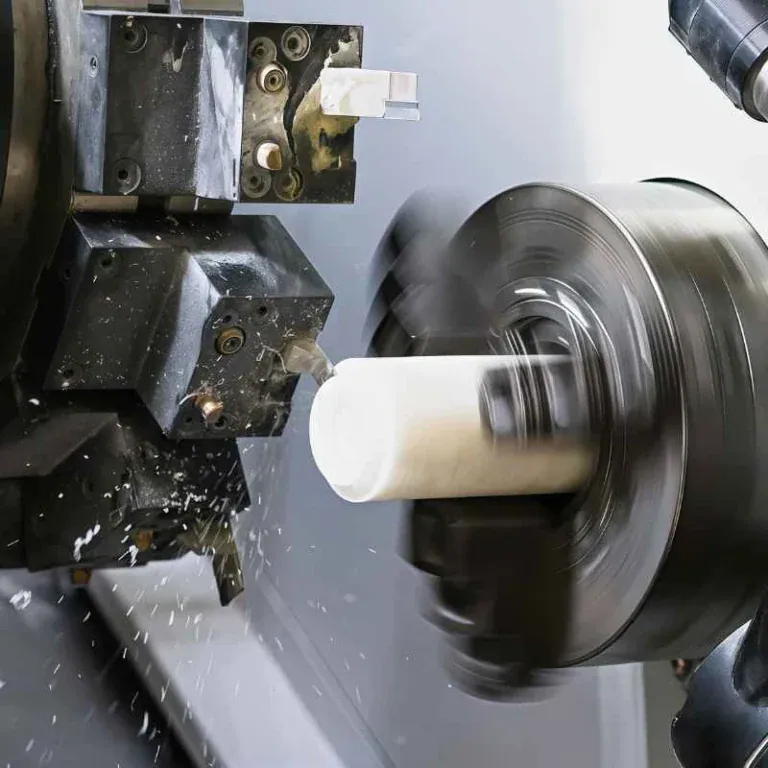
CNC machining performance is generally easier with 5052 aluminum than with 5083 aluminum, but both alloys can be machined with proper tooling. 5052 is softer, usually allows faster cutting, and can produce smoother surface finishes, while 5083 is harder, creates higher cutting forces, and may increase tool wear.
For CNC milling, drilling, tapping, slotting, and 5-axis CNC machining, the process should use sharp tools, stable clamping, suitable coolant, chip evacuation, and good workholding. If the part needs both seawater resistance and CNC machining, 5083 may be selected for marine performance. If the part is protected or non-seawater, 6061 may also be reviewed for easier CNC machining.
Manufacturing Problems And Process Control
Manufacturing problems in 5052 and 5083 aluminum usually come from wrong temper selection, tight bend radius, poor weld cleaning, excessive heat input, unstable clamping, tool marks, distortion, or unrealistic tolerances. 5052 is more forgiving in forming, while 5083 requires stronger process control in structural fabrication.
For production parts, engineers should confirm stock thickness, temper, flatness, bend direction, weld sequence, machining allowance, fixture strategy, surface finish, and inspection method before cutting material. This reduces scrap, rework, distortion, and unexpected cost.
Temperature Performance Comparison
Temperature performance comparison shows that 5083 is better for cryogenic and low-temperature structural service, while both 5052 and 5083 should be used carefully in continuous high-temperature environments. 5083 is widely associated with LNG and low-temperature marine applications, while 5052 is more common in general sheet metal and moderate environments.
Low-Temperature And Cryogenic Performance
Low-temperature and cryogenic performance is stronger with 5083 aluminum because it retains useful toughness and can gain strength at very low temperatures. 5083 is commonly used for LNG carriers, cryogenic tanks, and low-temperature structural equipment.
5052 is not usually selected for critical cryogenic structural components. It may still be used in low-risk, non-critical environments, but for LNG or pressure-related low-temperature systems, the design should specify qualified alloy, temper, welding procedure, inspection, and material certificates.
High-Temperature Performance Limits
High-temperature performance is limited for both 5052 and 5083 aluminum because prolonged exposure to elevated temperature can increase stress corrosion cracking risk, especially in high-magnesium alloys. Some references warn against continuous service above about65°C / 150°F for these alloys in demanding corrosive conditions.
For parts near engines, heat sources, exhaust systems, or hot process equipment, engineers should review actual service temperature, exposure time, stress level, corrosion environment, and material specification. In these cases, 6061, 5754, 6082, stainless steel, or another material may sometimes be more suitable.
Thermal Expansion And Thermal Conductivity
Thermal expansion and thermal conductivity are broadly similar for 5052 and 5083 aluminum because both are aluminum-magnesium alloys with close density and modulus values. They are lightweight and thermally conductive compared with steel, but they can still distort when uneven heat input occurs during welding or machining.
For precision parts, thermal behavior matters during CNC machining, welding, inspection, and assembly. Large plates, thin walls, deep pockets, or welded panels should be controlled with proper fixturing, balanced material removal, temperature-stable inspection, and stress-aware process planning.
Best Uses Of 5052 Aluminum
5052 aluminum is best used for formed sheet metal parts, corrosion-resistant panels, enclosures, tanks, covers, vehicle parts, and moderate-strength industrial components. It is the better alloy when fabrication flexibility and cost control are more important than maximum strength.
Sheet Metal Parts And Formed Components
5052 aluminum is best for sheet metal parts and formed components because it bends and forms more easily than 5083. It is widely used for stamped parts, bent brackets, covers, housings, tanks, baffles, trays, and panels that need moderate strength and clean fabrication.
For production buyers, this makes 5052 a practical material for cost-effective sheet metal manufacturing. It reduces cracking risk, forming difficulty, and scrap rate compared with stronger alloys when the design includes tight bends or complex shapes.
Enclosures, Panels, And Covers
5052 aluminum is commonly used for enclosures, panels, and covers because it provides corrosion resistance, good appearance, formability, and moderate strength. It is suitable for electronic housings, machine covers, battery boxes, access panels, control cabinets, and protective guards.
For enclosure parts, the final decision should consider bend radius, mounting holes, threaded inserts, surface finish, anodizing or powder coating, gasket surfaces, and assembly flatness. 5052 often performs well because these parts usually need forming more than high load-bearing strength.
Automotive And Transportation Parts
5052 aluminum is suitable for automotive and transportation parts that need lightweight structure, corrosion resistance, vibration resistance, and sheet metal formability. Common examples include panels, guards, interior structures, fuel tanks, trailer parts, covers, and utility vehicle components.
For heavy-duty transport parts exposed to high impact, abrasion, or repeated structural load, 5083 may be reviewed instead. The choice should consider load path, thickness, fatigue risk, welding, and whether the part is a cosmetic cover or structural member.
Industrial Equipment And General Fabrication
5052 aluminum is a strong option for industrial equipment and general fabrication when parts need corrosion resistance, bending, welding, and practical cost control. It is used for equipment panels, brackets, tanks, machine guards, work platforms, cabinets, and sheet metal assemblies.
If the part requires high structural strength, continuous abrasion, pressure loading, or marine immersion, 5083 may be a better choice. If the part is mainly a cover, formed panel, or moderate-duty component, 5052 usually gives better manufacturing efficiency.
Best Uses Of 5083 Aluminum
5083 aluminum is best used for high-strength marine, offshore, cryogenic, pressure vessel, and heavy welded structures. It should be selected when strength, fatigue resistance, seawater durability, and structural safety are more important than forming ease or lowest material price.
Shipbuilding And Marine Structures
5083 aluminum is best for shipbuilding and marine structures because it combines high strength, saltwater corrosion resistance, and strong welded performance. It is commonly specified for hull plating, decks, bulkheads, marine frames, and load-bearing structures, especially in H116 or H321 temper.
For marine structures, the material must handle wave impact, vibration, weld stress, and long-term seawater exposure. 5083’s higher strength and marine-grade tempers make it safer for critical areas than 5052.
Offshore Platforms And Heavy Welded Components
5083 aluminum is suitable for offshore platforms and heavy welded components because it provides better structural strength and corrosion resistance in harsh environments. It can be used for offshore decks, pressure structures, marine access systems, tanks, welded frames, and load-bearing panels.
These parts usually require strong welds, dimensional control, material traceability, and inspection. For secondary panels or covers, 5052 may still be used to reduce cost, but primary load-bearing offshore components often justify 5083.
LNG And Cryogenic Equipment
5083 aluminum is suitable for LNG and cryogenic equipment because it performs well at very low temperatures and retains useful ductility. It is used in LNG carriers, cryogenic tanks, low-temperature vessels, and specialized transportation systems where strength and toughness are critical.
Cryogenic parts require more than base material selection. Buyers should confirm material certificate, welding procedure qualification, inspection method, pressure code requirements, and supplier experience before production.
Pressure Vessels And Structural Plates
5083 aluminum is commonly selected for pressure vessels and structural plates because it offers higher strength and better welded joint performance than 5052. Its combination of strength, corrosion resistance, and weldability makes it useful for tanks, pressure-related equipment, and heavy industrial structures.
For pressure or safety-critical parts, engineering specifications should define alloy, temper, thickness, weld filler, inspection level, and acceptance criteria. A lower-cost alloy can become expensive if it increases failure risk, inspection issues, or rework.
Cost And Availability Comparison
Cost and availability comparison shows that 5052 is usually cheaper and easier for formed sheet metal, while 5083 costs more because it provides higher strength and stronger marine performance. The best choice should be based on total project cost, not only raw material price.
5052 Vs 5083 Aluminum Price Difference
5052 vs 5083 aluminum price difference usually favors 5052. Some market references list 5083 at about10–20% higher than 5052 in equivalent gauges and quantities, mainly because of higher alloy content, marine-grade tempers, certification requirements, and more demanding processing.
For buyers searching 5052 aluminum sheet price, the final cost depends on thickness, width, temper, surface finish, MOQ, tolerance, certificate, cutting, bending, and current aluminum market price. A low sheet price does not always mean the lowest finished part cost if rework, cracking, or coating problems occur.
Material Availability And Stock Forms
Material availability and stock forms affect delivery time, cost, and design flexibility. 5052 is commonly available in sheet and coil for bending and forming, while 5083 is commonly supplied as marine plate, thick sheet, and structural stock.
Before design freeze, buyers should confirm the required alloy, temper, thickness, sheet size, plate size, flatness, certificate, and lead time. If a specific temper is hard to source, the project may need design changes, alternate thickness, or a different alloy.
Processing Cost And Welding Cost
Processing cost and welding cost are usually lower for 5052 when the part requires forming, bending, and simple machining. 5083 may increase cost because it needs more forming force, larger bend radius, slower machining speed, and stronger distortion control.
However, 5083 may reduce lifecycle cost in critical structures because it offers better strength and marine durability. For a hull, pressure vessel, or offshore component, the cost of failure can be much higher than the material premium.
Total Project Cost Considerations
Total project cost should include raw material, cutting, bending, welding, CNC machining, surface finishing, coating, inspection, certification, scrap risk, delivery, maintenance, and lifecycle risk. 5052 is usually better for immediate cost control, while 5083 is better when performance risk is more important.
A practical buying rule is simple: do not use 5083 for every part just because it is stronger, and do not use 5052 for a critical structure just because it is cheaper. Use each alloy where its strength makes economic sense.
How To Choose Between 5052 And 5083 Aluminum?
Choosing between 5052 and 5083 aluminum should be based on strength, corrosion exposure, formability, welding, CNC machining, cost, availability, and project risk. 5052 is the practical fabrication alloy, while 5083 is the stronger marine structural alloy.
Choose Based On Strength Requirements
Choose based on strength requirements by selecting 5083 for load-bearing, impact-resistant, pressure-related, and fatigue-sensitive parts. 5083 has higher tensile strength, yield strength, hardness, and fatigue strength than 5052 in common comparisons.
Choose 5052 when the part is non-structural or moderately loaded. It is strong enough for many covers, panels, tanks, and enclosures without adding the cost and forming difficulty of 5083.
Choose Based On Corrosion Exposure
Choose based on corrosion exposure by selecting 5083 for continuous saltwater immersion, offshore structures, hulls, decks, and severe marine environments. Select 5052 for freshwater, industrial atmosphere, mild coastal exposure, and protected marine parts.
Both alloys resist corrosion well, but corrosion exposure should be combined with load, welding, maintenance access, and expected service life. Severe marine load plus corrosion usually points to 5083.
Choose Based On Formability And Part Geometry
Choose based on formability and part geometry by selecting 5052 for tight bends, stamped parts, deep drawing, formed covers, and complex sheet metal shapes. 5052 is more forgiving and can reduce cracking, scrap, and forming cost.
Choose 5083 when the geometry is simpler or the strength requirement is more important than forming difficulty. For curved marine structures, 5083 can be formed with proper tooling, temper selection, and bend radius planning.
Choose Based On Welding And Fabrication Needs
Choose based on welding and fabrication needs by selecting 5083 for stronger welded structural joints and 5052 for easier sheet metal welded assemblies. Both alloys weld well, but 5083 is preferred when weld strength and structure matter.
For welding, confirm filler material, cleaning method, weld sequence, heat input, distortion control, inspection, and finishing. For critical marine parts, the weld procedure is as important as the alloy.
Choose Based On Cost, Availability, And Project Risk
Choose based on cost, availability, and project risk by comparing the full finished-part value. 5052 is lower cost and easier to process, while 5083 is higher cost but safer for high-load, marine, and long-life applications.
Related comparisons such as 5052 vs 5086 aluminum, 5052 vs 5083 price, and 5083 vs 5052-H32 aluminum properties can help refine the decision, but the final selection should always match the actual drawing, tolerance, service environment, and production route.
FAQs
What Is 5083 Aluminum Used For?
5083 aluminum is used for high-strength marine, offshore, cryogenic, and welded structural applications. Common uses include ship hulls, decks, bulkheads, pressure vessels, LNG tanks, offshore platforms, heavy-duty transport bodies, and structural plates. It usually contains about4.0–4.9% magnesium and can reach about305–317MPa tensile strength in common H32/H321 comparisons. Compared with 5052, 5083 is better when the part needs higher strength, stronger weld performance, and long-term saltwater durability.
What Are The Key Differences Between 5052 And 5086 Aluminum?
The key differences between 5052 and 5086 aluminum are strength, marine performance, and fabrication purpose. 5052 usually contains about2.2–2.8% magnesium and is better for sheet metal forming, enclosures, tanks, covers, and lower-cost parts. 5086 contains more magnesium, usually about3.5–4.5%, and is stronger for marine panels, hull sections, decks, and welded structures. 5052 is easier to bend, while 5086 offers better marine structural performance than 5052 but less strength than 5083.
What Is 5052 Aluminum Good For?
5052 aluminum is good for corrosion-resistant sheet metal parts that need bending, forming, welding, and moderate strength. It is widely used for electrical enclosures, fuel tanks, marine covers, vehicle panels, appliance parts, brackets, cabinets, guards, and industrial sheet metal assemblies. 5052-H32 can reach about228–230MPa tensile strength and about193MPa yield strength, making it stronger than many basic sheet alloys while still easier to form than 5083 aluminum.
Is 5052 Aluminum Hard Or Soft?
5052 aluminum is considered a medium-strength, relatively formable aluminum alloy, not a very hard alloy. In H32 temper, it is often listed around60HB Brinell hardness, with about228–230MPa tensile strength and about193MPa yield strength. In O temper, 5052 is softer and more ductile for deep drawing and tight bending. Compared with 5083, 5052 is softer, easier to bend, easier to machine, and usually more suitable for formed sheet metal parts.
Conclusion
5052 and 5083 aluminum are both valuable 5000 series aluminum-magnesium alloys, but they serve different engineering priorities. 5052 is better when the project needs formability, lower cost, corrosion resistance, and efficient sheet metal fabrication. 5083 is better when the project needs higher strength, stronger welded joints, better fatigue performance, and long-term marine durability. The right choice depends on strength, corrosion exposure, forming difficulty, welding requirements, CNC machining needs, cost, and final application.
At TiRapid, we provide precision CNC machining and manufacturing services for custom aluminum parts across marine, industrial equipment, automation, aerospace, and transportation applications. If you are comparing 5052 vs 5083 aluminum for machined plates, enclosures, welded components, marine parts, fixtures, housings, or prototypes, our team can support material selection, DFM review, CNC machining, 5-axis CNC machining, surface finishing, tolerance control, and reliable low-volume production.