CNC machining of plastic sheets has become a very common manufacturing method in modern industry and is widely used in electronic equipment, medical devices, automation equipment, semiconductor equipment, aerospace, and industrial machinery. Whether producing simple plastic brackets and insulation panels or high-precision engineering plastic components, professional equipment is essential. When consulting about plastic sheet machining, many customers focus more on materials and pricing while overlooking the significant impact that equipment has on machining quality.
Different plastic sheets have different physical characteristics. For example, materials such as POM, ABS, PEEK, PEI, and PTFE vary in hardness, heat resistance, and machinability, so the choice of machining equipment also differs. A complete plastic sheet CNC machining process typically requires programming equipment, CNC machine tools, cutting tools, and inspection equipment working together. Whether the equipment configuration is appropriate directly affects machining accuracy, surface quality, and production efficiency.
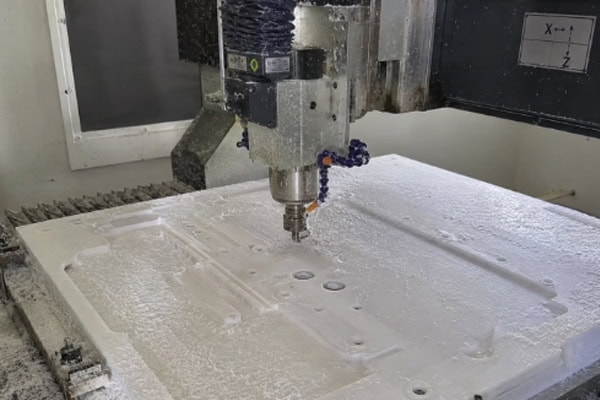
Why Is Professional Equipment Essential for CNC Machining Plastic Sheets?
CNC machining of plastic sheets is not simply a matter of placing material on a machine tool and cutting it. As industrial products continue to demand higher dimensional accuracy, assembly precision, and surface quality, traditional machining methods can no longer meet modern manufacturing requirements. Particularly in industries such as automation equipment, medical devices, electronics, semiconductor equipment, and aerospace, many plastic components must meet stringent machining standards.
To ensure stable product quality, accurate dimensions, and consistency in mass production, professional equipment is required throughout the entire machining process. From CAD/CAM programming to cutting and final inspection, every stage depends on dedicated equipment. Equipment not only determines machining efficiency but also directly affects final product quality.
CNC Programming Equipment
Before plastic sheets enter the machining stage, programming has already determined the quality of the subsequent manufacturing process. Many customers assume that production can begin immediately after submitting drawings, but engineers must first use professional programming equipment and software to create machining models and develop suitable machining strategies based on the product structure.For simple flat components, programming is relatively straightforward. However, for irregular geometries, curved surfaces, and high-precision mating parts, programming often requires significantly more time.
Programming equipment is primarily responsible for converting product drawings into machine-readable machining programs while planning toolpaths, cutting sequences, and machining parameters. Improper toolpath design may lead to excessive machining time, poor surface quality, or even part deformation. This is especially important for high-performance engineering plastics such as PEEK, PEI, and PTFE.
Professional programming equipment enables:
- 3D model creation
- Toolpath simulation
- Interference analysis
- Machining sequence optimization
Cutting parameter adjustmentBefore actual production, engineers typically run simulations to identify potential problems in advance, preventing material waste and rework. Therefore, although programming equipment does not directly participate in cutting operations, it is an indispensable part of the entire machining process.
CNC Machining Centers
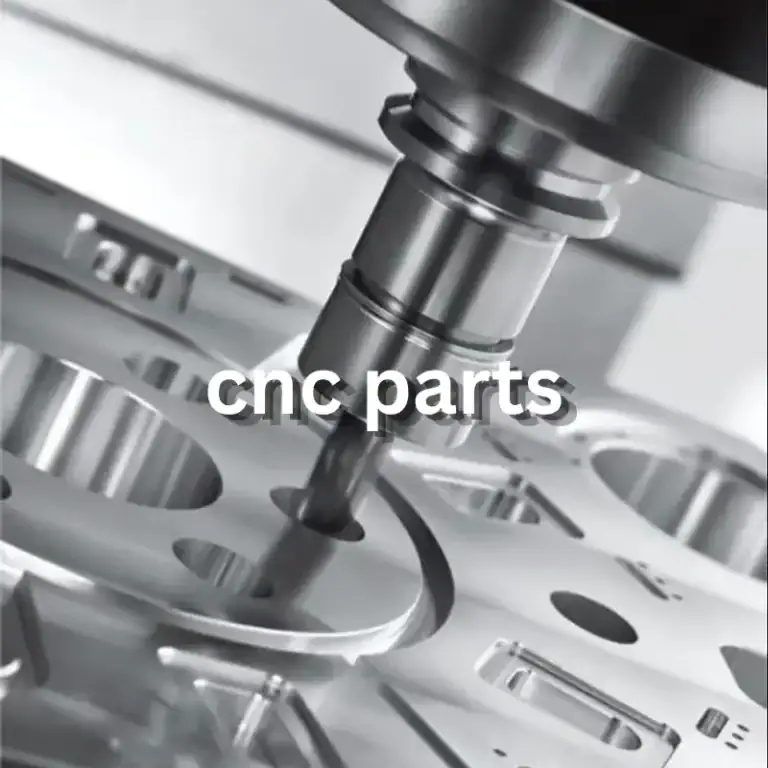
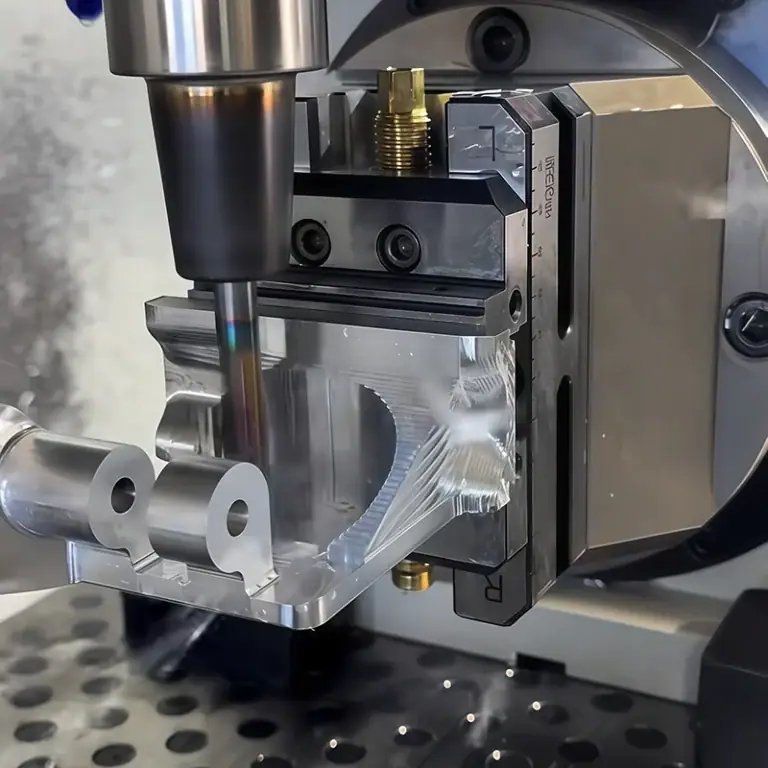
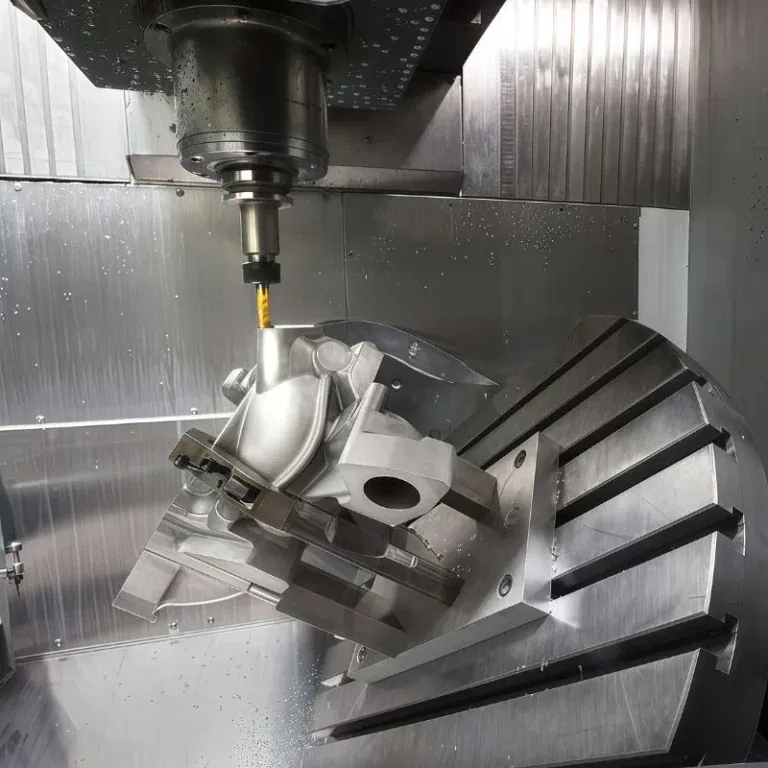
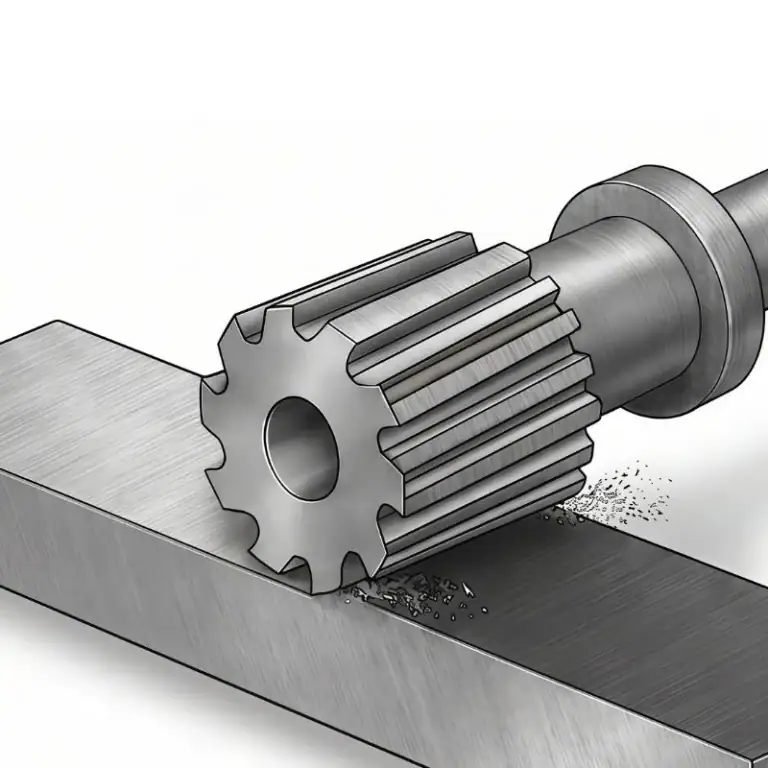
If programming equipment develops the machining plan, then the CNC machining center is the core equipment that transforms the plan into a finished product. It is the most important production equipment in plastic sheet machining and plays a key role in determining product precision and productivity.Modern CNC machining centers can automatically perform complex machining operations according to programmed instructions, including milling, drilling, tapping, slotting, and profile cutting. Since plastic materials differ from metals in hardness and thermal properties, machine tools must provide not only high accuracy but also excellent operational stability.
High-performance machining centers can achieve:
- High-speed cutting
- High-precision positioning
- Continuous multi-process machining
- Complex contour machining
Curved surface machiningFor example, plastic fixtures in automation equipment, insulation components in semiconductor equipment, and structural parts in medical devices often require high-precision machining centers for manufacturing. The higher the machine accuracy, the more stable the dimensional consistency, hole positioning accuracy, and assembly performance.
Fixtures and Workholding Equipment
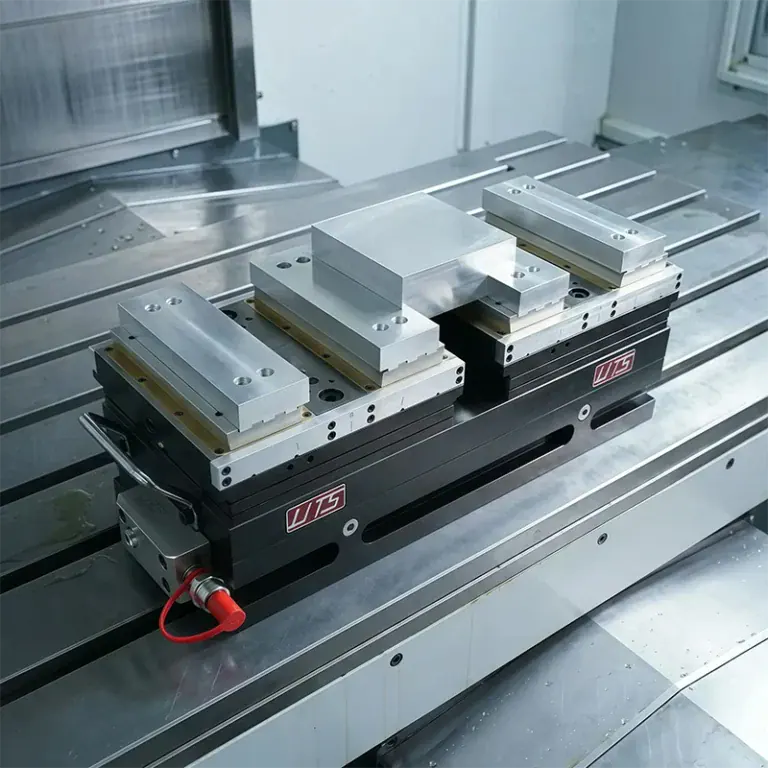
Although plastic sheets are relatively lightweight, they are more susceptible to cutting forces and temperature variations during machining. If workholding methods are not properly designed, dimensional deviations or part deformation may occur even when using highly accurate machine tools.Therefore, fixturing equipment plays an equally important role in plastic machining. Different plastic materials possess different hardness and rigidity characteristics. For example, PTFE is relatively soft and prone to deformation, while PEEK is harder and requires more stable clamping.
Common workholding equipment includes:
- Vacuum tables
- Positioning fixtures
- Clamping plates
Dedicated tooling fixturesProper fixturing prevents part movement, reduces vibration, and improves cutting stability. For thin sheets, large panels, and high-precision components, fixture design often directly affects machining quality. Many precision components require custom fixtures specifically designed to improve positioning accuracy and production efficiency.
The Importance of Inspection Equipment
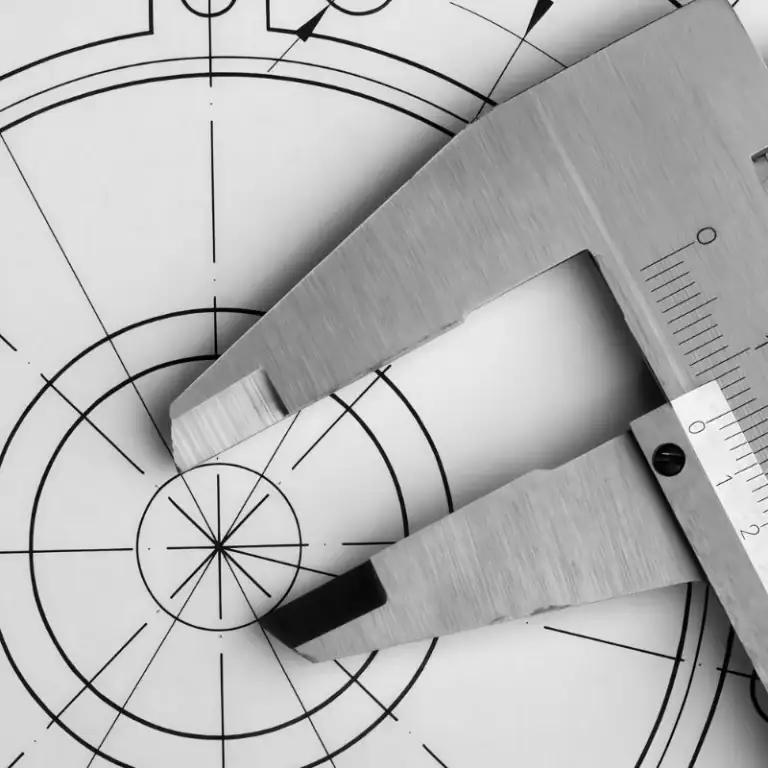
Many people assume production ends when machining is complete, but inspection is equally important. Plastic parts used in automation equipment, electronic devices, and medical equipment often require strict inspection before use.Inspection equipment verifies whether products meet drawing specifications and helps identify problems that may arise during machining. Even when parts are machined on the same machine, inspection is necessary to confirm dimensional compliance.
Common inspection equipment includes:
- Vernier calipers
- Micrometers
- Height gauges
- Optical projectors
Coordinate Measuring Machines (CMMs)These instruments can inspect:
- Product dimensions
- Hole position accuracy
- Flatness
- Coaxiality
Surface qualityFor high-precision plastic components, inspection is not only a key quality control step but also an important guarantee of successful assembly and proper functionality. A complete inspection system helps improve product consistency, reduce rework rates, and strengthen customer confidence in product quality.
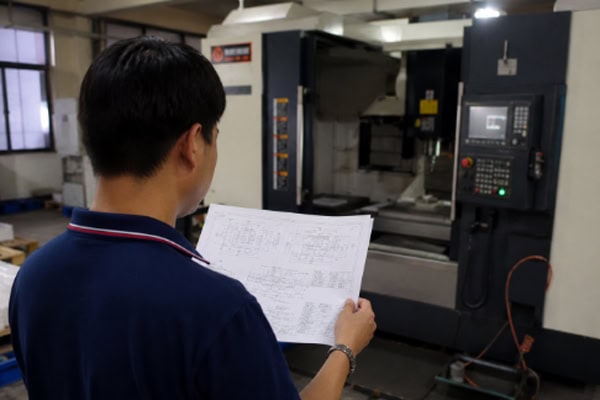
What Auxiliary Equipment Is Required for CNC Machining Plastic Sheets?
When machining plastic sheets, a CNC machining center alone cannot complete the entire production process. To ensure machining accuracy, product quality, and production efficiency, various auxiliary equipment must work together.This is particularly important when machining engineering plastics such as PEEK, PEI, POM, and PTFE, which require specialized tooling, cooling, dust extraction, and post-processing equipment. A complete auxiliary equipment system not only improves machining stability but also reduces deformation, burrs, and dimensional errors.
Cutting Tools
Although cutting tools are relatively small, they directly influence dimensional accuracy, surface quality, and machining efficiency.Different plastics require different tooling solutions. Improper tool selection may result in excessive burrs, rough surfaces, dimensional inaccuracies, or even material burning.Plastic machining generally places greater emphasis on tool sharpness because sharp cutting edges reduce cutting resistance and frictional heat, preventing localized softening or melting.
Common cutting tools include:
- Single-flute end mills
- Two-flute end mills
- Carbide cutting tools
- Diamond-coated tools
- Ball nose cutters
Engraving toolsFor example, sharp single-flute cutters are commonly used for POM and ABS to improve chip evacuation, while carbide tools are preferred for PEEK and PEI due to their superior wear resistance.
Air Cooling Equipment
One of the major differences between plastics and metals is their sensitivity to temperature changes. Although many engineering plastics have good heat resistance, localized heat buildup during high-speed machining can still cause softening, edge melting, dimensional changes, or discoloration.To maintain machining stability, most plastic sheet machining operations utilize air cooling systems.
Compressed air serves several purposes:
- Reduces cutting heat
- Prevents material softening
- Improves dimensional stability
- Minimizes surface burning
- Extends tool life
Removes chips efficientlyCompared with liquid cooling systems, air cooling is generally more suitable for plastics because some materials absorb moisture and may experience dimensional changes.
Dust Collection and Chip Extraction Equipment
Plastic sheet machining generates large amounts of chips and dust. If these residues accumulate in the machining area, they can negatively affect machining quality and machine performance.This makes dust collection systems an essential part of modern plastic machining facilities.
Common equipment includes:
- Industrial vacuum cleaners
- Centralized dust collection systems
- Chip extraction units
- Filtration equipment
Dust collection systemsContinuous removal of machining debris keeps the work area clean, improves machining stability, reduces airborne dust, and minimizes surface defects.
Post-Processing and Auxiliary Inspection Equipment
Machining completion does not necessarily mean the manufacturing process is finished. Many products require post-processing and preliminary inspection before meeting final delivery standards.
Common equipment includes:
- Deburring equipment
- Polishing equipment
- Hot-air trimming equipment
- Cleaning equipment
- Inspection fixtures
Surface inspection devicesThese tools help technicians identify issues and optimize finished products. Proper post-processing improves surface smoothness, assembly performance, consistency, and overall product quality.
What Inspection Equipment Is Needed After Plastic Sheet Machining?
Although plastic sheet products have already been formed after CNC machining, the manufacturing process is not complete. Inspection is a critical step in quality assurance.Especially in automation equipment, electronic devices, medical equipment, semiconductor equipment, and precision machinery industries, plastic parts often must meet strict dimensional tolerances and assembly requirements.
Dimensional Inspection Equipment
Dimensional inspection is one of the most fundamental and important post-machining quality control procedures.
Common equipment includes:
- Vernier calipers
- Digital calipers
- Micrometers
- Height gauges
- Depth gauges
Plug gauges and ring gaugesThese tools verify:
- Length
- Width
- Thickness
- Hole diameter
- Hole spacing
- Slot dimensions
Coordinate Measuring Equipment
For complex parts or components with demanding tolerances, standard measuring tools may not be sufficient.
Coordinate Measuring Machines (CMMs) can inspect:
- Hole position accuracy
- Coaxiality
- Flatness
- Perpendicularity
- Roundness
- Surface profiles
3D dimensionsCMMs are widely used in precision plastic component inspection and can generate detailed inspection reports for customer acceptance and quality traceability.
Surface Quality Inspection Equipment
In addition to dimensional accuracy, surface quality also affects component performance.
Common defects include:
- Excessive tool marks
- Residual burrs
- Surface scratches
- Machining vibration marks
- Insufficient smoothness
Common inspection equipment includes:
- Surface roughness testers
- Magnification inspection devices
- Industrial microscopes
- Surface profilometers
Optical inspection systemsThese tools help identify microscopic defects that may not be visible to the naked eye.
Appearance and Functional Testing Equipment
Before shipment, manufacturers typically perform visual and functional inspections.
Appearance inspections check for:
- Cracks
- Deformation
- Color variations
- Chips
- Contamination
Machining damageCommon equipment includes:
- Illuminated inspection stations
- Visual inspection systems
- Flatness inspection platforms
- Assembly testing fixtures
Functional testing fixturesFor example, plastic fixtures and guide components used in automation equipment may undergo simulated assembly tests to verify functionality.
How Does Equipment Configuration Affect Plastic Sheet Machining Quality?
Many customers focus primarily on price, lead time, and material selection when choosing a CNC plastic machining supplier while overlooking the importance of equipment configuration.The reason identical drawings and materials often produce different results is that equipment configuration significantly impacts machining quality.
Equipment Accuracy Affects Dimensional Quality
High-precision equipment typically offers:
- Higher repeatability
- More stable operation
- Lower machining errors
Better motion controlGreater machine accuracy results in improved dimensional consistency and assembly performance.
Equipment Stability Affects Product Consistency
Plastic machining requires not only compliance for individual parts but also consistency across batches.
Stable equipment enables:
- Consistent dimensions
- Uniform hole accuracy
- Consistent surface quality
- Uniform assembly performance
Stable product qualityThis consistency is particularly important for large-volume production.
Auxiliary Equipment Affects Surface Quality and Machining Performance
Auxiliary systems significantly influence machining results.
They improve:
- Surface roughness
- Edge quality
- Burr control
- Machining stability
Tool lifeFor transparent plastics, acrylic materials, and high-gloss engineering plastics, auxiliary equipment is especially important.
Inspection Equipment Affects Final Delivery Quality
Even with excellent machining processes, quality cannot be guaranteed without inspection.
Inspection equipment verifies:
- Dimensional compliance
- Hole accuracy
- Flatness requirements
- Surface quality
- Assembly functionality
A complete inspection system reduces quality risks, improves product stability, and enhances customer confidence.
Frequently Asked Questions
Is high-end equipment always required for CNC machining plastic sheets?
Conventional machining centers are sufficient for ordinary structural components. However, high-precision equipment is recommended for precision parts, complex geometries, and high-performance engineering plastics such as PEEK and PEI.
Are plastic machining equipment and metal machining equipment the same?
The basic principles are similar, but plastic machining places greater emphasis on tool sharpness, temperature control, and clamping methods, resulting in different process parameters.
Which equipment has the greatest impact on machining quality?
The CNC machining center is the core piece of equipment, while tooling systems and inspection equipment also directly influence final product quality.
In conclusion
Plastic sheet CNC machining requires the combination of proper equipment, optimized processes, and machining expertise to produce plastic components with precise dimensions, smooth surfaces, and stable performance. Basic equipment is sufficient for standard plastic products, but precision components made from high-performance engineering plastics such as PEEK, PEI, and PTFE—as well as parts used in automation equipment, medical devices, and semiconductor equipment—require higher-precision machine tools and inspection systems. Choosing a manufacturer with comprehensive equipment and mature technical capabilities not only improves product quality but also shortens lead times, making plastic sheet machining more efficient and reliable.