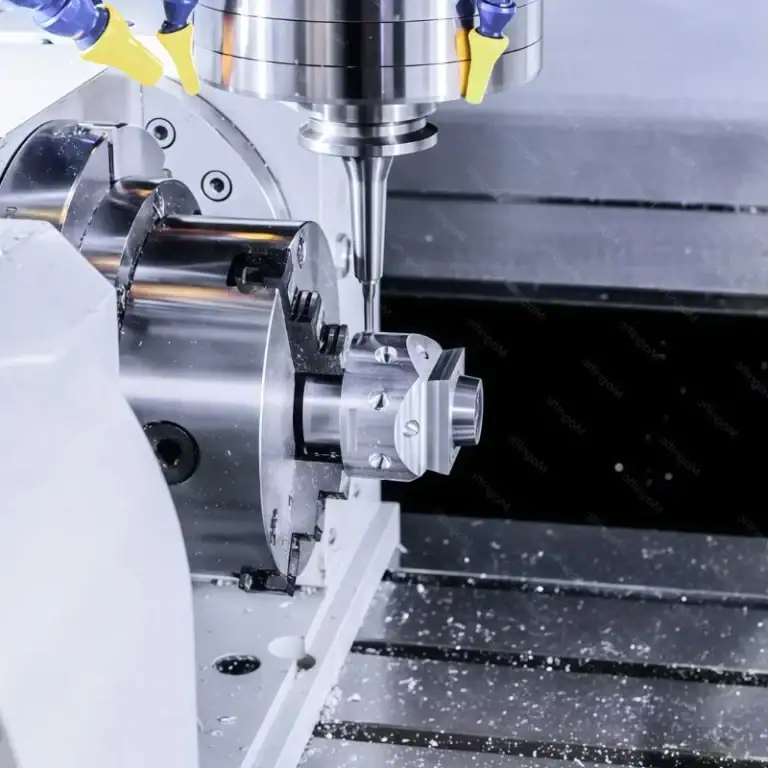
In precision manufacturing, dimensional stability is one of the most important indicators of part quality. Whether in medical devices, automotive components, or critical structures in automation equipment, dimensional variation can lead to assembly issues, performance degradation, or even entire batch rejection. In real production, many manufacturers encounter inconsistent part dimensions, which are not always caused by insufficient machine accuracy alone. In most cases, it is the result of multiple interacting factors. To improve stability in precision machining, it is necessary to systematically analyze and control machine conditions, process parameters, material behavior, and environmental influences.
Machine Tool and Equipment Instability
In machining operations, the stability of equipment is the primary factor affecting dimensional accuracy. Although dimensional variation may appear to be caused by tooling or process parameters, deeper analysis often reveals that long-term machine wear, structural rigidity changes, and thermal instability are the real sources. These issues are amplified during actual cutting processes and directly reflected in part dimensional deviations. In high-precision mass production, even minor mechanical errors can accumulate into significant inconsistencies.

Insufficient Rigidity or Machine Wear
Insufficient machine rigidity can cause slight deformation during cutting, affecting machining accuracy.
- Wear of guide rails or lead screws increases positioning errors
- Poor tool holder rigidity causes vibration during cutting
- Long-term use without maintenance reduces accuracy
These issues are especially obvious under heavy load or high-precision machining conditions and can lead to batch dimensional drift.
Spindle Runout and Accuracy Deviation
The spindle is a critical component affecting cutting stability. Any imbalance or runout directly impacts machining dimensions.
- Bearing wear causes spindle eccentricity
- High-speed operation introduces vibration affecting tool paths
- Workpiece surface shows dimensional variation or roundness errors
Poor spindle condition often results in continuous dimensional instability.
Thermal Deformation of the Machine Tool
During prolonged operation, heat buildup causes structural deformation of the machine.
- Spindle heat causes axial expansion
- Temperature differences in guide rails lead to displacement errors
- Continuous machining results in gradual dimensional drift
Thermal instability is one of the major sources of batch machining errors.
Improper Machining Process and Parameter Settings
Even with high-precision equipment, improper process planning can still lead to significant dimensional variation. Cutting parameters, tool selection, and toolpath design all directly influence process stability. In complex parts or mass production, these factors are amplified, reducing consistency. Therefore, proper process control is a core requirement in precision machining stability.
Incorrect Cutting Parameters
Different materials require different cutting speeds and feed rates.
- Excessive feed rate causes dimensional oversize
- High cutting speed leads to thermal deformation
- Uneven tool load reduces process stability
- Parameters not adjusted for material type
Improper parameters are a common cause of dimensional variation.
Delayed Tool Wear Replacement
Tool condition directly affects machining accuracy, and wear leads to gradual dimensional deviation.
- Tool dulling increases cutting resistance
- Dimensions gradually increase or decrease
- Surface quality deteriorates
Ignoring tool life management often results in batch-level errors.
Improper Toolpath Design
Toolpath planning affects cutting stability and load distribution.
- Poor entry strategy causes impact loads
- Unoptimized machining sequence leads to deformation
- Stress release causes dimensional changes
Well-designed toolpaths help maintain machining stability.
Material-Related Dimensional Variation
Material properties significantly influence machining stability. Different materials behave differently during cutting, especially metals versus engineering plastics. If internal stress, structural characteristics, and thermal behavior are not properly considered before machining, deformation or spring-back may occur during or after processing, affecting dimensional consistency.
Internal Stress Release in Materials
Raw materials may contain internal stress before machining.
- Stress release during cutting causes deformation
- Parts may warp or spring back after machining
- Different material batches show inconsistent behavior
Poor stress control affects production consistency.
Thermal Expansion Properties
Different materials react differently to temperature changes.
- Thermal expansion occurs during machining
- Shrinkage after cooling leads to dimensional errors
- Long machining cycles cause gradual drift
Temperature sensitivity significantly affects precision parts.
Material Batch Variation
Different material batches may show slight differences in properties.
- Hardness variation affects cutting behavior
- Density differences influence stability
- Supplier variation leads to inconsistent performance
Material consistency is essential for stable production.
Environmental and Operational Factors
In precision machining, environmental conditions and operator practices also play a critical role in dimensional stability. Even when equipment and processes are well controlled, fluctuations in temperature, improper clamping, or inconsistent operation can still lead to deviations. These “hidden factors” often become major contributors to instability in high-precision manufacturing.
Temperature and Humidity Changes
Environmental variations directly affect both machines and materials.
- Thermal expansion and contraction due to temperature changes
- Humidity affects certain material stability
- Unstable workshop conditions introduce errors
A controlled environment is essential for precision machining.
Improper Clamping Methods
Workpiece fixturing determines stress distribution during machining.
- Excessive clamping force causes deformation
- Misalignment leads to dimensional deviation
- Repeated setups accumulate errors
Proper fixturing improves consistency.
Operator and Human Factors
Unstandardized operations can also impact machining results.
- Incorrect parameter input
- Delayed tool changes or calibration
- Inconsistent operating procedures
Standardized workflows reduce human-induced variation.
Dimensional instability in machining is rarely caused by a single factor. It is usually the combined result of machine conditions, process parameters, material behavior, and environmental influences. Only through systematic optimization and control can stable precision machining quality be achieved. Tirapid specializes in high-precision machining services, providing reliable one-stop manufacturing solutions for precision parts.