Delrin vs Teflon is a common material comparison when choosing plastics for mechanical parts, sliding components, seals, wear parts, and precision assemblies. Delrin is known for strength, stiffness, and dimensional stability, while Teflon is known for extremely low friction, chemical resistance, and non-stick performance.
This guide explains the key differences between Delrin and Teflon, including properties, advantages, limitations, machining performance, applications, and material selection. It will help you understand when to choose Delrin plastic and when PTFE Teflon is the better material for your part.
What Are Delrin And Teflon?
Delrin and Teflon are both engineering plastics, but they are designed for different performance needs. Delrin is usually selected when a part needs strength, wear resistance, and accurate mechanical fit. Teflon is often used when the part needs low friction, chemical resistance, heat resistance, or non-stick performance.
What Is Delrin Plastic?
Delrin is a brand name for acetal homopolymer, a type of polyoxymethylene plastic. In many engineering projects, Delrin plastic is used when a part needs good mechanical strength, stiffness, low friction, and stable dimensions. It is commonly compared with other acetal and POM materials.
Delrin material is often used for gears, bushings, rollers, spacers, guide parts, and precision mechanical components. It machines well, holds tolerances effectively, and provides better rigidity than many general-purpose plastics. This makes it a practical choice for parts that need repeatable movement and reliable fit.
Compared with Teflon, Delrin is usually stronger and more dimensionally stable under mechanical load. However, it does not have the same level of chemical resistance or ultra-low friction as PTFE Teflon. This is why Delrin is often better for structural and mechanical parts, not extreme chemical or non-stick applications.

What Is Teflon Material?
Teflon is the well-known trade name for PTFE, which stands for polytetrafluoroethylene. PTFE Teflon is famous for its very low friction, excellent chemical resistance, high temperature resistance, and non-stick surface. It is one of the most widely recognized fluoropolymer materials.
Teflon material is often used for seals, gaskets, liners, sliding pads, insulating parts, and components exposed to chemicals or high-friction environments. It performs well where many plastics may swell, stick, or degrade due to chemical contact or harsh working conditions.
Compared with Delrin, Teflon is softer and less rigid. It is not usually the first choice for parts that need high strength, tight mechanical fits, or strong structural support. However, when the main requirement is low friction, chemical resistance, or heat resistance, Teflon is often the better option.
Main Difference Between Delrin And Teflon
The main difference between Delrin and Teflon is their performance focus. Delrin is better for strength, stiffness, wear resistance, and precision mechanical movement. Teflon is better for low friction, chemical resistance, heat resistance, and non-stick performance.
For parts that need to carry load, keep shape, and maintain accurate dimensions, Delrin material is often the better choice. For parts that slide, seal, resist chemicals, or work in high-friction environments, PTFE Teflon may be more suitable.
In simple terms, choose Delrin when the part needs mechanical strength and stable fit. Choose Teflon when the part needs very low friction, chemical resistance, or non-stick behavior.
Delrin vs Teflon: Key Properties Compared
Delrin and Teflon are both high-performance plastics, but they are not used for the same reasons. Delrin offers better strength, stiffness, wear resistance, and dimensional control. Teflon offers lower friction, better chemical resistance, and higher heat resistance. Comparing these properties makes it easier to choose the right material for real working conditions.

Strength And Rigidity
Delrin is generally much stronger and more rigid than Teflon. It has good tensile strength, stiffness, and load-bearing ability, so it works well for mechanical parts that need to keep their shape under pressure. This makes Delrin plastic suitable for gears, rollers, bushings, spacers, structural parts, and precision components.
Teflon is softer and more flexible. It is not usually chosen for parts that need high stiffness or strong mechanical support. Under load, Teflon can deform more easily than Delrin, especially if the part has thin walls, tight tolerances, or continuous pressure. For strength and structural stability, Delrin is usually the better option.
Friction And Wear Resistance
Teflon has one of the lowest friction levels among engineering plastics. Its surface is naturally slippery, which makes it useful for sliding pads, seals, gaskets, liners, and non-stick parts. When low friction is the most important requirement, PTFE Teflon often performs better than Delrin.
Delrin also has low friction and good wear resistance, but it is more balanced for mechanical movement. It is often used when the part needs both wear resistance and strength. For gears, bushings, rollers, and moving assemblies, Delrin can provide smoother operation while still keeping better shape and stiffness than Teflon.
Heat Resistance
Teflon usually performs better in high-temperature environments. PTFE Teflon can handle higher continuous working temperatures than Delrin, which makes it suitable for heat-exposed seals, insulation parts, chemical equipment, and sliding components used in demanding environments.
Delrin has good performance in many normal mechanical applications, but it is not the best choice for high heat. If the working temperature is too high, Delrin may lose strength or dimensional stability. For parts exposed to continuous high temperature, Teflon is often safer. For room-temperature or moderate-temperature mechanical parts, Delrin is often more practical.
Chemical Resistance
Teflon has excellent chemical resistance and can resist many acids, solvents, oils, fuels, and harsh chemicals. This is one of the main reasons it is widely used in chemical processing, sealing, fluid handling, and laboratory equipment.
Delrin also resists many oils, fuels, and common solvents, but it is not as chemically resistant as Teflon. Strong acids, strong oxidizers, and some harsh chemicals can damage Delrin material. If the part will contact chemicals, the exact chemical type, concentration, temperature, and exposure time should be checked before final selection.
Dimensional Stability
Delrin has excellent dimensional stability compared with many plastics. It absorbs little moisture, machines cleanly, and can hold tight tolerances well. This makes Delrin material a strong choice for precision parts, mechanical fits, and assemblies where stable size is important.
Teflon has lower dimensional stability under load. Because it is softer, it can creep or deform over time when exposed to pressure. This does not mean Teflon is a poor material, but it means it should be used where low friction, sealing, or chemical resistance is more important than tight mechanical accuracy.
Delrin vs Teflon: Advantages And Limitations
Delrin and Teflon each have clear advantages, but neither material is best for every part. Delrin is stronger, stiffer, and easier to use for precision mechanical components. Teflon is better for low friction, chemical resistance, and high-temperature applications. Knowing their limits helps avoid the wrong material choice.
Advantages Of Delrin Material
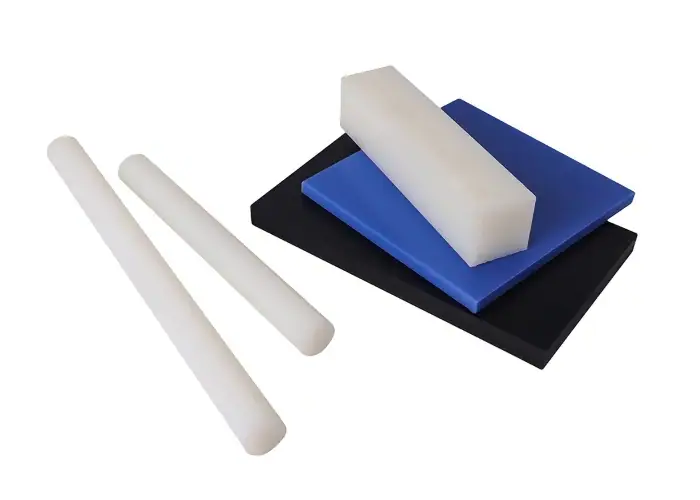
Delrin material offers a strong balance of stiffness, wear resistance, low friction, and dimensional stability. It is useful for parts that need to move smoothly while keeping accurate size and shape. This makes Delrin a practical choice for gears, rollers, bushings, spacers, guide blocks, and other precision mechanical parts.
Delrin plastic also machines well. It can produce clean edges, stable tolerances, and smooth surfaces with proper CNC machining. Compared with Teflon, Delrin is usually easier to control during machining because it is more rigid and less likely to deform under clamping or cutting pressure.
Limitations Of Delrin Plastic
Delrin is not the best choice for extreme chemical exposure. It can resist many oils, fuels, and common solvents, but strong acids, strong oxidizers, and certain harsh chemicals may damage the material. If the part will work in a chemical environment, material compatibility should be checked before production.
Delrin also has lower heat resistance than Teflon. It performs well in many mechanical applications, but it may lose strength or dimensional stability at higher temperatures. For parts that need continuous high-temperature performance, PTFE Teflon is often a better option.
Advantages Of PTFE Teflon
PTFE Teflon is known for extremely low friction, excellent chemical resistance, and strong non-stick performance. It works well in applications where parts need to slide, seal, resist chemicals, or reduce adhesion. Common examples include gaskets, seals, liners, sliding pads, and insulation components.
Teflon material also performs better than Delrin in high-temperature and chemically aggressive environments. When the main requirements are low friction, heat resistance, and chemical stability, Teflon is often the safer material choice.
Limitations Of Teflon Material
The main limitation of Teflon is its lower strength and stiffness. It is softer than Delrin and can deform more easily under load. This makes it less suitable for parts that need tight tolerances, strong structural support, or precise mechanical fitting.
Teflon is also more difficult to machine accurately. Because it is soft and flexible, it may move, compress, or deform during machining. For precision parts, the design, tolerance, clamping method, and machining strategy should be reviewed carefully before choosing Teflon.
How Do Delrin And Teflon Perform In Machining?
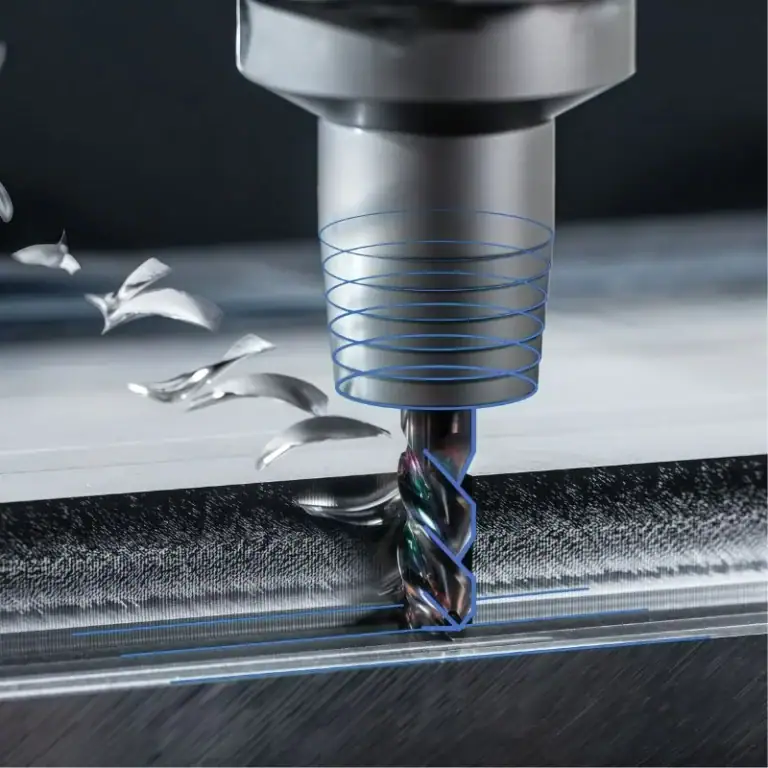
Delrin and Teflon can both be machined into custom plastic parts, but they behave very differently during cutting. Delrin is more rigid and easier to control, while Teflon is softer and more likely to deform. This difference affects tolerance, surface finish, tool selection, and final part accuracy.
Delrin Machining Performance
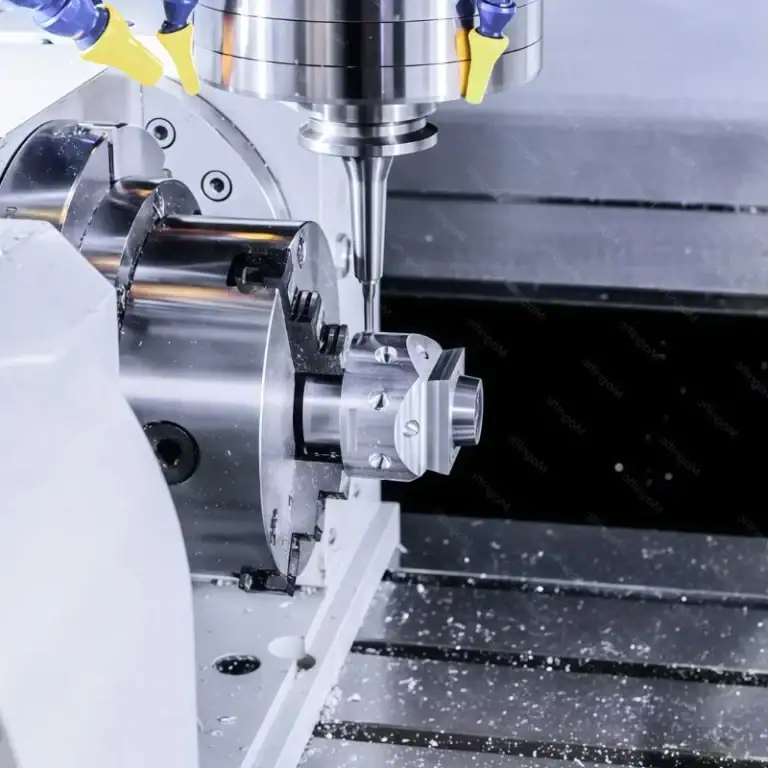
Delrin is one of the easier engineering plastics to machine. It cuts cleanly, produces stable chips, and can hold tight tolerances with proper machining conditions. Because Delrin material has good stiffness and dimensional stability, it is suitable for CNC milling, turning, drilling, boring, and tapping.
Delrin plastic is often used for precision machined parts such as gears, bushings, rollers, spacers, sliding blocks, and mechanical fixtures. It is a good option when the part needs smooth movement, accurate dimensions, and repeatable assembly performance.
Teflon Machining Performance
Teflon can also be machined, but it requires more process control. PTFE Teflon is soft, flexible, and slippery, so it may move or deform under cutting force or clamping pressure. This can make tight tolerances more difficult to maintain, especially on thin walls, long parts, or small detailed features.
During machining, Teflon material may also create stringy chips, so sharp tools and good chip control are important. It is often used for seals, gaskets, washers, insulation parts, sliding pads, and chemical-resistant components where low friction and chemical resistance are more important than high rigidity.
Tolerance And Surface Finish Considerations
Delrin usually provides better tolerance control than Teflon because it is stronger and more rigid. It can maintain accurate shapes more easily during machining and after production. For precision mechanical parts, Delrin is often the easier material to manage.
Teflon can achieve a usable machined finish, but the final accuracy depends heavily on part design, clamping, tool sharpness, and cutting strategy. If the part needs very tight tolerances, the drawing should be reviewed carefully before choosing Teflon.
When CNC Machining Is A Good Choice
CNC machining is a good choice for Delrin and Teflon parts when you need prototypes, small batches, custom shapes, tight features, or functional testing before mass production. It allows engineers to produce accurate parts directly from sheet, rod, plate, or block materials.
For Delrin, CNC machining is especially useful for precision mechanical parts. For Teflon, CNC machining is useful for seals, gaskets, liners, and custom low-friction components. The best result depends on matching the material, design, tolerance, and application before production starts.
Common Applications Of Delrin And Teflon
Delrin and Teflon are used in many industrial and mechanical parts, but their application focus is different. Delrin is often used where strength, wear resistance, and dimensional accuracy matter. Teflon is often used where low friction, chemical resistance, heat resistance, or sealing performance is more important.
Common Uses Of Delrin Plastic
Delrin plastic is commonly used for gears, bushings, rollers, pulleys, spacers, guide blocks, sliding parts, and mechanical fixtures. These parts often need smooth movement, stable dimensions, and good wear resistance during repeated use.
Delrin material is also suitable for precision components that need to hold shape under load. In many assemblies, it is used as a lightweight alternative to metal when the part does not require extreme heat or chemical resistance.
Common Uses Of PTFE Teflon
PTFE Teflon is often used for seals, gaskets, washers, liners, sliding pads, valve seats, insulation parts, and chemical-resistant components. Its low-friction surface helps parts slide smoothly, while its chemical resistance makes it useful in harsh working environments.
Teflon material is also used where sticking, corrosion, or chemical attack must be reduced. It is a strong choice for fluid handling, sealing systems, laboratory equipment, chemical processing parts, and high-temperature sliding applications.
Industrial Parts And Precision Components
In automation equipment, industrial machinery, electronics, medical devices, and fluid systems, both materials can be useful. Delrin is preferred for mechanical movement, precision fitting, and wear-resistant parts. Teflon is preferred for sealing, sliding, insulation, and chemical-exposed parts.
For custom machined plastic components, the application should guide the material choice. If the part needs strength and tight fit, Delrin is usually more suitable. If the part needs low friction, chemical resistance, or heat resistance, PTFE Teflon is often the better option.
Delrin vs Teflon: How To Choose The Right Material
Choosing between Delrin and Teflon depends on what the part needs to do in real use. Delrin is better when strength, stiffness, wear resistance, and accurate fit are important. Teflon is better when the part needs very low friction, chemical resistance, heat resistance, or sealing performance.
Choose Delrin For Strength, Wear, And Precision Fit
Choose Delrin when your part needs good mechanical strength, stable dimensions, and smooth movement. It is a strong option for gears, bushings, rollers, spacers, sliders, guide blocks, and other parts that need repeated motion or accurate assembly.
Delrin material is also a good choice when you need easier machining and better tolerance control. Compared with Teflon, Delrin is more rigid, so it is often easier to machine into precise features, tight holes, threads, and functional mechanical shapes.
Choose Teflon For Low Friction, Heat, And Chemicals
Choose Teflon when your part needs extremely low friction, chemical resistance, or high-temperature performance. PTFE Teflon is often used for seals, gaskets, washers, liners, sliding pads, valve seats, and parts exposed to aggressive chemicals.
Teflon material is especially useful when the part must resist sticking, reduce friction, or work in harsh fluid environments. However, because it is softer than Delrin, it may not be the best choice for parts that need high stiffness, tight mechanical fit, or strong load-bearing performance.
Key Questions To Ask Before Material Selection
Before choosing Delrin or Teflon, check the part’s load, movement, tolerance, temperature, chemical exposure, and surface requirements. A part used for sliding motion may need a different material than a part used for sealing, insulation, or structural support.
For CNC machined plastic parts, it is also important to review wall thickness, hole size, thread requirements, surface finish, and quantity. At TiRapid, I can help compare Delrin and Teflon based on your drawings, STEP files, application needs, and production goals.
FAQs
What Is Delrin AF?
Delrin AF is a modified Delrin material filled with PTFE fibers. It combines the strength and dimensional stability of Delrin with the lower friction of PTFE Teflon. It is often used for bushings, bearings, wear strips, and sliding parts that need smoother movement and better wear performance.
Can You Glue Delrin?
Delrin is difficult to glue because it has a low-friction, low-surface-energy surface. Standard adhesives usually do not bond well. For strong assembly, mechanical fastening, press fitting, threads, or special surface treatment with suitable adhesives is usually more reliable.
Can Delrin Be Laser Cut?
Delrin can be laser cut, but it is not always the best choice. Laser cutting may create fumes, edge discoloration, or heat-affected areas. For accurate holes, tight tolerances, clean edges, and functional parts, CNC machining is usually a better option.
Do Delrin Bushings Need Grease?
Delrin bushings do not always need grease because Delrin has low friction and good wear resistance. However, lubrication can improve service life, reduce noise, and help under higher loads or continuous movement. The need for grease depends on load, speed, temperature, and working environment.
Conclusion
Delrin and Teflon are both useful engineering plastics, but they are designed for different needs. Delrin is stronger, stiffer, easier to machine, and better for precision mechanical parts that require wear resistance and stable dimensions. Teflon is softer, more slippery, and better for low-friction, heat-resistant, chemical-resistant, and sealing applications.
When comparing Delrin vs Teflon, the best choice depends on the part’s function, load, tolerance, temperature, chemical exposure, and surface requirements. At TiRapid, I can help you review your drawings and material requirements to choose the right plastic for prototypes, small batches, or precision machined parts.