You may not realize that many mechanical parts that look ordinary are actually made from nylon instead of metal. With advantages such as lightweight, high strength, wear resistance, and self-lubrication, nylon has become increasingly popular in automation equipment, automotive components, electronic devices, and industrial machinery. However, nylon machining is not as simple as it seems. Due to its moisture absorption and sensitivity to temperature changes, nylon can experience dimensional changes and deformation during processing. To manufacture high-precision nylon parts, it is important to choose the right machining method and optimize the process according to material characteristics. For projects with strict accuracy requirements, professional precision machining solutions can effectively improve part quality and service life.
What Are the Characteristics of Nylon Material? Why Is It Suitable for Mechanical Parts?
Nylon is one of the most widely used engineering plastics. Compared with ordinary plastics, it provides better mechanical strength and wear resistance. In equipment where weight reduction, noise control, or reduced metal friction are required, nylon parts often provide excellent performance. However, different types of nylon have different properties, so selecting the right material grade before machining is essential.
What Advantages Does Nylon Material Provide?
The biggest advantage of nylon is its balanced performance. It combines good strength with excellent wear resistance, making it a preferred material for many industrial components.
- High mechanical strength and the ability to handle certain loads.
- Good self-lubricating properties to reduce friction between components.
- Lower weight compared with metal materials, helping reduce equipment weight.
- Strong impact resistance and less risk of cracking.
These characteristics make nylon suitable for manufacturing gears, bushings, sliders, rollers, and other mechanical parts. In equipment that requires smooth operation and low noise, nylon components can sometimes provide better performance than traditional metal parts.
Why Does Nylon Machining Require Special Attention?
Although nylon is relatively easy to machine, it is not a completely stable material. Due to its moisture absorption characteristics, environmental humidity and material condition can affect the final dimensions. Without proper preparation before machining, parts may experience fitting problems during assembly.
- Absorbed moisture can cause dimensional changes.
- Heat generated during machining may lead to deformation.
- Thin-wall structures are more likely to lose their shape.
Therefore, when performing precision machining of nylon parts, manufacturers need to consider material conditions, machining environments, and final application requirements to prevent accuracy issues caused by material characteristics.
What Are the Common Processing Methods for Nylon Parts?
There are several manufacturing methods available for nylon parts. The right process depends on the part structure, production volume, accuracy requirements, and application environment. For customized parts and small batches, machining is usually more flexible, while injection molding may be more suitable for mass production. Choosing the correct manufacturing method helps maintain quality while controlling costs.
CNC Precision Machining for Nylon Parts
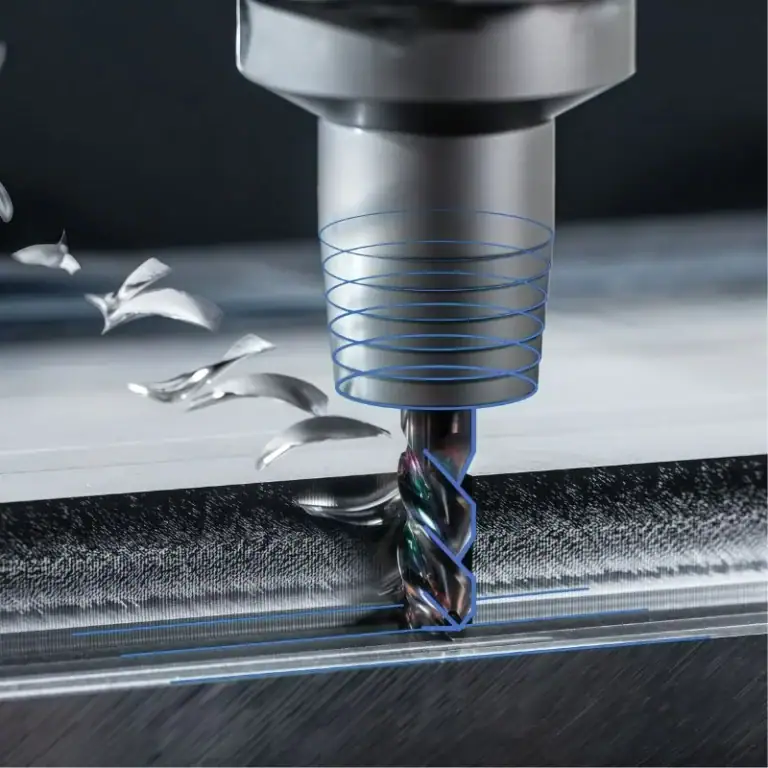
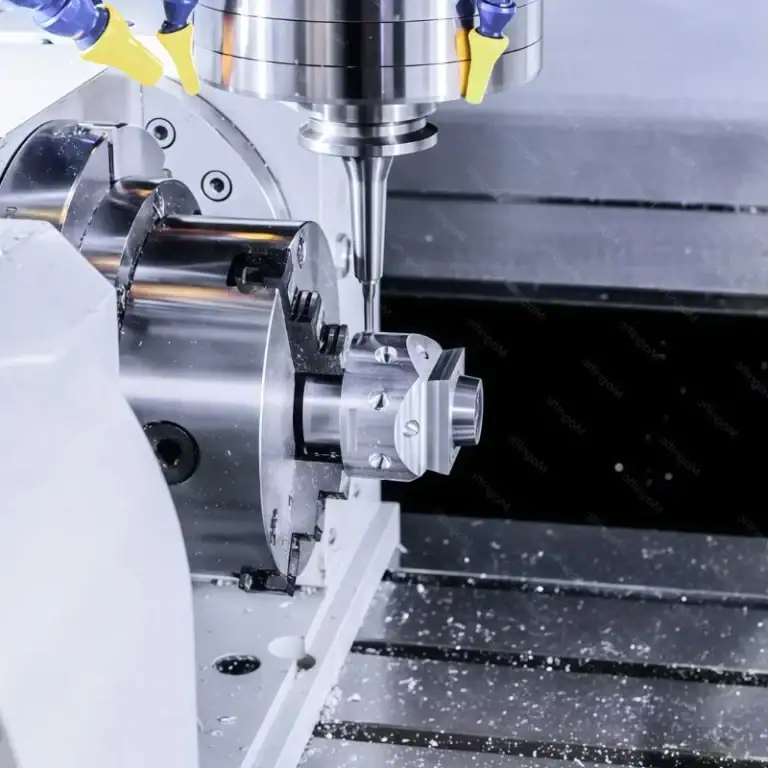
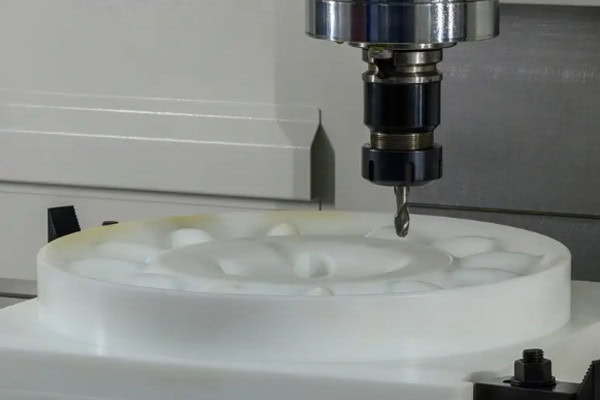
CNC machining is one of the most common methods for customized nylon parts, especially for prototypes, small-batch production, and complex structures. Through computer-controlled tool movement, CNC machining can achieve consistent quality and high accuracy.
- Capable of machining complex shapes, holes, and grooves.
- Allows quick design modifications during product development.
- Supports various nylon materials, such as PA6 and PA66.
The biggest advantage of CNC machining nylon parts is flexibility. Customers do not need to invest in molds, allowing them to quickly obtain functional prototypes or small quantities of finished parts. For research projects and customized equipment components, CNC machining can significantly shorten delivery time.
Nylon Injection Molding
When nylon part demand becomes high, injection molding is often a more cost-effective solution. By using molds for repeated production, large quantities of identical components can be manufactured efficiently.
- Suitable for high-volume production.
- Provides excellent part consistency.
- Reduces unit manufacturing costs.
However, injection molding requires upfront mold investment. If the product is still under development and requires frequent design changes, CNC machining is usually more flexible.
Nylon 3D Printing
With the development of additive manufacturing, nylon 3D printing has also become an option for producing nylon parts, especially for complex structures and rapid testing.
- No traditional mold required, allowing faster development.
- Suitable for complex internal geometries.
- Enables quick design verification.
However, compared with CNC machining, 3D printed parts may have limitations in surface finish and dimensional accuracy. For precision assembly components, additional machining or finishing processes may still be required.
What Should Be Considered During Nylon CNC Precision Machining?
Although nylon is considered easier to machine than many engineering materials, achieving stable accuracy requires careful process control. Machining parameters, tool selection, and cooling methods all influence the final quality. Especially for precision components, the machining strategy must be adjusted according to nylon’s unique characteristics.
How Can Nylon Machining Accuracy Be Controlled?
Nylon is sensitive to temperature and humidity, making dimensional control an important part of the machining process. For components requiring precise assembly, even small dimensional changes can affect final performance.
- Confirm material condition before machining.
- Control machining environment temperature and humidity.
- Reserve appropriate machining allowance based on material behavior.
- Perform dimensional inspection after machining.
By controlling the entire machining process properly, manufacturers can reduce the effects of moisture absorption and thermal expansion, helping nylon parts maintain more stable dimensions.
How Should Cutting Tools Be Selected for Nylon Machining?
Tool condition has a direct impact on nylon surface quality. Because nylon has certain flexibility, worn or unsuitable tools may cause burrs, stringing, or rough surfaces.
- Use sharp cutting tools to reduce cutting resistance.
- Select suitable tools according to part geometry.
- Regularly inspect tool wear conditions.
A proper tooling strategy not only improves machining efficiency but also enhances surface finish, allowing nylon parts to achieve better performance in practical applications.
Do Nylon Parts Require Inspection After Machining?
Some customers assume plastic parts do not require strict inspection, but high-precision nylon components need the same quality control as metal parts. Especially in automation equipment and medical devices, dimensional errors can affect overall system performance.
- Inspect critical dimensions and fitting areas.
- Check surface defects and burrs.
- Verify production consistency between batches.
A complete inspection process helps identify potential machining issues early, improving product reliability and reducing future assembly and maintenance costs.
How to Choose the Right Nylon Part Manufacturing Solution?
Different customers have different requirements for nylon parts. Some focus on fast delivery, some prioritize production costs, while others require strict accuracy and performance. When selecting a machining solution, price alone should not be the deciding factor. The part application, production quantity, and quality requirements should all be considered.
Choose the Machining Method Based on Part Application
Different working environments require different nylon properties. Standard mechanical components and high-load parts often have very different material and accuracy requirements.
- Standard structural parts can use common nylon materials.
- Wear-resistant components may require reinforced nylon.
- High-precision components are more suitable for CNC precision machining.
Selecting the right solution based on actual working conditions can prevent insufficient material performance or unnecessary manufacturing costs.
Plan the Process According to Production Volume
Production quantity is an important factor affecting manufacturing decisions. Proper planning helps reduce costs while maintaining delivery efficiency.
- Small-batch production is suitable for CNC machining.
- Large-volume production is suitable for injection molding.
- Prototype verification can use rapid manufacturing methods.
Using different manufacturing methods at different project stages can improve development efficiency and make the transition to mass production smoother.
Why Choose a Professional Nylon Machining Supplier?
Nylon part manufacturing requires not only advanced equipment but also a deep understanding of material behavior. An experienced machining team can help optimize designs, select suitable processes, and reduce potential production issues.
- Provide machining optimization suggestions.
- Support prototype development and small-batch manufacturing.
- Offer dimensional inspection and quality control.
From design evaluation to final delivery, a professional supplier can help improve production efficiency and ensure nylon parts meet real application requirements.
Nylon parts are widely used in automation, automotive, electronics, and industrial equipment due to their lightweight, strength, wear resistance, and self-lubricating properties. However, because nylon is sensitive to environmental conditions, professional process control is essential during precision machining. Tirapid specializes in CNC machining of nylon and engineering plastics, providing customers with high-precision and reliable custom manufacturing solutions.