Both turning centers and conventional lathes are used for machining rotational parts, but they differ significantly in structure, automation level, and machining capability. With increasing demands for higher efficiency and precision in modern manufacturing, turning centers have become the mainstream equipment for complex and mass production, while conventional lathes are still widely used for basic machining and single-piece production. The two types of machines serve different application levels and production needs.
Differences in Structure and Function Configuration
Turning centers and conventional lathes differ fundamentally in structural design. Conventional lathes rely mainly on mechanical operation, where feed movement, tool changes, and machining control are performed manually. Turning centers integrate CNC systems, automatic tool changers, and multi-axis linkage capabilities, enabling a higher level of automation and efficiency.
Structural Characteristics of Turning Centers
Turning centers are designed with a focus on automation and high-rigidity system integration, enabling complex machining tasks. In modern manufacturing environments, these machines are widely used for high-precision batch production. Their structure emphasizes not only mechanical rigidity but also system coordination, allowing stable performance under high-speed and complex cutting conditions.
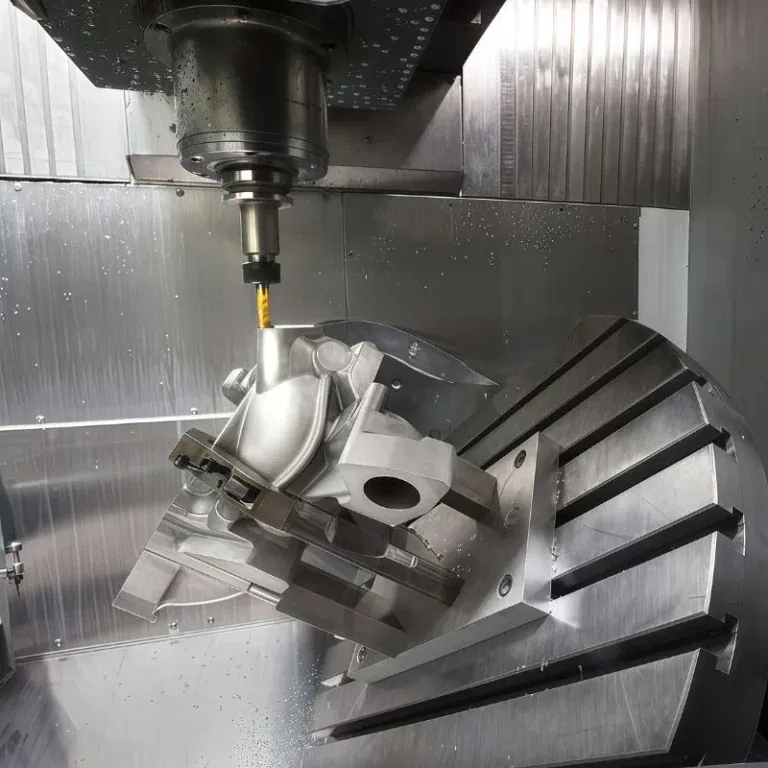
Turning centers typically adopt a fully enclosed structure combined with a high-rigidity bed and precision guideways, ensuring stability during high-speed cutting. The CNC system controls the entire process, and machining paths are executed through programming, greatly reducing human error.
- Equipped with CNC system for automated control
- Supports multi-axis simultaneous machining
- Built-in automatic tool changer for higher efficiency
- High-rigidity structure suitable for high-speed cutting
- Can integrate automatic loading and unloading systems
- Supports complex contour and composite machining
- Stable repeat machining accuracy
Turning centers are better suited for high-precision mass production environments.
Structural Characteristics of Conventional Lathes
Conventional lathes have a relatively simple structure and rely heavily on manual operation. In small and medium-sized workshops, they still offer high flexibility, but they lag behind modern equipment in automation and precision stability.
A conventional lathe typically consists of a headstock, tool post, feed system, and bed. The machining process depends heavily on the operator’s experience. Although flexible, it has limitations in efficiency and consistency.
- Manual control of feed and cutting operations
- Simple structure with lower maintenance cost
- Suitable for single-piece or small-batch production
- Flexible operation but highly experience-dependent
- No automatic tool changing capability
- Efficiency affected by operator skill
- Lower consistency in machining accuracy
Conventional lathes are more suitable for basic machining, maintenance, and training applications.
Machining Efficiency and Automation Level
Machining efficiency is one of the most obvious differences between the two machines. Turning centers enable continuous automated machining, while conventional lathes rely heavily on manual operation cycles, resulting in lower efficiency.
Automation Advantages of Turning Centers
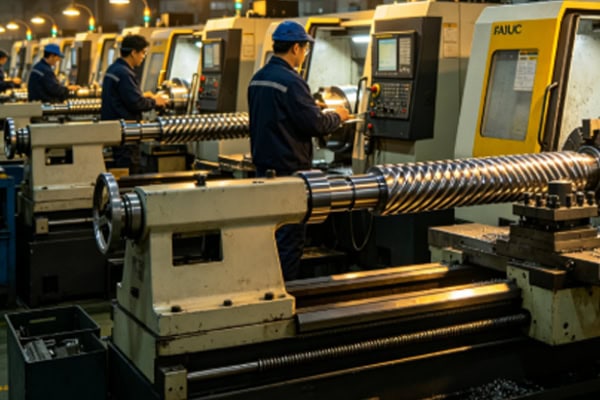
Turning centers achieve high-efficiency continuous production through CNC control and automation systems. In modern industrial manufacturing, they not only improve machining speed but also reduce fluctuations caused by human intervention, ensuring a more stable production rhythm.
Turning centers can complete the entire process from loading, machining, to tool changing automatically, significantly reducing downtime. In mass production environments, this advantage becomes particularly important.
- Automatic tool change reduces downtime
- Supports continuous batch production
- Can integrate robotic loading systems
- CNC control reduces human error
- Stable and consistent production cycle
- Suitable for large-scale manufacturing
Automation significantly improves overall productivity.
Machining Characteristics of Conventional Lathes
The machining rhythm of conventional lathes depends entirely on the operator, leading to variations in efficiency depending on skill and experience. While flexible in small-batch production, they are less efficient in large-scale manufacturing.
Since tool adjustment and feed control are manual, continuous automation is not possible, resulting in lower efficiency for batch production but advantages in flexible machining scenarios.
- Slower machining due to manual operation
- Tool change and measurement done manually
- Efficiency depends on operator skill
- Not suitable for mass production
- Flexible for multi-type machining
- Lower equipment investment cost
Conventional lathes prioritize flexibility over efficiency.
Machining Accuracy and Stability Comparison
Accuracy and stability are key indicators of machine performance. Turning centers clearly outperform conventional lathes in repeatability and process stability.
Precision Control Capability of Turning Centers
Turning centers use CNC systems to control tool paths precisely, maintaining stable output over long production cycles. In batch production, they offer excellent consistency advantages.
The system can automatically compensate errors and maintain consistent machining paths, keeping dimensional deviation within a small range.
- CNC-controlled machining path
- High repeat positioning accuracy
- Supports error compensation functions
- Reduces human operation errors
- Stable batch consistency
- Suitable for high-precision parts
This makes turning centers suitable for high-end manufacturing.
Characteristics of Conventional Lathe Accuracy
Conventional lathe accuracy depends heavily on operator experience and machine condition, resulting in noticeable variation during use.
Without automatic compensation or program control, machining accuracy is easily affected by human operation and machine wear, making long-term consistency difficult to maintain.
- Accuracy depends on manual control
- Highly operator-dependent results
- Accumulated errors in long production runs
- No automatic compensation system
- Suitable for general precision parts
- Machine condition has strong influence
Conventional lathes are more suitable for non-precision machining tasks.
Application Scenarios and Production Modes
Different machines are suited to different production models, depending on output volume, precision requirements, and cost considerations.
Application Areas of Turning Centers
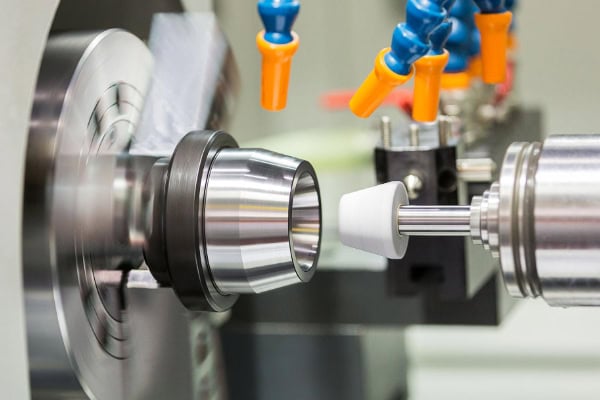
Turning centers are suitable for high-efficiency, high-precision, and mass production environments. In modern intelligent manufacturing systems, they are often used as core processing equipment.
They are widely used in automotive, aerospace, and precision machinery industries, supporting complex part machining and automated production lines.
- Automotive parts mass production
- Aerospace precision machining
- Complex shaft component manufacturing
- Automated production line integration
- High-consistency industrial manufacturing
- Precision mold machining
They are suitable for large-scale modern industrial production systems.
Application Areas of Conventional Lathes
Conventional lathes are more suitable for flexible machining and low-volume production environments.
They are commonly used in maintenance workshops, small factories, and training institutions, where they perform a wide range of basic machining tasks.
- Equipment repair and part restoration
- Small-batch custom machining
- Training and skill development
- Simple shaft part machining
- Low-cost production requirements
- Flexible machining adjustments
They are suitable for low-volume and variable production environments.