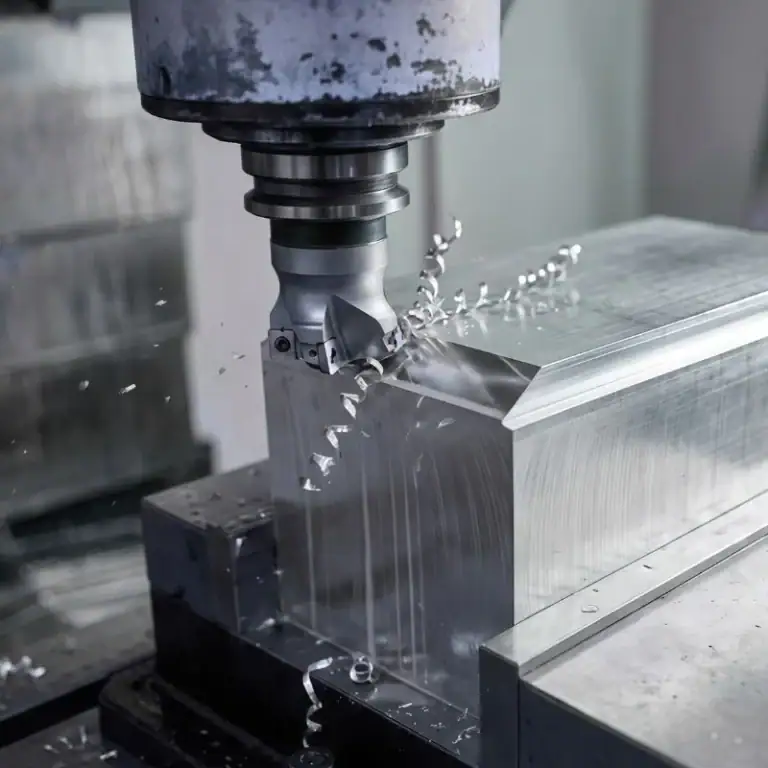
Turning process stability directly affects dimensional consistency, surface quality, and tool life. In continuous machining environments, even small variations in vibration, thermal behavior, or parameter mismatch can be amplified into noticeable machining errors. To maintain a stable cutting process, coordination between machine structure, cutting parameters, tool systems, and cooling control is required so that machining remains consistent and predictable.
Machine Rigidity and Structural Optimization
Machine rigidity defines the system’s ability to resist deformation and vibration during cutting. When machining high-strength materials such as alloy steel, cutting forces can be significant. If the machine structure lacks rigidity, elastic deformation may occur, leading to dimensional deviation and surface waviness. Stability depends on the combined performance of the bed, guideways, spindle system, and tool turret.
Structural Rigidity and Support Optimization
Stable machining begins with a rigid machine foundation. Structural integrity determines how cutting forces are absorbed and distributed throughout the machine body. Poor rigidity allows vibration to propagate to the workpiece, reducing accuracy and surface quality.
A stable structural foundation is especially important in high-load and continuous production environments, where cutting forces remain active for extended periods. Proper support design helps distribute stress evenly and prevents localized deformation that can affect precision.
- Strengthen machine base damping structure
- Improve guideway contact rigidity and lubrication stability
- Optimize spindle bearing preload
- Reduce vibration amplification caused by overhang structures
- Use high-rigidity clamping systems
Once structural rigidity is improved, cutting becomes smoother and vibration amplitude is significantly reduced, resulting in more stable machining behavior.
Dynamic Stability and Operating Condition Control
Dynamic stability determines how the machine behaves under continuously changing cutting loads. During long machining cycles, unstable servo response or spindle fluctuation can gradually accumulate errors and lead to vibration instability.
In real production environments, dynamic behavior is constantly influenced by acceleration, deceleration, and load variation. Without proper control, these fluctuations can cause resonance or instability during continuous machining.
- Smooth spindle acceleration and deceleration curves
- Avoid prolonged resonance speed ranges
- Optimize tool turret indexing impact
- Stabilize servo response in feed systems
- Reduce structural resonance during high-speed operation
After dynamic stability optimization, machining consistency improves and process fluctuations are significantly reduced.
Influence of Cutting Parameters on Stability
Cutting parameters include spindle speed, feed rate, and depth of cut. These variables are closely interconnected. Improper combinations may cause sudden changes in cutting force or heat concentration, which negatively affects machining stability.
Spindle Speed and Cutting Balance Control
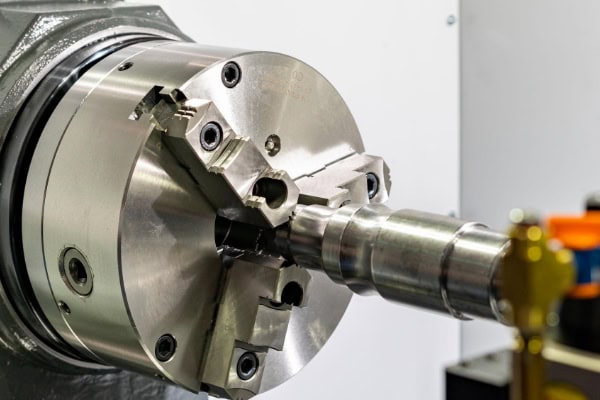
Spindle speed determines cutting velocity and heat generation behavior. Each material has a stable operating range, and deviation from this range may result in poor cutting conditions.
Speed selection also affects chip formation and tool wear behavior. A stable spindle setting ensures continuous material removal without interruption or excessive thermal load.
- Adjust spindle speed according to material hardness
- Avoid low-speed built-up edge and high-speed overheating
- Increase speed during finishing for better surface quality
- Control speed fluctuation to reduce impact
- Separate roughing and finishing speed strategies
Proper spindle speed control ensures smoother cutting behavior and more uniform heat distribution.
Feed Rate and Cutting Load Control
Feed rate determines the thickness of material removed per revolution and has a direct impact on cutting load. If feed changes abruptly, vibration and tool stress may increase significantly.
Stable feed control is essential for maintaining consistent chip formation and reducing sudden force spikes. It also helps ensure predictable surface texture and dimensional accuracy.
- Increase feed during roughing to improve efficiency
- Reduce feed during finishing for better surface quality
- Maintain continuous and stable feed motion
- Adjust feed based on tool nose radius
- Keep cutting force variation smooth
Balanced feed control improves load consistency and enhances surface stability.
Depth of Cut and Stability Relationship
Depth of cut defines the engagement area between tool and workpiece, directly influencing cutting force magnitude. Excessive depth variations can destabilize the cutting process and increase vibration risk.
Controlled depth management is particularly important in finishing operations where dimensional accuracy is critical. Stable depth settings help maintain uniform cutting conditions.
- Use larger depth for rough machining efficiency
- Reduce depth for precision finishing
- Avoid sudden load changes during cutting
- Maintain stable machining rhythm
- Set limits based on machine rigidity
Proper depth control ensures smoother and more predictable machining performance.
Tool System and Installation Stability
Tool system stability affects cutting force behavior, vibration level, and surface finish quality. Any slight misalignment or looseness may be amplified during high-speed machining, affecting accuracy.
Tool Installation Rigidity Control
Tool installation stability plays a critical role in ensuring consistent cutting conditions. Even minor displacement can lead to vibration amplification and dimensional variation.
Stable clamping and correct alignment help maintain consistent cutting engagement throughout the machining cycle. This is especially important in precision applications where tolerances are tight.
- Reduce tool overhang length
- Improve tool holder clamping rigidity
- Inspect turret contact surfaces regularly
- Maintain consistent installation reference points
- Prevent loosening during operation
Improved installation rigidity significantly reduces vibration and enhances machining consistency.
Tool Wear Impact on Stability
Tool wear gradually changes cutting conditions, increasing resistance and altering force distribution. As wear progresses, vibration and temperature rise, affecting machining consistency.
Wear monitoring is essential for maintaining predictable machining behavior and avoiding sudden quality degradation during production.
- Regularly inspect tool tip wear condition
- Monitor cutting sound changes
- Track dimensional deviation trends
- Control tool usage cycles
- Avoid machining beyond tool life
Stable wear control ensures consistent machining quality.
Cooling System and Vibration Control
Cooling and vibration control jointly influence thermal stability and dynamic machining behavior. Excess heat or vibration instability can significantly reduce machining accuracy and tool life.

Cooling Efficiency Optimization
An efficient cooling system is essential for maintaining stable cutting temperatures and improving chip evacuation. Insufficient cooling leads to thermal expansion and accelerated tool wear.
Proper coolant management helps stabilize machining conditions, especially during continuous production cycles where heat accumulation is significant.
- Increase coolant pressure and flow rate
- Direct coolant precisely to cutting zone
- Replace coolant regularly
- Select suitable coolant type for material
- Maintain stable system pressure
Optimized cooling improves thermal stability and extends tool life.
Vibration and Thermal Deformation Control
Vibration and thermal deformation are key factors affecting machining accuracy. Both can interact and amplify each other if not properly controlled.
Stable machining requires minimizing resonance, controlling heat accumulation, and maintaining consistent fixture conditions.
- Avoid resonance speed ranges
- Improve overall machine rigidity
- Control heat accumulation during cutting
- Stabilize clamping systems
- Optimize machining rhythm
Stable control significantly improves dimensional accuracy and surface quality.