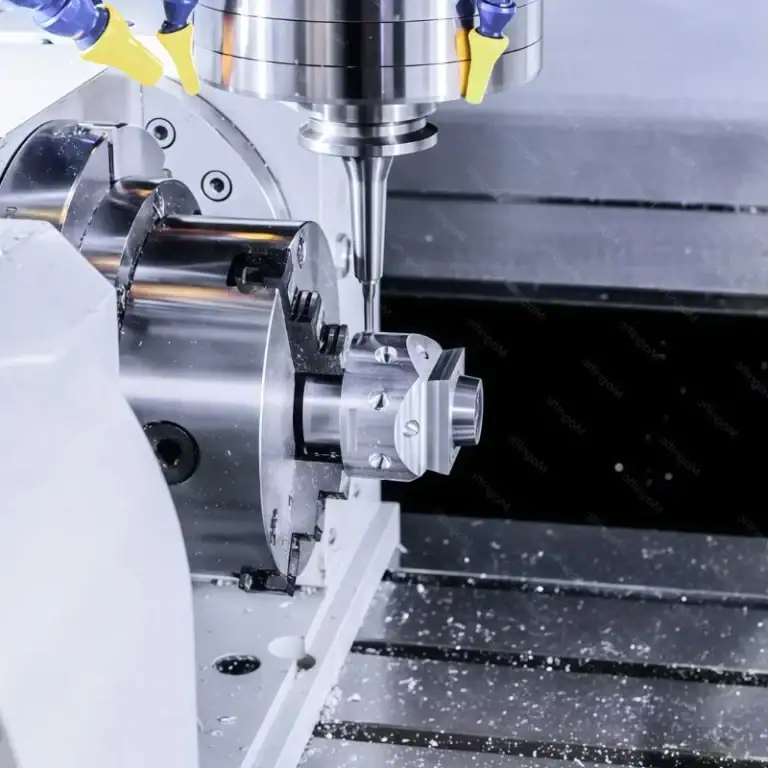
Electronic product development involves structural design, component installation, and system testing. Each stage has different requirements for part quantities and machining specifications. For equipment that has not yet reached its final design, committing to large production runs too early may increase inventory and design-change costs, while sourcing manufacturing resources at the last minute can disrupt project schedules. Small-batch electronic component manufacturing requires production planning based on part geometry, material properties, critical tolerances, and delivery schedules so that prototype parts meet actual assembly and validation requirements.
Which Applications Are Suitable for Small-Batch Electronic Component Manufacturing?
Small-batch machining supports prototype development, structural validation, and custom component sourcing. The appropriate solution depends on the intended function of each part.
Electronic Enclosures and Structural Components
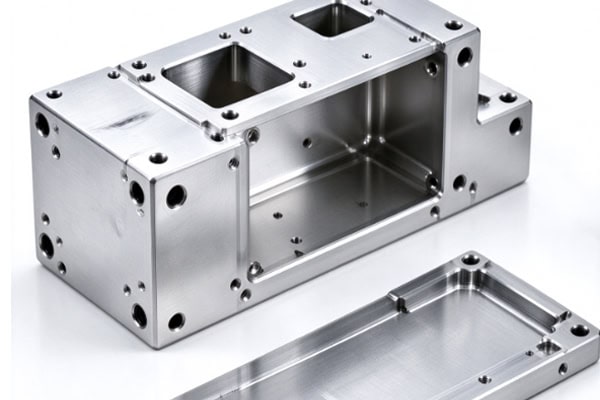
Equipment enclosures and internal support structures must accommodate installation space, connection methods, and the overall device layout.
- Equipment Enclosures and Covers: Control external dimensions, mounting-hole positions, and connection dimensions to prevent assembly interference.
- PCB Mounting Brackets: Determine hole spacing, support height, and mounting orientation according to the circuit board’s mounting positions.
- Heat Sinks and Mounting Bases: Define the machined geometry based on heat-source layout and contact areas.
Checking the 3D model against the assembly requirements before machining helps reduce prototype revisions.
Connectors and Precision Functional Components
Small connectors, sensor mounting bases, and custom metal components often require accurate locating dimensions and mating relationships. Critical tolerances should be specified for functional features. For thin walls, narrow slots, and complex profiles, tool accessibility and workholding stability must be evaluated. Materials and surface requirements should also be defined in advance for areas involving electrical conductivity or insulation. Translating functional requirements into clear machining specifications helps improve compatibility with the complete electronic assembly.
How Can Cost and Accuracy Be Controlled in Small-Batch CNC Machining of Electronic Components?
Small-batch order costs are closely related to machining preparation, the number of operations, material utilization, and inspection requirements. A technical assessment should be completed before production begins.
Optimize Drawings and Machining Processes
Well-designed components can reduce unnecessary machining operations and help control manufacturing risks.
- Identify Critical Tolerances: Prioritize dimensions that affect installation, positioning, and function. Set reasonable requirements for other dimensions according to their intended use.
- Evaluate Machining Challenges: Check whether deep grooves, small holes, internal corners, and thin-walled structures can be machined efficiently.
- Plan Workholding Methods: Select locating and clamping methods according to part geometry and rigidity to reduce clamping deformation and errors caused by repeated setups.
Simplifying difficult-to-machine features without compromising functionality helps control unit costs.
Define Inspection Requirements According to Part Function
Inspection priorities should correspond to drawing tolerances and assembly requirements.
| Part Type | Key Control Items | Inspection Focus |
| Electronic Enclosures | External dimensions, mounting-hole positions | Dimensions and assembly relationships |
| PCB Brackets | Hole spacing, support height | Positioning accuracy |
| Heat Sinks | Datum surfaces, heat-dissipation feature dimensions | Contact surfaces and critical dimensions |
| Connector Components | Mating dimensions, fit clearance | Fit accuracy and surface condition |
| Sensor Mounting Bases | Mounting-hole positions, datum relationships | Positional dimensions and assembly verification |
First-article inspection helps verify the machining results. Subsequent in-process checks and final inspections can then be arranged according to order quantity, part risk, and customer requirements.
How Should Materials and Surface Treatments Be Selected for Small-Batch Electronic Components?
Materials and surface treatments must meet the mechanical, electrical, and thermal requirements of each component while accounting for machining difficulty and purchasing costs.
Select Machining Materials According to Function
Material selection should be based on actual operating conditions and design specifications rather than material price alone.
- Aluminum Alloys: Suitable for some equipment enclosures, mounting brackets, and heat-dissipation structures, offering a balance of low weight and machinability.
- Stainless Steel: Can be used for structural components requiring strength or corrosion resistance. The specific grade should be selected according to the operating environment.
- Copper and Copper Alloys: Suitable for certain conductive or heat-transfer components. Material specifications and relevant performance requirements should be verified.
- Engineering Plastics: Suitable for insulating supports, separators, and some lightly loaded structures. Thermal expansion and clamping deformation must be considered.
After selecting a material, verify its specifications, condition, and drawing requirements to prevent material variations from affecting validation results.
Specify Surface Treatments and Functional Areas
Surface treatments can affect appearance, corrosion resistance, and local dimensions, so requirements should be defined before machining. Aluminum components may be evaluated for anodizing or other treatments according to their intended use. For electrical contact surfaces, grounding points, and precision mating areas, determine whether masking or subsequent finishing is required. For heat-dissipation components, confirm the required contact-surface condition according to the design specifications.Defining treatment methods and acceptance criteria in advance helps reduce dimensional deviations and assembly problems after finishing.

How Should You Select a Small-Batch Electronic Component Manufacturing Supplier?
A suitable supplier needs appropriate machining capabilities, quality control procedures, and technical communication skills to accommodate changes during product development.
Evaluate Prototype and Small-Batch Manufacturing Capabilities
Confirm the supplier’s machining capabilities and collaboration processes to determine whether they suit the project.
- Verify Machining Processes: Confirm whether the supplier can perform milling, turning, drilling, and necessary finishing operations according to the component geometry.
- Check Delivery Capabilities: Confirm support for prototype production and small-batch delivery.
- Review Design Change Procedures: For designs that are not yet finalized, understand how drawing revisions and process adjustments are managed.
Clarifying these details in advance reduces communication overhead and helps lower manufacturing and delivery risks.
Confirm Inspection and Delivery Requirements
Before placing an order, specify material grades, critical tolerances, surface treatments, inspection items, packaging methods, and lead times.
- Material specifications, critical tolerances, surface treatments, inspection items, packaging methods, and delivery schedules should be confirmed in advance.
- For precision assembly components, first-article inspection reports or critical dimensional records can be agreed upon as needed to support acceptance checks.
Clear requirements help prevent communication gaps and make final acceptance more efficient.
The success of a small-batch electronic component project depends on clearly defined technical requirements, suitable machining processes, and inspection criteria that can be consistently applied to each part. Buyers can prepare 2D engineering drawings, 3D models, material specifications, target quantities, and critical dimensional requirements to support manufacturability assessments and quotation discussions. TiRapid provides CNC precision machining and custom manufacturing services for electronic equipment manufacturers, supporting prototype development and small-batch production.