PVDF vs PTFE is an important material comparison for chemical processing, fluid handling, semiconductor, medical, and industrial plastic parts. PTFE is often used for extreme chemical resistance and low friction, while PVDF is preferred when stiffness, strength, and easier machining are also important.
This guide explains the key differences between PVDF and PTFE, including chemical resistance, heat resistance, mechanical strength, CNC machinability, cost, applications, and how to choose the right material for your project.
What Is PVDF?
PVDF, or Polyvinylidene Fluoride, is a high-performance fluoropolymer known for good chemical resistance, mechanical strength, dimensional stability, and processability. It is widely used in chemical equipment, semiconductor systems, medical devices, electrical components, and industrial fluid-handling applications.
Compared with many general engineering plastics, PVDF performs well in corrosive environments while still offering useful rigidity and strength. This makes it suitable for components that need chemical resistance but also require better structural stability than very soft or highly flexible plastics.
PVDF is also easier to process than PTFE in many manufacturing situations. It can be extruded, molded, welded, and CNC machined more conventionally, which makes it practical for sheets, rods, pipes, fittings, tanks, valves, and precision machined parts.
What Is PTFE?
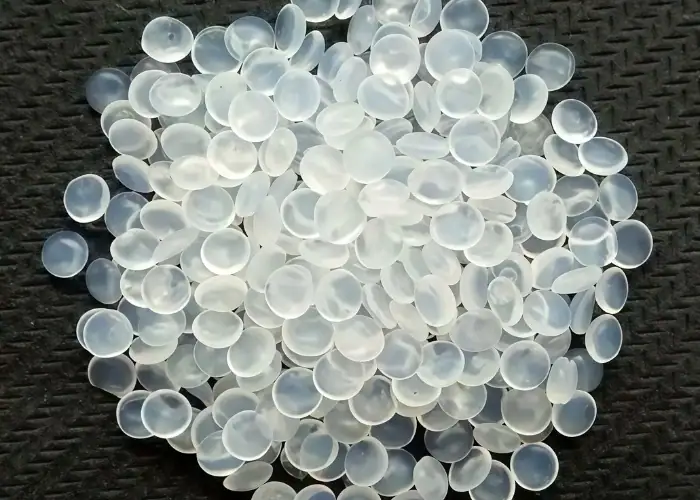
PTFE, or Polytetrafluoroethylene, is a fluoropolymer best known for outstanding chemical resistance, high temperature capability, extremely low friction, and excellent non-stick behavior. It is widely used in seals, gaskets, liners, bearings, bushings, insulation parts, and high-performance fluid-handling components.
One of PTFE’s strongest advantages is its chemical inertness. It can resist many acids, bases, solvents, and aggressive chemicals that may damage other plastics. This makes PTFE a preferred material for harsh chemical environments where long-term material stability is critical.
However, PTFE is softer and more prone to deformation under load than PVDF. It is also more difficult to process through conventional melt-processing methods. For precision CNC parts, engineers must consider creep, dimensional control, workholding, and final application requirements carefully.
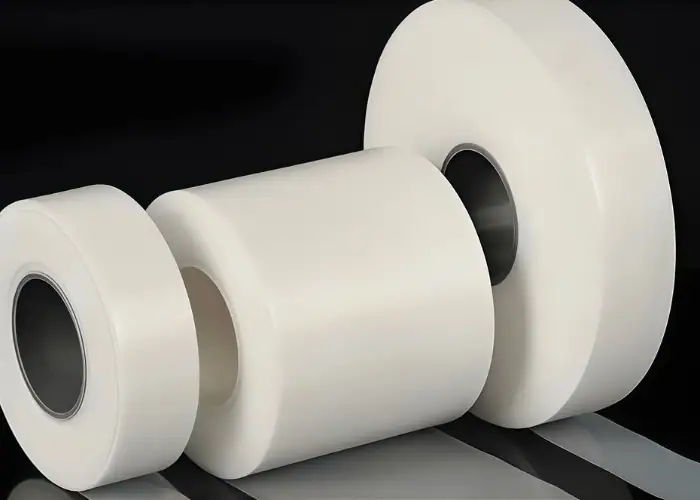
PVDF vs PTFE Quick Comparison
Before choosing between PVDF and PTFE, engineers should compare chemical resistance, heat resistance, mechanical strength, friction behavior, machinability, dimensional stability, and cost. These factors directly affect part reliability, production method, and long-term performance in industrial applications.
| Property | PVDF | PTFE |
| Material Family | Fluoropolymer | Fluoropolymer |
| Chemical Resistance | Excellent | Outstanding |
| Heat Resistance | Good | Excellent |
| Mechanical Strength | Better | Lower |
| Rigidity | Higher | Lower |
| Friction Performance | Good | Excellent |
| Creep Resistance | Better | Lower |
| Electrical Insulation | Good | Excellent |
| Processability | Easier | More difficult |
| CNC Machinability | Good | More challenging |
| Material Cost | Usually lower | Usually higher |
| Typical Use | Structural chemical parts | Seals, gaskets, liners, low-friction parts |
Key Differences Between PVDF and PTFE
PVDF and PTFE are both fluoropolymers, but their molecular structures create different engineering behavior. PTFE is highly inert and very low friction, while PVDF has a more balanced profile with better mechanical rigidity and easier processing. This difference affects material selection in CNC machining and industrial design.
The right choice depends on the real operating environment. A seal exposed to aggressive chemicals and sliding contact may perform better in PTFE. A machined bracket, pipe fitting, valve body, or structural fluid component may benefit more from PVDF because it offers better stiffness and dimensional stability.
For custom plastic parts, engineers should review temperature, chemical exposure, load, wear, tolerance, surface finish, and production quantity before choosing PVDF or PTFE. A material that performs well chemically may still fail if it cannot hold shape under load or meet the required machining tolerance.
Chemical Resistance
PTFE offers one of the highest levels of chemical resistance among engineering plastics. It is highly resistant to many acids, bases, solvents, and aggressive chemicals, which makes it suitable for chemical processing systems, seals, gaskets, linings, and components exposed to harsh fluids.
PVDF also provides excellent chemical resistance, especially against many acids, halogens, alcohols, and industrial fluids. It is widely used in chemical piping, tanks, valves, pumps, and semiconductor fluid systems where corrosion resistance and mechanical strength are both required.
If the application involves extremely aggressive chemicals or uncertain chemical compatibility, PTFE is often the safer choice. If the chemical environment is demanding but also requires structural stiffness, welding, or easier fabrication, PVDF may be more practical.
Heat Resistance
PTFE provides better heat resistance than PVDF and can perform in higher temperature environments. This makes it useful for high-temperature sealing, insulation, chemical transfer, and industrial systems where standard engineering plastics may soften or lose mechanical performance.
PVDF still offers good thermal performance for many industrial applications, but it is not designed for the same extreme temperature range as PTFE. When PVDF is exposed to temperatures beyond its practical working range, stiffness, dimensional stability, and long-term reliability may be affected.
For high-temperature chemical systems, PTFE usually has the advantage. For moderate-temperature applications where strength, cost, and manufacturability matter more, PVDF can provide a better balance of performance and production efficiency.
Mechanical Strength and Rigidity
PVDF generally provides better mechanical strength, stiffness, and creep resistance than PTFE. This makes it suitable for structural plastic parts, pump components, valve bodies, fittings, brackets, and machined components that must maintain shape under mechanical load.
PTFE is softer and more flexible, which is useful for sealing and low-friction applications but can be a limitation for load-bearing parts. Under constant pressure or compression, PTFE may deform more easily than PVDF, especially when the design does not account for creep behavior.
If the part must stay rigid and dimensionally stable, PVDF is often the better material. If the part needs conformability, low friction, or sealing performance, PTFE may be more suitable despite its lower rigidity.
Friction and Wear Performance
PTFE has exceptionally low friction, which is one of the main reasons it is used for sliding parts, bearings, bushings, seals, and non-stick components. It can reduce movement resistance and help parts operate smoothly in dry or lightly lubricated conditions.
PVDF also offers good wear behavior, but it does not match PTFE’s low coefficient of friction. It is better suited for structural chemical-resistant parts rather than applications where the lowest possible sliding friction is the main requirement.
For sliding contact, PTFE usually performs better. For parts that need wear resistance together with higher stiffness and strength, PVDF may be more suitable. The final choice should consider load, speed, mating material, lubrication, and operating temperature.
Electrical Properties
PTFE is widely used as an electrical insulation material because of its excellent dielectric properties, high resistance, and stability across demanding environments. It is commonly used in wires, cables, connectors, RF systems, and insulation components.
PVDF also provides useful electrical properties and can be selected for certain electronic and sensor-related applications. Because PVDF has different dielectric behavior from PTFE, it may be useful where insulation, mechanical strength, and special electrical performance must be balanced.
If the application requires very low dielectric loss or high-performance insulation, PTFE is often preferred. If the part also needs stronger mechanical support or easier processing, PVDF may be a practical alternative depending on the electrical requirements.
PVDF vs PTFE CNC Machining
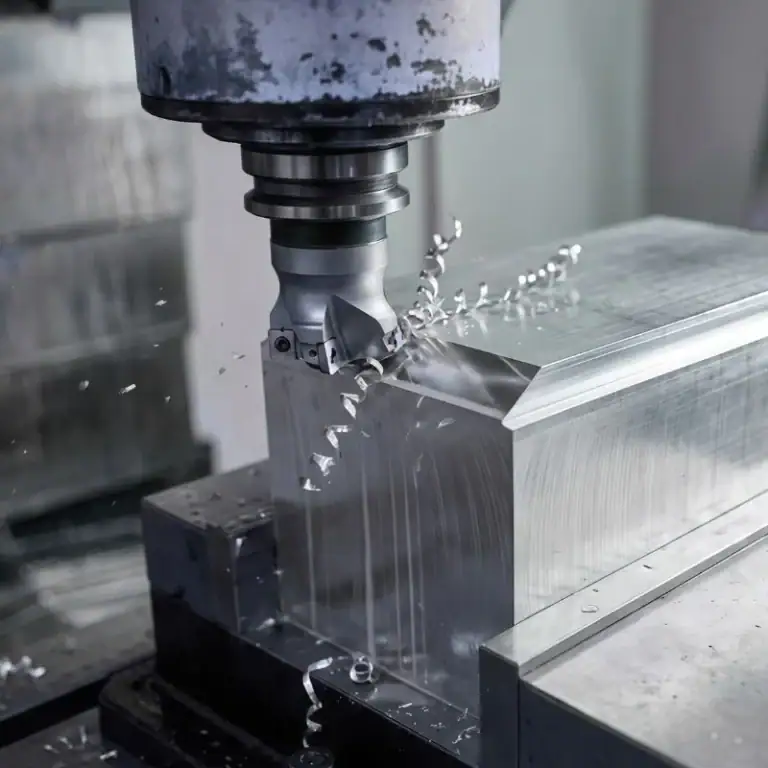
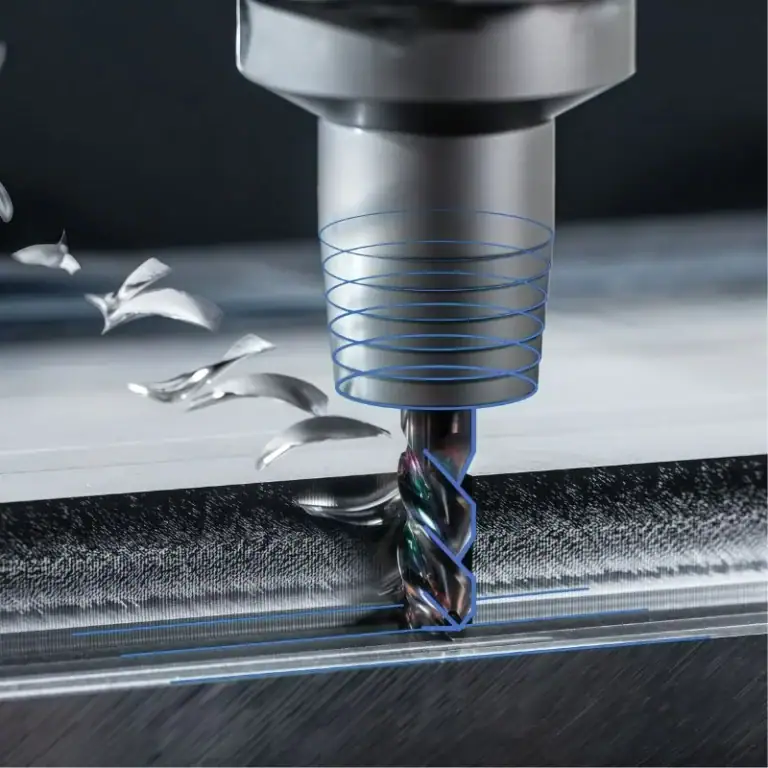
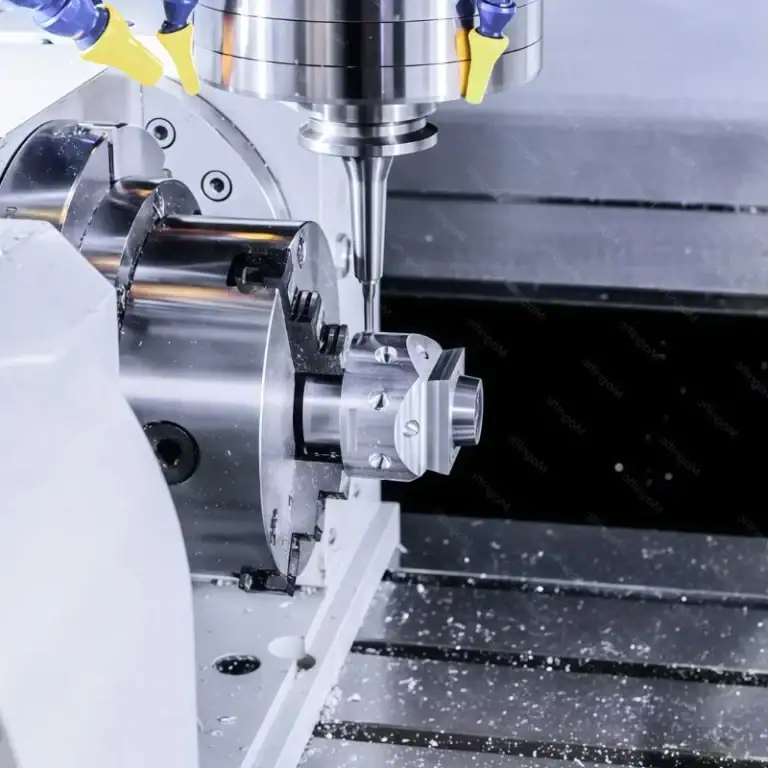
PVDF and PTFE can both be CNC machined, but they behave differently during cutting. PVDF is generally more rigid and easier to machine with stable dimensions, while PTFE is softer, more flexible, and more likely to deform under cutting force or clamping pressure.
For precision machined parts, material behavior can affect hole accuracy, flatness, surface finish, burr formation, and final tolerance. PVDF often supports better dimensional control for structural parts, while PTFE requires more careful fixturing and machining strategy to reduce movement during cutting.
Choosing the right material for CNC machining should include both performance and manufacturability. PTFE may be necessary for extreme chemical or friction requirements, but PVDF may reduce machining risk when the part requires tight tolerances and better shape stability.
Machining PVDF Parts
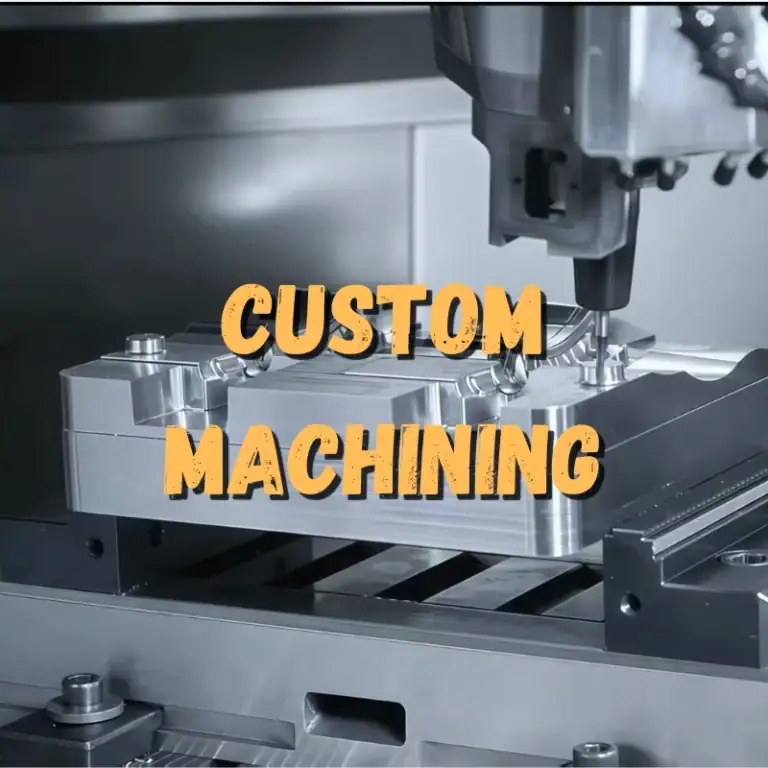
PVDF machines more predictably than PTFE because it has better stiffness and dimensional stability. It can be milled, turned, drilled, and threaded into precision components such as valve bodies, pump parts, fittings, brackets, manifolds, and chemical-resistant equipment parts.
During CNC milling, sharp tools and stable workholding help maintain clean edges and consistent dimensions. PVDF can still generate heat during cutting, so balanced speeds, feeds, and chip evacuation are important for avoiding surface defects or dimensional changes.
PVDF is a strong choice when a part needs both chemical resistance and mechanical accuracy. It is especially useful for custom machined parts that require reliable structure, tight features, and stable performance in fluid-handling or chemical-processing environments.
Machining PTFE Parts
PTFE can be CNC machined, but it is more challenging because it is soft, flexible, and prone to creep. During machining, it may move under tool pressure or clamping force, which can affect dimensions, roundness, flatness, and surface consistency.
Machining PTFE usually requires very sharp tools, light cutting forces, stable support, and careful fixturing. Excessive clamping pressure can distort the part, while insufficient support can cause vibration or dimensional variation. Thin-wall PTFE parts need especially careful process planning.
Despite these challenges, PTFE is widely machined for seals, gaskets, sleeves, spacers, valve seats, bushings, and insulation components. Its special chemical and friction properties often justify the extra machining care required for precision parts.
Tolerance and Surface Finish
PVDF usually offers better tolerance control than PTFE because it is stiffer and less prone to deformation during machining. This makes PVDF more suitable for precision features such as threaded holes, flat sealing surfaces, accurate bores, and parts requiring stable assembly fit.
PTFE can achieve functional tolerances, but realistic expectations are important. Because it is soft and can deform under load, very tight tolerances may require special machining strategy, controlled inspection conditions, and part design adjustments.
Surface finish depends on tool sharpness, material grade, cutting parameters, and part geometry. PVDF often produces cleaner machined edges, while PTFE may require more attention to avoid smearing, burrs, and dimensional recovery after machining.
Common Applications of PVDF and PTFE
PVDF and PTFE are both used in demanding industries, but they often serve different functions. PVDF is commonly selected for structural chemical-resistant components, while PTFE is selected for sealing, lining, insulation, and low-friction applications.
Application requirements should guide material choice. A chemical pipe fitting may need PVDF’s strength and weldability, while a gasket exposed to aggressive chemicals may need PTFE’s chemical inertness. A sliding bushing may benefit from PTFE, while a machined valve body may perform better in PVDF.
Both materials are used in semiconductor, industrial equipment, electronics, medical devices, aerospace, oil and gas, consumer products, and new energy applications. The best choice depends on the balance between chemical exposure, temperature, load, friction, tolerance, and manufacturing cost.
Semiconductor and Electronics Applications
PVDF is widely used in semiconductor and electronics manufacturing because it offers chemical resistance, purity potential, and useful mechanical strength. It can be used for fluid-handling components, fittings, valves, tanks, and parts exposed to controlled chemical environments.
PTFE is also used in semiconductor and electronics applications where chemical inertness, insulation, and low friction are important. It is common in seals, tubing, insulation parts, gaskets, and components requiring stable performance with aggressive chemicals or high electrical insulation needs.
For these industries, cleanliness, dimensional stability, and chemical compatibility are critical. PVDF may be better for rigid fluid components, while PTFE may be better for sealing, lining, and insulation functions.
Industrial Equipment and Chemical Processing
PVDF is often selected for chemical processing equipment because it combines corrosion resistance with mechanical strength. It is used for valves, pumps, pipes, fittings, tanks, liners, and custom machined components that need to resist chemicals while maintaining structural integrity.
PTFE is preferred for highly aggressive chemical environments and low-friction or sealing applications. Gaskets, seals, linings, sleeves, valve seats, and bearing surfaces often use PTFE because of its chemical inertness and non-stick behavior.
In industrial equipment, the choice depends on the part’s role. PVDF is usually better for rigid components that must carry load or hold shape, while PTFE is better for surfaces that need chemical inertness, sealing, or very low friction.
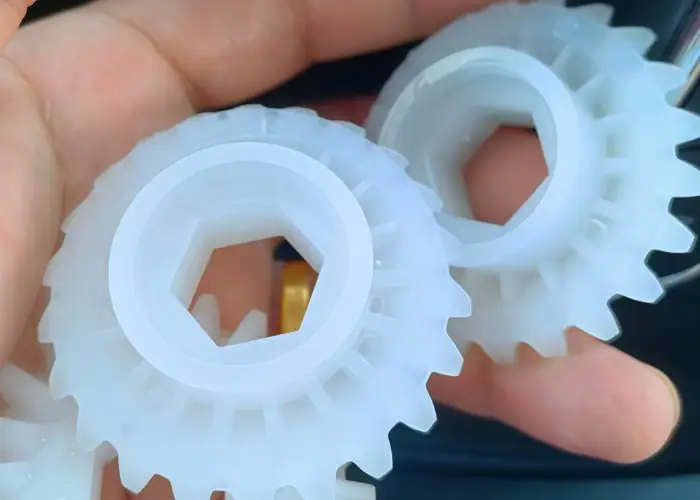
Medical and Laboratory Applications
PVDF can be used in medical and laboratory systems where chemical resistance, sterilization compatibility, and mechanical durability are required. It may be selected for housings, fittings, fluid connectors, and laboratory equipment parts depending on grade and compliance requirements.
PTFE is common in laboratory and medical-related components because it resists many chemicals and provides excellent non-stick behavior. It is used in tubing, seals, filters, gaskets, liners, and components that contact reactive fluids or require easy release.
For regulated applications, material grade and documentation matter as much as the polymer name. Engineers should confirm certificates, biocompatibility needs, sterilization method, and final use before selecting PVDF or PTFE.
Aerospace, Oil and Gas, and New Energy
PTFE is often used in aerospace and oil and gas applications because of its chemical resistance, temperature capability, and low friction. It can be found in seals, gaskets, hoses, insulation, bearings, and components exposed to demanding operating conditions.
PVDF is useful in applications where chemical resistance must be combined with stiffness, fabrication, or structural reliability. It may be used in fluid systems, battery-related parts, protective components, and industrial assemblies where rigid performance is needed.
New energy systems may use both materials depending on function. PVDF is often considered for structural or fluid-contact parts, while PTFE is useful for sealing, insulation, and chemical-resistant surfaces. Final selection should be based on temperature, electrolyte exposure, load, and assembly design.
PVDF vs PTFE Cost Comparison
PVDF is often more cost-effective than PTFE when the application does not require PTFE’s extreme chemical resistance, very low friction, or high-temperature capability. Its easier processing and better rigidity can also reduce manufacturing difficulty for some machined parts.
PTFE usually has a higher material and machining cost because it is softer, harder to process conventionally, and more difficult to hold precisely during machining. However, it can be worth the cost when the part must resist aggressive chemicals, extreme temperatures, or sliding friction.
A practical cost comparison should include raw material price, machining time, tolerance requirements, scrap risk, inspection needs, and long-term part performance. The lowest-cost material is not always the best choice if it fails under the actual operating conditions.
How to Choose Between PVDF and PTFE?
Choose PVDF when the part needs chemical resistance, better stiffness, mechanical strength, weldability, and easier processing. It is a strong choice for chemical-resistant structural parts, fluid-handling components, machined fittings, valve bodies, pump parts, and rigid industrial components.
Choose PTFE when the application requires extreme chemical resistance, high temperature stability, very low friction, non-stick performance, or excellent electrical insulation. It is often better for seals, gaskets, liners, bushings, bearings, sleeves, insulation parts, and low-friction sliding components.
There is no single better material for every project. Engineers should evaluate operating temperature, chemical exposure, mechanical load, friction, tolerance, manufacturing method, and cost before selecting PVDF or PTFE. A DFM review can help confirm which material is more suitable for CNC machining.
FAQs
When should I choose PVDF instead of PTFE?
Choose PVDF when the part needs chemical resistance, better stiffness, mechanical strength, weldability, and easier machining. It is often better for rigid fluid-handling parts, valve components, fittings, pump parts, and structural chemical-resistant components.
Is PTFE better for sealing and low-friction parts?
Yes. PTFE is usually better for seals, gaskets, bushings, liners, and sliding components because it has extremely low friction, excellent chemical inertness, and good temperature resistance. It is more suitable when sealing, release performance, or smooth movement is the main requirement.
Which material is easier to CNC machine, PVDF or PTFE?
PVDF is generally easier to CNC machine with stable dimensions because it is more rigid than PTFE. PTFE can also be machined, but its softness and creep behavior require careful fixturing, sharp tools, and realistic tolerance control.
Can PVDF and PTFE hold tight tolerances in CNC machining?
PVDF usually holds tighter tolerances more easily because it is stiffer and more dimensionally stable during machining. PTFE can also be machined accurately, but its softness and creep behavior may cause deformation, so the tolerance should be reviewed based on part size, wall thickness, and working conditions.
Conclusion
PVDF and PTFE are both valuable fluoropolymers, but they are optimized for different engineering needs. PVDF offers a strong balance of chemical resistance, stiffness, strength, and processability, while PTFE provides superior chemical inertness, low friction, heat resistance, and non-stick performance.
At TiRapid, we provide precision CNC machining services for fluoropolymers and other engineering plastics, including PVDF and PTFE custom parts. Send us your 2D drawings, 3D files, material requirements, quantities, and operating conditions, and our team can help review the best machining solution for your project.