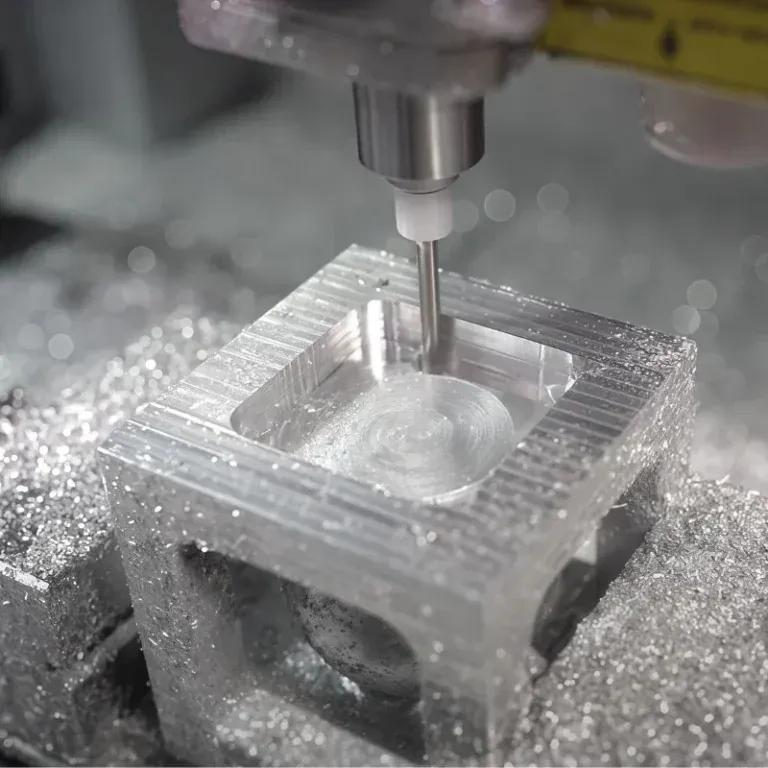
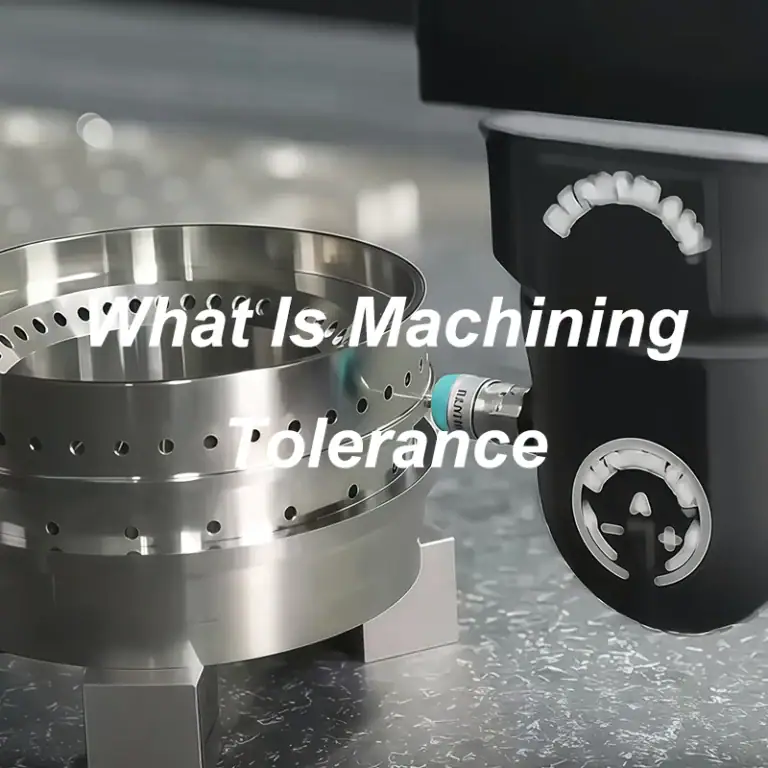
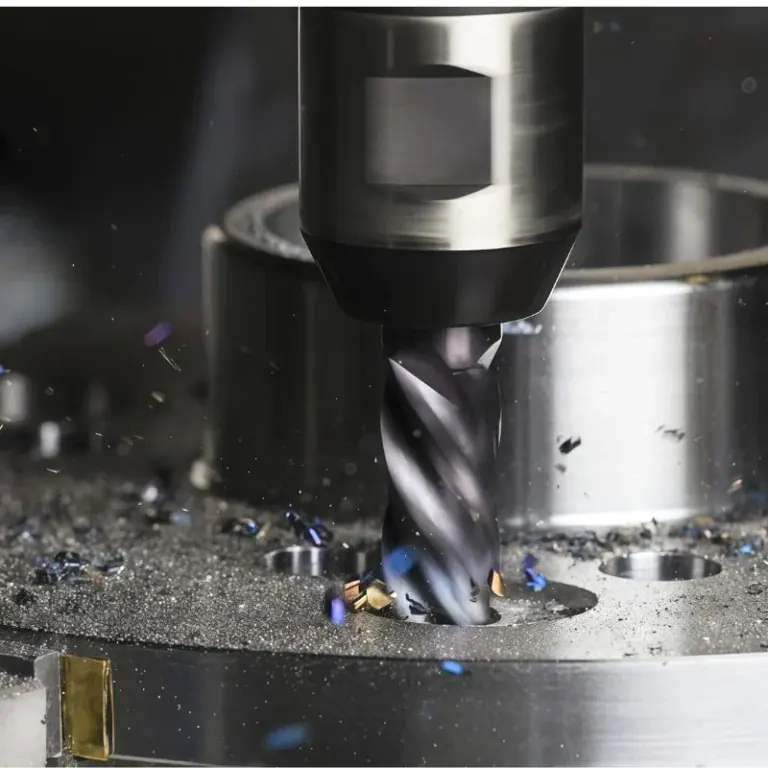
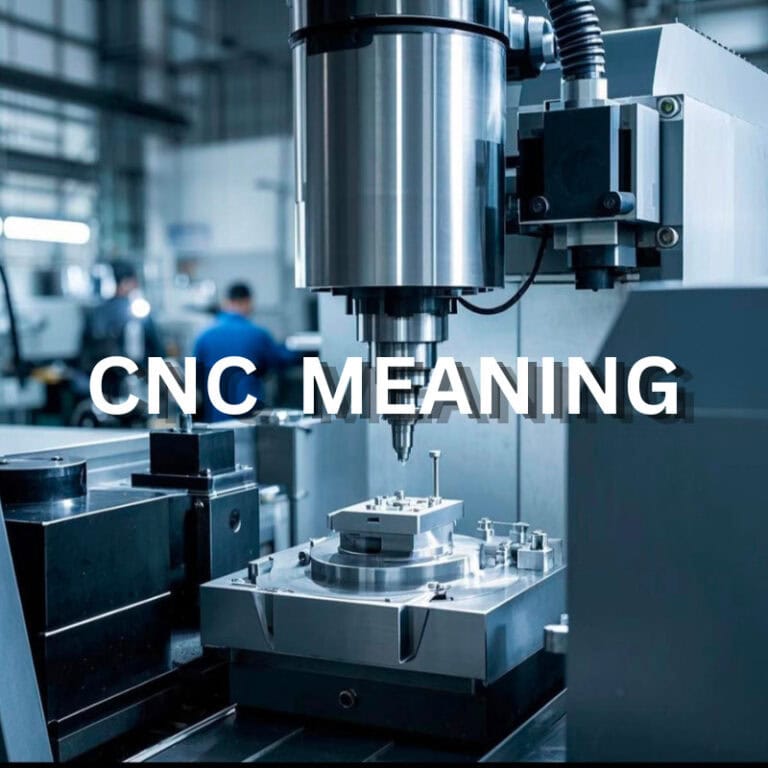
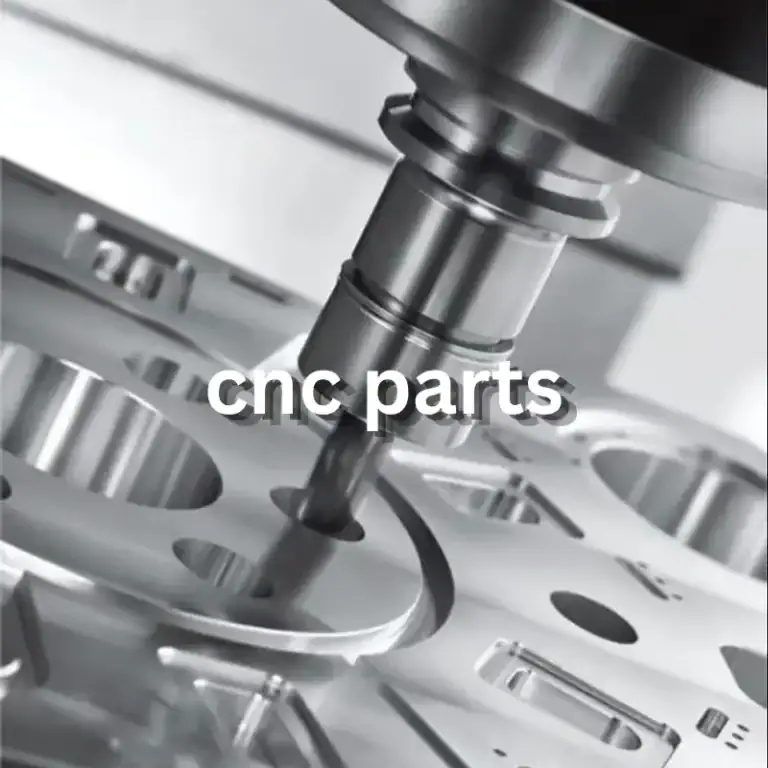
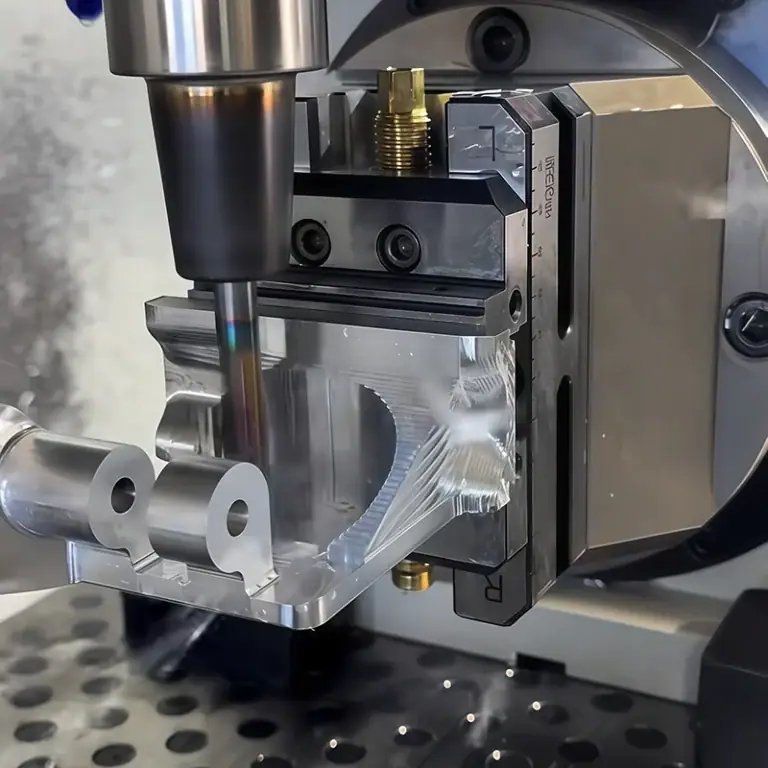
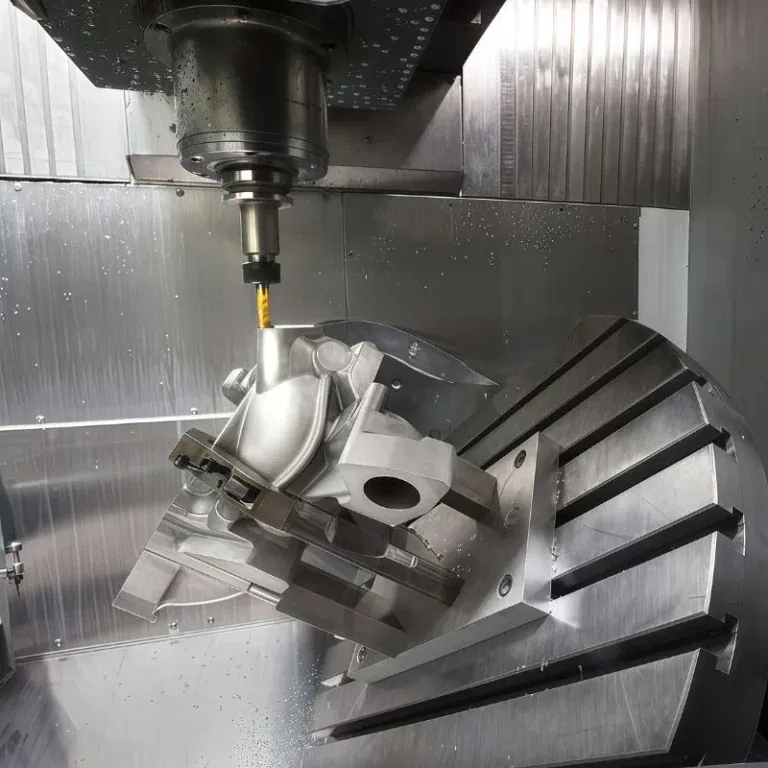
A semiconductor vacuum chamber may look like a relatively simple metal enclosure, but manufacturing one accurately is far more difficult than it appears. Internal holes, sealing grooves, stepped structures, and complex channels all place strict demands on dimensional accuracy and surface quality. Issues such as machining deformation, burrs, and residual contaminants can directly affect equipment assembly and vacuum performance. CNC machining provides the precision and flexibility required for these components, but achieving reliable results requires more than simply shaping the chamber. Material selection, machining processes, deformation control, cleaning, and final inspection all need to be carefully managed.
Why Are Semiconductor Vacuum Chambers Difficult to Machine?
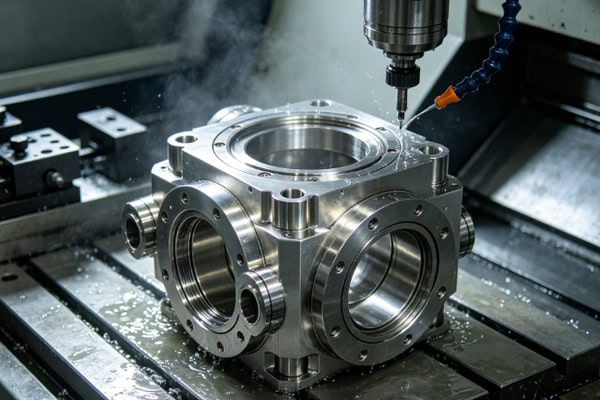
Semiconductor vacuum chambers often have large dimensions, thin-wall areas, complex internal structures, and demanding sealing surfaces. During machining, even small changes in cutting forces or clamping conditions can affect the final dimensions. This makes vacuum chamber manufacturing considerably more demanding than conventional mechanical machining.
Large Chambers Are Prone to Machining Deformation
Large vacuum chambers typically require substantial material removal. Internal stresses may be released during machining, causing dimensional changes or deformation. Improper clamping can make the problem even more noticeable.
- Plan roughing, semi-finishing, and finishing operations properly.
- Control clamping force to reduce deformation.
- Leave suitable machining allowance for later finishing.
- Check critical dimensions during processing.
A carefully planned machining sequence can gradually release internal stresses and reduce dimensional changes. This is particularly important for large aluminum alloy chambers, where maintaining dimensional stability throughout the entire process can be challenging.
Internal Structures Increase Tool Access Difficulty
Semiconductor vacuum chambers often contain deep cavities, narrow grooves, mounting holes, and internal channels. These features make tool selection and tool-path planning more complicated.
- Deep cavities require appropriate tool lengths and cutting strategies.
- Narrow grooves require suitable tool diameters.
- Internal channels require careful tool access planning.
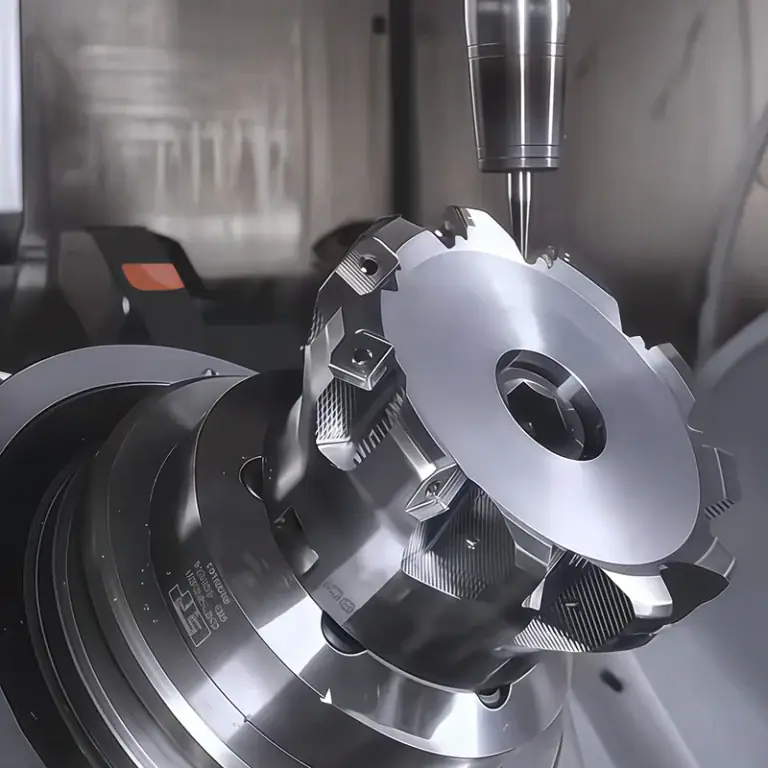
- Complex structures may benefit from multi-axis machining.
A well-designed CNC machining process can improve tool accessibility while reducing unnecessary tool changes and repeated setups. Proper tool-path planning also helps maintain dimensional consistency across different areas of the chamber.
Sealing Surfaces Require Strict Control
The sealing surface is one of the most critical areas of a vacuum chamber. Small dimensional deviations or surface defects can affect sealing performance and create problems during equipment assembly.
- Control flatness of sealing surfaces.
- Maintain accurate groove dimensions.
- Reduce scratches, burrs, and machining marks.
- Protect critical surfaces during subsequent processing.
For semiconductor equipment, machining the chamber body alone is not enough. Sealing surfaces, mounting areas, and connection interfaces all need to maintain stable dimensional and surface quality.
What Are the Key Processes for Vacuum Chamber CNC Machining?
Vacuum chamber CNC machining requires a carefully planned process rather than a single machining operation. The roughing stage, finishing stage, tool selection, clamping method, and cutting load all influence the final result. A reasonable process route can reduce deformation while improving machining efficiency and dimensional stability.
Properly Arrange Roughing and Finishing Operations
Rough machining removes most of the material and generates relatively high cutting forces. Finishing operations then focus on achieving the final dimensions and surface quality.
A practical process usually includes:
- Rough machining for major material removal.
- Semi-finishing for dimensional adjustment.
- Stress and deformation control during processing.
- Final finishing for critical surfaces and interfaces.
Separating high-load material removal from precision finishing gives the part more room to stabilize before the final dimensions are established. This approach is particularly useful for large or thin-wall vacuum chamber structures.
Common Vacuum Chamber Structures and Machining Priorities
Different areas of a vacuum chamber have different machining requirements. Identifying these requirements early makes process planning more effective.
| Chamber Structure | Common Materials | CNC Machining Focus | Typical Application |
| Main vacuum chamber body | Aluminum alloys, stainless steel | Internal cavity dimensions, wall thickness | Vacuum equipment |
| Flange connection area | Aluminum alloys, stainless steel | Flatness, hole positioning | Chamber connection |
| Sealing groove structure | Aluminum alloys, steel | Groove width, depth, surface quality | Sealing assembly |
| Internal support structure | Aluminum alloys, stainless steel | Position accuracy, structural rigidity | Component installation |
These structures often need to be machined within the same overall manufacturing process, but each area requires different machining priorities. Careful process planning helps prevent one operation from negatively affecting another.
Control Cutting Loads in Thin-Wall Areas
Thin-wall structures are particularly sensitive to cutting forces. Excessive machining pressure can cause vibration, deformation, or dimensional changes, making it difficult to achieve the required final accuracy.
- Reduce cutting load when machining thin walls.
- Keep tool overhang as short as practical.
- Use stable fixturing to support weak areas.
- Finish thin-wall sections after major material removal.
Keeping the cutting load under control allows thin-wall structures to retain their designed geometry. Tool selection and machining sequence are both important when working with delicate chamber sections.
How Can Semiconductor Vacuum Chamber Cleanliness Be Maintained After CNC Machining?
For semiconductor equipment, dimensional accuracy is only part of the manufacturing requirement. Machining residue, fine chips, burrs, and other contaminants can create problems during equipment assembly or operation. Vacuum chambers therefore require careful cleaning and handling after machining.
Minimize Residue During Machining
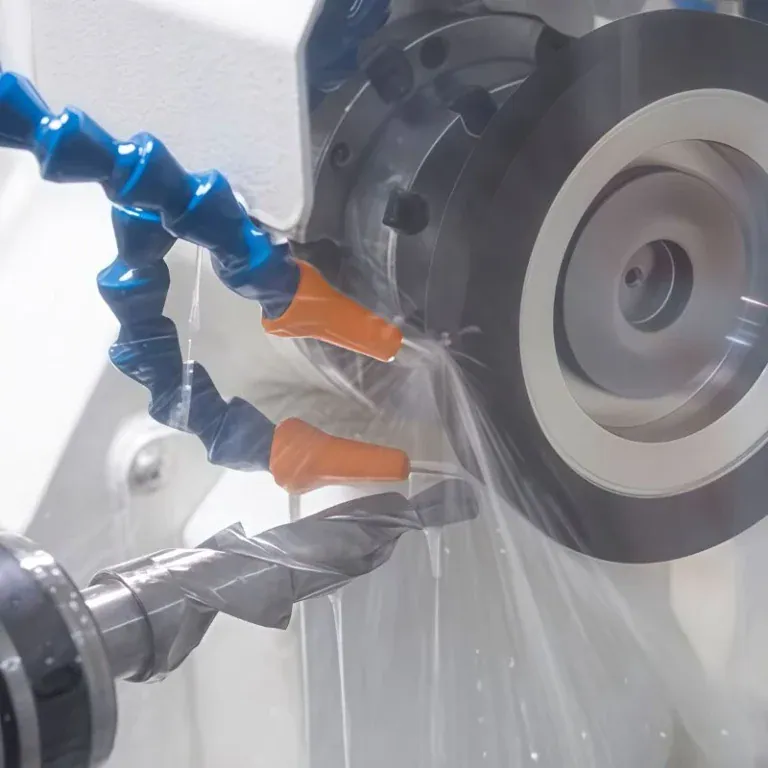
Machining conditions can affect how much residue remains on the chamber surface. Proper chip removal and coolant management can reduce contamination during production.
The machining process should pay attention to:
- Efficient chip removal from deep cavities.
- Prevention of material accumulation inside grooves.
- Protection of critical internal surfaces.
- Proper handling of machining fluids and residues.
Keeping the work area and chamber surfaces under control throughout production makes final cleaning more manageable and reduces the risk of contaminants remaining inside the component.
Deburring and Cleaning Should Not Be Overlooked
Burrs around holes, grooves, and edges can interfere with assembly and may become contamination sources. Cleaning should be treated as an important part of the manufacturing process rather than an afterthought.
After machining, the chamber may require:
- Careful burr removal.
- Removal of chips and machining residue.
- Cleaning of internal cavities and channels.
- Protection against contamination during handling.
A chamber that meets dimensional requirements but contains machining residue may still fail to meet the practical requirements of semiconductor equipment. Clean handling is particularly important for internal surfaces and vacuum-related structures.
Surface Treatment Must Consider Final Dimensions
Some vacuum chamber components may require surface treatment to improve corrosion resistance, durability, or other functional properties. However, any additional treatment can affect critical dimensions.
Before surface treatment, manufacturers should evaluate:
- Whether critical dimensions may change.
- Whether sealing surfaces require protection.
- Whether mounting interfaces need masking.
- Whether post-treatment inspection is necessary.
For precision vacuum chambers, surface treatment should be planned as part of the complete manufacturing process rather than handled separately. This helps prevent treatment-related dimensional changes from affecting final assembly.
How Should a CNC-Machined Vacuum Chamber Be Inspected?
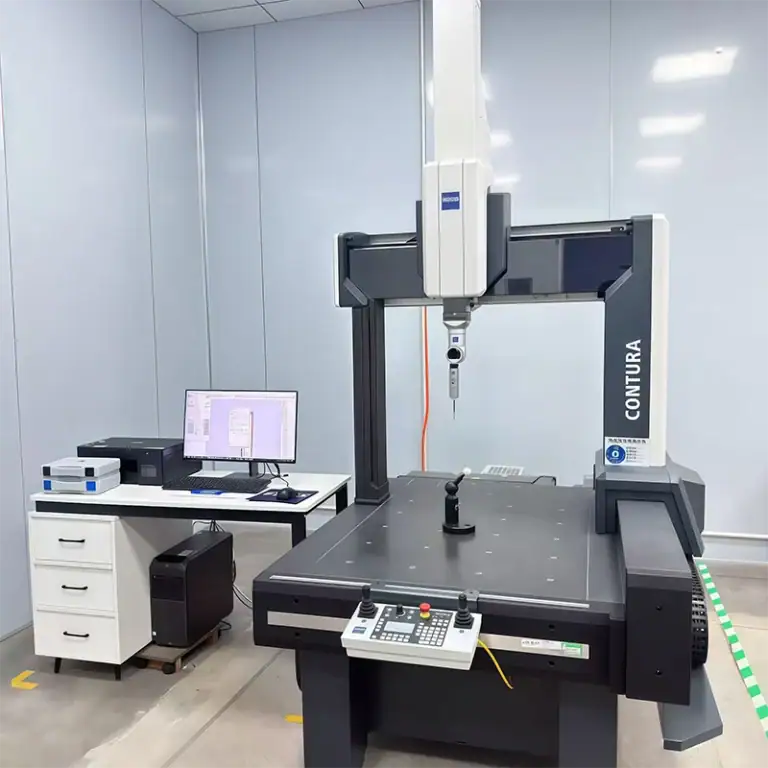
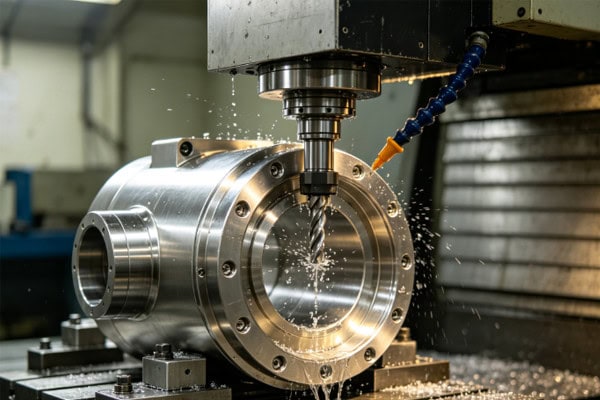
Final inspection is an essential step before a semiconductor vacuum chamber enters equipment assembly. The inspection process should cover dimensional accuracy, hole positioning, sealing surfaces, and other critical features. For high-value semiconductor components, complete inspection records also make quality control and production traceability easier.
Which Dimensions Should Be Inspected?
Different chamber features require different measurement methods. The inspection plan should focus on dimensions that directly affect assembly, sealing, and equipment operation.
| Inspection Item | Common Inspection Equipment | Main Inspection Focus |
| Chamber exterior | CMM, calipers | Length, width, height |
| Internal cavity | CMM, internal measuring tools | Cavity depth and width |
| Hole positioning | CMM, dedicated gauges | Hole diameter and position |
| Sealing grooves | Depth gauge, CMM | Groove width and depth |
| Sealing surfaces | CMM, surface roughness tester | Flatness and surface quality |
Critical dimensions should be inspected against the engineering drawings and tolerance requirements. More complex chamber structures may also require inspection at multiple stages rather than relying only on final inspection.
Sealing and Mounting Surfaces Require Special Attention
Sealing surfaces and mounting interfaces directly affect how the chamber connects with other semiconductor equipment components. A small dimensional deviation can create assembly difficulties or compromise sealing performance.
Key inspection areas include:
- Sealing surface flatness.
- Groove dimensions.
- Mounting hole positions.
- Interface dimensions.
- Surface condition.
Giving these areas additional inspection attention can reduce the risk of assembly problems and improve the reliability of the finished chamber.
Cleaning, Packaging, and Transportation Also Matter
A precision-machined vacuum chamber can still be damaged or contaminated after machining if handling procedures are not properly controlled. Clean packaging and suitable protection are important before shipment.
- Remove machining residue before packaging.
- Protect sealing and mounting surfaces.
- Prevent dust and foreign particles from entering internal cavities.
- Use suitable packaging to reduce impact during transportation.
For semiconductor equipment components, manufacturing quality does not end when machining is completed. Clean handling, packaging, and transportation are also part of delivering a reliable finished component.
Semiconductor vacuum chamber CNC machining is challenging because it requires simultaneous control of dimensional accuracy, structural machining, deformation, and cleanliness. Large chambers require careful stress and deformation management, deep structures need well-planned tool paths, thin-wall areas require controlled cutting loads, and sealing surfaces must meet strict dimensional and surface requirements. Complete inspection, cleaning, and packaging are also essential before the chamber enters semiconductor equipment assembly. Tirapid provides semiconductor vacuum chamber CNC machining services, offering customized support from precision machining through inspection for advanced equipment manufacturing.