Polymer vs plastic mainly differs in scope: a polymer is a broad class of natural or synthetic materials made of large molecular chains, while plastic is a polymer-based material formulated and processed into usable products. All plastics are based on polymers, but not all polymers are plastics. Cellulose, proteins, DNA, and natural rubber are familiar examples of polymers that are not normally classified as conventional plastics.
This guide explains the difference between polymer and plastic by comparing their composition, molecular structure, properties, types, strength, manufacturing methods, and applications.
What Is a Polymer?
A polymer is a natural or synthetic substance composed of very large molecules called macromolecules, which are built from smaller chemical units commonly called monomers. Polymers include natural materials such as cellulose, proteins, silk, and natural rubber, as well as synthetic materials such as polyethylene, polypropylene, nylon, PTFE, and PEEK.
The term polymer describes the molecular structure of a material rather than one specific finished product. Depending on its chemistry and structure, a polymer can become a rigid engineering material, flexible elastomer, fiber, coating, adhesive, resin, or plastic.
Important characteristics of a polymer are influenced by:
- Monomer chemistry
- Molecular weight
- Chain length
- Branching
- Crosslinking
- Crystallinity
- Additives and reinforcements
- Processing conditions
These variables explain why two polymer materials can behave very differently even when both belong to the same broad material family.
What Are Polymers Made Of?
Polymers are made of many smaller molecular units chemically bonded into large chains or networks. These smaller building blocks are commonly called monomers, and the chemical process that links them into polymers is known as polymerization.
For example, ethylene molecules can polymerize into polyethylene (PE), while propylene forms polypropylene (PP). Other polymers use multiple monomers or more complex chemical reactions. ABS, for example, incorporates acrylonitrile, butadiene, and styrene.
The monomer chemistry affects heat resistance, flexibility, strength, chemical stability, and processing behavior. For engineering applications, however, the polymer name alone is rarely sufficient—the exact grade, additives, reinforcement, and processing history also matter.
What Is the Structure of a Polymer?
Polymer structure can be linear, branched, cross-linked, or networked, and this molecular arrangement strongly influences mechanical and thermal performance. Linear polymers contain long molecular chains, branched polymers have secondary chains extending from the main backbone, and cross-linked structures contain chemical connections between neighboring chains.
Polymers can also be broadly described as amorphous or semi-crystalline. Amorphous polymers have less molecular ordering, while semi-crystalline materials contain both ordered crystalline regions and disordered amorphous regions.
In engineering applications, structure affects dimensional stability, shrinkage, impact behavior, temperature resistance, and machining characteristics. POM and PEEK, for example, are semi-crystalline engineering thermoplastics, while ABS and PC are generally amorphous.
Natural Polymers vs Synthetic Polymers
Natural polymers occur in living organisms or naturally occurring materials, while synthetic polymers are manufactured through controlled chemical processes. Cellulose, proteins, DNA, silk, wool, and natural rubber are natural polymers,PE, PP, PVC, ABS, nylon, PC, POM, PTFE, and PEEK are common synthetic polymers.
| Comparison | Natural Polymers | Synthetic Polymers |
| Origin | Biological/natural sources | Controlled chemical production |
| Examples | Cellulose, protein, silk, natural rubber | ABS, PE, PP, POM, PEEK |
| Property Control | Usually more limited | Highly customizable |
| Additives | Less commonly engineered | Fillers, fibers and modifiers common |
| Engineering Applications | Fibers, rubber, biomaterials | Gears, housings, seals, fixtures, components |
| Manufacturing Control | Variable | Highly controllable |
Synthetic polymers dominate many industrial applications because manufacturers can adjust their formulation. Glass fibers, carbon fibers, lubricants, UV stabilizers, flame retardants, and other additives can significantly modify the performance of the final material.
What Is Plastic?
Plastic is a polymer-based material formulated so that it can be shaped and processed into useful products. Most commercial plastics use synthetic polymers as their base material and may contain fillers, plasticizers, stabilizers, pigments, flame retardants, fibers, impact modifiers, or other additives.
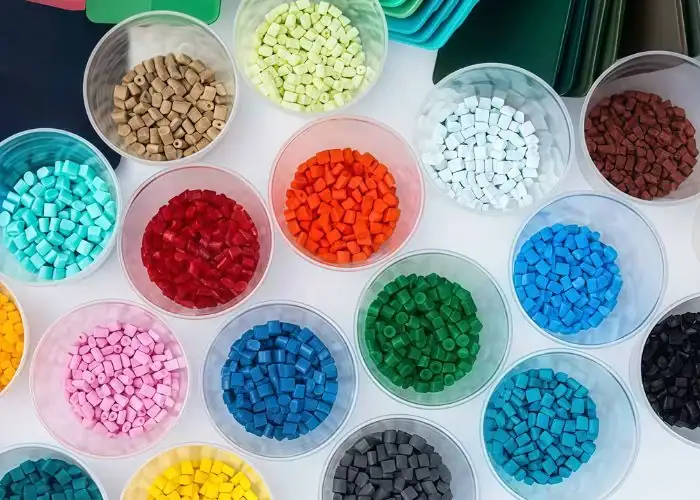
Plastic therefore describes more than the polymer molecule itself. Commercial plastic grades are engineered materials whose formulations are designed around manufacturing and final-use requirements.
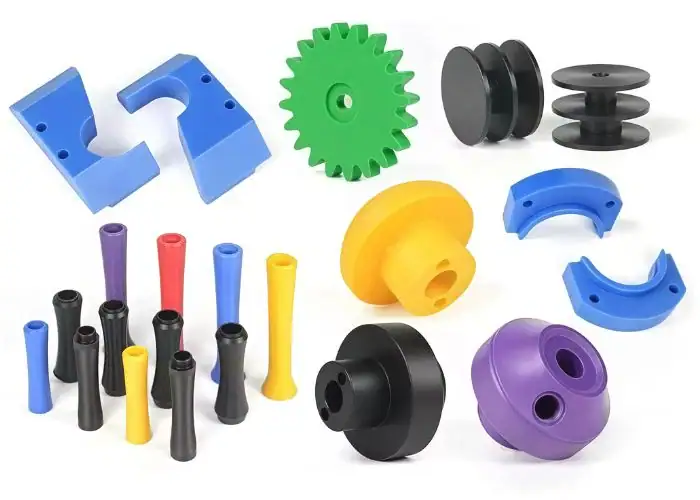
Common examples include ABS housings, POM gears, nylon bearings, polycarbonate covers, polypropylene components, PTFE seals, and PEEK aerospace or medical components.
What Is Plastic Made Of?
Plastic is primarily made from a base polymer combined with additives that modify its processing or final performance. Many conventional polymers originate from petroleum or natural-gas feedstocks, although bio-based sources can also be used.
A commercial plastic formulation may contain:
- Base polymer
- Glass or carbon fibers
- Mineral fillers
- Plasticizers
- UV stabilizers
- Pigments
- Flame retardants
- Impact modifiers
- Lubricants
- Processing aids
For example, Nylon 6/6 and 30% glass-filled Nylon 6/6 belong to the same polymer family, but they should not be treated as identical engineering materials. Fiber reinforcement can significantly increase stiffness while also affecting tool wear, dimensional behavior, and surface finish.
How Does a Polymer Become Plastic?
A polymer becomes commercial plastic when the base polymer is formulated, compounded, and prepared for processing into usable products. Manufacturers may combine the polymer with fillers, reinforcement, stabilizers, colorants, plasticizers, and processing aids before producing pellets, powders, sheets, rods, or other stock forms.
The resulting compound can then be processed by injection molding, extrusion, compression molding, thermoforming, CNC machining, or additive manufacturing, depending on its properties and the required geometry.
This distinction matters in manufacturing because the same polymer family can have many grades. An unfilled PEEK grade, carbon-fiber-reinforced PEEK, and glass-filled PEEK may require different cutting parameters, tolerances, tooling, and inspection strategies.
Is Plastic a Polymer?
Plastic is a polymer-based material, so plastics belong to the broader polymer family. However, polymer and plastic are not interchangeable terms because polymers also include natural materials, elastomers, fibers, adhesives, coatings, and other materials that are not normally classified as plastics.
A simple way to understand the relationship is:
Polymer = broad material category
Plastic = one major category of polymer-based materials
For example, polyethylene, polypropylene, ABS, nylon, PC, POM, PVC, and PEEK are synthetic polymers commonly used as plastics. Cellulose and proteins are polymers but are not conventional plastics.
Are All Polymers Plastics?
No, not all polymers are plastics. All conventional plastics contain polymers, but polymers also include cellulose, proteins, DNA, natural rubber, fibers, elastomers, adhesives, and many resin systems.
This relationship is important when searching terms such as are plastic polymers or is plastic a polymer. Plastic is a subset of polymer materials rather than a separate material family competing with polymers.
In engineering drawings, specifying only “polymer” is therefore usually too broad. A manufacturer typically needs the exact material family and grade, such as POM-C, PA66-GF30, PTFE, PC, ABS, or PEEK, to evaluate manufacturability accurately.
Polymer vs Resin vs Plastic
Polymer, resin, and plastic are related terms, but they describe different material concepts. Polymer refers broadly to macromolecular materials, plastic normally refers to polymer-based materials formulated into usable products, and resin often refers to raw or intermediate polymeric material before final processing.
| Term | Basic Meaning | Example |
| Polymer | Broad macromolecular material category | PE, nylon, cellulose |
| Resin | Raw/intermediate polymer material,meaning varies by industry | Epoxy resin, ABS resin pellets |
| Plastic | Formulated polymer-based engineering material | ABS housing, POM gear |
The term “resin” is particularly context-dependent. In molding, manufacturers often call raw plastic pellets “plastic resin,” while in thermoset manufacturing, resin may refer to a reactive liquid or viscous material that cures into a cross-linked structure.
Polymer vs Plastic: What Are the Key Differences?
The key difference between polymer and plastic is that polymer describes a broad molecular material category, while plastic describes polymer-based material formulated and processed into practical products. Therefore, comparing polymer vs plastic is mainly about understanding their scope rather than deciding which one is universally better.
| Comparison | Polymer | Plastic |
| Definition | Broad class of macromolecular materials | Polymer-based material for practical products |
| Origin | Natural or synthetic | Mostly synthetic or semi-synthetic |
| Basic Structure | Long chains/networks of molecular units | Polymer structure plus formulation |
| Additives | May or may not contain additives | Often contains functional additives |
| Examples | Cellulose, rubber, nylon, PE | ABS, PC, POM, PP |
| Material Forms | Fibers, elastomers, resins, plastics | Sheets, rods, pellets, molded parts |
| Manufacturing | Depends heavily on polymer type | CNC, molding, extrusion, 3D printing |
| Main Difference | Broader material category | Subset of polymer materials |
The difference between polymer and plastic becomes especially important for engineering procurement. Saying “plastic part” identifies only a broad class,specifying the exact polymer and grade determines mechanical strength, temperature resistance, tolerances, machinability, cost, and service life.
What Are the Properties of Polymers and Plastics?
The properties of polymers and plastics vary widely with molecular structure, crystallinity, additives, reinforcement, temperature, moisture, and manufacturing process. In general, engineering plastics can provide low density, corrosion resistance, electrical insulation, chemical resistance, and useful strength-to-weight ratios.
Mechanical Strength and Stiffness
Mechanical strength and stiffness vary significantly between polymer grades, ranging from flexible elastomers to high-performance engineering plastics and fiber-reinforced compounds. Tensile strength can range from roughly 20–40MPa for many commodity plastics to over 100MPa for some high-performance or reinforced engineering grades.
Adding glass or carbon fiber can substantially increase stiffness. However, reinforcement can also introduce anisotropy, increase tool wear, and affect surface quality.
For CNC parts, material selection should therefore consider tensile strength, modulus, impact resistance, fatigue, creep, and actual service temperature—not just whether the material is called plastic.
Heat and Chemical Resistance
Heat and chemical resistance depend on polymer chemistry, with high-performance materials such as PEEK and PTFE generally tolerating much harsher environments than ABS, PP, or PE.
PEEK can be used at continuous temperatures around 250°C depending on grade and operating conditions, while general-purpose ABS is typically used at substantially lower temperatures. PTFE also provides outstanding resistance to many chemicals.
However, temperature ratings should never be considered alone. Mechanical load, exposure duration, chemicals, dimensional tolerance, and manufacturer grade data must all be reviewed.
Weight and Density
Most engineering plastics are significantly lighter than steel and many other metals, typically with densities around 0.9–1.5g/cm³ for common unfilled materials. Aluminum is about 2.7g/cm³, while carbon steel is roughly 7.8g/cm³.
This low density makes polymer plastic components attractive for robotics, aerospace equipment, medical devices, automotive systems, and moving assemblies where mass reduction matters.
Reinforcement can increase density, however. Glass-filled grades are normally heavier than the corresponding unfilled polymer.
Electrical and Thermal Properties
Most conventional plastics are good electrical insulators and have much lower thermal conductivity than metals. This makes them useful for connectors, insulators, sensor housings, electrical enclosures, and electronic components.
Certain grades can be modified with conductive carbon, graphite, metal fibers, or other fillers to provide static-dissipative or electrically conductive properties.
For precision assemblies, thermal expansion deserves particular attention. Many plastics expand more than aluminum or steel, meaning a tolerance that is stable at 20°C may change considerably at elevated operating temperatures.
Durability and Environmental Resistance
Polymer and plastic durability depends on UV exposure, moisture, chemicals, temperature, cyclic loading, wear, and material formulation. Some polymers resist corrosion and chemicals extremely well, while others degrade under sunlight, solvents, humidity, or prolonged heat.
Nylon, for example, can absorb moisture, affecting dimensions and mechanical properties. PTFE provides excellent chemical resistance but has relatively low stiffness. POM offers good dimensional stability and wear performance but is not appropriate for every chemical environment.
For outdoor or demanding industrial components, engineers should confirm UV resistance, chemical compatibility, moisture absorption, creep, fatigue, and long-term operating temperature before selecting a grade.
What Are the Main Types of Polymer-Based Plastics?
The three main engineering groups of polymer-based materials are thermoplastics, thermosets, and elastomers. Their molecular structures determine whether they can melt repeatedly, permanently cure into rigid networks, or undergo large elastic deformation.
Thermoplastic Polymers
Thermoplastic polymers soften or melt when heated and harden again when cooled, allowing many of them to be repeatedly processed. Common examples include ABS, PP, PE, PC, nylon, POM, PTFE, PPS, and PEEK.
Thermoplastics dominate injection molding and are also widely supplied as rods, sheets, tubes, and plates for CNC machining.
For low-volume precision components, machining thermoplastic stock can eliminate mold tooling costs. For high-volume production, injection molding often becomes more economical.
Thermoset Polymers
Thermoset polymers cure into permanently cross-linked molecular networks and cannot simply be remelted and reshaped after curing. Common examples include epoxy, phenolic, melamine, and certain polyurethane systems.
Their cross-linked structures can provide excellent dimensional stability, heat resistance, electrical insulation, and chemical resistance.
Manufacturing requires careful control of curing temperature, curing time, material storage, and sometimes post-curing. Once cured, thermosets are generally machined rather than remelted when secondary features are required.
Elastomers
Elastomers are polymers designed for high elastic deformation and recovery. Common examples include natural rubber, silicone rubber, EPDM, nitrile rubber, and many thermoplastic elastomers.
Their low stiffness makes them suitable for seals, gaskets, vibration isolators, flexible couplings, grips, and protective components.
Machining elastomers is more difficult than machining rigid plastics because the workpiece can deform under cutting and clamping forces. Specialized fixtures, sharp tooling, or alternative manufacturing methods are often required.
What Are Common Examples of Polymers and Plastics?
Common plastic polymers examples include ABS, Nylon, PEEK, PTFE, PC, POM, PE, PP, and PVC. They belong to different polymer families and provide very different combinations of strength, temperature resistance, wear behavior, chemical resistance, dimensional stability, and cost.
| Material | Type | Typical Density | Key Property | Common Uses |
| ABS | Thermoplastic | ~1.04g/cm³ | Impact resistance | Housings, prototypes |
| Nylon | Thermoplastic | ~1.13–1.15g/cm³ | Strength and wear resistance | Gears, bearings |
| PEEK | Thermoplastic | ~1.30g/cm³ | High-temperature performance | Aerospace, medical |
| PTFE | Thermoplastic | ~2.2g/cm³ | Chemical resistance, low friction | Seals, insulators |
| PC | Thermoplastic | ~1.20g/cm³ | High impact resistance | Covers, guards |
| POM/Acetal | Thermoplastic | ~1.41g/cm³ | Dimensional stability | Gears, precision parts |
| PE | Thermoplastic | ~0.91–0.97g/cm³ | Chemical resistance | Containers, guides |
| PP | Thermoplastic | ~0.90g/cm³ | Lightweight, chemical resistance | Housings, components |
| PVC | Thermoplastic | ~1.3–1.45g/cm³ | Chemical/weather resistance | Pipes, equipment |
These are approximate typical values rather than universal specifications. Exact properties vary with grade, reinforcement, fillers, manufacturer, temperature, and test method.
Is Polymer Stronger Than Plastic?
Polymer is not inherently stronger than plastic because plastic itself is a polymer-based material. The strength of polymer plastic depends on its chemistry, molecular weight, crystallinity, reinforcement, temperature, moisture, manufacturing process, and exact grade.
What Determines Polymer and Plastic Strength?
Polymer and plastic strength is determined by molecular structure, chain orientation, crystallinity, molecular weight, reinforcement, temperature, and processing quality.
For example, increasing crystallinity can improve stiffness and chemical resistance in some thermoplastics, while cross-linking can increase stiffness and thermal stability. Fiber reinforcement can produce an even larger change in mechanical properties.
Engineers should compare measurable properties such as tensile strength, flexural modulus, impact strength, fatigue resistance, and creep rather than relying on generic labels such as “strong plastic.”
How Do Fillers and Reinforcements Change Performance?
Fillers and reinforcements can significantly change stiffness, strength, dimensional stability, wear, thermal behavior, and manufacturing performance. Glass fiber contents around 20–40% are common in reinforced engineering plastics, although exact formulations vary by material and supplier.
Glass-filled nylon, for example, can be substantially stiffer than unfilled nylon. Carbon-filled PEEK can provide increased stiffness and improved dimensional stability for demanding applications.
There is a manufacturing trade-off: abrasive reinforcement increases cutting-tool wear during CNC machining, while fiber orientation in molded components can create directional shrinkage and warpage.
How Are Polymers and Plastics Manufactured?
Polymers and plastics are manufactured using processes such as CNC machining, injection molding, 3D printing, extrusion, and compression molding. The best method depends on material type, geometry, tolerance, production quantity, tooling budget, surface requirements, and lead time.
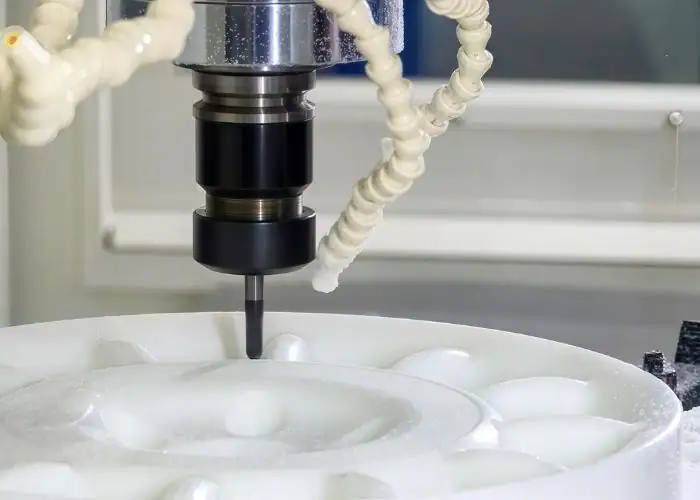
CNC Machining
CNC machining produces plastic parts by removing material from solid sheet, rod, tube, or plate stock. It is particularly useful for prototypes, low-volume production, precision components, large parts, and designs that do not justify injection mold tooling.
Common CNC-machined plastics include:
- POM/Acetal
- PEEK
- PTFE
- Nylon
- PC
- ABS
- UHMW-PE
- PVC
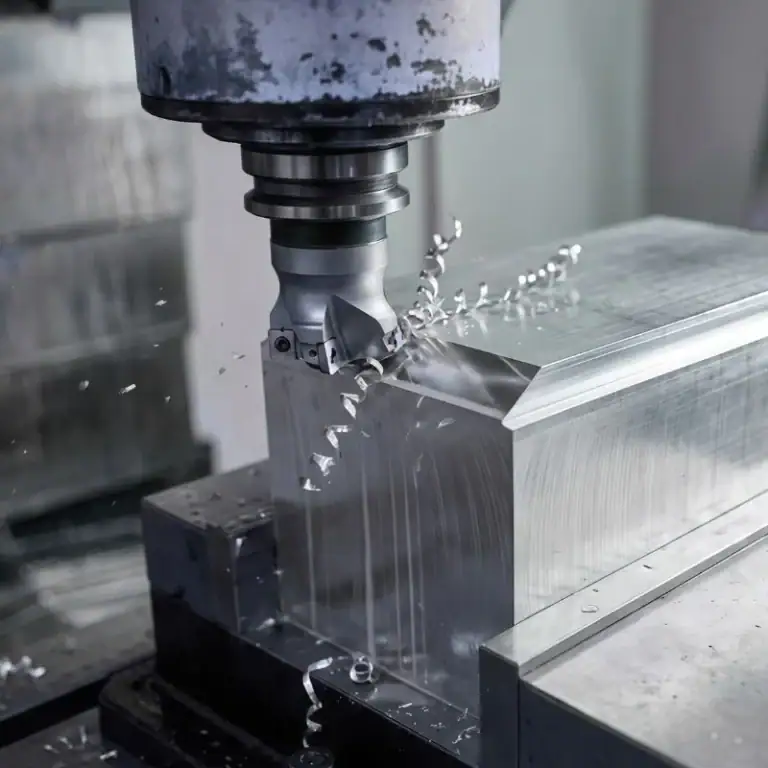
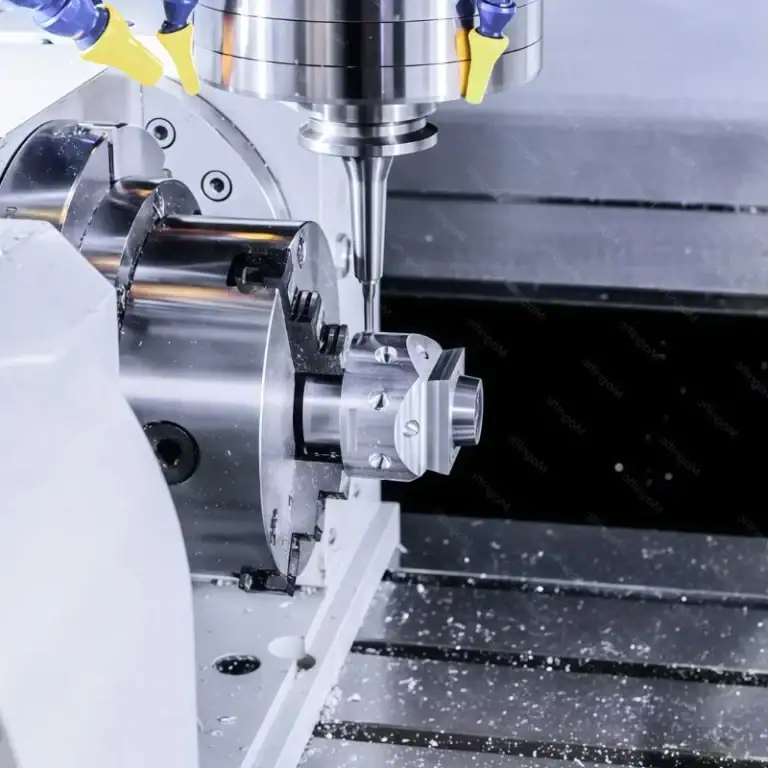
Common machining methods include CNC milling for pockets, slots, flat surfaces, and complex profiles, as well as CNC turning for bushings, rings, spacers, rollers, and other cylindrical parts. For components with multi-angle features, deep cavities, angled holes, or complex surfaces, 5-axis CNC machining can reduce repeated setups and improve positional accuracy between features.
Plastic machining requires different strategies from metal machining. Heat buildup, chip evacuation, workholding pressure, tool sharpness, thermal expansion, moisture, and residual stress can affect final dimensions. This becomes especially important in 5-axis machining, where complex geometry often requires careful toolpath planning, stable fixturing, and controlled cutting forces.
For tight-tolerance parts, stress-relieved stock, suitable milling and turning parameters, balanced material removal, and temperature-controlled inspection can improve dimensional consistency. When geometry is complex, 5-axis CNC machining can also help complete multiple surfaces in fewer setups while reducing repositioning errors.
Injection Molding
Injection molding produces plastic parts by melting or softening polymer material, injecting it into a mold cavity, cooling or curing it, and ejecting the finished component.
It is highly efficient for medium- and high-volume production because one mold can repeatedly produce complex parts with short cycle times.
The main disadvantage is tooling investment. For prototypes or low quantities, CNC machining or 3D printing may be more economical. Once production reaches thousands or tens of thousands of parts, molding can offer much lower unit cost depending on geometry and material.
3D Printing
3D printing builds polymer components layer by layer and is especially useful for rapid prototypes, complex geometries, design validation, and low-volume customized parts.
Common materials include PLA, ABS, Nylon, PETG, photopolymer resins, and high-performance polymers such as PEEK for specialized systems.
Its limitations include layer-dependent mechanical properties, surface roughness, dimensional accuracy, and material restrictions. CNC machining may therefore be preferred when a prototype must closely represent the mechanical and dimensional behavior of production-grade plastic stock.
Extrusion and Compression Molding
Extrusion continuously pushes softened polymer through a die to manufacture products such as sheets, rods, tubes, seals, films, and profiles. Compression molding places material into a heated mold and applies pressure to form the final geometry.
Extrusion is highly efficient for long parts with consistent cross sections, while compression molding is useful for thermosets, composites, and certain large or thick components.
These processes are complementary rather than competing. An extruded POM rod, for example, can later become raw stock for a CNC-machined precision component.
What Are Polymers and Plastics Used For?
Polymers and plastics are used across automotive, industrial equipment, medical, aerospace, automation, electronics, robotics, and consumer products because they combine low weight with corrosion resistance, electrical insulation, chemical resistance, manufacturability, and adaptable mechanical properties.
Automotive
Automotive applications use polymer plastics for clips, housings, connectors, gears, interior components, under-hood parts, fluid-handling components, and lightweight structural features.
Materials such as PP and ABS are common for general components, while nylon, POM, PBT, and PPS are used when higher strength, wear resistance, or temperature performance is required.
Material selection should consider temperature cycles, fuel and oil exposure, vibration, UV, impact, flammability, and dimensional stability.
Industrial Equipment
Industrial equipment uses plastics for gears, bearings, wear strips, guides, rollers, insulators, machine guards, manifolds, fixtures, and chemical-handling components.
POM provides good dimensional stability and low friction, nylon offers strength and wear resistance, while PTFE is useful where chemical resistance and low friction matter.
For machined components, replacing metal with engineering plastic can reduce weight and eliminate corrosion, but creep and thermal expansion must be evaluated.
Medical
Medical applications use engineering polymers for surgical instruments, diagnostic equipment, device housings, fluid-handling parts, sterilizable components, and implant-related applications where approved grades are available.
PEEK is particularly important in demanding medical applications because of its mechanical performance, chemical resistance, and availability in specialized medical grades.
Medical material selection must consider biocompatibility, sterilization method, traceability, cleaning chemicals, dimensional stability, and regulatory requirements.
Aerospace
Aerospace applications use high-performance polymers to reduce weight while maintaining thermal, chemical, wear, and electrical performance.
PEEK, PTFE, PEI, PPS, and reinforced polymer compounds can be used for bushings, insulators, brackets, seals, connectors, guides, and interior components.
Qualification requirements are critical. Flame, smoke, toxicity, temperature, traceability, and aerospace-specific material specifications can determine whether a polymer is acceptable.
Automation
Automation equipment uses polymers for fixtures, grippers, guides, rollers, sensor mounts, machine covers, insulating components, and moving assemblies.
Engineering plastics can reduce inertia and operating noise compared with metal while eliminating many corrosion concerns.
POM, nylon, UHMW-PE, PC, and PEEK are common choices depending on wear, stiffness, transparency, chemical exposure, and operating temperature.
Electronics
Electronics use plastics extensively for connectors, housings, insulators, switches, sockets, PCB-related components, cable management, and protective covers.
Electrical insulation and low weight are major advantages, while specialty compounds can provide flame retardancy or controlled electrical conductivity.
For precision electronic parts, material selection should consider dielectric strength, heat resistance, flame rating, dimensional stability, moisture absorption, and outgassing.
Robotics
Robotics uses engineering plastics for lightweight arms, gears, bushings, grippers, covers, cable guides, fixtures, and sensor components.
Low density reduces moving mass, while self-lubricating or low-friction plastics can reduce noise and maintenance.
For high-cycle robotic components, fatigue, wear, creep, temperature, and stiffness should be evaluated carefully rather than selecting a material only by weight.
Consumer Products
Consumer products use plastics for appliance housings, handles, gears, buttons, cosmetic components, electronic enclosures, furniture components, toys, and protective products.
ABS, PP, PC, PE, and nylon are widely used because they balance cost, appearance, durability, and manufacturing efficiency.
High-volume products generally favor molding, while CNC machining and 3D printing are valuable for prototypes, functional testing, pilot runs, and custom components.
What Are the Advantages and Limitations of Polymers and Plastics?
Polymers and plastics offer low weight, corrosion resistance, design flexibility, electrical insulation, and broad manufacturing options, but they can also suffer from creep, thermal expansion, lower stiffness, moisture sensitivity, and temperature limitations compared with metals.

| Factor | Advantage | Limitation |
| Weight | Much lighter than most metals | Low mass may reduce rigidity |
| Corrosion | Does not rust like steel | Some chemicals attack specific polymers |
| Manufacturing | CNC, molding, extrusion, printing | Processing behavior varies greatly |
| Electrical | Usually good insulation | Static may require conductive grades |
| Strength | Good strength-to-weight ratio | Usually lower stiffness than metals |
| Temperature | Specialty polymers tolerate high heat | Commodity plastics have lower limits |
| Geometry | Excellent design flexibility | Thin walls can warp |
| Cost | Low cost at suitable production volume | High-performance polymers can be expensive |
| Precision | Machinable to close tolerances | Thermal expansion and creep affect stability |
The key engineering principle is that plastic should not automatically be considered a cheaper replacement for metal. A properly selected engineering polymer can outperform metal in corrosion, weight, friction, or electrical applications, but an incorrect grade can fail through creep, wear, heat, or dimensional change.
How Do You Choose the Right Plastic Polymer for Your Project?
Choosing the right plastic polymer requires matching mechanical load, temperature, chemicals, dimensional stability, manufacturing process, production quantity, and cost to the actual operating environment. Material selection should begin with functional requirements rather than simply choosing the strongest or cheapest plastic.
Consider Mechanical Loads
Mechanical loads should be evaluated by considering tensile, compression, bending, impact, fatigue, wear, and long-term static loading.
A gear may prioritize wear and fatigue resistance, while a structural bracket may require stiffness. A sliding component may instead prioritize friction behavior.
Long-term creep is particularly important. Plastics can slowly deform under sustained loads even when the applied stress is well below their short-term tensile strength.
Consider Temperature and Chemical Exposure
Temperature and chemical exposure should be matched to the polymer’s continuous service capability and chemical compatibility.
PEEK and PTFE are often considered for demanding heat or chemical environments, while ABS, PP, PC, and POM serve different moderate-temperature conditions.
Engineers should evaluate actual exposure time, concentration, stress, moisture, sterilization, cleaning agents, fuels, oils, and thermal cycling instead of relying on a single maximum-temperature number.
Consider Tolerance and Dimensional Stability
Tolerance and dimensional stability depend on thermal expansion, moisture absorption, residual stress, crystallinity, geometry, reinforcement, and machining or molding conditions.
POM is often selected for precision mechanical components because of its dimensional stability, while nylon requires additional consideration because moisture absorption can change dimensions.
For tight-tolerance CNC parts, large stock removal should sometimes be divided into roughing, stabilization, and finishing stages to reduce distortion.
Consider Manufacturing Process and Production Volume
Manufacturing process and production volume should be selected together because the most economical method changes with quantity and geometry.
CNC machining is typically attractive for prototypes, low-volume parts, precision components, and frequent design changes. Injection molding becomes increasingly economical as production quantity rises enough to justify mold tooling.
3D printing is useful for rapid iteration and highly complex low-volume geometry, while extrusion is preferred for continuous profiles.
Consider Material and Manufacturing Cost
Material and manufacturing cost should include raw stock, machining time, tooling, mold cost, scrap, inspection, finishing, assembly, and lifecycle performance.
Commodity plastics such as PE and PP are inexpensive, while high-performance materials such as PEEK can cost many times more per kilogram.
However, material price alone can be misleading. A more expensive polymer may reduce part weight, eliminate coating, improve chemical life, reduce lubrication, or simplify assembly enough to lower total system cost.
FAQs
Is A Polymer The Same As A Plastic?
No, a polymer is not exactly the same as a plastic. A polymer is a broad class of materials composed of macromolecular chains, while plastic is a polymer-based material formulated for manufacturing. All conventional plastics contain polymers, but cellulose, proteins, DNA, natural rubber, and many fibers are polymers that are not normally classified as plastics. Commercial plastics may also contain 10–40% or more fillers or reinforcement depending on the engineering grade.
Why Are Plastics Called Polymers?
Plastics are called polymers because their base materials consist of large molecules formed from repeating molecular units. Common plastics such as polyethylene, polypropylene, nylon, ABS, POM, and PEEK belong to synthetic polymer families. Their long-chain molecular structures provide the foundation for their mechanical and thermal properties. Commercial plastics may then include pigments, stabilizers, plasticizers, glass fibers, or other additives to modify stiffness, strength, processing, appearance, or environmental resistance.
What Are 6 Examples Of Polymers?
Six common examples of polymers are polyethylene (PE), polypropylene (PP), nylon (PA), polyoxymethylene (POM), polyether ether ketone (PEEK), and polytetrafluoroethylene (PTFE). Their densities range roughly from 0.9g/cm³ for PP to about 2.2g/cm³ for PTFE. These materials serve very different engineering requirements, including lightweight components, gears, bearings, seals, chemical equipment, medical parts, aerospace components, and high-temperature precision CNC-machined parts.
Is Polymer Plastic Or Metal?
Polymer is not metal,it is a separate material class based on large molecular chains. Many polymers are used to produce plastics, while metals have metallic atomic bonding and typically provide much higher stiffness and electrical or thermal conductivity. For comparison, common engineering plastics often have densities around 0.9–1.5g/cm³, aluminum is approximately 2.7g/cm³, and steel is about 7.8g/cm³, giving polymers a major weight advantage in many engineering applications.
Is Polymer Plastic Strong?
Polymer plastic can be strong, but strength depends on the exact material and grade. Commodity plastics may provide tensile strengths around 20–50MPa, while high-performance or fiber-reinforced engineering polymers can exceed 100MPa depending on formulation and test conditions. Glass-fiber contents of approximately 20–40% are common in reinforced grades. However, stiffness, creep, impact resistance, temperature, moisture, fiber orientation, and fatigue must also be considered when evaluating structural performance.
Conclusion
Polymer and plastic are closely related terms, but they are not identical. Polymer describes the broader family of macromolecular materials, while plastic is a polymer-based material formulated for practical manufacturing and product use. Selecting the right material requires comparing mechanical strength, stiffness, temperature, chemicals, dimensional stability, moisture, wear, manufacturing method, production quantity, and cost rather than relying only on the polymer family name.
At TiRapid, we provide precision CNC machining and manufacturing services for custom plastic parts using materials such as POM, PEEK, PTFE, Nylon, PC, ABS, and other engineering polymers. Our team supports material selection, DFM analysis, CNC milling, turning, 5-axis machining, tolerance control, and inspection for prototypes and low-volume precision components.