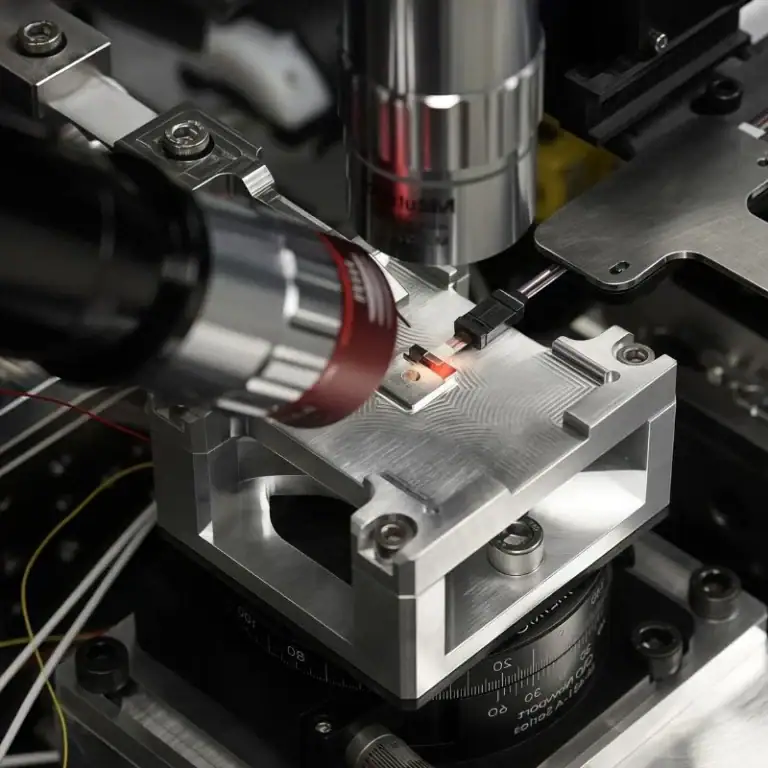
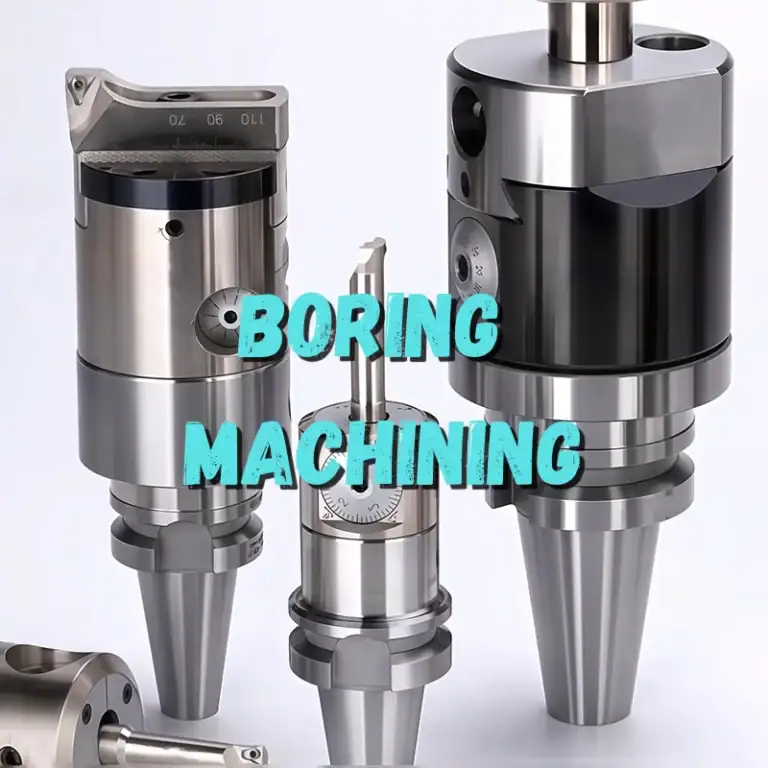
Ferrous metals are iron-based metals and alloys widely used for their strength, durability, wear resistance, heat resistance, and broad manufacturing capability. Common ferrous metals include carbon steel, stainless steel, alloy steel, tool steel, cast iron, and wrought iron. They are widely used in CNC machining, automotive components, industrial equipment, construction, tooling, transportation, and heavy machinery.
This guide explains what ferrous metals are, their properties, types, alloying elements, common examples, manufacturing methods, applications, advantages, limitations, recycling, and the difference between ferrous and nonferrous metals.
What Are Ferrous Metals?
Ferrous metals are metals or alloys in which iron is a major component. Common ferrous metals include carbon steel, stainless steel, alloy steel, tool steel, cast iron, and wrought iron. They are generally selected for high strength, durability, wear resistance, heat resistance, and cost-effective structural performance.
The word “ferrous” comes from the Latin word ferrum, meaning iron. However, describing a material as ferrous does not mean that all ferrous metals behave like pure iron. Carbon, chromium, nickel, manganese, molybdenum, vanadium, and other alloying elements can significantly change strength, hardness, corrosion resistance, machinability, and heat resistance.
What Makes A Metal Ferrous?
A metal is considered ferrous when iron is one of its principal components. Steel, stainless steel, cast iron, wrought iron, and many engineering alloy steels therefore belong to the ferrous metal family, although their carbon and alloying contents can produce very different mechanical and manufacturing properties.
Iron provides the base metallic structure, while carbon and other elements modify performance. For example, increasing carbon generally increases steel hardness and strength but can reduce ductility and weldability. Chromium can improve corrosion and oxidation resistance, while nickel can improve toughness and corrosion behavior.
This is why two ferrous metals can perform very differently in the same CNC machining operation. Material specifications should identify the actual grade, condition, heat treatment, hardness, and required properties rather than simply stating “steel” or “ferrous metal.”
What Is The Difference Between Ferrous And Non-Ferrous Metals?
The main difference between ferrous and non-ferrous metals is iron content: ferrous metals use iron as a major component, while non-ferrous metals generally contain no iron as a principal constituent. Ferrous metals typically prioritize strength and durability, while many non-ferrous metals offer lower weight, better conductivity, or stronger natural corrosion resistance.
Typical ferrous metals examples include carbon steel, stainless steel, cast iron, and tool steel. Common non ferrous metals examples include aluminum, copper, brass, bronze, zinc, magnesium, and titanium.
| Factor | Ferrous Metals | Non-Ferrous Metals |
| Main Composition | Iron is a major component | Iron is not the main component |
| Common Examples | Steel, stainless steel, cast iron | Aluminum, copper, brass, titanium |
| Strength | Generally high | Varies significantly |
| Density | Generally higher | Many are lighter |
| Magnetism | Many are magnetic | Generally non-magnetic |
| Corrosion Resistance | Grade-dependent | Often naturally better |
| Electrical Conductivity | Usually moderate to low | Copper and aluminum are excellent |
| CNC Machining | Highly grade-dependent | Often easier for aluminum/brass |
| Typical Uses | Structures, gears, shafts, tools | Aerospace, electronics, lightweight parts |
The difference between ferrous and nonferrous metals therefore goes far beyond whether a magnet sticks to the material. Strength, density, corrosion, conductivity, machinability, cost, and operating environment should all be considered before making an engineering selection.
What Are The Main Properties Of Ferrous Metals?
The main properties of ferrous metals include high strength, hardness, durability, wear resistance, heat resistance, recyclability, and, for many grades, magnetic behavior. Corrosion resistance and machinability vary considerably by alloy: carbon steels can rust readily, while stainless steels use chromium to achieve much stronger corrosion resistance.
Strength And Hardness
Ferrous metals generally provide high strength and hardness, making them suitable for structural components, shafts, gears, fasteners, tools, molds, machine parts, and other load-bearing applications.
Strength varies considerably with composition and heat treatment. Low-carbon steel prioritizes ductility and fabrication, while medium- and high-carbon steels provide progressively greater hardness and strength. Alloy steels can be heat treated to achieve still higher mechanical performance. TWI identifies roughly 0.05–0.25% carbon for low-carbon steels, 0.25–0.6% for medium-carbon steels, and 0.6–1% for high-carbon steels.
For CNC machining, increasing hardness usually increases cutting forces, heat, and tool wear. A material that provides excellent service strength may therefore require slower cutting parameters or carbide, ceramic, CBN, or other suitable tooling.
Durability And Wear Resistance
Ferrous metals can provide excellent durability and wear resistance, especially when carbon content, alloying elements, and heat treatment are optimized for repeated load, friction, impact, or abrasive service.
Cast iron, high-carbon steel, tool steel, and many alloy steels are commonly selected where wear is a major concern. TWI notes that high-carbon steels are suitable for wear-resistant applications, while cast iron combines hardness with good wear resistance.
Wear resistance is especially important for gears, shafts, dies, molds, machine ways, bushings, cutting tools, and industrial equipment. Heat treatment such as carburizing, quenching, tempering, or nitriding can further improve surface hardness depending on the alloy.
Magnetic Properties
Many ferrous metals are magnetic because they contain iron, but not every ferrous alloy is strongly magnetic. Carbon steels, ferritic stainless steels, and many cast irons show magnetic behavior, while austenitic stainless steels such as 304 and 316 are generally much less magnetic in the annealed condition.
This distinction matters because “ferrous” and “magnetic” are not interchangeable classifications. Alloy composition and crystal structure influence the actual magnetic response.
Magnetic properties are useful in motors, generators, transformers, magnetic fixtures, sensors, separation systems, and electrical equipment. They can also make magnetic workholding practical during grinding or machining of compatible steel components.
Heat Resistance
Ferrous metals can provide good heat resistance, but the usable temperature depends strongly on alloy composition and heat treatment. Alloy steels and stainless steels are generally more suitable for elevated-temperature applications than ordinary low-carbon steels.
Chromium, nickel, molybdenum, and other alloying additions can help maintain oxidation resistance and mechanical performance at elevated temperatures. This is important for engines, exhaust systems, tooling, boilers, industrial machinery, and energy equipment.
Temperature selection should never be based only on the label “ferrous.” Yield strength, creep, oxidation, thermal expansion, heat treatment, and expected service duration should be reviewed for the exact grade.
Corrosion And Rust Resistance
The corrosion resistance of ferrous metals varies from relatively poor in unprotected carbon steel to excellent in selected stainless steels. Ordinary iron and carbon steels can form rust when exposed to oxygen and moisture, while chromium-containing stainless steels develop a protective passive oxide layer.
Corrosion performance can also be improved through:
- Stainless alloy selection
- Painting
- Powder coating
- Zinc plating
- Galvanizing
- Nickel or chrome plating
- Black oxide
- Protective oils
- Controlled environmental exposure
For CNC components, corrosion protection should be considered during drawing review because coating thickness can affect threads, bores, fits, sealing surfaces, and final dimensional tolerances.
Electrical And Thermal Conductivity
Ferrous metals conduct electricity and heat, but their conductivity is generally lower than highly conductive non-ferrous metals such as copper and aluminum. This makes ferrous metals more attractive for mechanical strength than for applications where maximum electrical or thermal transfer is the primary requirement.
For example, copper is normally preferred for electrical conductors, while aluminum is widely used for lightweight heat sinks. Steel is more often selected when structural strength, pressure resistance, wear performance, or mechanical durability matters more.
Conductivity is therefore another practical distinction between ferrous and non ferrous metals when selecting material for electrical, thermal, and mechanical systems.
What Are The Main Types Of Ferrous Metals?
The main types of ferrous metals are carbon steel, stainless steel, alloy steel, tool steel, cast iron, and wrought iron. Each contains iron as a major component but uses different carbon levels, alloying elements, microstructures, and heat treatments to achieve specific combinations of strength, hardness, corrosion resistance, wear resistance, and manufacturability.
Carbon Steel
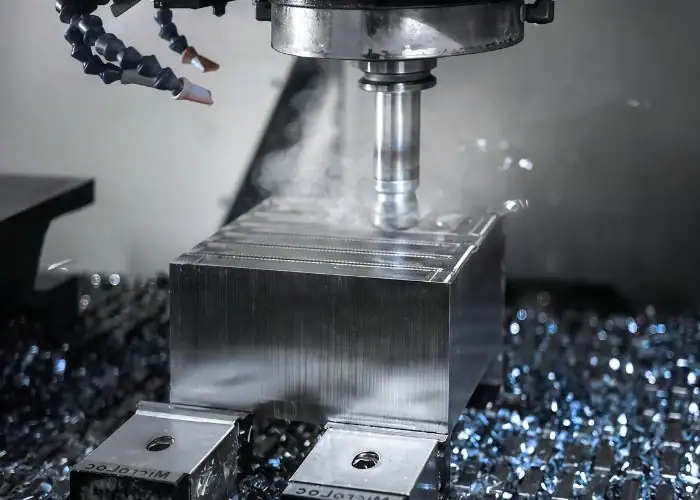
Carbon steel is an iron-carbon alloy in which carbon is the primary strengthening element, and it is commonly divided into low-, medium-, and high-carbon grades. Higher carbon content generally increases hardness and strength but reduces ductility and weldability.
Common categories include:
- Low Carbon Steel:approximately 0.05–0.25% carbon, economical, ductile, formable, and weldable.
- Medium Carbon Steel:approximately 0.25–0.6% carbon,stronger and harder, with good heat-treatment potential.
- High Carbon Steel:approximately 0.6–1% carbon in TWI’s classification,high hardness and wear resistance but lower ductility and weldability.
Carbon steels are widely used for brackets, shafts, fasteners, gears, machine components, structural parts, springs, rails, and tooling. For CNC machining, the exact grade and hardness can significantly change cutting conditions.
Stainless Steel
Stainless steel is a corrosion-resistant ferrous alloy containing sufficient chromium to create a protective passive oxide layer. It combines iron-based mechanical strength with substantially better corrosion resistance than ordinary carbon steel.
Common stainless families include austenitic, ferritic, martensitic, duplex, and precipitation-hardening stainless steels. Grades such as 304 and 316 are widely used for corrosion-resistant components, while 17-4PH is selected where higher mechanical strength is needed.
Stainless steel is common in medical equipment, food-processing systems, aerospace, chemical equipment, valves, pumps, electronics, and precision CNC components. Machining strategy must account for work hardening, heat generation, chip control, and tool wear.
Alloy Steel
Alloy steel is ferrous steel modified with elements such as chromium, nickel, manganese, molybdenum, silicon, or vanadium to improve strength, hardenability, toughness, wear resistance, corrosion behavior, or high-temperature performance.
Grades such as 4140 and 4340 are common engineering alloy steels. Through heat treatment, these materials can provide substantially greater strength than general-purpose mild steel.
Alloy steels are widely used for gears, shafts, axles, fasteners, machine components, automotive parts, energy equipment, and high-load CNC components. Material condition should be specified because annealed and hardened versions of the same alloy machine very differently.
Tool Steel
Tool steel is a high-hardness ferrous steel designed for cutting, forming, molding, stamping, or other applications requiring wear resistance, dimensional stability, and resistance to deformation.
Common families include A-series, D-series, H-series, O-series, S-series, and M-series tool steels. Their properties can be adjusted through alloy chemistry and controlled heat treatment.
Tool steels are widely used for dies, punches, molds, cutting tools, fixtures, gauges, and wear components. CNC machining is usually easier before final hardening, hardened tool steel may require grinding, EDM, or specialized hard-machining processes.
Cast Iron
Cast iron is an iron-carbon material with higher carbon content than steel, offering excellent castability, good compressive strength, vibration damping, and wear resistance but generally lower ductility than steel.
TWI describes cast iron as containing roughly 1.5–4% carbon, while Xometry uses greater than 2% as the general boundary for cast-iron alloys. This difference illustrates why exact grade standards should be used for engineering specifications rather than relying on a single general range.
Common forms include gray iron, ductile iron, white iron, and malleable iron. Applications include machine bases, engine blocks, housings, pipes, brake components, pulleys, and heavy industrial parts.
Wrought Iron
Wrought iron is a low-carbon iron material containing fibrous slag inclusions and is known for ductility, malleability, and traditional corrosion-resistant decorative applications.
Historically, wrought iron was widely used for chains, gates, railings, tools, hardware, and structural work. Modern industrial manufacturing uses steel much more extensively, so genuine wrought iron is now relatively uncommon.
Its importance today is mainly historical, architectural, decorative, and restoration-related rather than mainstream precision CNC production.
What Alloying Elements Are Used In Ferrous Metals?
Common alloying elements used in ferrous metals include chromium, nickel, manganese, molybdenum, vanadium, and silicon. These elements modify the iron-based material to improve properties such as corrosion resistance, hardness, strength, hardenability, toughness, wear resistance, high-temperature performance, and magnetic behavior.
Chromium
Chromium is added to ferrous metals primarily to improve corrosion resistance, hardness, strength, oxidation resistance, and wear resistance.
Its most recognizable use is stainless steel, where chromium forms a passive oxide film that protects the underlying material from further oxidation.
Chromium is also used in tool and alloy steels where hardness, hardenability, or wear resistance matters.
Nickel
Nickel is added to ferrous alloys to improve toughness, ductility, corrosion resistance, and mechanical stability, especially when combined with chromium and other alloying elements.
Nickel is particularly important in many stainless and high-performance steels. It can help stabilize austenitic structures and maintain toughness under demanding operating conditions.
For engineering parts, nickel-containing alloys are often considered where corrosion, temperature, toughness, or mechanical reliability justify higher material cost.
Manganese
Manganese is used in steel to improve strength, hardenability, wear resistance, and high-temperature mechanical behavior while also supporting steelmaking by controlling undesirable sulfur effects.
Its influence varies with concentration and alloy design. In conventional steels, manganese supports strength and processing, specialized high-manganese steels can provide exceptional work-hardening and wear behavior.
That work-hardening behavior can also make certain manganese-rich alloys difficult to machine.
Molybdenum
Molybdenum is added to ferrous alloys to improve high-temperature strength, hardenability, mechanical performance, and resistance to selected forms of corrosion.
It appears in alloy steels, tool steels, and stainless steels. In stainless grades such as 316, molybdenum contributes to improved resistance in chloride-containing environments compared with related grades without the same addition.
For machining, molybdenum-containing high-strength alloys may require more robust tooling and process control than mild steels.
Vanadium And Silicon
Vanadium and silicon are used in ferrous alloys to modify strength, hardness, grain structure, elasticity, wear performance, and magnetic behavior. Vanadium can refine grain structure and form hard carbides, while silicon can strengthen steel and is important in spring and electrical-steel applications.
Vanadium is especially useful where wear resistance, strength, and controlled microstructure are required. Silicon can contribute to strength and elasticity and is widely associated with spring steels and electrical steels.
Their actual effects depend on concentration, heat treatment, and interaction with other alloying elements.
What Are Common Examples Of Ferrous Metals?
Common ferrous metals examples include mild steel, medium-carbon steel, high-carbon steel, stainless steel, alloy steel, tool steel, gray cast iron, ductile iron, and wrought iron. These materials all contain iron as a major component but provide very different combinations of strength, hardness, corrosion resistance, wear behavior, and machinability.
| Ferrous Metal | Key Properties | Common Uses | CNC Machinability |
| Mild Steel | Ductile, economical, weldable | Brackets, frames, plates | Good |
| Medium Carbon Steel | Higher strength and hardness | Shafts, gears, axles | Moderate to good |
| High Carbon Steel | Hard, wear resistant | Springs, blades, tools | Moderate to difficult |
| Stainless Steel | Corrosion resistant, strong | Medical, food, industrial parts | Moderate |
| Alloy Steel | High strength, heat-treatable | Gears, shafts, machine parts | Grade-dependent |
| Tool Steel | Very hard, wear resistant | Dies, molds, punches | Difficult when hardened |
| Gray Cast Iron | Good damping and machinability | Machine bases, housings | Good |
| Ductile Iron | Stronger and tougher than gray iron | Housings, automotive parts | Good |
| Wrought Iron | Ductile, malleable | Decorative structures | Machinable but uncommon |
The important point is that a ferrous classification alone is not enough for manufacturing. A CNC drawing should identify a specific grade such as AISI 1018, 1045, 4140, 304, 316, 17-4PH, or another recognized material specification.
How Are Ferrous Metals Machined And Fabricated?
Ferrous metals can be manufactured through CNC machining, cutting, grinding, welding, casting, forging, forming, bending, heat treatment, and surface finishing. The correct manufacturing route depends on alloy grade, hardness, geometry, tolerance, production quantity, surface requirement, and final mechanical performance.
CNC Machining
CNC machining is widely used for ferrous metals because steel, stainless steel, cast iron, and alloy steel can be milled, turned, drilled, tapped, bored, reamed, and ground into precise components.
Common CNC operations include:
- CNC milling services for pockets, slots, surfaces, and complex profiles
- CNC turning services for shafts, pins, bushings, and cylindrical parts
- Drilling and tapping for mounting and threaded features
- Boring and reaming for precision holes
- 5-axis CNC machining for multi-angle and complex components
- Grinding for tight tolerance and hardened surfaces
Machining performance varies significantly. Low-carbon steels are generally easier to process than hardened tool steels, while austenitic stainless steels require careful control of heat and work hardening. Cutting tool material, coating, rigidity, coolant, feed, speed, and chip evacuation should therefore match the exact grade.
Cutting And Grinding
Cutting and grinding are used to size, shape, finish, or achieve tight tolerances on ferrous metal components, particularly when the material is too hard or the required surface finish is too precise for conventional machining alone.
Sawing, laser cutting, plasma cutting, waterjet cutting, abrasive cutting, and grinding can all be used depending on material thickness and geometry.
Grinding becomes particularly valuable after heat treatment because hardened steel surfaces may be difficult to finish accurately with conventional milling or turning.
Welding
Many ferrous metals can be welded, but weldability depends strongly on carbon content, alloy composition, heat treatment, section thickness, and joint design. Low-carbon steels generally weld more easily than high-carbon and highly alloyed steels.
Welding considerations include:
- Carbon equivalent
- Preheating
- Filler metal
- Heat input
- Joint design
- Distortion
- Residual stress
- Post-weld heat treatment
For precision CNC assemblies, welding is often completed before final machining because thermal distortion can shift hole positions, flatness, perpendicularity, and other critical dimensions.
Forming And Bending
Ferrous metals can be formed, rolled, stamped, forged, and bent when their ductility, hardness, thickness, and heat-treatment condition are compatible with the required deformation.
Low-carbon steel is particularly suitable for forming because of its ductility. Increasing carbon content and hardness generally reduces forming flexibility and increases cracking risk.
Designers should consider inside bend radius, grain direction, springback, thickness, hole-to-bend distance, and whether forming occurs before or after heat treatment.
Surface Finishing And Corrosion Protection
Ferrous metals can be protected or finished through plating, galvanizing, painting, powder coating, black oxide, passivation, polishing, nitriding, and other surface treatments depending on corrosion, wear, appearance, and dimensional requirements.
Common choices include:
- Zinc plating for economical corrosion protection
- Galvanizing for larger outdoor steel components
- Black oxide for appearance and mild protection
- Passivation for stainless steel
- Powder coating for durable cosmetic protection
- Nickel or chrome plating for corrosion and appearance
- Nitriding for surface hardness and wear resistance
Surface treatment should be specified before final tolerance planning because coating buildup can change thread fit, hole diameter, mating surfaces, and assembly clearances.
What Are Ferrous Metals Used For?
Ferrous metals are used for structural components, automotive parts, industrial machinery, medical equipment, aerospace hardware, automation systems, robots, buildings, bridges, tools, gears, shafts, molds, engines, railway equipment, and heavy machinery because they combine strength, durability, wear resistance, manufacturability, and cost efficiency.
Automotive
Ferrous metals are used extensively in automotive manufacturing for frames, gears, shafts, axles, fasteners, engine parts, transmission components, bearings, springs, and structural components.
Medium-carbon and alloy steels provide strength and fatigue resistance for drivetrain parts, while stainless steel may be selected for exhaust, fluid, and corrosion-sensitive applications.
CNC machining is commonly used to produce precision shafts, transmission components, fixtures, prototypes, and low-volume automotive parts.
Industrial Equipment
Ferrous metals are widely used in industrial equipment for machine bases, gears, shafts, housings, fixtures, tooling, rails, brackets, hydraulic components, and heavy-duty mechanical assemblies.
Steel provides load capacity and toughness, while cast iron is useful for machine bases because of its vibration-damping characteristics.
For precision machinery, heat treatment and grinding may be combined with CNC machining to control hardness, wear surfaces, and final dimensional accuracy.
Medical
Ferrous metals, especially selected stainless steels, are used in medical equipment for surgical instruments, equipment components, fixtures, housings, supports, and precision mechanical parts because they can provide strength, corrosion resistance, cleanability, and dimensional stability.
The exact grade must be selected according to the medical application and regulatory requirements. Not every stainless steel is suitable for every medical use.
Manufacturing may also require controlled surface finish, passivation, traceability, cleaning, and inspection.
Aerospace
Ferrous metals are used in aerospace where high strength, wear resistance, fatigue performance, temperature capability, or specific mechanical properties outweigh the need for minimum weight.
High-strength steels and stainless steels may be found in landing gear components, fasteners, shafts, bearings, actuators, engine-related hardware, and tooling.
Because steel is considerably denser than aluminum or titanium, material selection usually balances mechanical performance against aircraft weight.
Automation And Robotics
Ferrous metals are used in automation and robotics for shafts, gears, linear-motion components, machine bases, fixtures, grippers, brackets, fasteners, tooling, and high-load structural parts.
Steel is valuable where stiffness and wear resistance are more important than minimum mass. Hardened steels are particularly useful for bearing surfaces, guide components, gears, and repeated-contact mechanisms.
CNC machining allows precise interfaces, bearing bores, dowel locations, threaded holes, and alignment features to be integrated into these components.
Construction And Infrastructure
Ferrous metals are essential to construction and infrastructure because structural steels provide the tensile strength, durability, availability, and cost efficiency required for buildings, bridges, reinforcement, railways, pipelines, and large fabricated structures.
Typical applications include:
- Structural beams
- Columns
- Reinforcing bars
- Bridges
- Railway components
- Fasteners
- Plates
- Cables
- Pipes
Corrosion protection is especially important for outdoor structures, where galvanizing, painting, coating systems, or corrosion-resistant grades may be required.
Energy And Heavy Equipment
Ferrous metals are used in energy and heavy equipment for gears, shafts, pressure components, drilling equipment, valves, pumps, turbines, frames, fasteners, and wear components because they can withstand high loads and demanding operating conditions.
Alloy steels are particularly valuable when standard carbon steel cannot provide sufficient strength, hardenability, wear resistance, or temperature performance.
Critical components should be selected according to actual pressure, temperature, fatigue, corrosion, impact, and service-life requirements.
What Are The Advantages And Disadvantages Of Ferrous Metals?
The main advantages of ferrous metals are high strength, durability, wear resistance, broad material availability, heat-treatment capability, recyclability, and cost-effective performance. Their main disadvantages are relatively high density, corrosion risk in many grades, and increased machining difficulty as hardness, strength, or alloy content rises.
| Advantages | Disadvantages |
| High strength | Many grades can rust |
| Good load-bearing performance | Generally heavier than aluminum |
| Excellent wear resistance in selected grades | Hardened grades can be difficult to machine |
| Wide range of grades | Some stainless steels work-harden |
| Heat-treatable options | Corrosion protection may add cost |
| Good availability | High hardness increases tool wear |
| Highly recyclable | Some grades require controlled welding |
| Cost-effective general-purpose steels | Weight can limit aerospace use |
Advantages Of Ferrous Metals
The main benefits of ferrous metals are their high mechanical strength, durability, broad grade selection, wear resistance, heat-treatment flexibility, recyclability, and relatively economical performance for structural and industrial applications.
These advantages allow engineers to select from inexpensive mild steel through high-strength alloy steels and corrosion-resistant stainless steels without leaving the same broad material family.
Ferrous metals are particularly valuable when the part must withstand high load, impact, friction, fatigue, or long-term mechanical service.
Disadvantages Of Ferrous Metals
The main disadvantages of ferrous metals are corrosion susceptibility in many grades, relatively high weight, and potentially difficult machining or welding when carbon content, alloying, strength, or hardness becomes high.
Carbon steel may need coating or plating for humid environments. Hardened alloy and tool steels increase cutting forces and tool wear, while some stainless grades can work-harden during machining.
Therefore, the strongest ferrous material is not automatically the best material. Finished-part cost, manufacturing difficulty, corrosion protection, and service environment should be evaluated together.
Ferrous Vs Non-Ferrous Metals: Which Should You Choose?
Choose ferrous metals when strength, stiffness, wear resistance, load capacity, or cost-effective structural performance is the priority. Choose non-ferrous metals when low weight, high electrical or thermal conductivity, natural corrosion resistance, or non-magnetic behavior is more important.
There is no universal winner between ferrous and non ferrous metals. The correct choice depends on what the component must actually do.
| Selection Factor | Ferrous Metals | Non-Ferrous Metals |
| Iron Content | Iron is a major component | Iron is not the primary component |
| Strength | Usually high | Low to very high depending on alloy |
| Density | Generally higher | Many options are lighter |
| Corrosion Resistance | Grade-dependent | Often good |
| Magnetism | Many grades magnetic | Generally non-magnetic |
| Conductivity | Moderate to low | Copper/aluminum are high |
| Wear Resistance | Excellent options available | Alloy-dependent |
| Heat Treatment | Extensive options | Alloy-dependent |
| Material Cost | Many economical choices | Often higher |
| CNC Applications | Shafts, gears, molds, fixtures | Housings, aerospace parts, heat sinks |
For example, a high-load gearbox shaft may favor alloy steel, while a lightweight aerospace housing may favor aluminum. An electrical conductor may favor copper, while a corrosion-resistant precision valve component could favor stainless steel.
How To Choose The Right Ferrous Metal For CNC Machining?
The right ferrous metal for CNC machining should be selected by balancing strength, hardness, corrosion resistance, machinability, wear resistance, temperature, heat treatment, tolerance, surface finish, production quantity, and total finished-part cost. The material should meet service requirements without creating unnecessary manufacturing difficulty.

Choose Based On Strength And Load
Choose the ferrous metal according to the actual tensile, yield, fatigue, impact, and load-bearing requirements of the component rather than simply selecting the strongest available grade.
Low-carbon steel may be sufficient for brackets and covers, while medium-carbon or alloy steel may be needed for shafts, gears, and heavily loaded mechanical components.
Over-specifying strength can increase material cost and machining difficulty without improving real-world performance.
Choose Based On Corrosion Resistance
Choose stainless steel or a protected carbon/alloy steel when the component will be exposed to moisture, chemicals, salt, cleaning agents, or other corrosive conditions.
Stainless steels can reduce the need for secondary coatings, while carbon steel can remain economical when zinc plating, painting, powder coating, or another protective treatment is acceptable.
The choice should consider both initial manufacturing cost and long-term maintenance.
Choose Based On Machinability
Choose a ferrous grade with suitable machinability when the component contains deep pockets, many holes, threads, tight tolerances, complex profiles, or high material-removal volume.
Machinability affects:
- Cutting speed
- Tool life
- Chip control
- Cutting force
- Heat generation
- Surface finish
- Cycle time
- Burr formation
- Final machining cost
A stronger or more corrosion-resistant material may be technically suitable but significantly more expensive to machine.
Choose Based On Heat And Wear Resistance
Choose alloy steel, tool steel, or an appropriate stainless grade when the component must resist high temperature, friction, abrasion, repeated contact, or surface wear.
Heat treatment can further improve hardness and wear resistance. Carburizing, quenching and tempering, nitriding, or induction hardening may be considered depending on material and application.
For precision components, the manufacturing sequence should account for distortion caused by heat treatment.
Choose Based On Cost And Production Volume
Choose the ferrous material by total finished-part cost rather than raw material price alone. Material cost, machining time, tool wear, heat treatment, grinding, coating, inspection, scrap risk, and production quantity all affect the real manufacturing cost.
For prototypes and low-volume parts, CNC machining standard stock may be economical. For repeated production, forging, casting, near-net-shape blanks, or optimized bar stock may reduce machining time and material waste.
A practical DFM review should therefore evaluate both engineering performance and manufacturing efficiency.
Are Ferrous Metals Recyclable?
Ferrous metals are highly recyclable and can be recovered, separated, processed, melted, and returned to steel or iron production. Their magnetic behavior also makes many ferrous materials relatively easy to separate from mixed waste streams using magnetic separation.
How Are Ferrous Metals Recycled?
Ferrous metals are recycled by collecting and sorting scrap, separating iron-based materials, removing contaminants, shredding or sizing the scrap, melting it, refining the molten metal, and converting it into new steel or iron products.
A simplified process is:
- Scrap collection
- Material sorting
- Magnetic separation
- Shredding or cutting
- Contaminant removal
- Melting
- Refining and composition adjustment
- Casting into new feedstock
- Rolling, forming, or further manufacturing
CNC machining also generates recyclable chips and turnings. Keeping different alloys separated can improve scrap value and reduce contamination.
Why Is Ferrous Metal Recycling Important?
Ferrous metal recycling is important because it returns valuable iron and alloy content to manufacturing, reduces the amount of metal sent to landfill, and supports a circular material supply for steel-intensive industries.
EPA reported that about 10.53 million tons of steel entered U.S. municipal solid-waste landfills in 2018, showing that substantial recovery potential remains.
For manufacturers, organized scrap handling can also improve material traceability, workplace cleanliness, recycling value, and overall production efficiency.
FAQs
Which Metals Are Ferrous Metals?
Ferrous metals are iron-based metals and alloys, including carbon steel, stainless steel, alloy steel, tool steel, cast iron, and wrought iron. Carbon steel may contain up to about 2.1% carbon, while cast iron generally contains more than 2%. Stainless steel typically contains at least about 10.5% chromium for corrosion resistance. Their properties vary widely, but strength, durability, wear resistance, and recyclability make them important engineering materials.
What Are 10 Ferrous Metals?
Ten common ferrous metals or engineering grades include mild steel, 1018 steel, 1045 steel, 4140 alloy steel, 4340 alloy steel, 304 stainless steel, 316 stainless steel, 17-4PH stainless steel, gray cast iron, and ductile iron. Their performance differs significantly: mild steel favors economical fabrication, 4140 offers higher strength and heat-treatment capability, 316 improves corrosion resistance, and cast irons provide good damping and wear performance.
Is Gold A Ferrous Metal?
No. Gold is a non-ferrous precious metal because iron is not its principal component. Pure gold has a density of about 19.3g/cm³ and is valued for corrosion resistance, electrical behavior, ductility, and chemical stability rather than the high structural strength associated with many ferrous alloys. Unlike carbon steel, gold does not form iron oxide rust and is not classified as an iron-based engineering metal.
What Is The Strongest Ferrous Metal?
There is no single strongest ferrous metal because “strength” may mean tensile, yield, compressive, fatigue, or impact strength. Advanced heat-treated alloy steels can exceed 1,500MPa tensile strength, while specialized ultra-high-strength steels can go considerably higher. In practical CNC design, grades such as 4140 and 4340 are commonly considered for high-strength parts, but hardness, toughness, heat treatment, fatigue, machinability, and safety factor must also be evaluated.
Is Copper A Ferrous Metal?
No. Copper is a non-ferrous metal because iron is not its principal constituent. Pure copper has a density of about 8.96g/cm³ and electrical conductivity near 100% IACS for high-conductivity grades, making it much more suitable than ordinary steel for electrical and thermal applications. Copper and copper alloys are widely used for electrical contacts, busbars, heat-transfer components, electrodes, and precision CNC parts rather than iron-based structural applications.
Is Aluminium A Ferrous Metal?
No. Aluminium is a non-ferrous metal because iron is not its principal component. Pure aluminum has a density of about 2.70g/cm³, roughly one-third that of common steels at around 7.8g/cm³. Aluminum is therefore widely selected for lightweight CNC parts, aerospace structures, housings, heat sinks, and automation components. Ferrous steels are generally preferred when higher stiffness, wear resistance, or load-bearing strength is more important than weight reduction.
Conclusion
Ferrous metals are iron-based engineering materials that include carbon steel, stainless steel, alloy steel, tool steel, cast iron, and wrought iron. Their main advantages are strength, durability, wear resistance, broad grade availability, heat-treatment flexibility, and recyclability, while corrosion, weight, and machining difficulty must be considered for specific grades. The right choice should be based on load, environment, hardness, machinability, heat treatment, tolerance, surface requirements, and total manufacturing cost.
At TiRapid, we provide precision CNC machining and manufacturing services for custom ferrous and non-ferrous metal components. If your project requires carbon steel, stainless steel, alloy steel, tool steel, CNC milling, turning, 5-axis CNC machining, tight tolerances, heat treatment, or surface finishing, our team can support material selection, DFM review, machining strategy, inspection, and production-ready custom parts.