Polycarbonate vs acrylic is a common material comparison in product design, CNC machining, display manufacturing, equipment protection, and transparent plastic part development. Both materials offer good optical clarity, lightweight performance, and broad processing flexibility, but they behave very differently in strength, impact resistance, heat resistance, scratch resistance, weatherability, and long-term durability.
This guide explains how polycarbonate and acrylic differ, what each material is made of, how their mechanical and optical properties compare, how they perform during CNC machining and fabrication, and when each clear plastic provides better manufacturing value.
What Is Acrylic?
Acrylic is a transparent thermoplastic material also known as PMMA, or polymethyl methacrylate. It is widely used when a project requires high optical clarity, good surface gloss, weather resistance, easy polishing, and a more economical alternative to glass.
What Does PMMA Mean?
PMMA means polymethyl methacrylate, a linear transparent thermoplastic polymer made from methyl methacrylate monomers. Its molecular structure gives it high transparency, good rigidity, and strong outdoor weather resistance.
Acrylic has been used as an engineering and display material since the 1930s. Today, it is common in advertising signs, light boxes, transparent panels, optical parts, architectural decoration, consumer products, and protective covers where appearance matters.
PMMA is not as tough as polycarbonate, but it offers better natural scratch resistance and a clearer visual finish. This is why designers often choose acrylic when transparency, edge quality, and cosmetic appearance are more important than impact resistance.
Cast Acrylic Vs Extruded Acrylic
Cast acrylic and extruded acrylic are the two main sheet types used in machining and fabrication. Cast acrylic is made by polymerizing liquid monomer inside a mold, while extruded acrylic is formed by pushing melted material through a die.
Cast acrylic usually has higher molecular weight, better chemical resistance, better optical quality, and stronger performance during machining and polishing. It is often preferred for high-end optical parts, precision CNC machined acrylic components, and parts requiring good surface quality.
Extruded acrylic is usually more cost-effective and consistent in thickness, making it suitable for large-volume sheets, display panels, signage, and cost-sensitive transparent products. However, it may be more sensitive to heat and stress during machining or bonding.
What Is Polycarbonate?
Polycarbonate is a transparent engineering thermoplastic commonly known as PC. It is widely used when a project requires transparency combined with high impact resistance, toughness, heat resistance, and dimensional stability.
What Does PC Mean?
PC means polycarbonate, a thermoplastic polymer containing carbonate groups in its molecular chain. Most industrial polycarbonate materials are produced from bisphenol A and carbonate-based monomers, creating a material with high toughness and strong mechanical performance.
Polycarbonate is an amorphous transparent plastic, which means it can provide both clarity and dimensional stability. It also has good heat resistance, with heat deflection temperatures often reaching around 120–135°C depending on grade and testing conditions.
Representative commercial grades include Lexan™ and Makrolon®, which are widely used in automotive, aerospace, electronics, medical, machine protection, and industrial applications. These grades may also include UV-resistant, flame-retardant, hard-coated, or optical versions.
Why Is Polycarbonate Used For Protective Parts?
Polycarbonate is used for protective parts because it absorbs impact energy much better than acrylic. It is tough, flexible, and much less likely to crack or shatter under sudden force.
This makes it suitable for applications where transparent parts must also protect people, equipment, or internal components. Examples include safety guards, impact windows, protective shields, riot shields, machine covers, and transportation glazing.
The main tradeoff is that untreated polycarbonate scratches more easily than acrylic and may yellow under UV exposure if it lacks UV stabilization. For demanding use, coated or UV-resistant grades are often preferred.
Polycarbonate Vs Acrylic: Core Property Comparison
The core difference between polycarbonate and acrylic is that acrylic provides better optical clarity, surface gloss, natural scratch resistance, and cost efficiency, while polycarbonate provides much higher impact resistance, toughness, heat resistance, and safety performance.
| Property | Acrylic / PMMA | Polycarbonate / PC | Practical Selection Logic |
| Light Transmission | Around 92% | Around 88–90% | Acrylic is better for maximum clarity and display quality |
| Impact Resistance | Moderate, brittle under impact | Very high, tough and shatter-resistant | PC is better for safety and protection |
| Density | About 1.18 g/cm³ | About 1.20 g/cm³ | Weight difference is usually minimal |
| Scratch Resistance | Better natural surface hardness | Scratches more easily unless coated | Acrylic is better for frequent-touch display surfaces |
| Heat Resistance | Around 80°C heat deflection range | Around 120–135°C depending on grade | PC is better near heat sources |
| UV Resistance | Naturally better outdoor stability | Needs UV coating or stabilization | Acrylic is often better outdoors without coating |
| Chemical Resistance | Moderate, sensitive to solvents | Good toughness but also solvent-sensitive | Both require chemical review |
| Flame Retardance | Standard grades are more flammable | Better flame-retardant grades available | PC is better for electrical and safety parts |
| CNC Machinability | Cuts cleanly but can chip or crack | Tougher but may create burrs or sticky chips | Both need proper tool geometry |
| Cost | Lower | Higher | Acrylic is better for cost-sensitive visual parts |
Light Transmission And Optical Clarity
Acrylic provides higher optical clarity than polycarbonate, making it the better option when appearance, transparency, edge quality, and visual presentation are the main priorities. Its light transmission can reach about 92%, which is close to optical glass.
When Should You Choose Acrylic For Clarity?
You should choose acrylic for clarity when the part’s main function is visual display, light transmission, decoration, or optical appearance. Acrylic provides a cleaner and brighter appearance in many transparent plastic applications.
It is especially useful for retail displays, LED light guides, transparent panels, model covers, museum cases, decorative windows, and signage. The material also supports good edge polishing, laser engraving, color options, and surface finishing.
However, acrylic should be used carefully where impact is possible. A visually perfect acrylic panel may crack or shatter if it is used as a safety shield or machine guard.
When Is Polycarbonate Clarity Enough?
Polycarbonate clarity is enough when the part must remain transparent but also needs strength, toughness, and protection. Most industrial viewing windows, guards, face shields, and equipment covers do not require acrylic-level optical brilliance.
In these cases, the slight reduction in light transmission is often acceptable because the safety advantage is much more important. Polycarbonate allows users to see through the part while resisting impact and breakage.
For high-end transparent PC parts, hard-coated or optical-grade polycarbonate can improve surface durability and clarity. These grades are often used in automotive, aerospace, and protective glazing applications.
Impact Resistance And Mechanical Strength
Polycarbonate has much higher impact resistance than acrylic and is the better choice for safety-critical or load-bearing transparent parts. It can resist strong impact without shattering, while acrylic is harder but more brittle.
Why Is Polycarbonate More Impact Resistant?
Polycarbonate is more impact resistant because its molecular structure allows greater deformation before failure. It can bend, absorb energy, and resist crack propagation better than acrylic.
This toughness makes it useful in environments with vibration, falling objects, sudden contact, or mechanical stress. PC is also preferred when a transparent part must maintain integrity after impact.
In CNC machining, this toughness also reduces the risk of sudden cracking during cutting or drilling. However, it can create burrs, sticky chips, and heat-related machining issues if cutting parameters are not controlled.
Why Does Acrylic Crack More Easily?
Acrylic cracks more easily because it is a harder and more rigid material with lower impact toughness. It can provide excellent clarity, but it is more sensitive to stress concentration, sharp corners, over-tightened screws, and solvent exposure.
Cracking often occurs around drilled holes, bonded joints, sharp internal corners, or areas with residual machining stress. This is why acrylic parts often need proper drilling sequence, polished edges, rounded corners, and sometimes annealing.
For appearance parts, acrylic remains excellent. For impact protection, polycarbonate is usually the safer option.
Heat Resistance And Dimensional Stability
Polycarbonate provides better heat resistance than acrylic, making it more suitable for parts used near electronics, lighting systems, motors, engines, or thermal equipment. Acrylic typically softens or deforms at lower temperatures.
When Is Acrylic Heat Resistance Enough?
Acrylic heat resistance is enough for indoor displays, signage, decorative panels, light covers with controlled temperature, household products, and parts that do not experience high thermal load.
It is also suitable where optical clarity and surface finish matter more than heat resistance. However, designers should avoid placing acrylic close to high-power LEDs, motors, heaters, or enclosed thermal systems without temperature testing.
If the part must stay dimensionally stable above 80°C, acrylic may not be the safest option. Polycarbonate or another engineering plastic should be considered.
When Should You Choose Polycarbonate For Heat?
You should choose polycarbonate for heat when the transparent part is used near warm electronics, lighting systems, motors, sterilization environments, or industrial equipment. PC maintains better toughness and dimensional stability under elevated temperatures.
This is why polycarbonate is commonly used in electrical enclosures, LED covers, automotive lamp structures, medical device covers, and machinery panels.
For very high-temperature applications, standard PC may still not be enough. In those cases, material-grade selection, thermal testing, and alternative engineering plastics should be reviewed.
UV Resistance And Outdoor Weatherability
Acrylic generally provides better natural UV resistance and outdoor weatherability than untreated polycarbonate. It is less likely to yellow or become brittle under sunlight, making it suitable for signs, skylights, outdoor displays, and architectural decoration.
| Outdoor Condition | Acrylic Performance | Polycarbonate Performance | Recommendation |
| Indoor use | Excellent | Excellent | Choose based on clarity, strength, and cost |
| Short-term outdoor use | Good | Acceptable if protected | Both may work with design review |
| Long-term sunlight | Strong natural UV resistance | Needs UV-stabilized or coated grade | Acrylic or coated PC |
| High-impact outdoor use | Brittle under strong impact | Excellent toughness | UV-coated PC |
| Architectural glazing | Good clarity and weatherability | Better safety with coating | Select based on safety requirement |
Chemical Resistance And Cleaning
Acrylic and polycarbonate both require careful chemical review because many solvents can cause cracking, crazing, fogging, or surface damage. Neither material should be assumed to resist all cleaners or industrial chemicals.
How Should Acrylic And Polycarbonate Be Cleaned?
Acrylic and polycarbonate should be cleaned with mild soap, neutral cleaner, warm water, and soft microfiber cloth. Wiping should be gentle and consistent to reduce fine scratches.
Strong solvents, abrasive cleaners, dry wiping, alcohol-heavy cleaners, acetone, and strong alkaline solutions should be avoided unless the material grade has been tested for compatibility.
For long-term clarity, protective film should remain on the sheet until final assembly when possible. Frequent-touch applications may also need anti-scratch coating or replaceable protective layers.
CNC Machining And Manufacturability
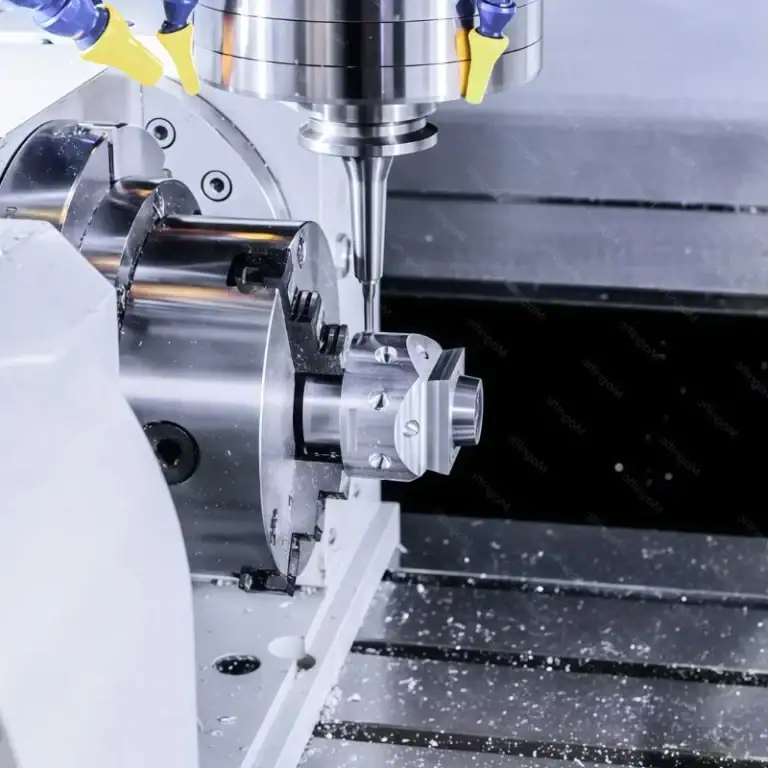
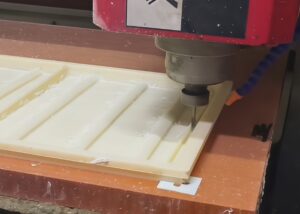
Acrylic and polycarbonate can both be CNC machined, but they require different cutting strategies because acrylic is harder and more brittle, while polycarbonate is tougher and more heat-sensitive. Tool geometry, feed, speed, cooling, and clamping must be adjusted accordingly.
CNC Machining Acrylic
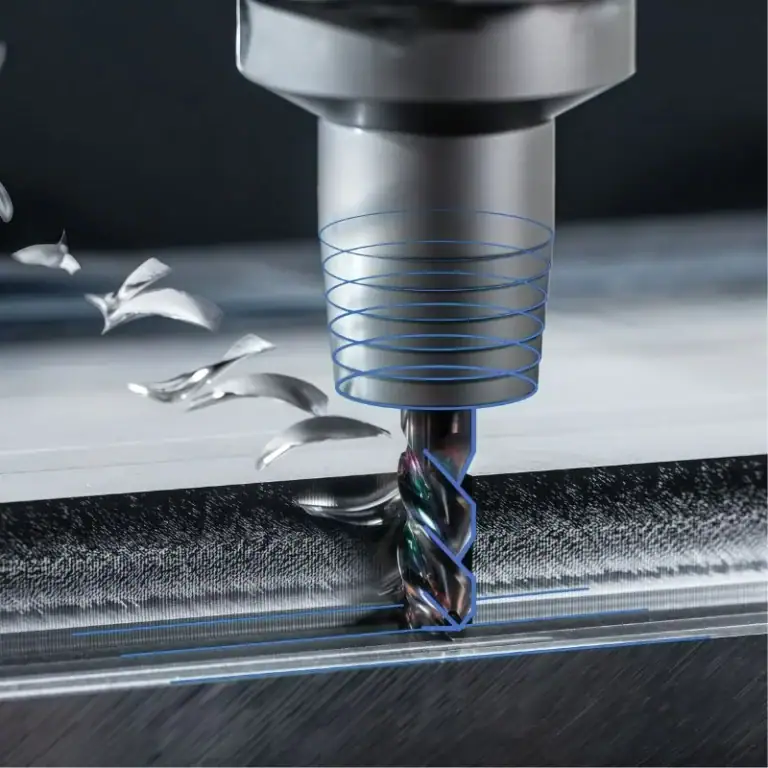
CNC machining acrylic requires sharp tools, controlled heat, stable clamping, and gradual drilling. Single-flute or polished-edge cutters are often used to reduce heat and improve chip removal.
Typical spindle speeds may fall around 10,000–18,000 rpm depending on cutter diameter, machine rigidity, and part geometry. Feed should be high enough to form chips rather than rub the surface.
Drilling acrylic requires extra care. Holes should be drilled gradually, with proper support at the exit side, because acrylic can crack or burst when the drill breaks through.
CNC Machining Polycarbonate
CNC machining polycarbonate requires sharp carbide tools, stable chip evacuation, and cooling to prevent melting or burr formation. PC is tough and flexible, so it usually does not crack as easily as acrylic.
However, its toughness can cause stringy chips and edge burrs. Tool paths should avoid excessive rubbing, and air blast or mist cooling can help maintain surface quality.
Polycarbonate is suitable for CNC machined protective covers, electronic windows, machine guards, medical device covers, and industrial transparent parts where strength is more important than polished-edge appearance.
Annealing And Stress Cracking Control
Annealing helps reduce internal stress in acrylic and polycarbonate parts before or after machining. This is important when parts will be bonded, screwed, polished, exposed to solvents, or used in tight-tolerance assemblies.
Acrylic may be annealed around 80–85°C for several hours depending on thickness. Polycarbonate may require higher annealing temperatures, often around 120°C, with holding time based on sheet thickness and material grade.
Stress cracking can be reduced by using rounded corners, avoiding over-tightened screws, selecting compatible adhesives, controlling machining heat, and leaving enough edge distance around holes.
Surface Treatment And Finishing Options
Acrylic offers better finishing flexibility for polished and decorative parts, while polycarbonate requires more caution because it is more heat-sensitive and softer on the surface. The correct finish depends on visual requirements, function, and durability.
| Surface Treatment | Acrylic / PMMA | Polycarbonate / PC | Manufacturing Consideration |
| Flame Polishing | Excellent edge clarity | Risk of distortion | Best for acrylic edges |
| Mechanical Polishing | Good | Possible with control | Better for heat-sensitive PC |
| Sandblasting | Good matte effect | Good matte or anti-glare effect | Useful for non-gloss surfaces |
| Dyeing | Good | Requires suitable dyes | Acrylic has more color flexibility |
| Screen Printing | Good | Good | Surface preparation is important |
| Laser Engraving | Good contrast | May discolor or melt | Acrylic is usually easier |
| Hard Coating | Optional | Highly recommended for wear | Improves PC scratch resistance |
Industry Application Scenarios
Polycarbonate and acrylic are used in many of the same industries, but their roles are different. Acrylic is more suitable for appearance, clarity, display, and cost-sensitive transparent parts. Polycarbonate is more suitable for protection, impact resistance, heat resistance, and safety.
| Industry | Application Examples | Recommended Material | Main Reason |
| Architecture And Decoration | Lighting covers, partitions, canopies | Acrylic or coated PC | Acrylic for clarity; PC for safety |
| Advertising And Signage | Light boxes, display boards, light guide panels | Acrylic | High transparency, polishability, and color options |
| Medical Devices | Observation windows, analyzer covers, light guides | Polycarbonate | Toughness, heat resistance, and medical-grade options |
| Electronics And Electrical | Insulation covers, LED covers, panel windows | Polycarbonate | Heat resistance, strength, and flame-retardant options |
| Transportation | Instrument covers, headlight lenses, visors | Polycarbonate | Impact resistance and vibration resistance |
| Household Products | Storage boxes, frames, desktop shields | Acrylic | Good appearance and lower cost |
| Mechanical Equipment | Safety shields, viewing windows, machine covers | Polycarbonate | High toughness and shatter resistance |
| Food Display | Packaging windows, vending machine windows | Acrylic | Clear appearance and display quality |
| Aerospace | Helmet visors, cockpit covers, instrument windows | Polycarbonate | High impact resistance and lightweight safety |
| Education And Research | Model covers, lab observation panels | Acrylic | Good clarity and economical processing |
Durability, Maintenance, And Service Life
Durability differs because acrylic has better natural scratch resistance and UV stability, while polycarbonate has much better impact resistance and toughness. The right choice depends on whether the part is more likely to face scratching, impact, sunlight, heat, or repeated cleaning.
Scratch Resistance
Acrylic has better natural scratch resistance than uncoated polycarbonate. Its surface is harder and can maintain a smoother appearance in display panels, covers, and frequent-touch visual parts.
Polycarbonate is softer and more easily scratched, even though it is much stronger against impact. In applications where users frequently touch or clean the surface, uncoated PC can develop fine abrasions.
Hard-coated polycarbonate can significantly improve scratch resistance. This is common in automotive lenses, aircraft windows, safety eyewear, and industrial transparent guards.
Indoor And Outdoor Service Life
Indoor service life can be long for both acrylic and polycarbonate when heat, chemicals, and abrasion are controlled. Material selection should focus on impact risk, appearance, and cleaning method.
For outdoor use, acrylic usually performs better without special coating because it naturally resists UV yellowing more effectively. Polycarbonate should use UV-resistant grades or coatings for long-term sunlight exposure.
With proper UV protection and maintenance, both materials can support long-term outdoor applications. However, unprotected PC may yellow faster, while acrylic may fail under sudden impact.
Maintenance Recommendations
Both acrylic and polycarbonate should be cleaned with non-abrasive cloth and neutral cleaners. Harsh solvents, rough towels, dry wiping, and strong alkaline cleaners should be avoided.
For acrylic, special care should be taken around bonded areas, screw holes, and polished edges because these locations can develop stress cracking. For polycarbonate, surface protection is important because the material scratches more easily.
In demanding environments, specify coating, cleaning procedure, replacement cycle, and inspection criteria at the design stage. Maintenance should be part of material selection, not an afterthought.
Cost, Availability, And Sustainability
Acrylic is usually less expensive and more widely available in colors, thicknesses, and decorative finishes, while polycarbonate is more expensive but offers better functional performance in strength, safety, and heat resistance.
| Factor | Acrylic / PMMA | Polycarbonate / PC | Selection Logic |
| Material Cost | Lower | Higher | Acrylic is better for cost-sensitive visual parts |
| Color Options | Very broad | More limited | Acrylic supports more decorative designs |
| Thickness Availability | Wide range | Wide industrial range | Both are widely available |
| Processing Cost | Usually lower | May be higher | PC needs burr and heat control |
| Coating Cost | Optional | Often needed for scratch or UV resistance | Coating can increase PC cost |
| Recycling | Recyclable thermoplastic | Recyclable thermoplastic | Local recycling availability varies |
| Sustainability Concern | Not biodegradable | BPA-related concerns in some grades | Review regional regulations and suppliers |
Alternative Clear Plastic Materials
Alternative clear plastic materials may be considered when acrylic or polycarbonate does not meet chemical, thermal, or processing requirements. These alternatives are usually selected for special environments rather than general transparent parts.
PETG offers good toughness, lower cost, and easier forming than PC in some applications. It is commonly used for display, packaging, and protective covers with moderate performance needs.
PCTFE, PFA, and other high-performance plastics may be used in chemical, semiconductor, or high-purity environments. However, they are usually more expensive and less visually versatile than acrylic or PC.
| Alternative Material | Main Features | Typical Use |
| PETG | Tough, easy to form, lower cost | Display covers and packaging windows |
| PCTFE | Low moisture absorption and high dimensional stability | Precision and chemical applications |
| PFA | Excellent chemical resistance | Semiconductor and corrosive environments |
| Transparent Nylon | Toughness and wear resistance | Specialty industrial parts |
| Glass | High hardness and optical stability | Applications where weight and impact risk are acceptable |
How To Choose Between Polycarbonate And Acrylic?
Choose acrylic when the project requires high clarity, glossy appearance, good scratch resistance, UV stability, color options, easy polishing, and lower material cost. Choose polycarbonate when the project requires high impact resistance, toughness, heat resistance, safety, and structural reliability.
Choose Acrylic When Appearance Matters Most
Choose acrylic when appearance, clarity, and polishability are more important than impact resistance. PMMA provides bright transparency, clean edges, and excellent decorative potential.
It is suitable for display fixtures, advertising signs, retail cases, product windows, light covers, and transparent panels. Its lower cost also makes it attractive for large-area visual applications.
However, avoid acrylic when the part may experience heavy impact, high heat, strong solvents, or repeated mechanical stress around fasteners.
Choose Polycarbonate When Strength Matters Most
Choose polycarbonate when the transparent part must resist impact, vibration, bending, heat, or mechanical load. PC is the safer material for protective and structural transparent applications.
It is suitable for machine guards, protective windows, helmet visors, electrical covers, medical equipment windows, transportation parts, and aerospace applications.
For outdoor or scratch-prone use, select UV-stabilized or hard-coated PC. This improves long-term clarity and surface durability.
FAQss
Which Is Better, Polycarbonate Or Acrylic?
Polycarbonate is better when strength, impact resistance, heat resistance, and safety are the main requirements. Acrylic is better when optical clarity, surface gloss, scratch resistance, polishability, and cost are more important. There is no universally better material; the right choice depends on whether the part must function as a protective engineering component or a high-clarity visual component.
Is Acrylic Or Polycarbonate More Expensive?
Polycarbonate is usually more expensive than acrylic, often by about 30–50% depending on grade, thickness, supplier, coating, and certification. Acrylic is commonly selected for cost-sensitive display, signage, and decorative parts. Polycarbonate justifies its higher cost when impact resistance, safety, heat resistance, or long-term structural performance is required.
Does Polycarbonate Scratch Easier Than Acrylic?
Polycarbonate scratches more easily than acrylic when both materials are uncoated. Acrylic has better natural surface hardness, making it suitable for display panels and frequent-touch visual parts. However, hard-coated polycarbonate can greatly improve scratch resistance and is often used when both impact resistance and surface durability are needed.
Will Polycarbonate Yellow In The Sun?
Polycarbonate can yellow in sunlight if it is not UV-stabilized or protected with a UV-resistant coating. For outdoor applications, UV-grade polycarbonate should be selected to maintain clarity and mechanical performance. Acrylic naturally has better UV resistance, so it is often preferred for long-term outdoor signs and decorative transparent panels when impact resistance is not the main concern.
Which Is Easier To Machine, Acrylic Or Polycarbonate?
Acrylic is easier to machine when the goal is clear edges, polishing, engraving, and high cosmetic quality. However, it can chip or crack if the tool is dull or the drilling process is too aggressive. Polycarbonate is tougher and less likely to crack, but it can produce burrs, sticky chips, and heat-softened edges, so tooling and cooling must be controlled.
Conclusion
Polycarbonate and acrylic are both valuable clear plastics, but they solve different engineering problems. Acrylic provides higher optical clarity, better natural scratch resistance, easier polishing, wider decorative options, and lower cost. Polycarbonate provides much higher impact resistance, better toughness, stronger heat resistance, and better safety performance. The correct choice depends on whether the part prioritizes appearance, cost, outdoor clarity, impact protection, thermal stability, or machining reliability.
At TiRapid, we provide precision CNC machining and manufacturing services for custom plastic and metal components. Our capabilities support acrylic and polycarbonate part machining, material selection review, DFM feedback, drilling, milling, polishing, tolerance control, inspection, and surface finishing for prototypes and low-volume production requiring clear plastic components with reliable fit, appearance, and functional performance.