In CNC machining of plastics, parameter settings are often more important than many people realize. Because plastics are not as “hard and stable” as metals, they are more easily affected by heat, stress, and cutting methods. Therefore, even with the same machine and the same tool, different parameters can lead to completely different results: some parts may have precise dimensions and smooth surfaces, while others may appear white, have burrs, deform, or even crack. For this reason, CNC machining parameters for plastics cannot be determined solely by experience; they must be systematically adjusted based on material properties, machining objectives, and process flow.
What exactly are CNC machining parameters for plastics?
What are machining parameters?
Many people immediately think of spindle speed when they hear “machining parameters,” but this is only one aspect. CNC machining parameters for plastics typically include spindle speed, feed rate, depth of cut, feed per tooth, toolpath, cooling method, clamping pressure, and tool type. These are not isolated but work together. A high spindle speed does not necessarily mean better performance, and a fast feed rate does not necessarily mean faster machining; the key is that the parameters must be matched. Changing only one parameter while leaving others unchanged often fails to achieve the desired results.
The Core Goal of Plastic Machining Parameters
Compared to metal machining, plastics are more susceptible to heat, pressure, and stress concentration. Therefore, the core of plastic CNC machining parameters is not simply pursuing speed, but rather stability. Stability means that the material does not overheat, deform, develop burrs, or crack during machining, while maintaining dimensional accuracy and surface quality. In other words, the design philosophy for plastic machining parameters must revolve around “reducing heat, reducing impact, and reducing stress.”
Parameter Settings Directly Determine Machining Results
Many common problems in plastic machining can actually be traced back to their parameters. For example, surface whitening is often due to excessive tool friction or high cutting heat; edge burrs are usually caused by unsuitable feed or tool conditions; part warping is often related to the cutting sequence, clamping force, and depth of cut. Therefore, parameters are not details to be considered last, but rather prerequisites for success or failure.

How to Determine Plastic CNC Machining Parameters Step by Step?
Define the Part’s Objective
Parameter settings shouldn’t focus on numerical values from the outset, but rather on the part’s purpose. Is it an appearance part or a structural part? A high-precision assembly or a general functional part? For appearance parts, surface quality and edge smoothness are prioritized, requiring more conservative and refined parameters; for functional parts, efficiency can be appropriately increased while maintaining dimensional accuracy. Different objectives necessitate different parameter approaches, making this step crucial.
Establish Initial Parameters Based on Material Characteristics
Different plastics react very differently to cutting. Therefore, before formal processing, an initial parameter range should generally be established based on the material type. For example, harder materials with good dimensional stability can have higher processing efficiency; while heat-sensitive and easily cracked materials require reduced cutting impact. This stage usually doesn’t involve setting a perfect value immediately, but rather setting a safety value and gradually adjusting through trial cuts. This approach avoids damaging the material from the outset.
Verify Parameter Feasibility Through Trial Cuts
Many factories don’t directly mass-produce parts but instead perform trial cuts on sample parts. During trial cuts, three key aspects are observed: dimensional stability, surface smoothness, and the absence of burrs or cracks at the edges. If problems are found, adjustments are made item by item in terms of spindle speed, feed rate, depth of cut, tool, and fixture. The significance of trial cuts is not just “to see if it can be done,” but more importantly, to find the most stable parameter combination, providing a basis for subsequent mass production.
Maintaining Parameter Consistency During Batch Processing
The biggest fear in plastic CNC machining is “the first few pieces are good, but the quality gets worse later.” This is usually related to parameter drift, such as failure to adjust worn tools in time, changes in material batches, and fluctuations in ambient temperature. During the batch stage, it is essential to maintain parameter consistency, while also conducting thorough tool condition checks and workpiece sampling inspections. Only in this way can the parameters be truly “stable and effective,” not just “set.”

How to Optimize Plastic CNC Machining Parameters?
Spindle Speed and Feed Rate
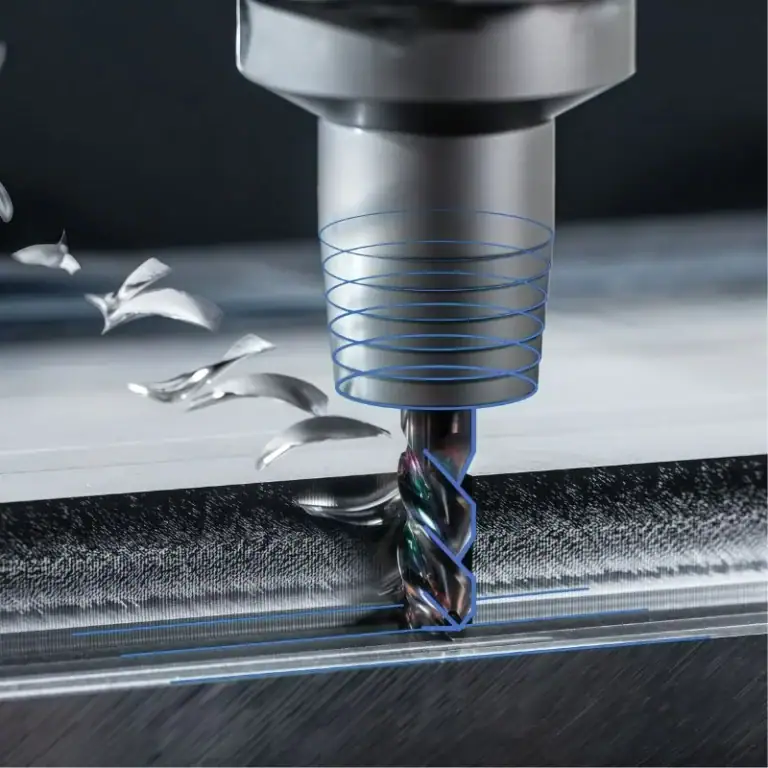
High spindle speed does not equal good machining, and fast feed rate does not equal high efficiency. The most common problem in plastic machining is that excessively high spindle speed leads to cutting heat, while excessively slow feed rate causes the tool to repeatedly rub against the material. The correct approach is to let the tool “cut,” not “grind.” Generally, a sharp cutting tool combined with a proper feed rate can remove chips faster, reduce heat buildup, and result in a cleaner surface. Well-matched parameters lead to neater edges and more stable dimensions on the parts.
Depth of Cut
Plastics are not suitable for large depths of cut, especially thin-walled and easily deformable parts. Cutting too deep in one go can subject the material to significant instantaneous stress, easily causing warping, chatter marks, or chipping. A more reliable approach is layered cutting: roughing, semi-finishing, and finishing. While this takes slightly longer, it significantly improves stability, making it particularly suitable for high-precision parts with high aesthetic requirements.
Tool Selectio
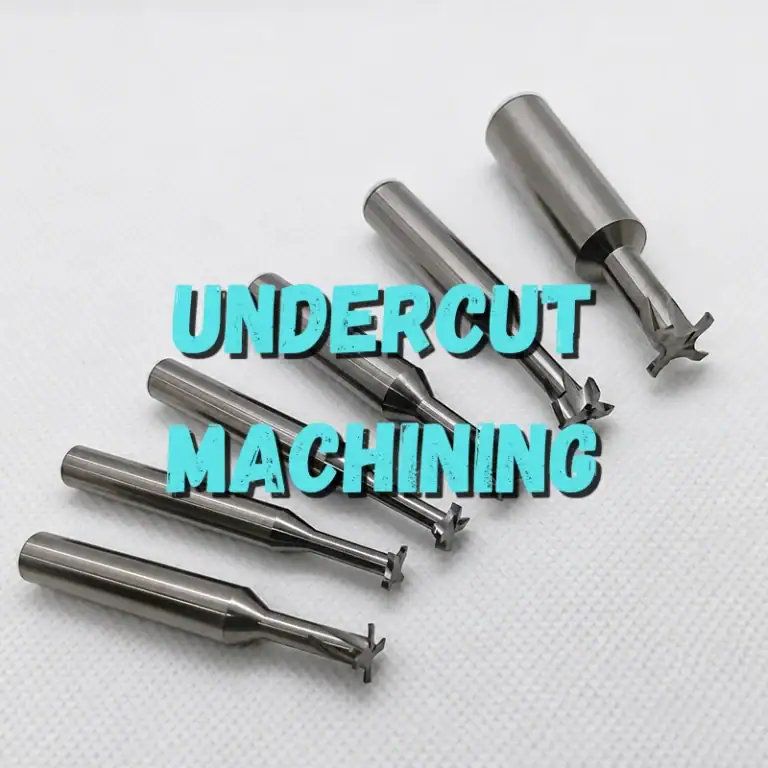
The sharper the tool and the better the chip removal, the easier it is to increase the parameters. Once the tool becomes dull, the parameters must be reduced; otherwise, it’s easy to burn material, stick to the tool, or create burrs. For plastic machining, single-edged or specialized plastic tools are often more suitable than ordinary tools because they remove chips more easily and have less cutting resistance. The tool is not an accessory, but the foundation for the parameters to function effectively. Often, poorly adjusted parameters are not due to incorrect values, but rather to an unsuitable tool.
Cooling and Chip Removal
In plastics machining, heat management is crucial. Inappropriate cooling methods can easily cause the workpiece surface to soften, turn white, or leave tool marks. Many plastic machining processes are better suited to air-blowing chip removal than strong liquid cooling, as liquids can introduce additional effects. The key is not “the stronger the cooling, the better,” but rather to ensure chips leave the machining area quickly, avoiding secondary friction. Smooth chip removal naturally reduces heat, resulting in more stable surface quality.
Why do different plastics have different parameter requirements?
POM is suitable for a more stable parameter range
POM is a common material in plastic CNC machining, offering good dimensional stability and machinability. It has a relatively high tolerance for parameters, making it suitable for precision structural parts and mechanical functional components. As long as the tool is sharp and chip removal is smooth, POM is generally less prone to severe burrs or deformation; therefore, many factories prioritize it for plastic machining parameter tuning.
PMMA is more sensitive to parameters
PMMA, or acrylic, has a beautiful appearance but is highly sensitive to cutting heat and stress. Slightly improper parameter settings can easily lead to white edges, cracks, fogging, or surface stringing. Therefore, when machining PMMA, extra attention must be paid to tool sharpness and cutting speed to avoid aggressive cutting. Its machining logic is not “fast,” but “fine”; parameters need to be more gentle, and the cutting path smoother.
PC and ABS are suitable for comprehensive parameter control
PC and ABS are both common engineering plastics with wide applications. PC has high strength but is also relatively sensitive to heat and stress; ABS has better processability, but surface details still require careful control. Their parameter settings usually need to strike a balance between efficiency and quality; they cannot be too aggressive or too conservative. For these materials, parameter stability often directly determines the yield rate.
Material selection
Many people choose materials based solely on price, which directly affects the difficulty of machining parameters. The more stable the material, the easier the parameters are to control; the more sensitive the material, the longer the parameter debugging time and the higher the batch risk. Therefore, material selection is not only a procurement issue but also a processing strategy issue. To make plastic CNC machining smoother, materials and parameters must be considered together, not separately.
Frequently Asked Questions
Why do different manufacturers use such different processing parameters for the same plastic?
This is a very common situation. Different manufacturers use different equipment, cutting tools, fixtures, and have different experience, so the parameter settings will naturally not be exactly the same. Some manufacturers prioritize efficiency and will set higher speeds and feed rates; others prioritize appearance and stability and will control the parameters more conservatively. In addition, the rigidity of different machine tools, the workshop environment, and the batch of materials will also affect the final parameters.
Conclusion
Plastic CNC machining parameters may seem like just a few numbers, but they actually determine whether the parts can be machined stably, accurately, and aesthetically. Speed, feed rate, depth of cut, cutting tools, and cooling methods do not act alone, but rather work in conjunction. If any one of these factors is not appropriate, it can lead to overheating, burrs, deformation, cracks, or dimensional deviations. Unlike metals, plastics are more susceptible to heat and excessive force, so processing should not solely focus on speed, but rather on balance and stability. To adjust the parameters effectively, the most important thing is to first consider the material, then the intended use of the part, and then gradually optimize through trial cuts. For appearance parts, more attention should be paid to surface quality; for precision parts, more attention should be paid to dimensional stability; for batch production parts, more attention should be paid to consistency. Once these ideas are straightened out, parameters will no longer be a problem.