CNC turning is a key technology in modern manufacturing, capable of high precision and complex shape machining. Improving efficiency in CNC turning involves optimizing processes, tool selection, cutting parameters, and machine operation. A well-structured workflow ensures that parts are produced faster, with stable quality and minimal downtime, which is critical for high-volume or high-value production.
Process Optimization and Machining Strategy
Optimizing the machining process is essential for improving CNC turning efficiency. This includes planning tool paths, minimizing idle time, and coordinating roughing, semi-finishing, and finishing steps to maintain a smooth workflow. Efficient strategies reduce tool wear, lower energy consumption, and shorten production cycles.
Tool Path Planning and Sequencing
Tool path planning determines the most effective way for the cutting tool to remove material. By analyzing part geometry and selecting optimal sequences, machines can operate continuously without unnecessary stops or repositioning.
- Define primary and secondary cutting paths
- Optimize approach and retract moves
- Avoid tool collisions and interference
- Balance roughing and finishing paths
- Minimize non-cutting time
- Ensure consistent surface engagement
Effective path planning directly enhances material removal rates and reduces cycle time.
Machining Strategy for Complex Features
For components with deep holes, thin walls, or multi-step profiles, proper strategy selection is crucial. Adjusting cutting order and feed directions helps maintain stability while reducing cycle times.
- Identify critical features affecting stability
- Sequence cuts to minimize deformation
- Use adaptive feed rates for complex sections
- Balance tool load distribution
- Prevent vibration during finishing passes
- Maintain dimensional consistency
Strategically sequencing complex features ensures reliable and efficient machining.
Integration of Roughing and Finishing Steps
Balancing roughing and finishing operations improves both productivity and part quality. Selecting appropriate cut depths and feeds for each stage prevents overloading tools while maintaining high surface quality.
- Determine optimal roughing depth
- Set finishing pass allowances
- Adjust spindle speeds for each stage
- Minimize tool changes
- Enhance surface uniformity
- Maintain cycle efficiency
Integrated steps reduce unnecessary tool movement and enhance overall production efficiency.
Cutting Parameters and Tool Selection
Optimizing cutting parameters and selecting suitable tools are fundamental to high-efficiency CNC turning. Proper choices reduce machining time while maintaining part accuracy and surface quality.
Selecting High-Performance Tools
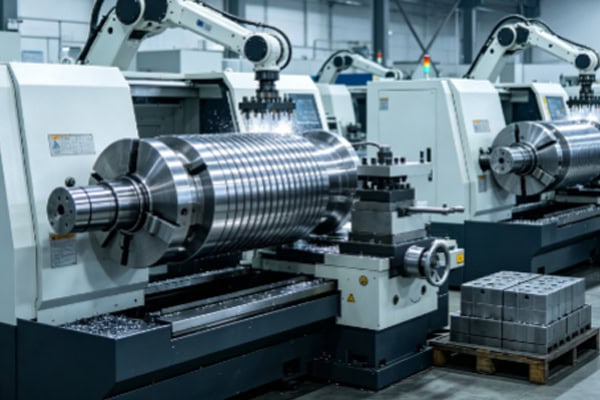
Using the right tool grade and geometry improves cutting efficiency and extends tool life, which allows for higher spindle speeds and feed rates.
- Choose material-specific inserts
- Use coated or reinforced cutting edges
- Match tool geometry to operation type
- Maintain proper tool sharpness
- Reduce vibration and chatter
- Enhance cutting stability
High-performance tools support faster cutting without compromising precision.
Optimizing Cutting Parameters
Adjusting spindle speed, feed rate, and depth of cut according to material properties and part geometry maximizes efficiency while minimizing tool wear.
- Set ideal spindle RPM for material
- Adjust feed per revolution for smooth cutting
- Determine optimal cut depth
- Use coolant effectively to reduce heat
- Monitor tool load and wear
- Balance speed and stability
Well-tuned parameters shorten cycle times and maintain consistent quality.
Matching Tool and Workpiece Materials
Material compatibility affects tool life and cutting efficiency. Harder materials may require slower speeds, while softer alloys allow for aggressive cutting.
- Analyze workpiece hardness and toughness
- Select tool material accordingly
- Adjust cutting strategy for thermal effects
- Prevent premature tool failure
- Enhance surface finish
- Increase overall machining throughput
Proper material matching reduces downtime and tool replacement frequency.
Machine Maintenance and System Control
Regular maintenance and precise control of CNC machines ensure stable operation and reduce unexpected downtime, which is critical for maintaining high efficiency.
Routine Maintenance and Inspection
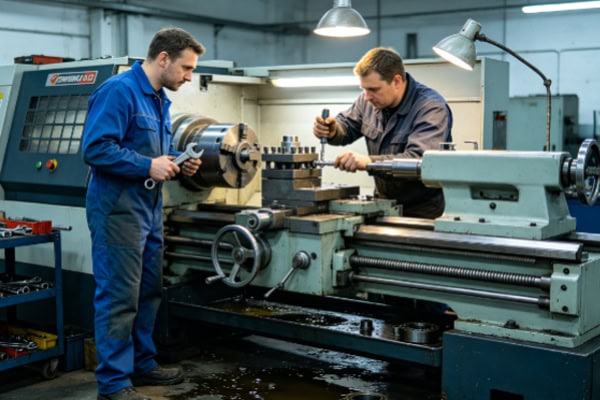
Maintaining machine condition allows for precise cutting and minimizes interruptions during production.
- Inspect spindle and bearings
- Clean and lubricate guideways
- Check coolant system performance
- Calibrate measurement systems
- Monitor alignment and backlash
- Replace worn components promptly
Consistent maintenance ensures reliable performance and prevents efficiency loss.
Vibration Control and Stability Enhancement
Controlling vibration is essential for high-speed machining. Machine rigidity, proper clamping, and damping techniques reduce vibrations that can slow down operations.
- Secure workpiece with high-rigidity fixtures
- Adjust cutting conditions to reduce chatter
- Use vibration-damping tools
- Maintain balanced spindle rotation
- Monitor real-time vibration data
- Minimize tool deflection
Reducing vibration improves surface quality and allows higher cutting speeds.
Cooling and Lubrication Optimization
Effective cooling maintains tool temperature, prevents thermal deformation, and improves cutting efficiency during prolonged operations.
- Ensure consistent coolant flow
- Choose appropriate cutting fluid
- Optimize nozzle direction and pressure
- Monitor tool temperature
- Reduce thermal expansion of workpiece
- Enhance tool life and cutting stability
Proper cooling management supports high-speed, long-duration machining.
Automation and Workflow Integration
Integrating automation systems with CNC operations reduces manual intervention, minimizes idle time, and streamlines production.
Automated Tool Changing
Automatic tool changers decrease machine idle time and enable uninterrupted multi-stage machining.
- Program tool sequences
- Ensure quick change without misalignment
- Monitor tool usage and wear
- Reduce operator intervention
- Maintain cycle consistency
- Increase production throughput
Automation of tool changes maintains high machine utilization rates.
Real-Time Monitoring and Feedback Systems
Monitoring machine performance and cutting conditions in real-time helps prevent downtime and optimize productivity.
- Track spindle load and torque
- Monitor cutting temperature
- Adjustfeed rates dynamically
- Detect tool wear early
- Log production data
- Maintain process stability
Real-time feedback enhances efficiency and reduces scrap.
Workflow Scheduling and Material Handling
Coordinating machine schedules and handling materials efficiently reduces waiting time between operations and supports continuous production.
- Plan machining sequences for multiple parts
- Organize material flow and storage
- Minimize loading/unloading time
- Use conveyors or robotic handling
- Align operations with production targets
- Optimize overall plant efficiency
Efficient workflow planning ensures machines operate at full capacity.